



Table of Contents
In 2020, I filed our first U.S. trademark application for LJVOGUES. The registration came through from the United States Patent and Trademark Office on June 8, 2021 — Reg. No. 6,378,310, Class 25, covering everything from shapewear to sports bras to yoga tops. We had already registered in China the year before — No. 36983303, Class 28, dated December 7, 2019.
I remember thinking at the time: this is just a piece of paper.
I was wrong. That "piece of paper" turned out to be one of the most important strategic decisions I've ever made. Not because the trademark itself generated revenue, but because the process of registering it forced me to think clearly about what LJVOGUES actually stands for — what categories we own, what markets we compete in, and what territory we're claiming in the minds of our clients and their customers.
That experience — combined with the fact that I've now worked with over a hundred brands at every stage from first-sample to mass production — has given me a perspective on brand building that most consultants and marketing agencies simply don't have.
I don't see brands from the outside. I see them from the inside of the supply chain — from the moment a founder sends their first email asking about MOQs, through the painful sampling iterations, the panicked pre-launch quality checks, and the triumphant (or devastating) first customer reviews.
I've seen brands go from a WhatsApp message to $170 million in revenue. I've also seen brands spend $50,000 on samples and never ship a single unit. The patterns are remarkably consistent.
Here is what I've learned.
Part 1: Product — Where Most Brands Die Before They're Born
Mistake #1: Starting with Too Many SKUs
The single most common mistake I see from first-time intimate apparel founders is launching with 8, 10, or 15 SKUs.
They come to us with a spreadsheet: three silhouettes × four colours × two absorbency levels = 24 SKUs. They think variety signals professionalism. It doesn't. It signals that the founder hasn't made a decision about who their customer is and what problem they're solving.
What works: Start with 2–3 SKUs maximum. One core silhouette in 2–3 colours. Knix started with leak-proof underwear — one product, one promise, one story. They've since expanded to bras, swimwear, and activewear — but only after proving the core product with real customers and real revenue.
Every additional SKU at launch multiplies your sampling cost, your inventory risk, your photography needs, your Amazon listing workload, and your quality control complexity. A focused launch with 2–3 perfect SKUs will always outperform a scattered launch with 15 mediocre ones.
Mistake #2: Designing for Yourself Instead of Your Customer
I've lost count of the number of founders who specify fabric, colour, and construction based entirely on their personal preference — without ever testing demand.
"I love lavender, so the brand should be lavender."
"I prefer high-waist, so we only need high-waist."
"I don't like lace, so no lace."
Your personal taste is a starting point, not a strategy. Before committing to mass production, validate your product concept through:
Landing page pre-orders — build a simple Shopify page, run $500 in targeted ads, and measure conversion. A 10–20% email-to-interest rate from targeted traffic signals real demand
Founding ambassador programs — recruit 15–20 real women to test your samples, wear them for a week, and give brutally honest feedback
Competitive gap analysis — don't just study what competitors make. Study their 1-star reviews. That's where unmet needs live

Designers are designing products that meet market demands.
Mistake #3: Underfunding Product Development
Most apparel founders don't struggle because they spend too much. They struggle because they spend on the wrong things, in the wrong order.
The temptation is to allocate 70% of the budget to marketing (branding, packaging, photography, influencers) and 30% to product. This is backwards. For functional intimate apparel — where the product must physically perform a job (absorb, protect, shape, support) — the ratio should be inverted, at least in Year 1.
Here is why: if your period underwear leaks, no amount of Instagram content will save you. If your shapewear rolls down, no influencer partnership will generate repeat purchases. If your fabric pills after three washes, your Amazon reviews will kill your listing within 60 days.
Invest in:
Multiple sampling rounds (expect 2–4 iterations minimum for a new product)
Proper Tech Pack development with detailed specs for every component
Third-party testing (PFAS-free, REACH/SVHC, OEKO-TEX) — $2,000–3,000 that pays for itself a thousand times over in brand credibility and regulatory protection
Wash testing (50+ cycles minimum before approving production)

LJVOGUES-PFAS Certification
Part 2: Market — The Questions That Define Your Category
Choose Your Arena Before Choosing Your Product
The intimate apparel market in 2026 is not one market. It is at least six distinct arenas, each with different economics, different consumers, and different competitive dynamics:
Arena | Market Size | Growth | Key Brands | Entry Difficulty |
Period underwear | ~$200M → $600M+ by 2036 | 17% CAGR | Thinx, Knix, Modibodi, Saalt | Medium — crowded but growing fast |
Incontinence underwear | $2B+ reusable segment | 12–17% CAGR | Tena, Knix, Confitex | Medium — less crowded, higher regulatory bar |
Everyday premium underwear | $20B+ global | 4.8% CAGR | Skims, Parade, Calvin Klein | High — brand-intensive, low differentiation |
Shapewear | $3B+ global | 6–8% CAGR | Skims, Spanx, Shapermint | High — Skims dominance |
Nursing / maternity | Niche but loyal | Growing | Kindred Bravely, Bodily | Low — underserved, high repeat purchase |
Sport / activewear intimates | Fast-growing sub-segment | 10%+ CAGR | Knix, WUKA, Modibodi | Medium — technical barrier is the moat |
The most successful founders I work with don't start by saying "I want to make underwear." They start by saying "I want to solve [specific problem] for [specific person] in [specific moment]."
Knix: "Leak-proof underwear for real women's real bodies" — then expanded outward
Thinx: "Break the taboo around periods" — owned the cultural conversation before competitors could catch up
Parade: "Sustainable, inclusive basics for Gen Z" — positioned as a cultural brand, not just a product
Each of these brands chose an arena first, then designed products to dominate that arena. They didn't try to be everything to everyone.
The European Opportunity Most Founders Miss
A disproportionate number of the brands I work with target the U.S. market first — specifically Amazon US and Shopify DTC to American consumers.
This makes sense intuitively: it's the largest English-speaking market, with the most mature DTC infrastructure. But it also means the competition is most intense, customer acquisition costs are highest, and differentiation is hardest.
The European market is structurally underserved for functional intimate apparel. Regulatory requirements are stricter (REACH/SVHC, PFAS bans in France and Denmark), which creates a natural barrier to entry that protects brands willing to invest in compliance. Consumer willingness to pay for premium, sustainable products is often higher than in the US. And several large national markets (Germany, France, UK, Nordics) have far fewer DTC period/incontinence underwear brands competing for attention.
If you are launching a functional intimate apparel brand in 2026, seriously consider Europe-first or Europe-simultaneous as your market strategy. The compliance investment (REACH testing, OEKO-TEX, PFAS-free verification) is not a cost — it's a moat.

Ljvogues can help you build your brand.
Part 3: Brand Identity — The Foundation Nobody Wants to Build
Your Brand Is Not Your Logo
I see this constantly: a founder spends $5,000 on brand identity design (logo, colour palette, typography, mood board) and thinks they've built a brand.
They haven't. They've built a visual system. A brand is something much deeper: it is the promise the customer believes you will keep.
Knix's brand is not its logo. It's the promise: "We celebrate real bodies, and our products actually work for real life"
Thinx's brand is not its colour palette. It's the promise: "We'll say out loud what other brands whisper about"
Skims' brand is not its font. It's the promise: "This will fit YOUR body, not a fantasy body"
Before you design a single visual asset, write down the answer to this question: "When a customer tells her best friend about my brand, what does she say?"
If the answer is "They make period underwear" — you don't have a brand. You have a product.
If the answer is "They make period underwear that actually feels like real underwear and they test for 253 chemicals to make sure it's safe" — now you're getting somewhere.
Protect Your Brand Early — Not When It's "Successful"
Here is where my personal experience with trademark registration becomes directly relevant to every founder reading this.
Many entrepreneurs delay filing for trademark protection, believing it's a task for later — after they have traction, after they have revenue, after they're "established." This is one of the most dangerous mistakes a startup can make.
The reality:
A domain name is not a trademark. Owning yourname.com doesn't prevent another company from trademarking the same name
An LLC registration is not a trademark. Forming a business entity only prevents name duplication within that specific state registry l
The more visible your brand becomes, the more likely someone will file for your name before you do
When we filed LJVOGUES with the USPTO in September 2020, we were still a relatively small operation. But we filed in Class 25 (covering hats, shapewear, shoes, T-shirts, tights, tracksuits, underpants, sports bras, and more) because we knew where we were headed — not just where we were. We also registered in China in Class 28 covering sports equipment and protective gear.
My advice to every founder:
File your trademark before your first production order — not after your first $100K in revenue
File in every market you intend to sell in — USPTO for the US, EUIPO for Europe, CNIPA for China, at minimum
File in the correct classes — and think about where you'll be in 3–5 years, not just today. Our Class 25 registration covers categories we weren't manufacturing yet in 2020 but are core to our business in 2026
Budget $2,000–5,000 for initial trademark filings — this is less than the cost of one sample round, and infinitely more valuable if a competitor ever tries to claim your name
Part 4: Marketing — What Actually Works in 2026
The "Blue Liquid Test" Era
The period underwear marketing playbook has been completely rewritten in the past two years. The brands winning in 2026 are not the ones with the biggest ad budgets. They are the ones producing educational, demonstration-based content that builds trust through transparency.
The most effective content format: the product test video. A real person, pouring real liquid (tinted to approximate menstrual blood — not the absurd "blue liquid" of pad commercials) onto real underwear, showing exactly how it absorbs, how fast, and how dry the surface remains. t
This content works because it answers the consumer's core objection: "Does this actually work?" — not with a marketing claim, but with visible proof.
Brands like The Period Company and new entrants are using TikTok and Instagram Reels to run these demonstrations, generating millions of organic views and converting skeptical viewers into first-time buyers.
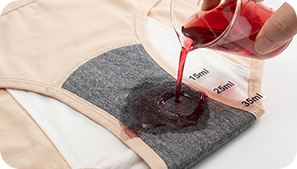
Real test liquid color
From Performance Mareting to Brand Building
Adore Me, one of the most successful DTC intimate apparel brands, publicly acknowledged a strategic shift away from pure performance marketing (Facebook/Instagram ads optimized for immediate conversion) toward brand-building content — including streaming video, creator partnerships, and storytelling.
Thinx made a similar pivot, expanding into digital out-of-home (OOH) advertising and user-generated content campaigns when they realized that performance marketing alone couldn't sustain growth against increasing competition.
The lesson: performance marketing gets your first 1,000 customers. Brand building gets your next 100,000.
For a startup with limited budget, the practical sequence is:
Phase | Budget Allocation | Focus |
Pre-Launch (Month 1–2) | 90% content creation, 10% paid ads | Build email waitlist, create 20+ TikTok/Reels demos, recruit founding ambassadors |
Launch (Month 3) | 50% performance ads, 50% content | Drive initial sales through targeted Meta/TikTok ads, continue organic content |
Growth (Month 4–12) | 30% performance, 40% content/brand, 30% retention | Shift toward brand storytelling, UGC, email marketing, and ambassador programs |
The 90-Day Launch Roadmap
For brands that have completed product development and are ready to go to market, this framework works:
Days 1–30: Tease & Build Community
Launch "Coming Soon" landing page with email capture
Recruit 15–20 Founding Brand Ambassadors for product testing
Begin "behind the scenes" content (factory visits, fabric testing, founder story)
Days 31–60: Educate & Build Hype
Start TikTok/Reels content (product demos, "blue liquid tests," myth-busting)
Reveal your compliance story (PFAS-Free, REACH-tested, OEKO-TEX) — this is a differentiator, not just a legal checkbox
Open early-access pre-orders for email subscribers
Days 61–90: Launch
Go live on your primary channel (Shopify, Amazon, or both)
Launch affiliate/ambassador program
Host live launch event on Instagram or TikTok
Activate performance ads with your best-performing organic content as creative
Part 5: The Factory Relationship — Your Most Undervalued Asset
Your Manufacturing Partner Is Not a Vendor. It's a Co-Founder.
This is the insight that separates the brands that scale from the brands that stall.
Most founders treat their factory the way they treat their web hosting provider: a utility. They send specs, receive quotes, approve samples, and place orders. The relationship is transactional.
The founders who build great brands treat their factory as a strategic partner — someone who has seen hundreds of products succeed and fail, who understands material science at a level no brand founder can match, and who can warn you about problems you don't yet know exist.
At Ljvogues, our most successful client relationships look like this:
Weekly communication (not just at order time) — sharing market feedback, consumer reviews, competitor moves
Collaborative product development — the brand brings the consumer insight, we bring the engineering knowledge, and the best products emerge from the intersection
Transparent quality dialogue — when we find a problem in QC, we flag it immediately rather than hoping it goes unnoticed. When a client's design spec creates a manufacturing risk, we explain it before sampling — not after a failed production run
The founders who come to us saying "Just make what's on the tech pack" get decent products. The founders who come to us saying "Here's what our customer is experiencing — what do you recommend?" get exceptional ones.

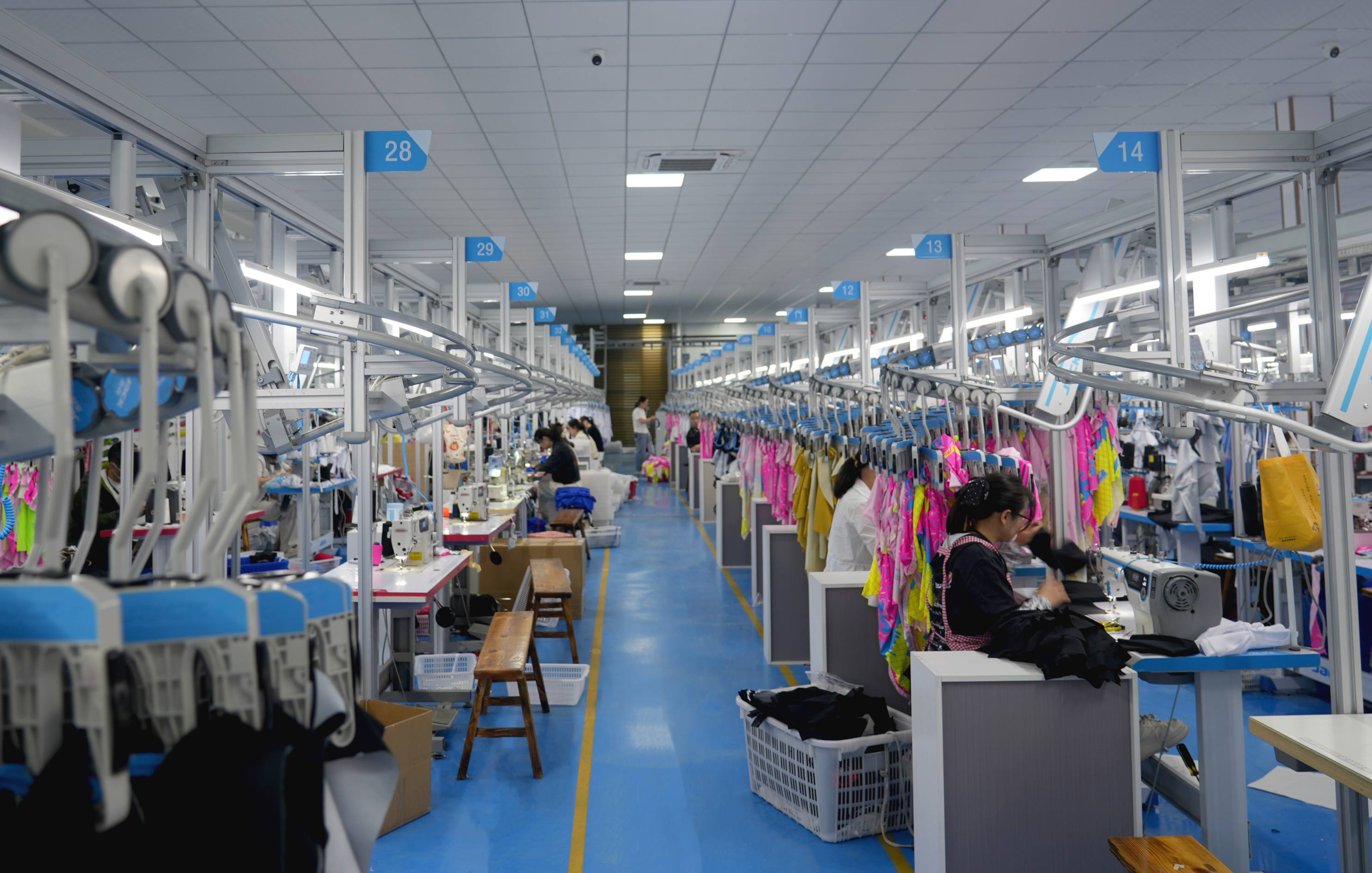
LJVOGUES - Your Manufacturing Partner
What to Look for in a Manufacturing Partner
Based on having been on the inside of this relationship for years, here is what actually matters when selecting an intimate apparel manufacturer — ranked in order of importance:
Technical capability for your specific product category. Can they actually make what you need? A factory that's great at basic cotton underwear may be terrible at leak-proof functional garments. Ask for samples of products similar to yours — not just any samples
Compliance infrastructure. Do they have existing REACH/SVHC, PFAS-free, and OEKO-TEX testing? Or will you be their first client to ask for it? A factory that already has these certifications has internalized quality at a systemic level, not as an afterthought
Communication quality and speed. How fast do they respond to your messages? How clearly do they explain technical constraints? The best factory in the world is useless if you can't get a reply within 24 hours
Flexible MOQs for startups. If a factory requires 3,000 units per colour per style as their minimum, they're not set up for emerging brands. Look for partners willing to work at 300–500 units for initial orders, scaling up as your brand grows
Willingness to educate you. The best manufacturing partners don't just fulfil orders — they teach you about fabric, construction, testing, and compliance. If your factory is making you smarter with every interaction, you've found the right partner
The Long Game
Building an intimate apparel brand in 2026 is easier than ever to start and harder than ever to sustain.
The barrier to entry has collapsed: Alibaba, TikTok Shop, and white-label ODM programs mean anyone with $5,000 can have product in hand within 60 days. But the barrier to endurance has never been higher: consumers are more discerning, platforms are more competitive, regulations are more complex, and the cost of a single quality failure (a PFAS scandal, a product recall, a viral negative review) can destroy years of brand building overnight.
Knix didn't reach $170 million in revenue by launching fast. They reached it by getting the fundamentals right — product, community, authenticity — and then scaling relentlessly on that foundation. It took them nine years from founding (2013) to peak revenue (2022). There were no shortcuts.
The brands I work with that succeed share three qualities:
Obsession with product — they would rather delay a launch by two months than ship a product that isn't right
Respect for compliance — they see chemical safety testing and regulatory certification as brand assets, not bureaucratic overhead
Long-term partnership mindset — they invest in their factory relationship the way they invest in their customer relationship, knowing that the supply chain is the brand
I registered the LJVOGUES trademark in 2019 in China and 2021 in the United States. At the time, it felt premature. Today, it feels like one of the smartest things I ever did — not for the legal protection, but for the clarity it forced: Who are we? What do we stand for? What territory are we claiming?
If you are building an intimate apparel brand right now, those are the only three questions that matter. Everything else — the fabric, the silhouette, the marketing, the TikTok strategy — flows from the answers.
Get the answers right first. Then build.
Starting a functional intimate apparel brand and looking for a manufacturing partner who thinks like a co-founder? We work with brands at every stage — from first-sample founders to established labels scaling into new categories. Send us your brief, your questions, or just your idea, and we'll tell you honestly what it takes to bring it to life.
Ocean Yang is the CEO of Ljvogues (USPTO Reg. No. 6,378,310), a Shenzhen-based manufacturer specializing in functional intimate apparel. He has helped over 100 brands develop, produce, and ship period underwear, incontinence underwear, nursing bras, shapewear, and activewear to markets across Europe, North America, and the Middle East. He believes the best brands are built from the inside out — product first, story second, scale third.