



Table of Contents
Period swimwear is not just period underwear that got wet. That distinction matters more than most people realize — and it is exactly why we wrote this guide.
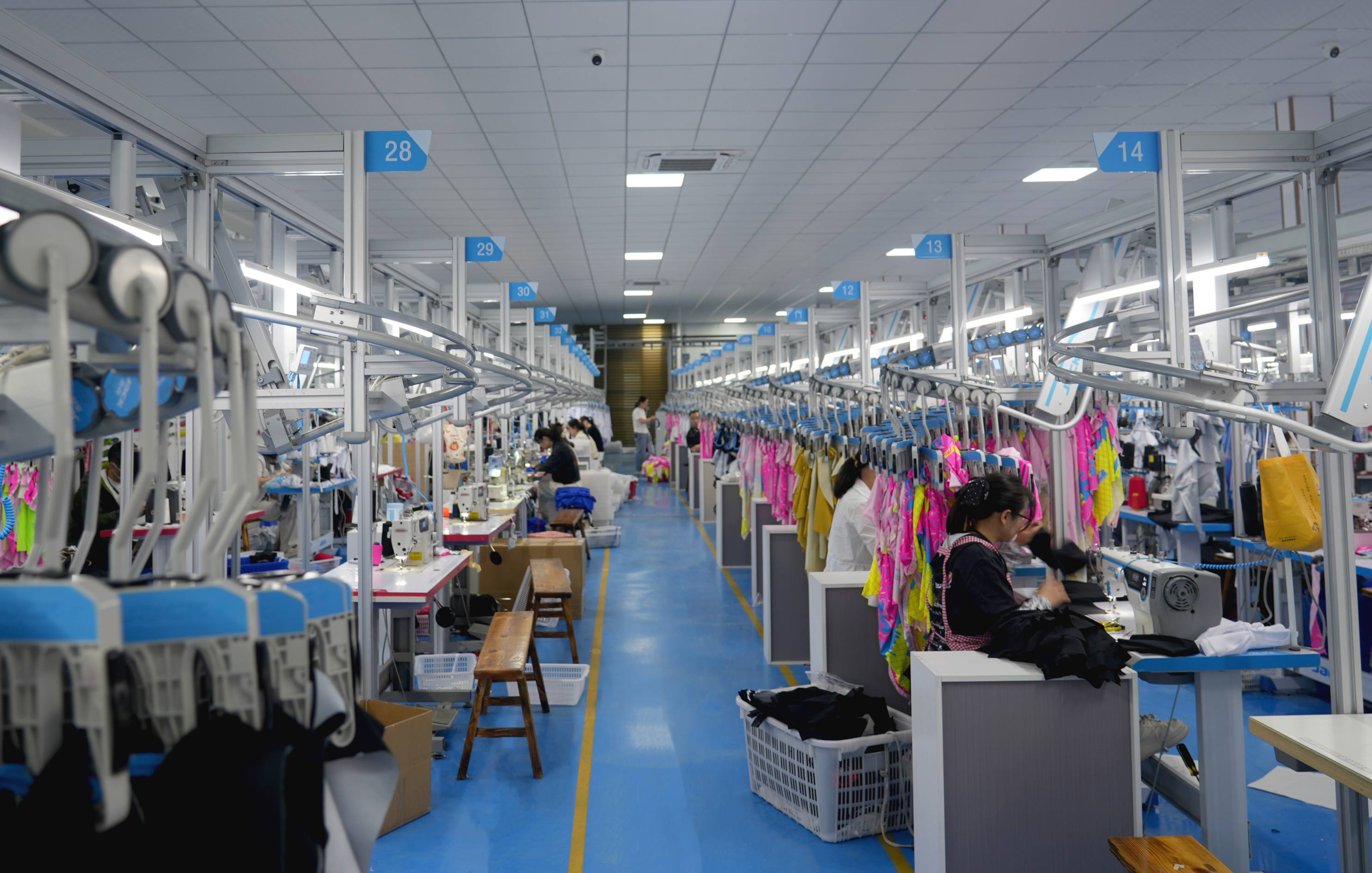
At LJVOGUES, we manufacture both period underwear and period swimwear for 500+ global brands from our production facility in Shenzhen. The two product types share a four-layer architecture and several care principles, but the threats that period swimwear faces in the pool, ocean, and on vacation are fundamentally different. Chlorine, saltwater, sunscreen oils, and ultraviolet exposure each attack specific layers of the fabric system in ways that never apply to period underwear.
We have seen what happens when swimwear with integrated period protection is washed incorrectly. Absorbency drops after a handful of swims. The outer fabric "wets out" and loses its water repellency. The waterproof membrane begins to degrade. Elastic fails around the legs within a single season. None of these outcomes are inevitable — they are the predictable result of applying standard swimwear care habits to a product that requires a more precise approach.
This guide is written from the manufacturing floor out. We will explain what each layer is vulnerable to, give you a step-by-step wash and care process, walk through how to maintain the DWR coating, and address the specific challenge of washing period swimwear on holiday. If you follow these steps, a well-made pair of period swim bottoms should last you one to two full swim seasons — and beyond.
Why Period Swimwear Care Is Different From Everything Else
Period swimwear occupies a unique care category because it simultaneously inherits all the vulnerabilities of regular swimwear and all the vulnerabilities of period underwear. Most products face one set of threats. Period swimwear faces both — plus the added complexity of a DWR (Durable Water Repellent) coating that requires active maintenance.

Regular Swimwear's Enemies
Conventional swimwear is made from nylon or polyester-elastane blends designed to withstand water. But even without period protection layers, swimwear is damaged by:
Chlorine (pool water): Chlorine is an oxidizing agent that attacks the spandex/elastane component of swimwear fabric, breaking down the polymer chains over time. This leads to color fading, loss of stretch recovery, and eventually the fabric becoming thin, rough, or porous. Chlorine also degrades the DWR coating that keeps outer fabric surfaces water-repellent.
Saltwater: Salt is hygroscopic — it attracts and retains moisture within fibers. If swimwear is not thoroughly rinsed after ocean swimming, residual salt continues to dry inside the fabric between wears, slowly degrading fiber integrity and DWR performance.
UV radiation: Direct, prolonged sun exposure breaks down the dye chemistry of swimwear fabric and accelerates the degradation of spandex fibers and elastic components.
Sunscreen and body oils: Many sunscreens — particularly those with oxybenzone, avobenzone, and chemical UV filters — are oil-based. These oils penetrate fabric and coat the fiber surface, compromising water repellency and creating a residue that attracts bacteria and traps odor.
-
Period Underwear's Enemies
The internal layers of period protection are vulnerable to a different set of threats:
Hot water: Blood contains hemoglobin, a protein that denatures and permanently bonds to fibers when heated — the same reason you set a blood stain by washing it warm.
Bleach: Chlorine bleach attacks polymer fiber chains in the absorbent microfiber core, destroying the capillary structure that holds fluid. It also degrades the TPU membrane.
Fabric softener: Softener deposits a waxy cationic surfactant coating on fibers, blocking the microscopic gaps that allow the moisture-wicking and absorbent layers to function. Even one or two uses can measurably reduce absorbency.
Heat (drying): Tumble drying and hot ironing crack or warp the TPU waterproof membrane — the critical leak-prevention layer.
What This Means for Period Swimwear
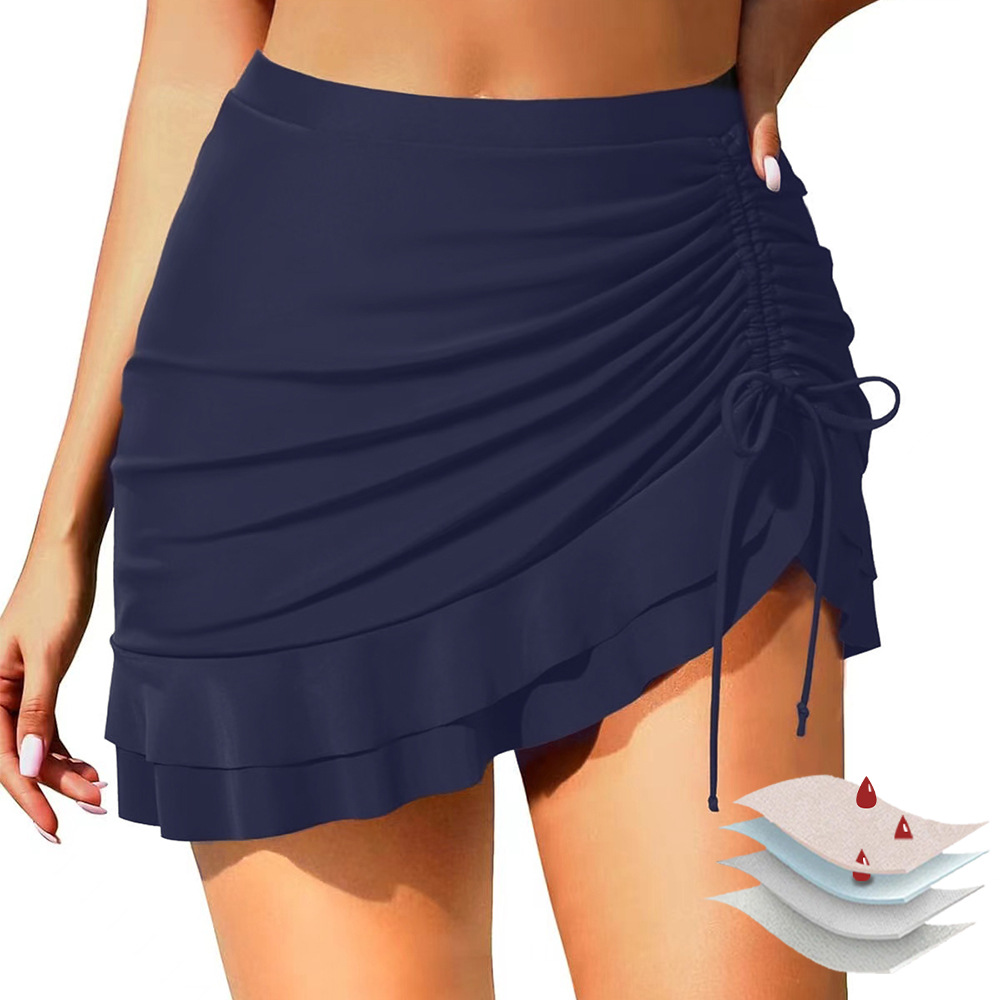
Period swimwear combines these four layers with a swimwear-grade outer fabric and a DWR coating. The result is a product that requires you to navigate both sets of threats simultaneously — with the additional requirement to actively maintain the DWR system that prevents swelling in water.
There is no other garment that asks this much of a care routine. That is why "just rinse it like regular swimwear" and "just hand wash it like period underwear" are both incomplete answers.
The 4 Layers of LJVOGUES Period Swimwear — and Their Specific Vulnerabilities
Understanding what each layer does and what harms it is the foundation of everything that follows.
Layer 1 — Moisture-Wicking Inner Mesh
The innermost layer sits against your skin. It is a fine-gauge mesh that pulls fluid away from the body surface and into the absorption core. The wicking function depends entirely on the microscopic capillary structure of the fiber — essentially, the spaces between fibers create a physical draw that moves moisture inward. Fabric softener is the primary enemy: it deposits a waxy coating that fills these capillary spaces and eliminates wicking. One or two softener washes can render this layer functionally useless.
Layer 2 — Absorbent Microfiber Core
This is the layer that does the absorbing. Our absorbent core is engineered to retain fluid through the same capillary physics as the wicking layer — fluid is drawn in and held between fiber surfaces. This layer faces two specific threats:
Hot water causes blood proteins (primarily hemoglobin) to coagulate and permanently bond to fibers, reducing capacity and creating stains that normal washing cannot remove.
Bleach attacks the polyamide and polyester fiber chains in the core, degrading the physical structure that holds fluid. Each bleach exposure reduces the core's long-term capacity.
Layer 3 — TPU Waterproof Membrane
Thermoplastic polyurethane is the ultra-thin layer that prevents any fluid from reaching outer clothing. It is flexible, breathable, and highly effective — but its enemies are heat and oxidizing chemicals. Tumble drying generates heat that cracks and deforms the TPU film over time. Bleach accelerates this by attacking the polyurethane polymer matrix. Chlorine in pool water also contributes to gradual TPU degradation with repeated exposure — one reason that the pre-rinse and post-swim rinse steps described below are important even from the perspective of protecting this layer.
Layer 4 — DWR-Treated Outer Fabric
The outer layer of period swimwear is treated with a DWR (Durable Water Repellent) coating that causes water to bead and roll off the fabric surface rather than being absorbed. This is what prevents the swimwear from becoming heavy and waterlogged during wear. The DWR coating is not permanent — it is a chemical treatment applied to the fiber surface, and it degrades over time through use and washing. Chlorine and salt are the most aggressive strippers of DWR in the swimwear context. Sunscreen oils compromise DWR by coating the fiber surface with a hydrophilic residue that prevents water from beading. Prolonged UV exposure also degrades both the DWR treatment and the outer fabric's dye integrity.

Step-by-Step: How to Wash Period Swimwear
Before You Swim: The Pre-Rinse
This step is often skipped, but our engineering team considers it one of the most impactful habits you can build.
Before entering a pool or the ocean, rinse your period swimwear in cold fresh water for 30–60 seconds.
When fabric fibers are already saturated with fresh water, they absorb significantly less chlorinated or salt water during your swim. This is the same principle that competitive swimmers rely on when they pre-rinse before entering a chlorinated pool. For period swimwear specifically, it reduces the chemical load that the TPU membrane and DWR coating are exposed to, extending the lifespan of both.
This step costs 60 seconds by a poolside shower or hotel bathroom faucet. The compounding benefit over a season is significant.
Immediately After Swimming: The Post-Swim Rinse
This is the single most important care step for period swimwear.
Immediately after swimming — before you change into anything else — rinse your period swimwear in cold fresh water for at least 2–3 minutes.
This rinse serves four simultaneous functions:
Removes chlorine before it continues to degrade the spandex, DWR coating, and TPU membrane between leaving the pool and your next wash.
Removes salt before it dries into the fiber structure and causes ongoing degradation.
Flushes sunscreen and body oils from the outer fabric before they set into the DWR layer.
Begins to flush menstrual fluid from the inner layers in cold water, before proteins have a chance to set.
Squeeze the swimwear gently under running cold water — do not wring or twist, which stresses seams and the internal layer structure. The rinse does not need to run completely clear at this stage; that is what the wash cycle is for. You are primarily removing the chlorine and salt residue that will keep damaging the fabric while it sits.
If you cannot rinse immediately: Store the swimwear damp in an open bag — not sealed — and rinse within a few hours. Never leave chlorinated or salt-soaked swimwear sealed in a bag for extended periods; the confined chemistry accelerates degradation significantly.
Washing: Hand Wash or Gentle Machine Cycle
Hand washing is preferred for period swimwear. The combination of delicate layers, DWR coating, and elastane-based outer fabric benefits from the lower mechanical stress of hand washing.
Hand wash method:
Fill a clean basin or sink with cold water (below 30°C / 86°F).
Add a small amount of mild, fragrance-free detergent — roughly a teaspoon. Less is more with technical fabrics; excess detergent residue is harder to rinse out and can build up in the absorbent core.
Submerge the swimwear and gently agitate by hand for 1–2 minutes, paying particular attention to the gusset area.
Rinse under cold running water until the water runs completely clear and no soap feel remains. This typically takes 2–3 minutes of thorough rinsing.
Machine washing:
If hand washing is not practical, a gentle machine cycle is acceptable.
Water temperature: Cold only (below 30°C / 86°F)
Cycle: Gentle or delicates
Spin speed: Low — high spin forces stress the internal layer seams and can cause delamination over time
Protection: Always place period swimwear inside a mesh laundry bag. This prevents hooks, zippers, and other garments from abrading or catching on the gusset layers.
What not to use:
No bleach or chlorine-based detergents — these degrade all four layers
No enzyme-heavy detergents — enzymes are designed to break down biological material, including the protein-based components of your absorbent core
No fabric softener — see Layer 1 above
No "sport wash" detergents with aggressive degreasing agents — these strip DWR coatings
Detergent recommendation: A mild wool or delicate wash detergent (such as those commonly used for technical outdoor fabrics) is ideal. These are formulated to clean without stripping surface treatments — exactly what period swimwear DWR needs.
Drying: Shade, Air, Inside Out
Turn the swimwear inside out. Drying inside out exposes the thicker gusset layers — where the absorbent core is located — to maximum airflow, ensuring they dry thoroughly. It also protects the outer fabric and DWR coating from UV degradation during drying.
Hang to air dry in shade. Direct sunlight dries swimwear quickly but accelerates UV degradation of the outer fabric, DWR coating, and elastic components. Shade drying takes longer but preserves color and fabric integrity.
Do not tumble dry — heat damages the TPU membrane.
Do not wring or twist — this stresses internal layer seams and deforms elastane.
Do not iron — heat warps the TPU film.
Lay flat or hang from the waistband — do not hang by a single leg hole, which puts prolonged stress on the elastane at that point.
Period swimwear should be completely dry before storage. The gusset is thicker than the outer fabric and takes longer to dry — check it specifically before putting swimwear away.
Storage: Only When Fully Dry
Never store period swimwear damp. The combination of residual moisture and enclosed storage creates optimal conditions for mildew and bacterial growth, both of which cause persistent odor that is difficult to fully eliminate and can degrade fabric over time.
Once completely dry:
Store flat or loosely folded — avoid tight compression that distorts elastic over time
Keep away from heat sources (e.g., near a radiator or in a car)
Do not store under heavy items that could compress the gusset layers
How to Wash Period Swimwear on Holiday
Vacations, beach trips, and pool holidays are exactly when period swimwear is most useful — and also when you are furthest from your usual laundry setup. Here is a practical system that works in any hotel room, beach house, or rented apartment.
The Holiday Care System
Immediately after swimming:
Rinse your period swimwear in the hotel shower or bathroom sink under cold water for 2–3 minutes. This is the non-negotiable step — do it even if nothing else is possible before bed.
Evening wash:
Fill the hotel bathroom sink with cold water. Add a small squeeze of travel-sized mild detergent — a few drops of gentle hand soap can work in a pinch, though a dedicated travel detergent pod is better. Agitate gently for 1–2 minutes, rinse thoroughly under cold running water, and hang on the towel rail or shower rail overnight.
Travel pack tip:
Period swimwear takes 8–12 hours to fully dry in a typical hotel room with reasonable ventilation. For reliability, pack two pairs and alternate them. Swim in one on day one, wash and dry overnight, swim in the second on day two. This gives each pair a full dry cycle before it is needed again.
If you forget detergent:
A thorough rinse in cold fresh water — with no soap at all — is far better than nothing. The primary goal of the holiday wash is removing chlorine, salt, and sunscreen residue. Cold water alone accomplishes this reasonably well when the rinse is thorough.
Packing out:
Never pack damp period swimwear directly into a sealed bag for an extended period (e.g., packing your suitcase the morning of checkout). If your swimwear is still damp, store it in an unsealed bag or breathable pouch for the journey home and hang to fully dry as soon as you arrive.
DWR Coating Maintenance: Keeping the Water-Repellent Layer Working
The DWR (Durable Water Repellent) coating on the outer layer of period swimwear is what prevents fabric from absorbing water and becoming heavy or waterlogged during swimming. It is one of the most important functional elements of the product — and one that most care guides do not address.
What Happens to DWR Over Time
DWR is a chemical treatment applied to the outer fabric surface during manufacturing. It is not part of the fiber itself — it sits on top of the fiber structure and causes water to bead and run off rather than being absorbed.
With use and washing, DWR degrades. The key accelerants are:
Chlorine: The oxidizing chemistry of pool water is particularly aggressive at stripping DWR from fabric surfaces
Salt: Repeated exposure to ocean water degrades the DWR surface treatment over time
Sunscreen oils: Oil-based sunscreens coat fiber surfaces with a hydrophilic (water-attracting) residue that directly counteracts DWR's water-repellency
Washing and friction: Every wash cycle removes a small amount of DWR coating; aggressive cycles remove more
How to Tell When DWR Is Failing
The visual indicator is called "wetting out" — the outer fabric begins to absorb water rather than beading it off. Instead of water droplets rolling off the surface, the fabric surface darkens and becomes saturated-looking when wet. If your period swimwear feels noticeably heavier in the water than it used to, or if the outer fabric looks dark and saturated rather than beading water, your DWR coating needs attention.
Reactivating DWR
Our engineering team regularly tests DWR behavior across wash and wear cycles. There is a well-established method for temporarily reactivating DWR that has lost its function:
Low-heat tumble dry revival: After washing, place the swimwear in a dryer on its lowest heat setting for 20 minutes. The gentle heat reactivates the DWR molecules by restoring their orientation on the fiber surface — they tend to "lie down" flat after washing, losing their water-repelling geometry, and heat causes them to stand back upright.
Important caveat: This is the one occasion where we recommend using a dryer for period swimwear, and it requires the absolute lowest heat setting available. Monitor the cycle. The goal is gentle warmth — not the sustained heat of a normal drying cycle. After 20 minutes on the lowest setting, remove the swimwear and hang to finish drying. Do not use this method if your dryer's lowest setting runs hot.
Restoring DWR With a Treatment Spray
When DWR wears off to the point where the revival tumble dry method no longer fully restores performance, a DWR restoration spray can extend the garment's useful life. These are spray-on waterproofing products marketed for outdoor gear and technical sportswear (common brands include Nikwax TX.Direct Spray-On and Grangers Performance Repel Spray).
Application method:
Wash the swimwear using your standard cold wash method and rinse thoroughly.
While the swimwear is still damp, apply the DWR spray evenly to the outer surface, covering the entire outer fabric.
Allow to soak in for the time indicated on the product instructions (typically 1–2 minutes).
Rinse lightly and hang to dry, or use the low-heat tumble dry activation step described above — heat helps the reapplied DWR bond to the fabric surface.
With proper care and occasional DWR maintenance, the outer repellency layer of LJVOGUES period swimwear can be significantly extended beyond what it would otherwise achieve with chlorine and salt exposure alone.

How Often Should You Change Period Swimwear During a Swim Day?
The guidance for period swimwear is slightly more time-compressed than for period underwear, because swimming creates additional physical pressure and movement against the absorbent gusset, and because water immersion limits the absorbing phase of the inner layers.
General guidelines:
Light to moderate flow: Period swimwear can typically be worn for 4–6 hours of active swimming
Moderate to heavy flow: Plan to change every 3–4 hours, or when you feel any discomfort or early saturation
Between swims (sunbathing, meals, activities): The layers continue functioning outside the water; the same 3–5 hour window applies
Practical tip: If you are spending a full day at the pool or beach with moderate or heavier flow, pack a spare pair. A mid-day change — during a lunch break or after a rest on the beach — is a simple way to maintain confidence and protection across a full day.
Note on swimming and menstruation: Period swimwear is not designed for use with additional internal menstrual products (tampons, cups, discs). The product provides standalone protection for the duration described above. For multi-day swimming trips with heavy flow, having three to four pairs allows comfortable rotation without laundry pressure.
DO and DON'T: Period Swimwear Care at a Glance
Care Step | DO | DON'T |
Before swimming | Pre-rinse in cold fresh water for 30–60 seconds | Skip the pre-rinse and enter the pool dry |
Immediately after swimming | Rinse thoroughly in cold fresh water for 2–3 minutes | Leave chlorine or salt sitting in the fabric for hours |
Wash water temperature | Cold only — below 30°C / 86°F | Warm or hot water (sets blood proteins, stresses TPU) |
Wash method | Hand wash preferred; gentle machine cycle with mesh bag | Normal or heavy-duty machine cycle without mesh bag |
Detergent | Mild, fragrance-free, minimal amount | Bleach, chlorine cleaners, fabric softener, enzyme detergents |
Detergent amount | Small amount — 1 teaspoon for hand wash | Excess detergent (causes residue buildup in core) |
Machine cycle | Gentle or delicates, low spin | Normal, heavy-duty, or high-spin cycles |
Drying method | Air dry in shade, inside out, hanging from waistband | Tumble dry at normal heat, wring, or iron |
DWR revival | Low-heat tumble dry (20 min, lowest setting) to reactivate | High-heat tumble dry after every wash |
DWR restoration | Apply DWR spray to damp fabric after washing, as needed | Use silicone-based waterproofing sprays (can damage TPU) |
Sunscreen | Apply sunscreen well before putting on swimwear; let it absorb | Apply sunscreen directly over swimwear fabric |
Storage | Store completely dry, loosely folded, away from heat | Store damp, compressed, or in a sealed bag |
Holiday washing | Rinse in sink immediately; hang overnight to dry | Pack away damp in a sealed bag for extended periods |
Spare pairs | Pack two pairs for swim days, rotate and wash each night | Wear the same pair for a full multi-day trip without washing |
How Long Does Period Swimwear Last?
Tested Durability
LJVOGUES period swimwear is tested for 50+ washes under standardized lab protocols that assess absorbency retention, DWR performance, TPU integrity, and elastic recovery across repeated wash cycles. Our manufacturing and QC standards — ISO 9001, AQL 2.5, and OEKO-TEX® STANDARD 100 — require consistent performance across these wash cycles before any product leaves our facility.
Real-World Lifespan
In practical terms, lifespan depends on how often you swim and how carefully you follow the care guide above.
With chlorine pool exposure and proper care: 1–2 swim seasons of regular use. Regular pool use accelerates DWR and spandex degradation more than any other factor; the care steps in this guide — especially the pre-rinse, post-swim rinse, and DWR maintenance — are specifically designed to maximize lifespan against this threat.
With primarily ocean swimming and proper care: DWR and fabric hold up somewhat better in saltwater than chlorinated water, with similar results — 1–2 seasons of regular use with proper post-swim rinsing.
With occasional summer swimming and proper care: A pair used a few times per summer, washed and stored correctly between seasons, can remain fully functional for 3+ years.
The single biggest variable is how consistently the post-swim rinse and cold wash protocol is followed. Swimwear that is rinsed within 30 minutes of pool exit consistently outperforms swimwear left to sit in chlorinated water for hours before washing.
Signs It Is Time to Replace
Even excellent care extends lifespan — it does not eliminate the eventual need for replacement. Watch for these indicators:
Reduced absorbency: The swimwear feels wet or uncomfortable sooner than it previously did during a swim — absorption capacity has measurably decreased
DWR failure that does not respond to revival: The outer fabric wets out and stays wet despite the low-heat tumble dry and DWR spray treatment
Elastic degradation: The leg openings or waistband no longer hold their shape, sit incorrectly, or show visible stretch loss — a loss of fit integrity creates potential gap leaks
Visible gusset wear: Thinning, pilling, or separation of the internal layers is visible when you inspect the gusset area
Persistent odor after thorough cleaning: Indicates irreversible bacterial saturation of the absorbent core
Fabric thinning or color changes: Particularly around the gusset or stress points, indicating fiber-level degradation
If you notice any of these signs, it is time to replace your pair. Browse the full LJVOGUES period swimwear collection to find your next pair — our bikini bottoms and one-piece styles are available in sizes XS to 4XL.
Is Period Swimwear Worth the Investment?
It is a fair question, especially for a product priced above conventional swimwear.
The cost comparison against disposable alternatives:
On a single swim day with moderate flow, you would typically need 2–3 tampons or a menstrual disc plus a panty liner for backup, or regular swimwear with internal disposable swim pads. Across a swim season of 15–20 pool or beach days, that adds up to a meaningful recurring cost — and significant disposable waste.
A single pair of period swimwear, with proper care delivering 1–2 seasons of regular use, replaces that recurring expenditure entirely. For swimmers who are in the water frequently, the break-even point is typically reached within a single season.
Beyond cost, the practical difference is significant: no last-minute tampon changes in a beach bathroom, no visible panty liner edges, no anxiety about tampon capacity during a long swim, and no environmental waste accumulating across months of use.
Our OEKO-TEX® STANDARD 100 certification and 100% PFAS-free materials mean the product you are wearing — session after session — contains no harmful chemical residues that can leach into your skin over repeated wear. That is a guarantee we build into the manufacturing process, independently verified by third-party testing.
For active women who swim during their periods, the answer is: yes, period swimwear is worth it. The value calculation only holds, however, if the care guidance above is followed — a pair that fails after five swims due to incorrect washing is not worth the investment. A pair that delivers a full season of reliable performance is.
Explore the full LJVOGUES period swimwear range, including our period swim bikini bottoms and one-piece styles, to find the right product for your swim routine.

FAQ: How to Wash Period Swimwear
Q: How do you wash period swimwear?
A: Rinse immediately in cold fresh water after swimming to remove chlorine, salt, and sunscreen residue. Then hand wash in cold water with a small amount of mild detergent, or machine wash on a gentle cold cycle inside a mesh laundry bag. Air dry in shade, inside out. Never use bleach, fabric softener, or hot water — these damage the absorbent core and waterproof membrane. Never tumble dry at normal heat — this cracks the TPU layer.
Q: How often should you change period swimwear during a swim?
A: For light to moderate flow, period swimwear can typically be worn for 4–6 hours of active swimming. For moderate to heavy flow, plan to change every 3–4 hours. If you are spending a full day at the pool or beach, packing a spare pair and doing a mid-day change is the most reliable approach. The physical activity of swimming, combined with water immersion, means the change window is shorter than the 8–12 hours typical for period underwear on dry land.
Q: How long does period swimwear last?
A: LJVOGUES period swimwear is tested for 50+ wash durability. With proper care — including the cold post-swim rinse, gentle cold washing, shade air drying, and DWR maintenance — expect 1–2 full swim seasons with regular pool or ocean use, or 3+ years with occasional summer swimming. The post-swim cold rinse (to remove chlorine before it continues degrading the fabric) is the single most impactful habit for maximizing lifespan.
Q: Can you use period swimwear in the ocean and in the pool?
A: Yes — LJVOGUES period swimwear is designed for both chlorinated pools and saltwater ocean swimming. Both environments require the same post-swim care: rinse thoroughly in cold fresh water immediately after swimming, wash in cold water with mild detergent, and air dry in shade. Chlorine is generally more aggressive on DWR coatings and spandex than saltwater; if you swim predominantly in pools, DWR maintenance (low-heat tumble dry revival, occasional DWR spray) is especially important.
Q: How do I wash period swimwear on holiday when I don't have a washing machine?
A: Rinse in the hotel shower or bathroom sink immediately after swimming (2–3 minutes, cold water). Then fill the sink with cold water, add a few drops of mild travel detergent or gentle hand soap, agitate gently for 1–2 minutes, rinse thoroughly, and hang on the towel rail overnight. Pack two pairs and alternate them so each pair has a full overnight dry cycle before it is needed again. If you have no detergent at all, a thorough cold water rinse removes the primary threats (chlorine, salt, sunscreen) and is much better than doing nothing.
Q: What happens if you put period swimwear in the dryer?
A: Normal tumble drying at standard heat degrades the TPU waterproof membrane over time, leading to reduced leak protection. It also accelerates the breakdown of elastic components. The one exception is a brief low-heat tumble dry (20 minutes at the lowest setting) specifically for DWR reactivation — this gentle warmth helps reorient the DWR molecules on the fiber surface without generating enough heat to damage the TPU. For all other drying, air drying in shade is the correct method.
Q: Why is the outer fabric of my period swimwear absorbing water instead of beading it off?
A: This is a sign that the DWR (Durable Water Repellent) coating is wearing off — a normal process accelerated by chlorine, saltwater, sunscreen oils, and regular washing. To restore it: try a 20-minute tumble dry on the lowest heat setting after washing (this reactivates DWR molecules). If that is not sufficient, apply a DWR restoration spray (such as those made for outdoor technical gear) to the damp outer fabric after washing. If the outer fabric continues to "wet out" despite these treatments, the DWR coating has reached the end of its functional life and replacement is likely needed.
Q: Are period swimwear reusable — and is the protection maintained after multiple washes?
A: Yes — reusability is the core value proposition, and it is engineered into every layer. Each pair is designed to maintain absorbency, TPU waterproofing, and DWR performance across 50+ wash cycles when care instructions are followed. The key variables are cold water (protects blood protein removal and TPU integrity), no bleach or fabric softener (protects fiber structure and absorbent function), and DWR maintenance (preserves outer water repellency). Follow these steps consistently, and the protection you have on wash one is substantially preserved through an entire season of use.
LJVOGUES is a premier OEM/ODM manufacturer of period-proof underwear and swimwear, certified to OEKO-TEX® STANDARD 100, ISO 9001, and ISO 14001 standards, with 100% PFAS-free materials across all product lines. Our engineering team has 20 years of experience designing and testing period protection textiles for 500+ brands worldwide.
Explore the full LJVOGUES period swimwear range at www.ljvogues.com.

Sources:
LJVOGUES Manufacturing & Engineering — Internal product testing data, DWR performance protocols, 50+ wash durability testing: https://www.ljvogues.com
Nikwax — DWR and fabric waterproofing technology: https://www.nikwax.com
Grangers — Performance Repel DWR restoration products: https://www.grangers.co.uk
American Chemical Society — Chlorine degradation of spandex/elastane in swimwear: https://pubs.acs.org
OEKO-TEX® STANDARD 100 — Independent textile safety certification: https://www.oeko-tex.com/en/our-standards/oeko-tex-standard-100