



Table of Contents
Every summer, thousands of women and teens ask the same urgent question: Can you swim with period underwear? Some have already tried — and ended up with a waterlogged, heavy garment that offered zero protection. Others have avoided the pool entirely, unsure whether their period underwear would hold up.
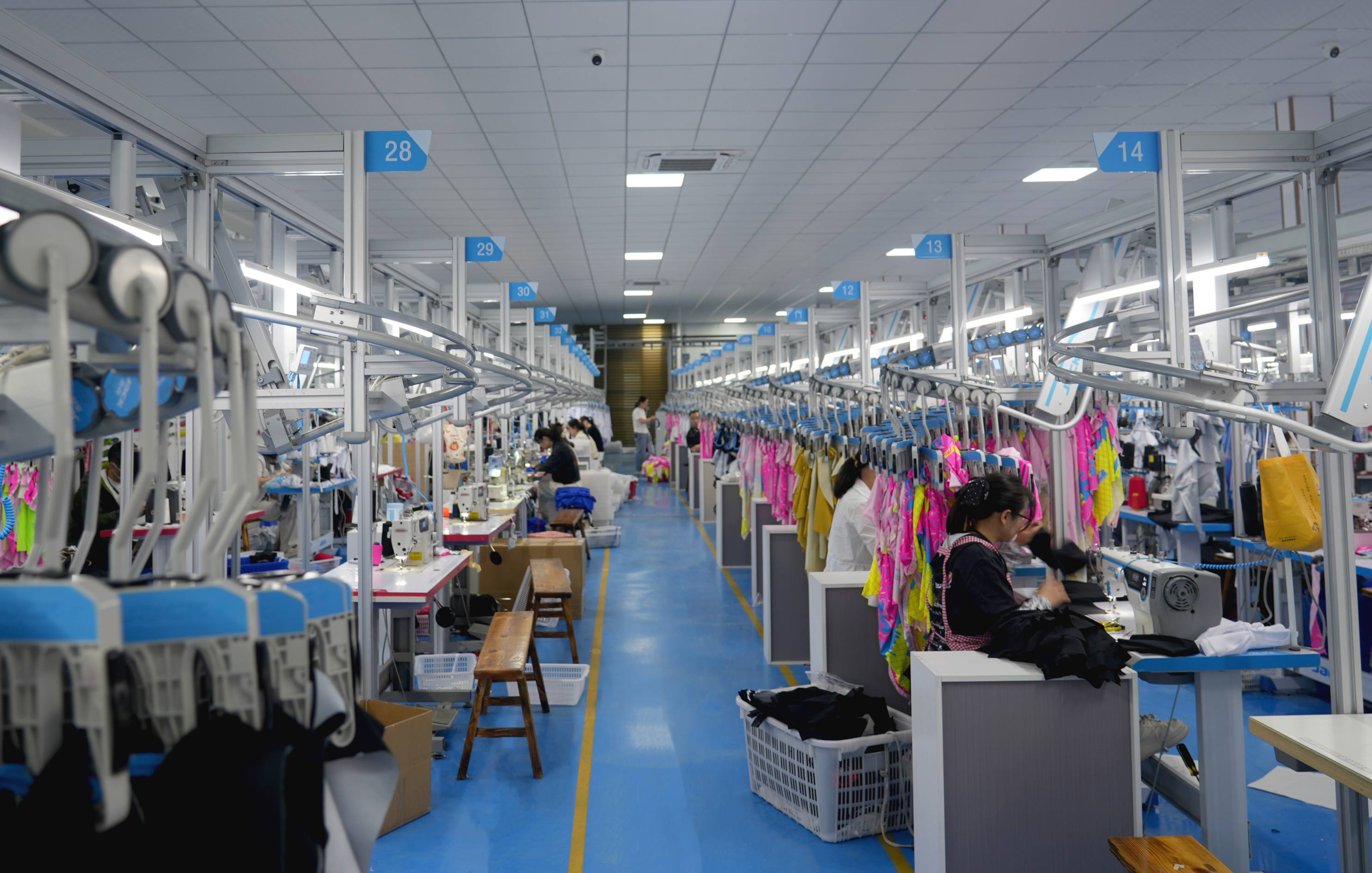
Here at LJVOGUES, we manufacture both period underwear and period swimwear for over 500 global brands. We run hydrostatic pressure tests. We put fabrics through chlorine resistance chambers. We understand, at a materials level, exactly why some products fail in water and others perform flawlessly.
So let us give you the manufacturer's honest answer — and explain the technology that makes all the difference.
The Short Answer: It Depends on What You're Wearing
Regular period underwear is NOT designed for swimming. If you take your everyday period panties into a pool or the ocean, the absorbent core will behave exactly the way it was engineered to: it will absorb liquid. That includes pool water, seawater, or lake water. Within minutes, the gusset becomes saturated with environmental water, loses its capacity to absorb menstrual blood, and may even release trapped fluid back into the water around you.
Period swimwear, on the other hand, is specifically engineered for water use. It uses an entirely different layer architecture — including DWR (Durable Water Repellent) technology — that prevents environmental water from entering while still absorbing menstrual flow from your body.
This is not a minor distinction. It is the difference between a product that works and one that fails at the exact moment you need it most.

Why Regular Period Underwear Fails in Water
To understand why regular period underwear cannot be used for swimming, you need to understand how it is constructed.
Standard period underwear uses hydrophilic (water-loving) absorbent layers — typically a combination of bamboo, cotton, or microfiber — specifically chosen because they draw moisture in and hold it. That is exactly what makes them excellent for everyday wear. The absorbent core is designed to pull menstrual fluid away from your skin and lock it inside the layers.
The problem? These layers do not distinguish between menstrual blood and pool water.
When you submerge regular period underwear in a pool or ocean, here is what happens:
The outer fabric wets out and saturates
The absorbent layers draw in environmental water (chlorinated pool water, saltwater, lake water)
The gusset becomes fully saturated with the wrong liquid
Absorbent capacity for menstrual blood is now at or near zero
Any previously absorbed menstrual fluid may be diluted and released into the surrounding water
The result is a heavy, ineffective, potentially leaking garment — the opposite of what you need when you are swimming.
As one of our manufacturing engineers puts it: "Regular period underwear works on the same principle as a sponge. If you dip a sponge in a bucket of water first, it cannot absorb anything else. Period swimwear is engineered to be the opposite — selectively absorbing only what comes from your body, while repelling everything from outside."
How Period Swimwear Actually Works: The 4-Layer System
Purpose-built period swimwear solves the problem through a fundamentally different layer architecture. At LJVOGUES, our period swimwear is engineered with four distinct layers, each performing a specific function.
Layer 1: Quick-Dry Breathable Mesh (Inner Comfort Layer)
The layer closest to your skin is a lightweight, quick-drying mesh fabric. It is soft enough to be comfortable against sensitive skin during prolonged wear, yet porous enough to allow menstrual fluid to pass through immediately. This layer does not hold fluid — it transfers it to the layer below. Because it dries rapidly, it does not feel wet against your skin even during extended water activities.
Layer 2: Selective Absorption Layer (The Key Innovation)
This is where the engineering complexity lives. The selective absorption layer is designed to absorb menstrual blood — which is a body-temperature fluid emerging from direct skin contact — while resisting environmental water coming from the outside.
The physics behind this: absorbent fibers in this layer respond to the warmth, viscosity, and direction of blood flow from the body. Combined with the waterproof barrier below (Layer 3), which prevents water from entering from the outside, this layer performs its absorption in one direction only. The result is a layer that holds menstrual fluid firmly while the rest of the suit is submerged in water.
Our period swimwear absorbs 30–35ml of menstrual fluid — the equivalent of 3 to 7 tampons — during a single wear session.
Layer 3: Waterproof Barrier
Positioned between the selective absorption layer and the outer fabric, this laminated waterproof barrier performs two critical jobs simultaneously:
Prevents water entry: Pool water, seawater, and lake water cannot penetrate inward toward the absorbent core
Prevents fluid escape: Absorbed menstrual blood cannot leak outward into the water
This barrier is tested to withstand hydrostatic pressure — a standardized test that measures how much water pressure a fabric can resist before leakage occurs. All LJVOGUES period swimwear fabrics pass rigorous hydrostatic head testing (AATCC 127 standard) before they ever reach a finished garment.
Layer 4: DWR-Treated Water-Repellent Outer Fabric
The outermost layer looks and feels identical to premium swimwear fabric — because it is. The key difference is the DWR (Durable Water Repellent) coating applied to the surface.
How DWR works: DWR treatment increases the surface contact angle of the fabric. When water hits a DWR-treated surface, it beads up into rounded droplets rather than spreading flat and soaking in. These bead-shaped droplets roll off the fabric rather than penetrating the fibers. The result is a suit that sheds water efficiently, dries quickly, and never becomes waterlogged or heavy in the water.
DWR also prevents the suit from absorbing chlorinated water, which is important both for comfort and for the longevity of the inner layers.

The Science of Water and Menstrual Flow
Here is something many swimmers do not realize: water pressure naturally slows your menstrual flow while you are submerged.
This is basic fluid dynamics. As explained by Intimina's research team, when your body is submerged in water, the external water pressure pushes against your body from all directions. This counteracts the gravitational force that would normally pull menstrual blood downward and out. Your uterus continues shedding its lining — the process does not stop — but the flow rate exiting your body is significantly reduced while you are in the water.
Moreland OB-GYN Associates confirms: "For some women, the water pressure of a lake or pool can be enough to prevent menstrual flow. However, it's not enough to completely stop it."
Practical implications for period swimwear wearers:
Your period swimwear capacity is used more slowly while you are actively swimming
When you exit the water, normal flow resumes — your swimwear should still be in place for that transition
On heavy flow days, consider pairing period swimwear with a menstrual cup for extended swim sessions
Vigorous activity (coughing, sneezing, sudden movement) can momentarily override water pressure and cause brief flow, which is why your swimwear's absorption capacity still matters
Pool, Ocean, or Lake: Does the Environment Matter?
Swimming Pools
The chlorinated environment of a pool presents specific challenges to any swimwear fabric. Chlorine is a strong oxidizer that degrades elastic fibers and waterproof coatings over time. At LJVOGUES, we test all period swimwear fabrics through chlorine resistance testing — repeated exposure cycles at standard pool chlorine concentrations — to verify that the DWR coating and waterproof barrier maintain their integrity over regular use.
Care tip for pool swimmers: Rinse your period swimwear in cold water before entering the pool. Pre-saturating the outer fabric with clean water reduces how much chlorinated water the fibers absorb during your swim, extending the life of the DWR coating.
Ocean and Saltwater
Saltwater presents a different set of challenges. Salt crystals left in fabric after drying can abrade fibers from the inside and degrade waterproof membranes over time. LJVOGUES period swimwear undergoes saltwater resistance testing to ensure the waterproof barrier and DWR coating hold their performance in marine environments.
Care tip for ocean swimmers: Rinse thoroughly in fresh water immediately after ocean swimming, before the salt has a chance to dry into the fabric.
Lakes and Natural Bodies of Water
Lakes are gentler on swimwear fabrics than pools or oceans. There are no chlorine compounds or salt concentrations to degrade materials. However, natural sediment and organic matter can clog the fine pores of moisture-wicking layers over time. Rinse and wash after each use as usual.
A Real-World Story That Made Our Engineers Double Down on Quality
The need for reliable period swimwear became vivid for us through the words of Dr. Arna Coren, a board-certified OB-GYN, who shared her family's experience in a TODAY.com article published in March 2026.
Dr. Coren's 13-year-old daughter got her first period the week before summer camp — a week forecast to reach nearly 100 degrees with daily swimming activities scheduled. Tampons were not something her daughter felt ready to use.
"She was mortified," Dr. Coren recalled. She ordered a pair of period swimsuit bottoms for same-day delivery.
"'They saved me,'" her daughter said.
This scenario is repeated in families everywhere, every summer. A teenager at their first pool party. A college athlete at swim team practice. A woman on a beach vacation who did not expect her period to arrive early. The stakes are real, and the technology has to work.
This is why our engineering team does not stop at making period swimwear that functions in lab conditions. We test it against the actual variables of real water environments.

How LJVOGUES Tests Period Swimwear
Our manufacturing process incorporates multiple testing protocols before any period swimwear product reaches a brand partner or consumer:
Hydrostatic Pressure Testing (AATCC 127)
Fabric samples are clamped to a testing apparatus and subjected to increasing water pressure. We measure the precise pressure (in centimeters of water head) at which the first droplets penetrate the fabric. This confirms the waterproof barrier's integrity against real-world water pressure.
DWR Performance Testing
Treated outer fabric samples are tested for water bead-up angle and droplet roll-off. We verify that the DWR coating causes water to bead and shed rather than spread and soak, and we test how this performance holds after repeated wash cycles.
Chlorine Resistance Testing
Samples are subjected to repeated chlorine exposure cycles at concentrations matching standard public pool chemistry. We verify that the waterproof membrane and DWR coating maintain functional performance after extended pool use.
Saltwater Immersion Testing
Samples are soaked in saltwater at concentrations matching open ocean salinity, then allowed to dry and re-tested for waterproofing integrity. This simulates the cumulative effects of regular ocean swimming.
Absorption Verification Testing
We verify that the selective absorption layer performs at its rated 30–35ml capacity in controlled tests using simulated menstrual fluid, confirming the "one-way" absorption function operates correctly when the outer layers are wet.
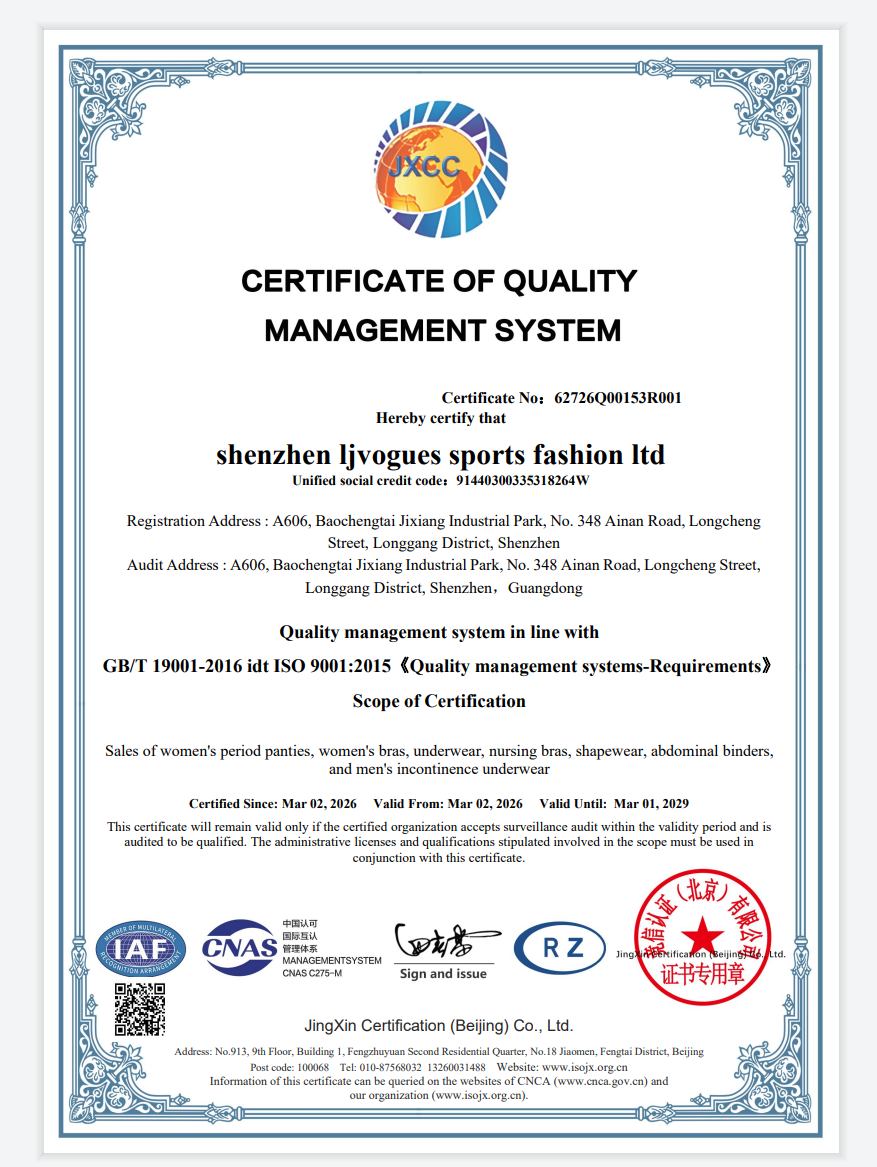
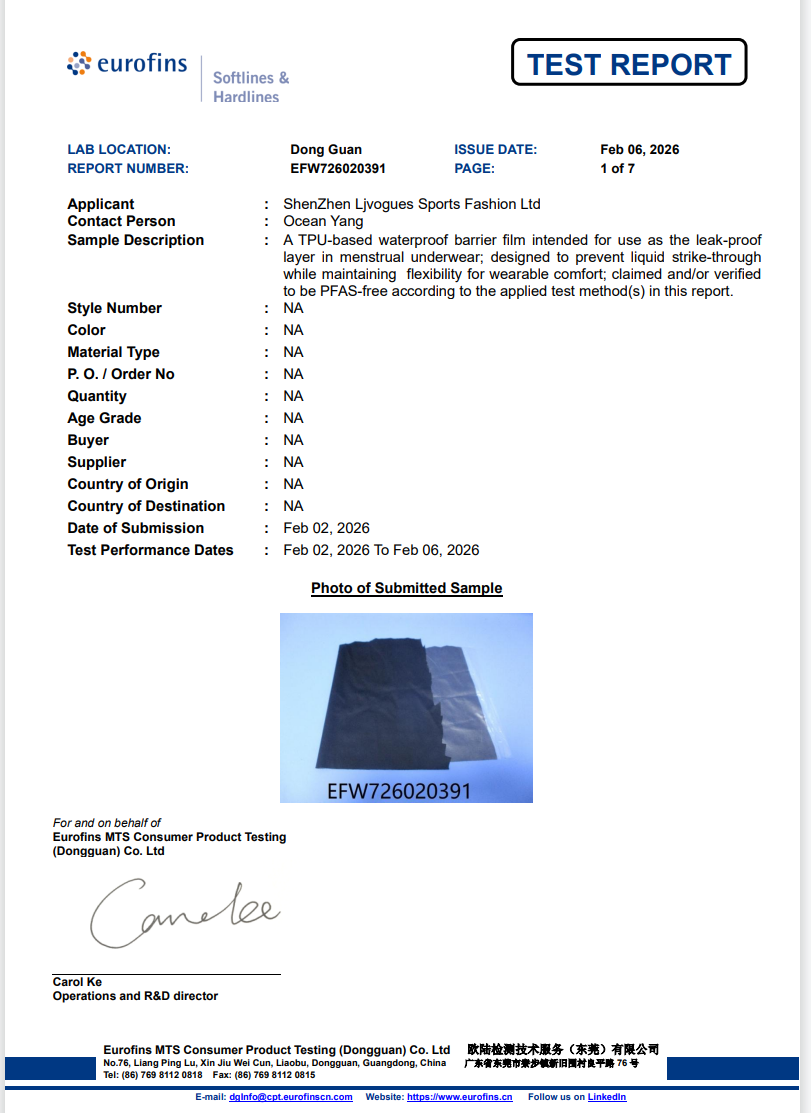
All LJVOGUES products are manufactured under ISO 9001 quality management standards and hold OEKO-TEX® STANDARD 100 certification — confirming that every material in the garment has been tested for harmful substances. Our swimwear fabrics are 100% PFAS-free, addressing the concern that some older DWR treatments used fluorocarbon chemistry. Our current DWR formulations are fluorine-free and independently verified.
Regular Period Underwear vs. Period Swimwear: Side-by-Side Comparison
Feature | Regular Period Underwear | Period Swimwear |
Designed for water use | No | Yes |
Outer fabric | Cotton/modal/bamboo blend | Quick-dry swimwear fabric |
DWR coating | None | Yes — prevents waterlogging |
Water in pool | Absorbed into layers (fails) | Repelled by outer layer |
Absorbent layers | Hydrophilic (water-loving) | Selective — absorbs body fluid only |
Waterproof barrier | Minimal or absent | Full laminated barrier (Layer 3) |
After submersion | Heavy, saturated, ineffective | Maintains full protection capacity |
Drying time | Slow (retains water) | Fast (DWR sheds water) |
Absorption capacity | 15–50ml (varies by style) | 30–35ml |
Chlorine resistance | Not tested | Yes — engineered and tested |
Saltwater resistance | Not tested | Yes — engineered and tested |
Best for | Daily period protection | Pool, beach, water sports |
Who Should Use Period Swimwear
Teens and First-Time Swimmers
For young people who are not yet comfortable with tampons or menstrual cups, period swimwear removes a major barrier to participating in swim activities. As Dr. Coren's story illustrates, first periods do not wait for convenient timing. Having period swimwear available allows teens to participate fully in pool activities, beach trips, and sports without the anxiety of internal product use.
Competitive Swimmers and Athletes
Swim team members and competitive swimmers deal with periods during practice and competition throughout the season. Period swimwear worn as a primary or backup protection — alongside an internal product on heavy flow days — keeps athletes comfortable and focused. LJVOGUES period swimwear is cut for athletic movement, with secure leg-opening fits designed not to shift during vigorous activity.
Pool Party and Beach Vacation Scenarios
For casual swimmers, period swimwear eliminates the need to plan activities around your cycle. Whether you are at a resort pool, a friend's backyard, or a week-long beach vacation, having period swimwear means you can swim on any day of your cycle without extra planning.
Water Parks
Water parks introduce an additional variable: water slides and wave pools create sudden pressure changes and vigorous water movement. The fitted, secure construction of LJVOGUES period swimwear — including our 4-needle 6-thread flatlock stitching — ensures the gusset stays securely in place through dynamic water activities, not just passive swimming.
Anyone Seeking Chemical-Free Protection
For consumers concerned about PFAS exposure from conventional menstrual products, LJVOGUES 100% PFAS-free period swimwear offers a clean, reusable alternative. Each garment replaces hundreds of disposable products over its lifespan, reducing both chemical exposure and environmental waste.
Care Instructions for Period Swimwear Longevity
Proper care significantly extends the life and effectiveness of period swimwear. Our engineering team recommends:
Pre-rinse in cold water before each use — especially for pool swimming, to reduce chlorine absorption
Rinse immediately after swimming in cold, clean fresh water — removes chlorine, salt, and sunscreen before they can degrade the fabric
Hand wash or machine wash on a gentle, cold cycle — hot water can denature the absorbent fibers and degrade the waterproof membrane
Use a gentle, fragrance-free detergent — avoid fabric softeners, which coat the absorbent layers and reduce their capacity
Never use bleach — bleach damages both the DWR coating and the inner layers
Air dry in shade — avoid tumble drying and direct prolonged sun exposure; while UV briefly helps with odor, extended heat exposure degrades DWR
Reactivate DWR if needed — after many washes, if you notice the outer fabric "wetting out" rather than beading water, a brief 20-minute low-heat tumble dry can help revive the DWR coating
Rotate between two pairs during heavy-use periods (swim team season, beach trips) to allow full drying between uses
With proper care, quality period swimwear should maintain functional absorbency and waterproofing for 200+ wash cycles.
Internal Link: Explore LJVOGUES Period Swimwear
Ready to swim with confidence on any day of your cycle? LJVOGUES manufactures period swimwear for B2B partners and direct brands in bikini bottom and one-piece styles, available in XS–4XL (up to 8XL for plus-size). All products carry OEKO-TEX® STANDARD 100 certification and are 100% PFAS-free.
→ View LJVOGUES Period Swimwear Collection
→ Explore Our Full Period Underwear Range
FAQ: Swimming with Period Underwear
Q: Can you swim with regular period underwear in a pool?
A: No. Regular period underwear is not designed for submersion in water. The absorbent layers in standard period underwear are made to attract and hold moisture — including pool water, seawater, or lake water. Once those layers saturate with environmental water, they lose their ability to absorb menstrual blood, and the garment may release previously absorbed fluid. For swimming, you need purpose-built period swimwear with DWR coating and a waterproof barrier layer.
Q: Will period underwear leak in the pool if I wear the swimwear version?
A: Quality period swimwear is specifically engineered to prevent leaking in pool water. The waterproof barrier layer (Layer 3 in LJVOGUES's 4-layer system) blocks water from entering the absorbent core from outside while preventing absorbed menstrual fluid from leaking out. For heavy flow days, pairing period swimwear with a menstrual cup provides additional security during extended swims.
Q: Are period underwear waterproof?
A: Regular period underwear is not waterproof — it uses hydrophilic (water-absorbing) layers specifically chosen to draw in moisture. Period swimwear is a different product that incorporates waterproof barrier layers and DWR (Durable Water Repellent) outer coating, making it suitable for water use. The waterproofing in period swimwear works directionally: it prevents water from entering from outside while allowing the inner layers to absorb fluid from your body.
Q: How much can period swimwear absorb?
A: LJVOGUES period swimwear absorbs 30–35ml of menstrual fluid — the equivalent of 3 to 7 tampons. This makes it suitable for light-to-moderate flow days when worn as standalone protection, and for any flow level when paired with a menstrual cup or tampon as backup. Keep in mind that water pressure while swimming temporarily slows menstrual flow, which means your swimwear's capacity is not drawn down as quickly while you are in the water.
Q: Does your period stop when you swim?
A: Not exactly. Water pressure — particularly the hydrostatic pressure of being submerged — temporarily counteracts gravity and slows the outward flow of menstrual blood. Your uterus continues shedding its lining, but less blood exits your body while you are submerged. As Healthline notes, "Your period doesn't really stop while you're in the water. Instead, you might be experiencing a reduction in flow due to the water pressure." This is why swimmers sometimes feel like their period has stopped — but flow resumes when they exit the water, making consistent protection essential.
Q: Can I swim with period swimwear in the ocean?
A: Yes. LJVOGUES period swimwear undergoes saltwater resistance testing to confirm that the waterproof membrane and DWR coating maintain performance in marine environments. Rinse the garment in fresh water immediately after ocean swimming to prevent salt crystals from degrading the fabric over time.
Q: What period underwear can you swim in?
A: Only period underwear specifically labeled and engineered as "period swimwear" or "period-proof swimwear" is appropriate for swimming. These products are constructed with DWR-treated outer fabric, a waterproof barrier layer, and a selective absorption gusset — none of which are present in standard period underwear. Look for products that explicitly describe chlorine resistance testing, hydrostatic pressure testing, and DWR coating in their technical specifications. All LJVOGUES period swimwear meets these criteria.
Q: How long can I wear period swimwear while swimming?
A: With an absorption capacity of 30–35ml (LJVOGUES specification), period swimwear can typically be worn for a full swim session on light-to-moderate flow days. Most swimmers comfortably wear one pair for 4–6 hours. On heavier flow days, plan to change your swimwear after your main swim, or pair it with a menstrual cup for extended water time (such as an all-day beach trip or a multi-session swim meet).
Q: Is period swimwear safe for teens?
A: Yes. Period swimwear is one of the most teen-friendly period products available, precisely because it requires no insertion and no applicator. It is worn exactly like normal swimwear. Dr. Arna Coren, a board-certified OB-GYN, described her daughter's experience in a TODAY.com article (March 2026): ordered just before summer camp when her daughter was not yet ready for tampons, the period swimwear proved to be a confidence-saving solution. LJVOGUES OEKO-TEX®-certified, 100% PFAS-free period swimwear is safe for all ages.

LJVOGUES is a premier OEM/ODM manufacturer of period-proof underwear and swimwear, certified to OEKO-TEX® STANDARD 100, BSCI, ISO 9001, and ISO 14001 standards. All products are 100% PFAS-free, independently tested, and manufactured under AQL 2.5 quality control. Learn more at www.ljvogues.com.