



Table of Contents
For decades, the menstrual care aisle offered only two mainstream choices: pads or tampons. Today, advancements in textile technology have introduced a third, rapidly growing category—leak-proof apparel.
As consumers and new brands alike evaluate this shift, the most common question arises: How does period underwear compare to traditional menstrual products?
To make an informed decision, we need to look beyond the marketing and break down the core metrics that matter most: comfort, cost, and sustainability. Here is the ultimate comparison guide.
1. Comfort and Performance: The Daily Experience
The biggest hurdle for first-time users is trusting that a piece of fabric can do the job of a thick disposable product. However, premium period underwear relies on advanced multi-layer engineering (moisture-wicking, absorbent, and leak-proof layers) rather than bulky plastics.
Period Underwear vs Pads
The Pad Experience: Traditional pads sit on top of the underwear. They are notorious for shifting during movement, bunching up, and creating a "diaper-like" feel. Because they often use plastic backings, they trap heat and moisture, which can lead to chafing, odor, and skin irritation.
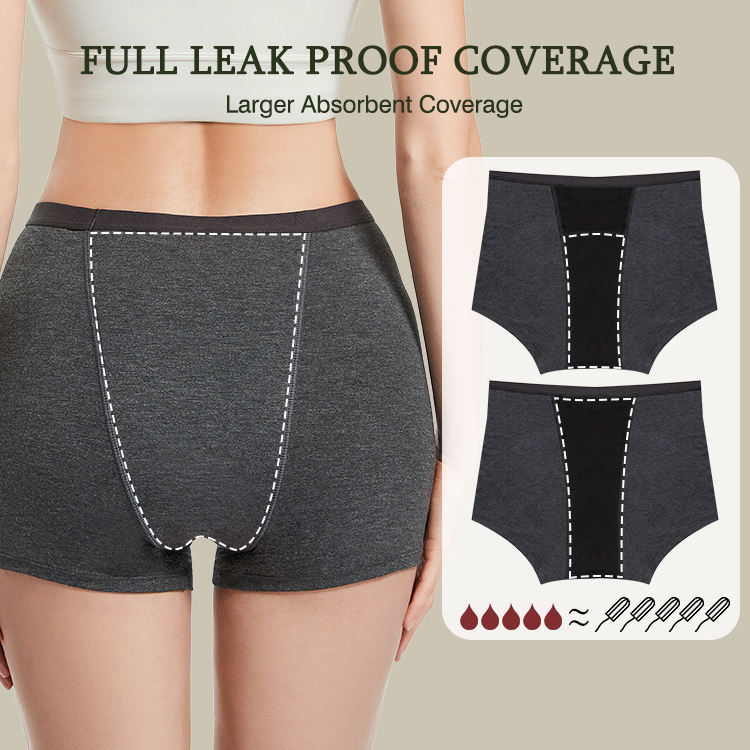
The Underwear Experience: Period underwear is designed to look and feel exactly like your regular panties. The absorbent gusset is integrated directly into the garment. There is no shifting, no adhesive wings pulling at your skin, and high-quality moisture-wicking inner layers pull fluid away instantly, keeping you feeling dry and breathable all day.
Period Underwear vs Tampons
The Tampon Experience: Tampons are internal, which eliminates the external bulk of pads. However, they can cause vaginal dryness, micro-tears, and sometimes worsen menstrual cramps. There is also the lingering anxiety of Toxic Shock Syndrome (TSS) and the strict need to change them every 4 to 8 hours.
The Underwear Experience: Period underwear is completely non-invasive. You simply put them on and go about your day. For those who find insertion uncomfortable—including teens, postpartum mothers, or those with pelvic floor sensitivities—period underwear offers a stress-free, highly comfortable alternative.
2. The Financial Breakdown: Upfront Price vs. Long-Term Value
At first glance, traditional products seem cheaper. But when we look at the math over time, the narrative flips completely.
The Cost of Disposables: The average menstruator spends roughly $5 to $15 per month on pads, tampons, and pantyliners. Over a year, that is $60 to $180. Over a lifetime, it can exceed $5,000.
The Cost of Period Underwear: A high-quality pair of period underwear typically costs between $15 and $35. To build a comfortable rotation for a full cycle, you might need 5 to 7 pairs, resulting in an upfront investment of $100 to $200.
The ROI (Return on Investment): Premium period underwear, when cared for properly (cold wash, hang dry), lasts for 2 to 3 years. The break-even point for your investment is usually reached within 6 to 8 months. After that, every month is essentially free, saving hundreds of dollars over the garment's lifespan.
-
3. Sustainability: Landfill Waste vs. Reusable Lifecycle
The environmental impact of traditional menstrual products is staggering, and it is the primary reason many consumers are making the switch.
The Plastic Problem: The average person will use between 10,000 and 15,000 disposable menstrual products in their lifetime. Most traditional pads are made of up to 90% plastic, and tampons often come with plastic applicators and synthetic wrappers. These products take 500 to 800 years to decompose in a landfill.
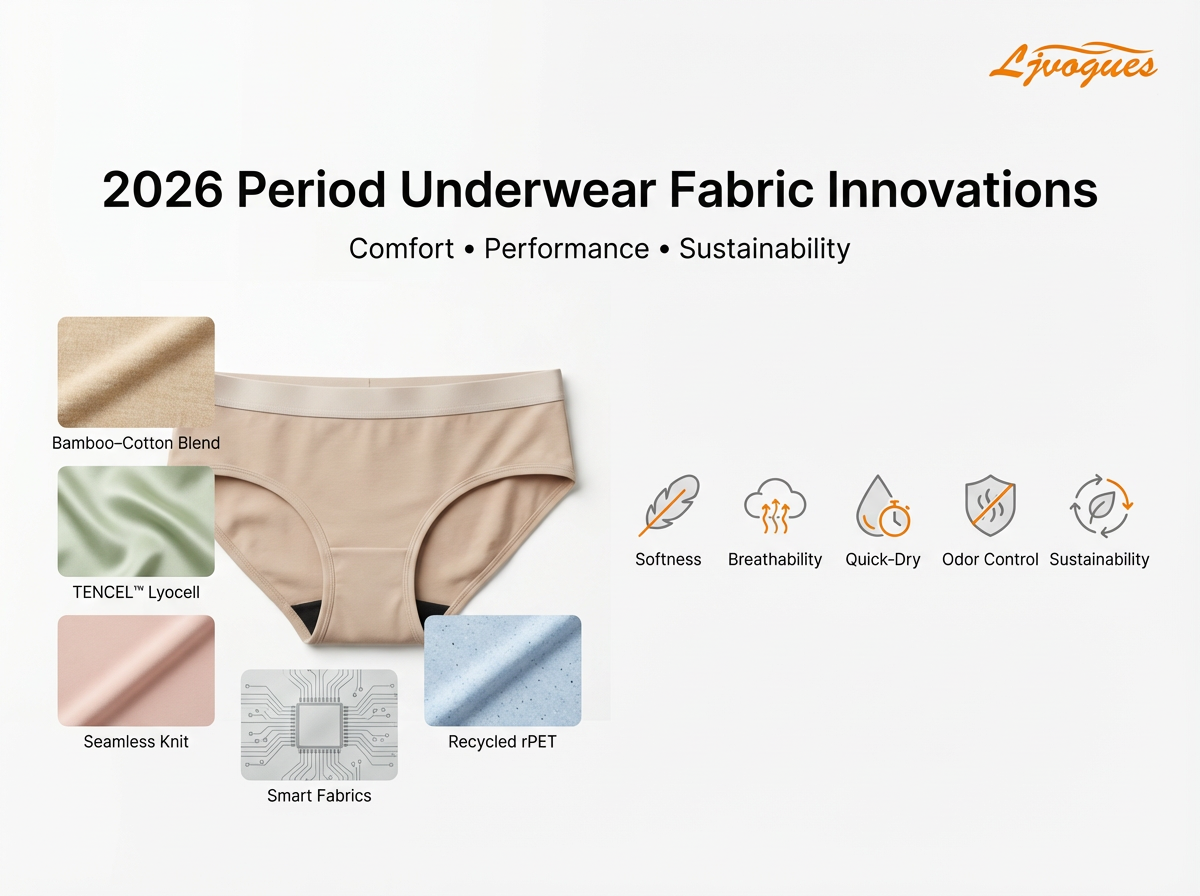
The Eco-Friendly Alternative: Period underwear is washable and reusable. By switching entirely to period underwear, a single person can divert thousands of single-use plastics from landfills and oceans. Furthermore, top-tier manufacturers are now prioritizing eco-friendly textiles, such as organic cotton (GOTS certified), bamboo fibers, and recycled nylon, further reducing the carbon footprint of production.
-
4. Health and Safety Considerations
When evaluating period underwear vs tampons or pads, health is a critical factor.
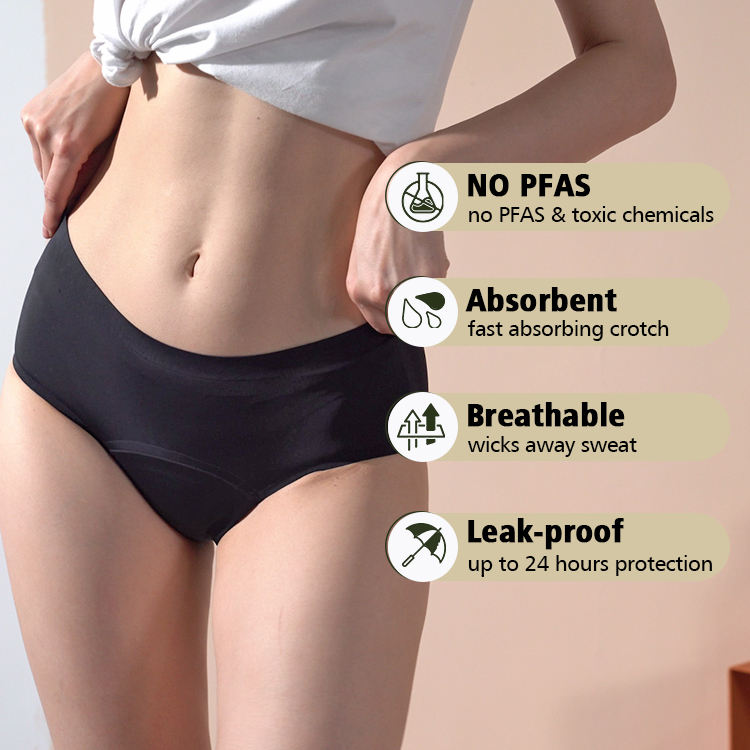
Chemicals in Disposables: Many traditional pads and tampons have been found to contain traces of bleach, dioxins, and artificial fragrances, which can disrupt the natural pH balance of the body.
The PFAS Factor in Underwear: When choosing period underwear, it is crucial to select brands that guarantee their products are PFAS-free (free from harmful "forever chemicals" historically used for waterproofing). As an industry leader, Ljvogues guarantees 100% PFAS-free production and holds certifications like OEKO-TEX® Standard 100, ensuring the textiles are rigorously tested for harmful substances.
The Verdict: Which is Better?
While pads and tampons offer the convenience of "use and toss," they fall short in long-term comfort, financial savings, and environmental responsibility.
Period underwear represents an upgrade in menstrual wellness. It requires a slight shift in routine (washing instead of throwing away) and a higher initial investment. However, for those seeking a breathable, leak-proof, cost-effective, and earth-friendly solution, period underwear is the clear winner.
Are you a brand looking to enter the sustainable menstrual care market?
As a premium OEM/ODM manufacturer, Ljvogues specializes in engineering high-performance, PFAS-free period underwear. Contact us today to learn how we can help you build a custom product line that outperforms traditional disposables in every category.