



Table of Contents
The question we get asked most often — from retail partners, health-conscious shoppers, and parents of teens alike — is some version of: are period underwear actually safe?
It is a fair question. Over the past several years, headlines about "forever chemicals" in period products have alarmed a lot of people, and not without reason. As a manufacturer that has spent 20 years engineering textile solutions for period care, we believe you deserve a straight answer — not a marketing pamphlet.
This article lays out what the science actually says, what the lawsuits were really about, what certifications genuinely mean, and how to verify that the period underwear you choose is free of harmful chemicals. We will not gloss over the industry's problems. We will tell you exactly where LJVOGUES stands and why.
The Elephant in the Room: PFAS in Period Underwear
Before we answer "are period underwear safe," we need to address the chemicals that caused the concern in the first place.
What Are PFAS?
PFAS stands for per- and polyfluoroalkyl substances — a family of more than 9,000 synthetic chemicals that have been used in industrial and consumer products since the 1940s. You will find them in nonstick cookware, food packaging, firefighting foams, stain-resistant carpets, and — as the industry discovered — some period underwear.
They are nicknamed "forever chemicals" for a simple reason: the carbon-fluorine bond at their core is one of the strongest in chemistry. PFAS do not break down in the environment. They accumulate in soil, water, wildlife, and human tissue. The U.S. EPA has linked PFAS exposure to a range of health concerns, including:
Decreased fertility
Increased risk of certain cancers (kidney, testicular, liver)
Hormonal disruption
High cholesterol
Developmental delays in children
Suppressed immune response (including reduced vaccine efficacy)
Why would PFAS appear in period underwear at all? In textile manufacturing, fluoropolymer-based treatments are sometimes applied to fabric to create moisture-wicking, stain-resistant, or waterproof properties. If a supplier uses these finishes without disclosure — and many do — a finished garment can contain PFAS even when the brand never intentionally added them.
The Thinx Class-Action Lawsuit (2021–2023): What Actually Happened
In January 2020, journalist Jessian Choy reported in Sierra Magazine that independent testing by physicist Dr. Graham Peaslee of the University of Notre Dame had detected PFAS in Thinx period underwear. The crotch panel of one pair registered 3,264 parts per million of fluorine; the teen version showed 2,053 ppm — levels consistent with intentional use of fluorinated treatments, not mere background contamination.
Thinx had marketed its products as "free of harmful chemicals," "sustainable," and "nontoxic." Following the Sierra Club article, consumers filed a class-action lawsuit in May 2022 alleging fraud and deceptive marketing practices.
In January 2023, Thinx settled the lawsuit for up to $5 million without admitting wrongdoing. As part of the settlement, the company agreed to:
Take measures to ensure PFAS are not intentionally added at any stage of production
Adjust marketing language
Disclose the use of antimicrobial treatments
Require suppliers to attest that PFAS are not intentionally added
A similar class-action followed against Knix, settling for more than $1.4 million in late 2023.
What the lawsuit was — and was not: The plaintiffs' attorney was clear that the case was about deceptive marketing, not proven personal injury. "This case is centered on marketing concerns, and did not allege any claims related to personal injury resulting from the product," she told NPR. That distinction matters: the lawsuit established that consumers were misled about what was in the product, not that anyone was clinically harmed.
The Mamavation/Environmental Health News Study: 65% Tested Positive
Following the Thinx revelations, eco-wellness investigator Leah Segedie of Mamavation commissioned independent lab testing on 17 period underwear products from 14 brands. Results were published in partnership with Environmental Health News and widely reported by outlets including TIME in 2023.
The findings were sobering: 65% of the period underwear tested showed fluorine levels indicative of PFAS contamination in the crotch panel. More troubling: 13 of the 18 products in a broader dataset that claimed to be "organic," "natural," or "non-toxic" still tested positive for PFAS markers.
A 2023 New York Times investigation (conducted with Dr. Peaslee's Notre Dame lab) tested 44 period and incontinence products and found that two of 10 pairs of period underwear showed fluorine levels suggesting PFAS-treated material had been intentionally added — including one pair from a brand that had specifically told the Times its underwear was "free of PFOA and PFOS." That pair registered 23,864 ppm of fluorine in a single sample.
The core problem these studies exposed was not that one bad actor had cut corners. It was a supply chain transparency failure across the industry. Brands were relying on supplier claims rather than independent verification of finished products.
LJVOGUES' Position: 100% PFAS-Free, Independently Verified
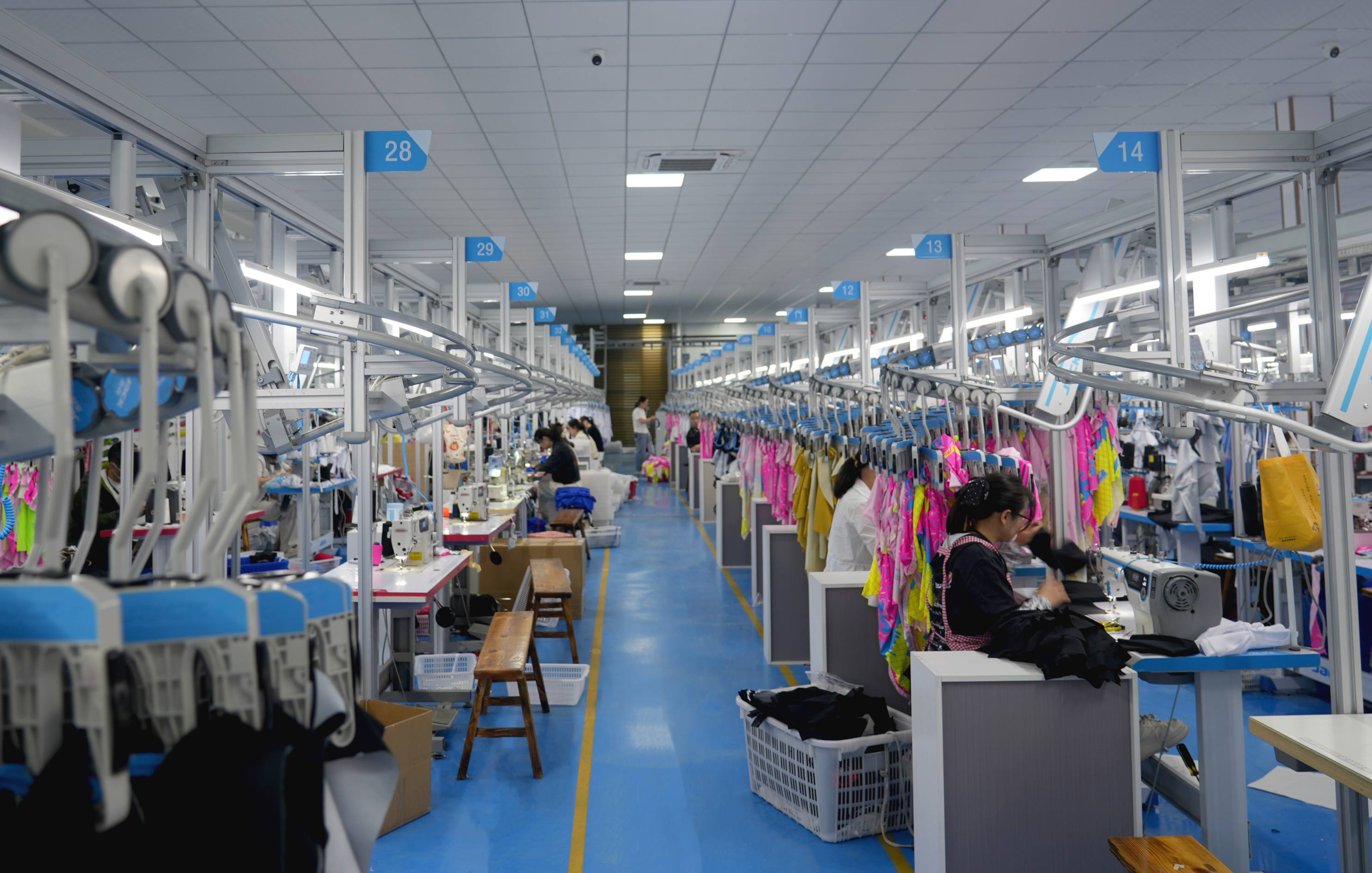
As a manufacturer — not a brand that outsources its production — we control the entire supply chain from fabric sourcing to finished garment. That difference is significant.
We source every fabric component from audited suppliers, and our engineering team performs verification at the material level before any fabric enters our production line. We do not rely on a supplier signing a form and taking their word for it. We test.
Here is what that means in practice:
OEKO-TEX® STANDARD 100 Certification
OEKO-TEX® STANDARD 100 is the gold standard for textile chemical safety. Every component of a certified product — every thread, dye, finishing chemical, and accessory — is tested against a list of more than 100 harmful substances. That list explicitly includes:
Per- and polyfluorinated substances (PFAS/PFCs) — banned outright under OEKO-TEX testing criteria
Heavy metals including lead and cadmium
Pesticide residues
Formaldehyde
Phthalates
Azo colorants that can release carcinogenic aromatic amines
All substances on the ECHA SVHC (Substances of Very High Concern) candidate list
OEKO-TEX also verifies compliance with REACH Annex XIV and XVII — the EU's comprehensive chemical management regulation — and U.S. CPSIA limits.
All LJVOGUES period underwear is certified to OEKO-TEX® STANDARD 100. This is not a self-declaration. It requires physical sample testing at an accredited OEKO-TEX laboratory, a documented audit of our manufacturing facility, and annual renewal.
REACH EC 1907/2006 Compliance
The EU's REACH regulation (Registration, Evaluation, Authorisation and Restriction of Chemicals) is one of the most rigorous chemical safety frameworks in the world. Compliance with REACH's Annex XVII restricts the use of dangerous substances including PFAS categories, heavy metals, and hundreds of other hazardous compounds in textile articles intended for prolonged skin contact. Our products are manufactured to full REACH compliance, which means they meet the most demanding market access requirements globally.
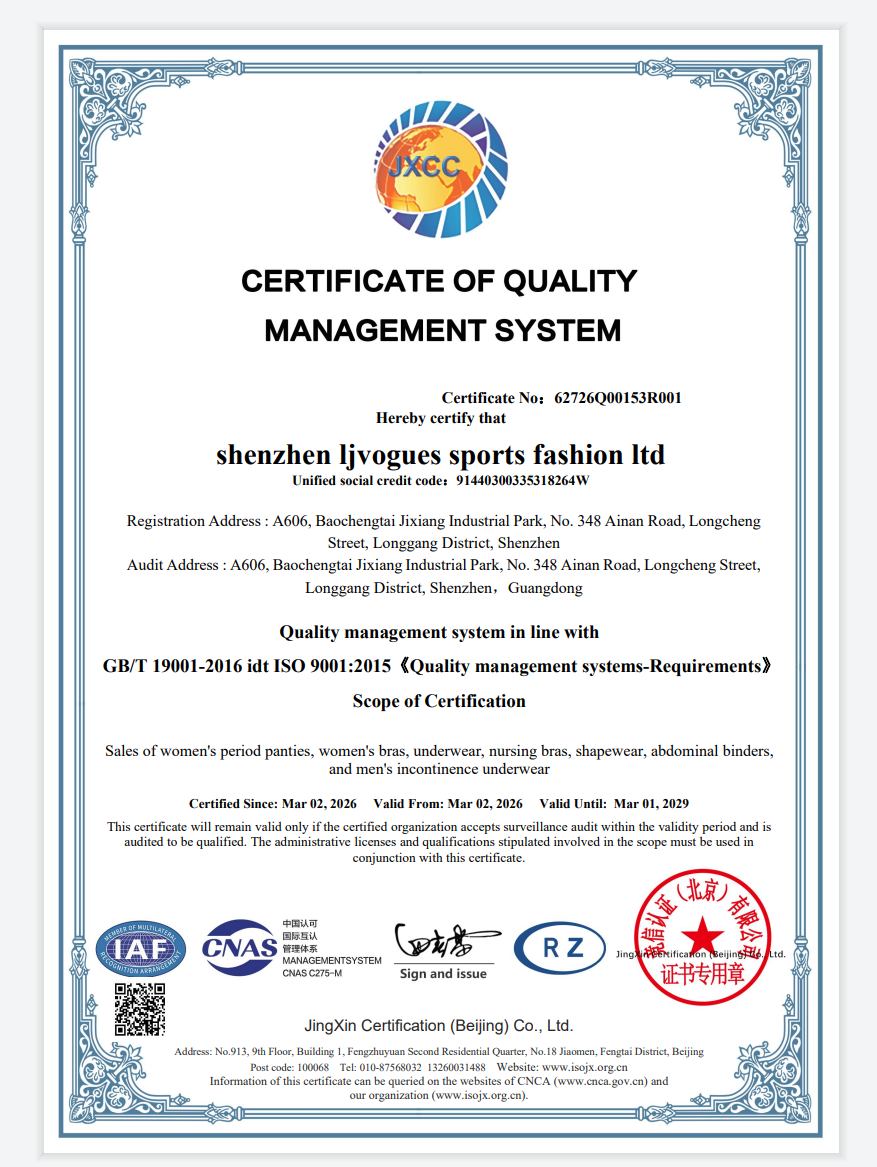
FDA 21 CFR Compliance
In the United States, period underwear is regulated as a Class I medical device under FDA oversight. Unlike tampons, which require premarket review, period underwear and reusable pads fall under an exemption from premarket notification — meaning the FDA does not pre-approve individual products before they are sold. However, manufacturers must register their facilities and comply with 21 CFR general quality system regulations. Our FDA 21 CFR compliance ensures our manufacturing processes, materials, and quality controls meet U.S. federal requirements.
It is worth being transparent about what FDA regulation does and does not cover here: the agency does not currently mandate PFAS testing or labeling for menstrual products. That regulatory gap is part of why independent certifications like OEKO-TEX matter so much.
Third-Party Lab Testing with Full Documentation
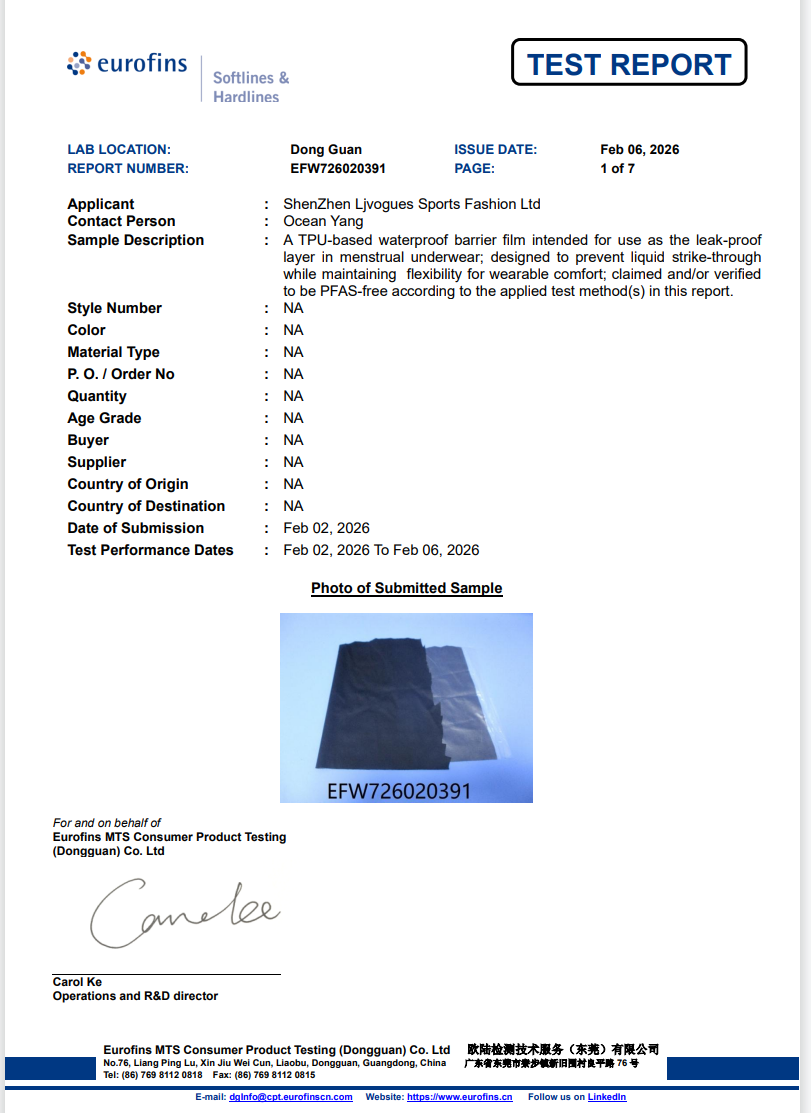
Beyond certifications, we conduct third-party chemical testing on finished products at accredited external laboratories. Our reports cover:
Fluorine screening (PFAS indicator testing)
Heavy metals (lead, cadmium, chromium, mercury)
Phthalates
Formaldehyde
pH and colorfastness
Antimicrobial additive disclosure
Brand partners working with LJVOGUES receive access to these test reports as part of our standard documentation package. We do not ask you to take our word for it.
What Makes Period Underwear Sanitary?
Beyond chemical safety, many people ask: are period underwear sanitary to use? This is a question about hygiene rather than manufacturing chemistry, and it has a clear, evidence-based answer.
The American College of Obstetricians and Gynecologists (ACOG) says it is OK to use period underwear. When used correctly — changed regularly, washed properly, and stored dry — period underwear is a hygienic menstrual product.
According to Kelly Johnson-Arbor, MD, a Medical Toxicologist: "Period underwear is mostly safe because it's worn for a short period of time."
And as reported by TODAY.com in March 2026, citing Poison Control: "PFAS and other industrial chemicals have been detected not only in period underwear but in some disposable menstrual products as well, and there is no definitive evidence indicating that wearing period underwear is harmful to human health."
How LJVOGUES Period Underwear Is Engineered for Hygiene
Our 4-Layer Leak-Proof Protection system treats hygiene as a core engineering requirement:
Inner moisture-wicking layer: Draws fluid away from skin quickly, reducing bacterial contact with the vulva. We use certified bamboo and cotton fibers in this layer — breathable and dermatologically gentle.
Absorbent core: Locks fluid away from the surface, preventing the damp environment bacteria need to proliferate.
Leak-barrier layer: Stops fluid migration to outer fabric via PFAS-free laminate construction, independently verified.
Outer fabric layer: Soft, breathable, and designed for all-day comfort.
Where antimicrobial properties are included (such as in our bamboo fiber styles), we rely on naturally occurring antimicrobial properties inherent to the bamboo fiber — not added silver ions or chemical treatments requiring separate safety evaluation.

The 8–12 Hour Rule
Medical guidance from both GoodRx and New Jersey Department of Health recommends changing period underwear every 8 to 12 hours, even for high-absorbency styles. This is not unique to period underwear: the CDC advises changing all menstrual products regularly because trapped moisture creates an environment where bacteria and fungi can grow.
Proper hygiene practices:
Change every 8–12 hours (more frequently on heavy flow days)
Rinse in cold water immediately after removal
Machine wash on a gentle, cold cycle — never hot, which can degrade the absorbent layers
Air dry rather than tumble dry to preserve the leak-barrier integrity
Do not use fabric softener, which can clog absorbent fibers
Why Period Underwear Might Smell (And How to Prevent It)
Odor is one of the most common concerns about period underwear. Understanding why it happens makes it easy to prevent.
The cause: Menstrual blood and vaginal discharge are not inherently odorous when fresh. Smell develops when bacteria metabolize the blood proteins and sugars in the fabric. This happens when:
The underwear is worn for too long (beyond the 8–12 hour window)
The underwear is rinsed and left damp before washing
It is washed in hot water (which can "set" blood proteins into fiber)
Fabric softener residue has built up and reduced absorbency, leaving fluid sitting at the surface longer
Prevention:
Rinse in cold water immediately after removal to flush out the bulk of fluid before bacteria have time to multiply significantly.
Wash promptly — do not let rinsed underwear sit wet in a laundry bag for days.
Use cold or warm water only during machine washing. Hot water causes protein coagulation in the fabric fiber.
Skip the fabric softener and use a small amount of gentle, fragrance-free detergent.
Air dry thoroughly — incomplete drying is a primary cause of mildew odor in any textile.
If odor persists despite proper care, a 15-minute soak in a mixture of cold water and white vinegar before washing can help neutralize bacterial buildup without damaging the fabric structure.
The Regulatory Landscape: What the Law Currently Requires
Understanding the regulatory environment helps you understand why certification matters more than label claims.
Federal (FDA): The FDA regulates period underwear as a Class I medical device but does not require premarket approval. The agency does not mandate PFAS testing or ingredient disclosure for menstrual products at the federal level — a gap flagged by consumer advocates and congressional committees alike. In 2025, the FDA issued updated draft guidance on menstrual product testing and labeling, but chemical disclosure for components remains voluntary federally.
State-Level Progress:
New York banned intentionally added PFAS in all apparel effective January 1, 2025. A December 2024 law further bans PFAS, heavy metals, formaldehyde, parabens, and phthalates in menstrual products specifically, effective December 2026.
California prohibits textiles containing regulated PFAS (intentionally added, or present at or above 100 ppm total organic fluorine) effective January 2025, tightening to 50 ppm by 2027.
Colorado, Minnesota, Rhode Island, New Hampshire, and Connecticut have each enacted PFAS-only bans for menstrual products.
The regulatory trajectory is clear. Manufacturers who have not already eliminated PFAS from their supply chains face growing legal and market access risk.

How to Verify Your Period Underwear Is Truly PFAS-Free
The Mamavation study found that 13 of 18 products claiming to be "organic" or "non-toxic" still contained PFAS markers. Label claims alone are not enough. Here is a practical checklist for evaluating any brand's safety claims:
Buyer Safety Verification Checklist
Verification Step | What to Look For | Red Flag |
Independent Certification | OEKO-TEX® STANDARD 100, GOTS, or equivalent third-party certification with a verifiable certificate number | "We don't use PFAS" with no certification to back it |
Scope of PFAS Testing | Tests covering the entire PFAS category (not just PFOA and PFOS, which are just two of 9,000+ PFAS) | Claims only PFOA-free or PFOS-free |
Third-Party Lab Results | Published test results from accredited labs (Galbraith, Intertek, SGS, Bureau Veritas, etc.) with full sample documentation | Test results unavailable or only internal testing cited |
Supply Chain Transparency | Brand can name fabric suppliers and confirm testing at material level, not just finished product | No information on where materials are sourced |
Waterproofing Method | Non-fluorinated alternatives (polyurethane laminate/PUL, TPU) rather than DWR fluorocarbon finishes | DWR treatment without PFAS-free specification |
Certifications Current | Certificate number is verifiable on the certification body's website (e.g., OEKO-TEX® label check tool) | Expired or unverifiable certificate numbers |
Antimicrobial Disclosure | Clear statement of what antimicrobial technology is used (silver ions, bamboo fiber, copper, etc.) | "Antimicrobial protection" with no ingredient disclosure |
Regulatory Compliance | REACH compliance for EU; CPSIA compliance for U.S. children's products | No mention of regulatory standards |
When evaluating LJVOGUES-manufactured products or products from our brand partners, all of the above documentation is available upon request. Our OEKO-TEX® STANDARD 100 certificate numbers can be verified directly through the OEKO-TEX® Label Check tool.
Our Perspective as a Manufacturer: Why This Matters More Than Marketing
In 20 years of manufacturing period care products, our engineering team has watched the PFAS problem develop from a supply chain transparency failure into an industry-wide legal and regulatory crisis.
Many period underwear brands are marketing companies that outsource manufacturing across multiple tiers of subcontractors. A brand might genuinely believe its product is PFAS-free because a direct supplier signed a form saying so — but if that supplier's fabric came from a finishing mill that routinely applies fluorocarbon DWR treatments for other clients, no one may know until independent testing uncovers the contamination.
As a vertically integrated manufacturer, LJVOGUES sits at the intersection of design, materials sourcing, and production. We are the factory. Our engineers select every fabric. Our quality team tests every material. When we certify a product as PFAS-free, that declaration is backed by documented test results at the material level and the finished-product level — not a supplier attestation form.
Our OEKO-TEX® STANDARD 100 certification covers our entire manufacturing operation — not just a single style or season — and is renewed annually through re-testing and re-inspection.

Internal Link: Shop PFAS-Free Period Underwear
All period underwear manufactured by LJVOGUES — from our bamboo period panties to our teen period underwear and period swimwear — are manufactured to OEKO-TEX® STANDARD 100 and independently verified PFAS-free. Full certification documentation is available for brand partners.
FAQ: Are Period Underwear Safe?
Q: Are period underwear safe to use?
A: Yes, when made by a certified, transparent manufacturer and used correctly. The American College of Obstetricians and Gynecologists (ACOG) says it is acceptable to use period underwear. Medical toxicologist Dr. Kelly Johnson-Arbor notes that "period underwear is mostly safe because it's worn for a short period of time." The key variables are the materials used in manufacturing and proper hygiene practices (changing every 8–12 hours and washing promptly).
Q: Do all period underwear contain PFAS?
A: No — but a significant portion of the market did, particularly before the lawsuits and regulatory changes that began in 2022–2023. A Mamavation investigation found that 65% of period underwear products tested showed PFAS markers. However, many certified brands and manufacturers — including LJVOGUES — produce verifiably PFAS-free products backed by third-party laboratory testing and OEKO-TEX® STANDARD 100 certification. Always look for documented third-party certification rather than self-declared claims.
Q: Which period underwear has PFAS?
A: The most widely documented case is Thinx, which settled a class-action lawsuit for up to $5 million in January 2023 after independent testing found PFAS in its products. Knix settled a similar lawsuit for over $1.4 million in late 2023. The Mamavation study identified 65% of 17 tested products (from 14 brands) showing fluorine contamination. We do not publish a comprehensive list of currently non-compliant brands here because testing data changes and brands are reformulating — but the verification checklist above will help you evaluate any product independently.
Q: What period underwear is PFAS-free?
A: Look for period underwear with verifiable OEKO-TEX® STANDARD 100 certification (confirm the certificate number at oeko-tex.com), published third-party lab test results covering the full PFAS category (not just PFOA/PFOS), and clear disclosure of the waterproofing technology used (polyurethane laminate or TPU rather than fluorocarbon DWR). LJVOGUES-manufactured products meet all of these criteria. Among retail brands, those with published Intertek, SGS, or Galbraith Labs test reports covering full PFAS panels (not just individual compounds) are the most verifiable.

Q: Are period underwear sanitary?
A: Yes, when changed regularly. Medical guidance recommends changing period underwear every 8–12 hours, regardless of absorbency level. Rinse in cold water immediately after removal, then machine wash on a gentle cold cycle without fabric softener. The multi-layer construction of quality period underwear draws fluid away from skin into an absorbent core, reducing direct moisture contact with the skin compared to traditional pads.
Q: Why does my period underwear smell?
A: Odor in period underwear is caused by bacterial breakdown of blood proteins and sugars in the fabric — not by the underwear itself being inherently smelly. It is almost always preventable. The primary causes are: wearing beyond the 8–12 hour recommended change window; rinsing then leaving the underwear damp for an extended period before washing; washing in hot water (which sets blood proteins into fiber); and fabric softener buildup reducing absorbency. Cold-water rinse immediately after removal, prompt cold-water machine washing, and air drying eliminate the conditions bacteria need to produce odor.
Q: Are period underwear bad for you?
A: Period underwear made with certified PFAS-free materials, worn for appropriate durations, and washed correctly are not bad for you. As Poison Control states, there is currently "no definitive evidence indicating that wearing period underwear is harmful to human health." The concern arises with products that contain PFAS — and as the industry data shows, a meaningful portion of the market has had this problem. Choosing certified, tested products from transparent manufacturers addresses the primary risk.
Q: Does LJVOGUES period underwear contain harmful chemicals?
A: No. LJVOGUES period underwear is 100% PFAS-free, lead-free, and phthalate-free. This is verified through OEKO-TEX® STANDARD 100 certification (which requires independent physical testing of all components, not self-declaration), REACH EC 1907/2006 compliance, FDA 21 CFR compliance, and third-party lab testing of finished products. Full documentation is available to brand partners and is renewed annually.
The Bottom Line
The period underwear industry has a real PFAS problem — one that was exposed by independent scientists, confirmed by class-action lawsuits, and is now being addressed by a wave of state legislation. That history is worth knowing.
It does not mean period underwear as a category is unsafe. It means that the manufacturing quality and transparency of the specific product you choose matters enormously. A product with OEKO-TEX® STANDARD 100 certification, verified by a published certificate number, and backed by full-panel third-party PFAS testing is a fundamentally different product from one with a self-declared "chemical-free" claim on its packaging.
As a manufacturer, our job is to make the former, and to make it easier for brands and consumers to verify the difference.
Sources:
NPR — Thinx Lawsuit Settlement (January 2023): https://www.npr.org/2023/01/19/1150023002/thinx-period-underwear-lawsuit-settlement
TIME — PFAS in Period Products (February 2023): https://time.com/6254060/pfas-period-chemicals-underwear-tampons/
New York Times / Wirecutter — PFAS Testing in 44 Menstrual Products (August 2023): https://www.nytimes.com/wirecutter/blog/forever-chemicals-in-period-incontinence-products/
GoodRx — Is Period Underwear Safe and Sanitary? (February 2024): https://www.goodrx.com/health-topic/gynecology/period-underwear-safe
TODAY.com — Are Period Underwear Safe for Teens? (March 2026): https://www.today.com/parents/teens/what-are-period-underwear-are-they-safe-rcna261691
Poison Control — Is Period Underwear Safe? (January 2023): https://www.poison.org/articles/is-period-underwear-safe-to-use
OEKO-TEX® STANDARD 100: https://www.oeko-tex.com/en/our-standards/oeko-tex-standard-100/
NY State PFAS in Apparel Law — NYSDEC: https://dec.ny.gov/environmental-protection/help-for-businesses/pfas-in-apparel-law
New York Menstrual Product Chemical Ban (Signed December 2024): https://www.exponent.com/article/ny-state-passes-ban-multiple-chemicals-menstrual-products
California PFAS Textile Restrictions: https://pfas.pillsburylaw.com/new-york-california-restrictions-pfas-apparel/
CDC — Menstrual Hygiene: https://www.cdc.gov/hygiene/about/menstrual-hygiene.html
University of Notre Dame PFAS Research Update (2025): https://news.nd.edu/news/researchers-at-notre-dame-detect-forever-chemicals-in-reusable-feminine-hygiene-products/
ClassAction.org — Thinx and Knix Lawsuit Tracker: https://www.classaction.org/thinx-underwear-toxic-chemicals-lawsuit