Retail buyers do not just source products — they source complete, shelf-ready solutions. The underwear itself is only half the job. Labels have to be right. Packaging has to be right. Delivery has to land on schedule. One error in any of those areas can delay an entire retail program. In this project, we worked with a UK-based retail buyer to deliver a private-label period underwear range that was built for the demands of a retail environment from day one.
The Client
Our client was a UK retail buyer managing a private-label period underwear project for a retail-facing product line . This was not a DTC founder experimenting with a new idea — this was a professional buyer operating within a structured retail planning process, with internal sign-off gates, packaging specifications, compliance requirements, and firm delivery windows.
The buyer had experience sourcing across intimate apparel categories but was entering period underwear for the first time. They needed a manufacturing partner who understood not just how to make the product, but how to execute the full scope of details that retail channels demand.
The entire project was handled under a confidential OEM arrangement. No retailer name, brand identity, or channel-specific details are disclosed.
What the Client Was Looking For
The brief went well beyond "make us period underwear." It was a retail execution brief:
Core period underwear styles suitable for retail presentation and consumer self-selection
Reliable everyday absorbency covering light to moderate flow
Fit and comfort that would satisfy a broad consumer demographic, not a niche audience
Private-label branding: custom main labels, size labels, care labels with UK/EU-compliant content, and hangtags
Retail-ready packaging that met the buyer's presentation and merchandising standards
Accurate, consistent labeling execution across the full bulk order — no variation, no errors
A production and delivery schedule that aligned with the retailer's buying calendar and distribution timeline
The buyer made one thing very clear early on: in retail, a great product with wrong labels or late delivery is a failed project. Execution accuracy was weighted equally with product quality.
The Concerns We Heard Before Starting
"Do you understand how retail orders work?"
The buyer had previously worked with factories that were capable of making good product but struggled with the surrounding details — label content errors, packaging inconsistencies, carton markings that did not match purchase orders. They needed to know we could manage the full scope, not just the sewing.
"How do you ensure bulk matches the approved sample?"
Sample-to-bulk consistency is a perennial concern in retail sourcing. The buyer had experienced situations where approved samples looked and felt different from what arrived in bulk — slight color shifts, different fabric hand feel, changed gusset thickness. They wanted a documented process for maintaining consistency.
"Can you handle our labeling requirements accurately?"
UK retail labeling is detail-intensive: fibre composition percentages, country of origin, care symbols per ISO 3758/BS EN standards, size markings, and specific brand label formats. One wrong percentage or missing symbol can trigger a compliance hold at the distribution center.
"Will delivery actually hit the date we agree on?"
Retail delivery windows are not suggestions. Late shipments can miss intake slots, incur penalties, or cause empty shelf space during planned promotional periods. The buyer needed confidence in our ability to commit to and meet a firm delivery date.
How We Worked Through It
We structured this project as a retail-grade sourcing program, not a standard sample-and-order workflow.
Phase 1 — Defining the Retail Product Scope
We started with a detailed discussion about the intended retail positioning: where the product would sit in-store or online, the target price point, the consumer profile, and how the range would be merchandised. This shaped the product scope — we agreed on a compact range of three core styles that could be presented as a clear, easy-to-understand offer for the retail consumer. Simple enough to display, broad enough to cover the key use cases.
Phase 2 — Product Development with Retail Wearability in Mind
Retail period underwear serves a different customer than a DTC niche brand. The product has to work for a wider body-type range, a broader age demographic, and consumers who may be trying period underwear for the first time. We calibrated accordingly:
Fit: slightly more generous ease than a DTC-targeted product, designed for wider consumer acceptance across UK sizing (8–18)
Absorbent structure: our standard multi-layer panel — wicking top, absorbent core, leak-proof membrane, soft lining — tuned for light-to-moderate everyday use
Fabric feel: a soft, brushed cotton-rich outer with enough stretch for comfort but enough structure to hold its shape after washing
Visual simplicity: clean, unfussy design that would photograph well for packaging and translate clearly on a retail shelf or product page
Phase 3 — Sample Development and Approval
We produced initial samples with full specifications documented — fabric composition, weight, absorbent panel construction, elastic type, and stitch details. The buyer reviewed against their internal product standards and provided structured feedback:
Fit adjustment — modified the hip curve and leg opening on two styles to better match UK body-fit expectations
Gusset width — slightly widened the absorbent panel on the full-brief style for improved coverage confidence
Fabric hand feel — switched to a higher-brushed finish on the inner-facing fabric for a softer first touch
Elastic tension — reduced waistband tension by approximately 8% to avoid a "too tight" impression across the upper size range
Two revision rounds were completed. Each round was accompanied by a written specification update and a physical counter-sample for the buyer's sign-off file.
Phase 4 — Labeling and Packaging Execution
This phase received as much attention as product development. We worked through every detail with the buyer's compliance and design teams:
Main label: custom woven label with the buyer's private-label branding, produced to exact size, color, and placement specifications
Care label: printed content including fibre composition (verified by our textile testing partner), ISO 3758 care symbols, country of origin, and size marking — all formatted per the buyer's standard label template
Size label: integrated into the care label or placed separately per the buyer's preference, with UK size designation
Hangtag: buyer-supplied artwork, printed and attached per their planogram requirements
Packaging: individual polybag with a branded header card, formatted for retail display compatibility
We produced label and packaging pre-production samples for written approval before any bulk labels were printed. This added a short step to the timeline but eliminated the risk of a bulk labeling error — which, in retail, can cost far more than a few extra days.
Phase 5 — Pre-Production Review and Bulk Planning
Before cutting began, we ran a formal pre-production meeting covering: approved fabric lot confirmation (color, weight, stretch), label print proofs signed off, packaging materials received and checked, size ratio and quantity allocation confirmed against the purchase order, and carton marking requirements documented. Every detail was locked in a single reference document shared with both production and QC teams.
Production and Delivery
The bulk order was structured for a clean first retail intake:
3 core styles (bikini brief, midi brief, full brief)
6 sizes per style (UK 8–18), with quantity weighted toward 10/12/14 based on the buyer's size curve data
2 core colorways (black + one neutral)
Full retail-ready packaging with branded hangtag, compliant care label, and polybag with header card
Carton packing per the buyer's distribution center specifications (carton dimensions, max weight, labeling format)
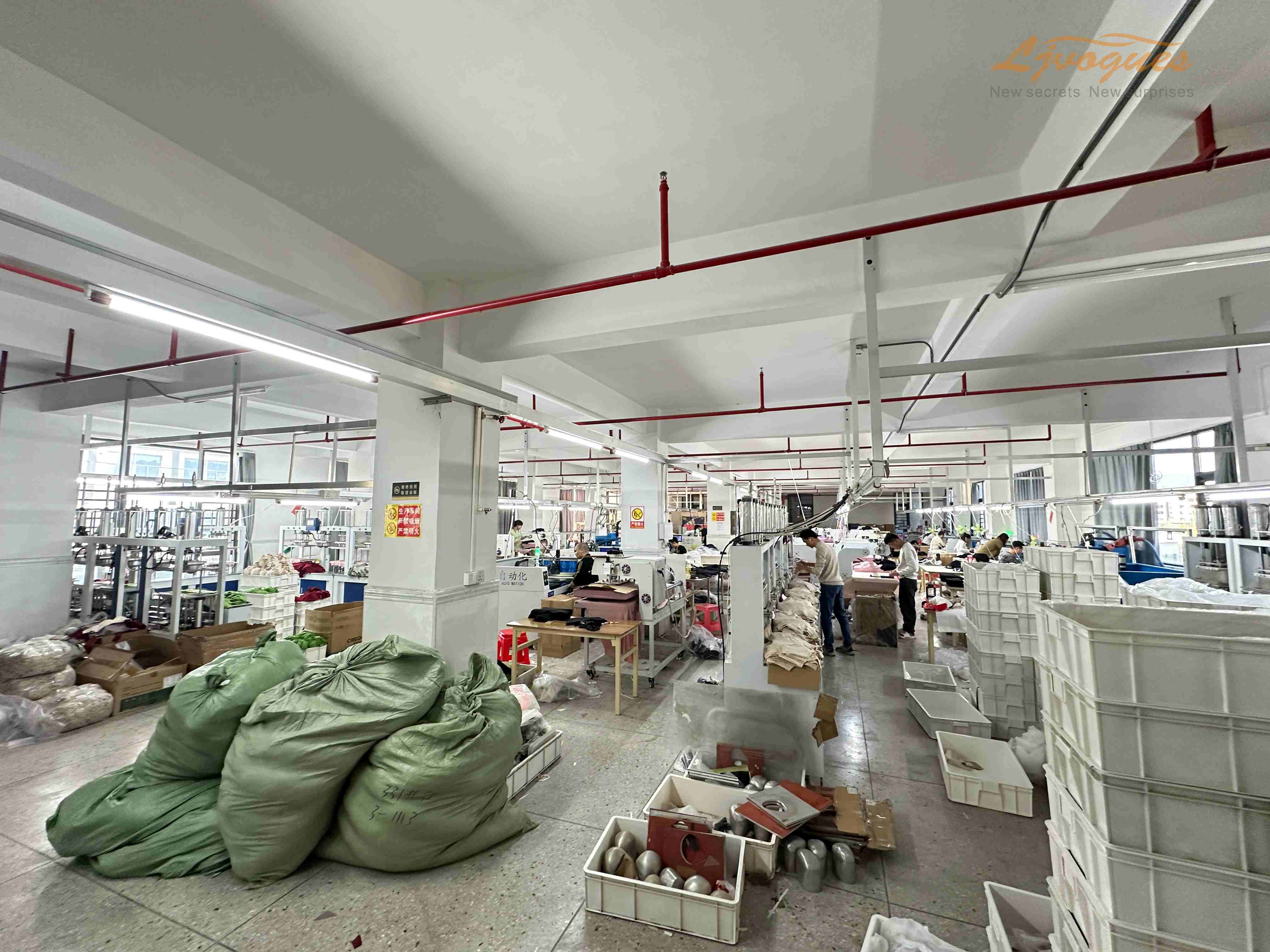
Production included three in-line QC checkpoints: post-cutting fabric and panel verification, mid-sewing construction and measurement audit, and final pre-packing inspection covering product, labels, packaging, and carton compliance . A pre-shipment inspection report was issued to the buyer before dispatch.
Delivery was completed within the agreed shipping window, arriving in time for the buyer's planned distribution and intake schedule.
The Result
The client received a private-label period underwear range that was retail-ready in every sense — not just the product, but the full package around it.
Product quality consistent with approved samples — no surprises in fabric, fit, or construction between sample and bulk
Labeling executed accurately across the full order — fibre content, care symbols, sizing, and brand labels all passed the buyer's intake compliance check
Packaging met retail presentation standards — the product was shelf-ready on arrival at the distribution center
Delivery hit the agreed window — no late shipment, no missed intake slot, no disruption to the retail calendar
Reorder foundation in place — the buyer now has a fully documented product specification, approved label files, and a proven production workflow for future replenishment or range extension
For a retail buyer, the outcome that matters most is not just a good product — it is a smooth, repeatable sourcing process that can be relied on again.
What Other Buyers Can Take from This Project
Treat labeling and packaging as development workstreams, not afterthoughts.
In retail sourcing, label errors and packaging inconsistencies cause more delays than product defects. Build these into your development timeline from the start, with their own approval steps.
Confirm your compliance requirements before sampling, not after.
Fibre composition, care symbol standards, country of origin format, size designation system — these details should be shared with your supplier at the beginning, not discovered as problems during final inspection.
Request a pre-production sample of labels and packaging, not just the product.
Approving the garment is not enough. Seeing the actual printed label, the actual hangtag, and the actual packaging format before bulk starts is the single most effective way to prevent retail compliance issues.
Size your first order to your actual sales data, not to round numbers.
If your retail data tells you that sizes 10–14 account for 65% of unit sales in intimates, your period underwear order should reflect that — not default to an even split across all sizes.
Looking for a Confidential OEM Partner for Private-Label Period Underwear or Period Swimwear?
At Ljvogues, we support retail buyers, private-label programs, and brand-direct sourcing for period underwear and period swimwear. From product development through labeling compliance, packaging execution, and on-time delivery, we manage the full scope of what retail channels require — with confidentiality built into every step.
Request a Sample · Email: info@ljvogues.com · WhatsApp: +86-19928802613
Ocean Yang bridges the gap between textile science and brand success. As the founder of Ljvogues, he leverages 10+ years of expertise in manufacturing high-performance period underwear and swimwear. Dedicated to transparency and safety, Ocean empowers B2B buyers to source verified, compliant, and innovative functional apparel from Shenzhen to the world.
Ljvogues is a Shenzhen-based manufacturer of high-performance menstrual and incontinence apparel. Empowering 500+ brands across 100+ countries since 2015 — with PFAS-free verified production, REACH/SVHC compliance, and ISO 9001 & 14001 certified precision.

 English
 العربية
 Français
 Русский
 Español
 Português
 Deutsch
 italiano
 日本語
日本語 한국어
한국어 Nederlands
 Tiếng Việt
 ไทย
ไทย Polski
 Türkçe
 ພາສາລາວ
 ភាសាខ្មែរ
 Bahasa Melayu
 Filipino
 Bahasa Indonesia
 magyar
 Română
 Čeština
 Српски
 हिन्दी
 فارسی
فارسی Svenska
 українська
 Ελληνικά
 Suomi
Suomi Հայերեն
 עברית
עברית Latine
 Dansk
Dansk Gaeilge
 Eesti keel
 Oʻzbekcha
 Azərbaycan dili
 Беларуская мова
 Български
 ქართული
 Lietuvių


 Ocean Yang


