



Table of Contents
If you've been eyeing period swimwear ahead of swim season but hesitated because of safety headlines—you're asking exactly the right question. The surge in PFAS awareness has understandably made health-conscious consumers scrutinize every wearable product, and swimwear deserves its own careful look. Unlike regular underwear, swimwear comes with a specific chemical history: durable water repellent (DWR) coatings, which traditionally relied on fluorocarbon chemistry, the same family of compounds as PFAS.
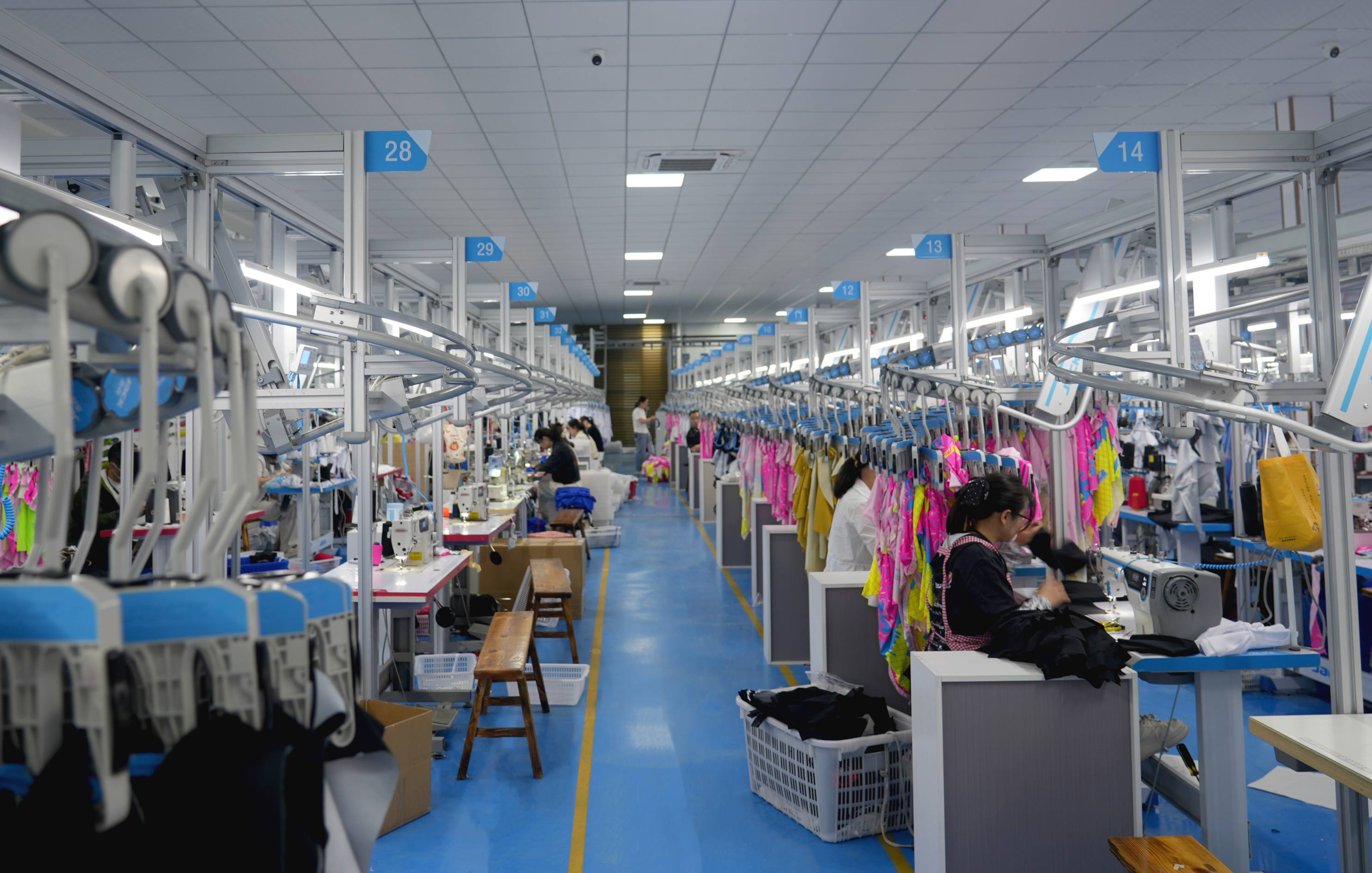
This article addresses the swimwear safety question from our perspective as a manufacturer—one that has spent 20 years engineering period-proof garments, running lab tests, and navigating the certification landscape. We'll cover the science, the expert consensus, the specific PFAS risk that sets swimwear apart, the hygiene question in chlorinated and saltwater environments, and exactly how to verify whether any period swimwear you buy is genuinely safe.
Already read about PFAS in period underwear? Our earlier deep dive, Are Period Underwear Safe? The PFAS Truth, covers the foundational PFAS science and the Thinx lawsuit context in detail. This article focuses on the unique safety considerations of swimwear specifically.
The Three Safety Questions Every Buyer Should Ask
Period swimwear safety breaks down into three distinct concerns, and each deserves a clear answer:
Is the absorption technology itself safe to wear against the body?
Does the water-repellent coating contain PFAS?
Is it hygienic to wear in pools and open water?
Let's work through each one.

Safety Question #1: Is the Technology Itself Safe?
The short answer, backed by medical consensus: yes.
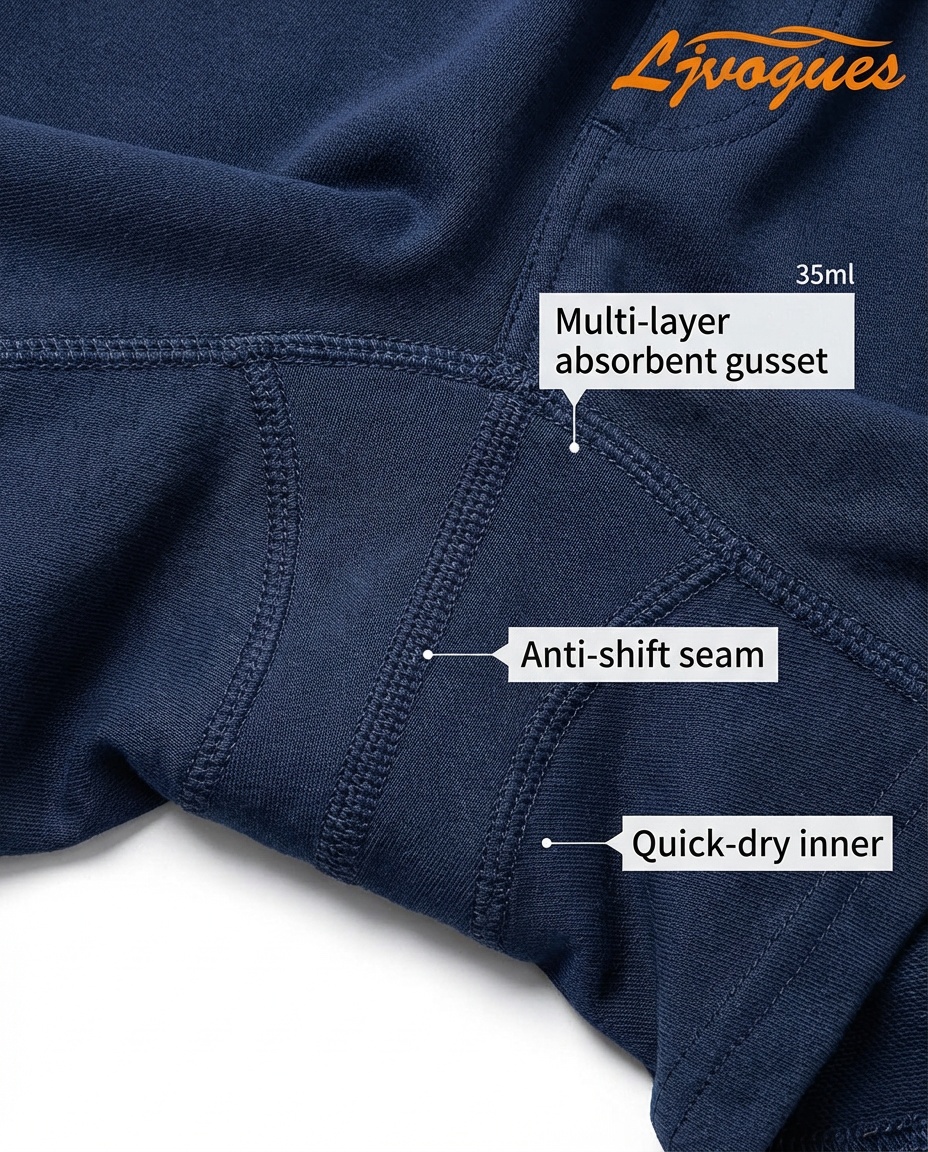
Period swimwear works on the same core principle as period underwear—a multi-layer gusset absorbs menstrual fluid while an outer layer resists liquid migration. No insertion. No applicators. No internal contact with mucous membranes.
The TSS question is off the table. Toxic Shock Syndrome (TSS) is associated with prolonged use of internal products like tampons that create an anaerobic environment inside the body. Because period swimwear is external, worn against the outer skin of the vulva rather than inside the vaginal canal, it carries no TSS risk by design.
What does the medical community say?
The American College of Obstetricians and Gynecologists (ACOG) confirms it is appropriate to use period underwear and swimwear as a menstrual management option.
Kelly Johnson-Arbor, MD, a medical toxicologist, states that period underwear—and by extension, period swimwear—is "mostly safe" because the garment is worn externally for a limited time period, per her expert commentary published on GoodRx.
The National Capital Poison Center has stated that while PFAS and other industrial chemicals have been detected in some period products, "there is no definitive evidence indicating that wearing period underwear is harmful to human health," as cited in a TODAY.com article from March 2026.
These expert positions reflect the current body of evidence: properly manufactured period swimwear, with verified PFAS-free materials, is a safe menstrual management choice.
Safety Question #2: PFAS in Swimwear — The DWR Problem
This is where period swimwear diverges meaningfully from period underwear, and it's why we're writing this article separately.
Why Swimwear Has a Unique PFAS Risk
Period swimwear must do something regular period underwear does not: it must perform in water. The outer shell of a period swimsuit needs to shed pool water and seawater efficiently—otherwise the garment absorbs ambient water and loses its selective absorption function entirely (it would have no capacity left to absorb menstrual fluid).
Historically, the textile industry achieved water repellency through DWR (Durable Water Repellent) coatings based on C8 fluorocarbon chemistry—a class of long-chain PFAS compounds. These are the same "forever chemicals" detected in the Thinx period underwear lawsuit (for a full account of that case and what it revealed about the period underwear industry, see our Are Period Underwear Safe? article).
The key distinction for swimwear: the DWR coating sits on the outer face of the fabric, facing the water. The inner layers—those in contact with the body—have a different function (absorption and moisture wicking). But the DWR treatment is applied across the entire fabric, meaning PFAS from legacy coatings could, in principle, be present throughout the garment, including surfaces in prolonged skin contact.
The Industry History in Brief
The evolution of DWR chemistry illustrates why the concern is legitimate:
Generation | Chemistry | Status |
C8 DWR (pre-2015) | Long-chain PFAS (PFOA, PFOS) | Phased out — well-documented carcinogens and endocrine disruptors |
C6 DWR (2015–2022) | Short-chain fluorocarbons | Being phased out — evidence shows similar environmental persistence |
C4 DWR | Ultra-short-chain fluorocarbons | Transitional only; still fluorine-based |
C0 DWR (current standard) | Fluorine-free polymer alternatives (silicone, wax, bio-based) | No PFAS; the safe choice |
Patagonia's PFAS transition documentation provides one of the clearest public accounts of this chemistry shift: "Between 2013 and 2016, we were able to fully phase out the use of long-chain (or C8) fluorocarbon-based treatments in DWR finishes, guided by studies that demonstrated C8's negative impacts on environmental and human health." They then discovered C6 was equally problematic—a process the entire textile industry has been working through.
The regulatory environment has now caught up. As of January 1, 2025, California and New York both ban the sale of apparel containing intentionally added PFAS, per Morgan Lewis legal analysis of California AB 1817 and New York Bill S1322/A994. Colorado, Maine, Vermont, Rhode Island, and Connecticut are implementing equivalent bans on a rolling schedule through 2028. The message from regulators is unambiguous: fluorocarbon DWR in apparel is being regulated out of existence.
LJVOGUES Position: 100% Fluorine-Free DWR
Our engineering team made the decision early: no fluorinated chemistry in any DWR treatment, period. Every LJVOGUES period swimwear product uses C0 DWR—fluorine-free water repellent treatments. Our fluorine-free polymer systems achieve the same essential water-shedding performance as legacy fluorocarbon DWR: water beads up on contact and rolls off the outer fabric surface, maintaining the selective absorption function of the inner layers throughout your swim session.
This is not a compromise in performance—it is a deliberate engineering choice grounded in the available chemistry science and our commitment to producing garments we would be comfortable recommending to the people who wear them.
Our PFAS-free status is not a marketing claim. It is third-party verified, with test reports available. This matters because, as OEKO-TEX itself notes, the organization explicitly bans intentional PFAS use across all certified products and tests to a total fluorine limit—and our LJVOGUES products hold OEKO-TEX® STANDARD 100 certification, which means every component—fabric layers, thread, elastics, DWR coating—has been independently tested against a list of over 1,000 harmful substances.
As NY Times/Wirecutter reported in February 2026, "Oeko-Tex prohibits PFAS in the textiles it certifies"—confirming that OEKO-TEX® certification is one of the most reliable third-party indicators of PFAS compliance available.
Safety Question #3: Hygiene in Water
Does Swimming in a Pool or Ocean Affect Hygiene?
A common concern is whether water exposure creates hygiene risks—bacterial buildup, leakage, or other issues. The science here is actually reassuring.
Chlorinated pool water is maintained at a pH of 7.2–7.8 and contains hypochlorous acid, which actively destroys bacteria, viruses, and algae. As Nip Tuck Swim's technical guide on chlorine chemistry explains, pool chlorine "disinfects and oxidizes materials like dirt and chloramines"—it creates an antimicrobial environment around the garment. In other words, chlorinated water actively works against bacterial growth during the time you are in the pool.
Saltwater has well-documented natural antiseptic properties. High salinity inhibits many common bacteria, and ocean swimming has historically been associated with wound disinfection for this reason.
This does not mean period swimwear should be worn indefinitely without changing. The appropriate guidance, supported by manufacturers and health professionals:
Change every 3–5 hours during active use, adjusting for the heaviness of your flow
Rinse immediately after exiting the water with cool or lukewarm water to remove chlorine, salt, sunscreen, and body oils (this also extends the garment's life—The Conversation's textile science explainer notes that rinsing immediately is the most critical step for swimwear longevity)
Change into dry clothing after swimming rather than wearing damp period swimwear for extended periods on land, to prevent the moisture environment associated with skin irritation
Does Flow Actually Stop in Water?
A common misconception: menstrual flow does not stop when you enter water. What typically happens is a reduction in outward flow due to water pressure. The period continues; the swimwear continues doing its job of absorbing what does emerge. This is why purpose-built period swimwear—with its DWR outer layer preventing water ingress—functions correctly where standard period underwear does not.

LJVOGUES Certifications Relevant to Swimwear Safety
We believe buyers should be able to verify every safety claim independently. Here is what our certifications mean in practice for period swimwear:
Certification / Standard | What It Covers | Relevance to Swimwear Safety |
OEKO-TEX® STANDARD 100 | Tests every component against 1,000+ harmful substances; bans intentional PFAS; verifiable by certificate number | Covers DWR coating, elastics, and all fabric layers |
PFAS-Free Certification (Third-Party Lab) | Independent analytical testing for total fluorine and specific regulated PFAS compounds | Directly confirms no fluorocarbon DWR |
REACH EC 1907/2006 Compliance | EU regulation restricting substances of very high concern (SVHCs) in products sold in Europe | Covers PFOS, PFOA, and related compounds by regulation |
FDA 21 CFR Compliance | Confirms materials meet U.S. FDA standards for textiles in contact with the body | Applicable to U.S. market distribution |
GRS (Global Recycled Standard) | Certifies recycled content claims and responsible production | Supports eco-friendly credentials for swimwear fabrics |
ISO 9001 / ISO 14001 | Quality management and environmental management systems | Ensures manufacturing consistency and environmental controls |
All certifications are independently audited. Our OEKO-TEX® certificate number is verifiable directly at the OEKO-TEX® label check portal.
Are Period Swimwear Reliable? What Testing Actually Proves
"Safe" and "reliable" are related but distinct questions. Here is how reliability is established in manufacturing:
Hydrostatic Pressure Testing
The outer DWR layer of our swimwear undergoes hydrostatic pressure testing—a standardized procedure that measures how much water pressure a fabric can resist before moisture penetrates. This simulates realistic swimming conditions: strokes, turns, and prolonged immersion. A passing result confirms the selective absorption function is maintained in real water environments.
Absorption Verification
Each style is independently tested to verify its stated absorption capacity (in ml, not vague "tampon equivalent" claims). LJVOGUES period swimwear absorbs between 15ml and 50ml depending on style—tested against standardized protocols that simulate real menstrual fluid viscosity.
Wash Durability Testing
50+ wash cycles is our verified durability standard for swimwear. This covers at least one to two full swim seasons of regular use. The critical test: absorption capacity and DWR performance are measured both before washing and after repeated wash cycles to confirm no significant degradation. The fluorine-free DWR treatments we use are tested to confirm maintained water repellency throughout the garment's lifespan.
Fit and Compression Under Load
Unlike period underwear that operates in a stationary or low-movement environment, period swimwear faces the dynamic stresses of swimming—stroke movement, diving, fast turns. Seam integrity, gusset compression, and leg opening elasticity are all tested under simulated swim conditions.
The Eco Angle: Why Period Swimwear Is the Sustainable Summer Choice
The environmental case for period swimwear is among the strongest of any reusable menstrual product, specifically because summer swim seasons generate substantial disposable product waste.
What Disposable Products Are Doing to Our Waterways
The data is stark. According to World Health Organization Bulletin research published in 2024:
In Europe alone, 49 billion single-use period products are consumed annually
In the UK, 2.5 million tampons and 1.4 million pads are flushed daily, contributing to sewage backflow and plastic release into waterways
In the EU, tampons and pad components are consistently among the five most commonly found items in marine debris
Conventional disposable pads contain up to 90% plastic and take an estimated 500–800 years to decompose in landfill
Menstrual products account for approximately 6.3% of sewage-related debris along rivers and beaches, according to sanitation research compiled by WOMENA. This is beach-going season waste. Period swimwear directly competes with the disposable products that disproportionately end up in the waterways where people swim.
Period Swimwear vs. Disposables: Lifetime Impact Comparison
Impact Category | Disposable Products (per summer season) | LJVOGUES Period Swimwear (per season) |
Products used | 20–40+ disposable products (pads, tampons, applicators) per month × 3 summer months = 60–120 units | 1–2 swimwear pieces, reused throughout |
Plastic waste generated | Each pad = ~4 plastic bags equivalent; significant applicator waste | Near-zero product waste per season |
Ocean pollution risk | High — pads and tampon applicators are top coastal debris items | Zero — reusable garment, no disposable components |
Chemical exposure in water | Chlorine-saturated tampons, degrading pad plastics | PFAS-free certified fabric, no leaching materials |
Carbon footprint (manufacturing) | Repeated production cycles, packaging, distribution for single uses | Single manufacturing cycle, GRS recycled materials, reused 50+ washes |
Cost over 2 seasons | $80–$150+ on disposable products for summer periods | $40–$80 for 1–2 swimwear pieces, fully reusable |
A 2025 BBC Future life-cycle assessment covering France, India, and the US found that across eight environmental impact categories, period underwear (and by extension, period swimwear) substantially outperformed single-use pads and tampons, ranking second only to menstrual cups for overall environmental performance.

LJVOGUES Eco Credentials
Our sustainability position is not greenwashing—it is built into manufacturing:
GRS-certified recycled fabrics form the outer shell of many swimwear styles, giving a second life to post-consumer plastic
Eco-friendly packaging: minimal packaging using recycled and recyclable materials
50+ wash durability: engineering for longevity, not planned obsolescence
ISO 14001 certified facility: our manufacturing operations are conducted under a certified environmental management system
Buyer's Safety Verification Checklist
Before purchasing any period swimwear, use this checklist to verify genuine safety credentials. Do not rely on marketing language alone—every claim below should be independently verifiable.
What to Check | What to Look For | Red Flags |
DWR chemistry disclosure | Brand explicitly states "fluorine-free DWR," "C0 DWR," or "PFAS-free water repellent" | Silence on DWR chemistry; generic "waterproof" claim without disclosure |
OEKO-TEX® STANDARD 100 | Valid certificate number you can verify at oeko-tex.com | Vague reference to "OEKO-TEX tested" without a certificate number |
Third-party PFAS test report | Independent lab report (Intertek, SGS, Bureau Veritas, etc.) confirming total fluorine below threshold | Self-certification only; no test report available on request |
Full material composition | Complete fabric breakdown including coating treatments | "Proprietary blend" without disclosure; no component-level transparency |
Wash durability data | Stated wash cycle count with performance retention data | Only general "machine washable" claim |
Absorption capacity in ml | Specific ml figure, not just tampon equivalents | Absorption claims with no test methodology backing |
Regulatory compliance statements | REACH, FDA, California AB 1817, or equivalent | No reference to chemical compliance frameworks |
How to Care for LJVOGUES Period Swimwear
Proper care protects both the garment and your health:
Rinse in cold water immediately after each use — removes chlorine, salt, and body fluids before they degrade the fabric fibers
Hand wash or machine wash on a delicate/gentle cycle using mild, fragrance-free detergent
No bleach, no fabric softener — bleach degrades absorbent fibers; softener coats them and reduces absorption capacity
No tumble dryer — air dry flat in shade; direct sunlight and dryer heat degrade elastane and DWR performance over time
No wringing — gently press water out; wringing damages the multi-layer gusset stitching
Store dry — never store damp; allow complete air drying before folding and storing
Treated this way, LJVOGUES period swimwear maintains its performance across 50+ wash cycles—one to two complete swim seasons of regular use.

Shop LJVOGUES Period Swimwear
LJVOGUES offers a growing range of period swimwear including bikini bottoms and one-piece options, all manufactured with PFAS-free DWR, OEKO-TEX® certified components, and our proven 4-layer leak-proof protection system. Available in sizes XS through 4XL, with plus-size options up to 8XL.
For B2B partners and brands looking to white-label PFAS-free period swimwear: our OEM/ODM manufacturing capabilities cover custom design, private label, and full certification documentation support. Contact our team to discuss your requirements.
FAQ
Q: Are period swimwear safe to wear all day in the pool or ocean?
A: Period swimwear manufactured with PFAS-free, certified materials is safe to wear during typical swim sessions. The key hygiene guideline is to change every 3–5 hours depending on flow volume, and to rinse the garment immediately after exiting the water. Wearing any swimwear—period or conventional—for extended periods of all-day dampness is not recommended, as prolonged moisture against skin can cause irritation independent of the menstrual function.
Q: Does PFAS in swimwear DWR coatings actually enter the body?
A: The exposure route is topical (skin contact), and the medical community has not established definitive evidence of harm from external wear. The National Capital Poison Center states there is "no definitive evidence indicating that wearing period underwear is harmful to human health," as reported by TODAY.com in March 2026. However, given the precautionary principle and the availability of effective PFAS-free alternatives, there is no rational reason to accept unnecessary fluorocarbon exposure. Choose brands that independently verify their PFAS-free claims.
Q: What makes period swimwear different from period underwear — why the extra PFAS concern?
A: Standard period underwear requires moisture resistance at the outer layer, but it does not need to perform when fully submerged in water. Period swimwear requires a DWR coating to prevent the garment from absorbing ambient pool or seawater, which would eliminate its ability to absorb menstrual fluid. Historically, this DWR function relied on fluorocarbon chemistry — the source of PFAS risk. Modern C0 (fluorine-free) DWR alternatives achieve the same performance without fluorocarbons, making PFAS-free period swimwear technically feasible and commercially available.
Q: How do I verify that a period swimwear brand is genuinely PFAS-free?
A: Ask for the OEKO-TEX® STANDARD 100 certificate number and verify it directly at oeko-tex.com. Request or view the brand's third-party lab test report specifically addressing total fluorine content and PFAS screening. Confirm the DWR chemistry is explicitly described as "fluorine-free" or "C0 DWR." Generic claims like "free of harmful chemicals" without certification backing are insufficient — the Thinx lawsuit demonstrated that self-certification claims can be misleading.
Q: Is period swimwear reliable for swimming, or does it leak?
A: Properly engineered period swimwear is designed to perform in water. The hydrophobic outer layer prevents water ingress, and the absorbent gusset layers retain menstrual fluid during immersion. LJVOGUES swimwear is verified through hydrostatic pressure testing and absorption testing under simulated swim conditions. Most period swimwear is suited for light to medium flow days; on heavy flow days, pairing with a tampon or menstrual cup provides maximum protection. Water pressure during swimming also naturally reduces outward flow, further supporting in-water performance.
Q: Does OEKO-TEX® certification fully guarantee PFAS-free status?
A: OEKO-TEX® STANDARD 100 bans intentional PFAS use in all certified products and tests to a total fluorine limit of 100 mg/kg (reducing to 50 mg/kg in 2026 in line with California regulations). As Hohenstein's OEKO-TEX® PFAS testing guidance notes, the certification covers legally restricted PFAS through both total fluorine testing and direct compound screening. It does not claim absolute zero PFAS (no analytical method can guarantee this), but it is one of the most rigorous third-party textile certifications for PFAS control available globally.
Q: Why is period swimwear more eco-friendly than using tampons during summer?
A: A 2025 BBC Future life-cycle analysis found that period underwear significantly outperforms single-use pads and tampons across eight environmental impact metrics. For summer specifically, disposable products are a documented source of coastal and marine pollution — menstrual products account for roughly 6.3% of sewage-related beach debris, per research cited by WOMENA/SuSanA. One pair of LJVOGUES period swimwear replaces dozens to hundreds of single-use products over its lifetime, eliminating that waste stream entirely.
Q: Can teens safely wear period swimwear?
A: Yes. The ACOG confirms period underwear and swimwear are appropriate menstrual management options, with no age-based restrictions. The external wear design means no TSS risk and no internal insertion required. For teens new to period management, period swimwear offers an approachable, discreet option that looks and functions like standard swimwear. LJVOGUES offers styles across the full size range including options suited for teens. Parents seeking information on PFAS safety specifically can refer to the expert consensus: Poison Control confirms no definitive evidence of harm from properly manufactured, certified period products.

Sources
TODAY.com — "What Are Period Underwear and Are They Safe for Teens?" (March 2026): https://www.today.com/parents/teens/what-are-period-underwear-are-they-safe-rcna261691
GoodRx — "Is Period Underwear Safe and Sanitary?" (Kelly Johnson-Arbor, MD, medical toxicologist): https://www.goodrx.com/health-topic/gynecology/period-underwear-safe
National Capital Poison Center — "Is Period Underwear Safe to Use?": https://www.poison.org/articles/is-period-underwear-safe-to-use
Patagonia — "Made Without PFAS": https://www.patagonia.com/our-footprint/pfas.html
Morgan Lewis — "New York and California: Bans on PFAS in Textiles and Apparel Begin January 1, 2025": https://www.morganlewis.com/pubs/2024/11/new-york-and-california-bans-on-pfas-in-textiles-and-apparel-begin-january-1-2025
OEKO-TEX® — STANDARD 100 and PFAS regulations: https://www.oeko-tex.com/en/our-standards/oeko-tex-standard-100/
Hohenstein/OEKO-TEX® — PFAS General Ban: https://www.hohenstein.us/en-us/oeko-tex/restrictions-and-testing/pfas
NY Times/Wirecutter — "Waterproof Gear Relied on PFAS. Not Anymore." (February 2026): https://www.nytimes.com/wirecutter/reviews/pfas-bans-for-clothing/
WHO Bulletin — "Environmental impact of menstrual hygiene products" (PMC, 2024): https://pmc.ncbi.nlm.nih.gov/articles/PMC11865846/
BBC Future — "Pads, pants or cups: Which period product is the most climate-friendly?" (March 2025): https://www.bbc.com/future/article/20250305-what-is-the-most-sustainable-period-product
WOMENA/SuSanA — Environmental impact of disposable menstrual products: https://www.susana.org/downloads?documentID=53187
The Conversation — "Do I have to rinse out my swimsuit after the pool?" (January 2026): https://theconversation.com/do-i-have-to-rinse-out-my-swimsuit-after-the-pool-a-textile-scientist-has-the-answer-270982
SGS — "Phasing Out PFAS in the Textile Industry" (March 2025): https://www.sgs.com/en-us/news/2025/03/cc-2025-q1-phasing-out-pfas-in-the-textile-industry
NICCA USA — "Fluorine-Free Water Repellent": https://www.niccausa.com/fluorine-free-water-repellent/