



Table of Contents
Picture this: your daughter is packing for summer camp — a week of swimming, kayaking, and bonfire nights. Her period arrived three days early. She's 13, not ready for tampons, and the thought of sitting poolside while everyone else splashes around is quietly devastating. It doesn't have to be that scenario.
Period swimwear for teens has changed the equation entirely. It looks like any other swimsuit. It absorbs menstrual flow in the water. No insertion required — she just puts it on and jumps in. For millions of parents navigating this exact crossroads, that simplicity is everything.
This guide covers everything you need to know: how period swimwear works, why pediatric gynecologists recommend it, age-specific guidance from 10 to 18, the competitive swim team angle, what to look for when buying, and how many pairs a teen actually needs. If you're a parent, this is the article you'll want to bookmark before summer.
Why Period Swimwear Is a Game-Changer for Teens
No Insertion Required — and That Matters More Than You Think
For many young teens, tampons and menstrual cups feel intimidating — even scary. That hesitation is completely normal, and no health professional would suggest forcing the issue. The problem is that without an internal product, swimming during a period used to mean pads that balloon in water, towels wrapped around waists, and a lot of anxious poolside sitting.
Period swimwear closes that gap. It's worn exactly like a regular swimsuit — no applicators, no technique to master, nothing to insert. For a 12-year-old experiencing her first summer with periods, the ability to simply put on her swimsuit and get in the water is genuinely life-changing.
Dr. Arna Coren, a certified OB-GYN known as "The Vag Doc," shared a personal story that captures this perfectly. Her 13-year-old daughter got her period the week before summer camp — a full week of swimming activities in near-100-degree heat. According to a March 2026 article on TODAY.com, "She was mortified," Dr. Coren recalls. Tampons weren't something her daughter felt ready for, so she ordered period swimwear for same-day delivery. Her daughter's verdict afterward: "They saved me."
That story, from an OB-GYN ordering period swimwear for her own child, says more than any clinical abstract could.

It Looks Exactly Like Regular Swimwear
One of the most consistent concerns teens report about swimming during their period is being "found out." The fear of visible protection, of standing out, of an embarrassing moment in front of friends — these anxieties are real and they matter.
Well-engineered period swimwear is visually indistinguishable from regular swimwear. There are no bulky liners, no suspicious waistbands, no giveaways. A teen can wear period swim bikini bottoms or a one-piece to a pool party, a beach vacation, or summer camp, and nobody will know the difference — including her. That invisibility is the point.
It Eliminates the Fear of Swimming During Periods Entirely
Before period swimwear existed, the default for menstruating teens at the pool was either "use a tampon" or "sit out." For young teens and those with sensory sensitivities, neither option felt acceptable. What followed was avoidance — skipping pool parties, dreading swim class, pretending to be unwell at camp.
Dr. Lauryn Roth, an assistant professor of OB-GYN and pediatric and adolescent gynecologist at the University of Colorado School of Medicine and Children's Hospital Colorado, has seen the impact directly. In a published conversation on the University of Colorado Anschutz Medical Campus news platform, she notes: "Period underwear has been a game changer for a lot of our patients, especially kids who are neuro-divergent or have sensory issues." The same principle extends to period swimwear: for teens who find tampon insertion stressful or physically uncomfortable, a swimwear-based solution removes the barrier to participating entirely.
The Waterproof Layer — Understanding the Technology
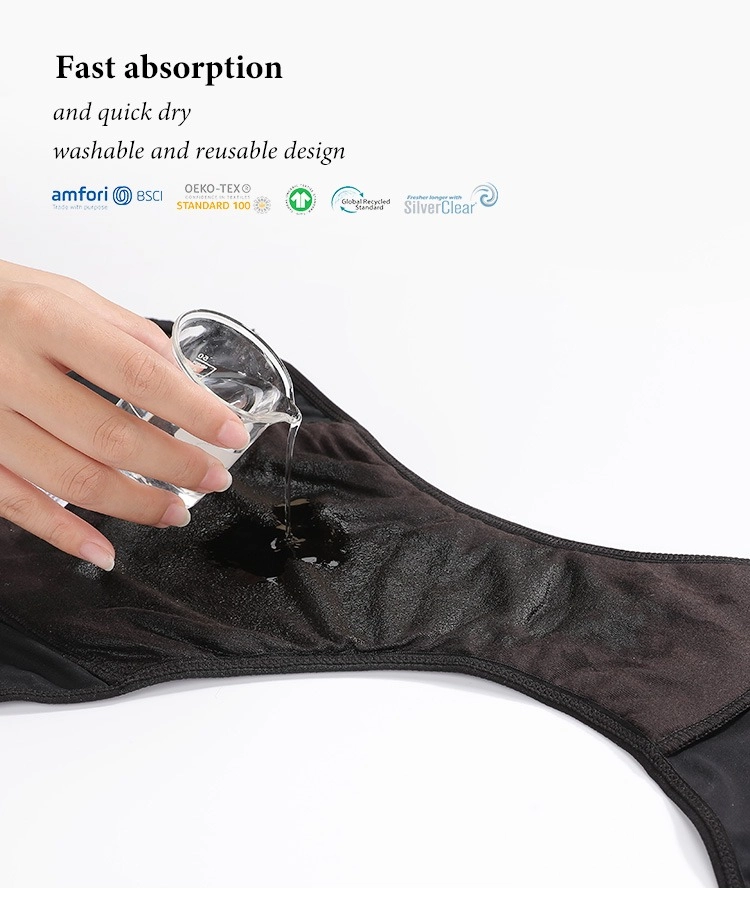
The key to period swimwear that actually works in water is the balance between absorbency and water resistance. A DWR (Durable Water Repellent) outer layer prevents pool water from flooding the absorbent inner layers — so the suit doesn't swell with water and lose its absorbing capacity. Meanwhile, the inner absorbent layers draw in and lock away menstrual flow.
At LJVOGUES, our engineering team has refined this balance across thousands of production runs. Our period swimwear uses a 4-layer construction — a soft moisture-wicking top layer, a high-capacity absorbent core, a DWR-treated water-resistant barrier, and a durable chlorine-resistant outer fabric — so the suit performs in the pool exactly as it performs on land.
Age-Specific Guide: Period Swimwear from 10 to 18
Teens are not a monolithic group. A 10-year-old navigating her first period has very different needs from a 16-year-old competitive swimmer. Here's how to match period swimwear to your daughter's age and stage.
Ages 10–12: Tweens and the "Just in Case" Pair
For tweens in this age group, periods are often new, unpredictable, and light. Many haven't had more than a few cycles, and flow patterns are still establishing themselves. The goal here isn't maximum absorption — it's confidence and readiness.
What to look for:
Light to moderate absorbency — Most tweens don't need heavy-flow capacity for their first summer
Simple, sporty cuts — Board shorts-style or classic one-piece suits feel comfortable for younger bodies
Teen-specific sizing — Adult XS is not the same as a 10-year-old's sizing. Look for brands that offer genuine junior sizing with age-appropriate dimensions
One "just in case" pair to pack at all times during pool season
The psychological benefit here is enormous: a tween who has a period swimsuit in her bag is a tween who doesn't have to announce her period to get out of the pool. She's covered — literally and figuratively.
For period swimwear for 10 year olds and period swimwear for 12 year olds specifically, look for softer, thinner absorbent gussets that don't feel bulky on a smaller frame. Our LJVOGUES teen period swimwear collection is engineered with youth sizing in mind, not scaled-down adult dimensions.

Ages 13–15: Growing Confidence, Growing Options
This is the peak age for period-related swimming anxiety. Teens in this group are socially aware, increasingly active, and often navigating the combination of a more established period and more demanding physical schedules — swim lessons, school PE, sports camps, group vacations.
What works well at this stage:
Bikini bottoms that can be worn under a regular swimsuit or team practice suit
One-piece styles with built-in protection for all-day events
Moderate to heavy absorbency as cycles become more regular and potentially heavier
Variety — having both a bikini-bottom style and a one-piece gives flexibility across different activities
This is also the age where swim team membership peaks. See the dedicated swim team section below for specific guidance.
For period swimwear for tweens bridging into this age group (around 13), the key transition is from "backup protection" to "standalone protection." Period swimwear at this stage should be reliable enough for a full day at the pool or beach without needing supplementation.
Ages 16–18: Full Range, Full Confidence
By 16, most teens have a well-established sense of their flow, their cycle timing, and their comfort with different menstrual products. Period swimwear for older teens can match adult styles — from high-waist bikini bottoms to racerback one-pieces — with heavy-flow capacity for extended water activities.
At this stage, teens may also be combining period swimwear with internal products on heavy-flow days for double protection. That's a legitimate strategy for all-day beach trips or multi-event swim competitions.
Period Swimwear for Competitive Swimmers and Swim Teams
The Swim Team Reality
Competitive swimming and menstruation are a conversation that's long overdue in youth sports. Teen swimmers practice daily, often for two or more hours, through every phase of their cycle. The expectation that they'll use tampons or cups — especially for 12- and 13-year-olds just starting competitive training — is unrealistic for many.
Alto Swim Club's guide on swimming during periods — one of the most-referenced swim team resources on this topic — addresses it directly: "Period swimwear has come a LONG way! Period swim suits are really great. Swimmers who are not comfortable using a tampon/cup can use period swimwear instead." They recommend two specific approaches for competitive swimmers: wearing a period-specific one-piece that closely resembles a competitive suit, or wearing period swimwear bikini bottoms under a regular team suit.
That second option — period bottoms under the team suit — is particularly practical. The team suit goes on top and looks completely standard. The period bottoms underneath provide absorbent protection throughout practice. From the outside, nothing is different. From the athlete's perspective, everything is.
The Real Parent Story
This real-world approach has been validated repeatedly by swim families. One parent shared this on an online swim community: "My daughter was on swim team. We got her black period swim bottoms worn under her team suit. Never any leaks through two seasons." That's the kind of practical endorsement that matters more than lab claims.
Chlorine Resistance Matters
For daily swim practice, fabric durability is non-negotiable. Standard swimsuit fabrics break down under repeated chlorine exposure — the color fades, the elasticity weakens, and the fit degrades. Period swimwear used for competitive swimming needs to be made from chlorine-resistant nylon or polyester blends that hold their structure across a full season.
At LJVOGUES, our manufacturing team uses chlorine-resistant performance fabrics rated for 200+ hours of pool use, with 4-Needle 6-Thread Flatlock Stitching that prevents seam failure even under repetitive physical stress. For a teen swimmer who may wear her period swimsuit 3–4 times per week, fabric longevity isn't a luxury — it's a requirement.
Competition Day Strategy
For actual race days, most competitive teen swimmers prefer to use an internal product (tampon or cup) if they're comfortable with one, due to the precise fit requirements of competition suits. Period swimwear works best as a practice-day solution and as a warm-up/warm-down layer on competition days. For light or moderate flow during a competition, period swim bottoms under a competition suit remain a viable option — particularly for younger competitors not yet using internal products.
Summer Camp, Pool Parties, and Beach Vacations: Addressing the Anxiety Directly
The Summer Camp Scenario
Summer camp is peak period anxiety territory for teens and parents alike. Camp schedules don't pause for menstruation. Swimming is often mandatory, or at minimum unavoidable socially. Counselors may or may not be approachable. And the thought of asking to sit out — in front of a cabin full of peers — is mortifying.
Period swimwear is the solution that requires no conversation. A teen who arrives at camp with two pairs of period swim bottoms in her bag can navigate any water activity without explaining herself to anyone. She changes into them before swimming and rinses them afterward in the cabin sink. That's the entire process. No announcements required.
Camp packing checklist:
2 pairs of period swimwear (allows one to be rinsing/drying while the other is in use)
Small mesh laundry bag for rinsing in the cabin
Quick-dry travel towel
Pool Parties
Pool parties are where period anxiety tends to spike — because they're social, unstructured, and involve swimwear in front of peers. Period swimwear neutralizes the anxiety because there's nothing to manage publicly. She gets in the pool on her timeline, without a second thought.
Beach Vacations
Beach days often run 6–8 hours, longer than most pool parties. For extended beach time, look for period swimwear with higher absorbency (moderate to heavy capacity) and UV protection (UPF 50+) if your daughter is spending hours in the sun. Rinse in fresh water after salt water exposure to prolong the life of the absorbent layers.
What to Look For When Buying Period Swimwear for Teens
Not all period swimwear is created equal. Here is a practical checklist for parents evaluating options:
Feature | Why It Matters | What to Check |
PFAS-free certification | PFAS ("forever chemicals") can be present in water-resistant fabrics. Teen skin is sensitive and prolonged contact is a concern. | Look for third-party certification, not just brand claims |
OEKO-TEX® STANDARD 100 | Independent certification confirming all materials are free of harmful substances | Check for the certification badge on the product page |
Teen-specific sizing | Adult "XS" does not fit a 10- or 12-year-old properly | Look for junior sizing charts with age and body measurements |
Absorbency level matched to flow | Light-flow swimwear won't protect a heavy-flow teen; heavy-capacity swimwear may be bulkier than needed for a tween | Check the absorbency in ml or tampon equivalents |
DWR outer layer | Prevents pool/ocean water from flooding the absorbent layers | Look for "DWR," "water-resistant," or "no swelling in water" in the product description |
Chlorine resistance | Essential for swim team use; prevents premature fabric breakdown | Check fabric composition — chlorine-resistant nylon/polyester blends |
Age-appropriate design | Coverage and cut should match the teen's age and body stage | Review the design specs; avoid adult-only cuts for younger tweens |
Flat or minimal seams | Reduces chafing during extended water activities | Flatlock stitching is the gold standard |
Independent lab testing | Verifies absorbency and safety claims are real, not marketing | Look for brands with third-party testing documentation |
The PFAS Question: What Parents Need to Know
PFAS (per- and polyfluoroalkyl substances) are a legitimate concern for any textile that sits close to the skin. The vulvar and vaginal region absorbs substances more efficiently than regular skin — a point that Dr. Coren emphasizes in her patient education. This is why it matters specifically for period swimwear, not just for swimwear in general.
The answer is not to avoid period swimwear — it's to buy from manufacturers who are transparent about their chemical testing. Dr. Crystal King, a physician affiliated with Banner Health, advises parents to "double-check that the product doesn't have any PFAS chemicals" and to look for independent certifications rather than self-reported brand claims.
At LJVOGUES, our teen period swimwear is 100% PFAS-free, lead-free, and phthalate-free — verified through third-party lab testing to OEKO-TEX® STANDARD 100, the most rigorous independent textile safety certification available. We document these results because parents deserve more than a marketing promise. View our LJVOGUES OEKO-TEX® certified teen period swimwear.

LJVOGUES Teen Period Swimwear: The Manufacturer's Perspective
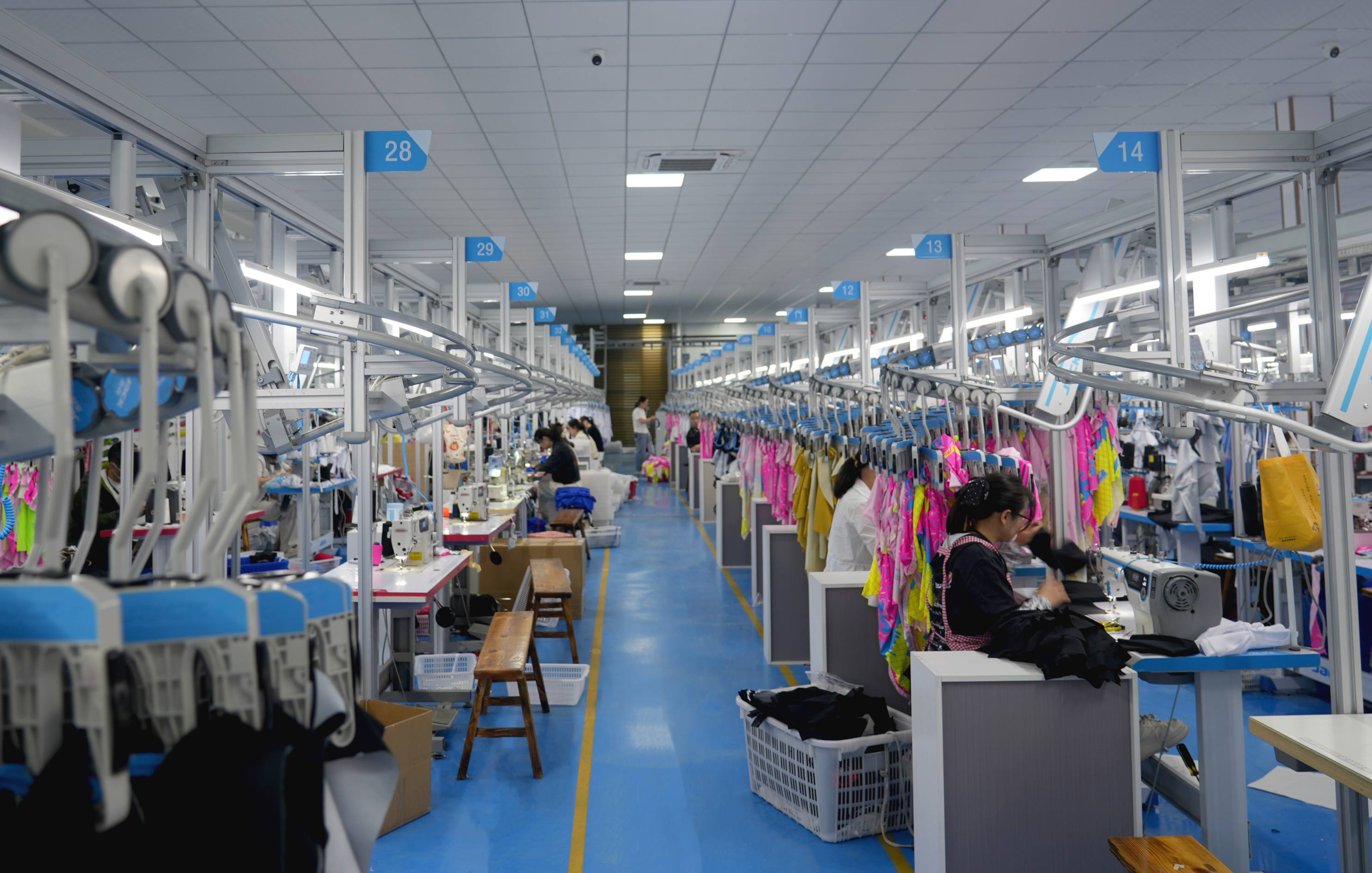
As a manufacturer with 20 years of OEM/ODM experience producing period-proof textiles for 500+ global brand partners, LJVOGUES brings a different kind of expertise to teen period swimwear — we work from the material up.
What Our Engineering Team Builds Into Every Pair
4-Layer Leak-Proof Construction:
Layer 1 — Soft moisture-wicking top layer: Pulls menstrual flow away from the skin immediately, keeping the wearer dry and comfortable
Layer 2 — High-capacity absorbent core: Locks in flow; capacity ranges from 15ml (light) to 30ml (heavy) depending on the teen style
Layer 3 — DWR-treated water-resistant barrier: Prevents pool, lake, or ocean water from entering the absorbent core while allowing internal moisture to pass through — the critical mechanism that makes period swimwear functional in water
Layer 4 — Chlorine-resistant outer fabric: Performance-grade nylon/spandex blend rated for extended pool use, holds color and shape through a full swim season
Key certifications for teen products:
OEKO-TEX® STANDARD 100 — all materials independently tested for 100+ harmful substances
100% PFAS-free, verified by third-party lab (not self-declared)
BSCI and SEDEX social compliance certifications
Teen-specific sizing from youth XS through youth XL
Why manufacturer expertise matters for parents:
When you buy from a fast-fashion brand making period swimwear as an afterthought, the PFAS-free claims are often based on supplier declarations rather than independent testing. Our lab testing program tests finished goods — the actual product that touches skin — not just raw material certificates. After 20 years of producing technical performance textiles, we know the difference.
How Many Pairs Does a Teen Need?
For most teens, 2–3 pairs covers a full summer comfortably. Here's the practical logic:
The minimum (2 pairs):
At summer camp or on vacation, your daughter needs at least one pair to wear and one pair either drying or clean and ready. Two pairs creates a basic rotation that covers 2–3 days of swimming without laundry.
The recommended (3 pairs):
Three pairs gives real flexibility: one in use, one drying, one clean. This is particularly useful for swim team athletes who practice daily, or for summer programs where laundry access is limited.
For heavy flow days:
A teen with a heavier flow should have at least one pair with moderate-to-heavy absorbency capacity alongside lighter pairs for normal-flow days.
Style variety to consider:
1–2 pairs of bikini bottoms for pool parties, beach days, and layering under team suits
1 pair of one-piece style for swim team practice, summer camp, or days when more coverage is preferred
-
Care Instructions: Simple Enough for Teens to Do Themselves
Part of what makes period swimwear work for teens is that they can manage it independently — no parent assistance required. Here's a simple routine any teen can follow:
After Swimming
Rinse immediately in cold water. Cold water prevents blood proteins from binding to the fabric. Don't skip this step, even if you're tired after practice.
Squeeze gently — do not wring or twist.
Hang to dry or lay flat if you're at camp without a drying line.
Washing
Machine wash cold on a gentle cycle with mild, fragrance-free detergent.
Do not use fabric softener — it coats the absorbent fibers and reduces performance over time.
Do not bleach.
Air dry or tumble dry low. High heat can damage the DWR layer and reduce absorbency over time.
Odor Tips
Rinse promptly after use — the biggest driver of odor is delayed rinsing. If odor persists after washing, add a tablespoon of white vinegar to the rinse cycle. Sunlight can also naturally neutralize residual odors when air-drying outside.
Chlorine Care
After pool use, rinse period swimwear in fresh water before storing or washing. This removes chlorine residue that, over time, can degrade absorbent fibers. Our chlorine-resistant fabrics are engineered for durability, but prompt fresh-water rinsing extends performance life meaningfully.
Conclusion
Period swimwear for teens isn't a niche product anymore — it's a practical, pediatrician-endorsed solution that lets teens participate fully in their lives regardless of where they are in their cycle. Whether your daughter is a 10-year-old approaching her first period who needs a "just in case" pair for pool season, a 13-year-old headed to summer camp, or a 16-year-old competitive swimmer who practices daily, there's a period swimwear solution that fits her life.
The key is choosing swimwear that's built right: PFAS-free, OEKO-TEX® certified, properly sized for teen bodies, and engineered with a DWR layer that actually works in water. At LJVOGUES, our 20 years of manufacturing experience go into every layer of every product we produce. Explore our teen period swimwear collection — and give your daughter her summers back.

FAQ
Q: What is period swimwear for teens and how does it work?
A: Period swimwear for teens is a swimsuit — either bikini bottoms or a one-piece — with a built-in multi-layer absorbent gusset that absorbs menstrual flow while a DWR (Durable Water Repellent) outer layer prevents pool or ocean water from entering the absorbent core. The result is a swimsuit that looks and functions like regular swimwear but provides period protection in the water without any insertion required. Absorbency typically ranges from 15ml to 30ml depending on the style.
Q: Is period swimwear safe for teens to wear? What about PFAS?
A: High-quality period swimwear from certified manufacturers is safe for teens. The concern worth taking seriously is PFAS (per- and polyfluoroalkyl substances), which are sometimes used in water-resistant fabrics and have been found in some period underwear products. Parents should look for period swimwear that is independently certified as PFAS-free through third-party lab testing — not just self-declared by the brand. OEKO-TEX® STANDARD 100 certification is the gold standard. LJVOGUES teen period swimwear is 100% PFAS-free, verified through independent lab testing, and certified to OEKO-TEX® STANDARD 100.
Q: Can teens wear period swimwear for competitive swimming?
A: Yes. Many teen competitive swimmers wear period swimwear bikini bottoms under their team or competition suit for leak-free protection during practice. Alto Swim Club specifically recommends this approach for swimmers who prefer not to use internal products. For practice sessions, a period-specific one-piece that closely resembles a competition suit is also effective. On competition days with heavier flow, combining period swimwear with an internal product provides the most confidence.
Q: What is the best period swimwear for tweens ages 10–12?
A: For tweens ages 10–12, look for period swimwear with light-to-moderate absorbency, teen-specific sizing (not adult XS), soft flatlock seams to minimize irritation, and a sporty or classic cut that's age-appropriate. The most important features for this age group are a proper fit and PFAS-free certification — both more important than maximum absorbency capacity. LJVOGUES offers genuine youth sizing for its teen period swimwear, sized to developing bodies rather than scaled-down adult dimensions.
Q: How long can a teen wear period swimwear in the water?
A: Most teens can wear period swimwear for 2–4 hours of swimming depending on their flow level and the swimwear's absorbency capacity. Light-flow days allow longer wear; heavy-flow days require more frequent changes. A teen with a moderate flow and a mid-capacity period swimsuit can typically manage a full pool party or beach morning without changing. For all-day events with heavy flow, either a higher-capacity swimsuit or supplemental internal protection is recommended.
Q: How many pairs of period swimwear does a teen need for summer?
A: Most teens need 2–3 pairs for a comfortable summer rotation. Two pairs provide a minimum: one to wear and one drying or clean. Three pairs — including a mix of bikini bottoms and a one-piece style — provide real flexibility for camp, daily swim practice, and beach trips without laundry pressure. Teen competitive swimmers who practice daily may benefit from 3–4 pairs to maintain the absorbent layers' performance between washes.
Q: Can period swimwear be worn at summer camp without parents managing it?
A: Yes — and this is one of its biggest advantages for the camp context. The care routine is simple enough for any teen to handle independently: rinse in cold water immediately after swimming, hang to dry, and machine wash cold between wears. No special products or adult assistance required. Sending your daughter to camp with 2 pairs and a small mesh laundry bag gives her complete independence for a 1–2 week session.
Q: How is period swimwear different from period underwear?
A: Period swimwear and period underwear share the same core concept — built-in absorbent layers in a garment that looks like regular clothing — but they're engineered differently for their environment. Period swimwear includes a DWR (Durable Water Repellent) outer layer that prevents water from flooding the absorbent core when submerged, plus chlorine-resistant fabrics for pool durability. Period underwear lacks this water-resistance and would become saturated in a pool. Do not use period underwear as a substitute for period swimwear. LJVOGUES produces both as distinct product lines with different fabric constructions, tested separately for their respective use environments.
Sources:
Dr. Arna Coren, OB-GYN ("The Vag Doc"), quoted in TODAY.com, March 2026
Dr. Lauryn Roth, MD, Assistant Professor of OB-GYN, University of Colorado School of Medicine / Children's Hospital Colorado, quoted in University of Colorado Anschutz Medical Campus News, April 2025
Alto Swim Club — What to Know About Swimming During Your Period