



Table of Contents
You have seen the product. You have heard the claims. But if you have ever stood in front of a pool wondering how period swimwear actually works — and whether it really works the way the marketing says — you are asking exactly the right question.
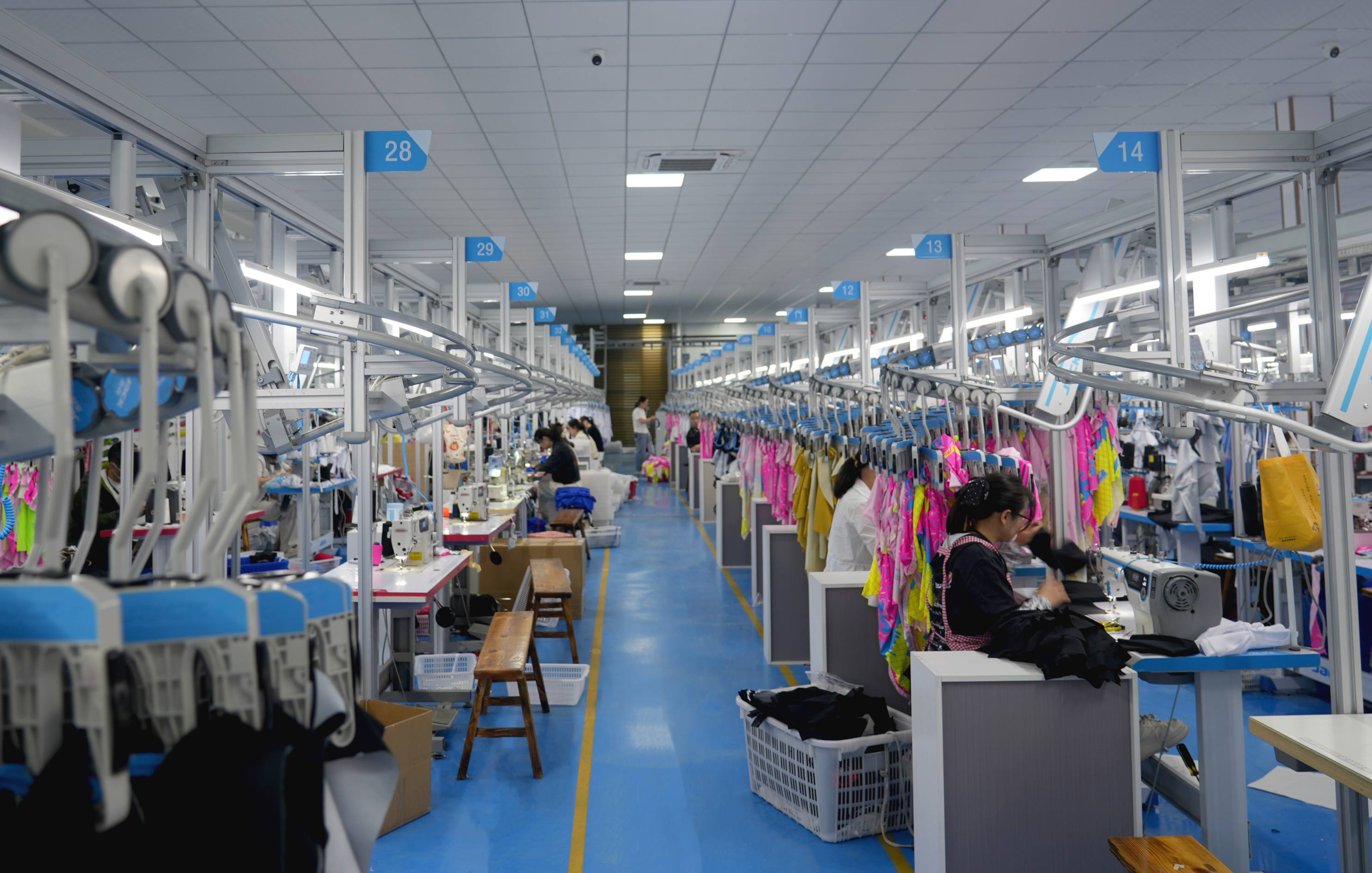
At LJVOGUES, we do not just sell period swimwear. We manufacture it. Our engineering team designs the layer architecture, selects the raw materials, specifies the membrane laminates, and runs every garment through battery testing before it leaves our facility in Shenzhen. Over 20 years and 500+ global brand partners, we have refined this technology into something that is genuinely remarkable — and in this guide, we are going to explain it in full.
This is not a marketing overview. This is the definitive engineering guide to period swimwear: what it is, how each layer works, why it does not absorb pool water, how much it can hold, and what our testing protocols actually involve.
What Is Period Swimwear? A Precise Definition
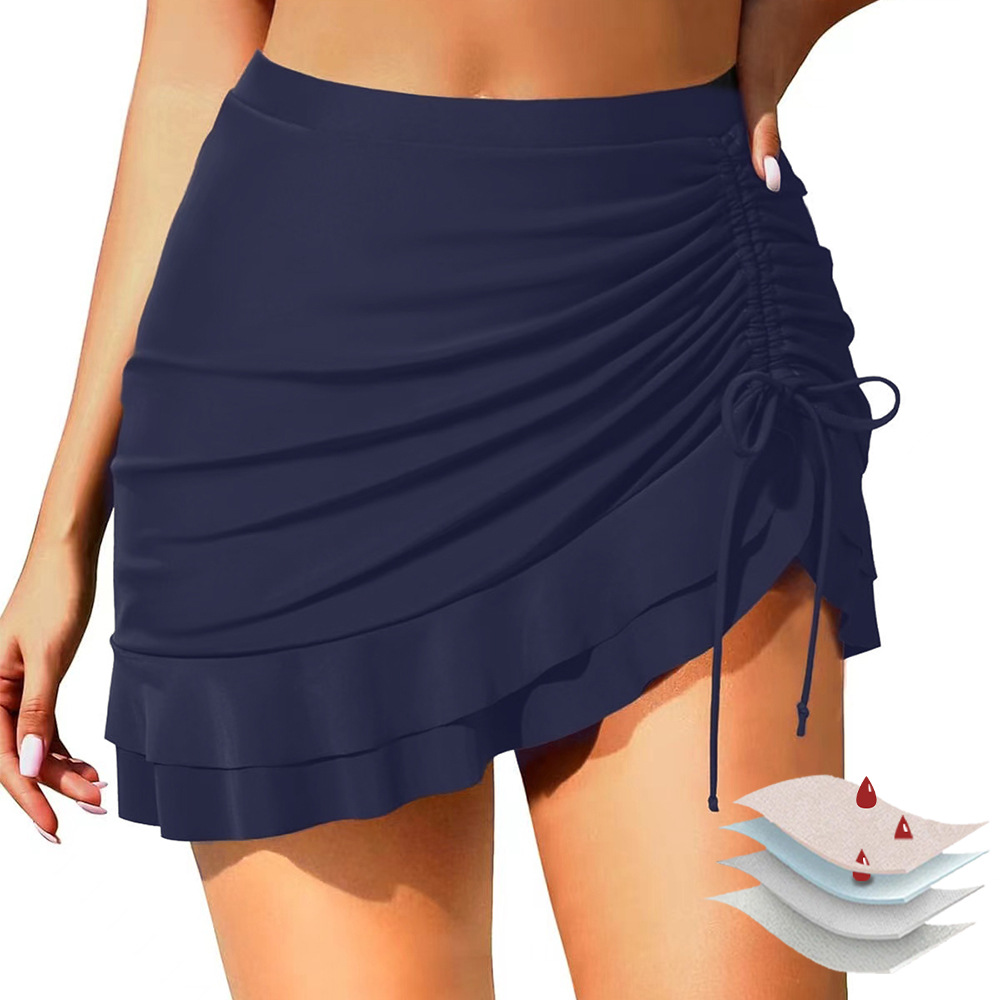
Period swimwear is a category of swimwear constructed with a multi-layer gusset system that absorbs menstrual blood while simultaneously repelling external water — whether that is chlorinated pool water, saltwater, or fresh water.
It is not a swimsuit with a pad inserted. It is not a regular swimsuit that has been treated with a water-repellent coating. It is a purposely engineered garment category where every layer of the gusset performs a distinct, non-redundant function.
The key word in the definition is selective. Period swimwear gussets must do two contradictory things at once: absorb fluid from your body and repel fluid from the environment. Achieving both simultaneously — in an active aquatic environment, under hydrostatic pressure, across repeated wear and wash cycles — is the engineering challenge that defines this product category.
How Period Swimwear Differs from Regular Swimwear
Regular swimwear has no absorbent component whatsoever. It is constructed entirely from hydrophobic (water-repelling) fabrics like nylon-spandex blends that are engineered to resist water uptake, dry quickly, and maintain their shape when wet. A standard swimsuit offers zero protection against menstrual flow during use.
How Period Swimwear Differs from Period Underwear
This is a distinction that matters enormously — and one that often confuses consumers. Period underwear is designed for dry environments. Its absorbent layers use hydrophilic (water-loving) fibers, because in everyday wear, maximum moisture uptake is the goal. If you submerge regular period underwear in a pool, those hydrophilic layers will absorb pool water just as readily as menstrual blood, saturate completely, and provide no useful protection. Period underwear is not period swimwear. The two categories use fundamentally different materials architectures.
For a deeper look at this difference, see our guide Can You Swim with Period Underwear?.
Period Swimwear vs. Regular Swimwear vs. Period Underwear
Feature | Period Swimwear | Regular Swimwear | Period Underwear |
Absorbs menstrual blood | Yes (30–35ml capacity) | No | Yes (up to 50ml, style-dependent) |
Repels pool/ocean water | Yes | Yes | No — absorbs environmental water |
Safe to submerge in water | Yes | Yes | No — gusset saturates with water |
Waterproof barrier layer | Yes (TPU membrane) | Not in gusset | No |
DWR outer treatment | Yes | Often yes (outer fabric) | No |
Works out of water | Yes — like period underwear | N/A | Yes |
Looks like regular swimwear | Yes — discreet gusset | Yes | Looks like underwear |
Can replace tampons/pads | Yes, on light-moderate flow | No | Yes, in dry environments |
Suitable for pool/ocean | Yes | Yes | No |
Washable and reusable | Yes | Yes | Yes |
The 4-Layer Technology: A Full Engineering Breakdown
The functional core of all LJVOGUES period swimwear is the gusset — a reinforced panel sewn into the crotch area that contains four discrete layers. Each layer is precisely specified and serves a distinct role. Understanding what each one does, and why, is the key to understanding how the whole system works.
Layer 1: Quick-Dry Breathable Mesh (Inner Comfort Layer)
The innermost layer — the one that contacts your skin — is a lightweight, open-structure mesh fabric. Our engineering team specifies this layer for two properties above all others: moisture transfer rate and dry-feel recovery.
The mesh must transfer menstrual fluid downward into Layer 2 immediately upon contact. Any delay means fluid pools against the skin, creating the wet, uncomfortable sensation that most people associate with other period protection products. The open mesh structure achieves this through capillary action — the tendency of liquid to flow through narrow spaces without requiring external force.
Equally important is dry-feel recovery. After transferring fluid to Layer 2, the mesh must not remain damp against your skin. This is achieved through the selection of synthetic fibers with low moisture retention — typically a fine denier polyester construction — that return to a dry tactile feel within seconds of fluid transfer.
This layer performs identically whether you are dry on a beach towel or actively swimming. It does not absorb or hold fluid; it only moves fluid inward to the next layer.
Layer 2: Selective Absorption Core (The Innovation Layer)
Layer 2 is where the engineering complexity — and the genuine innovation — of period swimwear lives.
This is an absorbent layer, but it is not a simple absorbent layer. It is a directionally selective absorbent — meaning it is designed to accept fluid from one direction (inward from the body via Layer 1) while resisting fluid from the other direction (which would be blocked by Layer 3 below).
The absorption capacity in LJVOGUES period swimwear gussets is 30–35ml per wear session — equivalent to approximately 3 to 7 standard tampons, depending on tampon absorbency. The fibers in this layer are selected for high fluid retention under compression — meaning they do not release absorbed fluid back outward when the garment is squeezed, pressed against the body, or subjected to water pressure during swimming.
Why doesn't this layer absorb pool water?
This is the question we hear most often, and it is a fair one. The answer involves the interaction of three factors:
The TPU barrier below (Layer 3) physically prevents any environmental water from reaching Layer 2 from the outside. Pool water cannot get to the absorbent core because it is blocked before it ever reaches it.
Directional fluid access. Layer 2 only has access to fluid that has passed through Layer 1 — and Layer 1 only contacts your body. Environmental water, by definition, approaches from the outer layers and is blocked by Layer 3 before it can reach the top of Layer 2.
Fiber specification. The absorbent fibers in Layer 2 are selected in part for their behavior under lateral (sideways) pressure from water. They are not free-standing sponge-like materials but woven and bonded into a structure that resists lateral infiltration.
The result is a layer that is, in operational terms, selectively absorbent: it accepts fluid from inside (your body) and holds it, while the system architecture around it prevents it from ever contacting external water.
Layer 3: Waterproof TPU Barrier Membrane
Layer 3 is a thermoplastic polyurethane (TPU) membrane — a thin, flexible, polymer film laminated between the absorbent core and the outer fabric.
TPU is the material of choice for high-performance waterproof barriers in activewear because it combines flexibility (critical for swimwear that must stretch during movement) with genuine impermeability to liquid water under pressure. Unlike older waterproofing technologies that used coatings which could crack or delaminate, TPU membranes are bonded at the molecular level and maintain their barrier properties across the full lifecycle of the garment.
This membrane performs two simultaneous jobs:
Water exclusion (inward direction): Pool water, ocean water, or lake water pushing inward from outside the suit cannot pass through the TPU membrane. The absorbent core stays dry from external water regardless of submersion depth.
Blood containment (outward direction): Menstrual blood absorbed into Layer 2 cannot pass outward through the membrane into the water around you. This is what makes period swimwear safe and discreet — there is no risk of visible leakage into pool or ocean water.
Our TPU membranes are tested to the AATCC 127 hydrostatic pressure standard — a test that measures the water column height required to force water through a fabric under controlled conditions. Our swimwear fabrics pass this test at levels that comfortably exceed the pressures encountered during recreational swimming, including lap swimming and diving.
The TPU layer also contributes to the garment's chlorine resistance. TPU does not degrade in chlorinated water the way some natural-fiber or PU-coated fabrics do, which means the barrier remains intact wash after wash, swim after swim.
Layer 4: DWR-Treated Outer Fabric (Surface Repellency Layer)
The outermost layer of the gusset — and the outer fabric of the entire swimsuit — is treated with DWR: Durable Water Repellent.
DWR is a fluorine-based or fluorine-free chemical treatment applied to the surface of textile fibers. It works by dramatically reducing the surface energy of each fiber, causing water droplets to bead up and roll off the fabric surface rather than spreading and soaking in. You have seen this effect when water beads on a waxed car hood — DWR creates the same behavior on fabric.
In the context of period swimwear, DWR at Layer 4 serves three functions:
Prevents outer fabric saturation. Without DWR, the outer nylon-spandex fabric of a swimsuit would absorb surface water during activity, becoming heavier and slower to dry. DWR prevents this "wetting out" so the outer layer stays light and quick-drying.
Reduces hydrostatic pressure on the TPU membrane. A DWR-treated outer fabric sheds most environmental water before it ever reaches Layer 3. This reduces the sustained hydrostatic load on the TPU barrier, contributing to longer-term barrier performance.
Prevents swelling at the gusset. Without DWR, a multi-layer gusset in a swimsuit would become noticeably heavy and swollen when wet — a telltale sign that the fabric construction is different from regular swimwear. DWR-treated gussets remain thin, light, and discreet throughout water activities.
LJVOGUES DWR is 100% PFAS-free. Our DWR formulations contain no per- and polyfluoroalkyl substances — the chemical class associated with environmental persistence and health concerns. We use next-generation DWR chemistries that deliver equivalent water-repellency performance without PFAS, and all our fabrics are independently verified to OEKO-TEX® STANDARD 100 and tested to confirm zero PFAS presence.

How Period Swimwear Doesn't Absorb Pool Water: The Physics
Let us address the physics directly, because this is the question that underlies every skeptical reaction to period swimwear.
Water at depth in a pool creates hydrostatic pressure — pressure exerted in all directions by the weight of the water above. At 1 meter depth, this pressure is approximately 0.1 bar (1.45 psi). At 2 meters, approximately 0.2 bar (2.9 psi). This pressure pushes in all directions, including inward through the outer fabric of a swimsuit.
Here is how the four-layer system resists this pressure:
The outer DWR fabric (Layer 4) causes water to bead and shed before it can penetrate the surface weave. Most pool water never makes it past the outer fiber surface.
The TPU membrane (Layer 3) stops anything that does get through. The TPU film is impermeable to liquid water at the pressures encountered during recreational and competitive swimming. Hydrostatic pressure tests confirm that this membrane holds under water column loads far exceeding real-world swimming conditions.
The absorbent core (Layer 2) is therefore never exposed to external water. It exists in a sealed compartment: accessible from above (via Layer 1 and your body) but hermetically blocked from below and on all sides.
The system works because it creates an asymmetric environment: open from the inside, sealed from the outside.
Expert Perspectives
The engineering behind period swimwear has attracted attention from both the medical and outdoor recreation communities.
As the team at Ruby Love explained to Outdoor Swimmer Magazine: "Period swimwear features an absorbent gusset made of three layers: a soft and breathable top layer, a highly-absorbent moisture-wicking second layer which can absorb up to three tampons worth of blood, and a water-repellent outer fabric." The multi-layer design principle is consistent across the category — LJVOGUES extends this to four discrete, independently functional layers for maximum performance separation.
From the medical community, the response has been enthusiastic — particularly for adolescents. Dr. Arna Coren, an OB-GYN, ordered period swimwear for her 13-year-old daughter before summer camp. As reported by TODAY.com in March 2026, her daughter's response was definitive: "They saved me." For young people navigating their first summer activities with a period, period swimwear removes a significant barrier to participation.
Does Period Swimwear Work Without Tampons?
Yes — on light to moderate flow days, period swimwear is designed to work as standalone protection with no additional menstrual products required.
LJVOGUES period swimwear gussets hold 30–35ml of menstrual fluid per wear session. For context:
A regular tampon absorbs approximately 5ml before reaching capacity
A super tampon absorbs approximately 10–12ml
Average total menstrual flow per period: 30–60ml across 3–7 days
Average flow on a moderate day: 5–15ml
This means that on a light or moderate flow day, a single pair of LJVOGUES period swim bottoms provides full-session protection without any additional product. For most people, this covers the majority of their swimming days during a period.
On heavy flow days, we recommend pairing period swimwear with a menstrual cup or tampon for maximum protection. The period swimwear acts as a backup layer — catching any overflow and eliminating the risk of leakage into the water, even if the primary product reaches capacity. This combination gives you complete coverage for your heaviest days without compromising your ability to swim.
Does Period Swimwear Work In AND Out of Water?
Yes — period swimwear absorbs and holds menstrual blood whether you are in the water or out of it.
The 4-layer gusset system does not require submersion to function. Out of water, it functions essentially identically to period underwear — absorbing menstrual flow from your body, wicking it away from the skin surface, and containing it within the absorbent core. The DWR outer layer, which is designed for a wet environment, has no negative effect on comfort or performance in dry conditions.
This makes period swimwear genuinely versatile. You can wear it:
At the beach, alternating between swimming and sunbathing
Around a pool, sitting on the deck between laps
On travel days to and from a water destination
During light activity on days when you want the extra reassurance of a water-safe garment
The dual-environment functionality also means period swimwear is useful for people whose flow day and swim day overlap unexpectedly — the garment is protective from the moment you put it on, not only when submerged.
What Does Period Swimwear Look Like?
One of the most consistent findings from consumer research on period swimwear is that people expect it to look different from regular swimwear. They are almost always surprised to discover that it does not.
LJVOGUES period swimwear is visually identical to conventional swimwear. The multi-layer gusset is engineered to sit flat, stay thin, and not create any visible bulk or unusual silhouette. Our DWR treatment prevents the gusset from swelling when wet, which means there is no telltale fullness in the crotch area during or after swimming.
The garment range includes:
Bikini bottoms — available in brief, high-waist, and cheeky cuts; identical to standard bikini bottoms in appearance
One-piece swimsuits — full-coverage styles with built-in period protection throughout the gusset
Swim shorts — boardshort and athletic short styles with period-protective gusset panel
All styles are available in sizes XS through 4XL, with extended plus-size options up to 8XL, across a range of colors and prints consistent with current swimwear trends.
The only visible difference you might notice — if you are looking for it — is a slightly more structured gusset lining when the garment is held open. In wear, this is not visible to anyone, including you.
Explore the full LJVOGUES period swimwear range at www.ljvogues.com/period-swimwear.html
LJVOGUES Testing Protocols: How We Verify Performance
Claims about period swimwear performance are only meaningful if they are backed by rigorous, reproducible testing. At LJVOGUES, our quality assurance program for period swimwear includes the following protocols:
1. AATCC 127 Hydrostatic Pressure Testing
This standardized test measures the pressure required to force water through a laminated fabric. We test every gusset fabric construction to confirm that the TPU membrane holds under hydrostatic loads exceeding real-world swimming pressures. No fabric goes into production until it passes this test.
2. DWR Bead-Up Testing (AATCC 22 / ISO 4920)
After fabrication and after accelerated wash cycles, gussets are tested for DWR surface repellency. Water should bead and shed off the outer surface rather than spread or soak in. We test at multiple points in a garment's lifecycle to confirm DWR durability — not just out-of-the-box performance.
3. Chlorine Resistance Testing
Period swimwear must maintain its performance properties across repeated exposure to chlorinated water. We conduct immersion testing in chlorinated solutions at pool-standard concentrations (1–3 ppm free chlorine) to verify that the TPU membrane, DWR treatment, and fabric colorfastness remain intact. A garment that works on the first pool day but degrades by the fifth is not an acceptable product.
4. Saltwater Immersion Testing
For ocean-use applications, we conduct saltwater immersion testing at standard ocean salinity (approximately 3.5% NaCl). This confirms that the selective absorption and waterproof barrier properties hold in marine environments, not just fresh water.
5. Absorption Verification Testing
We verify gusset absorption capacity against stated specifications (30–35ml) using standardized fluid simulation protocols. This confirms that Layer 2 meets its absorption targets under the compression and movement conditions encountered during actual swimming.
6. AQL 2.5 Final Inspection
Every production batch is subject to Acceptable Quality Level (AQL) 2.5 sampling inspection — the industry standard used in premium apparel manufacturing. This inspection covers dimensional conformity, stitching integrity, and seam seal performance.
All LJVOGUES period swimwear is manufactured under ISO 9001 quality management certification, and our facilities hold BSCI and SEDEX social compliance audits. Fabric materials are certified to OEKO-TEX® STANDARD 100 — confirming freedom from harmful substances, including PFAS, lead, and phthalates.

FAQ: Period Swimwear Explained
Q: How does period swimwear work?
A: Period swimwear contains a 4-layer gusset system: an inner mesh that transfers fluid, a selective absorption core that holds menstrual blood (30–35ml), a TPU waterproof membrane that blocks external water from reaching the absorbent core, and a DWR-treated outer fabric that repels water at the surface. The result is a garment that absorbs your menstrual flow while preventing pool or ocean water from entering the absorbent layers.
Q: Does period swimwear actually work in a pool or ocean?
A: Yes. The waterproof TPU membrane and DWR outer treatment work together to prevent pool water, saltwater, and freshwater from penetrating the absorbent gusset. The absorbent core only receives fluid that comes from direct body contact through Layer 1. LJVOGUES period swimwear is tested to AATCC 127 hydrostatic pressure standards and chlorine and saltwater resistance protocols.
Q: How much can period swimwear hold?
A: LJVOGUES period swimwear holds 30–35ml of menstrual fluid per wear session — the equivalent of 3 to 7 standard tampons. This capacity is sufficient for light to moderate flow days without any additional menstrual products.
Q: Does period swimwear work without tampons?
A: Yes, on light to moderate flow days, period swimwear functions as standalone period protection. No tampon, pad, or menstrual cup is needed. On heavy flow days, we recommend pairing period swimwear with a menstrual cup or tampon for additional capacity and maximum confidence.
Q: Why doesn't period swimwear absorb pool water?
A: Two layers prevent this. The DWR-treated outer fabric causes water to bead and roll off the surface rather than soaking in. Behind it, the TPU waterproof membrane creates an impermeable barrier that water cannot pass through, even under the hydrostatic pressure of swimming. Pool water never reaches the absorbent core because it is blocked before it can get there.
Q: Is period swimwear waterproof?
A: Yes — in the relevant sense. The TPU membrane within the gusset is impermeable to liquid water at all recreational swimming pressures. Period swimwear is not designed for deep-pressure activities like competitive freediving, but for all standard aquatic recreation — swimming, snorkeling, surfing, water parks — it provides full waterproof performance at the gusset.
Q: Does period swimwear work out of water?
A: Yes. The 4-layer gusset absorbs and holds menstrual blood whether you are in the water or not. Out of water, it functions like period underwear. This makes it ideal for beach days or poolside activities where you alternate between swimming and dry activities.
Q: What does period swimwear look like?
A: Period swimwear looks identical to regular swimwear. The multi-layer gusset is thin and discreet — the DWR treatment prevents any swelling or bulk when wet. LJVOGUES period swimwear is available in bikini bottoms, one-pieces, and swim shorts across a full size range (XS–8XL). No one will know you are wearing period protection unless you tell them.

The Bottom Line: Period Swimwear Is Real Engineering, Not Marketing
Period swimwear works because the engineering is sound. Each of the four layers performs a specific, verifiable function. The physics of DWR and TPU membranes are well-established. The selective absorption mechanism is not magic — it is the logical result of creating a sealed system that only has access to fluid from one direction.
At LJVOGUES, we have manufactured period swimwear for brands around the world. We know what makes a gusset construction fail (poor TPU lamination, insufficient DWR durability, substandard fiber selection) and what makes it succeed (correct material specifications, rigorous testing, and manufacturing discipline).
When you buy period swimwear from a brand that manufacturers with LJVOGUES, you are buying a product that has been engineered, tested, and verified — not just assembled and labeled.
Ready to experience it? Browse the full LJVOGUES period swimwear collection at www.ljvogues.com/period-swimwear, or contact us at www.ljvogues.com/contact to discuss OEM/ODM manufacturing for your brand.
Sources:
Ruby Love via Outdoor Swimmer Magazine: "Period swimwear features an absorbent gusset made of three layers: a soft and breathable top layer, a highly-absorbent moisture-wicking second layer which can absorb up to three tampons worth of blood, and a water-repellent outer fabric."
Dr. Arna Coren, OB-GYN, as reported by TODAY.com (March 2026): period swimwear ordered for her 13-year-old daughter before summer camp — daughter's response: "They saved me."
AATCC 127: Standard Test Method for Water Resistance: Hydrostatic Pressure — AATCC.org
OEKO-TEX® STANDARD 100 — oeko-tex.com
-
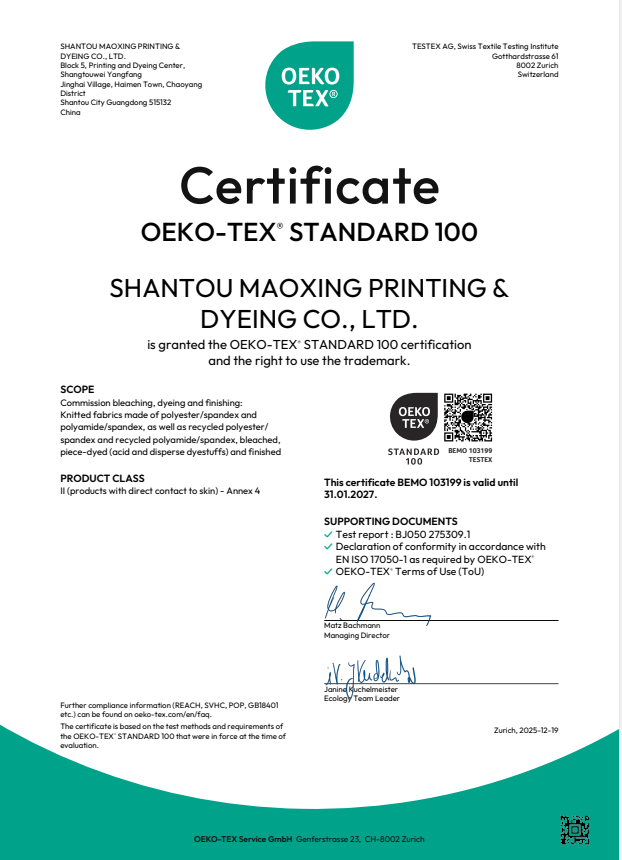
This certification is an OEKO certification for dyeing, provided by the upstream factory of the fabric.