



Table of Contents
On April 13, 2026, Texas Attorney General Ken Paxton announced a formal investigation into Lululemon — one of the most recognizable and premium-priced activewear brands in the world — over the potential presence of PFAS ("forever chemicals") in its athletic clothing.
A Civil Investigative Demand (CID) has been issued to Lululemon USA Inc. The investigation will scrutinize the company's testing methods, its Restricted Substances List (RSL), and its supply chain practices to determine whether the brand misled health-conscious consumers about the safety of its products.
Lululemon's stock dropped more than 3% on the news, adding to a nearly 22% decline year-to-date in 2026.
This is not the first time Lululemon has faced scrutiny over PFAS. In 2023, independent testing by Mamavation found 32 parts per million (ppm) of organic fluorine in Lululemon Align leggings — a widely-used indicator of intentionally added PFAS. A class-action lawsuit followed, accusing the brand of marketing its products as safe and environmentally conscious while allegedly exposing consumers to carcinogens.
Lululemon responded to the latest investigation by stating: "The health and safety of our customers is our top priority and our products meet or exceed global regulatory safety and quality standards. We mandate that all our suppliers consistently perform testing for restricted substances, including PFAS, through reputable third-party organizations".
They say they are cooperating with the investigation.
But regardless of whether Lululemon is ultimately found in violation, the damage is already done — not just to Lululemon, but to every brand that cannot prove its products are PFAS-free. Because consumers are now asking the question. And if you don't have the answer ready, they will assume the worst.

What Are PFAS, and Why Should an Intimate Apparel Brand Care?
PFAS stands for per- and polyfluoroalkyl substances — a family of over 9,000 synthetic chemicals that share one common trait: they contain fluorine-carbon bonds that are virtually indestructible. They do not break down in the environment. They do not break down in your body. That is why they are called "forever chemicals".
PFAS have been used in textiles for decades to achieve water resistance, stain resistance, and oil repellency. They are the reason some yoga pants repel sweat stains, some jackets bead water, and some underwear claims to be "moisture-resistant".
The health risks associated with PFAS exposure are documented by the U.S. Environmental Protection Agency and include:
Kidney and testicular cancer
Immune system suppression
Endocrine (hormonal) disruption
Reproductive issues including reduced fertility
Low birth weight in newborns
Thyroid disease
For intimate apparel — products worn directly against the most absorbent and sensitive skin on the body for 8–16 hours per day — the exposure pathway is direct and prolonged. This is not a theoretical risk. This is skin-to-chemical contact, every day, in the most vulnerable areas.

Intimate Apparel should place even greater emphasis on PFAS certification
The Regulatory Tsunami: PFAS Bans Are Accelerating Globally
If you are selling apparel in any major market, PFAS regulation is no longer "coming." It is here. The legislative landscape has shifted dramatically in the past 18 months:
United States
State | Regulation | Effective Date |
California (AB 1817) | Bans intentionally added PFAS in all textiles | January 2025 ✅ Already in effect |
New York | Prohibits PFAS in apparel (except outdoor severe-weather gear until 2028) | In effect |
Connecticut | Disclosure requirement for outdoor apparel containing PFAS | January 2026 ✅ Already in effect |
Colorado | Phase-out with disclosure labels, full ban by 2028 | In progress |
Texas | Attorney General actively investigating major brands | April 2026 ✅ Happening now |
Europe
Country/Region | Regulation | Effective Date |
France | Bans PFAS in clothing and cosmetics; broader textile ban by 2030 | 2026 ✅ Already in effect |
Denmark | Prohibits importing/selling PFAS-containing clothing and footwear | July 2026 |
EU (proposed) | Universal PFAS restriction under REACH — the broadest chemical ban in history | Under review, expected 2027–2028 |
The direction is unmistakable. Within 2–3 years, selling PFAS-containing apparel will be illegal in most major consumer markets. Brands that wait until the bans are fully enforced will face emergency reformulations, supply chain disruptions, and the reputational damage of being caught on the wrong side of history.
The Lululemon Lesson: Marketing Claims Without Chemical Proof Are a Liability
Here is the core of the Lululemon crisis, and the lesson every apparel brand must internalize:
Lululemon built a $40+ billion brand on wellness positioning. Their customers aren't buying yoga pants — they're buying a health-conscious lifestyle identity. The brand's entire value proposition is premised on the idea that its products are aligned with the consumer's commitment to personal wellbeing.
When independent testing found PFAS in those same products, it didn't just create a legal problem. It created an existential brand contradiction: the wellness brand was allegedly exposing its health-obsessed customers to carcinogens.
Texas AG Paxton's investigation is specifically examining whether Lululemon's marketing "may have misled health-conscious consumers concerning the safety of its products". The key word is misled — not "poisoned" or "harmed," but misled. The legal risk is not about whether PFAS cause cancer at the concentrations found. It is about whether the brand's wellness positioning created a reasonable consumer expectation of chemical safety that the products did not deliver.
This applies to every brand in the functional intimate apparel space. If your marketing says "safe," "clean," "body-friendly," "wellness," or "natural" — and you cannot produce a third-party lab report proving your products are free of harmful chemicals — you are carrying the same risk Lululemon is facing right now.
The difference between Lululemon and a brand that has proactively tested? One is spending millions on legal defense. The other is spending a few thousand on lab testing.
What PFAS-Free Means for Intimate Apparel Manufacturing
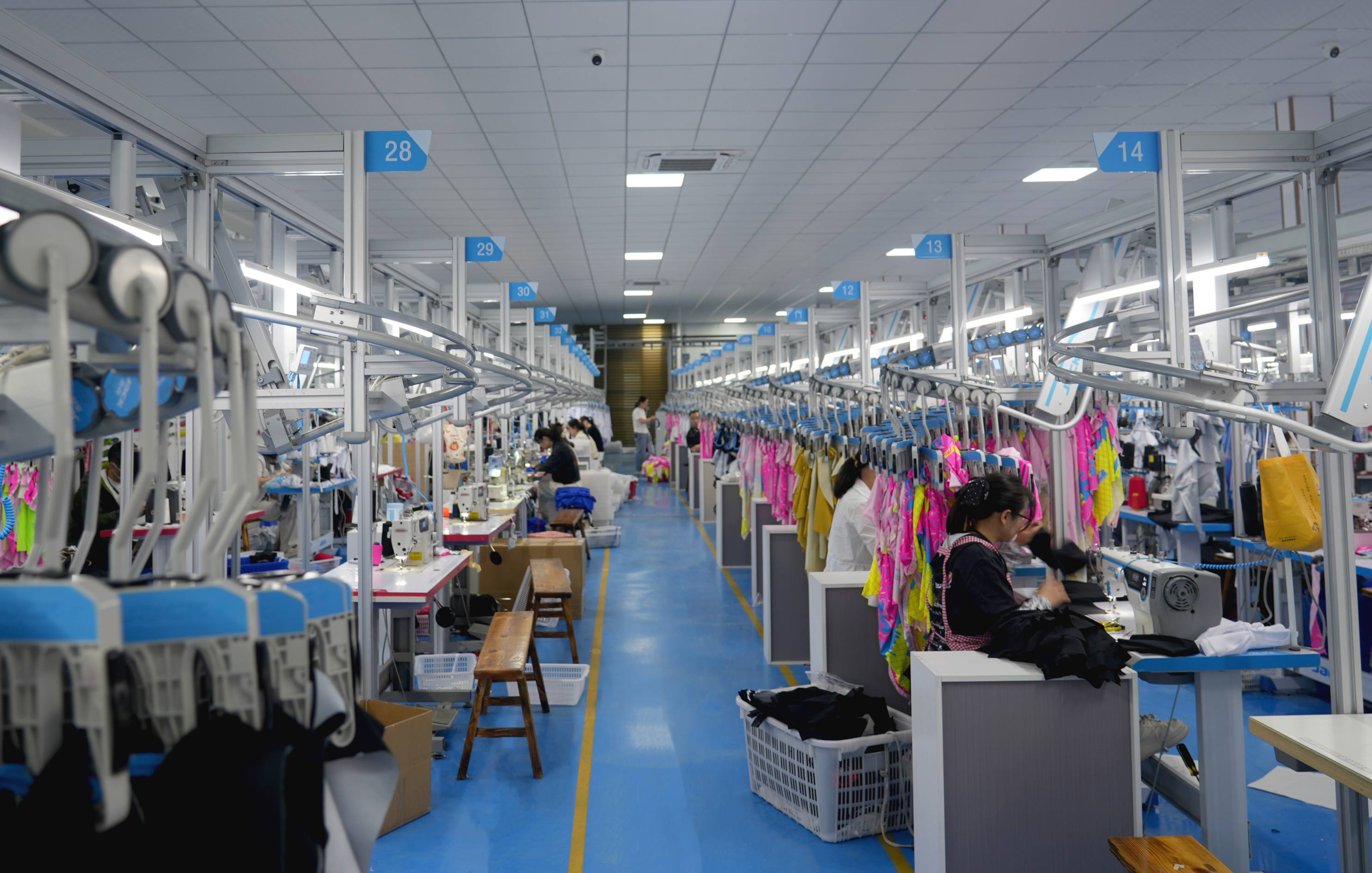
At Ljvogues, we made the decision to go PFAS-free across our entire production line before the regulatory wave hit. Here is what that means in practice, and what every brand should understand about the manufacturing implications:

Ljvogues PFAS-Free Certification
Where PFAS Typically Hide in Intimate Apparel
PFAS don't appear in textiles by accident. They are intentionally added during manufacturing for specific functional purposes:
Component | Why PFAS Was Used | PFAS-Free Alternative |
Waterproof barrier (TPU membrane) | Water resistance, liquid blocking | PFAS-free TPU membranes (same performance, no fluorine chemistry) |
Fabric finishing / DWR coating | Stain resistance, moisture repellency | Silicone-based or wax-based DWR finishes |
Gusset lining | Moisture management, quick-dry properties | Mechanical wicking through fabric structure, not chemical coatings |
Elastic and waistband coatings | Durability, sweat resistance | Untreated or silicone-treated elastics |
The most common hiding place in period underwear is the waterproof barrier layer. Many manufacturers use TPU membranes that contain fluorinated compounds to enhance waterproofing. Cheaper TPU films from unverified suppliers are the highest-risk component in any leak-proof garment.

The TPU coating on Ljvogues' period underwear does not contain PFAS
How to Verify PFAS-Free Status
Saying "we don't use PFAS" is not enough. Your supply chain has multiple tiers, and PFAS can enter at any stage — from the fiber mill to the dyehouse to the membrane laminator.
The only credible verification is third-party laboratory testing for total organic fluorine, which is the chemical marker shared by all PFAS compounds. If organic fluorine is detected above the threshold (typically 100 ppm for "intentionally added" determination), PFAS is present — regardless of what your supplier's spec sheet says.
At Ljvogues, our PFAS-free status is verified by independent lab testing. We test the finished product — not the raw materials, not the supplier certificates, but the actual garment that ships to your warehouse. Because the only test that matters is the one performed on the product your customer wears.
We also carry full REACH/SVHC compliance verified by Eurofins MTS, testing against all 253 Substances of Very High Concern on the latest ECHA Candidate List (published February 4, 2026). This covers not just PFAS but the entire spectrum of chemical safety risks — including formaldehyde, azo dyes, nickel release from metal hardware, heavy metals, phthalates, and PAHs.

Ljvogues fully complies with REACH/SVHC standards
The Competitive Advantage of Being Proactively Clean
The Lululemon investigation is creating a market-wide ripple effect. In the coming weeks and months, three things will happen:
1. Consumers will start asking questions. Every brand selling activewear, intimate apparel, or functional clothing will face the question: "Do YOUR products contain PFAS?" If you cannot answer immediately with a lab report, you will lose the sale — and possibly the customer permanently.
2. Retailers will tighten their RSLs. Major retailers (Amazon, Target, Zalando, ASOS) will accelerate their Restricted Substances List requirements. Brands that proactively carry PFAS-free certification will clear onboarding faster. Brands that don't will face delays, additional testing costs, and potential delisting.
3. "PFAS-Free" will become a premium positioning signal. Just as "organic" transformed food marketing and "cruelty-free" transformed cosmetics, "PFAS-Free" is becoming the trust badge for intimate apparel. The brands that adopt it first will own the positioning. The brands that adopt it last will look like they were forced into it by regulation — not by conscience.
A Practical Action Plan for Brand Owners
If you are reading this as a brand owner, product developer, or sourcing manager, here is your immediate action plan:
This Week
Ask your current manufacturer: "Can you provide a third-party lab report showing our products are PFAS-free? Specifically, total organic fluorine testing on the finished garment."
If they say yes and send a report — review it carefully. Make sure it tests the finished product, not just raw materials.
If they hesitate, deflect, or say "our suppliers don't use PFAS" without lab proof — you have a problem.
This Month
Audit your waterproof barrier. If your period underwear or leak-proof products use a TPU membrane, demand the specific TPU supplier name and a PFAS-free certification for that membrane. This is the highest-risk component.
Review your marketing language. If your website, packaging, or Amazon listing uses words like "safe," "clean," "non-toxic," "wellness," or "body-friendly" — make sure you can back every claim with documentation. The Texas AG investigation is specifically targeting the gap between marketing claims and chemical reality.
This Quarter
Build your compliance file. The brands that will thrive in the post-PFAS regulatory environment are the ones with a complete documentation stack: PFAS-free test report + REACH/SVHC compliance + OEKO-TEX certification. This isn't just defensive — it's a sales tool. Share it on your product pages. Reference it in your retailer pitch decks. Make it part of your brand story.
What Ljvogues Provides to Every Client
Every product that ships from our factory can be accompanied by the following compliance documentation:
Document | What It Proves | Lab/Authority |
PFAS-Free Test Report | Zero per- and polyfluoroalkyl substances in finished product | Independent third-party laboratory |
REACH/SVHC Report (253 substances) | Full compliance with EU chemical safety regulation, all 253 SVHC substances not detected | Eurofins MTS (Dongguan) |
Azo Dye Test | No banned carcinogenic amines in fabric dyes | Eurofins MTS |
Formaldehyde Test | Below EU limits for direct skin contact textiles | Eurofins MTS |
Nickel Release Test | Metal hardware (hooks, clasps) safe for prolonged skin contact | Eurofins MTS |
ISO 9001 / ISO 14001 | Quality management and environmental management system certified | Certified |

Standard-compliant dyeing process
This documentation is not an upsell. It is part of how we operate. Because in a world where a $40 billion brand can be brought to its knees by a chemistry report, the factory that can prove its products are clean is the factory that protects your brand.

The Real Cost of "Cheap and Untested"
Let me leave you with a simple comparison.
The cost of comprehensive chemical safety testing (PFAS + REACH/SVHC + formaldehyde + azo dyes + nickel release) for a single product style is approximately $1,500–3,000 USD, depending on the number of components tested.
The cost of a single state attorney general investigation? Lululemon's stock has lost 22% of its value in 2026 so far — that is billions of dollars in market capitalization. And the legal fees, the PR crisis management, the potential fines, and the long-term brand trust erosion haven't even been calculated yet.
$2,000 in lab testing. Or billions in brand damage.
That is not a difficult decision. But it is a decision that must be made before the investigation lands on your desk, not after.
The Lululemon crisis is not a Lululemon problem. It is an industry wake-up call. And the brands that wake up first will be the ones still standing when the dust settles.
Need to verify your products are PFAS-free before the regulatory window closes? We can arrange third-party testing for your existing inventory or develop new PFAS-free products from scratch. Our compliance team will guide you through the entire process — from lab selection to report interpretation to marketing-safe claim language.
Ocean Yang is the CEO of Ljvogues, a Shenzhen-based manufacturer specializing in functional intimate apparel. His factory is PFAS-free, REACH/SVHC compliant, and ISO 9001 & ISO 14001 certified — because when the attorney general comes calling, the only brands that survive are the ones with proof.