



Table of Contents
TL;DR
The global activewear market is on track from USD 345.79 billion in 2025 to USD 720.25 billion by 2034. A new sub-category — leakproof activewear — is emerging at the intersection of period underwear technology and athletic performance wear. Three product archetypes are leading: period biker shorts, leakproof leggings, and girls' safety shorts. This article maps the market forces, competitive landscape, manufacturing challenges, and a five-step framework for brands building in this space.
A Brand Founder Reached Out. The Inquiry Said a Lot.
Two weeks ago, a brand founder reached out to us through our sourcing inquiry form. The message was specific enough to be memorable:
"We are developing a reusable moisture-protective clothing brand focused on women's and girls' activewear and everyday protective products. Initial products include leakproof underwear, period biker shorts, girls' safety shorts for school and sport, and future leakproof leggings and activewear. We are looking for a manufacturing partner with experience in absorbent gusset systems, TPU/PUL waterproof barrier layers, moisture-wicking fabrics, seamless or bonded construction, and stretch/compression activewear integration."
In my twenty years manufacturing intimate apparel in Shenzhen, inquiries like this one used to be rare. In 2026, they are arriving weekly. The brief captures precisely what is happening at the market level: the leak-protection technology that defined period underwear over the last decade is migrating — systematically — into the much larger activewear category.
This article exists because that brand founder is not alone. If you are building, sourcing, or investing in leakproof activewear, here is what the market data and manufacturing reality actually look like.
Part 1: Why Leakproof Activewear Is Emerging Now
Four structural forces are converging to make this category viable in 2026.
1.1 Rising Female Athletic Participation
Female participation in organized sport has grown significantly across all demographics. The NCAA recorded a 5% year-on-year upsurge in female student-athletes between the 2020–21 and 2021–22 academic years — a meaningful signal for both youth and collegiate apparel markets. More women training at higher intensities, more often, creates both the need and the commercial demand for apparel that performs under physiological conditions that standard activewear was never designed to address.
1.2 The Athleisure Normalization Effect
Athleisure legitimized performance fabrics as everyday wear. That cultural shift matters for leakproof activewear because it expands the use-case from "during a workout" to "all day, every day." A period biker short that can transition from cycling class to a school run or a work-from-home afternoon represents an entirely different value proposition from traditional period underwear, and that is what buyers are now asking for.
1.3 The Reusables Wave
The reusable period product market is growing at a rate that justifies long-term product investment. Future Market Insights data shows reusable period panties scaling from USD 180.4 million to USD 859.7 million by 2035. As consumer behaviour normalises reusable period underwear — with an industry-standard functional lifespan of approximately 50 wash cycles — the next logical consumer question becomes: "Can the same protection work in my leggings?"
1.4 Consumer Expectations Have Outpaced Product Supply
Most activewear on the market today treats physiological leakage as a non-issue. Most period underwear treats athletic performance as a secondary concern. There is a documented gap between what female athletes need and what is currently available. The brands that close that gap first will have a structural first-mover advantage in a category with limited incumbent competition.Ljvogues

Ljvogues-Yoga Pilates Leggings
Part 2: The Numbers — A Multi-Billion-Dollar Convergence
The leakproof activewear opportunity is best understood not as a standalone niche, but as the intersection of two large, growing markets.
2.1 Global Activewear: The Parent Market
According to Fortune Business Insights, the global activewear market was valued at USD 345.79 billion in 2025 and is projected to reach USD 720.25 billion by 2034, growing at a compound annual growth rate (CAGR) of 8.57%. A parallel estimate from Coherent Market Insights places the active wear segment at USD 338.97 billion in 2026, scaling to USD 526.75 billion by 2033 at a 6.5% CAGR.
The sports and fitness wear sub-segment — most directly relevant to activewear with functional performance claims — was valued at USD 75.21 billion in 2025 and is forecast to reach USD 95.29 billion by 2030 at a 5.5% CAGR.
These numbers matter for leakproof activewear brands because they define the market ceiling. Even a 0.5% penetration of the sports and fitness wear segment by period-functional activewear would represent a USD 476 million market in 2025 terms.
2.2 Cycling Wear: The Biker Short Addressable Market
Period biker shorts — arguably the most technically complex and commercially promising sub-category — sit within the cycling wear segment. Coherent Market Insights values global cycling wear at USD 8.70 billion in 2026, growing to USD 12.90 billion by 2033 at a 5.8% CAGR. Europe holds the largest regional share at 40.7%, while apparel accounts for 72.4% of the total cycling wear market. The biker short form factor, already mainstream in both cycling and athleisure contexts, provides a ready-made commercial vehicle for leakproof integration.

ljvogues menstrual cycling shorts
2.3 The Youth and School Uniform Angle
Girls' safety shorts — designed for wear under school uniforms during menstruation or as protective underlayers during sport — represent a distinct entry point. The global school uniform market was valued at USD 29.98 billion in 2025. Within this context, safety shorts occupy a narrow but defensible niche with institutional procurement potential: schools, sports academies, and uniform suppliers are all plausible B2B buyers.
Part 3: The Three Sub-Categories Leading the Wave
Not all leakproof activewear is the same product. Three distinct archetypes have emerged, each with a different technical profile and market entry logic.
3.1 Period Biker Shorts
The biker short format is technically demanding because it requires high-compression performance fabric to coexist with an absorbent gusset system. The shorts must manage moisture both from perspiration (outward, via moisture-wicking) and from menstrual flow (inward, via absorption and containment). These are, in engineering terms, competing functions operating in the same textile layer.
The commercial opportunity is significant: biker shorts are already one of the best-selling activewear silhouettes globally, and the delta between "standard biker short" and "period-capable biker short" is a clear product differentiation point that justifies a price premium.
3.2 Leakproof Leggings
Full-length leakproof leggings present a different challenge: the absorbent zone must be designed for longer wear periods and varied activity levels — from low-intensity yoga to high-intensity running. The gusset engineering must account for both central absorption and rear extension for protection during seated positions. This is the highest-volume opportunity within the category because leggings represent the largest single product segment in women's activewear.

Full-length leakproof legging
3.3 Girls' Safety Shorts
This sub-category serves two distinct use cases: menstrual protection for girls aged 10–16 during school or sport, and general protective underlayers worn beneath skirts or dresses during athletic activity. The latter does not require absorbent capacity — only a secure, comfortable barrier layer — which simplifies manufacturing. The menstrual-protection variant requires a calibrated absorbent system appropriate to lighter flow typical of early menstrual cycles. This is a high-growth segment in markets with increasing awareness of menstrual health in schools, including the UK, Australia, and parts of Southeast Asia.
Part 4: The Competitive Landscape
The leakproof activewear market is nascent but no longer empty. Several brands have established early positioning, primarily by extending from period underwear into activewear formats.
Competitive Brand Comparison
Brand | Product Type | Absorbency Claim | Primary Market | Structural Approach |
Knix | Period leggings | 1–3 regular tampons (~10–30ml) | North America (DTC) | Integrated absorbent layer, compression fabric |
Modibodi x Puma | Period activewear (collab) | Modibodi standard ranges | Australia / Global | Sport bra, leggings — launched May 2022 |
Thinx Active | Active leggings, shorts | ~3 regular tampons (~30ml) | North America (DTC) | High-waist legging with leak-proof lining |
Dear Kate | Activewear | ~1.5 regular tampons (~15ml) | North America | Seamless, bonded construction |
The Modibodi x Puma collaboration, launched in May 2022, is particularly significant for B2B buyers: it validated the category at mass-market scale and demonstrated that performance sportswear brands are willing to co-develop period-functional activewear with specialist manufacturers. A second Modibodi x Puma collection followed within the same calendar year.
Key observations from the competitive landscape:
Absorbency ranges span 15–30ml, covering light-to-moderate flow. There is an underserved market for higher-capacity period activewear (35–50ml) for heavy flow or overnight applications.
Most incumbents are DTC-native. This creates a private-label and wholesale opportunity for brands willing to supply retail channels, sports chains, or institutional buyers.
No incumbent has established a strong position in girls' safety shorts specifically. This is the least contested entry point.
For a deeper look at how period underwear brands typically structure their OEM partnerships before extending into activewear, see [internal link: Article 2 — Period Underwear OEM vs ODM vs Private Label].

Part 5: What Makes Leakproof Activewear Hard to Manufacture
This is where the category complexity concentrates. Leakproof activewear is not simply period underwear in athletic fabric. It involves five distinct engineering challenges that manufacturers without activewear-specific experience will struggle to resolve.
Manufacturing Challenge Overview
Challenge | Root Cause | Why It Matters |
Compression vs. absorption conflict | High-compression fabrics resist fluid absorption | Absorbent gusset loses function under garment compression |
TPU barrier stability under dynamic stretch | Thermally bonded films delaminate under repeated elongation | Barrier integrity fails mid-wash or mid-wear cycle |
Wet-state motion testing | Standard QC tests are static | A garment can pass dry-state QC and fail during a 45-minute run |
Moisture-wicking vs. leak-proofing balance | Wicking draws moisture outward; barrier retains it | These functions must be managed in spatially distinct layers |
Seam integrity at gusset junctions | Athletic stress on seams differs from underwear stress | Flatlock stitching norms from underwear do not automatically transfer |
5.1 Compression vs. Absorption
A standard compression fabric — typically 80% nylon / 20% elastane — exerts continuous pressure on the absorbent core within the gusset. This pressure can reduce the absorbent material's effective uptake capacity by 20–40% compared to its rated capacity under no-compression conditions. Manufacturers must compensate through gusset geometry (wider and deeper absorbent zones) and through absorbent material selection (higher-loft materials that retain capacity under compression).
5.2 TPU Barrier Stability Under Dynamic Stretch
The leak-proof barrier layer in quality period activewear uses thermally bonded polyurethane laminate (TPU), which is preferable to solvent-laminated PUL because it contains no chemical solvents, is more breathable, and is softer against the skin. However, TPU films must be bonded to stretch fabrics that routinely elongate 50–80% during athletic use. The bond must maintain integrity not only at full extension but through the repeated compression-and-release cycle of a 50-wash garment life, which is the industry standard for functional lifespan. Bonding temperature, dwell time, and film thickness are all critical variables that require calibration specific to the athletic fabric substrate.
5.3 Wet-State Motion Testing
Standard QC protocols for period underwear test absorption capacity in static conditions: a measured volume of synthetic fluid is applied and uptake or leakage is assessed. This is insufficient for activewear. A period biker short worn during a 45-minute cycling class is under constant dynamic stress — compression, flexion, and rotational movement — that can cause fluid migration to gusset edges not identified by static testing. Wet-state motion testing, where garments are evaluated under simulated physical activity while containing a fluid load, is not yet universal in the industry and represents a significant differentiator for manufacturers who have implemented it.
5.4 Moisture-Wicking vs. Leak-Proofing
Athletic fabrics are engineered to move moisture away from the body. The top layer of a leakproof activewear gusset must simultaneously allow menstrual fluid in (absorption), prevent perspiration from reducing absorbent capacity (selective wicking), and never allow fluid to reach the outer face of the garment (barrier containment). These three functions must be managed across distinct fabric layers — the strategic placement of absorbent material is concentrated in the central gusset, with channelling structures that direct fluid away from edges. This multi-layer engineering is beyond the capability of manufacturers who only assemble standard activewear.
5.5 Seamless and Bonded Construction Alternatives
Traditional period underwear uses flatlock stitching at gusset seams. In high-performance activewear, seam bulk creates pressure points and potential failure sites. Many premium leakproof activewear products require seamless or thermally bonded seam alternatives — techniques that demand different machinery, operator training, and QC protocols than standard sewing-based construction. For brands targeting the premium athletic market, seam construction is not a secondary consideration. It is a core product specification that must be defined before sampling begins.
For guidance on how to audit a manufacturer's QC capabilities before placing an order, see [internal link: Article 10 — Period Underwear Quality Control: The Complete QC Checklist].

Part 6: How LJVOGUES's Manufacturing Stack Maps Onto This Category
LJVOGUES began as a period underwear OEM and built its technical capabilities around absorbent system engineering. The extension into leakproof activewear is a natural one — and in practice, the core manufacturing stack transfers directly.
6.1 The 4-Layer Leak-Proof Protection System
Our standard 4-layer construction for period underwear carries over to activewear formats: moisture-wicking athletic outer layer, absorbent core, TPU barrier film, and outer shell. For activewear, the outer shell and wicking layer are replaced with compression-grade performance fabrics while the absorbent core and barrier are retained and re-calibrated for the higher-stress application. Absorbency capacity across our activewear-adapted range spans 15ml to 50ml depending on gusset specification.
6.2 Selective Absorption Technology and Strategic Placement
Our Selective Absorption Technology — originally developed for period underwear — manages the tension between perspiration wicking and menstrual fluid retention. In activewear applications, this becomes critical: the gusset must not become saturated with perspiration before it absorbs menstrual flow. Our engineering team uses channelling structures and zonal absorption placement to concentrate absorbent capacity where it is most needed and to direct fluid away from garment edges.
6.3 TPU Processing Capability
LJVOGUES uses thermally bonded TPU throughout our barrier layer construction — no chemical solvents, no off-gassing, no PFAS. Our 100% PFAS-free certification covers all barrier materials, and our process parameters have been validated specifically for high-stretch athletic substrates. This is not universal in the period underwear manufacturing sector; many factories that produce standard period underwear have not validated their TPU bonding process for 50–80% elongation cycling.
6.4 Certifications Relevant to Activewear Markets
For B2B buyers entering the activewear market, the certification stack matters for retail channel access:
OEKO-TEX STANDARD 100 — required by most European retailers for skin-contact garments
PFAS-free verified — increasingly mandated in California, EU, and UK markets
BSCI / SEDEX — social compliance audits required by most major retail buyers
ISO 9001 / ISO 14001 — quality and environmental management systems
Our AQL 2.5 quality control standard and 99.8% order consistency rate reflect the production discipline required for retail and institutional supply chains, not just DTC brands. For a full breakdown of which certifications apply to which markets, see [internal link: Article 6 — Period Underwear Certifications Explained: OEKO-TEX, GOTS, BSCI, PFAS-Free].
"When a brand founder asks us about leakproof activewear, the first thing I ask is: what is the primary use case — high-intensity sport, all-day wear, or school/institutional? The absorbent specification, barrier choice, and seam construction all change depending on the answer. There is no single correct design; there is only the right design for that specific use case."
— Ocean Yang, Founder, LJVOGUES
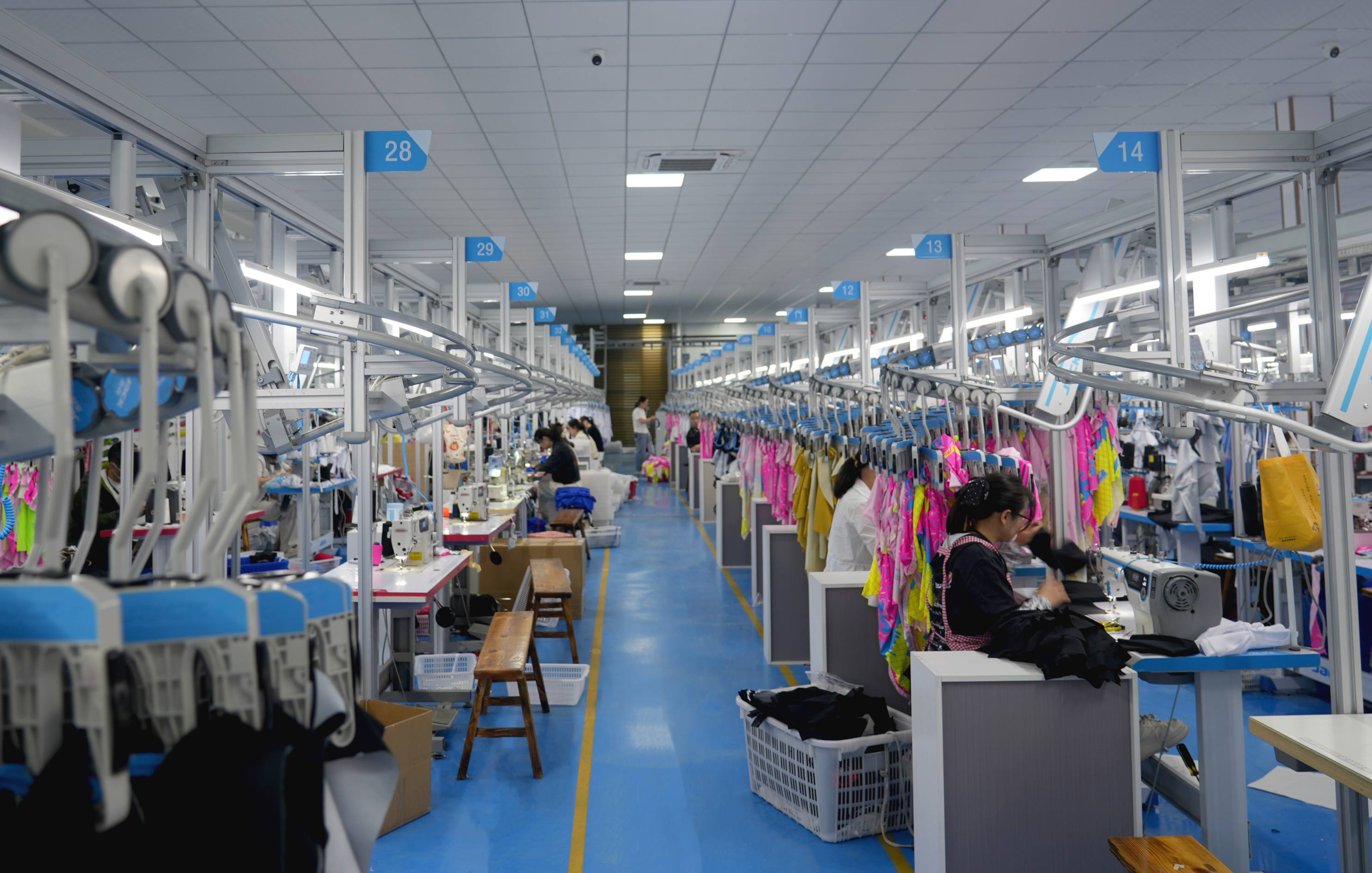
LJVOGUES operates from an 8,000 m² production facility in Shenzhen, with over 20 years of intimate apparel manufacturing experience and more than 500 global brand clients. Our MOQ for period activewear development starts at 300 pieces per style for sampling programmes, with bulk production programmes typically beginning at 500 pieces. Sample lead time is 10–15 days; bulk production lead time is 35–45 days depending on order volume and fabric sourcing requirements.

ISO9001 certificate
Part 7: A 5-Step Framework for Brands Building in This Space
The following framework is based on the common sourcing questions we receive from brands entering the leakproof activewear category.
Step 1: Define Your Use Case and Absorbency Tier
Before approaching any manufacturer, establish the primary activity context: high-intensity sport (cycling, HIIT, running), moderate activity (yoga, walking, gym), or daily-wear (school, casual). This determines the absorbency tier — light (15ml), moderate (20–30ml), or heavy (35–50ml) — and consequently, the gusset geometry, absorbent material, and barrier specification. Without this decision, sampling will produce unusable results.
Step 2: Evaluate Manufacturers on Activewear-Specific Criteria
Period underwear manufacturing capability does not automatically transfer to activewear. When evaluating potential manufacturing partners, request:
Evidence of wet-state motion testing protocols
TPU bonding validation data for high-stretch substrates
Sample garments in athletic fabric (not just underwear fabric)
Certifications relevant to your target market (OEKO-TEX, PFAS-free, BSCI)
Experience with seamless or bonded construction if relevant to your design
Do not accept a manufacturer's self-assessment on these points. Request physical samples and test them under conditions that reflect actual use. For a structured due diligence process, see [internal link: Article 1 — How to Choose a Period Underwear Manufacturer: The Complete 2026 Buyer's Guide].
Step 3: Plan Your SKU Matrix Before Sampling
Leakproof activewear SKU proliferation is a common early-stage mistake. A brand that launches with three silhouettes in three absorbency levels and six colourways has created 54 SKUs — an inventory and production management challenge that will strain any brand at the 500–2,000 unit per SKU launch scale. A more defensible approach: launch one to two silhouettes in two absorbency levels and three colourways. Expand based on sell-through data.
For detail on MOQ tiers and how to structure a phased production programme, see [internal link: Article 4 — Period Underwear MOQ Guide].
Step 4: Build Your Compliance Strategy Early
Leakproof activewear occupies a regulatory grey zone: it is neither medical device nor standard garment in most jurisdictions. However, the materials used — particularly barrier layers and absorbent cores — may be subject to PFAS restrictions in California (AB 1817), EU REACH regulations, and UK chemical safety standards. PFAS-free certification at the manufacturing level is the most straightforward route to compliance across all major markets. If your target market includes EU retail channels, OEKO-TEX STANDARD 100 certification on all skin-contact materials is effectively mandatory. For a full compliance overview, review [internal link: Article 6 — Period Underwear Certifications Explained: OEKO-TEX, GOTS, BSCI, PFAS-Free].
Step 5: Sequence Your Market Entry by Sub-Category
Not all three sub-categories carry the same market entry risk. Girls' safety shorts (non-absorbent underlayer variant) have the lowest manufacturing complexity and the lowest consumer education requirement. Period biker shorts have the highest competitive interest and the highest technical complexity. Leakproof leggings offer the largest addressable market but require the most sophisticated absorbent integration.
A rational sequencing for a new entrant: launch girls' safety shorts or a light-absorbency period biker short to validate manufacturing partnership and consumer demand, then expand into leggings and higher-capacity formats as the brand scales.
Frequently Asked Questions
Q1: What is leakproof activewear, and how does it differ from period underwear?
Leakproof activewear combines the absorbent and barrier technology of period underwear with performance athletic fabrics and construction techniques — compression fabrics, moisture-wicking layers, flatlock or bonded seams. The primary difference is that activewear is engineered to perform under athletic stress (movement, perspiration, repeated washing) rather than for static or low-activity wear.
Q2: What absorbency levels are available in period activewear?
Current market offerings from brands like Knix (10–30ml), Thinx Active (~30ml), and Dear Kate (~15ml) cover light to moderate flow. LJVOGUES produces leakproof activewear with absorbency ranging from 15ml to 50ml depending on gusset specification. Higher-capacity options (35–50ml) for heavy flow or overnight use remain underserved by current incumbents.
Q3: How long does leakproof activewear last?
The industry standard functional lifespan for absorbent period garments is approximately 50 wash cycles, after which absorbent capacity typically begins to decline. Barrier layer integrity may persist longer if the TPU bonding process was correctly calibrated for the specific fabric substrate. Brands should disclose expected functional lifespan in product communications.
Q4: What certifications should I require from a leakproof activewear manufacturer?
At minimum: OEKO-TEX STANDARD 100 (skin-contact safety), 100% PFAS-free verification (chemical safety for US, EU, and UK markets), and BSCI or SEDEX (social compliance for retail channel access). ISO 9001 signals quality management system maturity. For brands targeting the EU market, REACH compliance documentation for all barrier materials is also advisable.
Q5: What is TPU, and why does it matter for period activewear?
TPU (thermoplastic polyurethane) in this context refers to a thermally bonded barrier film laminated to the inner layer of the gusset. It is preferable to solvent-laminated PUL because it contains no chemical solvents, is more breathable, softer, and is compatible with PFAS-free certification. In activewear applications, TPU must be bonded to high-stretch athletic substrates and validated to maintain integrity through 50+ wash cycles and repeated elongation cycles during wear.
Q6: What is the minimum order quantity for custom leakproof activewear?
MOQs vary by manufacturer and product complexity. At LJVOGUES, development sampling begins at 300 pieces per style. Bulk production programmes typically require a minimum of 500 pieces per style. For phased market entry strategies that minimise inventory risk, see [internal link: Article 4 — Period Underwear MOQ Guide].
Q7: Can the same manufacturer produce both period underwear and leakproof activewear?
Not necessarily. A manufacturer with expertise in period underwear may not have validated their TPU bonding process for high-stretch athletic fabrics, may lack wet-state motion testing capability, or may not work with compression-grade fabrics. When evaluating a manufacturer for activewear, request activewear-specific samples and testing documentation, not just period underwear credentials.
Q8: What are the most common mistakes brands make when entering the leakproof activewear category?
Three recurring mistakes: (1) Over-indexing on product variety at launch — too many SKUs before validating consumer demand; (2) Using a period underwear manufacturer without confirming their activewear-specific capabilities, leading to sampling failures; and (3) Underestimating the compliance workload — particularly PFAS restrictions in the US and EU — and discovering it after production has begun rather than before.
Sources
Fortune Business Insights — Global Activewear Market: https://www.fortunebusinessinsights.com/activewear-market-107923
Coherent Market Insights — Cycling Wear Market: https://www.coherentmarketinsights.com/market-insight/cycling-wear-market-1636
Coherent Market Insights — Active Wear Market: https://www.coherentmarketinsights.com/industry-reports/active-wear-market
The Business Research Company — Sports and Fitness Wears Global Market Report: https://www.thebusinessresearchcompany.com/report/sports-and-fitness-wears-global-market-report
UniformMarket — School Uniform Statistics: https://www.uniformmarket.com/statistics/school-uniform-statistics
Future Market Insights — Reusable Period Panties Market: https://www.futuremarketinsights.com/
Female Engineering — Period Panties: 5 Things You Need to Know (50-wash lifespan): https://www.femaleengineering-official.com/sk/articles/period-panties-5-things-you-need-to-know?hl=en
CNHAVING — Period Underwear Technology: A Buyer's Guide to Absorbency, Fabrics, Leak-Proofing: https://cnhaving.com/period-underwear-technology-materials-a-buyers-guide-to-absorbency-fabrics-leak-proofing/
NCAA — Female Student-Athlete Participation Data: https://www.ncaa.org/
Grand View Research — Period Panties Market (referenced in series context): https://www.grandviewresearch.com/
About the Author
Ocean Yang is the Founder of LJVOGUES (Shenzhen Ljvogues Sports Fashion Limited), an OEM/ODM manufacturer specialising in period-proof intimate apparel and activewear. With over 20 years of manufacturing experience and 500+ global brand clients, Ocean leads LJVOGUES's product engineering and client development programmes from the company's 8,000 m² production facility in Shenzhen, China. LJVOGUES holds OEKO-TEX STANDARD 100, BSCI, SEDEX, ISO 9001, ISO 14001, GRS, and FDA certifications, and manufactures exclusively PFAS-free products.
For OEM/ODM enquiries on leakproof activewear development, visit www.ljvogues.com.