



Table of Contents
Period underwear manufacturers should have textile safety certificates, chemical compliance reports, quality systems, and social audit documents. The most important documents are OEKO-TEX Standard 100, PFAS test reports, REACH/SVHC declarations, CPSC flammability compliance for the US, BSCI or SMETA audits, and ISO 9001.
For buyers, the key rule is simple: certificates must match the actual product, material, color, and production batch.
Last updated: May 19, 2026
Author: Ocean Yang, Founder of Ljvogues
Commercial disclosure: This article is published by Ljvogues. Ljvogues manufactures OEM and private label period underwear, period swimwear, and functional intimate apparel.
Quick Answer
Certification / Report | What It Proves | Priority |
OEKO-TEX Standard 100 | Textile product tested for harmful substances | Essential |
PFAS test report | No regulated PFAS detected or intentionally added | Essential |
REACH / SVHC | Chemical compliance for EU market | Essential |
CPSC 16 CFR Part 1610 | US clothing textile flammability compliance | Essential for US |
BSCI or SMETA | Social and ethical factory audit | Strongly recommended |
ISO 9001 | Quality management system | Recommended |
GRS / RCS | Recycled material verification | Needed for recycled claims |
GOTS / OCS | Organic textile verification | Needed for organic claims |
ISO 14001 | Environmental management system | Useful for retail buyers |
OEKO-TEX Standard 100
OEKO-TEX Standard 100 is one of the most important certifications for period underwear. It shows that textile components have been tested for harmful substances.
For period underwear, buyers should check whether the certificate covers:
Body fabric
Gusset fabric
Absorbent layer
Leakproof layer
Elastic
Thread
Labels
Dyes and finishing chemicals
Do not accept a generic fabric certificate if your finished product uses different layers or trims.
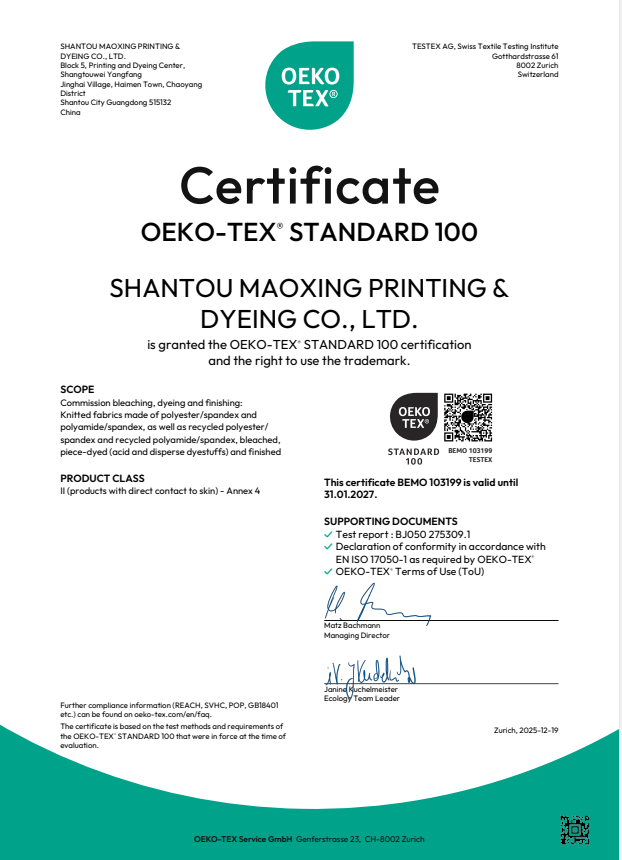
The upstream dyeing factory of ljvogues provides the oeko certificate.
PFAS Test Report
A PFAS test report is essential for period underwear sold into stricter textile markets. PFAS chemicals are a major concern in functional textiles because they have been used for water resistance, stain resistance, and performance finishes.
California AB 1817 restricts regulated PFAS in new textile articles from January 1, 2025. Buyers selling into the US should ask for product-specific PFAS testing and a certificate of compliance.
A good PFAS document should include:
Testing lab name
Sample description
Test method
Detection limits
Date of testing
Exact material or product tested
Authorized signature
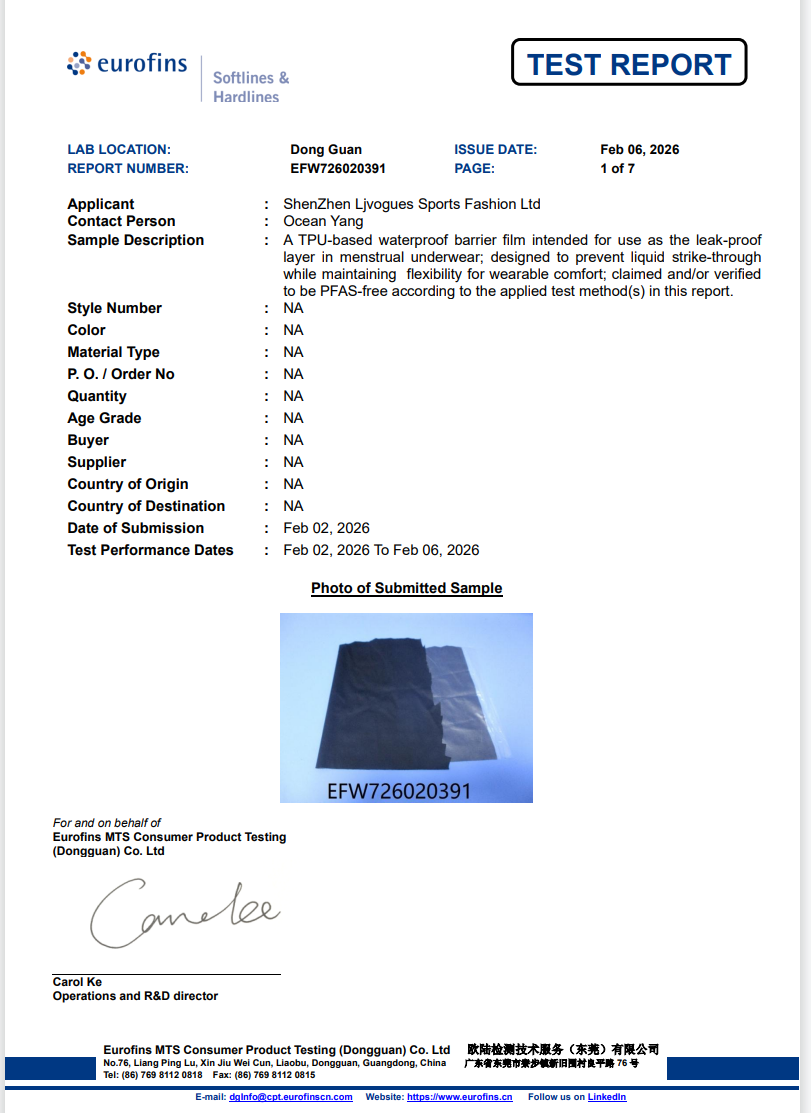
ljvogues' PFAS report
REACH And SVHC Compliance
REACH/SVHC compliance is important for period underwear sold in the European Union. REACH controls chemical substances in products placed on the EU market. SVHC refers to substances of very high concern.
Buyers should request:
REACH compliance declaration
SVHC declaration
Restricted substance test reports
Material safety documentation when needed
This is especially important for dyed fabrics, prints, coatings, adhesives, and leakproof membranes.
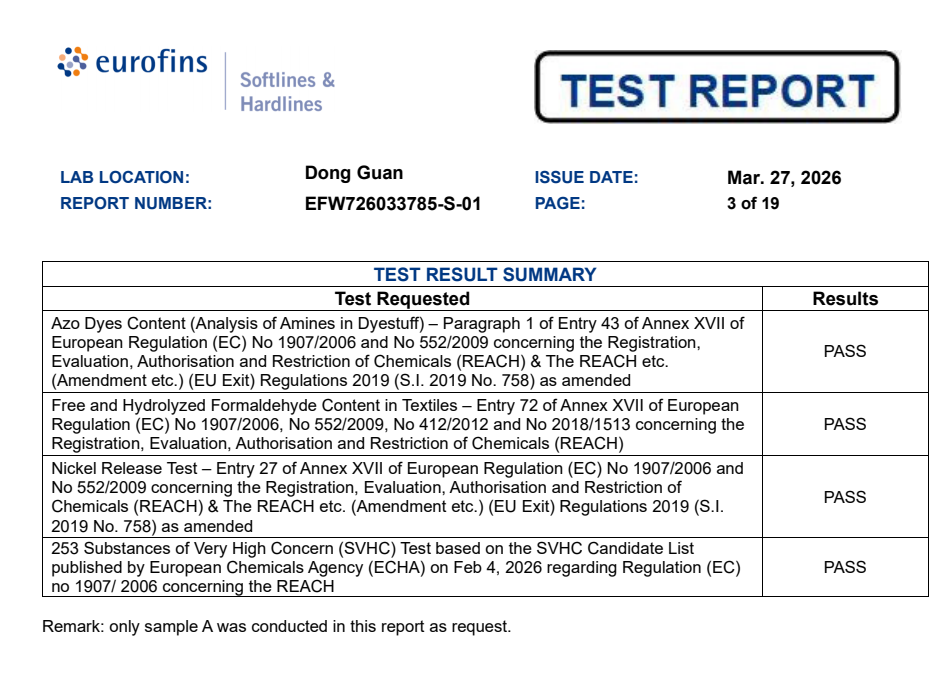
ljvogues' REACH/SVHC report
CPSC 16 CFR Part 1610
CPSC 16 CFR Part 1610 is important for clothing textiles sold in the United States. It covers flammability requirements for apparel textiles.
Period underwear is worn as apparel, so US buyers should confirm that the fabric complies with applicable flammability rules.
For children’s or teen period underwear, buyers should also review CPSIA-related requirements, including lead and phthalate rules where applicable.
BSCI Or SMETA
BSCI and SMETA help buyers evaluate factory social responsibility. They are not product safety certificates. They are factory audit systems.
BSCI is connected with supply chain social performance. SMETA, developed by Sedex, reviews labor standards, health and safety, environment, and business ethics.
Large retailers often ask for one of these audits before approving a supplier.
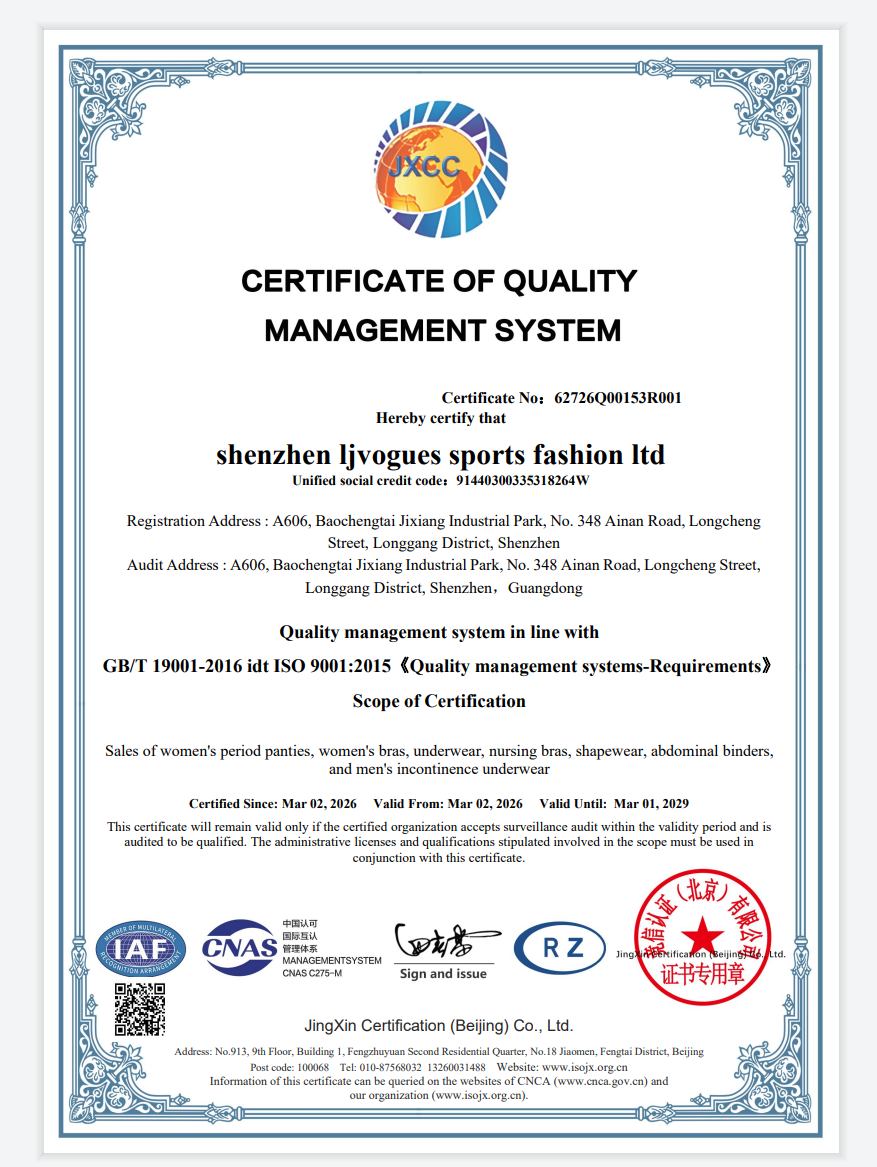
ISO 9001
ISO 9001 shows that a factory has a quality management system. It does not prove that one period underwear style is leakproof or PFAS-free. It proves that the factory has documented quality processes.
For period underwear buyers, ISO 9001 is useful when combined with:
Incoming material inspection
Inline production inspection
Finished goods inspection
Absorbency testing
Wash testing
Leakage testing
AQL inspection
GRS, RCS, GOTS, And OCS
Material-claim certifications are needed when your brand makes sustainability claims. Do not claim recycled, organic, or sustainable materials unless the supply chain documentation supports it.
Use these documents carefully:
GRS: for recycled material and chain of custody
RCS: for recycled content claims
GOTS: for organic textile claims
OCS: for organic content verification
If your brand sells recycled nylon period underwear, ask whether the supplier has valid GRS or RCS transaction documentation.
ISO 14001
ISO 14001 is useful for buyers that care about environmental management. It does not replace product testing, but it shows that the factory has an environmental management system.
Retail buyers may ask for ISO 14001 when evaluating long-term suppliers.

What Certifications Are Not Enough?
A certificate is not enough if it does not match your product. This is one of the biggest sourcing risks in period underwear.
Watch for these red flags:
The certificate belongs to another factory
The certificate is expired
The certificate covers fabric only, not the finished product
The test report is for a different color
The report does not include the leakproof layer
The supplier says “FDA certified” for normal underwear
The factory refuses batch-level testing
Buyer Checklist
Before placing an order, ask the manufacturer for these documents.
OEKO-TEX Standard 100 certificate
PFAS test report
REACH/SVHC declaration
CPSC flammability compliance for US sales
BSCI or SMETA audit report
ISO 9001 certificate
GRS/RCS documents for recycled materials
GOTS/OCS documents for organic materials
Absorbency and leakage test data
Wash durability test data
Pre-shipment inspection report
How Ljvogues Supports Certification-Ready OEM
Ljvogues helps buyers prepare certification-ready period underwear programs. The team supports PFAS-free material options, private label development, absorbency testing, leakproof structure design, and product documentation for B2B sourcing.
Ljvogues is a good fit for:
Startup period underwear brands
DTC intimate apparel brands
Amazon and e-commerce sellers
Retail private label programs
Period swimwear brands
Incontinence underwear brands

FAQ
What certification is most important for period underwear?
OEKO-TEX Standard 100 and PFAS test reports are the most important safety documents for period underwear.
Does period underwear need FDA certification?
Usually no. Normal period underwear is apparel. FDA review may become relevant only if the product is marketed with medical claims.
Is OEKO-TEX enough for PFAS-free claims?
OEKO-TEX is useful, but buyers should still request PFAS-specific reports for strict markets.
What audit should a factory have?
BSCI or SMETA is commonly requested for social compliance and retailer approval.
Should test reports be product-specific?
Yes. Reports should match the actual fabric, gusset, leakproof layer, color, and production batch.
Sources
Reviewed sources include OEKO-TEX Standard 100, California AB 1817, ECHA REACH Candidate List, CPSC clothing textile guidance, Sedex SMETA, ISO 9001, and Textile Exchange GRS/RCS.