You are here: Home / Blog / Guide / Importing Period Underwear from China: Shipping, Customs & Compliance Guide 2026

Importing Period Underwear from China: Shipping, Customs & Compliance Guide 2026

Views: 0     Author: Ocean Yang      Publish Time: 2026-05-19      Origin: Ljvogues

Inquire

facebook sharing button
linkedin sharing button
twitter sharing button
pinterest sharing button
line sharing button
whatsapp sharing button
kakao sharing button
telegram sharing button
snapchat sharing button
sharethis sharing button

TL;DR: Importing period underwear from China by sea freight takes 25–45 days at $0.30–0.60 per piece (LCL/FCL). Air freight delivers in 5–10 days but costs $1.50–3.00 per piece — best reserved for samples and urgent top-ups. Correct HS code classification, PFAS compliance documentation, and a reliable freight forwarder are the three levers that determine whether your shipment clears smoothly or sits at the port. Read the full guide for region-by-region duty rates, Incoterms advice, and a worked landed-cost example.

The Full Import Journey — End to End

Understanding the complete sequence from factory to your warehouse prevents costly surprises. Here is the typical flow when importing period underwear from a Shenzhen manufacturer like LJVOGUES.

1. Production

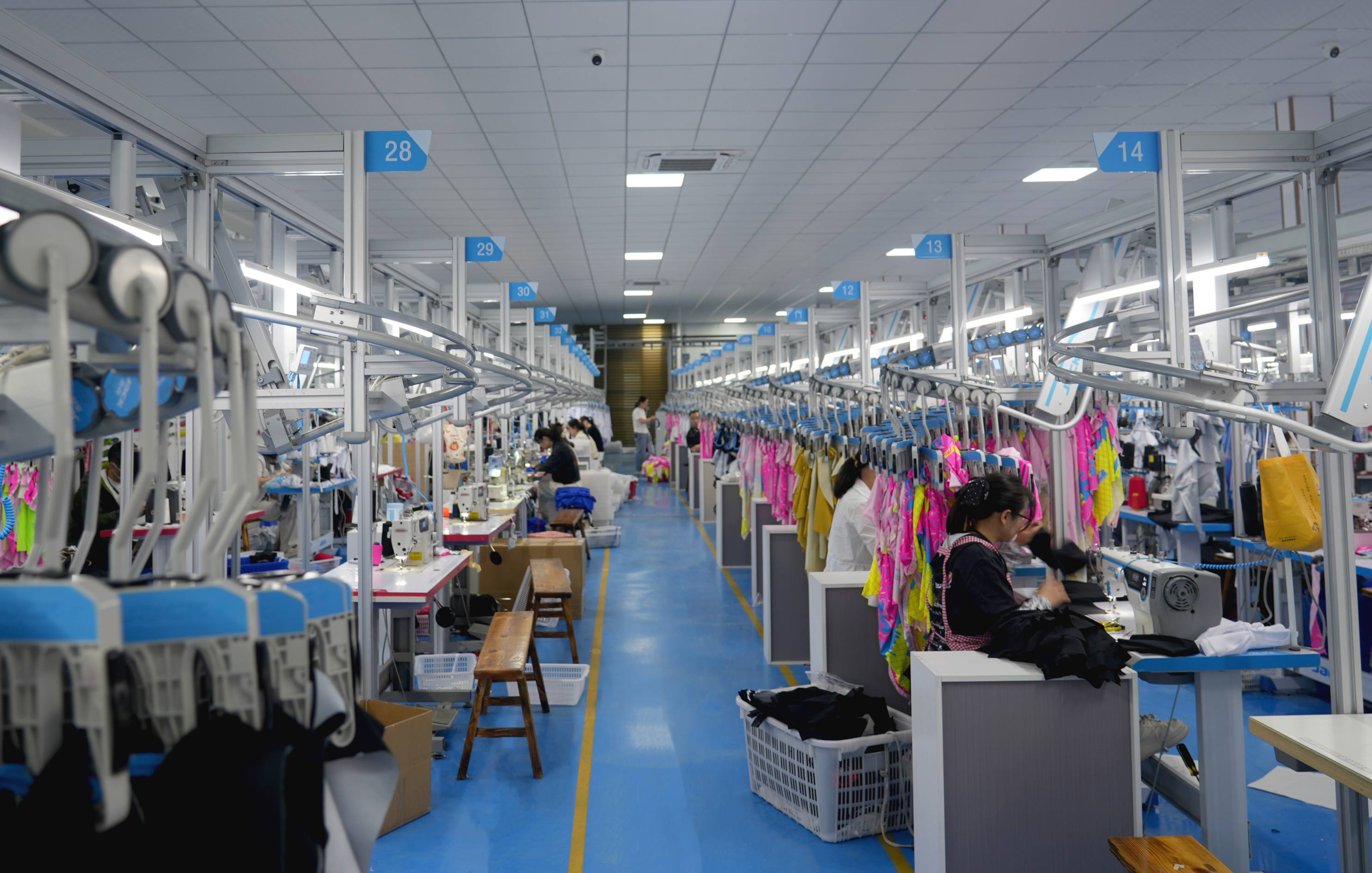
Bulk manufacturing begins once samples are approved and a deposit (typically 30%) is received. Standard bulk lead times run 35–45 days for orders of 1,000–5,000 pieces, and 45–60 days for orders above 10,000 pieces. Lead times include fabric sourcing, lamination of the absorbent core, cutting, sewing, and finishing.

2. Pre-Shipment Inspection

Before goods are packed, a third-party AQL 2.5 inspection should be arranged. [internal link: Article 10 — Period Underwear Quality Control: The Complete QC Checklist] covers this in detail. At LJVOGUES, we prepare the inspection booking and provide the inspector with full product specifications, so you have a clear pass/fail outcome before loading.

3. Freight Booking

Once goods pass inspection, the freight forwarder is instructed to book space — either LCL (groupage) or FCL (full container) for sea, or a booking with an air carrier. Booking typically occurs 1–2 weeks before the cargo ready date.

4. Loading & Export Customs

The factory delivers goods to the port or consolidation warehouse. Chinese Customs checks export declarations, and the freight agent arranges the necessary export licence, commercial invoice, and packing list. LJVOGUES handles all Chinese export documentation as standard — including the Certificate of Origin (Form A for GSP, or Form E for ASEAN preferential rates).

5. Transit

Cargo moves from Shenzhen/Guangzhou or Shanghai to the destination country. Transit times vary by mode (see the comparison table below).

6. Destination Customs

Your customs broker (or the factory's agent under DDP terms) files an import entry, pays duties and taxes, and releases the shipment. This is the most risk-prone step if documentation is incomplete or the goods are mis-classified.

7. Last-Mile Delivery

Cargo moves from the port or bonded warehouse to your distribution centre or 3PL. Under FOB or CIF terms, you arrange this leg. Under DDP, the factory's agent delivers to your door.

Total elapsed time from order confirmation to warehouse: 70–100 days for sea freight orders; 45–65 days for air freight orders.

新建文件夹(5).jpg

Incoterms Explained — Which to Use

Incoterms (International Commercial Terms, ICC 2020 edition) define exactly where risk and cost transfer from seller to buyer. The table below summarises the four terms most commonly used in China-to-world apparel trade.

Incoterm

Risk Transfers At

Who Books Sea/Air Freight

Who Pays Import Duty & Tax

Best For

EXW (Ex Works)

Factory gate

Buyer

Buyer

Experienced importers with their own logistics partners and Chinese customs agent

FOB (Free On Board)

When goods cross the ship's rail at Chinese port

Buyer

Buyer

Most common for experienced importers — buyer controls freight costs and carrier selection

CIF (Cost, Insurance & Freight)

Destination port

Seller

Buyer

Buyers who want the factory to arrange freight but still handle their own customs clearance

DDP (Delivered Duty Paid)

Buyer's named destination

Seller

Seller (included in price)

First-time importers, or brands trialling a new market who want an all-in price with no customs surprises

Recommendation for new importers: Start with DDP for your first 1–2 shipments. You pay a premium (the factory builds duty, freight, and customs clearance into the unit price), but you avoid the complexity of setting up as an Importer of Record, obtaining an EORI number, or engaging a customs broker before you understand the process. Once volumes justify it, switch to FOB — you will typically save 15–25% on logistics costs by controlling the freight booking yourself.

Recommendation for experienced importers: FOB from a named Chinese port (e.g., FOB Shekou or FOB Shanghai) gives you full control over freight spend and carrier selection without taking on the complexity of arranging Chinese export clearance.

"LJVOGUES ships on FOB, CIF, and DDP terms depending on the customer's preference and experience level. For brands new to importing from China, we frequently recommend DDP for the first shipment — we handle all documentation, duties, and final-mile delivery so the buyer can focus on selling. Once they're comfortable with the process, we transition them to FOB where they gain more cost control."
Ocean Yang, Founder, LJVOGUES

Shipping Methods Comparison

Mode

Transit Time

Typical Cost per Piece

Minimum Viable Volume

Notes

Sea LCL (Less than Container Load)

25–40 days

$0.30–$0.50/pc

200–500 pcs

Consolidated with other shippers' cargo; small premium over FCL on a per-piece basis; best for orders under 3,000 pcs

Sea FCL — 20ft container

25–35 days

$0.18–$0.35/pc

~5,000 pcs

A 20ft container holds roughly 10,000–15,000 period underwear units; most cost-effective above 5,000 pcs

Sea FCL — 40ft container

25–35 days

$0.12–$0.25/pc

~10,000 pcs

Optimal at 10,000+ units; lowest per-piece freight cost

Air Express (DHL/FedEx/UPS)

3–7 days

$2.00–$4.00/pc

1 pc

Best for samples and urgent replenishment of fast-moving SKUs; cost prohibitive for bulk

Air Freight (airline cargo)

7–12 days

$1.50–$2.50/pc

100–200 kg

More economical than express for 100–500 kg loads; used for pre-launch stock or promotional restocks

Rail (China–Europe)

18–22 days

$0.80–$1.20/pc

500–1,000 pcs

China–Europe only via China Railway Express (CRE); faster than sea, cheaper than air; popular for EU brands

Practical note on sea freight: Port congestion, seasonal peaks (particularly October–December pre-Christmas), and weather can add 5–10 days to sea transit. Always build a buffer into your launch calendar.

Air freight for samples: For initial sample orders, air express (DHL/FedEx) is the standard. LJVOGUES ships samples globally within 3–5 business days of dispatch. Sample freight costs are typically borne by the buyer and range from $30–$80 for a 2–5 piece sample set, depending on destination.

factory (47).webp

Bulk Shipment Dispatched

HS Codes for Period Underwear — A Critical Classification Decision

The Harmonised System (HS) code you declare at customs is not administrative formality — it directly determines your duty rate, and incorrect classification triggers delays, re-assessment, and potential penalties.

The Two Classification Paths

Reusable period underwear (garment classification)

Most reusable period underwear is classified under HS Chapter 61 (knitted/crocheted garments):

  • HS 6108.21 — Women's/girls' briefs and panties of cotton, knitted or crocheted

  • HS 6108.22 — Women's/girls' briefs and panties of man-made fibres, knitted or crocheted

The applicable subheading depends on the fabric's predominant fibre content by weight. LJVOGUES period underwear uses a nylon/spandex outer and a cotton or bamboo absorbent inner layer. Typically, if the outer shell (which constitutes the majority of weight) is synthetic, the garment classifies under 6108.22. If cotton dominates, it classifies under 6108.21. Your supplier's fabric composition certificate should state this clearly.

Disposable period underwear (sanitary article classification)

Disposable period underwear — designed for single use — classifies under:

  • HS 9619.00 — Sanitary towels (pads) and tampons, napkins and napkin liners for babies, and similar articles, of any material

This matters because HS 9619.00 attracts different duty rates in most markets (often lower for hygiene articles), but also different regulatory treatment. In the US, for example, 9619.00 goods may attract greater FDA scrutiny as medical devices.

LJVOGUES produces reusable period underwear only. All our products classify under HS 6108.21 or 6108.22 depending on fabric blend. We provide a written HS code recommendation with each commercial invoice to assist your customs broker.

Region-by-Region Import Guide

USA

Applicable HTS Codes (10-digit US classifications):

  • Cotton briefs/panties: HTS 6108.21.0000 — MFN duty rate: 7.6%

  • Synthetic fibre briefs/panties: HTS 6108.22.0010 (women's) — MFN duty rate: 16%

Section 301 Tariffs (List 4A):

Chinese-origin apparel and consumer goods currently fall under List 4A of the Section 301 tariff regime, which imposes an additional 7.5% on top of the MFN rate. This means effective duty rates for period underwear from China are approximately:

  • Cotton (6108.21): 7.6% + 7.5% = ~15.1%

  • Synthetic (6108.22): 16% + 7.5% = ~23.5%

Always verify current rates against the USITC Harmonized Tariff Schedule and CBP.gov at time of importation, as tariff policy continues to evolve.

FDA Regulation:

Period underwear is generally not an FDA-regulated medical device for import purposes — it is classified as an apparel/textile product, not a Class II medical device. However, Amazon has a known policy issue: if a listing's description, images, or keywords indicate menstrual absorption functionality, Amazon's automated systems may flag it and request FDA Establishment Registration (21 CFR Part 807). The FDA's own position (as reported by multiple Amazon sellers who contacted FDA directly) is that reusable period underwear does not require FDA Establishment Registration or Device Listing. However, if Amazon requests it, you will need to respond with documentation. Practically, many sellers resolve this by maintaining OEKO-TEX and PFAS-free test reports and careful listing copy that avoids medical-device language. LJVOGUES holds FDA registration, which can assist customers navigating this issue.

CPSIA Compliance:

If your period underwear is marketed to children or teens (roughly ages 12 and under), the Consumer Product Safety Improvement Act (CPSIA) applies. This requires:

  • Children's Product Certificate (CPC)

  • Third-party testing by a CPSC-accepted lab

  • Compliance with lead content limits and phthalate restrictions

Most adult-focused period underwear brands are not subject to CPSIA, but if you market "teen period underwear," factor this in.

PFAS State Bans:

California AB 1817 (Safer Clothes and Textiles Act) is in effect as of January 1, 2025, banning PFAS above 100 ppm Total Organic Fluorine (TOF) in textile articles sold in California. The threshold tightens to 50 ppm on January 1, 2027. New York S5648 follows the same schedule, effective January 1, 2025. LJVOGUES products are 100% PFAS-free verified — we provide test reports on request.

Importer of Record:

US Customs requires a designated Importer of Record (IOR) — typically the US buyer or their licensed customs broker. The IOR is legally responsible for accurate classification, duty payment, and compliance. You cannot legally import on another party's IOR number.

Merchandise Processing Fee (MPF):

All formal US entries are subject to an MPF of 0.3464% of cargo value (minimum $32.71, maximum $634.62 per entry).

UK

Post-Brexit Customs Procedures:

Since 1 January 2021, Great Britain (England, Scotland, Wales) has operated its own independent customs regime. Goods from China are now subject to UK customs entry requirements on arrival, separate from EU procedures.

UK Global Tariff (UKGT) Rates:

  • Cotton women's briefs/panties (UK HS 6108210000): approximately 12%

  • Synthetic fibre briefs/panties (UK HS 6108220000): approximately 12%

The UK has generally maintained similar tariff rates to the EU MFN schedule for most apparel categories. Check the UK Trade Tariff tool for the current confirmed rate at the time of import.

VAT:

UK VAT at 20% applies to imported goods at point of entry. VAT is recoverable by VAT-registered businesses on their return. If you are not yet VAT-registered in the UK and your taxable turnover exceeds £90,000 (2026 threshold), registration is mandatory.

Period products and VAT: Period underwear has been zero-rated for VAT purposes in the UK since January 2021 under the "tampon tax" removal. This means no VAT at point of import for period underwear — a meaningful cost saving. Confirm your customs broker applies the zero-rate at entry.

EORI Number:

UK businesses importing from outside the UK require a UK EORI number, issued by HMRC. Non-UK businesses importing into the UK need a UK EORI number or must appoint an indirect customs agent to act on their behalf.

UKCA Marking:

The UK Conformity Assessed (UKCA) mark is not required for period underwear. It applies to specific regulated product categories (electrical goods, PPE, medical devices). Period underwear as a textile garment has no UKCA requirement.

factory (55).webp

EU

REACH Compliance:

The EU REACH Regulation (EC) No 1907/2006) restricts hazardous substances in textiles placed on the EU market. Key restrictions relevant to period underwear include:

  • Azo dyes that release carcinogenic aromatic amines — restricted under REACH Annex XVII

  • Formaldehyde — restricted in textiles in direct skin contact

  • Nickel in metal components (e.g., metal clasps)

  • PFAS — the EU is advancing a broad PFAS restriction under the REACH universal PFAS proposal, with restrictions expected to be phased in through 2026–2030 depending on category

OEKO-TEX STANDARD 100 certification covers REACH substance restrictions comprehensively. LJVOGUES holds OEKO-TEX STANDARD 100 certification — request the certificate before shipping to the EU.

GPSR (General Product Safety Regulation):

The EU's General Product Safety Regulation (GPSR), effective 13 December 2024, replaced the former General Product Safety Directive. It applies to all consumer products, including textiles. Key requirements for importers:

  • A Responsible Person (RP) must be designated within the EU — a manufacturer, importer, or authorised representative established in an EU member state

  • Mandatory traceability information: product labelling must include the manufacturer's name, address, and a unique product identifier

  • Incident reporting obligations if a safety risk is identified

If you are a non-EU brand selling directly to EU consumers, appointing an EU Responsible Person under GPSR is now mandatory.

EORI Number:

An EORI number is mandatory for customs clearance in EU territory. Apply through the customs authority of the member state where you will first import (e.g., Netherlands, Germany, Belgium). Processing typically takes 1–3 business days.

EU Import Duty Rates:

  • Cotton briefs (6108.21): MFN rate 12%

  • Synthetic briefs (6108.22): MFN rate 12%

VAT:

EU VAT applies on import (rates vary by member state: typically 19–25%). Businesses importing commercially must register for VAT in at least one EU member state. Cross-border e-commerce sellers supplying EU consumers can use the EU One Stop Shop (OSS) scheme.

EU Customs Duty Relief:

The EU has preferential tariff agreements with many countries under GSP (Generalised Scheme of Preferences). Chinese goods do not benefit from EU GSP preferences. Full MFN rates apply.

Canada

Customs Tariff:

Canada applies Most-Favoured-Nation tariff rates to Chinese goods. Under the Canada Customs Tariff, women's briefs and panties (HS 6108.21 and 6108.22) attract approximately 18% MFN duty. Canada has not imposed equivalent Section 301-style surcharges on Chinese apparel as of 2026.

GST/HST Treatment:

Canada's federal GST (5%) applies to imported goods, collected at the border. Provinces with HST collect that rate instead (e.g., Ontario at 13%, Nova Scotia at 15%). Lingerie and underwear are fully taxable — there is no zero-rating for period underwear at federal level, unlike the UK.

Importer of Record:

You must have a Canadian Business Number (BN) or use a licensed customs broker as your importer of record. Canada Border Services Agency (CBSA) requires an Advance Commercial Information (ACI) declaration for sea and air freight.

Australia

Import Duty:

Australia applies relatively low MFN tariff rates. Women's knitted briefs and panties generally attract 10% duty under the Australian Customs Tariff (HS 6108.21/6108.22). Australia has free trade agreements with several major trading partners but not China under a comprehensive FTA that covers these goods; however, the China-Australia Free Trade Agreement (ChAFTA) provides preferential rates — verify current rates via the Australian Border Force Tariff Finder.

GST:

Here is the important exception: as of 1 January 2019, menstrual underwear is GST-free in Australia under the A New Tax System (GST) Act. Period underwear that is specifically designed to absorb or collect menstrual discharge is classified under tariff classification 9619.00.30 for GST exemption purposes. Ensure your customs broker applies the FHP (Feminine Hygiene Product) exemption code at entry. Note: This GST exemption applies regardless of whether the goods are classified as 6108 (garment) or 9619 (sanitary article) for duty purposes — the GST exemption is determined separately.

Therapeutic Goods Administration (TGA):

The TGA regulates therapeutic goods (medicines, medical devices). Period underwear is generally not subject to TGA regulation — it is classified as a textile product, not a therapeutic good. There is no TGA registration or listing requirement for reusable period underwear. However, if marketing language makes therapeutic or medical claims (e.g., "treats endometriosis"), that may trigger TGA requirements.

Quarantine:

Australia's biosecurity rules are strict but do not typically affect finished textile garments. Period underwear will not require biosecurity intervention at the border.

India

BIS Standards:

India's Bureau of Indian Standards (BIS) maintains a mandatory certification list for specific imported product categories. As of 2026, intimate apparel and period underwear are not on the BIS mandatory certification list. However, given India's pattern of expanding BIS requirements, importers should verify this at time of order.

Customs Duty:

India imposes a basic customs duty of approximately 10–20% on imported women's briefs and panties (HS 6108.21/6108.22), plus Social Welfare Surcharge (10% of basic duty), IGST (typically 5% for women's underwear), and CESS where applicable. Total effective duty can reach 25–35% of CIF value for Chinese-origin apparel.

GST on Period Underwear:

Domestically sold period underwear in India is subject to 5% GST under the reduced rate for menstrual sanitary products, following the GST Council's 2021 revision. However, this reduced rate applies to domestic supply, not necessarily to the import duty calculation.

Import Licensing:

Most apparel items do not require import licences in India under the current DGFT framework. However, specific items under the Restricted or Canalized list require licences — check the current DGFT Foreign Trade Policy at time of importation.

Note on India market opportunity: The Indian period underwear market is projected to grow at a 22.6% CAGR — the fastest single-country growth rate globally. [internal link: Article 13 — Period Underwear Manufacturer Guide for Indian Brands] covers India-specific sourcing considerations in detail.

Customs Documentation Checklist

Every commercial import shipment requires a standard set of documents. Missing or inaccurate documents are the single most common cause of customs delays. Prepare these before goods leave the factory:

Document

Purpose

Who Prepares

Critical Details

Commercial Invoice

Declares value, description, and terms of sale

Seller (LJVOGUES)

Must state Incoterm, unit price, total value, country of origin, HS code, buyer/seller details

Packing List

Itemises contents, weights, dimensions

Seller

Must match commercial invoice exactly

Bill of Lading (B/L)

Sea freight title document

Freight forwarder/shipping line

Consignee, notify party, port of loading/discharge, container number

Air Waybill (AWB)

Air freight equivalent of B/L

Airline/freight agent

Non-negotiable document; consignee details must be accurate

Certificate of Origin

Establishes origin for preferential or standard duty purposes

Chinese Chamber of Commerce or factory

Form A (GSP), Form E (ASEAN FTA), or General CO as required

OEKO-TEX Certificate

Evidence of substance compliance

OEKO-TEX certifying body

Include for all EU, UK, and US Amazon shipments

PFAS-Free Test Report

Compliance with state/national PFAS bans

Accredited testing lab

Essential for California, New York, EU shipments

Importer's Declaration

Importer confirms compliance with destination country laws

Buyer (or customs broker)

Format varies by country

Packing Declaration

Wood packaging compliance (ISPM 15)

Factory

Required for pallet wood; usually included automatically

LJVOGUES prepares the commercial invoice, packing list, Certificate of Origin, and all relevant certificates (OEKO-TEX, PFAS test reports, composition certificate) as standard for every shipment. We also provide a detailed HS code recommendation sheet for your customs broker.

LJVOGUES PFAS-FREE.png

LJVOGUES PFAS-FREE test report

Common Customs Issues and How to Avoid Them

HS Code Mis-Classification

Problem: Declaring period underwear under the wrong chapter (e.g., using 9619.00 for a reusable garment, or using 6108.21 when the fibre content warrants 6108.22). This results in either over-payment of duty or a customs challenge with back-duties and penalties.

Solution: Obtain a written HS code recommendation from your factory with supporting fabric composition certificates. Experienced customs brokers will cross-check this against the destination country's tariff schedule.

Missing Certificates

Problem: Shipment to the EU or UK arrives without REACH/OEKO-TEX documentation. Customs may hold the goods pending inspection or require laboratory testing at your expense.

Solution: Request all test reports from your factory before goods ship, not after. At LJVOGUES, certificate preparation is part of the pre-shipment pack.

Undervaluation

Problem: Declaring a lower unit price than the actual transaction value on the commercial invoice is customs fraud. Customs authorities cross-reference declared values against trade databases; significant under-declaration triggers a full audit.

Solution: Declare the genuine FOB or CIF transaction price. If you have negotiated an unusually low price, retain the purchase contract as evidence. Do not ask your factory to under-declare value — most reputable manufacturers will refuse.

UFLPA (US Uyghur Forced Labor Prevention Act)

Problem: The UFLPA creates a rebuttable presumption that any goods manufactured wholly or in part in China's Xinjiang region were produced using forced labour, and therefore bars entry into the US unless the importer can demonstrate otherwise with clear and convincing evidence. Cotton sourced from Xinjiang is a particular focus.

Solution: Request full supply chain traceability from your factory — origin of cotton, yarn mills, fabric mills. LJVOGUES sources cotton from non-Xinjiang origins and can provide a supply chain declaration. BSCI and SEDEX certifications support social compliance documentation. Keep traceability records for a minimum of five years.

Incorrect Country of Origin Declaration

Problem: If substantial transformation does not occur in China (e.g., fabric is cut in China but sewn in a third country), origin may be that third country. Incorrect origin declarations can trigger anti-dumping or countervailing duty investigations.

Solution: For goods manufactured entirely in China — as LJVOGUES products are — country of origin is straightforwardly China. Declare accordingly.

Choosing a Freight Forwarder

A good freight forwarder is not just a booking agent — they are your logistics partner for documentation, customs pre-clearance advice, and problem resolution. When evaluating forwarders for period underwear imports from China, look for:

  • China presence: A forwarder with their own office or trusted agent in Shenzhen, Guangzhou, or Shanghai can manage factory pickups, consolidation, and export customs directly — rather than relying on sub-agents.

  • Experience with China apparel/textile exports: Forwarders who regularly handle garments understand common HS code questions, Certificate of Origin requirements, and documentation norms.

  • Destination customs expertise: Your forwarder's customs broker arm (or partner) should have active relationships with the relevant customs authority — CBP (US), HMRC (UK), relevant EU member state authority.

  • Cargo insurance: Confirm you are covered for all-risk marine cargo insurance, not just basic carrier liability.

  • Track record with UFLPA documentation (for US shipments): Ask specifically whether they have experience helping clients prepare UFLPA supply chain documentation.

LJVOGUES has established relationships with freight forwarders covering the US, UK, EU, Canada, Australia, and India, and can provide introductions to vetted partners on request.

Total Landed Cost Calculation — Worked Example

Scenario: You order 2,000 pieces of reusable period underwear from LJVOGUES at an ex-factory price of $5.00 per piece (cotton/nylon blend, classifies as HS 6108.21 — cotton dominant). You ship via sea LCL. The table below shows the estimated all-in landed cost in four major markets.

Cost Element

New York (USA)

Los Angeles (USA)

London (UK)

Sydney (Australia)

Ex-Factory price (2,000 pcs)

$10,000

$10,000

$10,000

$10,000

Sea freight LCL (Shenzhen to port)

~$450

~$380

~$420

~$500

Origin charges (export handling, cert fees)

~$150

~$150

~$150

~$150

Import duty

~$1,560 (15.1% of CIF)

~$1,560

~$1,248 (12% of CIF)

~$1,053 (10% of CIF)

VAT/GST at import

$0 (no US VAT)

$0

$0 (period underwear zero-rated UK)

$0 (GST-free for period underwear AU)

Customs broker fee

~$200

~$200

~$180

~$220

Destination handling & delivery to warehouse

~$250

~$220

~$200

~$280

Total landed cost

~$12,610

~$12,510

~$12,198

~$12,203

Landed cost per piece

~$6.31

~$6.26

~$6.10

~$6.10

Notes: Figures are illustrative estimates based on 2026 market rates. Sea freight rates fluctuate significantly; obtain current quotes from your forwarder. US figures include Section 301 List 4A (7.5%) on top of MFN 7.6%. Australian figure assumes ChAFTA preferential rate if applicable; verify at time of import. All costs in USD equivalent. Currency conversion costs not included.

Takeaway: For a standard 2,000-piece sea freight order at $5.00 ex-factory, expect a total landed cost of roughly $6.00–$6.35 per piece depending on destination — before your local warehousing, marketing, or retail margin.

How LJVOGUES Supports International Customers

Importing from China involves genuine complexity — multiple documents, regulatory requirements that differ by country, and logistics coordination across several parties. LJVOGUES is structured specifically to make this straightforward for international B2B buyers.

Our export experience covers 50+ countries, and we have refined our documentation process to address the common pitfalls that hold up shipments. For every order, we provide:

  • HS code recommendation with supporting fabric composition certificate

  • Commercial invoice prepared to destination country customs standards

  • Certificate of Origin (Form A, Form E, or General CO as appropriate)

  • OEKO-TEX STANDARD 100 certificate (current, verifiable at oeko-tex.com)

  • PFAS-free test report from an accredited laboratory

  • BSCI and SEDEX compliance documentation for supply chain due diligence

  • ISO 9001 / ISO 14001 certificates

  • Freight forwarder introductions for any destination where you don't have an established partner

"In 20-plus years of manufacturing and exporting period underwear, the number one cause of customs delays for our customers has been documentation — not the goods themselves. That's why we prepare every certificate, every declaration, and every test report as part of our standard shipment pack. We've shipped to over 50 countries, and we understand what each market's customs authority actually looks for."
Ocean Yang, Founder, LJVOGUES

[internal link: Article 7 — Period Underwear Cost Breakdown: Factory to Shelf] provides a deeper analysis of how factory gate price translates to shelf price across each cost layer.

Frequently Asked Questions

Q1: Do I need FDA approval to import period underwear to the USA?

No — reusable period underwear is not an FDA-regulated medical device for import purposes. It is classified as a textile/apparel product. However, if you list period underwear on Amazon and your listing language references menstrual absorption, Amazon's systems may request FDA Establishment Registration documentation. In practice, FDA has confirmed directly to sellers that period underwear does not require registration. Maintaining OEKO-TEX and PFAS-free test reports, and using careful listing language, typically resolves Amazon's requests. LJVOGUES holds FDA registration, which can be referenced in documentation submissions.

Q2: What is the import duty rate for period underwear from China to the USA?

Under current rates (2026), cotton period underwear (HTS 6108.21) is subject to a 7.6% MFN rate plus 7.5% Section 301 surcharge, totalling approximately 15.1%. Synthetic period underwear (HTS 6108.22) carries a 16% MFN rate plus 7.5% Section 301 surcharge, totalling approximately 23.5%. These rates are subject to change — always verify against the USITC HTS database and CBP.gov at time of importation.

Q3: How long does shipping take from China to my country?

By sea LCL: 25–40 days to most destinations. By sea FCL: 25–35 days. Air express (DHL/FedEx): 3–7 days. Air freight: 7–12 days. Rail (China to Europe only): 18–22 days. Transit times are from port departure, not from order confirmation — add your production lead time (35–45 days for bulk orders) to calculate total time from order to arrival.

Q4: Can the factory ship DDP (Delivered Duty Paid) to my warehouse?

Yes — LJVOGUES ships on DDP terms to most major markets including the US, UK, EU, Canada, and Australia. DDP pricing includes factory price, freight, insurance, import duty, and final delivery. It is priced at a premium over FOB but eliminates the need for you to set up as an Importer of Record or engage your own customs broker for initial shipments. Contact us for a DDP quote for your target destination.

Q5: Do I need a customs broker?

For formal commercial imports in virtually every major market, yes. A licensed customs broker files your import entry, classifies goods, calculates and pays duties on your behalf, and is your first point of contact if customs holds the shipment. Informal imports (typically under $800 in the US, or under £135 in the UK) do not require a formal entry, but commercial B2B orders almost always exceed these thresholds. Your freight forwarder often has an affiliated customs brokerage.

Q6: What HS code should I declare for period underwear?

For reusable period underwear: HS 6108.21 (cotton dominant) or HS 6108.22 (synthetic dominant). The applicable code depends on the fabric's predominant fibre content by weight. LJVOGUES provides a written HS code recommendation with each shipment. Do not use HS 9619.00 for reusable garments — this code applies to disposable sanitary articles and misclassification attracts different duty rates and potential regulatory treatment.

Q7: Is period underwear subject to VAT in the UK?

No — period underwear is zero-rated for UK VAT purposes, following the removal of the "tampon tax" from January 2021. This applies both at import and at domestic sale. Confirm your customs broker applies the zero-rate code at entry. Note that the product must be clearly described as period/menstrual underwear to qualify.

Q8: Is period underwear GST-free in Australia?

Yes — menstrual underwear specifically designed to absorb menstrual discharge has been GST-free in Australia since 1 January 2019 under the A New Tax System (GST) Act. The FHP (Feminine Hygiene Product) exemption code applies. Ensure your commercial invoice and packing list clearly describe the product as period/menstrual underwear.

Q9: How do I comply with the US UFLPA when importing from China?

The Uyghur Forced Labor Prevention Act (UFLPA) creates a rebuttable presumption that goods from China's Xinjiang region were made with forced labour. To comply, maintain supply chain traceability records showing the origin of all input materials — particularly cotton. Request a supply chain declaration from your factory confirming no Xinjiang-origin cotton is used. LJVOGUES provides BSCI and SEDEX compliance documentation and a supply chain origin statement for all cotton and fabric inputs. Keep all supply chain records for a minimum of five years.

Q10: What is the minimum order to make sea freight cost-effective?

For sea LCL (grouped with other shippers' cargo), sea freight is typically cost-effective from approximately 200 pieces upward compared to air freight. For sea FCL (your own container), the break-even point against LCL is approximately 3,000–5,000 pieces for a 20ft container. Below 200 pieces, air express is often more economical on a total landed cost basis once you factor in LCL handling surcharges. LJVOGUES has a minimum order quantity (MOQ) of 300 pieces per style, making LCL viable from the first bulk order.

Ready to Import? Speak to LJVOGUES

Navigating import logistics, duty rates, and compliance requirements across five continents is complex. The manufacturers who make it straightforward are the ones with the documentation infrastructure to back it up.

LJVOGUES has shipped period underwear to brands in 50+ countries. We prepare every certificate, every customs document, and every compliance report as standard — not as an optional extra. From HS code classification to DDP delivery to your warehouse, we support you at every step of the import journey.

[internal link: Article 1 — How to Choose a Period Underwear Manufacturer: The Complete 2026 Buyer's Guide]

[internal link: Article 9 — Sampling & Prototyping Period Underwear: Timeline & Costs]

Contact LJVOGUES for a sourcing consultation:

Visit www.ljvogues.com or send your brief (target market, estimated volumes, product specifications) to our export team. We will respond within one business day with a preliminary quotation, HS code guidance, and a shipping cost estimate for your target destination.

Sources: USTR Section 301 Tariff Actions | CBP.gov | USITC Harmonized Tariff Schedule | UK Trade Tariff (GOV.UK) | European Commission — Understanding REACH | EU GPSR | EU EORI — Taxation and Customs Union | Amazon Seller Central — FDA Period Underwear Forum | California AB 1817 — Certivo | New York and California PFAS Textile Bans — Morgan Lewis | UFLPA — USTR | Australia GST-free health goods — ATO | OEKO-TEX STANDARD 100

About the Author

Ocean Yang
CEO & Founder, Ljvogues
 
Ocean Yang bridges the gap between textile science and brand success. As the founder of Ljvogues, he leverages 10+ years of expertise in manufacturing high-performance period underwear and swimwear. Dedicated to transparency and safety, Ocean empowers B2B buyers to source verified, compliant, and innovative functional apparel from Shenzhen to the world.

Related Products

CONTINUE READING

Ljvogues is a Shenzhen-based manufacturer of high-performance menstrual and incontinence apparel. Empowering 500+ brands across 100+ countries since 2015 — with PFAS-free verified
production, REACH/SVHC compliance, and ISO 9001 & 14001 certified precision.

What We Do

Talk to Us

 WhatsApp: +86-19928802613
 E-mail: info@ljvogues.com
  Address:A606, Baochengtai Jixiang Industrial Park, No. 348 Ainan Road, Longcheng Street, Longgang District, Shenzhen
 
© 2026 Shenzhen Ljvogues Sports Fashion Limited · USPTO Reg. No. 6,378,310  All Right Reserved    Sitemap  Technical Support: sdzhidian.com