



Table of Contents
Why This Article Exists
Most B2B buyers who land on this page fall into one of three groups.
The first group is period underwear brand founders who have noticed a quiet but persistent pattern in their customer service inbox: women in their forties, fifties, and sixties writing in to ask whether the brand's heavy-flow style "also works for bladder leaks." The brand says no, the customer buys it anyway, and three months later she's a repeat buyer for a use case the brand never marketed.
The second group is postpartum underwear brands who realised — usually after reading our postpartum series — that stress urinary incontinence does not end at the six-week postpartum check. According to a 2021 Journal of Urology analysis of NHANES data, 53% of US women aged 20+ report some form of urinary incontinence, with 26% reporting stress-only symptoms. Their postpartum customer becomes their incontinence customer. They want to keep her.
The third group is medical-supply distributors and DTC founders entering the adult incontinence category for the first time, drawn by the Cognitive Market Research forecast of USD 28.7 billion by 2031 at an 8.5% CAGR. They are evaluating manufacturers and trying to understand a category whose technical vocabulary is dominated by legacy medical brands like Depend, TENA, and Attends.
This article is for all three. It exists because the public-facing internet has surprisingly little high-quality, vendor-neutral, technically grounded explanation of what incontinence underwear actually is, how it differs from period underwear and adult diapers, and what a brand founder needs to know before committing to a manufacturer.
This is the first article in a Ljvogues incontinence series. It is a primer, not a sales document. By the end you will be able to read a competitor's product page, a manufacturer's tech sheet, or a clinical study and understand exactly what is being claimed and what is being omitted.
I am Ocean Yang, CEO of Ljvogues. We manufacture incontinence underwear for brands sold in North America, the EU, the UK, and Australia. I am writing this in my own voice, with my own opinions about where the industry is honest and where it is not.
Definition First: What Incontinence Underwear Is
Incontinence underwear is a reusable or disposable garment worn in place of conventional underwear, engineered to absorb involuntary urine release of a specified volume within a specified time, while controlling odour and preventing leakage onto outerwear. It is distinct from period underwear, adult diapers, light bladder leak (LBL) liners, and post-surgical mesh underwear.
The four diagnostic features that define the category are:
Absorbent core capacity rated for urine, not menstrual blood. Urine is released faster, in larger single-event volumes, and has different surface tension and pH than menstrual fluid. A pad system tuned for periods will fail under a urine load.
Acquisition layer optimised for fluid velocity. Urine release rates during a stress event (sneeze, cough, jump) can exceed 15 ml/second. The top layer must move that fluid into the core before it pools at the gusset edge.
Odour management system. Urine breaks down into ammonia within hours. Incontinence underwear includes either zinc-based odour neutralisers, activated carbon, or pH-buffering chemistry — period underwear typically does not.
Fit engineered for leg-cuff seal. Urine flows downward and outward. The leg opening must be a continuous elastic seal, not the relaxed leg band common in period underwear.
If a product is missing any of these four features, it is not incontinence underwear. It is period underwear, fashion shapewear, or marketing.
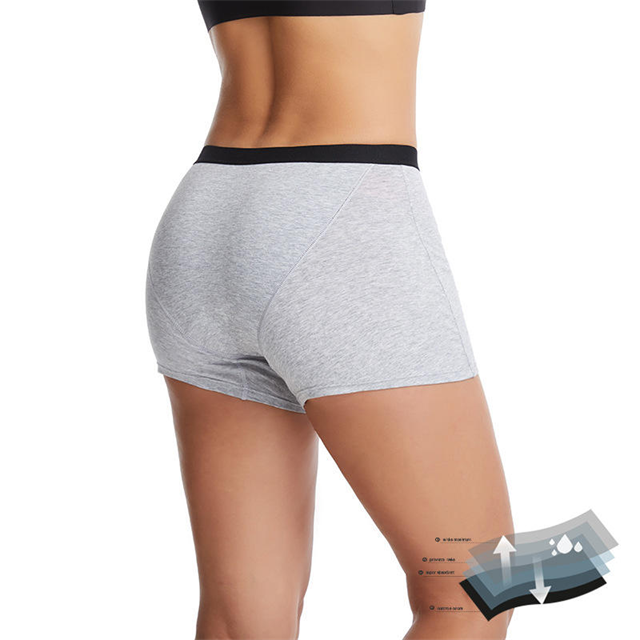
Women's incontinence underwear
The Three Clinical Types of Urinary Incontinence
Buyers who source product without understanding the underlying clinical condition end up with a SKU range that does not match real customer demand. There are three primary types, and each requires a different absorbent architecture.
Stress Urinary Incontinence (SUI)
What it is: Involuntary urine loss triggered by physical pressure on the bladder — coughing, laughing, sneezing, jumping, lifting. The pelvic floor and urethral sphincter cannot resist the sudden intra-abdominal pressure spike.
Volume per event: Typically 5–50 ml, occasionally up to 100 ml.
Frequency: Episodic. Tied to specific physical triggers, not time of day.
Customer demographics: Postpartum women (very common), perimenopausal and menopausal women, female athletes (runners, gymnasts, CrossFit), post-prostatectomy men.
Product implication: Light to moderate absorbency (150–400 ml total core capacity), focus on fast acquisition and discreet profile, daytime-dominant SKU.
Urge Urinary Incontinence (UUI)
What it is: Sudden, intense need to urinate followed by involuntary loss before the person can reach a toilet. Driven by overactive detrusor muscle contractions, often associated with overactive bladder (OAB) syndrome.
Volume per event: Typically 50–250 ml. Can be a complete bladder voiding.
Frequency: Variable. Often nocturnal in older adults.
Customer demographics: Older adults of both sexes, neurological condition patients (post-stroke, MS, Parkinson's), some diabetic populations.
Product implication: Heavy absorbency (400–1,000 ml core capacity), full leg-cuff seal, often paired with overnight SKUs.
Mixed Urinary Incontinence (MUI)
What it is: Symptoms of both SUI and UUI in the same person. According to Poise's clinical reference, MUI represents 16% of US women with incontinence — making it the second-largest sub-category after stress-only.
Product implication: This is the underserved sweet spot for new brands. Most legacy products are designed for one type or the other. A well-engineered moderate-absorbency garment (300–600 ml) with both fast acquisition and overnight retention can serve the entire MUI population.
How Incontinence Underwear Differs From Adjacent Categories
The four categories below are routinely confused by both consumers and inexperienced buyers. The differences matter because they determine which manufacturer can build your product, which regulations apply, and which retail channel will accept it.
Feature | Period Underwear | Postpartum Underwear | Incontinence Underwear | Adult Diapers / Pull-Ups |
Primary fluid | Menstrual blood | Lochia + SUI + perineal exudate | Urine (and sometimes faecal) | Urine + faecal |
Typical capacity | 10–80 ml | 30–150 ml | 150–1,000+ ml | 800–2,500 ml |
Fluid velocity tolerance | Low (slow seepage) | Moderate | High (stress events) | Very high |
Reusable? | Yes | Mostly yes | Both reusable and disposable variants | Predominantly disposable |
Typical wear duration | 8–12 hours | 4–8 hours, frequent change | 4–10 hours | 6–12 hours |
Regulatory pathway (EU) | General consumer textile | General consumer textile | EU MDR Class I or general consumer textile, depending on claims | EU MDR Class I or higher |
Retail channel | Lifestyle, intimate apparel | Maternity, baby, lifestyle | Pharmacy, medical supply, lifestyle (growing) | Pharmacy, medical supply, institutional |
Leg cuff design | Decorative elastic, often relaxed | Often relaxed for comfort | Continuous elastic seal | Continuous elastic seal with standing cuffs |
Odour neutralisation | Rare | Rare | Standard | Standard |
The most expensive sourcing mistake I see brand founders make is asking a period underwear factory to "just add more layers" and call it incontinence underwear. The leg cuff geometry, the acquisition layer chemistry, the odour system, and the gusset construction are different engineering problems. A factory that has only built period underwear will produce a product that fails in the first stress event.
Reusable vs Disposable: Which Subcategory Are You Building?
Within incontinence underwear, the most consequential decision a new brand makes is reusable vs disposable. They are different industries with different supply chains, different regulatory exposure, different unit economics, and different customer expectations.
Reusable Incontinence Underwear
Construction: Knit fabric outer (cotton, modal, or bamboo viscose blend with elastane), absorbent core (microfibre + bamboo + sometimes superabsorbent polymer SAP layer), waterproof barrier (TPU film), fabric inner gusset.
Wash cycle: 100–200 wash cycles before degradation, depending on construction quality and care compliance.
Unit economics: FOB cost USD 8–14 for Tier 3 (defensible clean) construction at 1,500-piece MOQ. Retail typically USD 28–48.
Regulatory pathway: Often general consumer textile in the US (CPSIA, FTC fibre labelling). In the EU, depends on claims — health claims may trigger EU MDR Class I.
Customer profile: Mild to moderate incontinence, environmentally conscious, willing to invest upfront for repeated use, comfortable with handling soiled garments at home.
Best for: DTC brands, lifestyle positioning, women aged 35–65 with SUI or mild MUI.
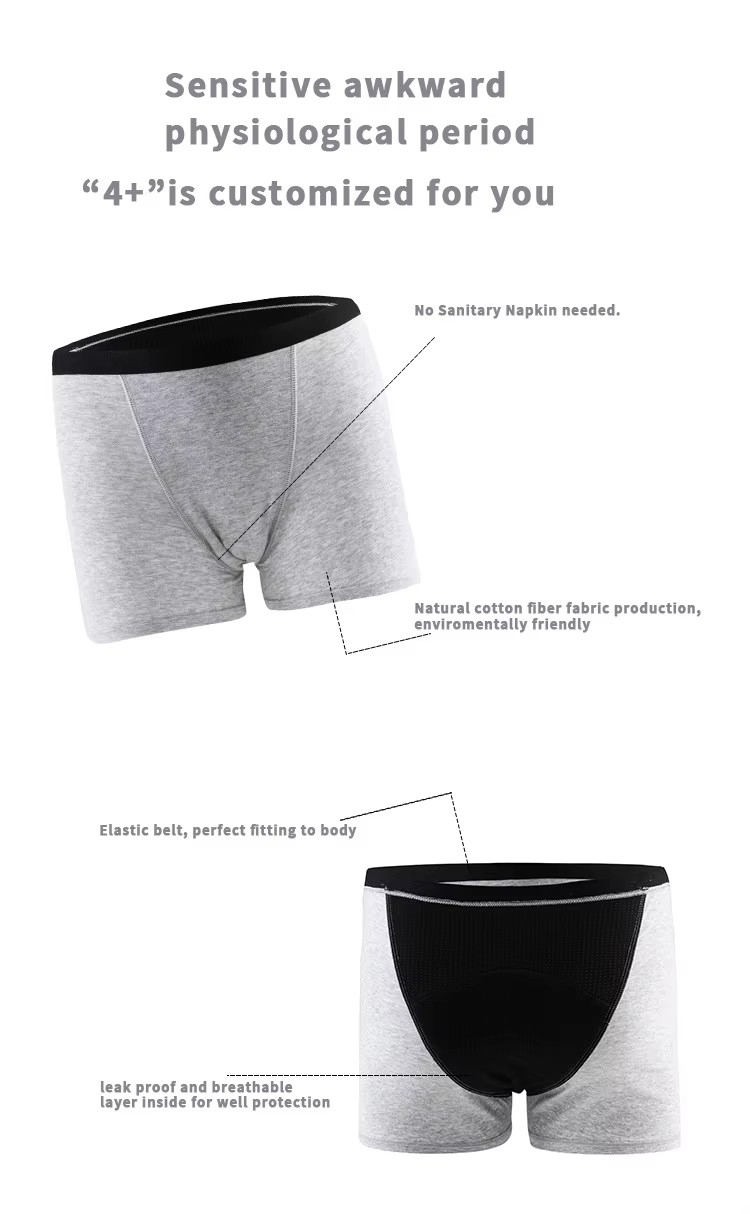
Disposable Incontinence Underwear (Pull-Ups)
Construction: Non-woven shell (polypropylene), fluff pulp + SAP absorbent core, polyethylene back sheet, elastic waistband and leg cuffs.
Single-use. Discarded after one void event or after several hours of wear.
Unit economics: Per-unit FOB cost USD 0.20–0.80, sold in cases of 60–100. This is a volume game with razor-thin margins.
Regulatory pathway: EU MDR Class I in Europe is standard for moderate/severe absorbency. FDA in the US treats most adult diapers as exempt medical devices but requires CPSIA flammability compliance.
Customer profile: Moderate to severe incontinence, older adults, institutional care, post-surgical recovery, neurological conditions.
Best for: Pharmacy chain private label, medical supply distributors, institutional buyers, large legacy brands (Depend, TENA, Attends, Tranquility).
Ljvogues manufactures reusable incontinence underwear. We do not manufacture disposable pull-ups. The two product types share almost no supply chain — different machinery, different materials, different certifications, different expertise. A factory that claims to do both well is almost certainly mediocre at one of them.
The rest of this article focuses on the reusable category, where the DTC and brand-led opportunity sits.
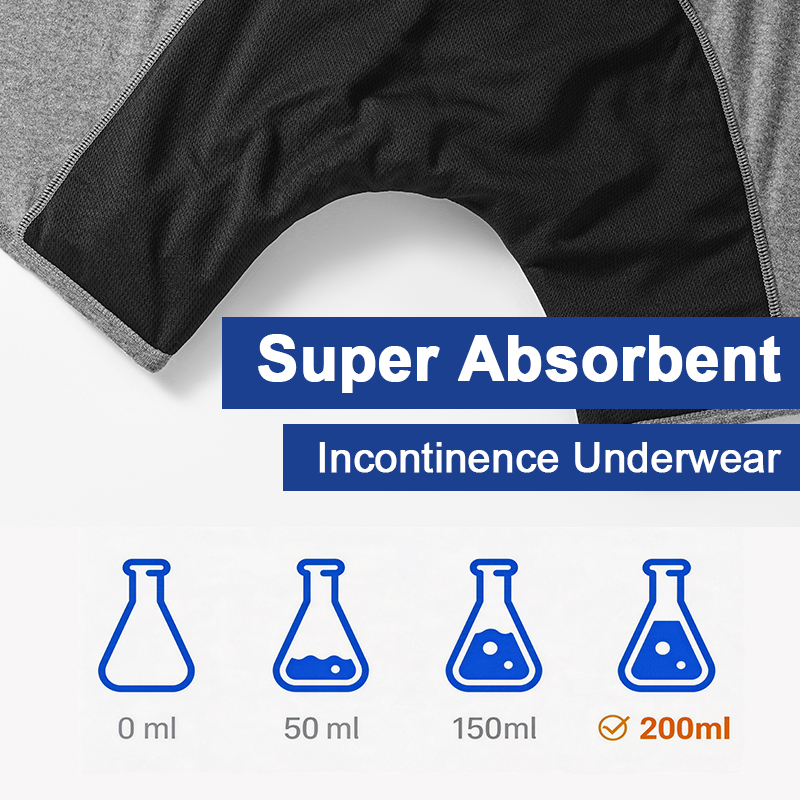
Absorbency Levels: The Industry Vocabulary You Need to Speak
Buyers who walk into manufacturer conversations without absorbency vocabulary get sold whatever the factory has on the shelf. The industry uses a five-tier informal scale. There is no single global standard, but the following maps closely to how Poise, Always Discreet, Knix, Speax, Saalt, and Because Market position their SKUs.
Tier | Typical Name | Capacity Range | Use Case | Construction Implication |
1 | Liner / Very Light | 30–80 ml | Drips, post-void dribble | Single absorbent layer, no SAP |
2 | Light / Daytime | 80–200 ml | Mild SUI, cough/sneeze leaks | Two-layer core, optional SAP |
3 | Moderate | 200–400 ml | Moderate SUI, mild MUI, daytime UUI | Three-layer core, SAP standard |
4 | Heavy / Maximum | 400–700 ml | Severe SUI, moderate UUI, postpartum heavy days | Four-layer core, SAP-dominant |
5 | Overnight / Plus | 700–1,500 ml | Severe UUI, nocturnal voiding, post-surgical | Five-layer core, full leg seal, often disposable |
A note on the EDANA ABL test method. EDANA, the European trade association for nonwovens, publishes the ABL (Absorption Before Leakage) test methodology — the closest thing the industry has to a standard absorbency benchmark. The method was designed for adult diapers worn by bedridden patients, not active reusable underwear, so it under-represents real-world performance for stress incontinence garments. If a manufacturer cites ABL numbers, ask whether they tested at static load or with a simulated stress-event flow rate. The two produce very different results.
A second reference standard is ISO 15621, the international standard for "absorbent incontinence aids for urinary incontinence — general guidelines on evaluation." It governs in-use testing, user evaluation methodology, and product claim substantiation. Few reusable incontinence underwear brands cite ISO 15621 because the standard is heavily oriented toward disposable products and clinical settings, but knowing it exists signals technical maturity in buyer conversations.
Absorption capacity of incontinence underwear
The Material Stack: What's Actually Inside Reusable Incontinence Underwear
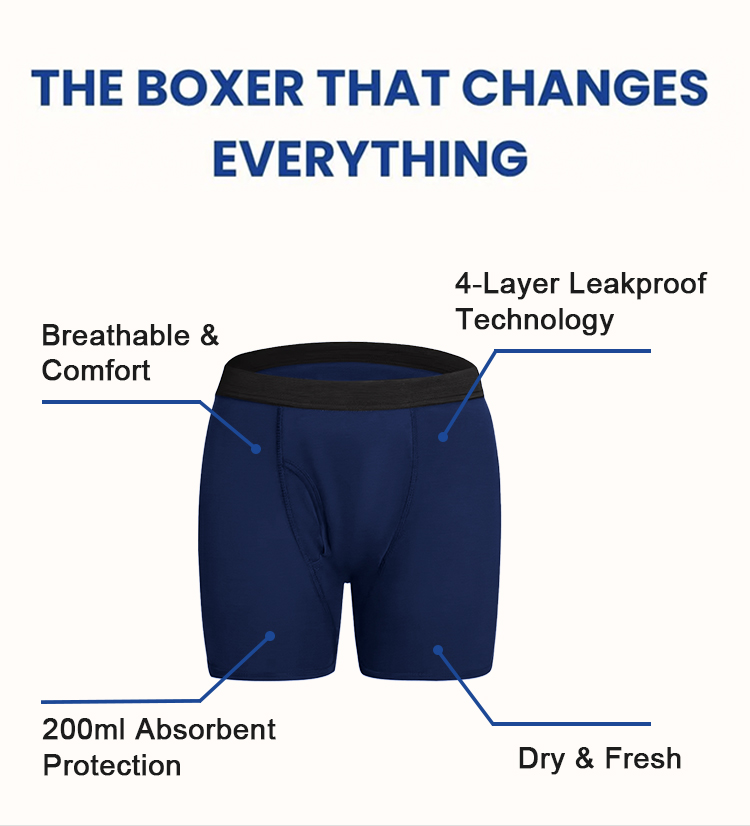
A four-layer or five-layer reusable incontinence garment uses a stack that looks like this from skin-side outward:
Layer 1 — Top Sheet (Acquisition Layer). The fabric touching skin. Typically a knit blend of cotton (50–70%), modal or bamboo viscose (20–30%), and elastane (3–8%). The acquisition layer must move fluid downward fast. In premium constructions, the top sheet is engineered with a stitch pattern that creates micro-channels for fluid flow.
Layer 2 — Distribution Layer. A microfibre or rayon-based fabric that spreads fluid laterally across the full pad area, preventing localised saturation. This is the layer that determines whether a garment leaks at the gusset edge during a stress event.
Layer 3 — Absorbent Core. Multiple layers of bamboo, hemp, or microfibre fleece, often combined with a thin layer of cellulose-based superabsorbent. The core stores the fluid.
Layer 4 — Optional SAP Layer. Superabsorbent polymer (sodium polyacrylate) sandwiched between fabric layers in moderate and heavy SKUs. SAP turns liquid urine into gel, locking it away from skin.
Layer 5 — Waterproof Barrier. Polyether-based phthalate-free thermoplastic polyurethane (TPU) film, typically 0.02–0.04 mm thick. This is what prevents leak-through to the outer fabric. Polyether-based TPU is the clean option; polyester-based TPU is cheaper but contains phthalate plasticisers we do not consider acceptable.
Layer 6 — Outer Shell. The visible fabric. Cotton, modal, or nylon-elastane blend depending on style. In the moderate-to-heavy tiers, the outer shell often has a brushed-finish backing for additional fluid containment.
Critical chemistry questions for any manufacturer:
Is the SAP food-grade certified (USP class)?
Is the TPU polyether-based (clean) or polyester-based (contains phthalates)?
Is there an antimicrobial treatment applied to the top sheet? (This is common in cheap incontinence products and is a red flag — silver, copper, and triclosan-based treatments raise both skin-irritation and EU REACH compliance issues.)
What odour-control chemistry is used? Zinc-based, activated carbon, pH buffer, or none?
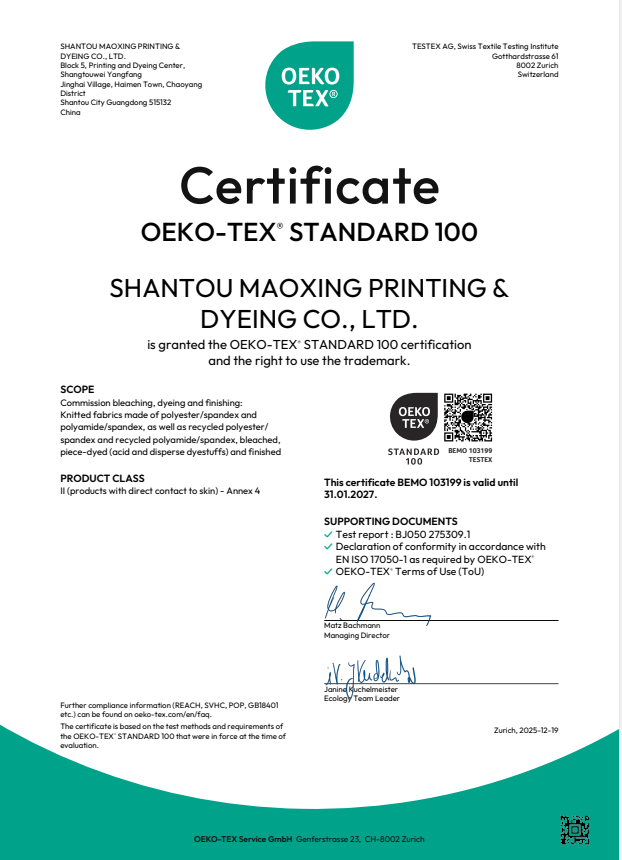
Are dyes OEKO-TEX Standard 100 Class II at minimum, with no azo, formaldehyde, or chlorinated phenol residues?
If a manufacturer cannot answer these five questions in writing, with documentation, they are not ready to manufacture for a brand that will face Sephora-level retailer compliance audits or EU REACH enforcement.
Regulatory Map: What Applies Where
Incontinence underwear sits in a regulatory grey zone in most markets. Whether your product is a textile or a medical device depends on the claims you make, not the product itself.
United States
CPSIA (Consumer Product Safety Improvement Act). Mandatory for all textiles. Covers lead content, phthalates, flammability (16 CFR 1610). Compliance is non-negotiable for retail.
FTC Care Labeling Rule and Textile Fibre Products Identification Act. Mandatory fibre content and care label disclosure.
FDA medical device classification. If a product makes a medical claim — for example, "treats stress urinary incontinence" — it crosses into 510(k) territory. Most reusable incontinence underwear brands avoid medical claims and stay in the consumer textile lane. Knix, Speax, Saalt Wear, Because Market, and Thinx all operate as consumer textiles, not medical devices.
California Proposition 65. Applies to all consumer goods sold in California. PFAS, lead, cadmium, phthalates, and 900+ other listed chemicals require warning labels above thresholds.
European Union
EU MDR (Medical Device Regulation 2017/745). Reusable absorbent products for moderate-to-severe incontinence are typically classified as Class I medical devices. According to a PMC review of EU regulatory frameworks, incontinence absorbent products fall under EU MDR Annex VIII rules with self-certification by the manufacturer plus mandatory technical documentation, post-market surveillance, and (in many cases) CE marking. Class I status is significantly more onerous than general consumer textile.
Reach Annex XVII. Restricts heavy metals, azo dyes, formaldehyde, chlorinated phenols, certain phthalates, and PFAS in textile products.
OEKO-TEX Standard 100. Voluntary but de facto required for European retail. We recommend Class II minimum for incontinence underwear. Class I (for items in direct contact with infant skin) is overkill for adult products.
GPSR (General Product Safety Regulation, in force December 2024). Applies to all consumer products including those that fall outside MDR scope.
United Kingdom
UKCA marking (post-Brexit). Functions parallel to CE marking. Manufacturers selling into the UK should hold both CE and UKCA where applicable.
REACH-UK mirrors EU REACH.
Australia
TGA (Therapeutic Goods Administration). Some incontinence products require ARTG (Australian Register of Therapeutic Goods) listing if marketed for medical use. Most reusable lifestyle brands operate as general consumer textiles.
ACCC consumer guarantees and mandatory labelling apply.
The bottom line: if you are selling reusable incontinence underwear DTC in the US under lifestyle positioning, you need CPSIA + Prop 65 + FTC labelling. If you are selling into EU pharmacy or medical-supply channels, you need EU MDR Class I + REACH + GPSR + OEKO-TEX. If you are entering Australia through pharmacy, plan for TGA conversation early. The certifications you obtain shape the factory you can use.
The Customer Demographic Map
Brands that succeed in this category understand that "incontinence underwear customer" is not one person. There are at least five distinct customer segments, each with different language, channel preferences, and willingness to pay.
Segment | Age | Primary Condition | Channel Preference | Willingness to Pay (Retail) |
Postpartum graduates | 28–40 | SUI from childbirth | DTC, lifestyle | USD 28–48 |
Active midlife women | 38–55 | SUI from athletics | DTC, athletic retail | USD 32–55 |
Perimenopausal/menopausal | 45–60 | SUI + MUI | DTC, drugstore | USD 24–42 |
Older adults | 60+ | UUI, MUI | Pharmacy, medical supply | USD 18–35 |
Post-surgical (men) | All ages | Post-prostatectomy SUI | Medical supply, urology | USD 25–45 |
The largest underserved DTC segment is the active midlife woman. She is post-postpartum but pre-menopausal, runs marathons, does CrossFit, and refuses to shop in the pharmacy aisle. Most legacy brands ignore her. Most period brands gesture at her use case but do not engineer for it. Brands like Speax and Knix Leakproof have built nine-figure businesses on this segment alone.
If you are building a new brand, the segment you choose determines your fabric, your pricing, your packaging photography, and your retail channel. There is no single "incontinence customer."
What "Tier 3 Defensible Clean" Means for Incontinence Underwear
Throughout this article I have referenced Ljvogues' Tier 3 standard, the same construction and chemistry baseline we apply to our period and postpartum lines. For incontinence specifically, Tier 3 means:
Spandex: ROICA V550 (Cradle-to-Cradle Gold certified, no halogen-based processing aids)
Waterproof barrier: Polyether-based TPU, 0.025–0.035 mm, phthalate-free
Top sheet: GOTS-certified organic cotton blend with Transaction Certificates, OEKO-TEX Standard 100 Class II
SAP (where used): USP food-grade sodium polyacrylate, biocompatibility tested per ISO 10993-5 and ISO 10993-10
No antimicrobial chemistry. No silver, no copper, no triclosan, no quaternary ammonium compounds.
Bonding: Heat lamination only. Where adhesive is required, water-based PU adhesive — no solvent-based adhesives, no hot-melt adhesives with phthalate plasticisers.
Dyes: OEKO-TEX Standard 100 Class II, with separate verification for AZO compliance under EU REACH Annex XVII Entry 43.
Tier 3 is what we believe a serious brand should specify. Tier 2 (consumer-grade) and Tier 1 (cost-engineered) constructions exist and are appropriate for some channels, but they are not what a brand audited by a top-tier retailer or scrutinised by an EU regulator should ship. We have written a detailed essay on the Cost of Clean that walks through the FOB cost difference between these tiers — typically USD 1.50–3.00 per unit, less than most brand owners assume.
OEKO certification from the dye factory
The Six-Question B2B Reality Check
Before you sign a contract with any incontinence underwear manufacturer, run them through these six questions. A factory that fails any of them is not ready for a serious brand.
1. What is your absorbency test methodology, and can you show me a recent third-party report?
The right answer references either EDANA ABL, ISO 15621, or a documented in-house protocol with simulated stress-event flow rate. Wrong answer: "We tested it ourselves and it works."
2. What waterproof barrier do you use, and is it polyether or polyester TPU?
Right answer: polyether-based, phthalate-free, with material safety data sheet from the supplier. Wrong answer: "Standard PU" or "I'll have to check."
3. Do you have OEKO-TEX Standard 100 certificates for every dye and fabric component, with the certificate numbers issued in the last twelve months?
Right answer: yes, here are the certificate numbers, here are the PDFs. Wrong answer: "We work with certified suppliers" without producing the documents.
4. What is your SAP supplier and grade?
Right answer: a named supplier (BASF, Nippon Shokubai, Sumitomo, or LG Chem are the major global players), with a USP food-grade or biocompatibility-tested specification. Wrong answer: "Generic SAP" or "I don't know."
5. Do you use any antimicrobial finish, and if so, what chemistry?
Right answer: "We do not apply antimicrobial finishes." Acceptable answer: "We use a zinc-pyrithione finish on request, with full REACH compliance documentation." Wrong answer: "Yes, silver-based" without further documentation. Worst answer: "I'm not sure."
6. Can you produce a Class I OEKO-TEX product if a future SKU requires it?
Right answer: yes, here are the suppliers we use for Class I dyes and fabrics. Wrong answer: "Class II is enough for adults" — a factory that says this is telling you they can't access Class I supply chains.
If you would like, we run this audit for free for serious B2B prospects considering Ljvogues. Email info@ljvogues.com with the subject line "Tier 3 Audit Request" and we will respond within one business day.

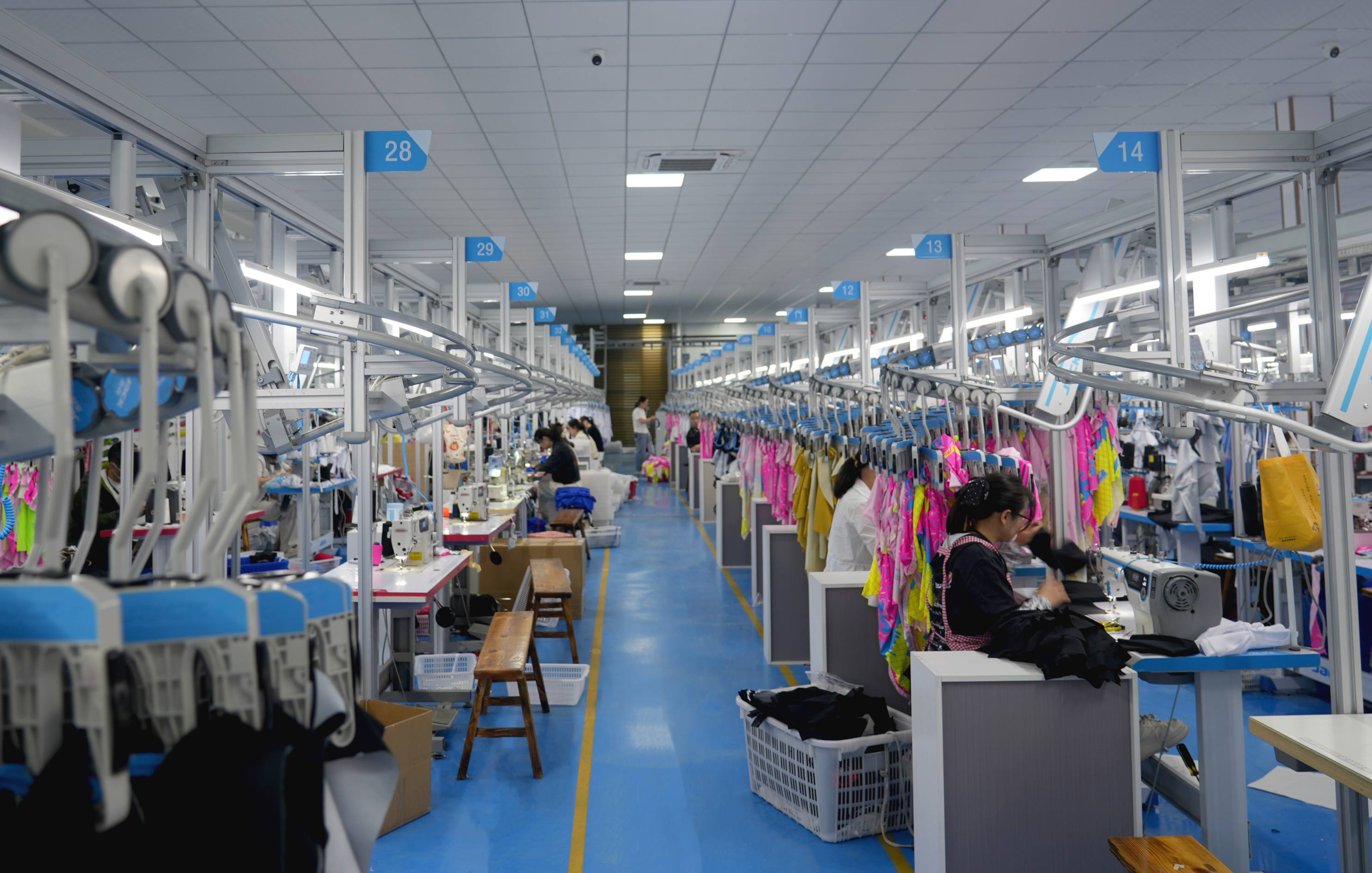
Cutting workshop
Frequently Asked Questions
What is incontinence underwear?
Incontinence underwear is a reusable or disposable garment engineered to absorb involuntary urine release, control odour, and prevent leakage onto outerwear. Unlike period underwear, it is tuned for the higher fluid velocity, larger single-event volume, and ammonia-based odour profile of urine.
How is incontinence underwear different from period underwear?
The four key differences are: capacity (incontinence holds 150–1,000+ ml versus period's 10–80 ml), fluid velocity tolerance (incontinence handles stress-event flow rates above 15 ml/second), odour-management chemistry (incontinence includes zinc, carbon, or pH buffer; period typically does not), and leg-cuff seal (incontinence requires continuous elastic; period often uses decorative elastic).
How much liquid does incontinence underwear hold?
Capacity ranges by tier: light (80–200 ml), moderate (200–400 ml), heavy (400–700 ml), overnight (700–1,500 ml). Tier selection should match the customer's diagnosed condition — stress incontinence typically needs light to moderate, while urge or nocturnal incontinence needs heavy or overnight.
Is incontinence underwear a medical device?
In the United States, most reusable incontinence underwear is classified as a consumer textile, not a medical device, because brands avoid medical claims. In the European Union, products marketed for moderate-to-severe incontinence often fall under EU MDR Class I, requiring CE marking and technical documentation. The classification depends on the claims made on packaging and marketing material, not the product itself.
Is incontinence underwear washable and reusable?
Reusable incontinence underwear typically lasts 100–200 wash cycles when washed in cold water, tumble-dried low or air-dried, and washed without fabric softener or bleach. Disposable pull-ups are single-use.
What is SAP in incontinence underwear?
SAP is superabsorbent polymer, typically sodium polyacrylate, used in the absorbent core of moderate and heavy incontinence garments. It can absorb 30–50 times its weight in liquid and locks fluid into a gel, preventing skin contact. USP food-grade SAP with ISO 10993 biocompatibility testing is the safe specification.
What is the difference between stress, urge, and mixed incontinence?
Stress urinary incontinence (SUI) is leakage triggered by physical pressure on the bladder, typically 5–50 ml per event. Urge urinary incontinence (UUI) is sudden involuntary loss following an intense urge, typically 50–250 ml per event. Mixed urinary incontinence (MUI) combines both. According to NHANES data, 26% of US women with incontinence have stress-only, 10% have urge-only, and 16% have mixed.
Can men wear incontinence underwear?
Yes. Post-prostatectomy stress incontinence is a major use case. The garment construction is similar but with a male-anatomy gusset profile and adjusted absorbent core placement. Most reusable incontinence brands offer men's lines.
What is the MOQ for OEM incontinence underwear?
For Tier 3 defensible clean construction, Ljvogues' MOQ is 1,500 pieces per SKU for a new brand launch. Lower MOQs are available for existing customers reordering established SKUs. Disposable pull-up MOQs are typically much higher (50,000+ units) due to nonwoven roll-stock economics.
What is the FOB price range for OEM reusable incontinence underwear?
Tier 3 defensible-clean reusable incontinence underwear typically prices at USD 8–14 FOB Shenzhen at 1,500-piece MOQ. Tier 2 consumer-grade is USD 5–8. Tier 1 cost-engineered is USD 3–5. Lead time is typically 90–110 days for first production runs.
Where Ljvogues Stands
We are a Shenzhen-based OEM/ODM manufacturer, USPTO Reg. No. 6,378,310, focused on reusable period, postpartum, and incontinence underwear. We do not make disposable pull-ups. We build to a Tier 3 defensible-clean specification by default and we will not quote on Tier 1 cost-engineered work.
Our incontinence line uses ROICA V550 spandex, polyether-based phthalate-free TPU, GOTS-certified organic cotton blends with Transaction Certificates, and USP food-grade SAP from a named global supplier. We do not apply antimicrobial finishes. Our dyes are OEKO-TEX Standard 100 Class II minimum, with REACH Annex XVII compliance verified separately.
We work with brand founders entering the category for the first time and with established period or postpartum brands extending into incontinence. We do not work on retail-ready quick turns where the buyer wants Tier 1 chemistry at Tier 3 prices. The math doesn't work and the relationship ends badly.
If you are evaluating manufacturers for a serious launch, we are happy to ship samples for dissection, walk you through our supplier chain, and run a free Tier 3 chemistry audit on a competitor product you are considering benchmarking against.
What's Next in This Series
This was the category primer. The next articles in the Ljvogues incontinence series will cover:
Article 2 — Engineering for Stress Incontinence: Leg-cuff geometry, gusset architecture, and the acquisition-layer chemistry that determines whether your garment survives a sneeze test.
Article 3 — The Odour Problem: Zinc, carbon, pH-buffer chemistry, and the silver-antimicrobial trap to avoid.
Article 4 — Channel Strategy for Incontinence Brands: DTC versus pharmacy versus medical supply, and why most period brands fail when they cross channels.
If a specific topic above is more urgent for your sourcing decision, write in and tell me. We adjust the order based on what serious B2B readers are asking for.
Talk to Us
If you are a brand founder, sourcing manager, or product developer evaluating reusable incontinence underwear manufacturers, we are easy to reach.
Email: info@ljvogues.com
WhatsApp: +86-199-2880-2613
Web: www.ljvogues.com
We respond within one business day, in English, with a real person who can speak to specifications.
About Ljvogues
Ljvogues is a Shenzhen-based OEM/ODM manufacturer of reusable period, postpartum, and incontinence underwear, registered with the USPTO under Reg. No. 6,378,310. We supply brands sold in North America, the European Union, the United Kingdom, and Australia. Our focus is Tier 3 defensible-clean construction — chemistry, certification, and documentation that holds up to retailer audits and regulatory enforcement. We are not the cheapest manufacturer. We are the one that will not embarrass your brand twelve months after launch.