



Table of Contents
If you are searching for men's incontinence underwear, here is something worth knowing upfront: bladder leakage affects men of all ages — post-surgery recovery, prostate issues, overactive bladder, or simply ageing. According to the National Association for Continence, approximately 25 million adult Americans experience some form of urinary incontinence, and a significant proportion are men who have not yet found a product that works for daily life.
The reality is more straightforward than most people expect. Finding the right leak-proof underwear can restore your confidence, comfort, and daily routine. This guide walks you through everything you need to know before buying — from understanding your actual absorbency needs to getting sizing right the first time.
We manufacture men's incontinence underwear. This guide reflects our product team's technical knowledge of the category.
What Is Men's Leak-Proof Underwear?
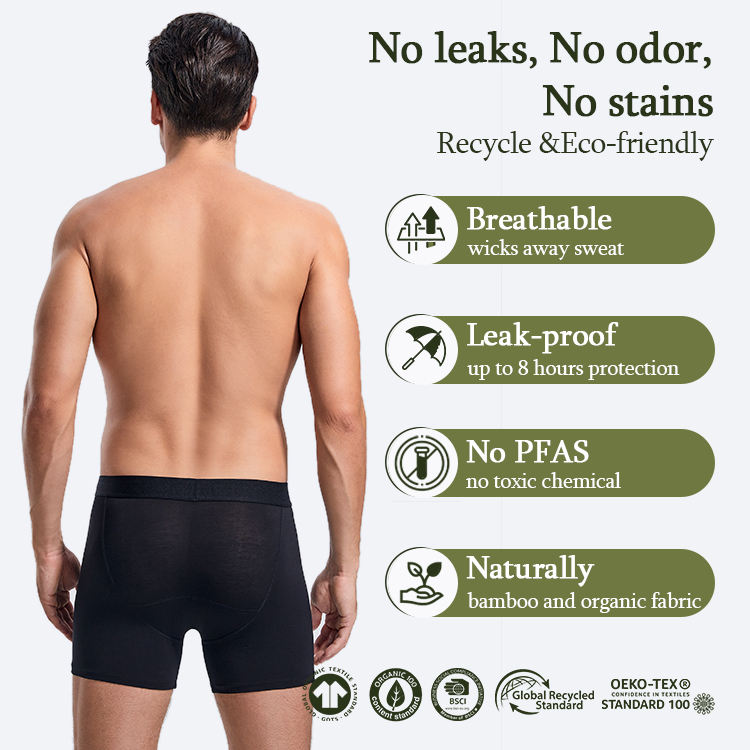
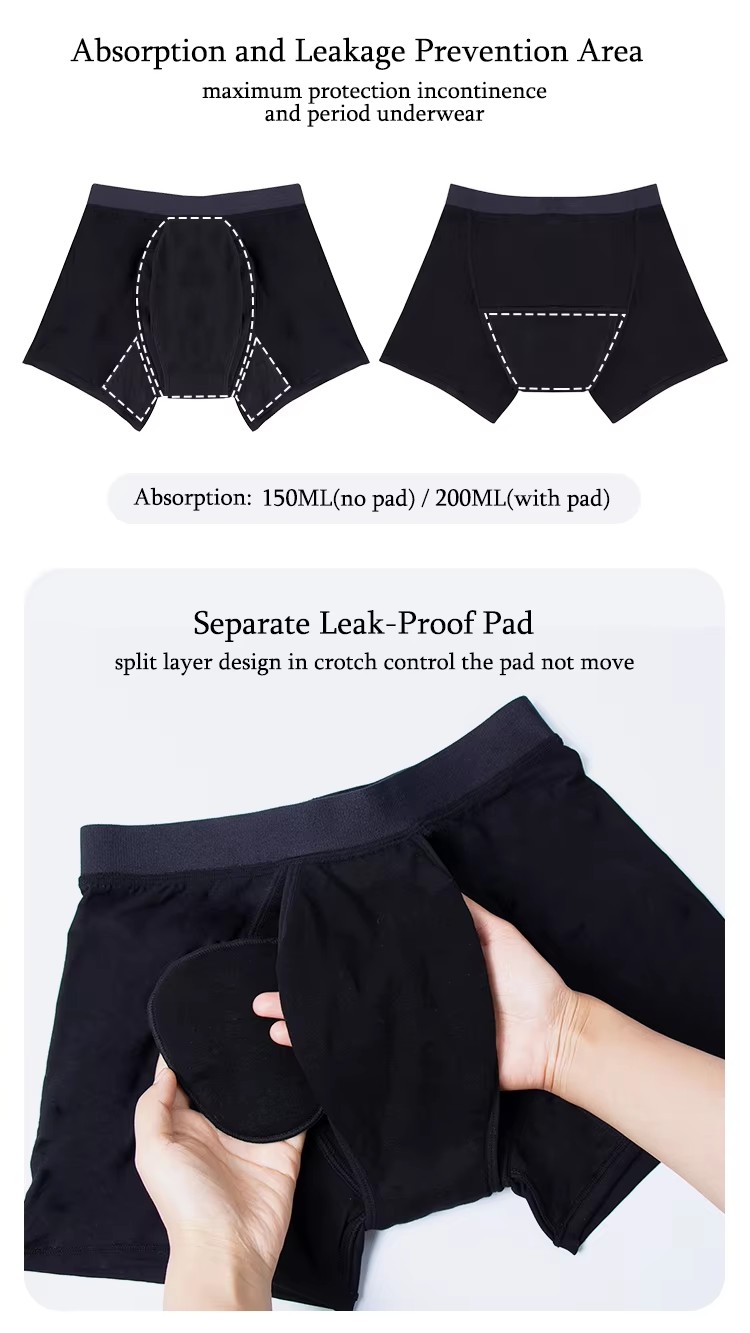
Men's leak-proof underwear is underwear with a built-in multi-layer protection system against urinary leakage. Unlike standard underwear, these garments have absorbent layers integrated directly into the construction — they capture moisture, hold it away from the skin, and prevent it from soaking through to outer clothing.
The key distinction from adult diapers or disposable pads: quality leak-proof underwear is engineered to look and feel like regular underwear. No visible bulk under clothing, no crinkle sounds when you move, no tape fasteners.
Why men choose incontinence underwear:
Stay active without the constant "what if" anxiety
Avoid embarrassing moments at work or social events
Eliminate the bulkiness and waste of disposable products
Save money over time with washable, reusable options
Return to a normal daily routine with added security
Understanding Incontinence Levels
Before choosing men's underwear for incontinence, assess your actual protection needs honestly. Incontinence varies significantly — choosing the right absorbency level matters for both effectiveness and comfort. Overbuying on absorbency means unnecessary bulk; underbuying means the product fails when you need it.
Light Incontinence
Occasional dribbles or small amounts of leakage, typically triggered by physical exertion — coughing, sneezing, laughing, or sudden movement.
Volume: Up to approximately 30–80ml per incident
What you need: Light to moderate protection, slim construction
Moderate Incontinence
More frequent leakage with stronger urgency, potentially requiring protection throughout the day. Larger volume per incident than light incontinence.
Volume: Approximately 80–200ml
What you need: Moderate to high protection with a secure waistband and adequate gusset coverage
Heavy Incontinence
Significant leakage that would saturate lighter products. Often related to post-surgery recovery, advanced prostate issues, or significant bladder dysfunction.
Volume: 200ml+
What you need: Maximum absorbency, multi-layer core construction, secure leg and waist fit
If you are unsure of your level, start with moderate protection and adjust after one to two weeks of wear. Most men find they need less absorbency than they initially assume.
Key Features to Evaluate Before Buying
Absorbency Capacity
The most critical factor. Ignore vague claims like "light" or "heavy" and look for actual volume specifications in millilitres (ml). A credible product specification will state the absorbency capacity of the core.
What to look for in construction:
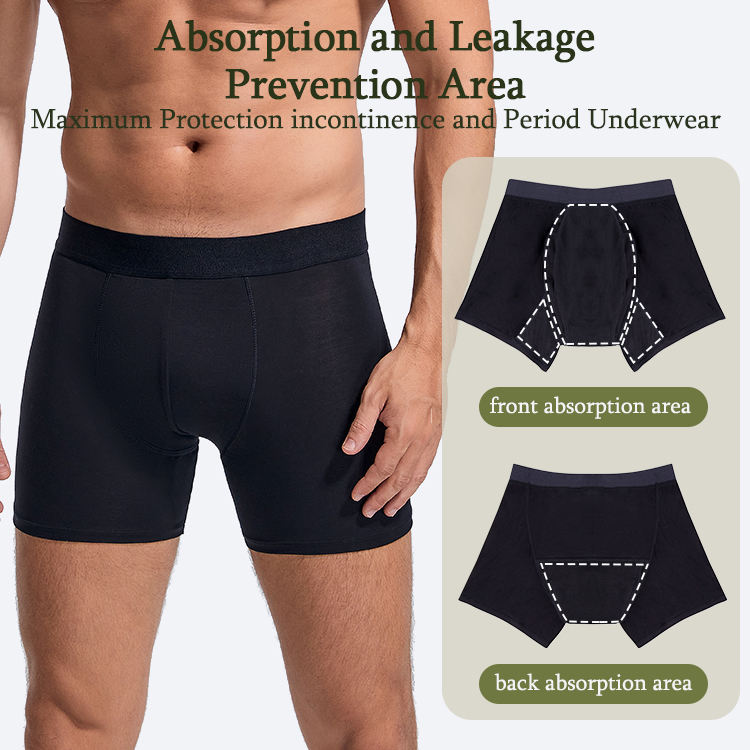
3–4 functional layers minimum: moisture-wicking top sheet, acquisition/distribution layer, absorbent core, waterproof backing
Core material: microfiber cores are standard; SAP (super-absorbent polymer) cores hold significantly more volume in a thinner construction
Quick-dry surface: the top layer should pull fluid away from skin within seconds to prevent the wetness sensation even after absorption
Fit and Coverage
Absorbency is useless if the underwear does not stay in the right position. Fit determines leak containment more than core volume in most real-world scenarios.
Waistband: should sit securely at the natural waist without rolling or digging in after extended wear
Gusset width and length: inadequate gusset coverage is the most common cause of side leakage — look for gusset lengths of at least 9–12" for men
Leg openings: must lie flat against the thigh without gapping; gapping is where most overflow leakage occurs
Large absorption area
Discretion
One of the primary advantages over disposable products:
Profile thickness: quality washable options sit no thicker than two to three layers of standard underwear fabric
Outer fabric: cloth-like woven or knit outer surface, not film-like or crinkly
Colour range: black, white, and grey blend invisibly under standard trousers
Seam construction: flat seams or bonded seams prevent visible lines under fitted clothing
Washability and Durability
For reusable options, this determines your actual cost per use and long-term performance:
Wash cycle rating: look for minimum 100 cycles; quality products reach 200+
Care compatibility: can it be machine washed at 40°C (104°F)? Air dry or low-heat dryer?
Absorbency retention: the core should maintain its capacity through the full rated wash cycle count — delamination or compression of the absorbent core is the most common failure mode
Material and Chemical Safety
This matters more than most buyers realise, particularly for daily intimate wear:
PFAS-free waterproofing: some products use per- and polyfluoroalkyl substance (PFAS) treatments for their waterproof backing layer. These have documented health concerns with long-term skin contact exposure. Look for independently verified PFAS-free certification — not just a self-declaration
OEKO-TEX Standard 100: confirms the finished product has been tested against harmful substances for direct skin contact
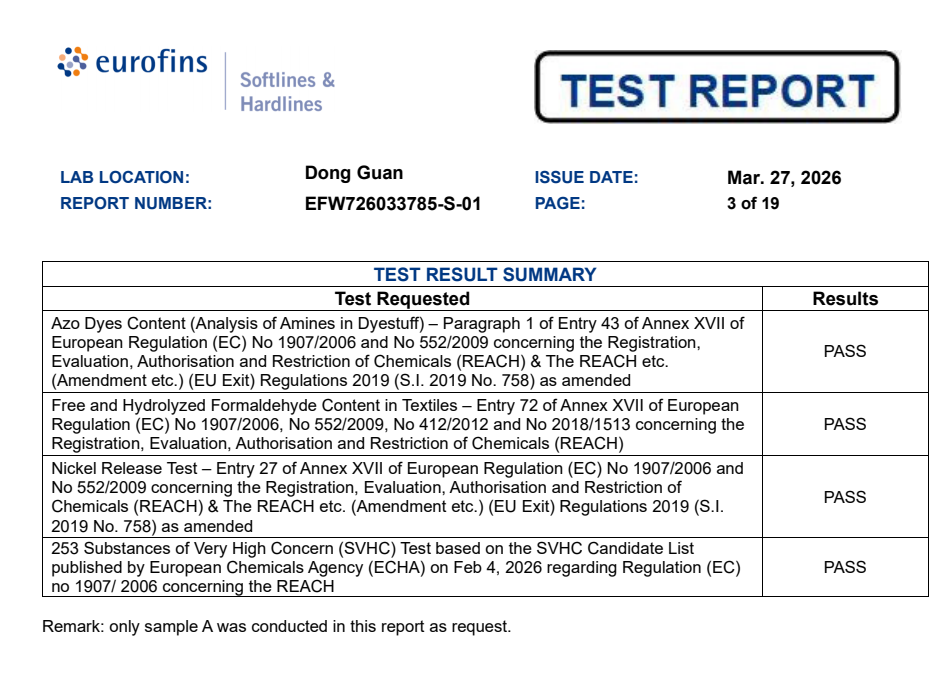
REACH/SVHC compliance: particularly important for EU market products, covering 253 substances of very high concern
Fabric options: bamboo and TENCEL Modal offer natural antibacterial properties; cotton blends are breathable and familiar; synthetic microfiber wicks moisture most efficiently
REACH/SVHC compliance
Washable vs. Disposable: Which Is Right for You?
Washable Incontinence Underwear
Advantages:
Significantly lower cost over time — a set of five pairs typically costs less per year than three months of disposables
Feels like regular underwear — no crinkle, no bulk, no clinical appearance
Better environmental footprint — no landfill waste per use
Available in fashion-forward styles, colours, and cuts
Most rated for 150–200+ wash cycles
Considerations:
Higher upfront investment ($20–$50 per pair for quality options)
Requires 3–7 pairs for daily rotation while others are washing and drying
Must follow care instructions to maintain absorbency; fabric softener and bleach degrade performance

Disposable Incontinence Underwear
Advantages:
No care routine required — discard after use
Higher maximum absorbency available (useful for heavy incontinence)
Practical for travel, emergencies, or transitional use
No waiting for laundry
Considerations:
Ongoing cost — $30–$80+ per month depending on frequency of changes
Bulkier profile than quality washable options
Landfill waste accumulates rapidly
Prolonged use can cause skin irritation from trapped moisture
Bottom line: For daily wear, washable men's leak-proof underwear offers the best balance of comfort, discretion, and long-term value for light-to-moderate incontinence. For heavy incontinence or situations where laundry is impractical, disposables serve a genuine role. Many men use both — washable for daily wear, disposables when travelling.
For specific product recommendations, see our Top 10 Best Incontinence Underwear for Men in 2026.
How to Find Your Size
Proper sizing is the single most important factor in leak prevention. Too loose and the gusset shifts out of position. Too tight and discomfort leads to removing the underwear before it has done its job.
How to Measure
Waist: Measure around your natural waistline at navel level — not at the hips, not at the trouser waistband
Hip: Measure around the fullest part of your hips, typically 7–9 inches below your natural waistline
Use both measurements: if waist and hip measurements suggest different sizes, go with the larger size
Size Reference Chart
Size | Waist (in) | Waist (cm) | Hip (in) | Hip (cm) |
S | 28–30" | 71–76 cm | 34–36" | 86–91 cm |
M | 32–34" | 81–86 cm | 38–40" | 97–102 cm |
L | 36–38" | 91–97 cm | 42–44" | 107–112 cm |
XL | 40–42" | 102–107 cm | 46–48" | 117–122 cm |
2XL | 44–46" | 112–117 cm | 50–52" | 127–132 cm |
3XL | 48–50" | 122–127 cm | 54–56" | 137–142 cm |
When in doubt, size up. Snug but comfortable is the target — you should be able to move freely without readjusting.
Fit Checklist
☑ Waistband stays in place through a full day without rolling or sliding down
☑ Leg openings lie flat against the inner thigh without gapping
☑ Gusset stays centred during movement — sitting, standing, walking
☑ No bunching or twisting in the crotch area
☑ No red marks or pressure lines after 4+ hours of wear
Care Instructions for Washable Incontinence Underwear
Proper care is what separates a product that lasts 200 washes from one that loses absorbency by wash 30.
Washing
Rinse in cold water immediately after use — prevents staining and breaks down urine before it sets into the absorbent core
Machine wash at 40°C (104°F) — warm water is more effective than cold for cleaning the core; hot water (60°C+) degrades absorbency over time
Use mild, fragrance-free detergent — avoid detergents with optical brighteners or enzymes that can degrade technical fabrics
No fabric softener — this is the most important rule. Fabric softener coats the fibres of the absorbent core and dramatically reduces capacity over time
No bleach — bleach breaks down the waterproof backing layer
Drying
Air dry or tumble dry on low heat — high heat is the second most common cause of early absorbency degradation
Do not iron — heat applied directly to the gusset area will damage the absorbent construction
Allow to dry fully before storing — storing damp leads to mildew in the absorbent core
Storage and Rotation
Keep a minimum rotation of 3–5 pairs for daily use; 5–7 pairs if you need to change during the day
Store clean, fully dry underwear in a cool, dry location
Inspect periodically for signs of core delamination, elastic degradation, or persistent odour after washing
When to Replace
Quality washable incontinence underwear typically lasts 150–200+ wash cycles with proper care. Replace when:
Absorbency is noticeably reduced — you are leaking through at lower volumes than before
Fabric has thinned or become transparent in the gusset area
Elastic has permanently lost its recovery
Odour persists after a full wash cycle
Top 5 Buying Tips
1. Match absorbency to your actual scenario — not your worst day
Most men overbuy on absorbency, ending up with unnecessary bulk for everyday wear. If your incontinence is light except on heavy-exertion days, buy light-to-moderate for daily use and keep a heavier option for specific situations.
2. Prioritise fit over absorbency rating
A product with a 200ml core that fits poorly will leak at 50ml. A product with a 100ml core that fits correctly will outperform it. Gusset position and leg elastic are more important than the number on the spec sheet.
3. Look for chemical safety documentation, not just claims
"PFAS-free" should be backed by a third-party lab test report on the finished garment — not just a material declaration from the fabric supplier. Ask the manufacturer for documentation if it is not published on the product page.
4. Buy at least two pairs before committing
Fit and performance vary between wears and wash cycles. Buy two pairs, wear and wash both several times, then decide whether to invest in a full rotation set.
5. Check the care instructions before the price
If care instructions say "hand wash only" or "air dry only," factor that into your real-world use. A product requiring hand washing will not get properly laundered as often, reducing both hygiene and longevity.
Common Myths About Men's Incontinence Underwear
Myth: "They're only for elderly men"
Incontinence affects men across all age groups — post-surgery recovery (particularly prostatectomy), athletes with stress incontinence, men managing overactive bladder, and younger men with neurological conditions. Age is one factor, not the defining one.
Myth: "They'll be visible under my clothes"
Modern washable designs have a profile equivalent to two to three layers of standard cotton underwear. Under most trousers, jeans, or sports clothes they are undetectable — particularly styles with bonded seams and smooth outer surfaces.
Myth: "They're uncomfortable and hot"
Breathable outer fabrics and moisture-wicking inner layers keep you cooler than most people expect. The critical factor is the outer fabric construction — a knit or woven cloth-like outer shell breathes; a film-laminated outer shell does not. Verify before purchasing.
Myth: "I'll have to give up exercise or travel"
The opposite tends to be true. With reliable protection, many men return to physical activities and travel they had been avoiding. Look for moisture-wicking fabrics with a secure, stay-put construction for active use.
Myth: "All incontinence underwear is the same"
Core construction, waterproofing chemistry, gusset design, and wash-cycle durability vary enormously between products. The difference between a $15 and a $40 pair is usually not margin — it is layer count, core material, and construction quality.

Transitioning to Incontinence Underwear: What to Expect
Week 1: The underwear will feel different from regular underwear — slightly more structured in the gusset area. This is normal. Most men report the awareness fades within the first week as the fit becomes familiar.
Weeks 2–3: You will develop a washing and rotation routine that becomes as automatic as your existing laundry routine. The key milestone is finding the absorbency level and style that matches your daily pattern.
After one month: Most men report they stop thinking about the underwear during the day — which is the intended outcome. The confidence that comes from reliable protection, worn discreetly, is the real benefit.
Frequently Asked Questions
How much does men's incontinence underwear cost?
Washable options range from approximately $15–$50 per pair depending on brand, construction, and technology. A rotation set of five quality pairs ($100–$200 upfront) typically costs less per year than three months of disposable products. Disposables run approximately $30–$80 per month depending on usage frequency.
Can I wear men's leak-proof underwear all day?
Yes. Quality incontinence underwear for men is designed for 8–12 hours of wear. Change when the product has reached its capacity, when you notice skin irritation, or at the end of the day as a hygiene practice.
Does insurance cover incontinence underwear?
Some insurance plans, Medicare Part B, and Medicaid cover incontinence supplies with a physician's prescription. Coverage criteria vary significantly — contact your provider and ask specifically about "absorbent incontinence underwear" and whether a prescription from a urologist or primary care physician qualifies.
How many pairs do I need?
For daily wear with a standard home laundry routine: 5–7 pairs. This provides enough rotation to have clean, dry underwear available while others are washing and drying. For heavier incontinence requiring mid-day changes, or if your laundry routine is less frequent, 7–10 pairs is more practical.
Will incontinence underwear help with odour?
Quality products include antimicrobial properties in the absorbent core that neutralise odour-causing bacteria. The moisture-wicking surface layer also reduces the warmth and humidity that bacteria thrive in. Odour control degrades if care instructions are not followed — particularly if fabric softener is used.
What is the difference between incontinence underwear and adult diapers?
Incontinence underwear is pulled on and off like regular underwear, uses integrated absorbent layers rather than a separate pad insert, and is designed to look and feel like normal underwear. Adult briefs (sometimes called diapers) have tape or hook-and-loop fasteners at the sides, offer higher maximum absorbency, and are typically used for heavy-to-total incontinence or when a caregiver is assisting with changes.
Can I exercise while wearing incontinence underwear?
Yes. Men successfully wear incontinence underwear for men during walking, jogging, cycling, and gym workouts. For active use, prioritise moisture-wicking inner construction, a secure waistband that does not roll, and a gusset that stays in position during movement. Not all styles are equally suited to exercise — check whether the product is specifically described as suitable for active wear.
Finding the Right Product for Your Needs
The right men's incontinence underwear is the one that matches your specific scenario:
Scenario | What to Prioritise |
Light daily leakage | Slim profile, moderate absorbency, breathable outer |
Active lifestyle | Moisture-wicking, secure fit, stay-put gusset |
Office or professional wear | Smooth outer surface, neutral colours, flat seams |
Overnight use | Extended absorbency (200ml+), full back coverage |
Post-surgery recovery | Easy on/off, soft waistband, moderate absorbency |
Travel | Consider a hybrid: washable for daily + disposable for transit |
For specific product recommendations across all absorbency levels, see our Best Incontinence Underwear for Men in 2026.
This guide is for informational purposes only. For medical assessment and personalised treatment of urinary incontinence, please consult a urologist or continence specialist.
About Ljvogues
Ljvogues (USPTO Reg. No. 6,378,310) is a Shenzhen-based manufacturer specialising in functional intimate apparel, including men's and women's incontinence underwear. All products are PFAS-free verified and REACH/SVHC compliant.
For manufacturing enquiries or brand development: info@ljvogues.com