



Table of Contents
Introduction
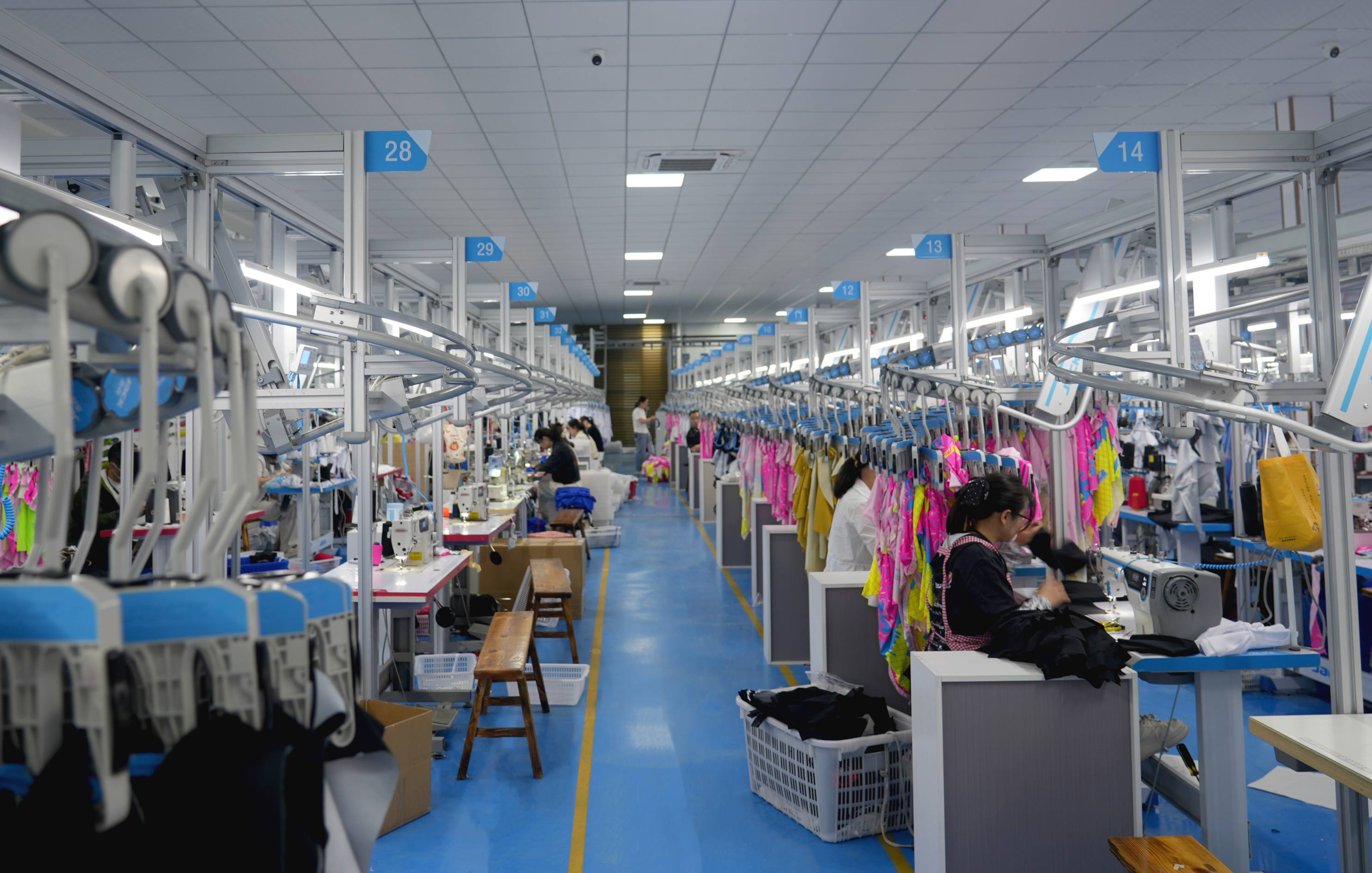
The first time we ran leak-proof underwear through our production line, I spent an hour on the factory floor staring at the crotch seam.
Standard practice — whenever we start a new product category, we pull apart what's selling on the market. See what works, what doesn't, and where the engineering gaps are. That day, I had six competitor samples spread across my QC table. Some were impressive. Most weren't.
The biggest problem wasn't the absorbent layers — most brands had figured that part out. The problem was the contact layer. Several samples used cheap polyester next to skin. When I asked our material team to run moisture-wicking tests, two of the six failed within the first hour of simulated wear. That's not a design flaw — that's a cost decision. Someone chose the cheaper fabric, and women are paying for it with discomfort.
At Ljvogues, we make functional underwear for a living — leak-proof underwear, postpartum underwear, incontinence products. We've been running these production lines for over a decade, and what I've learned is this: the difference between a product that works and a product that feels like wearing a diaper comes down to decisions made on the factory floor. Fabric choices. Layer thickness. Seam placement. Gusset width.
This guide covers everything you need to know about leak-proof underwear: how it works, who needs it, how to choose the right one, and what separates quality products from the rest. Whether you're dealing with your period, managing bladder leaks, or recovering from childbirth, you should find practical information here.
What is Leak-Proof Underwear?
Leak-proof underwear is underwear with built-in absorbent and waterproof layers. You wear it like regular underwear, but it absorbs fluid instead of letting it pass through.
Unlike disposable pads or tampons, leak-proof underwear is reusable — you wash and wear it, typically for 2-3 years with proper care. Unlike adult diapers or incontinence products, it's designed to look and feel like normal underwear.
What makes leak-proof underwear different:
Multi-layer absorbent system: Quality leak-proof underwear has 3-5 layers of functional material in the crotch area. The innermost layer pulls moisture away from skin, middle layers trap fluid, and the outer layer prevents anything from leaking out. If you're comparing products, check how thick that absorbent zone is. Some budget brands market "leak protection" with a layer thinner than a panty liner.
Waterproof yet breathable: The outer barrier stops fluid from escaping while still allowing air circulation. This is what separates real leak-proof underwear from period pads — it works as an integrated garment, not an accessory. The technology here typically involves TPU (thermoplastic polyurethane) lamination or PUL (polyurethane laminate) membranes.
Made for real bodies: Leak-proof underwear accounts for body movement, fabric stretch, and different levels of protection needs. Sizes typically range from XS to 4XL or 5XL depending on the brand. At Ljvogues, we run custom sizing for our OEM clients — we see that sizing consistency is one of the top complaints in this industry. A too-tight waistband creates gaps. A too-loose fit allows fluid to escape.
Leak protection capacity: Quality leak-proof underwear holds about 15-50ml depending on the level. That's roughly equivalent to 2-8 tampons. Budget options might claim higher numbers but fail under sustained pressure. Don't trust any brand that doesn't specify ml capacity — vague claims like "heavy duty" mean nothing without numbers.
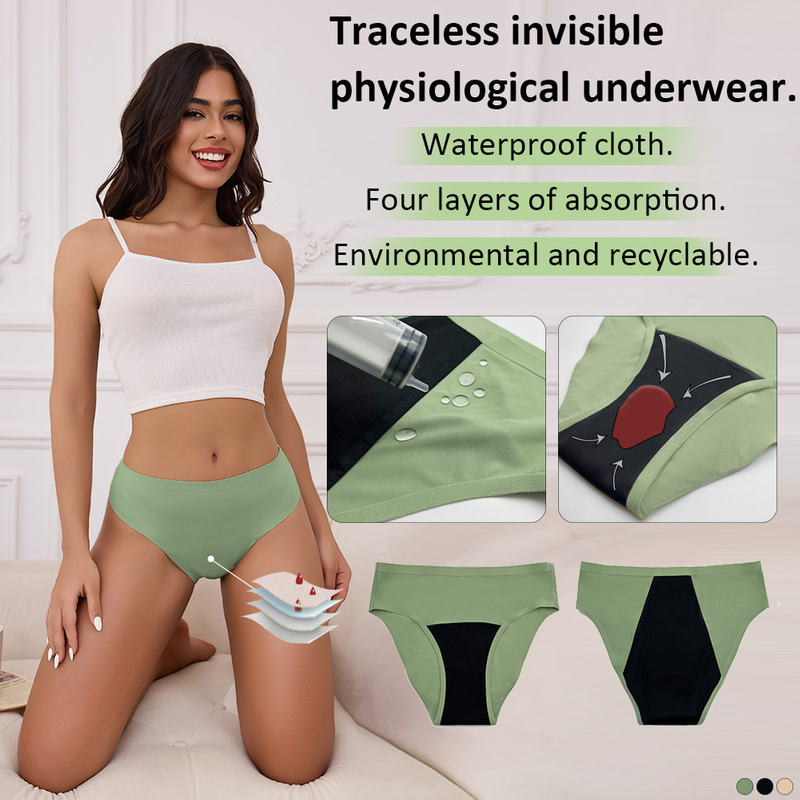
Leak-Proof Underwear: Seamless, comfortable, and absorbent
Who Needs Leak-Proof Underwear?
The market has fragmented into specific use cases. Here's where leak-proof underwear actually helps:
Menstrual Protection
About 1.1 billion women worldwide menstruate. Most will need leak protection at some point — during their period, when using other menstrual products as backup, or on light flow days when tampons feel excessive.
Leak-proof period underwear works for:
All days of your period, from light to heavy
Overnight protection
Backup with menstrual cups or tampons
Days when you don't want to use disposables
The practical advantage: no more stuffing disposable pads into your purse. No more running out. No more environmental guilt about monthly waste.

Period panties with lace trim
Bladder Incontinence
An estimated 25-45% of women experience some form of urinary incontinence. It's common after childbirth, during menopause, and as a result of pelvic floor conditions. Many women deal with it silently, avoiding activities they love because they're afraid of leaks.
Leak-proof incontinence underwear provides:
Light to moderate leak protection (20-50ml)
Discreet appearance under clothing
Comfortable fit for all-day wear
Reusable option vs. disposable pads
The practical advantage: you can exercise, socialize, and live normally without constant worry about finding a bathroom.
Postpartum Recovery
After childbirth, women experience postpartum bleeding (lochia) that can last 4-6 weeks. This isn't like a regular period — flow varies unpredictably, and comfort is critical while your body heals.
Postpartum underwear needs:
High-waisted coverage for C-section incision sites
Soft, non-irritating materials against sensitive skin
Sufficient absorbency for unpredictable flow
Stretch to accommodate changing body size
At our factory, we produce dedicated postpartum lines for several brands. The design requirements are different from standard period underwear — the waistband placement, fabric softness, and coverage area all need to account for postpartum bodies.
Active and Sports Use
Stress incontinence affects many active women during exercise — sneezing, jumping, running. Traditional pads shift during movement. Leak-proof underwear stays in place.
Sports-specific features to look for:
Moisture-wicking outer fabric
Secure fit that doesn't shift during movement
Breathable materials for extended wear
Compression-friendly design
How Does Leak-Proof Underwear Work?
The Technology Behind It
Layer 1 - Skin Contact Layer
The innermost layer touches your skin. Quality options use bamboo fiber, modal, or cotton blends — soft materials that pull moisture away from skin, keeping you dry. This is where most brands cut costs to hit price points.
At our factory, we tested seven different inner fabric blends before settling on our current bamboo-modal combination. The moisture-wicking rate difference was 23% between our choice and the budget alternative. That's the difference between "feels dry" and "feels damp" after an hour.
Layer 2-3 - Absorbent Core
These layers trap and lock away fluid using microfiber, cotton, or proprietary blends. Some premium options add activated charcoal or bamboo charcoal for odor control. The engineering here determines whether a product performs on day one and after 100+ washes.
We run our absorbent cores through 100-wash cycle tests before locking in specifications. Many brands test to 30-50 cycles — that's not enough for a product you'll use for years.
Layer 4 - Anti-Odor and Airflow Layer
This layer neutralizes odor and allows air circulation. Odor prevention isn't just about freshness — it's about bacteria control. Standing moisture creates conditions for bacterial growth. Proper airflow prevents this.
Layer 5 - Waterproof Outer Barrier
The outermost layer stops fluid from escaping. This is the functional foundation — a breathable yet waterproof membrane. Standard TPU lamination works well. Some premium brands use ceramic coating for better water resistance, but the performance difference in real-world use is marginal.

Leak-proof underwear with multi-layer structure
Does It Actually Work?
Short answer: yes, when built correctly.
Longer answer: the performance depends entirely on the engineering. A product with 5ml capacity will fail for heavy flow. A product with poor moisture-wicking will feel damp even if it doesn't leak. A product with cheap outer fabric will lose waterproofing after 30 washes.
Here's what we see in our testing:
Absorbency Level | Capacity | Equivalent | Best For |
Light | 5-15ml | 1-2 tampons | Spotting, light days, backup |
Moderate | 15-25ml | 2-4 tampons | Regular flow days |
Heavy | 25-50ml | 4-8 tampons | Heavy days, overnight |
Ultra | 50ml+ | 8+ tampons | Postpartum, overnight, heavy flow |
The key is matching capacity to your actual needs. Many women underestimate their flow — we get emails from customers whose first pair was undersized. It's an easy mistake, but it's avoidable if you understand the numbers.
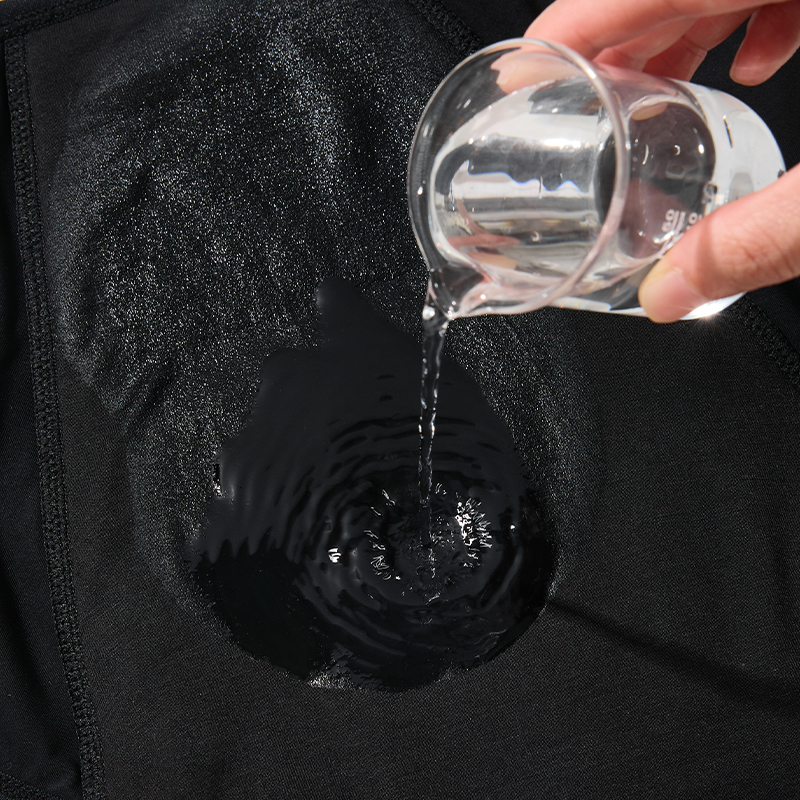
Effective and highly absorbent new period underwear
How to Choose the Right Leak-Proof Underwear
Assess Your Primary Use Case
For period protection:
Choose based on your heaviest flow days
Consider overnight use if you need protection while sleeping
Look for breathable fabrics if you experience discomfort with other products
For incontinence:
Match capacity to your leak severity (light, moderate, heavy)
Look for quick-dry fabrics if changing during the day
Consider waist height — high-waisted options provide more coverage
For postpartum:
Prioritize comfort and fabric softness over capacity
Look for high-waisted designs that won't irritate C-section incisions
Consider sizing up — postpartum bodies change daily
Consider Your Activity Level
Desk job / sedentary:
Most styles work. Focus on comfort and all-day wearability.
Active / exercise:
Look for moisture-wicking fabrics, secure fit, and styles that don't shift during movement. Some women prefer seamless designs for gym wear.
Overnight / extended wear:
Choose heavy or ultra absorbency. Look for full-coverage designs that prevent back leaks.
Select the Right Style
Style | Coverage | Best For | Considerations |
Bikini | Low rise, minimal coverage | Light days, everyday wear | May not suit all body types |
Brief | Full hip coverage | Most uses, reliable fit | Standard period coverage |
High-waist | Full stomach coverage | Overnight, postpartum, incontinence | More coverage, more security |
Boyshort | Full hip and thigh | Active wear, postpartum | Comfortable, modest coverage |
Thong | Minimal coverage | Light days, tight clothing | Limited capacity, style choice |
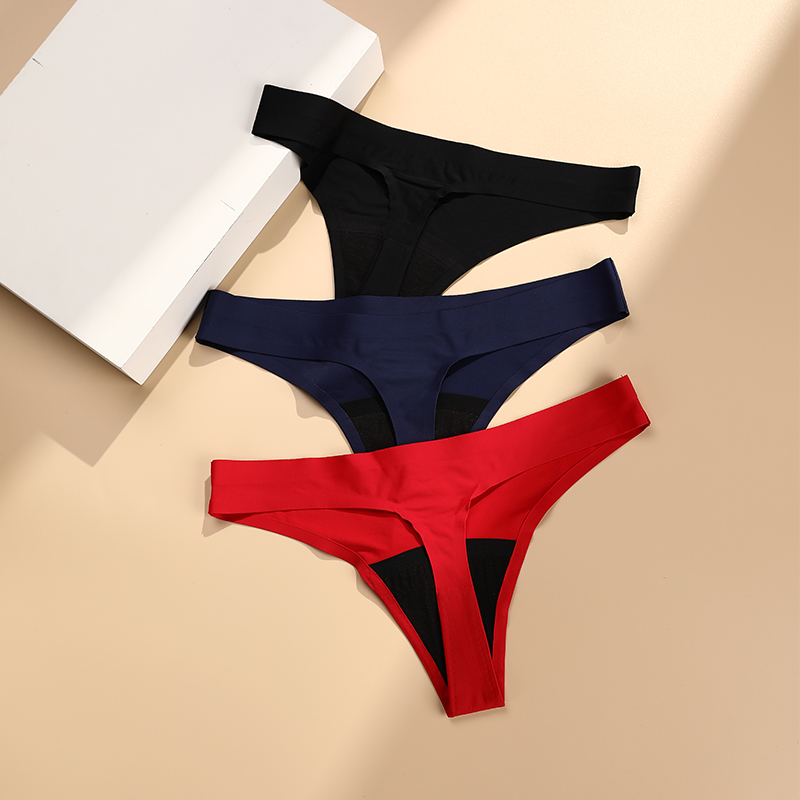
Bikini-style menstrual underwear
Get the Right Size
This is where we see the most customer issues. Leak-proof underwear needs to fit snugly to work — but not so tight that it creates gaps in the absorbent zone.
General sizing tips:
When in doubt, size up
Check the gusset width — this is the absorbent zone
A slightly loose fit still protects; a too-tight fit creates leak paths
Read brand-specific sizing charts — vanity sizing varies wildly
At Ljvogues, we manufacture for multiple brands and see sizing data across many product lines. The most common return reason is customers buying a size too small. The second most common is customers not understanding gusset width — they buy based on waist size without checking whether the absorbent zone is wide enough for their body.
Consider Fabric Preferences
Bamboo:
Naturally moisture-wicking
Antibacterial properties
Soft feel
Eco-friendly
Slightly more expensive
Modal:
Made from beech tree pulp
Extremely soft
Good moisture-wicking
Retains color well
Moderate price point
Cotton:
Breathable
Easy to care for
May not wick as quickly as bamboo/modal
Budget-friendly option
Synthetic blends (nylon/spandex):
Durable and stretchy
Quick-drying
May feel less natural
Often used in active/sports styles

LJvogues period underwear supports customization of various fabrics.
Top Leak-Proof Underwear Brands in 2026
When I evaluate leak-proof underwear, I look at three things: does the absorbent layer actually perform, does the fit work for real bodies, and does the product last after repeated washing? Here are the brands that meet those standards in 2026:
Brand | Price Range | Absorption | Material | Sizes | Best For |
$35-50 | Light to Ultra | Nylon/spandex + cotton gusset | XS-3X | All-day wear, versatile styles | |
Sorae | $35-45 | Up to 50ml | 95% bamboo-viscose | S-4XL | Sensitive skin, breathable comfort |
$22-44 | 2-5 tampons | Recycled materials | 00-24 | Eco-conscious consumers | |
Saalt | $25-35 | Up to 5 tampons | Modal blend | XS-3X | Heavy flow, cup backup |
Thinx | $30-43 | Up to 2 tampons | Cotton/spandex | XS-4X | Light-moderate flow |
GoSure | ~$10/pair | 25ml | Nylon-spandex | S-XXL | Budget-conscious, value packs |
Everdries | $12-60 | 20ml | Cotton blend | S-3XL | Incontinence, everyday use |
Depend | $15-30 | Medical-grade | Polyester blend | S-XL | Light incontinence, disposable option |
$8-25/pair | 10-80ml | Custom | Custom | Brands, private label, bulk orders |
Brand Details
1. Knix
Knix is one of the most established names in leak-proof underwear. Their UltraThin line has become something of an industry standard for everyday period protection.
What works:
Wide variety of styles and absorbency levels
UltraThin technology reduces bulk while maintaining protection
Good quality control across product lines
Sizes from XS to 3X
User review: "I've worn Knix for heavy workout days and overnight. The absorbency holds up even on my heaviest days." — Verified buyer
2. Sorae
Sorae has emerged as a top performer in 2026, particularly for women with sensitive skin. Their bamboo-based approach addresses comfort concerns that plague many competitors.
What works:
95% bamboo-viscose blend — naturally cooling and breathable
100% cotton contact layer for sensitive skin
Up to 50ml capacity on high-absorbency styles
Sizing from S to 4XL
User review: "Switched from Thinx to Sorae because of skin irritation. The bamboo fabric is noticeably softer and I haven't had any issues since." — Verified buyer
3. Modibodi
This Australian brand built its reputation on sustainability, using recycled materials throughout their product lines.
What works:
Made from recycled materials
Mid-range pricing with good durability
Multiple absorbency options
Sizes from 00 to 24 (most inclusive range)
User review: "Love Modibodi's commitment to sustainability. The period underwear holds up well after repeated washing." — Verified buyer
4. Ljvogues — OEM/Private Label Options
For brands and retailers, we manufacture leak-proof underwear under custom specifications. Our production capabilities include:
Manufacturing capabilities:
Custom absorbency levels: 10ml to 80ml capacity
Multiple fabric options: bamboo, modal, cotton, recycled materials
Custom sizing: XS to 6XL with brand-specific fit specifications
MOQ flexibility: Starting at 500 pairs for custom orders
Quality standards: 100+ wash cycle testing standard
Certifications: OEKO-TEX available on request
What sets factory production apart:
We see the material specs that go into products from every price tier. The difference between a $35 retail product and a $15 private label product often comes down to layer count, fabric quality, and testing standards — not the basic construction.
Our OEM clients include DTC period brands, healthcare companies, and private label retailers. We've supplied products that perform alongside top retail brands at 40-60% lower landed cost. If you're building a leak-proof underwear brand or adding private label products, we can discuss specifications.

LJvogues-Period underwear that has passed various certifications
Care and Maintenance: Making It Last
Leak-proof underwear is an investment. Here's how to make it last 2-3 years:
Washing Instructions
After each use:
Rinse in cold water immediately — this prevents stains from setting
Don't let used underwear sit for more than 12 hours before washing
Machine washing:
Use cold or warm water (max 40°C / 104°F)
Mild detergent only — avoid fabric softener
Fabric softener coats fibers and reduces absorbency
Use a delicates bag for extra protection
Hand washing:
Cold water with mild soap
Gently agitate — don't wring
Rinse thoroughly
Drying
Air dry whenever possible:
Lay flat or hang to dry
Avoid direct sunlight on colored garments
Takes 4-8 hours depending on humidity
Machine drying:
Low heat only
Remove promptly when dry
High heat damages the waterproof barrier
Storage
Store in a cool, dry place
Avoid damp environments (mildew risk)
Don't fold tightly — allow airflow
When to Replace
Signs you need new leak-proof underwear:
Reduced absorbency (feels damp more quickly)
Fabric degradation or thinning
Loss of elasticity in waistband or leg openings
Waterproof barrier appears damaged
Generally after 100-150 washes with heavy use
Common Mistakes to Avoid
Using fabric softener — Coats fibers, reduces absorbency
High heat drying — Damages waterproof layers
Using bleach — Breaks down absorbent materials
Storing damp — Creates bacterial growth
Wearing the wrong size — Creates gaps for leaks
Frequently Asked Questions
Q: How much fluid can leak-proof underwear hold?
Quality leak-proof underwear holds 15-50ml depending on the absorbency level. Light protection is typically 5-15ml, moderate is 15-25ml, heavy is 25-50ml, and ultra/night protection is 50ml+. Always check the specific ml rating — vague claims aren't helpful.
Q: Can I wear leak-proof underwear overnight?
Yes. Choose heavy or ultra absorbency for overnight use. The key is selecting a style with full coverage — a wide gusset and adequate back coverage prevents leaks while you sleep. Many women prefer high-waisted styles for overnight protection.
Q: Is leak-proof underwear sanitary?
Yes. Quality leak-proof underwear is sanitary when used and cared for properly. The absorbent layers trap fluid, and the waterproof outer layer prevents contamination. Follow the manufacturer's care instructions and replace underwear when it shows signs of wear. Period underwear does not increase infection risk compared to other menstrual products.
Q: How do I know what size to buy?
Refer to the specific brand's sizing chart — vanity sizing varies. When in doubt, size up. The underwear should fit snugly without gaps, but not so tight that it creates pressure points. At Ljvogues, we recommend checking the gusset width (the absorbent zone) — this is often more important than waist measurement for leak protection.
Q: Can I wear leak-proof underwear with a menstrual cup or tampon?
Yes. Many women use leak-proof underwear as backup with menstrual cups or tampons on heavy days. This provides double protection and peace of mind. It's also useful during cup insertion/removal when accidents can happen.
Q: Will leak-proof underwear show through my clothes?
Most quality leak-proof underwear is designed to be discreet. Look for styles marketed as "seamless" or "no-show" if discretion is a priority. High-absorbency styles may be slightly thicker, but the outer fabric typically drapes like normal underwear.
Q: Can men use leak-proof underwear?
Yes. There are male-specific styles designed for incontinence or post-prostate surgery recovery. The technology is the same — absorbent layers with waterproof barriers. If you're sourcing for a male product line, our OEM capabilities include custom male styles.
Q: How long does leak-proof underwear last?
With proper care (cold washing, air drying, avoiding fabric softener), quality leak-proof underwear typically lasts 2-3 years or 100-150 washes. Budget options may degrade faster — the waterproof barrier is often the first component to fail.
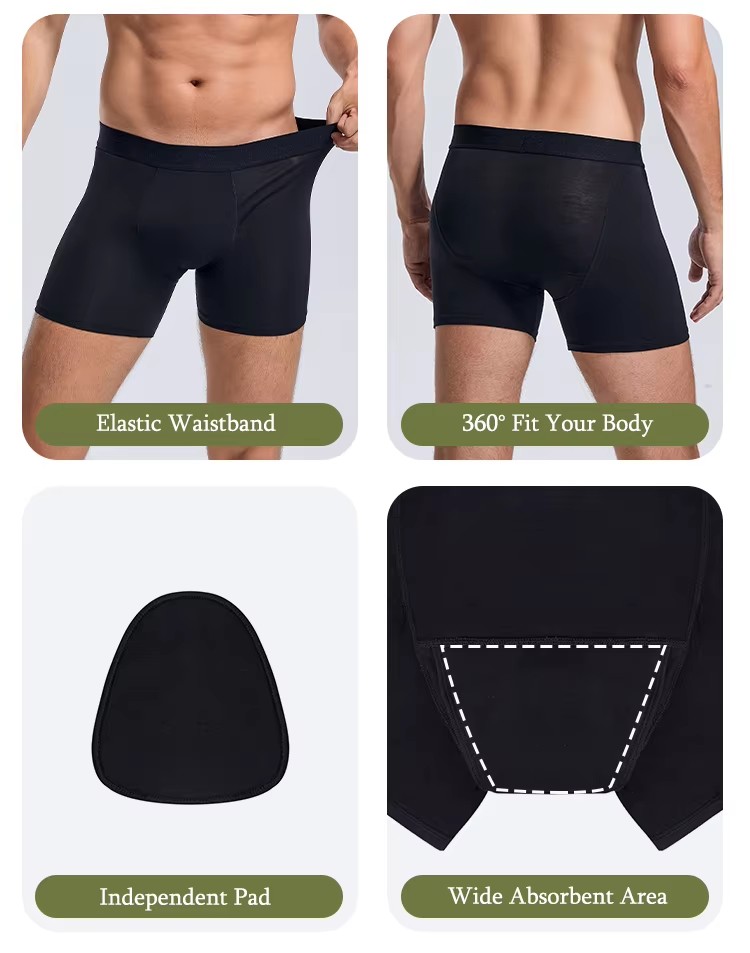
Men's leak-proof underwear
Conclusion
Back to where I started.
That afternoon on the factory floor, staring at competitor samples, I learned something I keep coming back to: leak-proof underwear is a simple product with complex engineering. The concept is straightforward — absorb fluid, prevent leaks, feel comfortable. But the execution determines whether a product actually works in real life.
The differences between products aren't always visible. A cheap inner layer might look fine but feel damp after an hour. A thin waterproof barrier might pass initial tests but fail after 30 washes. A poorly sized absorbent zone might protect standing but fail when you sit down.
Here's what to remember from this guide:
Capacity matters: Match the ml rating to your actual needs. Light, moderate, heavy, and ultra are meaningful categories — not marketing terms.
Fabric quality determines comfort: The inner layer is what touches your skin for hours. Bamboo and modal outperform cheap polyester. The 15% material cost difference is worth it.
Fit is non-negotiable: Sizing up when uncertain is better than sizing down. Check the gusset width, not just the waist measurement.
Proper care extends life: Cold washing, air drying, and avoiding fabric softener can double the lifespan of your leak-proof underwear.
Multiple use cases exist: Period protection, incontinence management, and postpartum recovery are different product categories — know what you're buying.
Want to explore options? Browse our leak-proof underwear collection at Ljvogues.com/leak-proof-underwear.html or contact us about OEM and private label opportunities for brands and retailers [Contact Ljvogues →].
For brands looking to add leak-proof underwear to their product line: we offer flexible manufacturing with custom specifications, competitive pricing, and quality standards that meet or exceed retail benchmarks. Our production lines have supplied products for multiple successful DTC brands.
Every woman deserves leak protection that actually works. Build it right, and it does.