



Table of Contents
Introduction: Why Testing Is the Foundation of Trust
Yesterday, I received our latest batch of laboratory reports from our third-party testing facility. Twelve tests, covering everything from chlorine resistance to chemical safety. I sat in my office and went through each one carefully — the same way I have done for every product line we have launched over the past fifteen years.
This is not about paperwork. This is about what happens when a teenager puts on a period swimsuit and jumps into a swimming pool. It is about the mother who buys that swimsuit for her daughter and deserves to trust that the product will work as promised. It is about the retail buyer who stocks that swimsuit on their shelves and needs to know it will not generate a wave of returns.
She should not be thinking about leakage. She should not be worrying about skin irritation. She should not be wondering if the chlorine will damage the absorbent layers. She should be swimming.
At Ljvogues, we run these twelve tests because we know that the gap between a good period swimwear product and a disastrous one lives in the details — the durability of the seams after fifty washes, the PH balance of the inner fabric against sensitive skin, whether the formaldehyde content meets EU REACH regulations, whether the phthalate-free waterproof membrane will hold up through multiple summers.
This testing report is for brand owners, retailers, and procurement teams who need to understand exactly what quality looks like when it comes to period swimwear manufacturing. If you are evaluating an OEM partner, you deserve to know what questions to ask and what standards to expect.
Over the years, I have spoken with hundreds of brands considering period swimwear production. The ones who build successful, sustainable businesses all share one trait: they treat manufacturing quality as a strategic investment, not a cost to minimize. They understand that a single product recall can erase years of brand-building. They know that customer trust, once lost, is nearly impossible to recover.
That is why every test we run at Ljvogues matters. Not just for our reputation, but for yours.
In the sections below, I will walk you through each of the twelve tests we conduct at Ljvogues, explain why they matter, and share what our test results demonstrate. By the end of this report, you will have a complete understanding of what rigorous quality control looks like in period swimwear manufacturing — and why it matters for your brand.

Why Testing Matters for Period Swimwear OEM Production
Period swimwear operates in an environment that is uniquely harsh compared to regular underwear or standard athletic apparel. Unlike typical swimwear that only needs to look good and fit well, period swimwear must manage fluid absorption while surviving conditions that break down ordinary fabrics.
The engineering challenges are substantial. When I explain this to brand owners during our initial consultations, I often describe it this way: imagine designing a product that must be comfortable against sensitive skin, absorbent enough to contain menstrual flow, waterproof enough to prevent leakage, durable enough to survive chlorinated pool water, salt water, repeated washing, and extended UV exposure — all while maintaining these properties through dozens of uses.
That is the actual challenge of period swimwear manufacturing. And that is why testing is not optional.
Constant water exposure — Chlorine in pools degrades certain materials over time through chemical reaction with the sanitizing agents. Standard swimwear fabric that looks perfect after pool use is actually undergoing slow degradation with each exposure. Salt in ocean water affects fabric treatments differently than chlorine, creating distinct stress patterns. Salt crystals can form during drying and create abrasive damage to certain fabric surfaces. Repeated soaking and drying cycles stress every component from seams to elastic to absorbent layers, causing materials to expand, contract, and gradually lose their original properties.
Body heat and moisture management — The absorbent layers must function while managing both menstrual fluid and perspiration simultaneously. This creates a complex moisture environment that standard swimwear fabrics are not designed to handle. When moisture from two sources meets a waterproof barrier, temperature and humidity gradients create conditions that can degrade certain materials faster than either moisture source alone. The inner fabric must wick moisture away from skin while the absorbent core must retain fluid without becoming saturated or uncomfortable.
UV radiation — Beach and outdoor pool use means extended sun exposure, sometimes for entire days at a time. UV radiation degrades dyes, weakens elastic fibers, and can break down certain waterproof membrane materials. A fabric that looks perfect in the showroom can look washed out and worn after one summer of beach use if UV stabilization is inadequate. This is particularly relevant for period swimwear because the absorbent layers may be more susceptible to UV degradation than standard swimwear materials.
Sensitive skin contact — Particularly for teenage users whose skin can be more reactive to chemicals, dyes, and finishing treatments. A fabric that causes mild irritation in an adult may cause significant discomfort in a teenager whose skin is still developing and may be more permeable to certain substances. The intimate areas where period swimwear sits for extended periods are particularly susceptible to irritation from inappropriate PH levels or chemical residues.
Absorbent functionality under stress — Unlike regular swimwear, period swimwear must absorb and contain fluid while the wearer swims, jumps, and moves. The engineering required to maintain leak protection during physical activity while submerged is non-trivial. Water pressure, body movement, and fabric stress create opportunities for leaks that would not exist in static conditions. A swimsuit that appears to work perfectly in a standing position may develop leaks when the wearer is swimming laps or playing water sports.
When a brand launches a period swimwear line without proper testing, they take on significant risk. Product returns destroy margins. Customer complaints damage brand reputation on social media and review platforms. Chemical safety failures — formaldehyde above limits, phthalates exceeding regulatory thresholds — can result in product recalls, regulatory fines, import bans, and in the worst cases, legal liability.
I have seen brands lose hundreds of thousands of dollars because they sourced from a factory that said their products were safe without actual test reports to prove it. They had no documentation when regulatory authorities came knocking. They had no evidence to defend themselves when customers complained. They were relying on the factorys word, and when that word proved insufficient, they paid the price.
At Ljvogues, we do not work on said. We work on laboratory verified.

ljvogues' menstrual swimsuit passed all 12 tests.
The 12 Essential Tests We Conduct at Ljvogues
Every batch of period swimwear from Ljvogues undergoes comprehensive third-party laboratory testing. Here is what we test, why each test matters for your brand, and what our specific test results demonstrate.
Durability Tests
These tests verify that the swimwear survives real-world use conditions over time, not just during initial wear but after repeated exposure to the harsh environments period swimwear encounters. Durability is particularly important for this product category because customers who invest in period swimwear expect it to last through multiple seasons.
Weather Aging Test (Fluorescent UV Lamps with Spray)
Standard: ASTM D4329 or equivalent fluorescent UV aging protocol
What it measures: How the materials hold up under accelerated UV exposure and moisture spray conditions — simulating months or years of sunlight and weather exposure in compressed laboratory time.
Why it matters for period swimwear: The outer shell of a period swimsuit faces constant UV exposure at the beach or pool. Without proper UV stabilization, the fabric becomes brittle, fades unevenly, and loses elasticity. This degradation affects not just appearance but functional performance — a fabric that has broken down under UV exposure cannot maintain its shape or provide reliable coverage.
This test ensures your customers receive a product that lasts through multiple summers, not just a few weeks of use. For brands positioning period swimwear as a premium, sustainable alternative to disposable products, longevity is essential for the value proposition to hold. A swimsuit that falls apart after one season does not support the reuse narrative that justifies the higher price point.
At Ljvogues, we use UV stabilization agents in our outer fabric formulations specifically because we know our clients customers will use these suits repeatedly throughout the season. A suit that cracks, pills, or loses elasticity after one summer generates returns and damages your brand perception.
Chlorine Resistance Test
Standard: ISO 105-E03 (result: Grade 4.0-4.5)
What it measures: Color fastness when exposed to chlorinated pool water at standard concentrations specified in the test method.
Why it matters: Pool swimming is the primary use case for period swimwear. If the color bleeds, fades unevenly, or changes appearance after a few exposures to chlorine, the product looks worn, damaged, and low-quality — even if the absorbent technology still functions perfectly.
Our Grade 4.0-4.5 result means the color maintains its integrity through dozens of pool sessions. For your brand, this translates to products that look as good on day thirty as they did on day one. When customers post photos of your period swimwear on social media, they are showcasing a product that still looks new.
Many budget manufacturers test to lower standards or skip chlorine resistance testing entirely. The result is period swimwear that looks acceptable when new but develops a washed-out, bleached appearance after a month of regular pool use. That is not a product you want your brand associated with.
Saltwater Resistance Test
Standard: ISO 105-E02
What it measures: Color fastness when exposed to seawater conditions, including the effects of salt and associated mineral content.
Why it matters: Beach use subjects period swimwear to salt, sand, and extended sun exposure simultaneously. Seawater can accelerate color degradation differently than chlorine, affecting certain fabric dyes and finishing treatments in ways that pool testing alone does not capture. Salt crystals can also abrasive damage to certain fabric surfaces during drying.
This test ensures your product handles ocean environments as well as it handles pools. For brands marketing to coastal communities, beach athletes, or vacation-focused customers, saltwater resistance is not optional — it is essential.
Ljvogues period swimwear is designed for both use cases. Whether your customers are doing laps in a chlorinated pool, playing at the beach, or swimming in natural bodies of water, the color and structural integrity must hold.
Wash Cycle Test (50 Cycles)
Standard: ISO 6330 (50 wash cycles)
What it measures: How the garment maintains its dimensions, appearance, seam integrity, and functional properties after fifty home laundry cycles.
Why it matters: This is one of the most important durability tests for period swimwear, and it is where many competitors cut corners. Teenagers and active women use these products repeatedly throughout a season. After fifty washes — which is not unusual for a frequently-used swimwear piece — the absorbent layers must still function, the seams must hold without unraveling or stretching, and the fit must remain secure.
We test to fifty cycles because we know real-world use means washing after every few wears, not careful hand washing as recommended on care labels. If your brand's period swimwear loses absorbency after twenty washes, develops baggy seams after thirty washes, or fits differently after forty washes, you will hear about it from your customers. In the era of online reviews and social media complaints, one viral negative experience can damage a product line irreparably.
At Ljvogues, we specifically engineer our period swimwear to maintain performance through extended wash cycles. Our absorbent layer construction uses durable materials that do not clump, break down, or lose effectiveness with repeated laundering.

LJVogues passed a 50-wash test on its menstrual swimwear.
Comfort and Performance Tests
These tests verify that the product feels good to wear and performs as expected during actual use — not just in laboratory conditions but in the dynamic environment of swimming, playing, and moving in water.
Stretch and Recovery (CRE Method)
Standard: ASTM D4964
What it measures: Elasticity and recovery properties — specifically, how much the fabric stretches under controlled load conditions and whether it returns to its original dimensions after the load is released.
Why it matters: Period swimwear must fit snugly enough to prevent leakage around the absorbent gusset area, but tight enough to be uncomfortable leads to returns. The stretch and recovery test ensures the garment maintains its shape and fit over time, even after repeated stretching during swimming movements, getting in and out of water, and general physical activity.
A swimsuit that stretches out and does not recover — developing a baggy, saggy appearance and losing its secure fit — cannot provide reliable leak protection. The gaps that form as the suit loses elasticity become potential leakage points.
Ljvogues uses high-quality spandex and elastane blends calibrated to our specific gauge and knit structure. We reject materials that stretch out and do not recover because we know a swimsuit that sags after one wear does not protect effectively.
Absorption Time and Capacity
Standard: ISO 20158
What it measures: How quickly the absorbent layer takes in fluid (absorption time) and how much fluid it can hold before reaching capacity (absorption capacity).
Why it matters: This is the core functionality test that defines whether period swimwear actually works. A period swimsuit that takes too long to absorb fluid creates discomfort and potential leakage during the absorption process. A suit with insufficient capacity fails during heavy flow days, leaving users exposed and embarrassed.
For teenage users with medium flow — and remember, approximately 73% of girls have their first period by age 13 according to the American College of Obstetricians and Gynecologists — reliable absorption capacity means the freedom to swim without anxiety. For women with heavier flows, the capacity rating tells them whether they need additional backup protection.
Our Ljvogues period swimwear is engineered to provide 2-4 tampons worth of absorption (10-20 mL), suitable for light to moderate flow days. For heavier flow, we recommend combining with additional protection, but the baseline absorption performance must meet expectations.
Safety and Chemical Tests
These tests verify that the materials are safe for contact with sensitive skin, particularly important for teenage users whose bodies may be more reactive to chemical exposures.
Formaldehyde Content
Standard: REACH Entry 72
What it measures: Formaldehyde content in the finished garment, ensuring it falls below regulatory limits for clothing articles sold in the European Union.
Why it matters: Formaldehyde is used in some fabric processing and finishing treatments, including certain dye fixatives and anti-wrinkle treatments. At high levels, formaldehyde can cause skin irritation, allergic reactions, respiratory issues, and longer-term health concerns. REACH Entry 72 specifically restricts formaldehyde content in clothing articles sold in the European Union.
For teenage users — whose skin is often more sensitive than adult skin — any formaldehyde above safe limits is unacceptable. Beyond the health concerns, a product found to exceed formaldehyde limits faces mandatory recall in EU markets, regulatory fines, and reputational devastation.
At Ljvogues, we source materials from suppliers who certify their fabrics are formaldehyde-free, and we verify compliance through independent laboratory testing on every production batch.
When you source from Ljvogues, you receive REACH-compliant products that meet EU chemical safety standards. This matters for your brand's regulatory compliance across European markets and demonstrates your commitment to product safety.
Phthalates (23 Types)
Standard: EN ISO 14389
What it measures: Content of 23 commonly restricted phthalate compounds in the finished product.
Why it matters: Phthalates are plasticizers used in some flexible materials, including certain waterproof membranes, elastic components, and printed decorations. Several phthalate types are classified as reproductive toxicants under REACH Annex XVII and are restricted in clothing articles, particularly those intended for children and adolescents.
For period swimwear — which uses waterproof membranes in the absorbent layers — phthalate content requires careful management. Waterproof membranes often incorporate plasticizers to maintain flexibility and durability, but the wrong formulation can introduce restricted phthalates.
At Ljvogues, we use phthalate-free alternatives in our waterproof membranes. Our EN ISO 14389 test results confirm compliance with all 23 monitored phthalate types. This is another area where sourcing from an unverified factory creates significant risk for your brand. If your products are tested by market surveillance authorities and found to exceed phthalate limits, you face recalls, regulatory fines, import bans, and legal liability.
pH Value
Standard: ISO 3071 (limit: 4.0-7.5)
What it measures: Acidity or alkalinity of the fabric in aqueous extract, reported as pH value.
Why it matters: Human skin has a naturally acidic mantle with pH around 4.5-6.0 that provides protection against bacterial growth and irritation. Fabrics with pH values outside the skin's natural range can disrupt this protective barrier, leading to irritation, rashes, or allergic reactions.
For period swimwear, which sits against intimate areas for extended periods, pH control is essential. Extended contact with a fabric outside the 4.0-7.5 range can cause discomfort, skin irritation, and in sensitive individuals, more significant reactions.
Our Ljvogues products are tested to confirm they fall within the 4.0-7.5 range — safe for sensitive skin and compliant with international textile safety standards including OEKO-TEX requirements.

The pH value of ljvogues' menstrual swimwear is within a safe range.
Color Fastness Tests
These tests verify that the colors remain stable during various exposure conditions, ensuring the product maintains its visual appeal throughout its usable life.

The colorfastness of LJVogues' menstrual swimwear passed testing.
Crocking Resistance (Rubbing)
Standard: ISO 105-X12
What it measures: Color transfer from fabric to fabric or skin through direct rubbing contact, both dry and wet.
Why it matters: When customers wear period swimwear against bare skin or when wet fabric contacts other materials, color transfer indicates poor dye fixation. This creates a cheap appearance, can stain skin or undergarments, and suggests the overall quality of the manufacturing process.
Ljvogues uses high-quality dyes with proper fixation processes appropriate for each fabric type. Our crocking resistance test results demonstrate minimal color transfer even under wet conditions, ensuring your products maintain their appearance and do not create embarrassing staining incidents for your customers.
Perspiration Resistance
Standard: ISO 105-E04
What it measures: Color fastness when exposed to both acidic and alkaline perspiration solutions, simulating real-world sweating conditions.
Why it matters: Swimming and sunbathing generate perspiration. Active teenagers especially may sweat more during physical warm-weather activities. If the color fades, bleeds, or changes appearance when exposed to perspiration, the suit looks worn and damaged even after minimal use.
This test ensures your period swimwear maintains its visual appeal even during heavy physical activity in warm conditions. For brands marketing active or sport-focused period swimwear, perspiration resistance is particularly important.
Light Fastness
Standard: ISO 105-B02
What it measures: Resistance to fading when exposed to artificial light (xenon arc lamp), which simulates extended sunlight exposure.
Why it matters: Beach and pool use means hours of direct sun exposure, often in environments with high UV index. A swimsuit that fades after a few uses looks old, damaged, and worn — even if the underlying garment is still functionally perfect.
Light fastness testing ensures your products maintain their visual appeal throughout the season. For brands investing in distinctive colors, prints, or patterns, color retention is essential for maintaining the design integrity that differentiates your product line.
How These Tests Protect Your Brand
Every test we run serves a specific purpose in protecting your brand's interests. Let me explain the practical implications of comprehensive testing for your business.
In my fifteen years in this industry, I have seen the full spectrum of quality approaches. I have worked with brands that invested in proper testing from day one and built lasting businesses. I have also seen brands that cut corners on quality and paid for it — sometimes fatally. The difference between success and failure often comes down to whether the brand understood that quality is not an expense — it is an investment in their future.
Reducing Returns Through Durability Verification
Returns are expensive. Beyond the direct costs of return shipping, handling, inspection, and restocking — typically 15-30% of the original item value — returns create indirect costs that are harder to measure but more damaging. Each return represents a customer who may not reorder. Each negative review influences future purchases. Each social media complaint reaches potential customers who never buy.
If your period swimwear has durability issues — seams failing after a few wears, colors bleeding in chlorine, absorbency declining after ten washes — you face a wave of returns that destroys your margin and your brand reputation.
By running comprehensive durability tests before production, Ljvogues identifies and resolves potential issues at the development stage. We catch problems in the sample phase, not after your customers have received the products.
For period swimwear specifically, durability issues can be particularly damaging because they affect core functionality. A swimsuit that fades is disappointing. A swimsuit that leaks is a failure — and customers remember failures. The Ljvogues quality control process begins with material inspection and continues through every step of production.
Avoiding Regulatory Violations and Product Recalls
The European Union's REACH regulation, the US Consumer Product Safety Improvement Act, California's Proposition 65, and similar frameworks in other markets create strict chemical safety requirements for textile products. Products that fail chemical testing face consequences that can devastate a brand.
Forced recalls at the brand's expense, including costs for retrieval, transportation, and disposal. For a period swimwear brand, recalling thousands of units from retail locations and customers is a logistical nightmare and a financial catastrophe.
Regulatory fines that can reach significant levels, particularly under EU REACH. These fines are often calculated based on the severity of the violation and the companys revenue, making them potentially existential for smaller brands.
Import bans preventing products from entering key markets. If your shipment is held at customs because testing reveals chemical violations, you miss your selling season and disappoint retail partners.
Legal liability from affected customers, particularly for products marketed to teenagers. Parents who believe their child was harmed by a product will pursue legal action, and class-action lawsuits in the childrens products space can be devastating.
Reputational damage that can outlast any single product line. Once a brand is associated with safety failures, recovery is slow and expensive.
Ljvogues conducts REACH Entry 72 formaldehyde testing and phthalate screening on every production batch because we know our clients depend on us for regulatory compliance. When your brand carries the Ljvogues name, it carries a verified safety record that regulatory authorities and retail partners can trust.
Chemical safety is not an afterthought at Ljvogues. It is built into our material sourcing process from the beginning.

Building Customer Trust Through Transparency
Parents buying period swimwear for their teenage daughters are making a trust decision. They need to believe the product is safe, reliable, and worth the investment. They are entrusting their child's comfort and dignity to a product they cannot fully evaluate before purchase.
Test reports — shared transparently through product listings, social media, or upon request — build that trust. When your brand can point to independent laboratory verification of safety and performance, you transform a purchase decision from I hope this works to I know this is tested.
For the period swimwear category specifically, trust is the foundation of the market. Customers are sharing intimate details about their bodies and their children's bodies. They need confidence that the products will perform as promised without causing harm.
The brands that win in this category are the ones that earn that trust — through consistent quality, transparent communication, and a willingness to show their work. At Ljvogues, we have built our reputation on exactly this approach.
Ljvogues Testing Commitment
Here is what you can expect when you partner with Ljvogues for your period swimwear OEM production. I want to be specific about our commitment because I know that words are cheap in this industry. Anyone can claim to care about quality. What matters is what you actually do.
Third-Party Laboratory Verification
All testing is conducted by independent, accredited laboratories that meet international standards. We do not conduct in-house testing that our factory can manipulate to show favorable results. We work with certified testing facilities that meet ISO 17025 requirements and are recognized by major regulatory bodies including EU market surveillance authorities.
Every test report we generate is available to our clients. If you need documentation for your own quality assurance records, regulatory submissions, retail partner requirements, or customer inquiries, we provide it. Transparency is not optional — it is how we build long-term partnerships.
Every Batch, Not Just First Batch
Some factories run tests on the initial production run to generate attractive documentation, and then reduce or eliminate testing for subsequent batches to cut costs. At Ljvogues, every production batch undergoes the same comprehensive testing protocol.
Consistency matters. The first batch and the hundredth batch must meet the same standards. Material lots change. Supplier formulations evolve. Manufacturing conditions shift. Testing every batch catches variations that could compromise quality before they reach your customers.
This is what we mean when we talk about quality control as a foundation of our manufacturing process — not an optional add-on that we offer for an additional fee.
Sample Testing Before Production
Before we begin bulk production for your order, we test samples from your specific production run. This means we verify that the exact materials, colors, and constructions going into your products meet our standards — not just that similar products have met standards in the past.
Different colorways may perform differently. Different material lots may have slight variations. Custom specifications require verification against the actual production parameters, not just theoretical compliance.
If a sample fails any test, we identify the root cause, implement corrective action, and retest until everything meets standards. You never receive products we would not stand behind.

Sample testing before production of menstrual swimwear
Full Test Report Access
When you work with Ljvogues, you receive complete test reports for every production batch, certificate of compliance with REACH, CPSIA, and other applicable regulations for your target markets, material safety data sheets for all components used in your products, ongoing compliance documentation as regulations evolve, and support for additional certification requirements including OEKO-TEX if needed.
We believe that sharing test results openly is part of what makes us a reliable partner. You should never have to wonder whether your products have been tested. With Ljvogues, you know.
How to Start Your OEM Partnership
Starting or expanding a period swimwear line with Ljvogues is straightforward. We have refined our process over fifteen years to make OEM production accessible for brands at every stage, from emerging startups to established retailers.
Every brand is different, and we adapt our approach to fit your specific needs. Some brands come to us with detailed specifications and need only manufacturing support. Others have a vision but need guidance on materials, construction, and testing requirements. We can work either way.
Step 1: Consultation
Contact our team with your product requirements — target markets, price points, volume expectations, certifications needed, and any specific design or material requirements. We discuss your vision, provide feedback on feasibility, material options, and realistic production timelines.
We have worked with brands targeting every major market, from North America and Europe to Australia and Asia. We understand the regulatory requirements for different regions and can guide you toward compliant product development.
During this consultation, we will ask questions about your target customers, your brand positioning, and your quality expectations. This helps us understand whether we are the right fit for your needs — and whether you are the right fit for our production capabilities.
Step 2: Sample Development
We develop samples based on your specifications. Our minimum order quantity for custom OEM production is flexible depending on your stage as a brand. For emerging brands, we offer smaller initial runs to allow market testing without excessive inventory risk. For established brands, we provide the volume capacity you need for full-scale production.
Sample development typically takes 2-4 weeks depending on complexity. For period swimwear specifically, sample development includes not just the outer shell and fit but the absorbent layer construction, waterproof membrane integration, and gusset engineering that determines leak protection performance.
We provide physical samples you can test in real conditions — swimming, washing, wearing. We want you to experience the product before you commit to production. There is no substitute for holding a sample in your hands and testing it yourself.
Step 3: Testing and Approval
Your samples undergo our full testing protocol. You review the results and approve production, or we iterate on the design until everything meets standards. We welcome client involvement at this stage — many brands send representatives to review samples and testing in person.
If testing reveals issues, we work transparently to resolve them. In our experience, most issues are caught and corrected during sample development, before any production commitment. We document every test result and share it with you before you make your production decision.
This is a collaborative process. Your feedback shapes the final product. We listen to what you observe during your testing and adjust specifications accordingly.
Step 4: Production
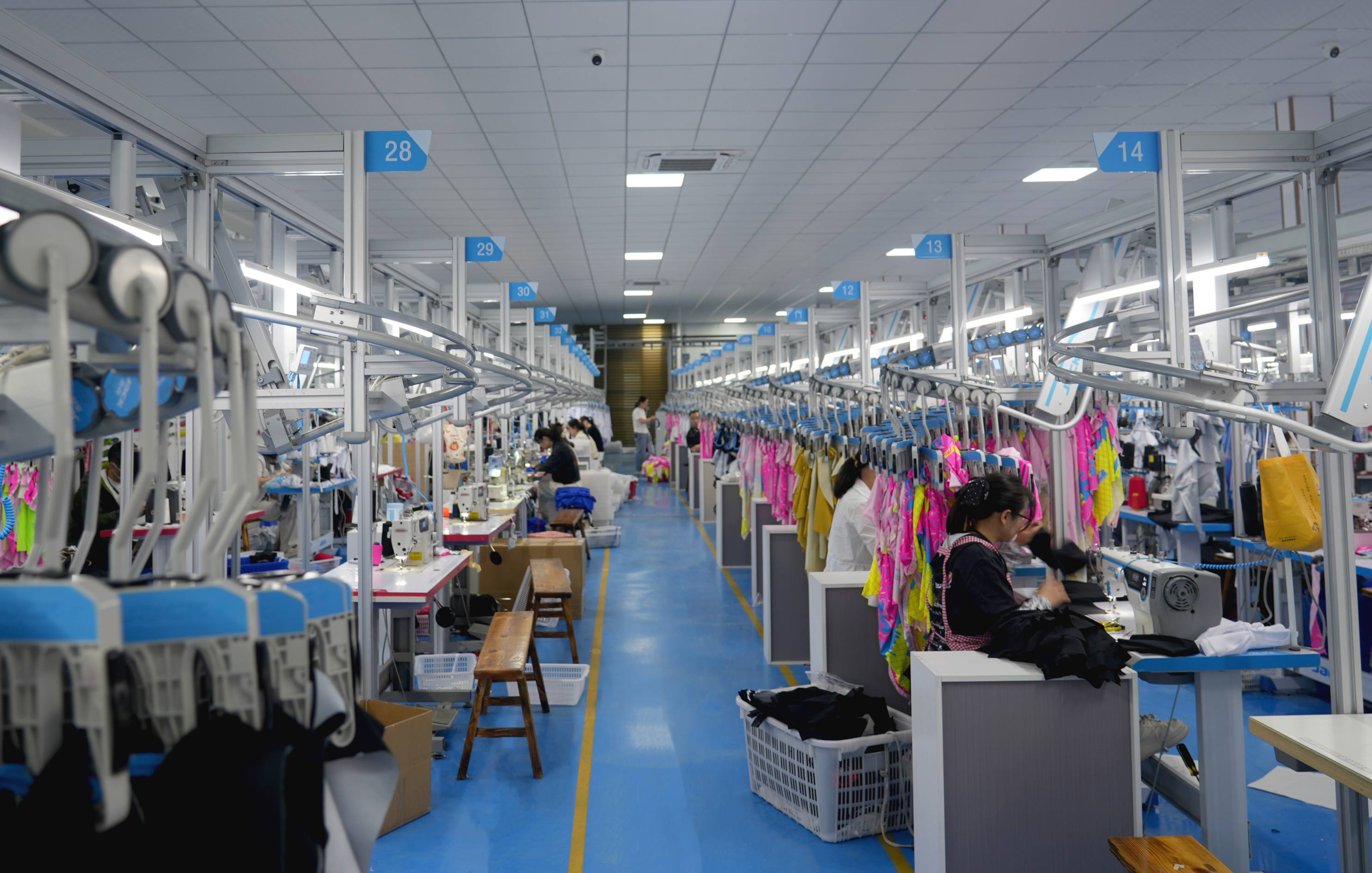
Once approved, we begin production with the same rigorous quality control at every stage — from incoming material inspection through cutting, assembly, and final garment testing. Every batch receives the same comprehensive testing as your samples.
Our production facilities are equipped for period swimwear-specific manufacturing, including the specialized equipment needed for absorbent layer construction, waterproof membrane integration, and the precision seaming required for leak protection.
You can request updates at any stage of production. We maintain open communication throughout the manufacturing process.
Step 5: Delivery and Support
We handle logistics and provide full documentation for your shipments, including test reports, compliance certificates, and any documentation required for customs clearance in your destination markets.
Our team remains available for ongoing support as your product line grows. Whether you need to expand into new styles, adjust specifications based on customer feedback, or scale volume for seasonal demands, we are your manufacturing partner.
We view every order as the beginning of a relationship, not the end of a transaction.

The custom production process of LJVogues' menstrual swimwear
Frequently Asked Questions
What is the minimum order quantity for period swimwear OEM?
Our minimum order quantity varies based on product complexity, customization level, and your stage as a brand. For custom period swimwear with absorbent technology and waterproof membranes, we typically recommend starting with 200-500 pieces per style for initial orders, with flexibility for growth as your brand scales. Contact our team to discuss your specific requirements and we will find a structure that works for your business model.
Do your products meet REACH regulations for EU market access?
Yes. Ljvogues period swimwear products are tested and verified compliant with REACH Entry 72 for formaldehyde content and meet all applicable phthalate restrictions under REACH Annex XVII. We provide certificates of compliance and full test reports for your regulatory documentation, import customs clearance, and retail partner requirements.
Are your products safe for teenage users with sensitive skin?
Yes. Our products are specifically designed with teenage users in mind, understanding that this demographic represents a significant portion of the period swimwear market. We conduct pH testing (ISO 3071) to ensure skin-safe acidity levels that fall within the 4.0-7.5 range. We use materials selected for low irritation potential, including soft inner linings that minimize chafing and discomfort. We avoid harmful chemical additives including formaldehyde and restricted phthalates, with third-party verification for every batch.
Can you produce period swimwear with custom branding and packaging?
Yes. As an OEM/ODM manufacturer, we provide full customization capabilities including fabric selection from our certified supplier network, custom color development to match your brand palette, hardware and trim options including branded labels and tags, and packaging design including hang tags, poly bags, and retail-ready presentation. We work with your design team to bring your vision to life under your brand identity.
How do you handle quality disputes if issues arise?
We stand behind our products completely. If quality issues arise that are attributable to manufacturing — not customer misuse or natural wear over extended use — we work with you to resolve them promptly. Resolution may include replacement products, credit for affected inventory, or corrective action implemented for future production runs. Our quality guarantee protects your brand's reputation because your success is the foundation of our ongoing partnership.
What certifications do you hold?
Ljvogues operates with ISO-aligned quality management systems and works exclusively with third-party accredited laboratories for product testing. We assist clients with any additional certifications their markets require, including OEKO-TEX Standard 100 for textile safety, GOTS for organic textiles, and country-specific regulatory compliance. Our test reports are recognized by major retail partners and regulatory authorities in North America, Europe, and Asia.
How long does production take?
Production timelines vary based on order size, complexity, and current scheduling. Standard production runs typically complete within 4-6 weeks after sample approval. Expedited production may be available for urgent orders with additional lead time discussion. We recommend planning 8-12 weeks from initial consultation to delivery for new product development and first orders.
What markets do you serve?
Ljvogues has experience producing period swimwear for brands targeting markets across North America, Europe, Asia-Pacific, and Australia. We understand the specific regulatory requirements for each region and can guide you toward compliant product development. Whether you are targeting US retail with CPSIA requirements, EU markets with REACH regulations, or Australian standards, we have the expertise to support your market entry.
Do you offer design assistance?
Yes. Our team includes experienced product developers who can work with your design concepts or create designs from scratch based on your brief. We understand period swimwear-specific engineering requirements including gusset design, absorbent layer integration, and waterproof membrane placement. We can recommend material combinations based on your target price point and performance requirements.
Can you scale with our business as we grow?
Absolutely. Our production capacity is designed to support brands at every stage, from initial market testing with smaller quantities to full-scale production for established product lines. As your business grows, we grow with you. We have helped brands scale from initial runs of a few hundred pieces to regular orders of tens of thousands. Our production flexibility means you never have to change manufacturers as your business evolves.
Conclusion: Building Products That Earn Trust
When I look at a test report, I see more than numbers on a page. I see a teenager jumping into a pool on the first day of her period, confident that her swimwear will hold up so she can focus on swimming with her friends. I see a mother buying a product she trusts because she can see the quality documentation and verify the safety testing. I see a brand building a reputation that compounds over years of consistent quality, not one that erodes with every product complaint and return.
The twelve tests we run at Ljvogues are not bureaucratic checkbox exercises designed to satisfy auditors. They are the foundation of trust between your brand and your customers — and trust is the only currency that matters in the period products category.
Period swimwear is not a commodity product. It is a category where quality directly impacts peoples comfort, confidence, and dignity. When your product works, you have a customer for life. When it fails, you have a story that spreads.
If you are evaluating period swimwear OEM partners, ask to see actual test reports — not summaries, not verbal claims, not attractive marketing language about quality commitment. Ask for verified laboratory results from independent accredited facilities. Ask about testing protocols for every batch, not just the first production run. Ask about chemical safety compliance for your specific target markets. Ask what happens when a test fails — how does the factory respond?

At Ljvogues, we welcome those questions because we have the answers. We have the test reports. We have the compliance documentation. We have fifteen years of experience producing period swimwear that performs as promised.
When you partner with Ljvogues, you are not just finding a factory. You are finding a manufacturing partner who understands that your brand reputation is on the line with every product we produce together.
The choice is yours. But when you see those twelve test reports on your desk, you will know exactly what they mean — and so will your customers.
Thank you for reading this far. I know it is a lot of technical detail, but I believe transparency builds trust. If you have questions about any of these tests or want to discuss your specific requirements, we welcome the conversation.
Ready to discuss your period swimwear production? Visit www.ljvogues.com or contact our team directly to start the conversation about your next product line. We look forward to learning about your vision and explaining how we can help bring it to life with the quality and reliability your customers expect.
This article was written by Ocean Yang, CEO of Ljvogues — a manufacturer specializing in period swimwear and functional underwear OEM/ODM production for brands worldwide.