



Table of Contents
Why This Article Exists
Roughly twice a month, a brand owner sends me a message that goes something like this:
"We're launching a postpartum underwear line. Our hero SKU is essentially your period underwear in a higher-waist cut. Same fabric, same gusset construction, same absorbency. Can you produce it for us?"
We can. We don't, and we don't recommend it to brand partners we want to keep working with for more than one product cycle.
The reason isn't manufacturing capacity. It's that period underwear and postpartum underwear are different products built for different biological situations, and the brands that understand this difference are the ones building durable positioning in the postpartum category. The brands that don't understand it are launching products that get returned, get poor reviews, and get quietly delisted within 18 months.
This article exists to lay out — clearly, with biological detail and engineering specifics — why postpartum is its own category. The goal isn't to discourage brands from entering postpartum. The opposite. Postpartum is one of the highest-growth, highest-margin segments in functional intimate apparel. The goal is to make sure brands entering it build products that actually serve the use case, instead of products that look like they serve the use case until customers actually wear them.
The Core Difference: Three Fluids, Not One
A period underwear is engineered around one biological reality: menstrual fluid, released cyclically over 3–7 days, in volumes ranging from light spotting to heavy flow.
A postpartum underwear is engineered around three concurrent biological realities, often happening simultaneously:
Fluid Type | Source | Duration | Volume | Composition |
Lochia (postpartum discharge) | Uterine lining shedding after birth | 4–6 weeks | 500–1,000ml total over the period; heaviest first 3–10 days | Blood + uterine tissue + cervical mucus + bacteria + white blood cells |
Stress urinary incontinence (SUI) | Pelvic floor weakness from delivery | Often 6 weeks to 6+ months | Variable; episodic small-to-moderate releases | Urine — different chemistry, different absorption profile |
Perineal wound exudate (vaginal birth) | Healing tears or episiotomy | 1–3 weeks | Small but continuous | Serous fluid, sometimes mixed with blood, with healing-stage bacterial profile |
A typical postpartum woman in the first 2 weeks after vaginal delivery is managing all three simultaneously. A woman after C-section delivery has lochia + SUI + the surgical incision recovery zone (no perineal wound, but the abdominal area becomes the primary engineering constraint).
This is fundamentally not what a period panty is built for. A period panty is engineered for one fluid type at predictable volumes over a predictable timeline. A postpartum panty has to handle three fluid types with different chemistry, different release patterns, different volumes, and different healing-zone considerations — across a 6-week window where the body is changing daily.
You cannot solve this with a higher waistband.

LJVogues Postpartum Menstrual Panties
What "Lochia" Actually Means for Absorbency Engineering
Most period underwear is engineered around an absorbency target equivalent to 2–3 regular tampons (15–30ml capacity in the gusset). Heavy-flow period underwear runs to 4–5 tampon equivalents (40–50ml).
Lochia in the first 72 hours postpartum can release 80–120ml in a single episode, often accompanied by passage of small clots (a normal physiological process in the first week). Day-by-day, the volume tapers — but the pattern is dramatically different from menstruation:
Postpartum Day | Lochia Stage | Volume Profile | Period Underwear Equivalent? |
Days 1–3 (Lochia rubra) | Bright red, heaviest | 50–100ml/day, heaviest hours sleeping/resting | No period panty handles this — hospital-grade pads are standard |
Days 4–10 (Lochia serosa) | Pinkish-brown | 20–40ml/day | Approaches but exceeds heavy-flow period underwear capacity |
Days 11–28 (Lochia alba) | White-yellow discharge | 5–15ml/day | Falls within period underwear capacity range |
Days 28–42 (residual) | Light spotting | 0–5ml/day | Within light-flow capacity |
The engineering implication: a true postpartum-rated underwear has to span a 25x range in absorbency demand over a 6-week window. No single-capacity construction handles this. The category requires either:
A multi-SKU lineup (heavy-postpartum + transitional + light-recovery), with the brand educating customers on which SKU to wear when
A modular insert system, where a base panty accommodates different absorbency inserts at different recovery stages
A "high capacity for early stage + breathability for late stage" single-product engineering compromise that's deliberately spec'd for the middle of the curve
A period panty doesn't fit any of these patterns. It's spec'd for a different absorbency profile entirely.

Ljvogues Postpartum Menstrual Period Underwear Absorbency Project
Stress Incontinence Is a Different Fluid Engineering Problem
Lochia and menstrual fluid are biologically similar — both blood-dominant, both release over hours, both manageable with the same general absorbent core technology (cotton terry, bamboo viscose, microfiber blends).
Urine is different. Urine release in stress incontinence:
Releases in seconds, not hours. A laugh, a sneeze, a step taken wrong — urine release is rapid and concentrated, not slow and sustained.
Is much less viscous than blood. Period blood and lochia spread slowly through an absorbent core; urine spreads instantly.
Has different chemistry. Urea, creatinine, ammonia, salts. The pH is different (urine is typically 4.5–8.0; lochia is around blood pH 7.4).
Generates odor differently. Urea breaks down into ammonia within hours of release; menstrual blood doesn't. The odor management requirement is fundamentally different.
Stains differently. Urine staining is yellowing over repeated exposure; menstrual staining is rust-colored set-in protein.
A core engineered for lochia — slow blood absorption, biological staining management, blood-pH chemistry — does not handle a 30ml urine release the same way. It overflows. The fluid escapes laterally before the core can absorb it. The customer experiences a "leak" not because the panty isn't absorbent, but because the core can't absorb fast enough.
The engineering solution for stress incontinence requires:
Engineering Element | Spec |
Top sheet | Highly hydrophilic — pulls fluid downward fast, away from skin |
Acquisition / distribution layer | Wicks fluid laterally to spread surface area for absorption |
Absorbent core | High-capacity, fast-absorbing — typically incorporates SAP (super-absorbent polymer) for urine, vs. terry-only for blood |
Backsheet / barrier | Tighter pore structure than period panty — urine pressure can defeat looser TPU |
The SAP (super-absorbent polymer) point matters. Most period underwear deliberately doesn't use SAP — it's not necessary for menstrual flow rates and adds chemistry that brands targeting "natural" positioning prefer to avoid. For stress incontinence, SAP isn't optional; it's structurally how the product handles 30ml of urine in 2 seconds. The cleanest postpartum products use GRS-certified, third-party-tested SAP with specific safety profiles, but they do use it.
A period panty with no SAP cannot perform the stress-incontinence function. A postpartum panty without SAP is making a marketing claim it cannot deliver.

SAP package absorber core structure
The C-Section Constraint Changes Everything
Roughly 32% of births in the US, 25% in the EU, and 45%+ in some Asian markets are by Cesarean section. For these women, the postpartum underwear isn't engineered around the perineum — it's engineered around the abdominal incision.
The constraints stack:
The incision sits at or just above the pubic hairline, typically 10–15cm horizontal, in the exact zone where a period panty's leg-opening band or low-waist seam would compress.
The incision is closed but healing for 4–6 weeks. Direct pressure on the incision impedes healing, increases risk of dehiscence (wound separation), and causes pain.
The abdomen is swollen for 2–4 weeks as the uterus involutes from pregnancy size back to normal. A panty that fits at 6 weeks postpartum doesn't fit at 1 week postpartum.
The wearer is typically lying down or sitting for the first 2 weeks, meaning the panty experiences friction patterns dramatically different from normal wear.
Skin in the incision area is more reactive — recent surgical trauma, antiseptic residue, and altered local microbiome all increase contact dermatitis risk from any chemistry on the panty.
A standard period panty waistband sits exactly where the C-section incision is. A "high-waist period panty" with the same elastic structure moved 5cm higher still has the leg-opening elastic running across the lower abdomen. The construction that works for C-section postpartum requires:
Smooth, seamless, low-pressure waistband that sits above the navel (typically 10–12cm above incision line)
No elastic compression below the navel at all — the panty body has to drape, not grip, in the incision zone
Knit fabric with mechanical stretch (not elastic stretch) so the panty body grows and shrinks with the daily abdominal volume change
Flat-lock or seamless construction anywhere the panty contacts incision-zone skin
Hypoallergenic chemistry verified to a higher standard than even regular period underwear, given the surgical-recovery context
This is genuinely different engineering. Period underwear with a higher waistband doesn't deliver any of these properties.
The Bridge Issue: Postpartum Skin Is Not Period Skin
We covered in earlier articles in this series (referencing the period underwear chemistry work) that vulvar and labial skin is more permeable than typical body skin, and that period underwear sits against skin during a hormonally elevated permeability window.
Postpartum skin is in an even more reactive state. Specifically:
Factor | Period | Postpartum (first 6 weeks) |
Estrogen levels | Variable across cycle | Crashed to near-menopausal levels (especially while breastfeeding) |
Skin barrier function | Normal | Reduced — hormonal collapse disrupts lipid barrier |
Tissue trauma | None | Vaginal birth: perineal trauma. C-section: abdominal incision |
Local pH | Normal vaginal acidic ~3.8–4.5 | Disrupted — lochia is alkaline (~7.4); local pH off-balance |
Local microbiome | Lactobacillus-dominant | Disrupted; recovery takes 4–6 weeks |
Inflammatory state | Cyclical, predictable | Elevated systemically; locally elevated at trauma sites |
Sensitivity to chemistry | Heightened | Substantially heightened |
The implication: chemistry that's marginal for period underwear is unacceptable for postpartum. Antimicrobial finishes that disrupt vaginal microbiome (already covered in the period series) cause documented harm to the postpartum recovery process. Formaldehyde residues at OEKO-TEX Class II limit (75 ppm) — acceptable for general apparel — are too high for postpartum skin contact. Solvent-based adhesive residues that off-gas slowly become more problematic when the wearer's skin barrier is compromised.
The right chemistry standard for postpartum is the infant chemistry standard — OEKO-TEX Class I limits (formaldehyde under 16 ppm, stricter heavy metal limits, stricter aromatic amine limits), even for adult products. This is the standard a meaningful subset of postpartum-focused brands target, and it's a real differentiator at the documentation level.
What "Postpartum Comfort Support" Actually Means
Brand briefs almost always include some version of "gentle abdominal support." The technical translation of this requirement is more nuanced than the marketing language suggests.
Postpartum women are managing diastasis recti (abdominal muscle separation, occurs in 60%+ of pregnancies and persists postpartum), pelvic floor weakness, and uterine involution — the gradual return of the uterus from pregnancy size to normal size, which takes 6–8 weeks.
"Support" in a postpartum panty has to balance:
Compression light enough not to impede uterine involution (high compression delays the natural process)
Compression light enough not to compress C-section incision (if applicable)
Compression light enough not to create pressure on hemorrhoids (very common postpartum, especially after vaginal delivery)
Mechanical containment of the soft abdominal wall during diastasis recovery — without medical-grade compression
Wash durability — the support property has to persist through 30+ wash cycles, not collapse after wash 5
The engineering pattern that delivers this is knit-structure mechanical support, not elastic compression. Specifically:
Power mesh panels in the front body fabric — knit structure provides directional support without elastic squeezing
Compression-graded zones — heavier knit at the lower abdomen where support is wanted, lighter knit higher up
Encapsulated waistband — provides retention without grip; sits at natural waist or above (above navel for C-section variants)
No "shapewear" elastic — postpartum is not the use case for high-compression body shaping
Period panty construction uses elastic compression for fit retention because it doesn't need to do anything else. Postpartum construction uses knit-structure mechanical engineering because compression elastic is contraindicated for the use case.
Different construction philosophy entirely.

A variety of safe and skin-friendly fabrics are available.
The Customer Buying Journey Is Different Too
Period underwear is purchased monthly-cyclically by an established user; the buying decision is a routine reorder for an ongoing physiological pattern.
Postpartum underwear is purchased in a specific 4–8 week window, by a customer in a specific physical and emotional state, often as a gift or via a registry, with the buying decision typically made between weeks 30–36 of pregnancy. The buying journey:
Period Underwear | Postpartum Underwear |
Self-purchased | Often gifted, registry, or purchased by partner |
Reorder-driven | One-time or short-window purchase |
Decision time: minutes | Decision time: extensive research |
Driver: cycle management | Driver: hospital prep + recovery anxiety |
Repurchase: 6–18 months | Repurchase: not until next pregnancy |
Channels: DTC + Amazon | Channels: DTC + maternity retail + hospital systems + registries |
Influencer: friends + cycle apps | Influencer: doulas, OB/GYNs, postpartum-specialty platforms |
The marketing implication is that postpartum underwear isn't sold the same way period underwear is sold. The retailer mix is different, the influencer mix is different, the positioning language is different, and the price elasticity is different (postpartum customers are typically less price-sensitive in the buying window).
Brands trying to extend a period underwear product line into postpartum without adjusting any of this — same SKU, same packaging, same channels — typically get conversion rates 30–50% below dedicated postpartum brands at similar price points. The product fails to convert not because it's bad but because it's not engineered for the actual buying journey.

Details of Ljvogues' postpartum menstrual underwear
What Postpartum Brand Owners Should Be Asking Their Manufacturer
If your manufacturer is showing you a "postpartum" sample that's clearly a period panty in a higher-waist cut, the diagnostic questions are:
What's the absorbent core construction, and is it spec'd for blood + urine simultaneously? A blood-only core (cotton terry, bamboo viscose) doesn't handle stress incontinence. The right answer includes some SAP component or equivalent fast-acquisition technology, with safety documentation.
What's the maximum single-event absorption capacity in ml, and what's the lateral spread containment? Period panty answers are typically 25–40ml; postpartum answers should be 60–100ml minimum for the heavy-stage SKU.
Is there a C-section variant with smooth-construction waistband above navel? If the answer is "we offer it in high-waist," that's not actually a C-section construction — that's a higher waist on a period construction.
What's the chemistry standard — OEKO-TEX Class II or Class I limits? Class I (infant standard) is the right benchmark for postpartum. Most factories default to Class II for adult intimate apparel.
What's the support structure — elastic compression or knit-structure mechanical? For postpartum, the right answer is knit-structure mechanical with no compression elastic in the abdominal zone.
Is the panty pattern graded for postpartum body shape change? Postpartum bodies fluctuate dramatically across the recovery window — a single panty has to fit a 1-week-postpartum abdomen and a 6-week-postpartum abdomen. The pattern grading and fabric stretch profile both have to accommodate this.
What's the wash durability target — 30+ wash cycles minimum? Postpartum customers wash these products frequently in the first month. Wash durability matters more than for period products.
Is the chemistry verified for compromised skin barrier states? This is a higher standard than general intimate apparel. The supplier needs to be able to speak to it.
A manufacturer that can answer all eight has engineered for postpartum. A manufacturer that gets vague on three or more is showing you a period panty with a different cut.
Where Ljvogues Stands on Postpartum
Same transparency principle that we apply across all our intimate apparel work:
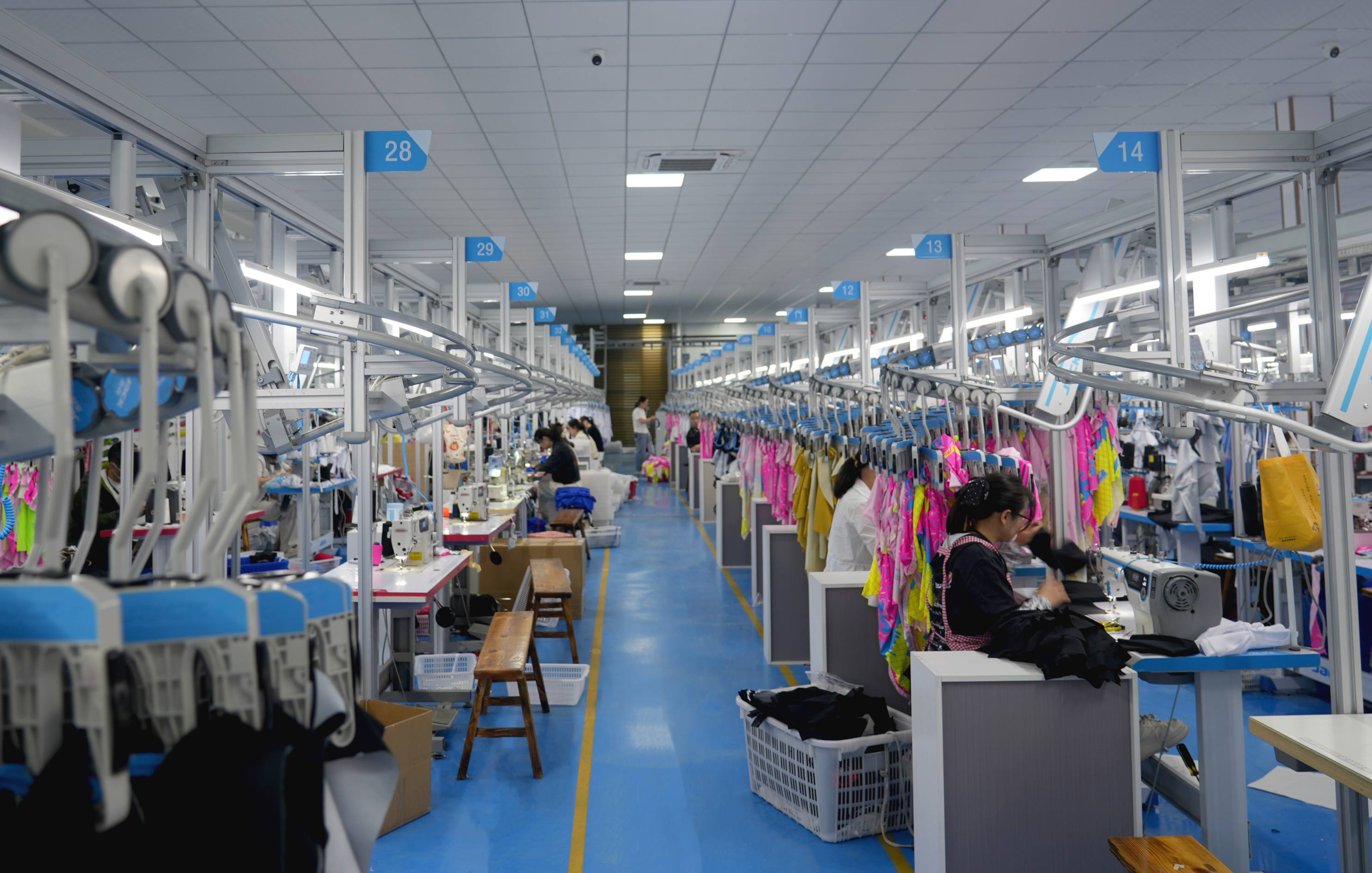
We treat postpartum as a structurally different category from period, with different absorbent core technology, different waistband construction, different chemistry standards, and different pattern grading. Our postpartum production lines are not period production lines run with a different cut.
Multi-stage SKU architecture — heavy-stage (Lochia rubra, days 1–10), transitional (days 11–28), and recovery (days 28+/light incontinence) constructions, each engineered for its specific absorbency and skin-state requirements.
C-section dedicated variants — smooth-waistband construction sitting above the navel, no elastic compression in the incision zone, knit-structure mechanical support only.
Chemistry to OEKO-TEX Class I limits on postpartum product lines — formaldehyde under 16 ppm finished garment, stricter heavy metal extraction limits, no antimicrobial treatments anywhere.
GRS-certified, third-party-tested SAP in stress-incontinence-rated SKUs, with full safety documentation available.
GOTS Organic Cotton skin-contact layers with Transaction Certificates per shipment, in the brand's name.
Heat lamination and water-based PU adhesive only — no solvent-based adhesives in postpartum products specifically because of the compromised-skin-barrier consideration.
Pattern grading specific to postpartum body shape change — sized to fit the body across the 6-week recovery window, not to fit a single static body state.
Free postpartum sample dissection service for brands sourcing from other factories — send us a competitor sample, we'll dissect it, identify what's actually inside, and write you a report on whether it's engineered for postpartum or repackaged from period production.
If a brand asks us for a postpartum spec sheet, we send the postpartum spec sheet — not a period spec sheet with a higher-waist annotation.

Frequently Asked Questions
Can a brand sell postpartum and period underwear off the same product?
Some brands try, with a "works for both" positioning. It's a viable budget-tier strategy and serves customers who want one product for both use cases. But the product compromises in both directions — too much capacity for daily period use (uncomfortable, expensive), too little for early postpartum (leaks, dissatisfaction). The "works for both" tier is the value-tier of the postpartum category, not the premium tier. Brands building premium postpartum positioning need dedicated postpartum SKUs.
What's the realistic MOQ for a dedicated postpartum SKU?
For a small new brand with single-SKU launch, 1,500–3,000 pieces is the realistic minimum at most quality OEM factories. Below that, the per-unit cost premium for short-run production typically makes the economics unworkable. For a brand launching multiple SKUs (heavy + transitional + C-section variant, for example), 1,000–1,500 per SKU at 3,000–5,000 total is achievable with the right manufacturer.
We've worked with new brand partners at the lower end of this range when the brand has clarity on the use case and is willing to accept that initial production is more about market validation than scale economics.
How is postpartum sized differently from period underwear?
Period sizing is based on stable adult body measurements — typically S/M/L/XL with standard waist-and-hip ratios. Postpartum sizing has to accommodate:
Pre-pregnancy body (some brands ask customers to order pre-pregnancy size; works less well than expected)
Late-pregnancy body (some brands ask customers to order maternity size; risks oversizing post-recovery)
Postpartum-specific measurements — waist + lower abdomen circumference + hip — graded for the 6-week recovery window
The cleanest postpartum sizing approach is a dedicated postpartum size chart, often offered as postpartum S, M, L, XL with a sizing guide that asks customers to measure at week 36 of pregnancy. This is meaningfully different from period underwear sizing and worth implementing as a brand-level strategy decision.
Does postpartum underwear need to be machine-washable in hospital-grade conditions?
Most postpartum customers do laundry at home, and home wash is the design target. However, products marketed for the immediate postpartum hospital stay (days 1–4) face slightly different requirements — chlorine bleach exposure (some hospital laundries), hot water washing (typically 60°C+), and dryer drying. For brands targeting hospital partnerships or registry placement that includes hospital use, a "hospital-grade washable" SKU is worth specifying separately.
What's the right margin structure for postpartum vs. period at retail?
Postpartum supports a 30–40% retail price premium over comparable-quality period underwear, primarily because:
Customer is less price-sensitive in the buying window
Decision is gift / registry-driven, with different price psychology
Use case has higher functional stakes — willingness to pay for proven quality is higher
Channel mix includes maternity retail and hospital systems with different price elasticity
Most brands operating in both categories see postpartum gross margin run 5–10 percentage points higher than period margin, despite postpartum's higher COGS. The premium-pricing capture is the structural reason.
How long does the postpartum customer buying window last?
Typically 6–12 weeks. Most postpartum-specific purchases happen between pregnancy weeks 30–40 (preparation buying) and postpartum weeks 1–4 (in-recovery buying for additional units). Repurchase is rare unless the brand has a transition strategy into long-term incontinence products or a related category.
This narrow window is why postpartum brands are so dependent on registry placement, doula and OB-GYN recommendations, and pregnancy-stage targeted advertising. The customer is not findable on routine intimate apparel marketing channels — they're findable in the maternity-content ecosystem.
Do men's incontinence products work the same way as postpartum SUI products?
Different body geometry, different fluid release pattern, different fit considerations, and a different cultural buying context. Men's incontinence is a related category (and one we produce at Ljvogues), but the engineering and marketing are sufficiently different that brand owners shouldn't assume crossover product platforms.
The closest legitimate crossover is postpartum SUI products → general adult female SUI products (peri- and post-menopausal incontinence). The engineering is similar; the marketing positioning is different. Some brands successfully extend a postpartum line into general female adult incontinence as the customer ages out of postpartum specificity. This is a legitimate strategy that we support.
What's Next in This Series
This is Article 1 of a focused 3-article postpartum series. The next two articles dive deeper into specific engineering and sourcing topics:
Article 2: C-Section Engineering — The specific construction principles for postpartum underwear designed around abdominal incision recovery: smooth waistband construction, knit-structure mechanical support, pattern grading for the 6-week recovery window, and the manufacturing decisions that distinguish a real C-section variant from a period panty with a higher waistband.
Article 3: B2B Postpartum Sourcing Guide — The 12-question audit for brand owners evaluating postpartum manufacturers: what to ask, what answers should pass, what answers should disqualify a supplier. Designed as the operational companion to this series.
If you want to be notified when the next article publishes, email us — we'll add you to the postpartum-series list.
Talk to Us
If you're developing a postpartum brand and want a 30-minute conversation on what your specific positioning would require — heavy-stage capacity, C-section variant, chemistry standard, MOQ scoping — we're here. We've helped dozens of postpartum brands move from concept to first production, and we can usually map the engineering trade-offs and cost structure in a single call.
WhatsApp: +86-199-2880-2613
About Ljvogues
Ljvogues (USPTO Reg. No. 6,378,310) is a Shenzhen-based OEM and private label manufacturer specializing in period underwear, postpartum underwear, incontinence underwear, and functional intimate apparel. Since 2015, we have served 500+ brands across 108 countries.
Postpartum-specific capabilities:
Multi-stage SKU architecture: heavy / transitional / recovery / C-section variants
OEKO-TEX Class I chemistry standard on postpartum product lines (infant-grade limits applied to adult products)
GOTS Organic Cotton skin-contact layers with Transaction Certificates per shipment
ROICA V550 (C2C Gold) spandex on premium product lines
GRS-certified, third-party-tested SAP for stress-incontinence-rated SKUs
Knit-structure mechanical support — no compression elastic in C-section variants
Heat lamination and water-based PU adhesive only — no solvent-based adhesives
Pattern grading specific to postpartum body shape change
MOQ from 1,500 pieces per SKU for new brand launches
Every component has a name. Every claim has a document. Every engineering decision has a reason. That's the bar.