



Table of Contents
TL;DR
Sampling a period underwear line takes 10–21 days per round and costs $100–$800 per round, depending on complexity. Most B2B programs require 2–4 rounds before bulk approval. Stock/reference samples can be free or low-cost; custom prototypes are always paid. Skipping sampling to save money is the single most expensive shortcut in period underwear sourcing.
Why Sampling Is Non-Negotiable
Period underwear is not a standard garment. Every style carries performance claims — absorbency capacity, leak resistance, moisture management — that cannot be verified from a tech pack alone. A measurement on paper does not tell you whether the gusset lamination will hold after 40 washes, whether the elastic will recover after daily wear, or whether the stated 25ml absorbency is genuine or aspirational. Buyers who skip sampling to accelerate their timeline almost always face one of two outcomes: a bulk run that underperforms its claims, or a costly dispute with the factory after goods have shipped.
"In 20 years of manufacturing period underwear, I can say without exception that brands who try to skip sampling to save money almost always encounter bulk quality problems — sometimes minor, sometimes serious enough to delay their launch by months. Two or three rounds of paid sampling is completely normal and worth every dollar. It is the stage where you lock in quality before you commit to thousands of units."
— Ocean Yang, Founder, LJVOGUES
The functional complexity of period underwear makes sampling more critical than most apparel categories. The absorbent core is a laminated, multi-layer construction. A weak lamination bond means delamination after washing; the wrong gsm on the moisture-wicking top layer means the wearer feels damp immediately; inconsistent DWR treatment means leaks during heavy flow. None of these defects are visible to the eye. They must be tested.
Regulatory compliance adds another layer: US market entry may require FDA registration, and EU market access increasingly requires OEKO-TEX® STANDARD 100 at the fabric level. Catching a compliance gap at the sample stage — before bulk fabric is cut — costs far less than discovering it post-production.
[internal link: Article 6 — Period Underwear Certifications Explained: OEKO-TEX, GOTS, BSCI, PFAS-Free]
The 4 Types of Period Underwear Samples
Reference Sample / Stock Sample
A reference sample is a finished unit pulled from a manufacturer's existing line — an off-the-shelf style they already produce. It demonstrates the factory's construction quality, stitch finish, and absorbent system without any customisation applied.
Cost: Free to $20–$50 (buyer typically pays shipping)
Purpose: Evaluate the factory's baseline quality and capability before committing to a development program
What it shows: Fabric hand feel, gusset construction, seam placement, label quality, elastic performance
What it does not show: Your brand's specific design, colourway, or sizing
At LJVOGUES, we provide reference samples free of charge to qualified B2B inquiries. This is the correct starting point for any buyer evaluating us as a manufacturing partner — see what we already make before asking us to customise.

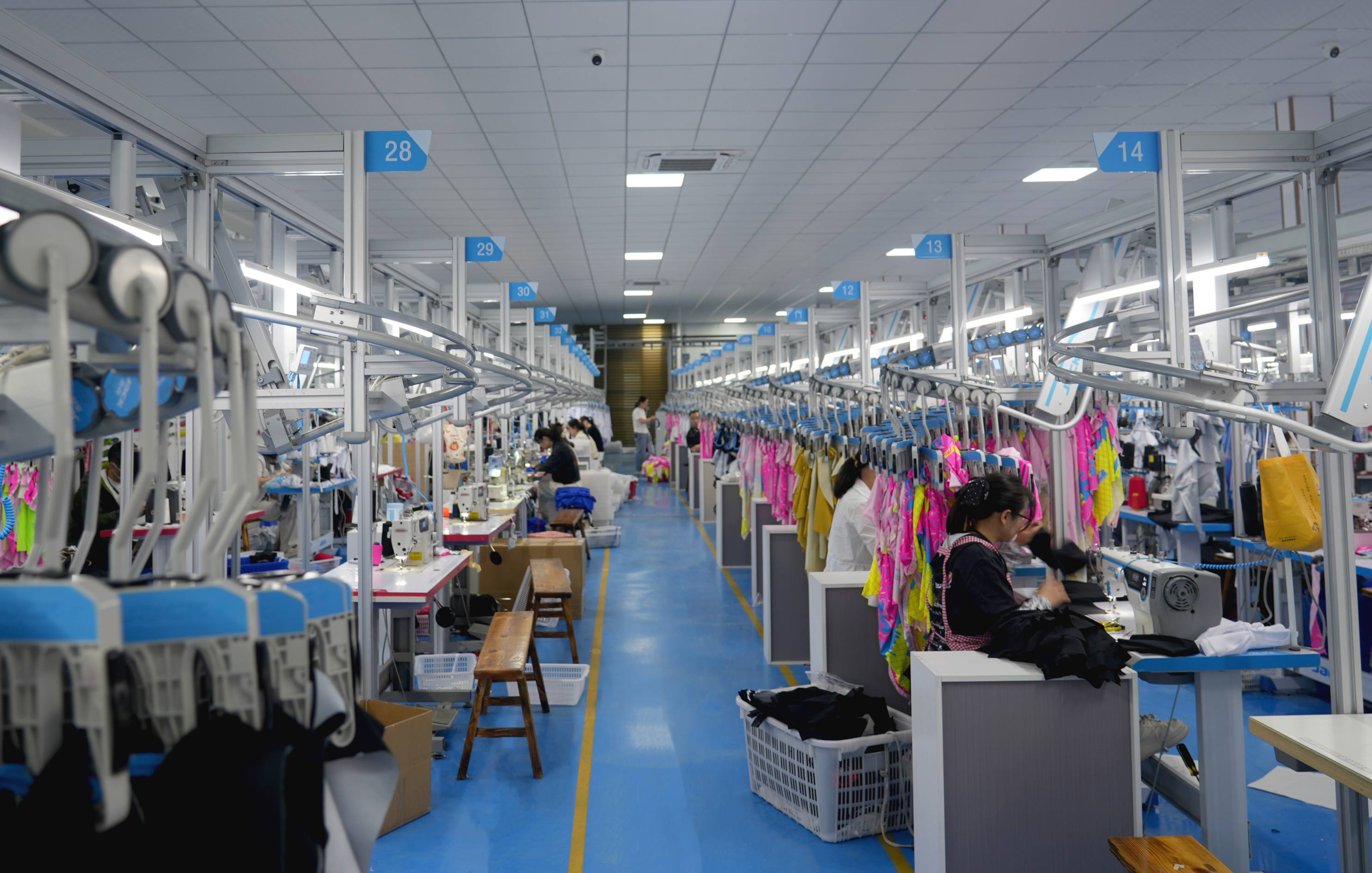
Samples currently in production
Counter Sample / Proto Sample (Development Sample)
A counter sample — also called a proto sample or development sample — is the first physical version of your specific design, built from your tech pack. This is where your brand's aesthetic, sizing, and functional specifications become a real garment for the first time.
Cost: $150–$400 depending on construction complexity
Lead time: 15–21 days from tech pack approval
Purpose: Validate that the factory has interpreted your design correctly; identify fit, construction, and material issues before investing in further development
What to expect: The first proto is rarely perfect. Fit adjustments, gusset refinements, and colour corrections are normal at this stage.
[internal link: Article 8 — Private Label Period Underwear: 7 Customization Options]

Developed Samples
PP Sample (Pre-Production Sample)
The pre-production sample is the final signed-off version of your product, produced using the exact fabrics, trims, and construction methods that will be used in bulk. It is the legal and commercial benchmark for the production run.
Cost: $200–$500
Lead time: 10–14 days from final approval of development samples
Purpose: Final written approval before bulk production begins. No bulk order should proceed without a signed PP sample approval.
Critical note: The PP sample should be retained by both the buyer and the factory. In the event of a dispute about bulk quality, the PP sample is the reference document.
Shipment Sample (TOP / During Production Sample)
A shipment sample — sometimes called a TOP (Top of Production) sample — is pulled from the actual bulk production run, typically after 10–15% of units have been produced. It is sent to the buyer or QC inspector for final check before the full run continues.
Cost: Usually included in production (no additional charge)
Purpose: Confirm that bulk production matches the approved PP sample; catch any material substitutions or construction drift before the full run is complete
Action if failed: Production is halted, the issue is identified and corrected, and a revised shipment sample is submitted
[internal link: Article 10 — Period Underwear Quality Control: The Complete QC Checklist]
Free Sample Reality Check
Searches like "free period underwear samples by mail" and "period underwear samples free" generate a lot of traffic — but the results are almost entirely DTC consumer promotions (brands offering free trial pairs to individual shoppers), not B2B manufacturing programs.
Here is the honest picture for B2B buyers:
What is genuinely free: Reference/stock samples of a factory's existing styles. LJVOGUES provides these free of charge to qualified buyers because it costs us little and demonstrates our quality directly.
What is never free: Custom prototypes. A counter sample built from your tech pack requires a pattern maker's time, a sample room cut-and-sew team, absorbent core lamination, and often a small dye lot for your colourway. This typically takes 15–21 days of skilled labour. Any factory offering "free custom samples" for a complex garment like period underwear is either subsidising that cost from your future bulk margin or producing something below the quality of what you will actually receive in bulk.
Why paid sampling is a positive signal: A factory that charges a fair, transparent sample fee is demonstrating that they respect the development process and price their labour honestly. It also aligns incentives — a factory that has invested time in your sample has a financial and reputational stake in getting it right.
What LJVOGUES offers:
Stock reference samples: Free to qualified B2B inquiries (buyer pays courier cost)
Custom proto samples: Paid, priced transparently at the tech pack review stage
Sample costs partially credited toward bulk order invoice on confirmed programs
Sample Cost Structure
Sample Type | Complexity | Typical Cost Range |
Stock / reference sample | Factory's existing style, no customisation | $0–$50 |
Custom pattern, existing fabric | Your design spec, standard fabric from factory library | $150–$300 |
Custom pattern + custom fabric | Your design spec, new fabric development or specific sourced fabric | $400–$800 |
Custom print / jacquard waistband + full development | Custom print, woven label, jacquard elastic, full construction spec | $600–$1,200 |
Notes:
Costs above are per round, per style. Multiple colourways of the same construction are typically $30–$80 each additional colourway at the proto stage.
Shipping costs are additional and depend on destination. DHL Express from Shenzhen to North America or Europe typically runs $30–$60 for a small sample package.
Sample costs for confirmed bulk programs are partially credited back at LJVOGUES — confirm this at the quoting stage.
[internal link: Article 7 — Period Underwear Cost Breakdown: Factory to Shelf]

Sample Timeline
Stage | Description | Lead Time |
Stock sample | Pull from existing inventory, pack, ship | 7–10 days (including shipping) |
1st proto / counter sample | Pattern making, sample cut-and-sew, construction from tech pack | 15–21 days |
Revision round (2nd proto) | Corrections applied, rebuilt from revised spec | 10–15 additional days |
3rd proto (if required) | Further refinements | 10–15 additional days |
PP sample | Final construction using bulk materials | 10–14 days after proto approval |
Shipment / TOP sample | Pulled from bulk run | Within first week of production |
Realistic total sample phase: 45–75 days for a new style requiring 2–3 rounds of development before PP approval. Factor this into your product launch timeline — buyers who plan for 6–8 weeks of sampling are rarely surprised. Buyers who plan for 2 weeks almost always are.
[internal link: Article 1 — How to Choose a Period Underwear Manufacturer: The Complete 2026 Buyer's Guide]
What to Test in Every Sample: The 12-Point Sample Checklist
Every sample round — from the first proto through to the PP sample — should be evaluated against the same structured checklist. Do not approve a sample based on visual impression alone.
Absorbency Capacity
Measure actual ml absorbed against the claimed absorbency level. A style claimed to hold 25ml should absorb at minimum 23ml under test conditions. Use the saline solution method (detailed below). This is the single most important test for period underwear.

LJVOGUES-period-underwear-absorption-capacity-test.jpg
Leak Test
Conduct both a static test (sample laid flat, measured liquid poured into gusset and held for 30 minutes) and a simulated wear test (sample worn over an absorbent pad to detect any migration to outer layers). Run for at least 24 hours of simulated wear.
Fit on Multiple Body Shapes
Fit comfort matters more for period underwear than standard lingerie. Test on at least 3–5 fit models across your target size range, not just the sample size.
Comfort: Gusset Thickness and Seam Placement
Evaluate whether gusset bulk is acceptable for daily wear. Check all seam placements for chafing risk — inner thigh seams are a common complaint.
Aesthetic Match to Design Intent
Compare the sample against your design brief, colourway spec, and any reference images. Does the garment look as intended? Are proportions correct?
Colour Accuracy (Pantone Match)
Compare fabric colour to your specified Pantone reference under D65 daylight-equivalent lighting. A Delta E (ΔE) of 1.0 or less is acceptable for most brand standards; above 2.0 should trigger a correction request.
Print / Embroidery Quality
If your design includes surface printing or embroidery, check registration accuracy, colour coverage, and washfastness (run at least 3 wash cycles and recheck).
Wash Test (Minimum 5–10 Cycles)
Wash at your care label's specified temperature and setting. After 10 cycles, check: fabric pilling, colour fade, elastic recovery, seam integrity, and gusset lamination. Delamination after 10 washes will generate immediate customer returns.

Wash Test
Drying Time After Wash
Measure room-temperature drying time. If drying exceeds 8–12 hours, buyers in humid climates will face practical wearability issues.
Odour Retention
Wash the sample, allow it to dry fully, then conduct a basic odour check. Odour retention after washing is a known defect in lower-grade absorbent cores.
Elastic Recovery
After the wash series, check whether waistband and leg elastics retain original tension. Weakened elastics after 10 washes indicate underspec materials — request a materials data sheet.
Label and Packaging Accuracy
Confirm care label instructions match destination market requirements (CE, FCC, CPSC as applicable). Check hang tags, size labels, barcodes, and packaging against your approved artwork files.
How to Run Absorbency Testing Yourself
You do not need a laboratory to conduct basic absorbency testing on samples. The following methods are suitable for in-house quality assessment before committing to bulk.
Saline Solution Method
Mix 9g of table salt per 1 litre of water (0.9% saline) — this approximates the viscosity of menstrual fluid better than plain water. Place the sample flat, then slowly dispense the solution into the gusset in 5ml increments, allowing each to absorb before adding more. Stop when liquid pools or migrates to the outer layer. Record total ml absorbed.
Weighed Water Absorption Test
Weigh the dry sample, submerge fully in clean water for 60 seconds, remove, allow to drip for 30 seconds (do not wring), then weigh again. The weight difference in grams ≈ ml absorbed (1g ≈ 1ml). This tests maximum fabric capacity but does not replicate directional flow.
Layered Fabric Test
Cut a small swatch from the gusset of a spare sample and separate the layers by hand. Pour a small measured quantity of saline onto the wicking top layer: it should feel dry within 30–60 seconds as moisture is drawn into the absorbent core. If the top layer remains visibly wet, the wicking performance is inadequate.
Common Sample Issues and How to Resolve Them
Wrong Shade
Issue: Fabric colour does not match your Pantone reference.
Resolution: Provide the factory with your Pantone TPG/TPX number and request a lab dip (a small dyed swatch) before the next proto is cut. Do not approve a proto until the lab dip matches within ΔE 1.0.
Gusset Too Thick or Too Thin
Issue: Absorbent gusset feels bulky and uncomfortable, or is visibly too thin to meet claimed absorbency.
Resolution: Request the gusset construction sheet showing the layer count and gsm of each component. Adjust the absorbent core weight (gsm) and retest. A standard 20–25ml capacity gusset typically requires an absorbent core of 280–350 gsm.
Sizing Off
Issue: The sample runs smaller or larger than your spec, or is inconsistent across size points.
Resolution: Return the sample with annotated measurements against your spec sheet. Request a full measurement report from the factory before the next round. Confirm that grading increments between sizes are correct — period underwear often requires additional gusset grading that standard lingerie grading rules do not include.
[internal link: Article 4 — Period Underwear MOQ Guide]
Stitch Quality Issues
Issue: Loose stitching, skipped stitches, thread tails, or uneven seam tension.
Resolution: Identify the specific stitch type and location. Request a corrective action note from the factory QC team and confirm the revised stitch parameters (SPI — stitches per inch) in writing before the next round.
Absorbency Below Claim
Issue: DIY testing shows the sample absorbs 15ml but the spec claims 25ml.
Resolution: Request the full gusset BOM (bill of materials) with gsm specifications for each layer. Ask the factory to verify with their in-house absorption test data. If data cannot be provided, request a revised gusset construction with increased absorbent core weight.
Sample-to-Bulk Quality Drop Prevention
In period underwear, the sample-to-bulk quality gap is amplified because performance characteristics — not just aesthetics — can change between sample and bulk. Three practices prevent this:
1. Require a signed PP sample before bulk begins. If the factory proposes any material substitution at the PP stage ("we used an equivalent elastic"), treat this as a red flag and require the original spec to be reinstated.
2. Document everything in writing. Every approval, revision, and material change must be confirmed by email. Your approval email referencing the sample version number is the paper trail you need if a dispute arises. Messaging app approvals do not carry the same weight.
3. Lock the tech pack before bulk. Once the PP sample is approved, the tech pack is frozen. Any subsequent changes — even a label update — require a formal Engineering Change Order (ECO) and written re-approval. Verbal changes during production are a leading cause of bulk quality drift.
LJVOGUES Sampling Process: 5 Steps from Brief to Bulk
Our sampling process follows a defined 5-step workflow for all OEM and ODM programs:
Step 1: Brief & Tech Pack Review — You submit your design brief, reference imagery, and any existing tech pack. Our team identifies any technical gaps and provides a written sampling quotation before work begins.
Step 2: 1st Proto Development — Our sample room produces the first prototype from your approved tech pack (15–21 days). We photograph each construction stage and send images with the physical sample so you can review gusset build and finishing details.
Step 3: Revision Rounds — You test against the 12-point checklist and return annotated comments. Corrections are applied and the next round is produced within 10–15 days. Most programs require 1–2 revision rounds.
Step 4: PP Sample — Once the proto is approved, we produce the pre-production sample using exact bulk materials. Bulk production does not begin until we have written PP approval in hand.
Step 5: Shipment Sample / TOP — Within the first week of bulk production, we pull and send a TOP sample. If approved, production continues. Any deviation triggers a halt-and-correct before the full run proceeds.

Frequently Asked Questions
Q1: Can I get a free sample of period underwear from LJVOGUES?
A: Yes — for stock reference samples from our existing range, we provide samples free of charge to qualified B2B buyers. The buyer typically covers courier costs (approximately $20–$40 for DHL Express). Custom prototypes built from your tech pack are always a paid service, priced at the time of tech pack review.
Q2: How many rounds of sampling are normal for a new period underwear style?
A: For a new custom development, 2–3 rounds of proto samples before PP approval is completely normal and should be budgeted for. Simple styles with minimal customisation sometimes achieve approval in 1–2 rounds. Complex constructions with custom fabrics, prints, and extended sizing may require 3–4 rounds.
Q3: Who pays for sample shipping?
A: The buyer pays outbound shipping (factory to buyer) — standard industry practice. Always use a tracked courier service. Return shipping for corrections is also typically buyer's responsibility unless the factory made a clear manufacturing error.
Q4: Can I send my own fabric for sampling?
A: Yes. Supply sufficient yardage for the sample run plus at least 20% overage for testing. Confirm fabric acceptance with the factory before shipping, as some specialty materials require lamination equipment compatibility testing.
Q5: What if the sample doesn't match my design?
A: This is expected at the first proto stage. Return the sample with a written correction note referencing specific issues (colour delta, measurement deviation, construction defect). Vague feedback ("it doesn't look right") delays corrections and wastes rounds.
Q6: Can I request samples in multiple sizes at the proto stage?
A: The first proto is produced in one base size (typically M or L). Graded size sets are produced at the PP stage once construction is finalised. A full size run at the first proto stage increases cost and delays without proportionate benefit.
Q7: Do sample costs apply toward my bulk order?
A: At LJVOGUES, sample costs are partially credited toward your bulk order invoice on confirmed programs. The credit amount is agreed at the time of sampling quotation. This is not an industry-wide standard — confirm the policy with any factory you work with.
Q8: How do I know if an absorbency claim on the sample is genuine?
A: Run the saline solution test described in this article. If the sample claims 25ml but your test shows 15ml, the claim is unsupported. Request the factory's test data and gusset construction BOM. Any reputable manufacturer can provide both.
Q9: What is the difference between a counter sample and a PP sample?
A: A counter sample (proto) is the development phase — it may use substitute fabrics and is not expected to be production-ready. A PP sample is the final approval sample produced from the exact bulk materials, construction, and trims that will be used in production. Only the PP sample has commercial approval status.
Q10: Can I skip sampling and order a small bulk run of 300 pieces to test the market?
A: Technically possible, but inadvisable for period underwear. A 300-piece run that underperforms its absorbency claims or delaminates after 5 washes generates returns and damages brand credibility with early adopters — the hardest audience to win back. The cost of 2–3 sample rounds is always less than a failed initial production run.
Start Your Sampling Program with LJVOGUES
LJVOGUES provides stock reference samples free of charge to qualified B2B buyers — brand founders, importers, retail buyers, and distributors evaluating period underwear manufacturing partners. Our sample room operates year-round with a 15–21 day lead time on custom first protos.
If you have an existing tech pack, a design brief, or simply want to evaluate our construction quality through a reference sample, contact our team at www.ljvogues.com to initiate a sampling inquiry.
All custom OEM/ODM programs include a structured sampling process with transparent pricing and written approvals at every stage.