



Table of Contents
Why This Article Exists
Five weeks of this series have walked through what's in a period panty — PFAS testing, OEKO-TEX scope, hidden finish chemistry, GOTS organic content, synthetic material specifications. The question this week is different.
It's not "what's in it." It's "how is it put together, and does the way it's put together change what reaches the wearer's skin."
I've reviewed period underwear samples that look fine on a BOM and still fail. The cotton was GOTS-certified. The TPU was phthalate-free. The spandex was OEKO-TEX certified. The dyes were on the GOTS-allowed list. Every individual component would have passed every audit question from Weeks 1 through 5.
And the finished garment had a faint chemical smell that didn't wash out, a slightly stiff hand on the gusset, and an OEKO-TEX finished-garment test that came back with elevated VOC residue.
The chemistry had been clean. The construction had reintroduced it.
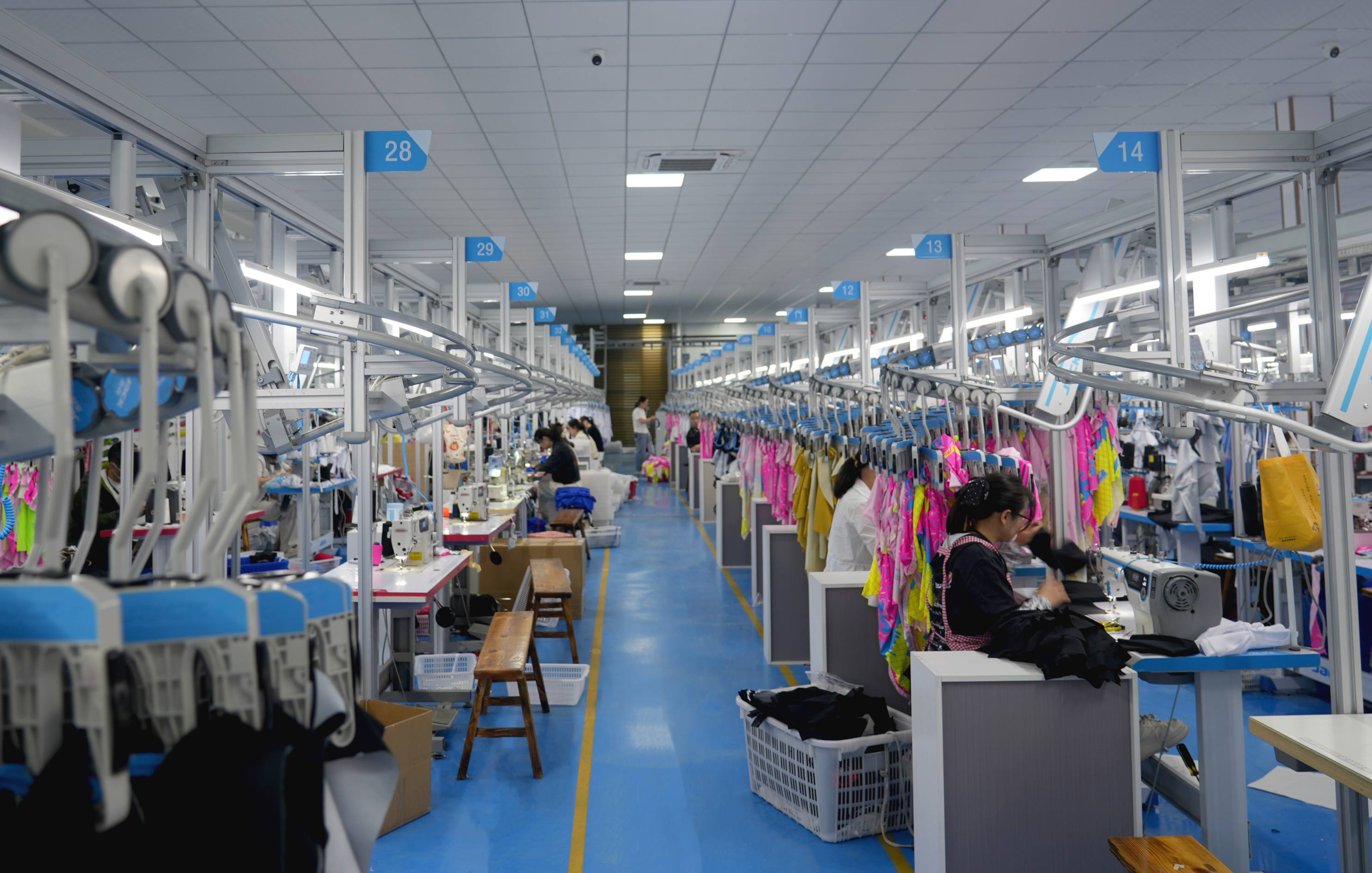
This is the part of the supply chain that no certificate covers in isolation. Glue chemistry, lamination temperature, elastic encapsulation, seam construction, thread selection at each seam — these decisions sit at the factory floor level, get made by line supervisors with little brand visibility, and quietly determine whether the chemistry work upstream actually delivers.
Week 6 is about closing that gap.
The Mental Model: Construction Is Where Chemistry Touches Skin
A period panty has roughly seven distinct skin-contact surfaces:
Top sheet (the inner gusset surface — most permeable skin contact)
Top sheet edges (where seams transition to skin)
Body fabric inner surface (everything outside the gusset)
Waistband interior (chronic skin contact, often pressure-loaded)
Leg-opening interior (chronic skin contact, often friction-loaded)
Seam ridges (raised lines of stitch that contact skin under pressure)
Tag and label area (small surface, but highly localized irritation source)
Each one of these surfaces inherits chemistry from multiple sources:
The fabric itself
Any finish on the fabric
The thread that joins the seam
The adhesive at the bond line nearest that seam
The elastic structure at that location
Any printing or label transfer in that area
Residual processing chemistry (sizing, lubricants, mold-release agents)
A "clean" component installed with the wrong adhesive at the wrong seam can deliver more chemistry to the skin than a "dirty" component would have on its own. A perfect TPU film bonded with solvent-based polyurethane glue and aged 30 days in a humid container has more residual VOC than the same TPU never bonded at all.
This is why audit questions framed at the component level miss the construction-level risks. The next 12 questions you ask your factory should be about how the components come together, not just what they are.

Flat lay photos of Ljvogues' period underwear
Section 1: Adhesive Chemistry — Where Most "Clean Components, Dirty Garment" Cases Originate
A period panty has between two and five separate adhesive bond lines, depending on construction. Each one is a chemistry decision.
Where adhesives appear in the construction:
Bond Line | Function | Typical Adhesive Type |
TPU-to-core lamination | Bond leak-proof film to absorbent core | Heat lamination OR water-based PU adhesive OR hot-melt |
Core-to-top-sheet bond | Hold layers in alignment before sewing | Hot-melt OR water-based |
Gusset-to-body-fabric crotch bond | Secure the assembled gusset stack into the body panty | Hot-melt OR sewn-only construction |
Elastic encapsulation bond | Where covered elastic is held in place before/instead of stitch | Hot-melt (rare in period underwear) |
Label and trim attachment | Heat-transfer labels, printed care info | Heat-press adhesive films |
The four major adhesive technologies, ranked from cleanest to most concerning for intimate apparel:
Heat Lamination (No Adhesive) — Cleanest
The TPU film and the adjacent fabric are fused under heat and pressure, with no chemical adhesive between them. The bond comes from the TPU itself softening and mechanically interlocking with the fabric structure.
Pros: Zero adhesive chemistry. No VOC. No residual solvent. No phthalate, no plasticizer, no antioxidant additive package coming from a separate chemistry.
Cons: Requires polyether-based TPU specifically engineered for direct lamination. Equipment is more expensive. Process window is narrow — temperature too high damages adjacent fibers, too low gives weak bond. Not all factories have invested in proper lamination equipment.
This is the gold standard for the TPU-to-core bond and is what you should be asking for if you're sourcing premium positioning.

Ljvogues workers are performing hot-press bonding work.
Water-Based Polyurethane Adhesive — Cleaner
A polyurethane adhesive dissolved or dispersed in water rather than organic solvent. Cures by water evaporation; final bond is a thin layer of cured PU between the two surfaces.
Pros: No volatile organic solvents. Very low VOC during application and in the cured bond. Compatible with OEKO-TEX Standard 100 limits. Can deliver strong, flexible bonds suitable for repeated wash cycles.
Cons: Still has an adhesive layer with its own additive package (catalysts, surfactants, defoamers, biocides in some formulations). Not all "water-based" adhesives are equally clean — the formulation details matter. Slower cure than solvent-based, which makes it less attractive to factories optimizing for line speed.
Water-based PU is the workable middle ground for factories that don't yet have direct-lamination equipment. It's the right answer when heat lamination isn't available.
Hot-Melt Adhesive — Variable
A thermoplastic adhesive (typically EVA, polyolefin, or polyamide-based) applied as molten liquid that solidifies on cooling. No solvent involved at any stage.
Pros: Zero VOC during application. Fast process — high line speed. Strong initial bond.
Cons: The hot-melt itself contains an additive package — antioxidants (often hindered phenols), tackifiers (often rosin esters or hydrocarbon resins), waxes, and stabilizers. The chemistry of these additives varies widely by hot-melt grade. Lower-grade hot-melts can contribute to OEKO-TEX residue limits even when the adhesive bond is mechanically perfect.
Hot-melt is acceptable for non-skin-contact bond lines (e.g., outer body fabric construction, label attachment) when the grade is OEKO-TEX certified. Hot-melt directly in the gusset stack, in skin-contact zones, is a yellow flag — possible to do cleanly with the right grade, but more often done with whatever's on the line.
Solvent-Based Polyurethane Adhesive — Avoid in Period Underwear
A polyurethane adhesive dissolved in organic solvent (typically MEK — methyl ethyl ketone, or DMF — dimethylformamide, or toluene). Cures by solvent evaporation; final bond is similar in chemistry to water-based PU but the application chemistry is fundamentally different.
Pros: Strong, fast bond. Cheap. Familiar process for most factories.
Cons: Solvent residue in the cured bond and in the surrounding fabric. DMF in particular is on the EU REACH SVHC candidate list (reproductive toxicant). Off-gassing during the first weeks after production — this is the primary source of "new garment chemical smell" in period underwear. VOC contribution to finished-garment testing.
Solvent-based PU adhesive is still common in commodity period underwear globally. For any product carrying clean-positioning marketing, it is not appropriate. The cost saving over water-based PU is measured in cents per garment; the chemistry exposure is not justified.
What to ask your factory about adhesives
The single highest-leverage question across this entire series:
"List every adhesive used in this construction, by bond line, by brand and grade, with SDS for each. Confirm in writing that no solvent-based adhesives are used in any skin-contact zone."
A factory that can answer this in writing on letterhead has its construction chemistry under control. A factory that gets vague about "the adhesive we use" is a factory where someone on the production floor is making the chemistry decision, and that decision is being made on cost rather than safety.
The four-question abbreviated version:
Is the TPU-to-core bond made by heat lamination, water-based PU, or hot-melt? (Solvent-based should be a hard no.)
Is the gusset-to-body-fabric bond sewn, hot-melt, or adhesive?
Are all adhesives OEKO-TEX certified, with certificates available at the adhesive level (not just finished-garment level)?
What's the off-gassing protocol — how long does the garment air before packaging, and is post-cure VOC tested?
That last question is the one almost no factory expects. Off-gassing time after production matters. A garment packaged into a sealed polybag 12 hours after lamination has more residual VOC than the same garment packaged 72 hours after lamination. The cleanest factories build cure time into the production schedule. The fastest factories don't.
Section 2: Elastic Construction — Why "Spandex Brand" Isn't Enough
Week 5 covered spandex chemistry — DMAc residue, ROICA, Creora, melt-spun vs. dry-spun. That's the fiber level. The construction-level question is how that spandex is built into the elastic structures of the garment, because the construction can either contain the spandex chemistry or expose it.
The three elastic constructions used in period underwear:
Construction A: Bare Elastic (Cheapest, Worst for Skin)
Naked spandex thread or naked rubber-blend elastic, sewn directly into seams or knit directly into fabric edges. The spandex itself is the surface that contacts skin.
Pros: Cheap. Thin. Allows fabric to look minimal.
Cons: Direct skin contact with spandex means direct exposure to whatever residual processing chemistry is on the spandex (DMAc, lubricants, surface finishes). Poor hand feel against sensitive skin. Tendency to "bite" under pressure. Higher friction; more chafing.
Bare elastic is acceptable on non-skin-contact bond lines only (e.g., where the elastic is fully buried inside a fabric channel and never touches skin).
Construction B: Covered Elastic (Standard for Quality Period Underwear)
Spandex core wrapped or knit-covered with cotton, nylon, or polyester yarn. The covering yarn is what contacts skin — the spandex provides stretch, the cover provides hand feel and chemistry barrier.
Pros: Skin contact is with the cover yarn (which can be specified to OEKO-TEX standards independently). Better hand feel. Less chafing. Can be specified with cotton cover for the cleanest skin-contact profile.
Cons: Slightly bulkier than bare elastic. Cover yarn quality varies — some "covered elastic" products use very thin cover that doesn't fully encapsulate the core.
This is the right construction for period underwear waistbands and leg openings.
Construction C: Encapsulated / Channeled Elastic (Premium)
The elastic — bare or covered — is fully enclosed inside a fabric channel, never directly contacting skin. The fabric channel is the same body fabric or a dedicated waistband fabric, with all skin-contact surfaces being the chosen body fabric (organic cotton, TENCEL, etc.).
Pros: Skin contact is with the body fabric only. The elastic chemistry, whatever it is, is structurally separated from the wearer. Highest comfort. Most durable to repeated wash cycles.
Cons: Most fabric per garment. Slightly more construction time. Higher cost.
This is the cleanest construction available and what we use on the gusset edges and waistband interior on premium product lines.
What to ask about elastic construction
"For the waistband, leg openings, and gusset edges — is the elastic bare, covered, or encapsulated? If covered, what's the cover yarn (cotton/nylon/polyester) and is it OEKO-TEX certified separately?"
A factory that uses bare elastic on skin-contact zones in a premium-positioned period panty is a factory making a cost decision the brand may not be aware of. A factory using cotton-covered or fully encapsulated elastic on skin-contact zones is a factory engineering for the use case.
Section 3: Thread Path and Seam Construction — Where the Chemistry Touches the Most Sensitive Skin
A period panty has roughly 8–12 distinct seams, depending on construction. Each seam is:
A line of thread chemistry pressed against skin
A potential point of mechanical irritation (raised seam ridge)
A potential migration path for chemistry from the cut edge of fabric into the seam
The seams that matter most for chemistry exposure:
Seam | Skin Contact | Chemistry Risk |
Gusset-to-body inner seam | Direct, mucosal-adjacent skin | Highest — thread chemistry against most permeable area |
Leg-opening hem | Continuous skin contact under friction | High — thread + elastic chemistry combined |
Waistband inner seam | Continuous skin contact under pressure | High — thread + waistband interior chemistry |
Side seams | Hip skin contact | Moderate |
Center-back seam | Lower-back skin contact | Moderate |
Top-stitch on waistband exterior | No skin contact | Low |
The four seam construction methods
1. Flatlock seam (cleanest for skin contact)
The two fabric edges are butted together (not overlapped) and joined with a stitch that lies flat. The seam has no raised ridge. Skin contact is with the fabric surface only, not with a thread bump.
Pros: No mechanical ridge. Comfortable. Reduces chafing. Thread is partially recessed into the fabric structure.
Cons: Specific machine required (3-thread or 4-thread flatlock). Slower than overlock. Higher cost per seam.
This is the right construction for the gusset-to-body inner seam in premium period underwear.
2. Bound seam (clean, depending on binding fabric)
The two fabric edges are joined and then enclosed with a strip of fabric (usually the same body fabric) sewn over the joint. Skin contact is with the binding fabric, not with the raw seam.
Pros: Smooth skin contact. Visible raw edges are concealed. Strong, durable.
Cons: Bulkier than flatlock. More fabric per seam.
Common on the leg openings and waistbands of quality period underwear.
3. Overlock (serged) seam (workhorse, acceptable with right thread)
The two fabric edges are overlapped and stitched with a serger machine that creates a thread loop wrapping the raw edges. Creates a raised ridge that contacts skin.
Pros: Fast, strong, common. Standard equipment in every garment factory.
Cons: Raised ridge against skin. Higher thread surface area in skin contact than flatlock. If the serger thread is bonded nylon (high tensile but solvent-treated), chemistry exposure increases.
Acceptable for non-skin-contact seams (outside-facing structural seams). For skin-contact zones, flatlock or bound is the better answer.
4. Bonded / heat-sealed seam (specialty, mostly used in seamless products)
The two fabric edges are joined by adhesive and/or heat without thread. Used in "seamless" products and some premium athletic wear.
Pros: Truly flat. No thread chemistry at the seam at all. Smoothest skin contact.
Cons: The adhesive replaces thread chemistry with bond-line chemistry — same questions as Section 1 apply. Requires solvent-free or water-based bonding for clean construction. Less common in period underwear.
What to ask about seam construction
"What seam construction is used at the gusset-to-body inner seam, the leg openings, the waistband, and the side seams? Is overlock thread bonded nylon or untreated polyester? Is the gusset seam flatlock or overlock?"
The single highest-leverage upgrade in seam construction is flatlock at the gusset-to-body inner seam. That's the seam closest to the most permeable skin in the entire garment. A factory that flatlocks that seam is a factory thinking about exposure paths. A factory that overlocks it because overlock is faster is a factory thinking about line speed.
Section 4: The Print, Label, and Trim Layer Nobody Audits
Every period panty has at least:
A care label (washing instructions, fiber content)
A brand label
A size indicator
Often a printed waistband logo or pattern
These small surfaces are responsible for a disproportionate share of contact dermatitis complaints. They sit in chronic skin contact, they're often the most chemistry-loaded part of the garment per gram, and they're almost never scoped into the chemistry audit.
The four label/print technologies, from cleanest to most concerning:
Tagless (Heat-Transfer Print on Fabric) — Generally Cleanest
The care information is printed directly onto the fabric using heat-transfer ink. No separate label, no stitch, no sewn-in tag.
Pros: No raised label edge. Often hypoallergenic when ink is properly cured. Used in most premium intimate apparel.
Cons: Ink chemistry matters — water-based heat-transfer inks are clean, plastisol-based heat-transfer inks (PVC + phthalate plasticizer) are not appropriate for skin contact in period underwear.
What to specify: Water-based heat-transfer ink, OEKO-TEX certified, no plastisol.
Woven Sewn-In Label (Workable with Right Materials)
A small woven fabric label sewn into a seam.
Pros: Clean if the label fabric is OEKO-TEX certified and the sewing thread is OEKO-TEX certified.
Cons: Mechanical irritation from the label edge. Polyester labels with poor finish can scratch. Some labels carry their own dye/print chemistry.
What to specify: Cotton or polyester woven label, OEKO-TEX certified, no formaldehyde finish, sewn at outer seam not skin-contact seam.
Printed Waistband Logo (Variable)
A logo or brand pattern printed on the exterior of the waistband.
Pros: Cosmetic only — typically not in skin contact if printed on exterior face.
Cons: If printed on interior face (some brand designs do this), the print ink contacts skin. Plastisol-based prints are not appropriate.
What to specify: If on interior, water-based ink only. If on exterior, water-based or plastisol acceptable but plastisol is the lower-quality choice.
Plastisol Print + Sewn-In Polyester Tag (Avoid)
The combination is what you find on commodity period underwear: a stiff polyester tag sewn into the waistband, with plastisol ink directly contacting skin.
Pros: Cheap.
Cons: Both contact dermatitis risk and cumulative chemistry exposure.

What to ask about labels and print
"What label construction is used — tagless heat-transfer, woven sewn-in, or other? Is heat-transfer ink water-based or plastisol? Is the waistband logo on interior or exterior face? Are all label fabrics and inks OEKO-TEX certified?"
This is the question that catches even diligent brands off guard. They specify the body fabric, they specify the gusset, they specify the spandex — and then accept whatever label the factory uses by default. The label is the single most chemistry-dense piece of the garment by weight.
Section 5: The Process Decisions That Connect Everything
Beyond materials and construction, three process-level decisions sit on top of everything else.
Decision 1: Pre-Wash Before Packing
Some factories pre-wash finished garments before packing. Most don't — pre-washing adds cost, time, and equipment requirements.
Why pre-wash matters for clean positioning:
A pre-wash removes:
Residual sizing agents from fabric milling
Loose dye particles
Residual processing lubricants from spandex and TPU
Residual adhesive surface chemistry
Manufacturing dust and lint
The first wash by the consumer does the same thing — but the consumer's washing machine releases the residue into household water and onto skin contact. The factory's pre-wash releases it into industrial wastewater treatment.
For premium positioning, factory pre-wash is meaningful. The garment the consumer receives is closer to its long-term steady state from day one. The chemistry that would have come off in the consumer's first wash never reaches the consumer.
Cost impact: ~5–8% of finished garment cost.
Specification: Single pre-wash with hypoallergenic detergent (no fragrance, no enzyme, no optical brightener), warm rinse, low-heat tumble dry or line dry.
Decision 2: Off-Gas / Cure Time Before Packing
How long the garment sits between final assembly and being sealed in a polybag.
The cleanest factories build in 48–72 hours of open-air cure time after lamination and adhesive bonding before any packaging. This allows residual VOC, residual adhesive solvent, and residual TPU isocyanate to off-gas in factory ventilation rather than in the consumer's home or in transit.
Why this matters:
A garment sealed in polybag 6 hours after lamination arrives at the consumer with weeks worth of off-gas trapped in the bag. The consumer opens it, smells "new garment," assumes it's normal, and wears it. Some of that chemistry then transfers from polybag atmosphere to skin during the first wear.
Specification: Minimum 48 hours cure time for water-based adhesive constructions; 72 hours for any product using hot-melt at gusset; not a specification we accept for solvent-based at all (we don't use solvent-based).
Decision 3: Packaging Material Itself
The polybag, mailer, or retail box also has chemistry.
The hierarchy:
Recycled paper / cardboard — cleanest, no plasticizers, fully recyclable
Recycled LDPE polybag — clean if the bag itself is OEKO-TEX or food-grade certified
PVC retail bag — phthalate plasticizer concerns; not appropriate for intimate apparel even at retail packaging level
Coated paper with metallic foil printing — often contains heavy metals in the foil; check pigment chemistry
Specification: Recycled paper or cardboard primary; OEKO-TEX or food-grade LDPE if polybag is required; no PVC; no metallic foil printing on direct-contact surfaces.
What to ask about process decisions
"Is finished garment pre-washed before packing? What's the cure time between final lamination/adhesive bonding and packaging? What packaging material is used, and is it OEKO-TEX or food-grade certified?"
These three decisions are typically not on any spec sheet, not on any certificate, and not in any audit checklist. They sit in the operations manual at the factory level. A factory that has thought about all three is a factory that has thought about the garment's chemistry beyond the fabric line.
The B2B Buyer's Construction Chemistry Audit — 12 Questions
Building on the audits from Weeks 3, 4, and 5, here's the construction-level audit.
Adhesive chemistry:
List every adhesive used in this construction, by bond line, by brand and grade. SDS available for each?
Is the TPU-to-core bond made by heat lamination, water-based PU, hot-melt, or solvent-based? (Solvent-based should be excluded.)
Is the gusset-to-body-fabric bond sewn, hot-melt, or adhesive? Skin-contact compatibility verified?
What's the off-gas/cure time between final adhesive application and packaging?
Elastic construction:
For the waistband, leg openings, and gusset edges — is the elastic bare, covered, or encapsulated?
If covered, what's the cover yarn and is it OEKO-TEX certified separately?
Thread and seam:
What seam construction is used at the gusset-to-body inner seam? (Flatlock preferred for skin-contact zones.)
Is overlock thread bonded nylon or untreated OEKO-TEX certified polyester?
Labels and trim:
What label construction is used — tagless heat-transfer, woven sewn-in, or other?
Is heat-transfer ink water-based or plastisol? Are all label fabrics and inks OEKO-TEX certified?
Process:
Is finished garment pre-washed before packing, and with what detergent specification?
What packaging material is used, and is it OEKO-TEX or food-grade certified?
A factory that can answer all 12 in writing has its construction chemistry under control. A factory that gets vague on three or more is a factory where the chemistry decisions you've made upstream are being undone on the production floor.
What "Clean Construction" Actually Looks Like — A Worked Example
Same product example as Week 5 — standard medium-flow period brief, size M, 65g — now specified at construction level.
Construction Decision | Specification |
TPU-to-core bond | Heat lamination, polyether TPU, no adhesive |
Core-to-top-sheet bond | Stitched only, no adhesive |
Gusset-to-body bond | Sewn flatlock seam, no adhesive |
Waistband elastic | Encapsulated inside organic cotton fabric channel |
Leg-opening elastic | Cotton-covered ROICA V550 spandex, bound seam |
Gusset inner seam | Flatlock, OEKO-TEX certified polyester thread |
Side seams | Overlock, OEKO-TEX certified untreated polyester thread |
Care label | Tagless heat-transfer, water-based ink, OEKO-TEX certified |
Brand label | Cotton woven label, OEKO-TEX certified, sewn at exterior seam |
Pre-wash | Yes — hypoallergenic detergent, warm rinse, line dry |
Cure time | 72 hours minimum after final assembly before packaging |
Packaging | Recycled cardboard primary, no polybag; OEKO-TEX certified LDPE bag if shipping format requires |
This is what construction-level engineering looks like when chemistry is the design priority. None of it is exotic. Most of it adds 5–15% per decision to the unit cost. Cumulatively, the construction-level upgrades from commodity to clean add roughly 8–15% to the finished-garment cost — on top of the 25–40% material-level upgrades from Week 5.
The total stack — fully documented chemistry, fully specified construction, fully audited process — typically runs 35–55% finished-garment cost premium over a generic period panty of similar size and feature set. That's a real number. It's also a number that fits inside a $25–40 retail price point that the cleanest brands in the category are already commanding.
Where Ljvogues Stands
Same transparency principle as the previous weeks:
Adhesives: Heat lamination on TPU-to-core wherever the construction allows; water-based polyurethane adhesive elsewhere; no solvent-based adhesives anywhere in our period underwear production. SDS available for every adhesive on every construction.
Elastic construction: Encapsulated waistband (organic cotton channel) on premium product lines; cotton-covered ROICA V550 on leg openings; bare elastic only in non-skin-contact zones.
Seam construction: Flatlock at gusset-to-body inner seam on premium lines; bound seams at leg openings; OEKO-TEX certified untreated polyester thread throughout. No bonded nylon thread in skin-contact zones.
Labels and print: Tagless heat-transfer with water-based ink as default; cotton woven sewn-in label as upgrade option. No plastisol prints on any skin-contact surface.
Process: Pre-wash with hypoallergenic, fragrance-free, enzyme-free, brightener-free detergent on every premium-line garment before packing. Minimum 72-hour cure time after lamination/adhesive before packaging.
Packaging: Recycled cardboard primary; OEKO-TEX certified LDPE only when polybag is required by shipping format. No PVC retail packaging at all.
Full BOM + construction spec sheet available to qualified buyers — every component, every adhesive, every seam, every process decision, listed by SKU.
If a buyer asks us for a complete construction specification, we send it. If we don't have a specific spec at the level a buyer needs, we tell them and either upgrade or decline rather than substituting. That's the bar.

Frequently Asked Questions
My factory says "we use water-based adhesive" but won't share the SDS. Is that normal?
Not from a factory that's actually using water-based adhesive at clean specification. Adhesive manufacturers publish SDS as standard practice; factories receive them in bulk along with the adhesive. A factory that won't share an SDS is a factory either using something they don't want to disclose, or a factory that doesn't have the SDS on file (which is itself a sign of low chemistry-management maturity).
The right pushback: "Please send the SDS for every adhesive used. If the SDS is the manufacturer's confidential property, please ask the adhesive supplier to send it to us under NDA — we'll sign whatever's needed."
If after that pushback the factory still won't disclose, you're sourcing from a factory with chemistry it can't account for.
Is heat lamination really better than water-based adhesive, or is that marketing?
Genuinely better, but the gap is smaller than the marketing makes it sound. Heat lamination eliminates the entire adhesive layer — no chemistry contribution at all from the bond line itself. Water-based PU adhesive has minimal chemistry contribution but is not zero.
For a brand competing at the absolute cleanest tier, heat lamination is worth specifying. For a brand competing at "premium clean" tier, water-based PU is acceptable and is what most quality factories use as standard.
The hard line is solvent-based adhesive vs. anything else. The gap from solvent-based to water-based is much larger than the gap from water-based to heat lamination.
My factory's flatlock looks like overlock to me. How do I tell the difference?
Look at the underside of the seam. A flatlock seam lies completely flat on both sides — the fabric edges are butted, not overlapped. An overlock seam has a clear ridge where the two fabric edges are wrapped by the serger thread loop. If you run your finger over the seam from the inside, you'll feel a definite ridge on overlock and a smooth surface on flatlock.
If you can't tell from a sample, ask the factory which machine type was used for that specific seam. Flatlock requires a specific 3-thread or 4-thread flatlock machine; it's not a setting on a regular serger.
Is pre-washing worth the cost premium?
For premium positioning, yes — both because of what it removes (residual processing chemistry) and because of what it signals (factory has invested in extra equipment and time). Pre-washing also pre-shrinks the garment, which improves fit retention.
The 5–8% cost premium is recoverable in fit retention alone — a pre-washed garment doesn't have the "fits weird after first wash" problem that consumers report on commodity period underwear. The chemistry benefit is on top of that.
My retailer requires polybag packaging. Does that undo the clean packaging story?
Not if the polybag is OEKO-TEX or food-grade LDPE. The chemistry concern with polybags is when they're PVC-based, made from non-food-grade recycled stream with contamination, or printed with heavy-metal inks. A clean LDPE polybag, even though it's still single-use plastic, doesn't add chemistry to the garment.
The cleaner packaging story for premium positioning combines: recycled cardboard primary box + recycled LDPE bag inside if needed for shipping protection + recyclable mailer outside. The total package can be 80%+ recyclable while still meeting retailer protection requirements.
What about new "biodegradable" adhesives and bonding agents?
The category is real but not yet at performance parity for period underwear. Biodegradable adhesives based on starch, casein, or PLA exist and are used in some textile applications. For period underwear specifically, the wash-cycle requirements (30+ wash cycles before failure) typically exceed what current biodegradable adhesives can deliver.
Worth tracking for 2027–2028. Not yet a workable specification for mainstream period underwear in 2026.
How does this affect lead time?
Construction-level upgrades typically add 1–2 weeks to lead time vs. commodity construction:
Flatlock seams: slower than overlock by ~30% per seam
Heat lamination: requires equipment scheduling
Pre-wash: adds 1–2 days minimum
Cure time: adds 2–3 days minimum
For initial orders, expect 8–10 weeks lead time on fully-specified clean construction vs. 6–8 weeks on commodity. For repeat orders once specifications are locked in, the gap narrows to 1 week.
Can I audit construction chemistry remotely or do I need to visit the factory?
Both, ideally. Document audit (the 12 questions in this article) catches most issues. Factory visit catches the rest — particularly cure-time discipline (is the factory actually leaving 72 hours, or is the production schedule pushing it down to 24?), pre-wash equipment condition, and worker-level adhesive handling practices.
For brands that can't visit, requesting video documentation of specific production stages (lamination, gusset assembly, packaging) is a workable second-best. Most reputable factories will provide this on request.
The Pattern Across All Six Weeks
Reading Weeks 1–6 together, the picture is now complete on the production side:
Period underwear chemistry is six layers of decisions, made at six different points in the supply chain, by six different sets of people, governed by overlapping but non-identical certification systems. PFAS is decided at fiber and finish level. OEKO-TEX scope is decided at certificate-issuance level. Hidden chemistries are decided at chemical-procurement level. GOTS organic content is decided at sourcing level. Synthetic materials are decided at component-supplier level. Construction chemistry is decided on the production floor.
No single audit, no single certificate, no single supplier statement covers all six. The brands that build defensible clean positioning ask questions at all six layers, get answers in writing at all six layers, and verify the answers against external evidence at all six layers.
This is the work. It's not glamorous. It's not visible to consumers. It's what separates the brands that survive a regulatory inquiry, a class action, or a retailer compliance audit from the brands that don't.
Weeks 7 and 8 of this series shift from "what to ask" to "how to put it all together." Week 7 will give you a single 7-step certificate verification guide that consolidates everything from Weeks 1–6 into a workflow your sourcing team can run. Week 8 will give you the real cost economics — what it actually costs to build a fully clean period underwear program, broken down by tier, with the financial trade-offs explicit.
What's Next in This Series
Next week (Week 7), we cover The 7-Step Certificate Verification Guide — a single consolidated workflow that takes everything from Weeks 1–6 and turns it into a sourcing-team checklist your team can run on every supplier, every PO, every shipment. It's the operational version of the entire series, designed to be printed, laminated, and put on your sourcing manager's desk.
Week 8 will close the series with The Cost of Clean — the real, transparent economics of running this stack, broken down tier by tier, with the trade-offs and decision points called out at each level.
If you want to be notified when the next article publishes, email us — we'll add you to the series list.
Talk to Us
If you're trying to evaluate construction chemistry on a current supplier — whether their adhesives are actually water-based, whether their flatlock is actually flatlock, whether their cure time is actually 72 hours — we offer a free construction audit. Send us a sample, and we'll dissect it. Literally — we'll cut it apart, identify each adhesive bond, identify each seam construction, identify each label and trim, and tell you in writing what we find. We've done this dozens of times. About 70% of the samples we audit have at least one construction-level issue that wasn't disclosed to the brand.
WhatsApp: +86-199-2880-2613
About Ljvogues
Ljvogues (USPTO Reg. No. 6,378,310) is a Shenzhen-based OEM and private label manufacturer specializing in period underwear, incontinence underwear, and functional intimate apparel. Since 2015, we have served 500+ brands across 108 countries with full construction transparency:
Adhesives: Heat lamination + water-based PU only — no solvent-based adhesives anywhere
Seams: Flatlock at gusset-to-body inner seam; OEKO-TEX certified untreated polyester thread; no bonded nylon in skin-contact zones
Elastic: Encapsulated waistband construction; cotton-covered ROICA V550 leg openings on premium lines
Labels: Tagless heat-transfer with water-based ink; no plastisol; no PVC trim
Pre-wash + 72-hour cure on premium-line production
Recycled cardboard and OEKO-TEX certified LDPE packaging only — no PVC
Free sample dissection service for brands sourcing from any factory — not just ours
Full Construction Spec Sheet disclosure available to qualified buyers
Every adhesive has a name. Every seam has a method. Every process has a time. Every claim has a document. That's the bar.