
Views: 0 Author: Ocean Yang Publish Time: 2026-05-07 Origin: Ljvogues


Period underwear is not standard intimate apparel. The absorbent core engineering, multi-layer lamination, and functional testing requirements place it in a different category from regular underwear — and they mean that your manufacturer choice will determine your product's performance, your brand's reputation, and your long-term margin structure. Getting this decision wrong is expensive. Getting it right early is one of the most durable advantages a period underwear brand can build.
This guide walks through every dimension of the evaluation process: what to look for, what to avoid, how to score potential suppliers, and what realistic numbers look like at each stage of the sourcing relationship.
The financial case for rigorous manufacturer selection starts with the market opportunity. According to Grand View Research, the global period panties market was valued at USD 157.03 million in 2025 and is projected to reach USD 700.18 million by 2033 — a compound annual growth rate of 21.1% from 2026 to 2033. North America holds the largest regional share at 39.33%, while Asia Pacific is the fastest-growing region. India is the single fastest-growing country market at a 22.6% CAGR.
For a brand entering this space, that trajectory is attractive. But it also means the market is attracting more suppliers, more competition, and more pressure on quality differentiation. Brands that build on a solid manufacturing foundation — absorbent cores that hold performance through 50+ washes, certifications that satisfy US and EU import requirements, consistent sizing across production runs — are the ones that retain customers and avoid costly recalls or regulatory issues.
"In twenty years of making functional intimate apparel, I have seen brands collapse not because their marketing failed, but because their factory failed them. A period underwear product that leaks, or that contains undisclosed chemicals, will generate return rates and social media backlash that no marketing budget can fix. The manufacturer decision is the most consequential sourcing decision a period underwear brand makes."
— Ocean Yang, Founder of LJVOGUES
Beyond product performance, the right manufacturing partner affects cash flow (through MOQ structure and payment terms), speed to market (through sample and bulk lead times), and growth capacity (through the ability to scale production without re-sourcing). These are not secondary concerns — they are operational fundamentals.
Use these eight criteria as the structural framework for every factory you evaluate. The section below includes a weighted scorecard table you can adapt to your own requirements.
Period underwear performance depends on the absorbent core system, not just the outer fabric. A factory that produces standard underwear or activewear is not automatically qualified to produce functional period underwear — the lamination process, layer sequencing, and wash-durability testing require specialised equipment and institutional knowledge.
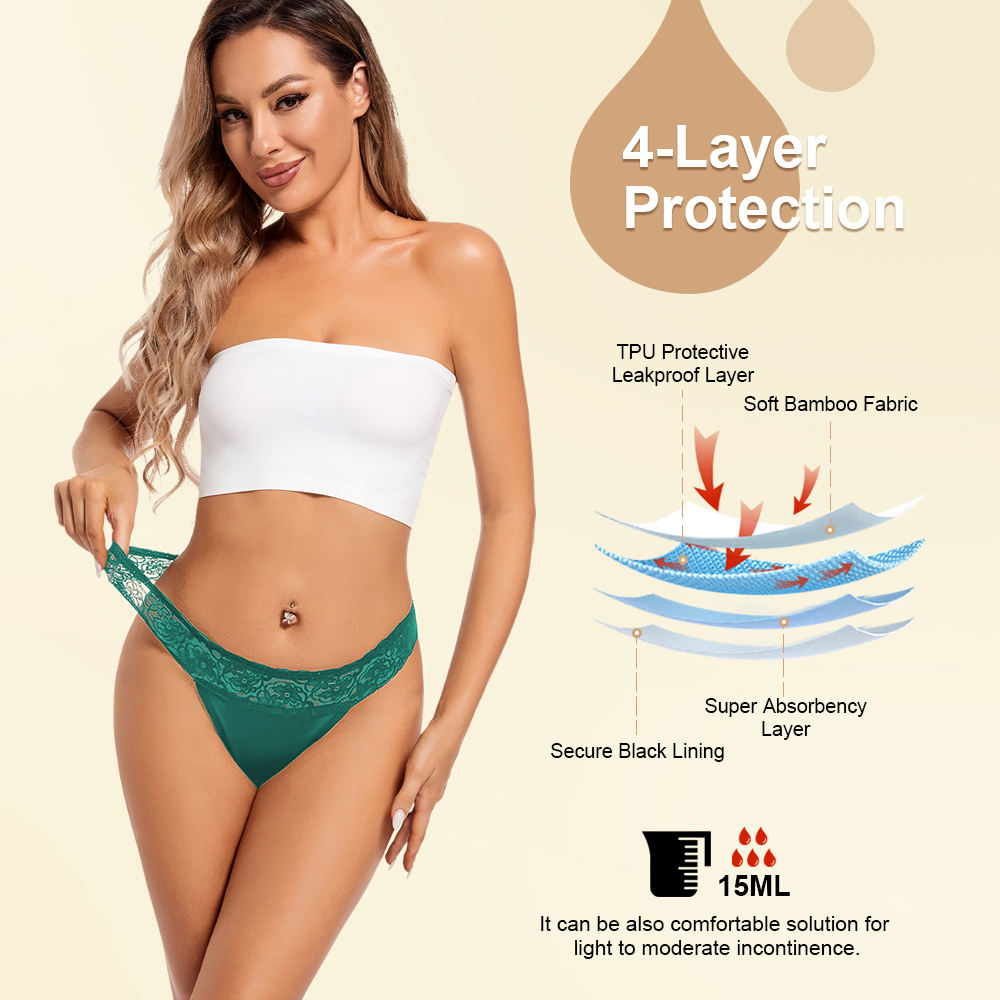
The standard construction is a 4-layer system:
Layer 1 (inner): Moisture-wicking fabric (typically nylon/elastane or modal blend) that pulls fluid away from skin
Layer 2 (absorption): Microfibre or cotton-bamboo absorbent core engineered to hold 15–50ml
Layer 3 (barrier): Leak-proof membrane (TPU laminate or equivalent) — this must be PFAS-free
Layer 4 (outer): Breathable, stretch-compatible shell fabric
Ask any prospective manufacturer to explain their absorbent core construction and lamination process in technical detail. Factories with genuine expertise will be specific. Factories without it will give you vague assurances.
Key technical questions to ask:
What absorbency ranges can you manufacture (ml per style)?
How is the absorbent core laminated — hot press, ultrasonic, or adhesive?
What is your wash-cycle durability claim, and how do you test it?
Can you manufacture extended sizes (XS–6XL) with consistent grading on the gusset panel?

The standard construction is a 4-layer system
The certification stack on your finished product determines which markets you can enter and at what speed. US import compliance, EU chemical restrictions (REACH), and retailer requirements for major chains all reference specific third-party standards.
The minimum certification baseline for a credible period underwear manufacturer in 2026:
OEKO-TEX® STANDARD 100 — Tests for harmful substances across all fabric layers, including dyes, finishes, and the absorbent core. This is the non-negotiable baseline for US and EU retail.
PFAS-free verified — Per- and polyfluoroalkyl substances (PFAS) were commonly used in DWR coatings on the leak-proof layer. Consumer and regulatory pressure has made PFAS-free a firm requirement in most markets. Verify with lab test reports, not manufacturer self-declaration.
BSCI or SEDEX — Social compliance audits that verify fair labour conditions. Required by most major European and Australian retailers.
ISO 9001 — Quality management system certification. Indicates the factory has formalised QC processes, not just informal inspection.
Additional certifications that strengthen your brand's positioning:
GOTS (Global Organic Textile Standard) — Relevant if you are marketing organic cotton period underwear
GRS (Global Recycled Standard) — For recycled fibre content claims
FDA registration — For US market entry, particularly relevant for brands making absorbency or medical-adjacent claims
Always request original certification documents with verifiable certificate numbers. Cross-check them on the issuing body's database (OEKO-TEX certificates are searchable at oeko-tex.com). For a deeper explanation of what each certification means for your product, see [internal link: Article 6 — Period Underwear Certifications Explained: OEKO-TEX, GOTS, BSCI, PFAS-Free].
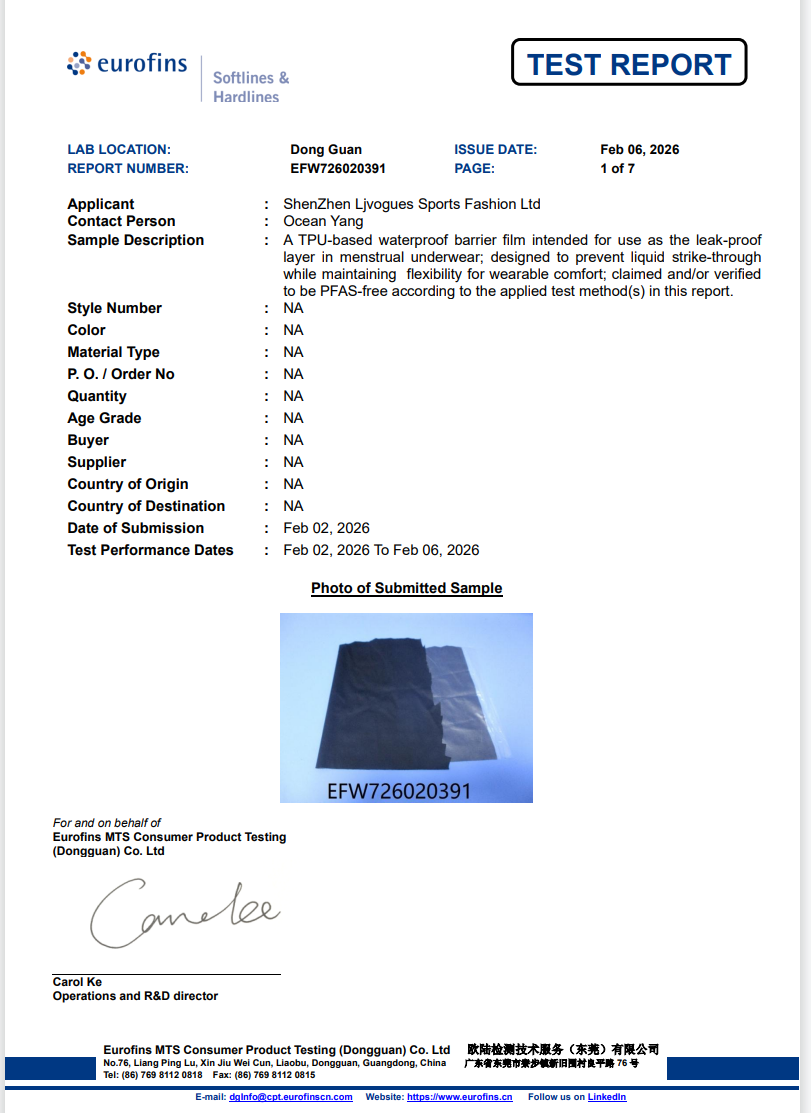
Ljvogues-PFAS-Free-report
Minimum order quantities are often the first barrier for emerging brands and the first test of whether a factory is genuinely interested in a long-term partnership or just optimising for volume.
Realistic MOQ ranges by factory type:
Factory Type | Typical MOQ (per style/colourway) | Notes |
Large volume factory | 3,000–5,000 pcs | Competitive price, limited flexibility |
Mid-size specialist | 500–1,000 pcs | Better flexibility, reasonable pricing |
Small-batch specialist | 300–500 pcs | Higher unit cost, good for launch phase |
Trading company | 200–300 pcs | Convenience, but no factory-direct control |
For brands in launch phase, an MOQ of 300–500 pieces per colourway is the practical minimum that allows for meaningful sell-through testing without excessive capital commitment. Avoid factories that offer MOQs below 200 pieces on functional period underwear — that is usually a signal either that product quality is compromised or that the "factory" is a trading intermediary with no manufacturing control.
As your volume grows, confirm that your manufacturer can scale. Ask about production capacity per week, maximum output per month, and whether they operate multiple production lines for your category. A factory that works for 2,000-unit launch orders should also be capable of handling 20,000-unit replenishment runs within an acceptable lead time.
For a full MOQ breakdown by stage of business growth, see [internal link: Article 4 — Period Underwear MOQ Guide].
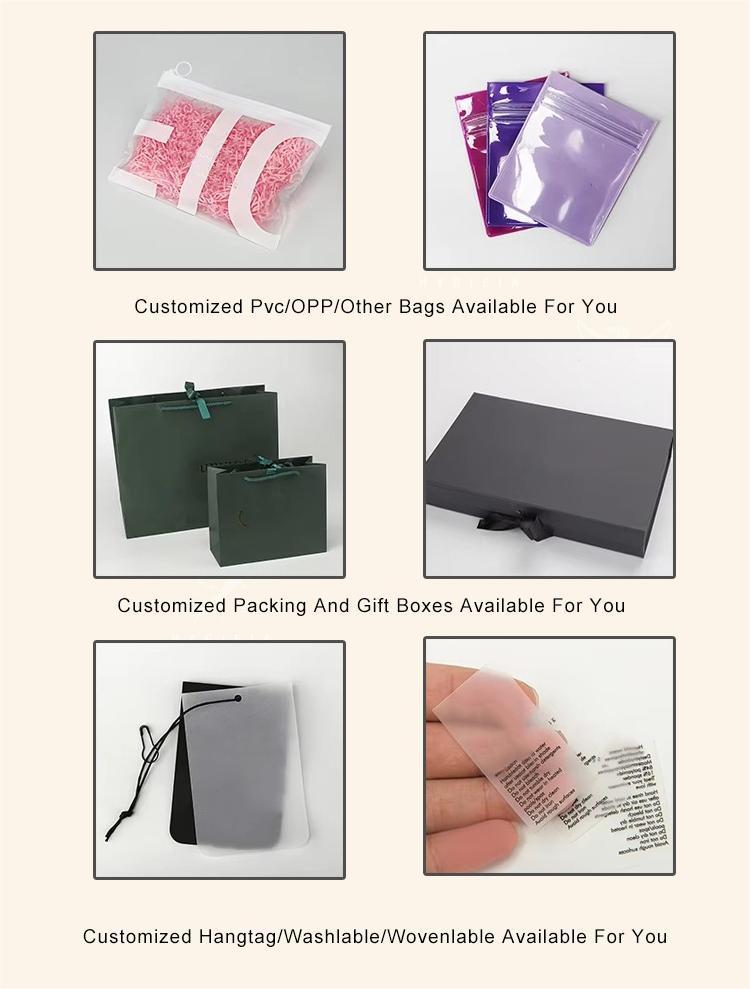
Ljvogues-Services Offered
A factory's stated quality standards mean nothing without a verifiable QC framework. The industry reference for acceptable quality levels in garment manufacturing is AQL (Acceptable Quality Level), with AQL 2.5 being the standard commercial threshold for functional intimate apparel.
Ask every prospective manufacturer:
What AQL level do you inspect to?
Do you conduct in-line inspection (during production) or only end-of-line inspection?
Do you have a dedicated QC team separate from the production team?
What specific tests do you run on period underwear — absorbency, wash durability, colorfastness, seam strength?
Can you provide your standard inspection checklist?
A factory operating purely on end-of-line inspection at AQL 4.0 is accepting a failure rate that will be visible in your customer return data. In-line inspection, where defects are caught and corrected mid-production, is the better indicator of a mature QC culture.
For the full functional testing protocol that period underwear should go through before you accept a bulk order, see [internal link: Article 10 — Period Underwear Quality Control: The Complete QC Checklist].

Quality control workers inspect menstrual panties.
The level of customisation a factory can deliver — and which model suits your business — is a core sourcing decision that affects your development cost, IP ownership, and time to market.
OEM (Original Equipment Manufacturer): You provide the design, tech pack, and specifications. The factory manufactures to your spec. You own the IP. Higher development investment, full brand differentiation.
ODM (Original Design Manufacturer): The factory provides existing patterns and designs that you customise with branding, colourways, and minor modifications. Lower development cost, faster to market, but less differentiation.
Private Label: A simplified version of ODM where you apply your brand to an essentially standard product. Low barrier to entry, but limited ability to differentiate on product features.
Most serious period underwear brands operate on OEM for their hero styles and ODM for category extensions or secondary SKUs. The key factory evaluation question is: can they execute both? A factory with genuine OEM capability will have in-house pattern-making, sample rooms, and technical staff who can work from a design brief. Factories limited to ODM will show you a catalogue and offer colourway modifications only.
For a detailed breakdown of the trade-offs between OEM, ODM, and private label for period underwear specifically, see [internal link: Article 2 — Period Underwear OEM vs ODM vs Private Label].
Honest lead time expectations are one of the most important things to establish before committing to a factory. Vague answers to timeline questions ("it depends" with no specifics) are a yellow flag.
Benchmark lead times for period underwear manufacturing:
Stage | Typical Timeline |
Sample development (new style) | 10–15 business days |
Counter sample (revision) | 7–10 business days |
Pre-production sample (PP sample) | 5–7 business days |
Bulk production (1,000–2,000 pcs) | 25–35 days from PP sample approval |
Bulk production (5,000–10,000 pcs) | 35–45 days from PP sample approval |
Bulk production (10,000+ pcs) | 45–60 days depending on fabric availability |
These are standard timelines for a well-run factory with fabric in stock. Add 5–10 days if custom fabrics need to be sourced, and add shipping transit time separately (typically 20–35 days by sea from China to the US or Europe).
When evaluating a factory, ask for documented evidence of their lead times — order records, sample delivery logs, or references from existing customers. Self-reported timelines without backup evidence should be discounted.

The quality of a manufacturing partnership over time is heavily determined by how a factory communicates — particularly under pressure. Poor communication leads to delayed approvals, misunderstood specifications, and disputes over defects that could have been caught earlier.
Practical communication standards to assess during your vetting process:
Do they respond to email inquiries within 24 hours?
Is there a dedicated account manager or do you interact with rotating staff?
Do they proactively share production updates, or do you need to chase?
Can they provide communication in your language, or is there a consistent interpreter/liaison?
Do they use structured documentation (tech pack feedback, approval forms, inspection reports) or informal chat-based communication?
Factories that default entirely to WeChat or WhatsApp voice messages for specification discussions, without written documentation, create significant risk. Disputes over agreed specifications are much harder to resolve without a clear paper trail.
Social compliance and ethical manufacturing have moved from "nice to have" to a practical requirement for brands selling in the US, EU, UK, and Australia. Major retailers require BSCI or SEDEX audit reports. Consumer brands face scrutiny on factory working conditions. And supply chain due diligence laws in the EU and Germany are tightening documentation requirements.
Minimum compliance expectations for a credible period underwear factory:
BSCI (Business Social Compliance Initiative) or SEDEX SMETA audit — Third-party audit of labour practices, working hours, wages, and facility safety
Willingness to accept customer-commissioned third-party audits
Transparent disclosure of subcontracting (if any subcontracting occurs)
Ask directly: "Do you subcontract any part of the production process?" If cutting, sewing, or finishing is outsourced to secondary facilities, those facilities need to meet the same compliance standards.
Some warning signs are immediately disqualifying. Others require deeper investigation. The most common red flags in period underwear sourcing include:
Inability to explain the absorbent core construction in technical terms
Certification documents that cannot be verified on the issuing body's database
Extremely low MOQs (below 100 pieces) from a claimed "factory"
Pressure to pay full payment upfront before sampling is complete
No QC inspection reports available for review
Evasive answers about subcontracting
Lead time commitments that are significantly below industry benchmarks (e.g., "7-day bulk turnaround")
No physical facility address verifiable via satellite map or third-party audit
For a comprehensive catalogue of sourcing scams, misleading practices, and how to spot them systematically, see [internal link: Article 12 — 10 Red Flags When Sourcing Period Underwear].
Use this checklist when you are in the active vetting stage with two or more factories. Score each factory 1–5 per criterion and compare total scores before making a commitment.
Section A: Technical Capability
Can the factory explain the 4-layer absorbent system in precise technical detail?
Do they have in-house absorbent core lamination equipment?
Can they produce the absorbency range your product requires (specify ml)?
Do they demonstrate wash-cycle durability testing capability?
Can they grade your pattern across XS–6XL with consistent gusset dimensions?
Section B: Certifications and Materials
Is their OEKO-TEX STANDARD 100 certificate current and verifiable?
Can they provide PFAS-free test reports from an accredited lab?
Do they hold BSCI, SEDEX, or equivalent social compliance certification?
Do they hold ISO 9001?
Can they source GOTS or GRS certified fabric if required?
Section C: Quality Control
Do they operate in-line inspection (not just end-of-line)?
What AQL level do they inspect to (target: 2.5 or better)?
Can they provide a sample of their inspection report format?
Do they run functional absorbency tests on bulk production?
Do they have a separate QC team from the production floor?
Section D: Commercial Terms
Is their MOQ appropriate for your launch volume?
Are their sample costs and bulk pricing within your margin model?
Do they offer a standard payment structure (e.g., 30% deposit / 70% on B/L)?
Are their documented lead times consistent with your launch timeline?
Have they provided verifiable references from existing brand clients?
Section E: Communication and Compliance
Did they respond to your initial inquiry within 24 hours?
Do they provide written documentation for all specification discussions?
Are they willing to accept a third-party factory audit?
Have they disclosed any subcontracting arrangements?
Is their facility address verifiable via satellite imagery or independent audit?
Evaluation Point | Reliable Manufacturer | Unreliable Manufacturer |
Technical explanation | Detailed, layer-by-layer, with equipment reference | Vague: "we have experience with period underwear" |
Certifications | Original docs with verifiable cert numbers | Scanned or unverifiable copies, cert numbers invalid |
PFAS status | Lab report from accredited third party | Self-declaration only |
MOQ | Realistic for the product type (300–1,000 pcs) | Either too high (5,000+) or suspiciously low (<100) |
QC process | In-line inspection, AQL 2.5, written reports | "We check everything" — no formal documentation |
Sample lead time | 10–15 business days | Under 5 days or over 30 days |
Bulk lead time | 35–45 days for standard volumes | Vague, or under 15 days (not credible) |
Communication | Dedicated contact, structured documentation | Rotating contacts, WeChat voice-only |
Pricing | Consistent with market rates for the specification | Significantly below market (compromised quality) |
Payment terms | 30% deposit, 70% on B/L or after inspection | Full payment upfront before sample approval |
Subcontracting | Disclosed and audited | Denied, then discovered |
References | Verifiable brand clients willing to speak | "We cannot share client details" |
Stage / Volume | MOQ | Sample Cost (per style) | Lead Time |
Development sample (first sample) | N/A (1–3 pcs) | USD 80–200 | 10–15 business days |
Counter sample (revision) | N/A (1–3 pcs) | USD 50–120 | 7–10 business days |
Pre-production sample | N/A (3–5 pcs) | USD 60–150 | 5–7 business days |
Small batch / launch order | 300–500 pcs | — | 25–35 days from PP approval |
Mid-volume order | 1,000–3,000 pcs | — | 35–45 days from PP approval |
High-volume order | 5,000–10,000 pcs | — | 40–50 days from PP approval |
Replenishment / repeat | Negotiable (200+ pcs) | — | 20–30 days (existing spec) |
Sample costs are typically deducted from your first bulk order above a threshold quantity. Confirm this in writing before sampling begins.
Use this scorecard to compare factories objectively. Weight the criteria to reflect your business priorities (e.g., a brand entering US retail may weight certifications more heavily; an early-stage brand may weight MOQ flexibility higher).
Criterion | Weight | Factory A Score (1–5) | Factory B Score (1–5) | Factory C Score (1–5) |
Technical construction expertise | 20% | — | — | — |
Material certifications | 20% | — | — | — |
MOQ flexibility | 15% | — | — | — |
Quality control systems | 15% | — | — | — |
Customisation / OEM capability | 10% | — | — | — |
Production capacity & lead times | 10% | — | — | — |
Communication quality | 5% | — | — | — |
Ethical compliance (BSCI/SEDEX) | 5% | — | — | — |
Total weighted score | 100% | — | — | — |
Multiply each raw score (1–5) by its weight percentage to get a weighted score per criterion. Aggregate for a total out of 5.00. Any factory scoring below 3.00 on a 20%-weight criterion (technical expertise or certifications) should be disqualified regardless of total score.
When brands run LJVOGUES through the evaluation framework above, here is what they find at each stage.
Technical expertise: LJVOGUES has manufactured functional intimate apparel — period underwear, period swimwear, and absorbent activewear — for over 20 years from our 8,000 m² production base in Shenzhen. Our 4-layer system uses proprietary absorbent core lamination with absorbency ranges from 15ml (light) to 50ml (heavy/overnight). For period swimwear, we use DWR coating with PFAS-free chemistry and achieve 30–35ml absorbency under water-exposure conditions. All construction is executed in-house — we do not subcontract fabric lamination.
Material certifications: LJVOGUES holds OEKO-TEX® STANDARD 100, ISO 9001, ISO 14001, BSCI, SEDEX, FDA registration, and GRS. All period underwear styles are 100% PFAS-free, verified by third-party lab reports. Certificates are available on request and cross-verifiable on issuing body databases.
MOQ flexibility: We support small-batch runs from 300 pieces per style for brands in launch phase, scaling to unlimited volume for established programmes. We do not require brands to commit to annual volumes before we will accept an initial order.
Quality control: Our QC protocol includes in-line inspection at three production stages, end-of-line inspection at AQL 2.5, and functional testing for absorbency retention (post 30-wash cycle) and seam integrity. Inspection reports are shared with clients prior to shipment approval.
Customisation: We operate as a full OEM and ODM manufacturer. OEM clients provide tech packs and we execute to specification. ODM clients work from our existing pattern library with customisation of design details, colour, waistband, and packaging. Both models are supported in the same facility.
Production capacity: Our facility operates multiple production lines for the period underwear category. Bulk lead times run 35–45 days from pre-production sample approval for orders up to 10,000 units, with accurate forecasting provided at order confirmation.
Communication: Each client is assigned a dedicated account manager. All technical approvals, specification confirmations, and inspection sign-offs are documented in writing. We use structured project milestones with proactive status updates at each production gate.
Compliance: BSCI and SEDEX audits are current. We accept customer-commissioned third-party audits with advance scheduling. We do not subcontract any stage of period underwear production.
"Every brand we work with eventually tells us the same thing: they wish they had found us earlier, before they lost time with a factory that looked credible on paper but could not execute on the technical requirements. The difference between a factory that can make period underwear and one that can make it properly is significant — and it becomes visible in your first production run, not during vetting."
— Ocean Yang, Founder of LJVOGUES
For a ranked comparison of the top period underwear manufacturers in China measured against these criteria, see [internal link: Article 5 — Top 10 Period Underwear Manufacturers in China (2026)].

The Ljvogues Team
Q1: How long does it take to find a period underwear manufacturer?
Active vetting typically takes 4–8 weeks if done properly: 1–2 weeks for initial shortlisting (typically 5–8 factories), 2–3 weeks for detailed qualification (documentation review, video call, sample request), and 1–2 weeks for sample evaluation and final selection. Shortcuts in this process — particularly skipping sample testing — routinely result in production problems that cost more time and money to resolve than the vetting would have taken.
Q2: What is the minimum order quantity for period underwear OEM?
Typical MOQs range from 300 pieces per style at small-batch specialist factories to 1,000–3,000 pieces at larger facilities. LJVOGUES supports 300-piece minimums for new clients. Be cautious of factories claiming MOQs below 100 pieces on functional period underwear — at that volume, the unit economics rarely support the lamination and testing costs required to produce a quality product.
Q3: How do I verify a manufacturer's certifications?
Always request the original certificate (not a photo of a certificate). For OEKO-TEX STANDARD 100, verify the certificate number at oeko-tex.com. For ISO 9001, verify via the certification body (Bureau Veritas, SGS, TÜV, etc.) using the certificate number. For BSCI, verification is through the amfori BSCI platform — ask the factory for their audit report directly, as the platform is not publicly accessible. For SEDEX, ask for the SMETA audit report — it should come from a recognised auditing firm (Intertek, Bureau Veritas, LRQA, etc.).
Q4: What is the typical sampling cost for period underwear?
First development samples typically cost USD 80–200 per style, depending on complexity (a basic brief is at the lower end; a hi-waist style with custom fabric is at the higher end). Counter samples for revisions cost USD 50–120. Pre-production samples for final approval cost USD 60–150. Many factories deduct sample costs from your first bulk order — confirm this arrangement in writing before sampling begins.
Q5: What certifications do I need to sell period underwear in the US?
There is no single mandatory federal certification for period underwear in the US, but practical market entry requirements include OEKO-TEX STANDARD 100 (retailer requirement at most major chains), PFAS-free verification (increasingly required, and mandated in several states including California), and general CPSC compliance for labelling. If you are making any absorbency claims, FDA guidance may apply. For US DTC brands, OEKO-TEX and PFAS-free documentation are the non-negotiable minimums.
Q6: What is the difference between OEKO-TEX and GOTS?
OEKO-TEX® STANDARD 100 tests the finished textile product for the presence of harmful substances — it does not regulate organic fibre content or production processes. GOTS (Global Organic Textile Standard) certifies that the fibre is organically grown and that the entire production chain meets organic and social criteria. A product can hold both certifications simultaneously. For most period underwear brands, OEKO-TEX is the baseline; GOTS is relevant only if you are specifically positioning around certified organic cotton.
Q7: Can I customise the absorbency level in my period underwear order?
Yes, with a factory that has genuine OEM capability. Absorbency is determined primarily by the weight and construction of the absorbent core layer. Qualified manufacturers can engineer absorbency to specification — typically in the range of 15ml, 20ml, 30ml, and 50ml for standard styles. Request absorbency test reports (pre- and post-wash-cycle testing) to verify the claimed capacity. Factories without in-house lamination capability cannot reliably customise absorbency.
Q8: How do I assess a factory's production capacity before I need to scale?
Ask directly: how many units per week can you produce in our category? What is your maximum monthly output? How many production lines are dedicated to period underwear? Also ask for references from existing clients who have scaled orders with them — a factory that has managed a brand's growth from 1,000 to 20,000 units per order has demonstrated capacity in a way that self-reported numbers cannot.
Q9: What payment terms are standard for period underwear manufacturing?
The standard commercial payment structure is 30% deposit at order confirmation, with the remaining 70% paid against the bill of lading (B/L) or after third-party pre-shipment inspection. Some factories offer 50/50 terms. Any factory requiring 100% payment upfront before sampling is complete, or before an inspection has been done, is presenting a significant risk — this is a common structure in sourcing fraud. For large repeat orders with an established factory relationship, more favourable terms (net 30 or 60 on the balance) may be negotiable.
Q10: What is the difference between in-line and end-of-line inspection for period underwear?
End-of-line inspection checks finished goods after the entire production run is complete. If defects are found at this stage, the entire production batch needs to be corrected or rejected — which is costly and time-consuming. In-line inspection checks at multiple stages during production (after cutting, after assembly, before final finishing), which means defects are caught while they are still easy and inexpensive to correct. For a functional product like period underwear — where a misaligned absorbent panel or a pinhole in the leak-proof membrane may not be visible to the eye — in-line inspection is strongly preferable.
If you are at the manufacturer evaluation stage for your period underwear brand or range extension, LJVOGUES invites you to run us through the framework in this guide. Request your certification documentation package, ask for our detailed absorbent core specification sheet, and initiate sampling on your first style.
With 500+ global brands served across 20 years and a full certification stack (OEKO-TEX, BSCI, SEDEX, ISO 9001/14001, FDA, GRS), we are prepared to answer every question in the evaluation checklist above — in writing, with supporting documentation.
Contact the LJVOGUES OEM/ODM team at www.ljvogues.com to request a sourcing consultation, certifications package, or sampling quotation.
Sources: Grand View Research — Period Panties Market Report (2026–2033) | OEKO-TEX® STANDARD 100 | ISO 9001:2015 Quality Management Systems
 Ocean Yang


