



Table of Contents
TL;DR
The 7 customization levers for private label period underwear are: (1) fabric selection, (2) absorbency level, (3) silhouette and style, (4) size range and grading, (5) color, print and aesthetic, (6) branding touchpoints, and (7) technology and performance add-ons. New brands should prioritise waistband branding and packaging first — these deliver the highest perceived brand differentiation for the lowest incremental cost.
Why Differentiation Matters in a Crowded Market
The global period underwear market is valued at USD 157.03 million in 2025 and is projected to reach USD 700.18 million by 2033, growing at a 21.1% CAGR (Grand View Research). That growth rate is exceptional by any standard. But growth also attracts competition, and the brands that will capture the largest share are not the ones that imitate the market leaders — they are the ones that carve out distinct positions.
Thinx, Knix, and Proof dominate consumer awareness in North America, which holds a 39.33% share of the global market. These brands have spent years and millions building their identities. Attempting to compete with them on the same terms — same silhouettes, same branding, same "leak-proof underwear" messaging — is a losing strategy for a new private label entrant.
What wins is differentiation. A brand built around teen sizing, an inclusive extended-size range up to 6XL, a specific aesthetic (minimalist Scandinavian, maximalist prints, medical-grade performance), or a particular absorbency niche (overnight heavy flow, active thong-cut) can own that space in ways a general-market brand cannot. Customization is the mechanism by which that differentiation gets baked into the physical product.
The seven levers below are not theoretical. They are the specific decisions that every brand working with LJVOGUES makes during product development, and each one has concrete cost, MOQ, and lead-time implications that brands need to understand before they start spending money on sampling.

Inclusive Size Range
The 7 Customization Levers
Fabric Selection
Fabric is the foundational customization decision. It determines hand-feel, sustainability story, retail positioning, and to some extent the price point your product can credibly command. Period underwear is a multi-layer construction: the outer shell fabric is what the consumer sees and feels against their skin; the inner absorbent core is a laminated assembly; the gusset lining interacts directly with the body.
Outer shell options:
Recycled nylon (rPET): Durable, smooth, holds colour well. Certifiable under GRS (Global Recycled Standard). Preferred for performance and swimwear crossovers. Carries a modest premium over virgin nylon.
Organic cotton: Softer feel, strong sustainability narrative, OEKO-TEX® STANDARD 100 and GOTS certifiable. Slightly more texture than synthetic. Popular with natural-lifestyle and baby/maternity-adjacent brands.
Modal: Exceptionally soft, lightweight, and breathable. Derived from beech trees. Higher per-metre cost. Good for premium everyday positioning.
Bamboo: Strong sustainability marketing angle, naturally moisture-wicking. Supply chain is less standardised than modal; verify certifications carefully.
TENCEL™ (Lyocell): Closed-loop production process, excellent drape and softness. Carries the licensed TENCEL™ brand mark if you source correctly. Commands a premium retail price.
Inner gusset lining options:
Moisture-wicking polyester blends: Fast moisture transfer, good durability through multiple wash cycles. Cost-effective.
Organic cotton: Better for sensitive-skin positioning; slightly slower moisture transfer than polyester blends.
Trade-offs at a glance:
Fabric | Feel | Sustainability Story | Cost Impact | Certifiable Under |
Recycled nylon | Smooth, performance | High (GRS) | Low–moderate | GRS, OEKO-TEX |
Organic cotton | Soft, natural | High | Moderate | GOTS, OEKO-TEX |
Modal | Very soft, luxury | Moderate | Moderate–high | OEKO-TEX |
Bamboo | Soft | High (if certified) | Moderate | OEKO-TEX |
TENCEL™ | Silky, drape | Very high | High | TENCEL™ brand + OEKO-TEX |
Standard nylon | Smooth, durable | Low | Lowest | OEKO-TEX |
MOQ impact: Switching from a standard stock fabric to a custom woven or certified specialty fabric typically adds 500–1,000 units to the minimum run per style, and 3–7 days to sampling lead time. Brands on tighter starting budgets often launch on recycled nylon or organic cotton, then migrate to modal or TENCEL™ after establishing product-market fit.

A variety of fabrics are available.
Absorbency Level
Absorbency is defined by the construction of the internal laminated core — specifically, the number of absorbent layers, their composition (usually a combination of microfibre, absorbent polymer, and a moisture-lock barrier), and the width of the protected gusset zone.
LJVOGUES manufactures across four standard absorbency tiers:
Tier | Absorbency | Equivalent to | Layer Count | Thickness Feel |
Light | ~15ml | 1–2 tampons | 2 layers | Barely noticeable |
Moderate | ~25ml | 2–3 tampons | 3 layers | Slightly padded |
Heavy | ~35ml | 3–4 tampons | 4 layers | Noticeable structure |
Overnight | ~50ml | 4–5 tampons | 4 layers (wider zone) | Structured, fuller coverage |
How layer count affects feel: More layers add both security and bulk. The light tier is close to a standard underwear feel — this is important for the daily-wear and light-days positioning that is driving bikini-style growth. The overnight tier has a noticeably structured gusset; this is appropriate and expected, but must be communicated clearly in your product copy. Layer construction also affects drying time, which is a common consumer complaint if not managed at the design stage.
Custom absorbency specs outside these four tiers are possible but require a dedicated R&D sampling round, typically adding 15–20 days and a sampling cost of USD 80–120 per development sample.
Silhouette & Style
Style is one of the most visible differentiators and has direct implications for target customer and market positioning.
Available silhouettes:
Brief: The classic full-coverage cut. Holds 29.48% of the period underwear market by revenue share — the largest single segment. Broad appeal, inclusive, works across all absorbency tiers.
Bikini: Lower rise, moderate coverage. The fastest-growing style at 21.5% CAGR, driven by younger consumers and everyday-wear positioning.
Boyshort: Full rear coverage, longer leg. Popular in markets where coverage and comfort are prioritised. Pairs well with moderate and heavy absorbency.
Hi-waist: Full tummy coverage. Strong seller in postpartum and plus-size segments. Often positioned as a premium product.
Thong: Yes, period thongs exist and are a growing niche. They use a very narrow absorbent zone and are suited to light days and spotting only. Brand differentiation opportunity in the active and lingerie-adjacent space.
Seamless: No sewn seams; constructed on a circular knit machine. Smooth silhouette under clothing. Higher tooling and MOQ requirements, but meaningful premium positioning.
Strategy note: Most brands launch with 2–3 silhouettes. The standard sequence is brief (broadest appeal) + bikini (everyday wear) + one hero style that differentiates. Adding seamless as a later expansion is common after initial distribution is established.

Bikini-style period panties
Size Range & Grading
Size inclusivity has moved from a differentiator to an expectation in the period care space, particularly in North American and UK markets. The practical question is not whether to offer extended sizing, but how to sequence it.
Standard range: XS–XL (5 sizes). Lower initial investment, simpler pattern grading, lower entry MOQ.
Extended range: XS–6XL (10 sizes). Requires full plus-size pattern re-grading, not simply scaling up from the standard range. Seam placement, gusset zone width, and waistband tension all need independent adjustment for accurate fit above 2XL.
Cost and MOQ impact of extended grading: Expect a pattern development fee of approximately USD 150–300 per style for full XS–6XL grading. Production MOQ per size drops to a minimum of 30–50 pieces when combined with a master order of 500+ units across the full size run.
Teen sizing: A separate consideration. Teen sizing uses different proportions — shorter rise, narrower hip-to-waist ratio — and is not simply the bottom end of a standard adult size run. See [internal link: Article 3 — How to Start a Period Underwear Brand: Step-by-Step Guide] for category entry considerations.
Color, Print & Aesthetic
Color and print decisions affect both brand identity and production logistics.
Solid colors: Standard colorways (black, navy, beige, burgundy) are typically held as stock fabric. Lower MOQ implications — you can often mix colors within a style's minimum. Custom Pantone-matched solids require a dye lot, which usually needs 500+ metres of fabric to be cost-effective; below that, the dye surcharge is prohibitive.
Custom prints: All-over or placement prints require a separate design-to-strike-off process. Digital printing offers lower MOQ flexibility (300–500 units per print) but has different colour saturation characteristics than screen or rotary printing. Traditional print methods require 1,000+ units per print to be cost-effective. Custom prints add 10–14 days to production lead time.
Lace trim: Applied at the waistband or leg opening. Available in standard lace widths from stock, or custom-dyed to match. A visible premium cue that communicates lingerie-adjacent positioning.
Seamless waistband vs branded jacquard waistband: A seamless waistband is cut-and-fold, clean, minimal. A jacquard waistband has the brand name or logo woven directly into the elastic fabric — a significantly higher perceived quality signal. Jacquard elastic is ordered by the roll, with a typical minimum of 500 metres per design. For most brands, this covers several thousand units, so it is scalable once you are past the startup phase.
Branding Touchpoints
Branding touchpoints are the elements that communicate brand identity at the moment of purchase and unboxing. They have a disproportionate impact on perceived brand quality relative to their cost.
Custom jacquard waistband: As noted above, the logo or brand name is woven into the elastic. This is the single branding element most visible to the consumer at point of sale and in social sharing. It cannot be replicated by a competitor who sources the same base fabric — it is structurally part of the garment.
Care label: Printed woven label (brand name, care symbols, size, country of origin) sewn inside the waistband. Options: standard woven label, printed label, or heat-transfer label. Heat-transfer is softer against the skin and carries a small cost premium.
Custom hangtag: Die-cut card or folded booklet attached at retail. Opportunity to communicate absorbency tier, fabric story, and certification claims (OEKO-TEX, PFAS-free). Design and print cost typically USD 0.08–0.25 per unit depending on complexity.
Custom packaging: Options include poly bag (simplest, lowest cost), kraft mailer box, rigid gift box, or paper sleeve. Poly bag with custom print is the most common entry-level option. Premium rigid box packaging is appropriate for gift sets and department store retail and adds USD 0.80–2.50 per unit.
Brand insert cards: Printed card inside the packaging. Can communicate wash instructions, brand story, QR code to product page, or sustainability credentials. Cost is minimal (USD 0.05–0.12 per unit) and disproportionately improves unboxing experience.
"The brands we work with that achieve the strongest launch results almost always invest their customisation budget in the waistband and packaging first," says Ocean Yang, Founder of LJVOGUES. "A custom jacquard waistband and a well-designed box communicate premium quality before the customer even puts the product on. Those two elements should be established before a brand spends money on custom fabric or silhouette development. Get to product-market fit first, then layer in the deeper customisations."

Customized Professional Packaging
Technology & Performance Add-ons
Beyond construction fundamentals, a set of functional finish options can differentiate on performance rather than aesthetics.
DWR coating (Durable Water Repellent): Applied to the outer shell fabric. Creates a water-resistant surface that prevents surface wetting — critical for period swimwear crossover products, and increasingly used in active period underwear for gym and outdoor use. 100% PFAS-free DWR formulations are available and should be specified; LJVOGUES uses only PFAS-free chemistry across all DWR applications.
Antimicrobial silver-ion treatment: Silver ions bonded to fabric fibres inhibit bacterial growth. Useful for products marketed on hygiene grounds or for brands targeting medical adjacent retail. Requires testing documentation to make claims (typically ISO 20743 bacterial reduction test).
Odor-neutralising finishes: Zinc-based or activated carbon treatments that neutralise odour compounds at the fibre level. Distinct from antimicrobial in mechanism. Can be layered with other finishes.
Cooling fabrics: Phase-change material integration or moisture-activated cooling finishes for summer-collection or activewear-adjacent SKUs. Increasing demand in Asia Pacific markets.
Selective Absorption Technology (LJVOGUES proprietary): LJVOGUES's internally developed absorbent core system, which combines a rapid-moisture-transfer wicking layer, a high-capacity absorbent polymer layer, and a physical moisture-lock barrier. The result is a product that wicks to the core quickly, distributes load across the full gusset zone, and prevents back-flow to the skin surface even under compression. This system is available exclusively through LJVOGUES and forms the basis of our period swimwear and multi-activity period underwear lines. See [internal link: Article 7 — Period Underwear Cost Breakdown: Factory to Shelf] for how technology add-ons affect unit economics.
Customisation Stack Examples
Three archetypes illustrate how these levers combine in practice:
Archetype A: Minimal (Launch-Ready, Low MOQ)
Goal: Get to market quickly with a defensible brand identity, minimum capital exposure.
Fabric: Stock recycled nylon outer, standard moisture-wicking lining
Absorbency: Moderate (25ml), single tier
Silhouette: Brief only
Size range: XS–XL
Color: 2–3 solid colorways from stock
Branding: Custom jacquard waistband, custom printed poly bag, brand insert card
Technology: Standard 4-layer system
MOQ: ~300 units per color/size run
Estimated lead time: 35–40 days after sample approval
Result: A product that looks and feels branded. Waistband and packaging differentiate from generic white-label. Ready for DTC launch or marketplace listing.
Archetype B: Moderate (Category-Ready, Medium Investment)
Goal: Build a credible multi-SKU range with a clear aesthetic identity.
Fabric: Organic cotton outer (OEKO-TEX certified), organic cotton lining
Absorbency: Light, Moderate, Heavy across 3 SKUs
Silhouettes: Brief + bikini
Size range: XS–3XL
Color: 4 Pantone-matched solids + 1 custom print (digital)
Branding: Custom jacquard waistband, heat-transfer care label, custom hangtag, kraft mailer box
Technology: 4-layer system + odor-neutralising finish
MOQ: ~500 units per colorway per style
Estimated lead time: 40–45 days after sample approval
Result: A full mid-tier product line with sustainability credentials and premium presentation. Suitable for independent retail, health food stores, boutique distribution.
Archetype C: Full (Premium / Specialty Brand)
Goal: Build a technically differentiated, premium-positioned product that commands a significant price premium.
Fabric: TENCEL™ outer, organic cotton lining, lace trim
Absorbency: Full 4-tier range including Overnight 50ml
Silhouettes: Brief, hi-waist, boyshort, thong (light only), seamless
Size range: XS–6XL with full plus-size grading
Color: 6 solid colorways + 2 custom all-over prints + seasonal capsule
Branding: Custom jacquard waistband, custom woven care label, full-color rigid gift box, brand insert booklet
Technology: Selective Absorption Technology + antimicrobial silver-ion + DWR on select SKUs
MOQ: 1,000+ units per print; 500 per solid colorway per style
Estimated lead time: 45–60 days after sample approval (more development stages)
Result: A premium period underwear brand with defensible differentiation at every level of the product. Appropriate for department store retail, subscription boxes, healthcare partnerships, or high-end DTC at USD 35–60+ retail.
How Customisation Affects MOQ, Cost & Lead Time
Customisation | MOQ Implication | Unit Cost Impact | Lead Time Addition |
Standard stock fabric | None | Baseline | None |
Certified specialty fabric (TENCEL™, organic cotton) | +300–500 units | +USD 0.80–2.50 | +3–7 days |
Custom Pantone solid (dye lot) | 500+ metres fabric | +USD 0.30–0.80 | +5–7 days |
Custom all-over print (digital) | 300–500 units per print | +USD 0.50–1.20 | +7–10 days |
Custom all-over print (screen/rotary) | 1,000+ units per print | +USD 0.20–0.60 | +7–14 days |
Custom jacquard waistband | 500 metres elastic (=1,000–3,000 units) | +USD 0.40–0.80 | +7–10 days |
Extended sizing (XS–6XL) | Min 30–50 per size in run | +USD 150–300 pattern dev fee | +5–10 days |
Lace trim | None above standard MOQ | +USD 0.30–0.70 | +3–5 days |
DWR coating (PFAS-free) | None | +USD 0.20–0.50 | +2–3 days |
Antimicrobial silver-ion | None | +USD 0.30–0.60 | +2–3 days |
Seamless construction | Higher — 1,000+ per style | +USD 1.50–3.00 | +10–15 days |
Custom rigid box packaging | 500 units per design | +USD 0.80–2.50 | +7–10 days |
Custom hangtag | 500 units per design | +USD 0.08–0.25 | +3–5 days |
All figures are indicative ranges. Exact pricing depends on volume, material sourcing at time of order, and complexity of design. See [internal link: Article 4 — Period Underwear MOQ Guide] for detailed minimum order structures.

What to Customise First: Priority Order for New Brands
If you are building your first private label period underwear range, the instinct to customise everything simultaneously is understandable — but it will slow your launch, inflate your capital requirement, and make it harder to isolate what is actually driving sales.
The priority sequence that works across the widest range of brand archetypes:
1. Waistband branding
The single highest-impact customisation per dollar spent. A custom jacquard waistband with your brand name makes every pair self-identifying. It is the first thing a customer sees on the product page and in an unboxing video. Do this on your launch order, not a future revision.
2. Packaging
A branded poly bag or mailer box transforms a product from "factory output" to "branded product." The incremental cost is low relative to the brand signal. Pair with a brand insert card at minimal additional cost.
3. Color selection
Choose 2–3 solids from your brand palette. This is lower risk than custom prints and does not require a dedicated dye lot at small volumes. Build your color story with stock-range fabrics initially.
4. Silhouette mix
Launch with the style(s) most aligned to your target customer. Brief is the safest universal choice. Add a second silhouette in your second or third production run based on customer feedback.
5. Fabric upgrade
Once you know your product sells, upgrade the fabric to TENCEL™, organic cotton, or bamboo in the next production cycle. This supports brand story development, premium price points, and sustainability marketing.
6. Technology add-ons
Add performance finishes (antimicrobial, DWR, cooling) when you have a specific use-case segment to address — active, summer collection, period swimwear crossover — rather than applying them across the range from the start.
The principle here is to establish product-market fit with controlled customisation, then layer complexity as you scale. See [internal link: Article 2 — Period Underwear OEM vs ODM vs Private Label] for how this sequence maps to the OEM/ODM decision.
How LJVOGUES Supports Customisation
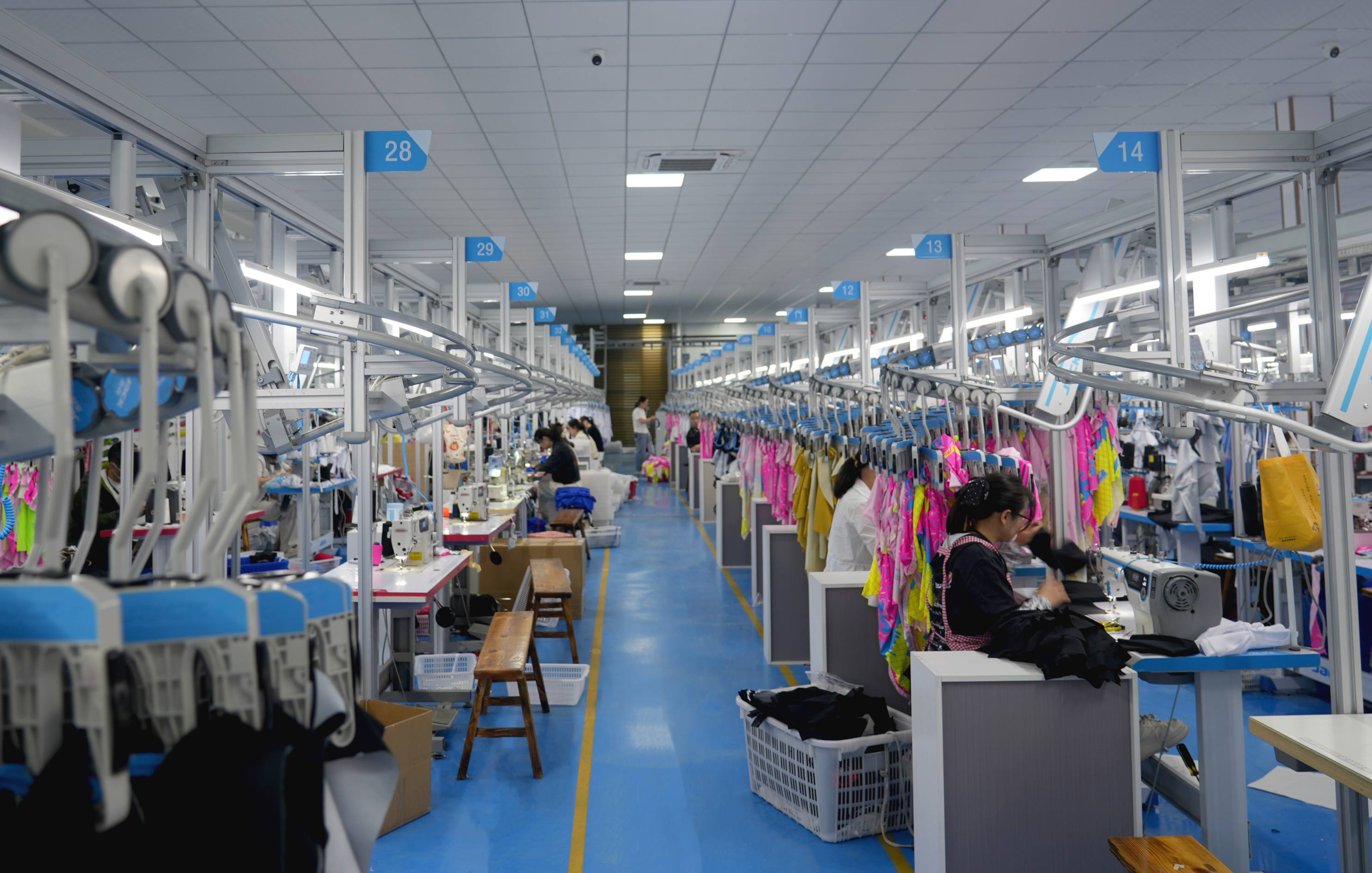
LJVOGUES operates as a one-stop OEM/ODM manufacturer, which means every stage of the customisation process sits under one roof at our 8,000 m² Shenzhen facility.
Fabric R&D and sourcing: Our in-house team works with certified fabric mills to source OEKO-TEX, GRS, and GOTS materials. We can develop custom fabric specifications and manage the certification documentation for your market.
Absorbent core lamination: The 4-layer leak-proof assembly and Selective Absorption Technology are manufactured in-house, not outsourced. This controls quality and allows us to modify the layer count and zone width per your absorbency specification.
Cutting, sewing and finishing: Full garment production including lace application, jacquard waistband attachment, and DWR finishing is handled on-site. We do not subcontract finishing to third parties.
Packaging and labelling: Custom hangtags, heat-transfer labels, woven care labels, poly bags, mailer boxes, and rigid gift boxes are all produced or sourced and assembled at the factory. You receive finished, retail-ready product.
Certifications supporting your claims: OEKO-TEX® STANDARD 100, BSCI, SEDEX, FDA, ISO 9001, ISO 14001, GRS, and 100% PFAS-free verified. Full documentation is available for retail compliance and import customs requirements. See [internal link: Article 6 — Period Underwear Certifications Explained: OEKO-TEX, GOTS, BSCI, PFAS-Free] for what each certification covers.
Sample lead time is 10–15 days for standard styles. Bulk production lead time is 35–45 days after sample approval for orders up to 5,000 units; larger volumes are quoted individually. See [internal link: Article 9 — Sampling & Prototyping Period Underwear: Timeline & Costs] for the full sampling process.
Mistakes to Avoid
Over-customising as a startup
The most common costly mistake: a first-time brand founder specifies custom fabric, custom print, seamless construction, and full XS–6XL grading on a 300-unit launch order. The result is an MOQ they cannot meet, a sample process that takes four months, and a unit cost that makes a viable retail price impossible.
Customisation is additive. Start with the elements that have the highest consumer-visible impact at the lowest production complexity, and build from there.
Under-customising
The opposite error is equally damaging. Ordering from a white-label catalogue with no branding, no custom packaging, and no distinguishing aesthetic means your product is indistinguishable from dozens of other products on the same manufacturer's line sheet. Without differentiation, the only competitive lever is price — and that is a race to the bottom against suppliers who will always undercut you.
The minimum defensible customisation for a brand launch is a custom jacquard waistband and branded packaging. Everything above that is additive value.
Choosing aesthetics that conflict with absorbency requirements
A common specification error: a brand insists on a thong silhouette with heavy (35ml) absorbency, or requests a tissue-weight TENCEL™ fabric for overnight protection. The physics do not support these combinations without compromising wearability. A heavy-absorbency gusset on a thong cut is structurally awkward and will not perform as expected. An ultra-lightweight outer fabric creates a product that feels inadequate for overnight use.
Work with your manufacturer during the brief stage to validate that your aesthetic choices are compatible with your performance requirements. At LJVOGUES, this is a standard part of the ODM development conversation.
FAQ
Q1: Can I add my logo to the waistband?
Yes. This is done through a custom jacquard elastic waistband, where your brand name or logo is woven directly into the elastic fabric. The minimum order for custom jacquard elastic is typically 500 metres of elastic, which translates to roughly 1,000–3,000 garments depending on waistband width. The process adds 7–10 days to your production timeline versus using a standard stock elastic.
Q2: How many colors can I order?
For solid colorways using stock or Pantone-matched dye lots, most brands launch with 2–4 colors. There is no upper limit, but each custom color requires a dye lot minimum of 500+ metres of fabric to be cost-effective. For custom prints, digital printing supports 300–500 units per print design; screen printing is more cost-effective above 1,000 units per design.
Q3: Can I customise just one style, or do I need to customise the full range?
You can customise one style. LJVOGUES handles single-style private label orders. Custom jacquard waistbands and packaging are applied at the order level, not the range level, so they are equally accessible for a one-SKU launch.
Q4: What is the smallest customisation I can do?
The smallest meaningful customisation is a custom care label with your brand name. This adds minimal cost and no MOQ impact. The next step up — custom packaging with your brand mark — adds roughly USD 0.10–0.50 per unit depending on format. These two elements together create a basic branded product from a white-label base.
Q5: Can I get OEKO-TEX certified products under my private label?
Yes. LJVOGUES holds OEKO-TEX® STANDARD 100 certification. Products manufactured at our facility under your private label can carry this certification in your marketing and on your labels, subject to verification of the specific materials and processes used in your order.
Q6: Can I request a specific absorbency that is not in your standard tiers?
Custom absorbency specifications outside the four standard tiers (15ml, 25ml, 35ml, 50ml) are possible but require a dedicated R&D development round. This typically adds 15–20 days and a development sampling cost of USD 80–120 per sample. Brands with specific clinical or medical-grade requirements have used this path to develop proprietary absorbency profiles.
Q7: How does customisation affect my sampling costs?
Standard style sampling from our existing block patterns costs USD 30–60 per sample with a 10–15 day lead time. Customisations that require new pattern development (seamless construction, custom silhouettes, extended size grading) or new material development add to this cost. Full details are covered in [internal link: Article 9 — Sampling & Prototyping Period Underwear: Timeline & Costs].
Q8: Can I use my own fabrics or packaging materials?
Yes, with conditions. Buyer-supplied fabric is accepted, but LJVOGUES cannot certify materials we have not sourced, tested, and documented. If you supply your own fabric and intend to make OEKO-TEX or PFAS-free claims, you will need to provide your own third-party test reports for that material. Buyer-supplied packaging (boxes, hangtags, insert cards) is accepted without restriction and is a common arrangement for brands with existing retail packaging suppliers.
Ready to Build Your Private Label Range?
Customisation decisions made during product development are significantly harder and more expensive to change after you have placed your first bulk order. The right time to explore your options is during the brief and sampling stage — before tools, patterns, and materials are committed.
LJVOGUES works with brand founders at every stage of this process, from initial concept and fabric selection through to bulk production and export documentation. Our team can walk you through the trade-offs specific to your target market, budget, and timeline.
Contact us at www.ljvogues.com to request a customisation consultation or to submit an ODM brief. Sample orders can be initiated within 48 hours of brief confirmation.