



Table of Contents
Private label period underwear usually costs $3.80–$12+ per piece ex-factory in China. The final landed cost often becomes $5–$15+ per piece after sampling, packaging, testing, inspection, freight, duties, and warehousing.
For startup brands, the safest first-order budget is usually $8,000–$15,000. For growth-stage brands, a serious multi-style launch often needs $40,000–$80,000.
Last updated: May 19, 2026
Author: Ocean Yang, Founder of Ljvogues
Commercial disclosure: This article is published by Ljvogues. Ljvogues manufactures private label period underwear and period swimwear for B2B buyers.
Quick Cost Table
Order Type | Typical MOQ | Ex-Factory Cost | Best For |
Stock style + logo | 50–300 pcs | $4.50–$12.00 | Startup testing |
Private label ODM | 500–1,000 pcs | $6.00–$11.50 | New brand launch |
Custom OEM | 3,000–10,000 pcs | $4.50–$8.00 | Growing DTC brands |
Full custom OEM | 30,000–50,000+ pcs | $3.80–$6.00 | Retail and wholesale programs |
Alibaba public listings show many China period underwear offers around $2.60–$5.00 per piece at 500–1,000 piece MOQs. Buyers should treat these as starting prices, not final landed costs. They may exclude custom design, PFAS testing, retail packaging, inspection, and freight.
Why Period Underwear Costs More Than Regular Underwear
Period underwear costs more because it is a functional garment, not a basic brief. A reliable product needs moisture-wicking fabric, absorbent layers, a leakproof barrier, precise gusset construction, and wash-durability control.
A low-cost regular panty may use one or two main fabrics. A period panty usually uses a 3-layer or 4-layer system. The factory must control lamination, seam placement, shrinkage, leakage, and comfort.

Menstrual underwear gift box
Main Cost Drivers
MOQ
MOQ has the biggest impact on unit cost. A 500-piece private label order costs more per piece than a 50,000-piece retail order because fabric, sampling, machine setup, packaging, and QC are spread across fewer units.
At Ljvogues, selected programs can start from low MOQ for startup testing. More customized OEM projects usually require higher MOQ.
Absorbency Level
Higher absorbency increases material and construction cost. Light-flow underwear uses less absorbent material. Heavy-flow or overnight underwear needs a larger gusset, stronger absorbent core, and more careful leakage testing.
Typical absorbency tiers include:
Absorbency | Common Use | Cost Impact |
Light | Spotting, backup, teen use | Lower |
Medium | Daily period protection | Medium |
Heavy | Heavy flow or overnight | Higher |
Swimwear | Period swimwear barrier design | Higher |
Fabric Choice
Fabric choice affects both cost and brand positioning. Cotton is common. Modal, bamboo, recycled nylon, organic cotton, and seamless fabrics usually cost more.
Premium fabric options may improve comfort and marketing value, but they should still pass shrinkage, colorfastness, and skin-contact safety tests.
PFAS-Free And Compliance Testing
PFAS-free documentation adds cost but reduces brand risk. For US and EU-focused brands, PFAS-free claims should be backed by third-party lab reports.
Buyers may also request OEKO-TEX Standard 100, REACH/SVHC, colorfastness, absorbency, and wash-durability testing.
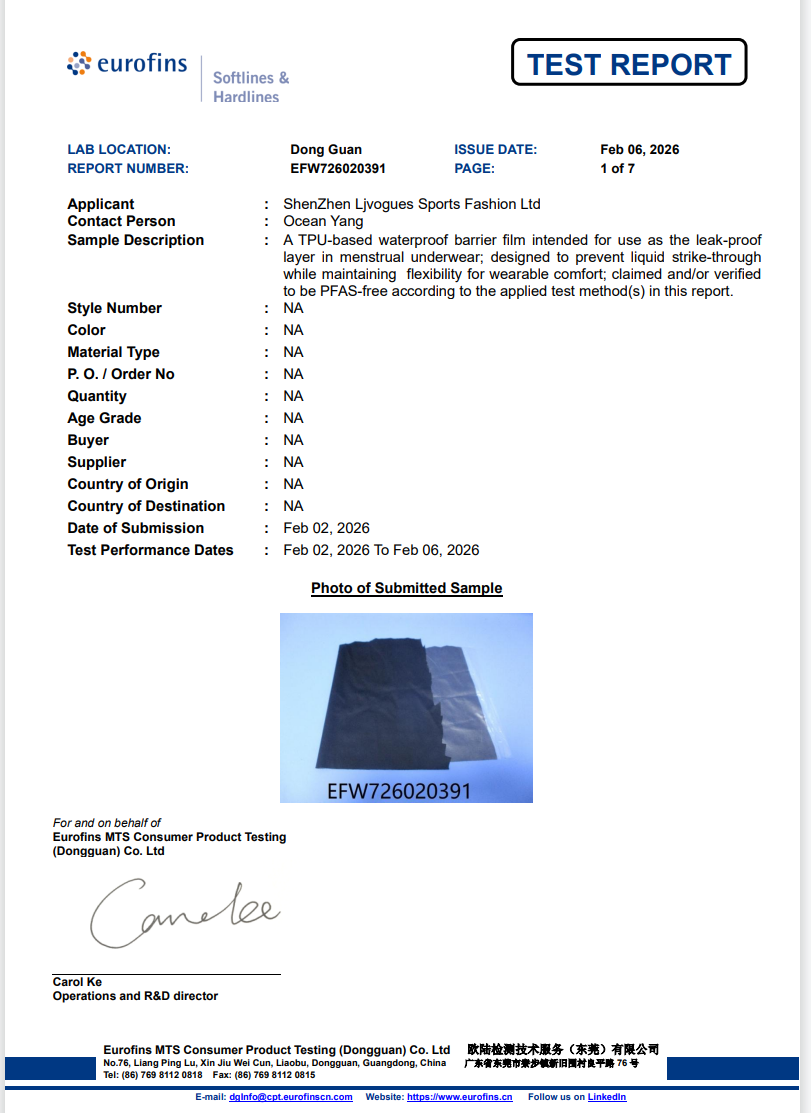
LJVOGUES PFAS-FREE-REPORT
Private Label Packaging
Private label packaging can add $0.20–$1.50+ per unit. Simple barcode labels and poly bags cost less. Retail boxes, hangtags, inserts, and premium packaging cost more.
Packaging also has MOQ. A factory may allow 500 pieces for underwear but require 1,000–3,000 pieces for custom printed boxes.
Inspection And Freight
Inspection and freight often surprise first-time buyers. A third-party inspection may cost a few hundred dollars per visit. Air freight is faster but expensive. Sea freight is cheaper per unit but slower.
Realistic Startup Budget
A practical startup budget is about $8,000–$15,000 for one focused style. This budget can support a small private label launch with samples, packaging, basic testing, shipping, and inspection.
Example budget:
Item | Estimated Cost |
500 pcs x $8.50–$11.50 | $4,250–$5,750 |
Sampling | $200–$600 |
Private label packaging | $200–$800 |
PFAS or fabric testing | $300–$1,200 |
Inspection | $300–$500 |
Freight and duties | $1,000–$3,000 |
Estimated total | $6,250–$11,850 |
This does not include website, photography, ads, warehousing, or returns.
What Is A Good Cost For A Serious Brand?
A serious DTC brand should usually expect a landed cost of $7–$12 per piece for a quality private label order. This range gives room for better fabric, leakproof construction, testing, packaging, and inspection.
If the landed cost is below $5, check carefully. The quote may exclude compliance testing, accurate absorbency, durable leakproof layers, or real private label packaging.

Cheapest Price Vs. Best Value
The cheapest period underwear is rarely the best sourcing decision. Poor leakproof construction creates refunds, negative reviews, and compliance risk.
A better factory should explain:
Absorbency in ml
Layer structure
TPU or leakproof barrier details
PFAS-free documentation
Wash test expectations
Shrinkage tolerance
MOQ by style, color, and size
Packaging MOQ
Inspection process
How Ljvogues Helps Buyers Control Cost
Ljvogues helps brands choose the right cost structure before production. A startup may begin with a low-MOQ private label style. A growth-stage brand may move into custom OEM with better unit economics.
Ljvogues supports:
Low-MOQ private label programs
Custom period underwear OEM
Period swimwear development
PFAS-free material options
Private label packaging
Product-specific test reports upon request
Startup and bulk production paths

FAQ
How much does private label period underwear cost?
Private label period underwear usually costs $3.80–$12+ per piece ex-factory. Landed cost often becomes $5–$15+ after packaging, testing, inspection, freight, and duties.
What is the cheapest period underwear OEM price?
Marketplace listings may show $2.60–$5.00 per piece, but these prices may exclude private label packaging, testing, compliance documents, and freight.
What MOQ should a startup expect?
A startup may find stock or semi-custom options from 50–300 pieces. Fully custom private label orders often start around 500–1,000 pieces per style.
Why does heavy-flow period underwear cost more?
Heavy-flow styles need more absorbent material, larger gusset coverage, stronger leakage control, and more testing.
Does PFAS-free testing increase cost?
Yes. PFAS-free testing adds cost, but it protects brands selling into stricter textile markets.
Sources
Reviewed sources include Ljvogues, Ljvogues period underwear cost guide, Ljvogues OEM manufacturer guide, Alibaba period underwear manufacturer listings, GM Garments period underwear manufacturer page, and OEKO-TEX Standard 100.