


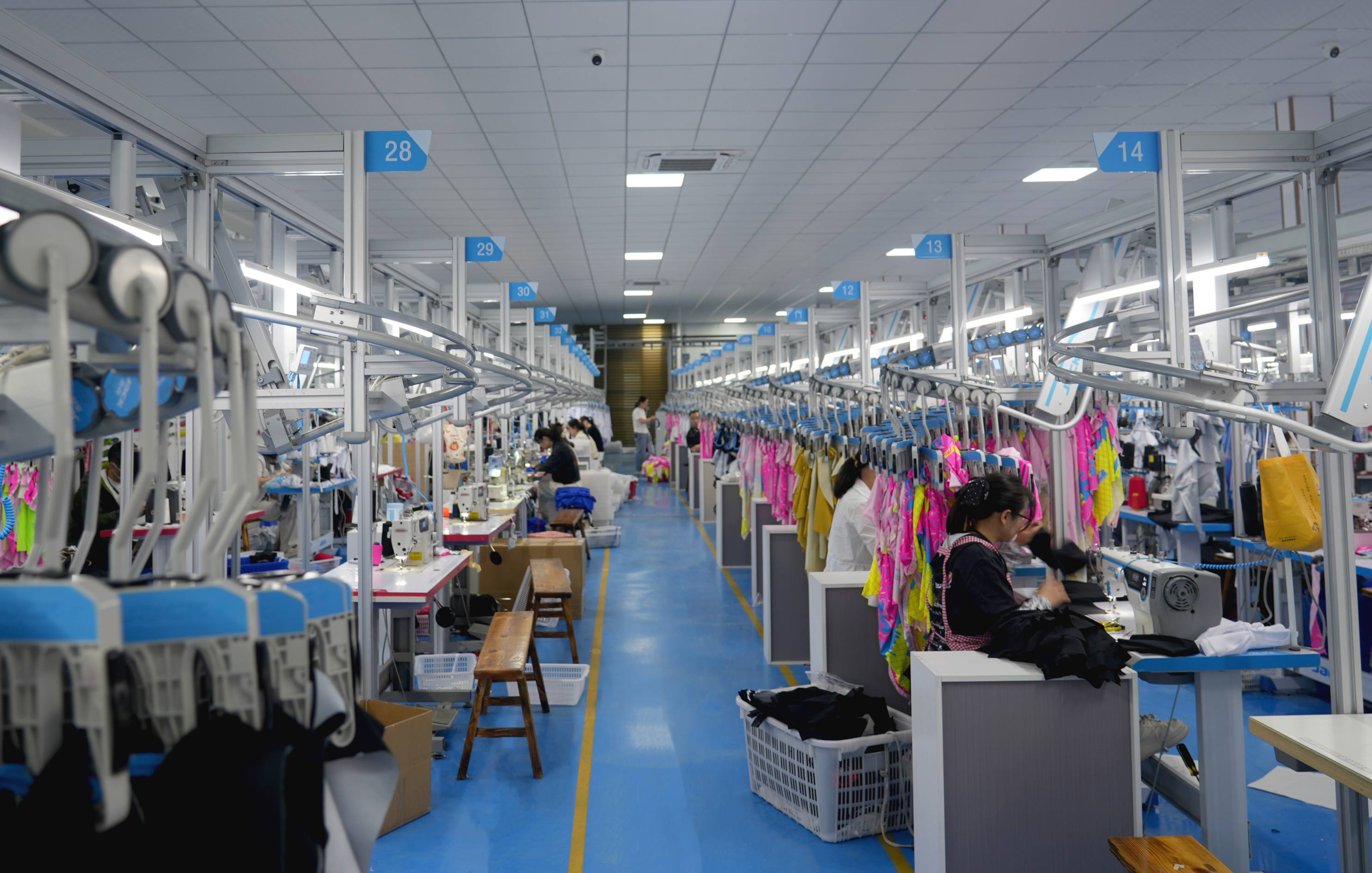

If you're reading this, there's a good chance you've already had a batch come back from a customer with a complaint you didn't see coming — a waterproof panel that peeled after a month of normal washing, a seam that split at the crotch, lace that started leaking along the edge even though the core itself was fine. I'd bet on it, actually. Almost every brand buyer I talk to who's sourced period underwear before has a story like this, and it's exactly why I'm writing this one differently than the last few in this series.
This isn't a "what is a waterproof layer" article. I've written that one already. This is the one where I tell you, specifically, what tends to go wrong with construction at other factories, why it happens, and how we build things differently at Ljvogues so you can decide for yourself whether it matters to your business.

The Failures You've Probably Already Seen
Most of the returns and complaints I hear about from buyers switching suppliers fall into three or four buckets, and none of them are random. Construction failures in period underwear are almost never bad luck — they're the predictable result of a handful of specific shortcuts taken during assembly, and once you know what those shortcuts are, you can spot them before you place a bulk order. That's the whole premise of this article.
The four I hear about most often:
The waterproof layer peels or bubbles up after a relatively small number of washes.
Seams open at the crotch or leg openings well before the garment's expected lifespan.
Lace edges fray or start leaking along the seam line, even when the absorbent core underneath is undamaged.
Defects — shifted cores, skipped stitches, inconsistent bonding — slip through and end up in a customer's hands instead of getting caught before shipment.
Let's go through each one, what actually causes it, and what we do instead.
Pain Point 1: The Waterproof Layer Peels After a Few Washes
When a waterproof layer delaminates or bubbles up after a handful of washes, the root cause is almost always that the film was iron-pressed onto the fabric instead of properly heat-bonded. I've seen this complaint more than any other from buyers who've switched to us, and once you understand how iron-pressing works, it's not surprising.
Iron-pressing applies heat unevenly and briefly — think of it like using a household iron instead of a controlled industrial process. The bond between the TPU film and the fabric layer underneath is weak from day one, even if it looks fine coming off the line. It just takes repeated wash-and-dry cycles for that weak bond to give up, and by the time it does, it's already in a customer's laundry basket, not on our production floor where we could catch it.
At Ljvogues, we bond our TPU waterproof layer using a constant-temperature, constant-pressure heat-bonding machine, applying the film at 18-25 microns rather than pressing it on. In our internal testing, this heat-bonded construction survives 100 washes without delamination, while iron-pressed alternatives in the same internal test commonly start failing — peeling or delaminating — somewhere between 3 and 8 washes. I want to be direct about what that number means: this is our internal factory test, not a third-party certified result. No outside lab verified the 100-wash figure. But it's the same test conditions we run consistently on our own production, and it's why we build the layer this way rather than cutting the faster corner.
Pain Point 2: Seams Open at the Crotch or Leg Openings
When seams split at stress points like the crotch or leg openings after normal wear, the cause is typically standard overlock stitching being used in a spot that takes repeated stretch and wash stress it wasn't built for. Overlock stitching is common, it's fast, and for a lot of garment applications it's perfectly fine — but at high-stress points on a garment that gets washed and stretched constantly, it's more prone to opening up over time than a flatter, more reinforced seam type.
We use 4-needle 6-thread flatlock seams at these stress points instead. Flatlock seams lie flatter against the skin, which also means less chafing for the end wearer, but the more relevant point for you as a buyer is structural: flatlock construction is simply stronger at points like the crotch and leg openings under repeated stretch and wash cycles than a standard overlock seam. It's a different machine, a different stitch structure, and it costs more to run — which is exactly why it gets skipped when a factory is racing to hit a lower price point.

Pain Point 3: Lace Edges Fray or Leak Along the Seam Line
When lace edges start fraying or leaking along the seam line — even though the absorbent core is completely intact — the usual cause is glued edge construction rather than heat-bonding. Glue is cheap and fast to apply, and it looks clean on day one. The problem is what happens after twenty or thirty washes: the adhesive bond breaks down, and once it does, that edge stops sealing properly. You end up with a garment where the core did its job perfectly but the customer still experienced a leak, purely because of what happened at the trim.
We heat-bond our lace edges instead of gluing them. A heat-bonded edge creates a more durable, wash-resistant seal at exactly the point where glue tends to fail — the seam line where lace meets the absorbent panel. It's a slower process than running a glue line, but it's the difference between an edge that holds up over the realistic lifespan of the garment and one that quietly degrades every time it goes through the wash.
Pain Point 4: Defects Slip Through to Shipped Product
When you start seeing inconsistent quality across a shipment — some units fine, others with a shifted core or a skipped stitch — that's rarely one bad seamstress having an off day. It's almost always a sign that the factory's QC process isn't systematic enough to catch assembly variation before it ships. Any of the three construction issues above can happen occasionally even in a well-run factory; the real question is whether there's a process in place to catch it before the box goes out the door.
We run our production against an AQL 2.5 acceptance quality limit with a 3-stage QC process spread throughout production, not just a single inspection at the end. That's the mechanism that catches things like a core that's shifted out of place, a stitch that's inconsistent, or a bonding pass that didn't hold — before it ever reaches a shipping carton. I won't pretend any QC system catches 100% of everything, every time. But a 3-stage process built into the production flow catches meaningfully more than a single end-of-line check, and that's the honest claim I'll make about it.
The Comparison, Side by Side
Here's the short version of everything above, in one place:
Common Failure | Root Cause (Typical Factory Shortcut) | Ljvogues Construction Approach |
Waterproof layer peels/delaminates after a few washes | Iron-pressed TPU film instead of proper heat-bonding | Constant-temperature, constant-pressure heat-bonded TPU at 18-25 microns; internal testing to 100 washes (internal test, not third-party certified) |
Seams open at crotch/leg openings | Standard overlock stitching at high-stress points | 4-needle 6-thread flatlock seams — flatter, stronger at stress points under repeated stretch/wash |
Lace edges fray or leak along the seam line | Glued edge construction that breaks down with washing | Heat-bonded lace edges for a more durable, wash-resistant seal |
Inconsistent defects slip through to shipped product | Weak or single-point QC | AQL 2.5 acceptance limit with 3-stage QC throughout production |
Don't Take My Word for It — Check It Yourself
I could have written this whole article and left it at "trust us, we do it right." I'm not going to ask you to do that, because I wouldn't trust a supplier who only offered me claims with nothing to check them against, and I don't expect you to either.
Here's what I'd actually do if I were sitting where you are:
Request a sample and run your own wash test on the waterproof layer. Don't take our 100-wash figure as gospel — run it yourself, or run it to the number of washes that matches how your customers actually use the product, and see what happens.
Physically inspect the flatlock seams and lace edges by hand. You can feel the difference between a flatlock seam and an overlock seam, and you can usually tell a heat-bonded edge from a glued one just by pulling at it gently at the trim line. This doesn't require lab equipment.
Ask to see factory or production line video of the heat-bonding process in action. If a supplier can't show you the actual machine and process running, that tells you something on its own.
That's exactly what our 7-day prototype sampling exists for — not just to get you a product to look at, but to give you something to test before you commit to a production run. Our MOQ is 50 pieces per color per size, which is low enough that verifying these claims yourself shouldn't cost you a meaningful amount of money or time.
If you've been burned before, I understand the instinct to be skeptical of anything a factory tells you about its own construction quality. That skepticism is healthy. Use it — request the sample, run the test, look at the seams with your own hands, and then decide.
You can reach us directly at info@ljvogues.com, on WhatsApp at +86-199-2880-2613, or through ljvogues.com.
— Ocean Yang, Founder & CEO, Ljvogues