



Table of Contents
This morning I opened an email from a founder in Switzerland. She is building a new brand focused on two specific products: period swimwear (bikini style, for the beach and pool) and sport period underwear (invisible under leggings, for running and fitness).
Her requirements were sharp:
Leak-proof in water
Absorbent but thin
Quick-drying
Invisible under leggings
Seamless or flat seams
Breathable
Premium and aesthetic
She ended with a sentence I hear increasingly often from European founders: "My goal is to build a premium, functional, and aesthetic brand."
This is the exact intersection where the functional underwear market is heading in 2026. And these two product categories — period swimwear and sport period underwear — are arguably the two hardest products to manufacture well in this entire industry. Not because the technology doesn't exist, but because most factories don't understand that these are two fundamentally different engineering problems that happen to share a brand story.
Let me walk you through both — what makes them difficult, how we solve it, and what every brand needs to know before ordering samples.
Part 1: Period Swimwear — The Product That Defies Physics
The Core Challenge: Water Must Stay Out While Blood Stays In
A period panty's job is straightforward: absorb fluid from above, block it from below. Gravity helps. The environment is dry.
Period swimwear has to do something far more complex: prevent pool or ocean water from entering the gusset from the outside, while simultaneously absorbing menstrual blood from the inside, while the entire garment is submerged in water.
This is why period swimwear uses a fundamentally different layer architecture than period underwear. The technology works on a principle of directional permeability — liquid can move in one direction (from body into the core) but not the other (from water into the core).
The 3-Layer Swimwear Gusset
Every credible period swimwear product on the market — from Knix to Modibodi to WUKA — uses some variation of this three-layer gusset system:
Layer 1 (Skin Contact): Soft, Breathable Top Sheet
A moisture-wicking liner that sits against the vulva. It feels like normal swimsuit fabric but is engineered to pull menstrual fluid through to the layer below. Key requirement: it must feel smooth and non-irritating even when wet, because the wearer will be alternating between water and dry land all day.
Layer 2 (Middle): Absorbent + Moisture-Wicking Core
A thin, highly absorbent layer that captures and retains menstrual blood. This layer must be:
Thin enough to be invisible inside a bikini bottom (target: <2mm)
Absorbent enough for light-to-medium flow (typically 10–20ml for swimwear — equivalent to 1–3 regular tampons)
Fast-wicking so blood doesn't pool on the surface
Quick-drying so the gusset doesn't stay heavy and soggy after the wearer exits the water
Layer 3 (Outer): Water-Repellent Barrier
This is the layer that makes period swimwear possible. A water-repellent outer fabric that prevents pool or ocean water from entering the gusset while the wearer is submerged. Critically, this barrier must also prevent menstrual blood from leaking outward — so it functions as both a water shield and a leak-proof barrier.
WUKA describes their system as: "Water-repellent outer fabric prevents water from entering the gusset and protects against leaks". Knix and Modibodi use similar architectures with their proprietary membrane technologies.

The Fabric Challenge: Chlorine Will Destroy the Wrong Material
This is where many new brands make their first catastrophic mistake: they choose swimwear fabric based on how it looks and feels in the showroom, without testing for chlorine resistance.
Pool water contains chlorine at concentrations of 1–3 ppm. Over repeated exposure, chlorine degrades elastane (spandex/Lycra) — causing the fabric to lose stretch recovery, become baggy, fade in colour, and eventually fall apart.
The solution is polyester-based swimwear fabric with chlorine-resistant elastane:
Fabric Type | Chlorine Resistance | Notes |
Standard Nylon/Spandex | Poor — degrades after 30–50 hours in chlorine | Not suitable for pool-focused swimwear |
Polyester/Spandex (standard) | Good — significantly better than nylon | The industry baseline for pool swimwear |
Polyester/XLANCE® Elastomer | Excellent — chlorine-proof, retains shape for 200+ hours | Premium option, also resistant to sunscreen/oils |
Recycled Polyester/XLANCE® | Excellent + sustainable | Combines performance with environmental story |
For a premium brand targeting both beach and pool use, we recommend recycled polyester/XLANCE® or equivalent chlorine-resistant elastomer for the outer shell. It costs more than standard nylon/spandex, but it means the swimsuit will still fit and perform after an entire summer of pool use — not just the first three trips.
Quick-Dry: The Detail That Separates Good from Great
Your customer will wear period swimwear in a specific pattern: swim → sit on a towel → swim → walk to the bar → swim → dry off and drive home. Throughout this cycle, the gusset goes from submerged to exposed to submerged again, repeatedly.
If the absorbent core takes 45 minutes to dry, the wearer spends most of her beach day with a cold, heavy, wet patch between her legs. That experience will end her relationship with your brand.
Target dry time: under 30 minutes in open air for the gusset zone. This requires:
Microfiber core (not cotton — cotton retains water far too long)
Hydrophobic outer barrier that sheds pool/ocean water quickly
Mesh or perforated inner liner that promotes airflow even when wet
Good Housekeeping's lab testing confirmed that the top-performing period swimwear brands achieve protection for "7+ hours in and out of the pool" without compromise. That level of performance requires deliberate quick-dry engineering, not just fabric selection.
Part 2: Sport Period Underwear — The Invisible Workhorse
The Core Challenge: Maximum Protection at Minimum Visibility
If period swimwear defies physics, sport period underwear defies geometry. You need to put enough absorbent material inside a panty to protect a runner on her heavy flow day — and that panty must be completely invisible under compression leggings.
The leading brands have set the bar high:
Snügs launched an "Invisible" collection featuring "revolutionary seamless technology ensuring there will be no visible panty line under your clothes" while remaining "the most absorbent period underwear on the market"
Saalt's patented leakproof gusset is "engineered to be the thinnest and driest option in the reusable market" — pulling moisture away from the body quickly and locking it into the absorbent core
Good Housekeeping's 2026 Lab testing praised top performers for "breathable, lightweight materials" and "thin fabric that helps mitigate panty lines" with "top-performing absorbency without a bulky pad"
For a sport-specific product, the engineering requirements are even more demanding than everyday period underwear:
Seamless or Flat-Seam Construction
Traditional stitched seams create ridges. Under compression leggings, those ridges become visible panty lines. Under movement (running, squatting, cycling), those ridges become friction points that cause chafing.
Two construction approaches work for sport period underwear:
Seamless knitting: The garment is knitted in one piece on a circular knitting machine, eliminating side seams entirely. The absorbent gusset is integrated during knitting or bonded in post-production. This is the gold standard for invisible wear — Gymshark's seamless underwear range uses this approach for everyday wear, and the same technology applies to period-specific products.
Flat-lock stitching + bonded edges: If full seamless construction isn't feasible (some absorbent core architectures require panel construction), flat-lock stitching reduces seam height to near-zero, and bonded (ultrasonic or heat-fused) leg openings eliminate the bulky elastic that causes VPL (Visible Panty Line).

Seamless menstrual swimwear
The Ultra-Thin Core for Movement
A runner generates more intra-abdominal pressure than a woman sitting at a desk. That pressure pushes menstrual fluid into the core faster and in larger bursts. Simultaneously, the running motion causes the panty to shift, compress, and stretch across the body.
The sport period underwear core must therefore be:
Thin (<2mm) — to prevent visible bulk and reduce heat buildup during exercise
Compression-resistant — to maintain absorption capacity even when the wearer's thighs are pressing the gusset during a squat or cycling motion
Fast-wicking — to pull fluid away from the skin immediately, preventing the "wet" sensation that disrupts an athlete's focus
Secure — the core must not shift, bunch, or fold during dynamic movement
Saalt's approach is instructive: their gusset "pulls moisture away from the body quickly and locks it into the absorbent core to prevent leaks" — combining speed (fast acquisition) with security (fluid lock) in a thin profile.
Breathability: The Sweat Factor
During exercise, the vulvar area generates significant perspiration in addition to menstrual flow. A sport period panty must manage two fluid sources simultaneously: blood from menstruation and sweat from exertion.
If the waterproof barrier blocks both liquid AND vapour, the gusset becomes a sealed microenvironment — hot, humid, and uncomfortable. This is why sport period underwear requires a TPU barrier with high breathability (high MVTR — Moisture Vapour Transmission Rate), allowing sweat vapour to escape while blocking liquid.
Target MVTR for sport products: 3,000+ g/m²/24hr — significantly higher than the 2,000 g/m²/24hr that's adequate for everyday period underwear.
Period Swimwear vs. Sport Period Underwear: Side-by-Side Engineering
For brand owners developing both products (as our Swiss client intends), here is a clear comparison of the engineering differences:
Dimension | Period Swimwear (Bikini) | Sport Period Underwear |
Primary challenge | Keep water out while absorbing blood within | Maximum absorbency at minimum thickness/visibility |
Outer fabric | Chlorine-resistant polyester/elastomer blend | Nylon/spandex or modal/spandex (stretch + recovery) |
Absorbent capacity | 10–20ml (light-to-medium, supplementary use) | 20–40ml (medium-to-heavy, standalone use) |
Core thickness | <1.5mm (must fit inside bikini bottom) | <2mm (invisible under leggings) |
Barrier type | Water-repellent outer fabric (DWR or laminated) | Breathable waterproof TPU membrane (PFAS-free) |
Key fabric property | Quick-dry, chlorine-proof, UV-resistant | Breathable, compression-recovery, moisture-wicking |
Seam construction | Standard swim construction (hidden by bikini styling) | Seamless knit or bonded/flat-lock (VPL elimination) |
Wash durability focus | Chlorine + salt water + sunscreen resistance | Sweat + frequent wash (3–4x per week during period) |
Consumer use pattern | 4–8 hours, alternating wet/dry | 1–8 hours, continuous wear during exercise |
This comparison reveals the fundamental insight: these two products share a brand story (active women + period freedom) but share almost zero engineering. The fabrics are different. The barriers are different. The core architecture is different. The durability requirements are different.
A factory that is excellent at period swimwear may be mediocre at sport underwear, and vice versa. The ideal manufacturing partner has proven capability in both categories — swimwear construction AND seamless/bonded underwear construction — on the same production floor.
The Brand Strategy: "Period Freedom, Everywhere"
From a positioning standpoint, this Swiss founder's two-product strategy is powerful because it captures a complete active lifestyle narrative:
Morning: Sport period underwear under leggings for her 6am run
Afternoon: Period bikini bottom at the lake with friends
Evening: Back in sport period underwear for yoga
One brand. Three moments. Zero compromise.
This is the brand story that resonates with the 2026 consumer — not "period protection" (which sounds medical) but "period freedom" (which sounds aspirational). The products are enabling a life she already wants to live, not managing a condition she'd rather not think about.
For brands building in this space, the product development sequence matters:

Period Freedom, Everywhere
Recommended Launch Sequence
Phase | Product | Why First/Second |
Phase 1 | Sport period underwear (2–3 styles) | Larger addressable market, year-round use, faster consumer feedback loop |
Phase 2 | Period swimwear bikini (1–2 styles) | Seasonal product (spring/summer launch), benefits from brand trust established in Phase 1 |
Phase 3 | Category expansion (one-piece swimsuit, swim shorts, sport shorts) | Extend the proven platform into adjacent silhouettes |
Launch sport underwear first because it generates year-round revenue and reviews. By the time you launch swimwear for summer, you already have a customer base, social proof, and manufacturing experience that de-risks the more complex swimwear product.
What to Ask Your Manufacturing Partner
Whether you are working with us or evaluating other factories, here are the questions that separate a capable partner from one that will waste your time and money:
For Period Swimwear:
"What is your outer shell fabric composition, and has it been chlorine-tested? For how many hours?"
"What water-repellent treatment do you use on the gusset barrier? Is it PFAS-free?" (Critical — many DWR finishes historically used PFAS chemistry )
"What is the gusset dry time after 30 minutes of submersion?"
"Can you provide a sample for pool testing before we commit to production?"
For Sport Period Underwear:
"Is the construction seamless (circular knit) or bonded? If bonded, what bonding method?"
"What is the absorbent core thickness at your target capacity? Can you achieve 30ml at <2mm?"
"What is the MVTR rating of your TPU barrier?"
"Can you show me a VPL test — the product worn under white or light-coloured leggings?"
For Both:
"What is your MOQ for custom designs with custom fabric?"
"What certifications do you carry? OEKO-TEX? REACH/SVHC? PFAS-free testing?"
"What is your sample timeline from confirmed tech pack to first prototype?"
"Can you develop both swimwear and underwear on the same production line, or will I need two separate factories?"
That last question is the most important. If the answer is "two separate factories," you are doubling your supplier management complexity, your quality control burden, and your communication overhead. If one factory can handle both — with proven capability in swim construction AND seamless underwear construction — your supply chain is dramatically simpler.

What Ljvogues Brings to This Brief
For brands developing period swimwear and sport period underwear — whether from Switzerland, the UK, Australia, or anywhere else — here is what we offer:
Capability | Period Swimwear | Sport Period Underwear |
Fabric sourcing | Chlorine-resistant polyester/elastomer, recycled options available | Nylon/spandex, modal/spandex, bamboo/spandex |
Core technology | Ultra-thin (<1.5mm) quick-dry microfiber core | Ultra-thin (<2mm) microfiber or hybrid SAP core |
Barrier | PFAS-free water-repellent barrier | PFAS-free breathable TPU membrane |
Construction | Swim-grade construction with hidden gusset | Seamless knit or bonded/flat-lock |
Certifications | REACH/SVHC (Eurofins), PFAS-Free, OEKO-TEX ready | REACH/SVHC (Eurofins), PFAS-Free, OEKO-TEX ready |
MOQ | Flexible for new brands — discuss per project | Flexible for new brands — discuss per project |
Sample timeline | 30–40 days from confirmed specs | 25–35 days from confirmed specs |
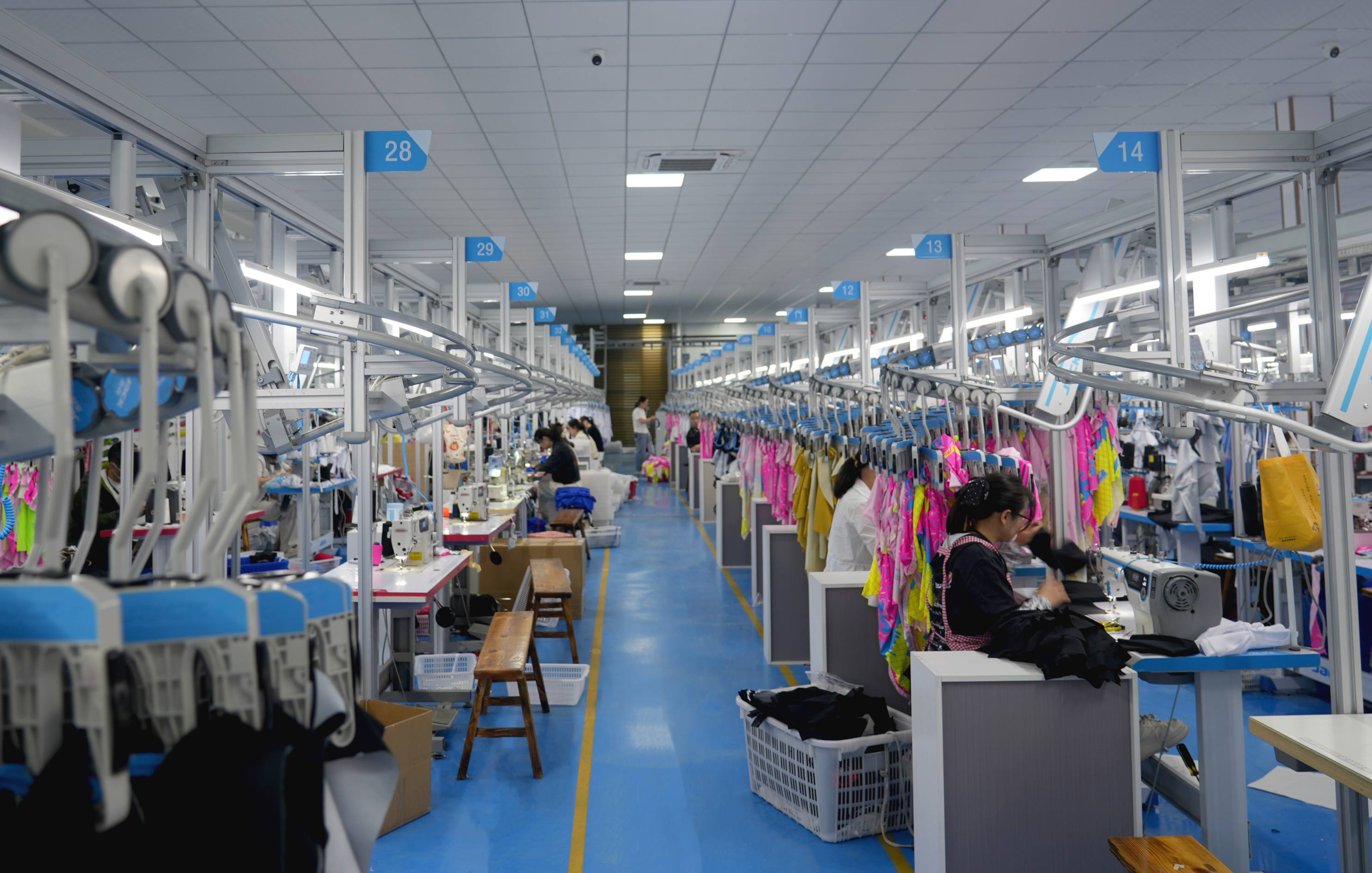
Both product categories are manufactured on our production floor. One factory. One quality system. One compliance file. One point of contact. That is how you build a premium brand without the operational chaos of managing multiple suppliers across multiple countries.
Building a period swimwear or sport period underwear brand? Send us your brief — even if it is as simple as "bikini + sport underwear, premium positioning, European market" — and we will respond with recommended base styles, fabric options, absorbent core specs, and a sample plan within 48 hours.

Ljvogues-All swimsuit test reports for menstrual period have passed.
Ocean Yang is the CEO of Ljvogues, a Shenzhen-based manufacturer specializing in functional intimate apparel and swimwear. From PFAS-free leak-proof technology to chlorine-resistant swim fabrics, he builds the products that let women stop planning their lives around their periods — whether they're at the gym, the beach, or anywhere in between.