



Table of Contents
A few weeks ago, a European brand sent me a brief that included a line I've been waiting years to see from a client:
"Potential future developments such as shaping or hybrid solutions."
Six words that represent the biggest untapped product opportunity in functional underwear.
Think about it. Right now, a woman who wants light bladder leak protection AND tummy shaping has to wear two garments: a leak-proof panty underneath a shapewear brief on top. Two waistbands. Two leg openings. Double the bulk. Double the heat. Double the discomfort.
And she's doing this because no one has given her a single product that does both.
That's about to change.
The Market Collision
Two enormous categories are on a collision course:
Shapewear is a $3+ billion global market, projected to grow at 6–8% CAGR through 2032. Driven by brands like Skims, Spanx, and Shapermint, it has shed its "grandmother's girdle" stigma and become a mainstream wardrobe staple for women 18–65.
Reusable absorbent underwear (period + incontinence) is a $2+ billion market growing at 12–17% CAGR. It has shed its "medical product" stigma and become, for millions of women, an everyday essential.
Here's what nobody in either category is talking about: the customer overlap is massive.
Postpartum women (0–12 months after delivery) frequently need both light incontinence protection AND abdominal compression/support. Currently, they layer disposable pads under postpartum shapewear — an expensive, uncomfortable, unsustainable solution.
Perimenopausal women (typically 40–55) experience both increasing bladder sensitivity AND increasing interest in smoothing/shaping undergarments. They're buying from two separate brands for two separate needs.
Active women who want a smooth silhouette under fitted clothing AND period protection are currently choosing one or the other — sacrificing either aesthetics (wearing bulky period underwear) or protection (wearing shapewear without absorbency).
The innovation consultancy Board of Innovation, working with Thinx, identified exactly these kinds of universal gaps in the existing reusable underwear market — "critical unmet needs that erode consumer trust and hinder product adoption". Their research across 350+ consumers uncovered white-space opportunities for innovation that would "trailblaze a new era for period and incontinence solutions".
Hybrid shaping + protection underwear is one of those white spaces. And the first brands to fill it will define the category.

The Engineering Challenge: Why No One Has Done It Yet
If the market opportunity is so obvious, why hasn't anyone launched a great hybrid product?
Because the two technologies fight each other.
Shapewear works through compression. High-power elastane (typically 20–30% spandex in a nylon blend) creates firm, sustained pressure against the body, smoothing contours and redistributing soft tissue. The fabric is dense, structured, and intentionally restrictive.
Absorbent underwear works through absorption and airflow. The multi-layer gusset needs to wick moisture away from skin, absorb and retain fluid in the core, and allow water vapour to escape through the breathable TPU barrier. The system relies on porosity, loft, and air movement — the exact opposite of compression.
Put a standard absorbent core inside a standard shapewear panel, and two things go wrong:
The compression crushes the absorbent core. A compressed core has reduced void space between fibres, which means less capacity to absorb and retain fluid. A core that holds 25ml in relaxed underwear might only hold 15ml when compressed under shapewear tension.
The compression blocks breathability. Dense shapewear fabric dramatically reduces vapour transmission. The gusset zone — already warm from body contact — becomes a sealed microenvironment where heat and moisture have nowhere to go. The result: exactly the clammy, uncomfortable experience that drives consumers away from functional underwear.
This is a solvable problem. But it requires deliberate engineering, not just stitching an absorbent pad into a shapewear brief.

How to Solve It: The Hybrid Architecture
Based on our R&D and prototyping work, here's the construction approach that makes hybrid shaping + absorbent underwear viable:
Principle 1: Zone-Specific Compression
The mistake is applying uniform compression across the entire garment. A hybrid product should use differentiated compression zones:
High compression in the tummy panel (the primary shaping zone) — this is where the consumer wants the smoothing effect
Medium compression in the hip and thigh panels — enough for a smooth silhouette, but not so tight that it restricts movement
Low or zero compression in the gusset zone — this is where the absorbent core lives, and it needs room to function
This is achieved through variable-power fabric panels — using different spandex ratios or different knit structures in different zones of the same garment. The tummy panel might be 75% nylon / 25% spandex (high power), while the gusset zone uses 85% nylon / 15% spandex (medium power) with a softer knit structure that allows the absorbent core to expand and breathe.
The consumer feels firm shaping where she wants it (tummy) and comfortable, functional protection where she needs it (gusset). One garment. Two jobs. No compromise.
Principle 2: Compression-Resistant Absorbent Core
Standard microfiber terry cores compress under pressure — that's the nature of textile-based absorbents. For a hybrid product, the core needs to maintain its absorption capacity even under moderate external compression.
The solution: structured absorbent cores that use a combination of:
Higher-loft microfiber with inherent resilience (spring-back after compression)
Channel architecture — the core is engineered with small channels or zones that maintain void space even when compressed, ensuring fluid has pathways to enter and distribute
Calibrated core thickness — slightly thicker than a standard underwear core (2.5–3mm vs. 2mm) to compensate for the volume lost under compression, while still maintaining a total gusset thickness that's invisible under shapewear-weight fabric
Principle 3: Ventilated Barrier Zone
The TPU waterproof barrier in a hybrid product needs higher breathability (higher MVTR — moisture vapour transmission rate) than a standard underwear barrier, specifically to compensate for the reduced airflow through the outer compression fabric.
We specify TPU membranes with MVTR ratings of 3,000+ g/m²/24hr for hybrid products, compared with 2,000–2,500 for standard underwear. This ensures that even under shapewear-level compression, the gusset zone can still expel moisture vapour efficiently.
Principle 4: Seamless Transition
Perhaps the most critical aesthetic detail: the transition between the shaping panels and the gusset zone must be invisible. No visible seam line. No sudden change in fabric texture. No ridge where the absorbent core begins.
This requires bonded construction (ultrasonic or thermal) at the panel junctions, with graduated fabric transitions rather than abrupt edges. The consumer should not be able to feel — by touch or by sight — where the shapewear ends and the absorbent zone begins.

Product Concepts: Three Hybrid SKUs
Concept 1: "Shape + Shield" High-Waist Brief
Target user: Postpartum, perimenopausal, everyday women who want tummy smoothing + light-to-moderate bladder/period protection
Construction: High-power tummy panel (25% spandex) + medium-power hip panels + low-compression gusset zone with 20–25ml absorbent core
Silhouette: High-waist brief, full-coverage back, laser-cut legs
Target retail: $38–48
Consumer message: "The shaping brief that also keeps you dry."
This is the highest-volume opportunity. It addresses the largest overlapping consumer base (any woman who currently buys both shapewear and absorbent underwear) and the simplest construction challenge (brief silhouette, not shorts or leggings).
Concept 2: "Shape + Shield" Bike Short
Target user: Women who want thigh smoothing + tummy control + period/bladder protection under dresses and skirts
Construction: Full compression through thigh and tummy panels + relaxed-compression gusset zone + 15–20ml absorbent core
Silhouette: Mid-thigh length, seamless construction, suitable as standalone shorts or under-dress wear
Target retail: $42–55
Consumer message: "Smooth thighs, flat tummy, leak-proof confidence — one garment does it all."
This concept is particularly strong for wedding season, travel, and formal events — occasions where women currently make the uncomfortable choice between shapewear (no protection) and period underwear (no shaping).
Concept 3: "Recover + Protect" Postpartum Brief
Target user: New mothers (0–6 months postpartum) who need abdominal support + light incontinence protection
Construction: Medical-grade abdominal compression panel + gentle hip support + 25–30ml absorbent core for postpartum bleeding and stress incontinence
Silhouette: Ultra-high-waist (above navel), full coverage, wide bonded waistband for comfort
Target retail: $35–45
Consumer message: "Support where you need it. Protection where you need it. One less thing to worry about."
This is a niche play, but a high-loyalty one. A new mother who discovers a single garment that replaces both her postpartum girdle and her disposable incontinence pads will be fiercely loyal to that brand — and she'll recommend it to every pregnant friend she has.
pelzGROUP presented a similar hybrid concept at Hygienix 2023 — a prototype combining "more or less regular underwear" with integrated absorbent capacity for light bladder leak sufferers. The industry supply chain is already exploring this direction. The question is which consumer brands will be first to market.

The Phased Development Roadmap
For brands considering hybrid products, I recommend a three-phase approach:
Phase | Product | Timeline | Risk Level |
Phase 1 | "Shape + Shield" High-Waist Brief | Months 1–4 | Low — closest to existing underwear construction |
Phase 2 | "Recover + Protect" Postpartum Brief | Months 4–7 | Medium — requires higher compression engineering |
Phase 3 | "Shape + Shield" Bike Short | Months 7–10 | Higher — extends into activewear/shapewear construction |
Phase 1 validates the core technology (compression-resistant absorbent core + zone-specific compression) in the simplest form factor. If it works in a brief, the same engineering principles scale to shorts, leggings, and postpartum garments.
Why This Category Will Explode
Three market forces are converging to make hybrid shaping + protection underwear inevitable:
1. Consumer fatigue with layering. Women are tired of wearing two garments to solve two problems. The same consumer simplification trend that drove the success of BB creams (moisturiser + sunscreen + foundation in one) will drive hybrid underwear adoption.
2. Technology readiness. Ultra-thin absorbent cores (<2mm), breathable TPU barriers, and variable-compression knitting technologies all exist today — they just haven't been combined in a single consumer product. The engineering is ready. The product design is what's missing.
3. Brand positioning opportunity. The first brand to launch a credible "shaping + protection" product will own a new category — just as Thinx owned "period underwear" and Skims owned "inclusive shapewear." Category creators enjoy first-mover pricing power, organic media coverage, and consumer loyalty that followers can't easily replicate.
Board of Innovation's work with Thinx identified these exact white spaces — "near-term areas for innovation and long-term growth territories" that would position a brand as a market leader. Hybrid products are squarely in that territory.
What We Bring to the Table
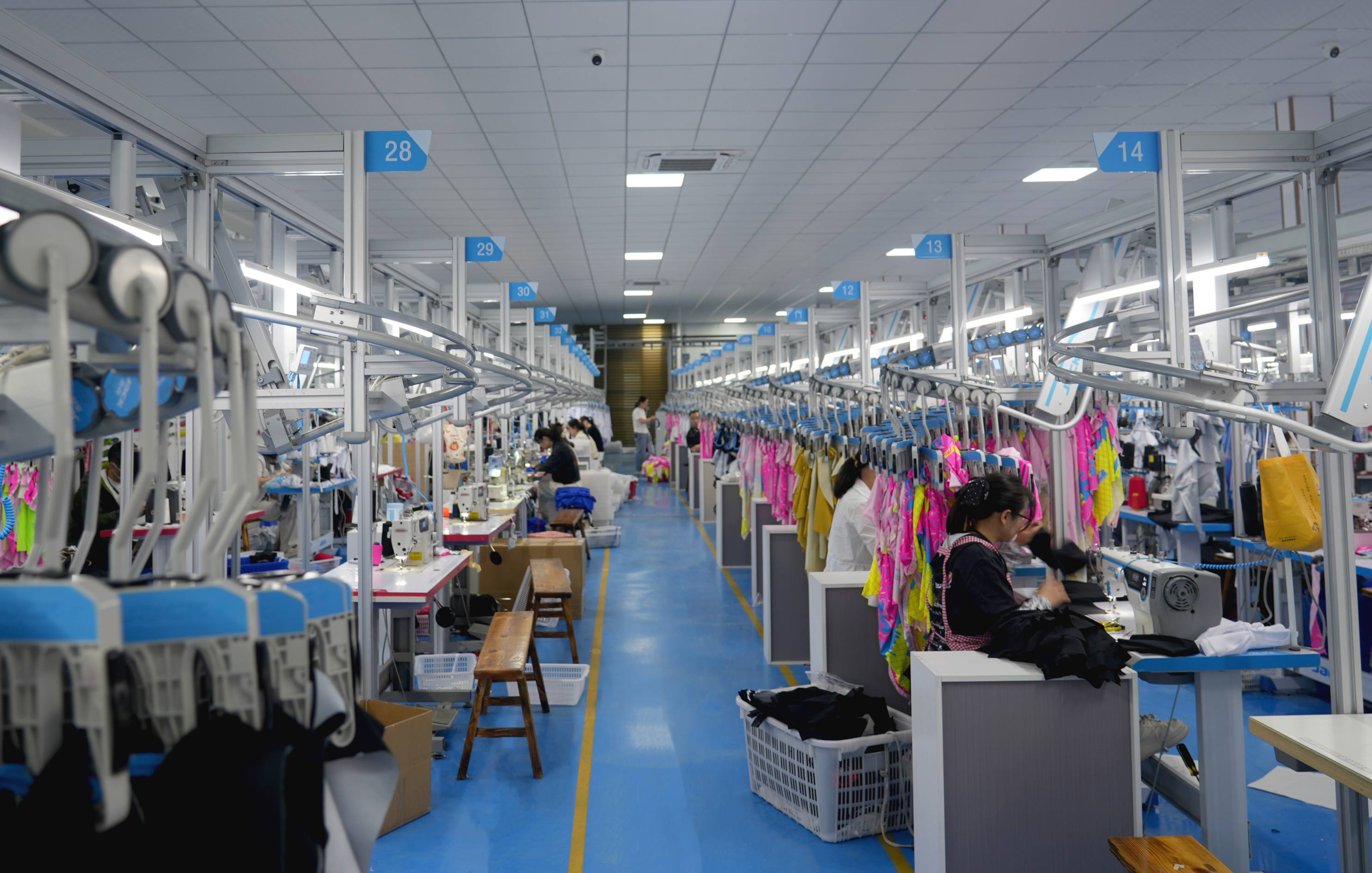
At Ljvogues, we've been quietly developing hybrid prototyping capabilities alongside our core period and incontinence underwear manufacturing:
Variable-compression panel construction — we can engineer different spandex ratios and knit structures in different zones of the same garment
Compression-resistant absorbent cores — tested to maintain ≥85% of rated absorbency under shapewear-level compression
Ultra-thin TPU barriers with high MVTR — maintaining breathability even under dense compression fabrics
Bonded/seamless construction — invisible transitions between shaping panels and gusset zones
Full EU compliance — REACH/SVHC, PFAS-Free, OEKO-TEX-ready
If you're a brand thinking about hybrid products — even if it's a "future development" item on your roadmap rather than an immediate launch — I'd encourage you to start the conversation now. The prototyping cycle for hybrid products is longer than standard underwear (expect 60–90 days for first samples), and the brands that start development in Q2 2026 will be first to market in Q4 2026 or Q1 2027.
The window is open. The technology exists. The consumer need is massive and unmet. The only question is: who moves first?
Interested in exploring hybrid shaping + absorbent underwear? We can develop concept prototypes based on your brand positioning and target consumer. Send us your brief — or just tell us which of the three concepts above interests you most — and we'll start engineering.

Ocean Yang is the CEO of Ljvogues, a Shenzhen-based manufacturer specialising in functional intimate apparel. He believes the next billion-dollar underwear brand will be the one that stops asking women to choose between looking good and feeling protected.