



Three weeks ago, I received an email from a client in Riyadh. The subject line was simple: "We want something that feels like nothing else on the market."
No tech pack. No size chart. Just that one sentence, and a link to their brand's website — a sleek, premium e-commerce store targeting the new generation of Saudi women. Women who are driving, running businesses, building careers under Vision 2030, and quietly demanding better intimate care products that match their evolving lifestyle.
I knew immediately what fabric to propose. Not cotton. Not bamboo. Not polyester.

Tencel Modal.
Let me explain why, because this decision wasn't obvious — even to my own team.
When most people hear "period underwear," they think cotton. It's safe, it's familiar, it's what everyone defaults to. And cotton is fine. But "fine" doesn't win a premium client in a market where the feminine hygiene sector is growing at over 5% annually and consumers are rapidly upgrading from disposables to reusables.
The client didn't want "fine." She wanted "the cashmere of underwear." Her exact words.
So I sent her three fabric swatches by DHL: organic cotton, bamboo viscose, and a Tencel Modal / Lyocell blend. No labels. No brand names. Just three white squares of fabric in a plain envelope.
She chose the Modal blend within an hour of receiving it. "This one. It's not even close."
That's the thing about Tencel Modal — you don't need to explain it. You just need to touch it. It has a matte, fluid drape that hugs the skin without clinging, a softness that actually gets better after washing rather than degrading, and a natural coolness that makes it feel like you're wearing a cloud in 42°C heat.

But here's where the story gets interesting from a manufacturing perspective.
Softness alone doesn't make a period panty. If it did, we'd all just wear silk and call it a day. The real question is: can this luxurious fabric survive the engineering requirements of a functional, leak-proof garment?
This is where Tencel™ Modal's unique fiber structure becomes critical. Unlike generic viscose rayon (which weakens dramatically when wet and pills after a dozen washes), Lenzing's Modal fibers are produced using their proprietary Eco Soft technology — a process that generates 81.5% less greenhouse gas emissions than generic modal production. But beyond the eco story, the fiber itself is structurally superior: it absorbs moisture 50% more efficiently than cotton, releases it faster (meaning the skin-contact layer stays dry), and maintains its shape through 100+ wash cycles without becoming rough or stretched out.
For this project, we engineered a four-layer gusset:
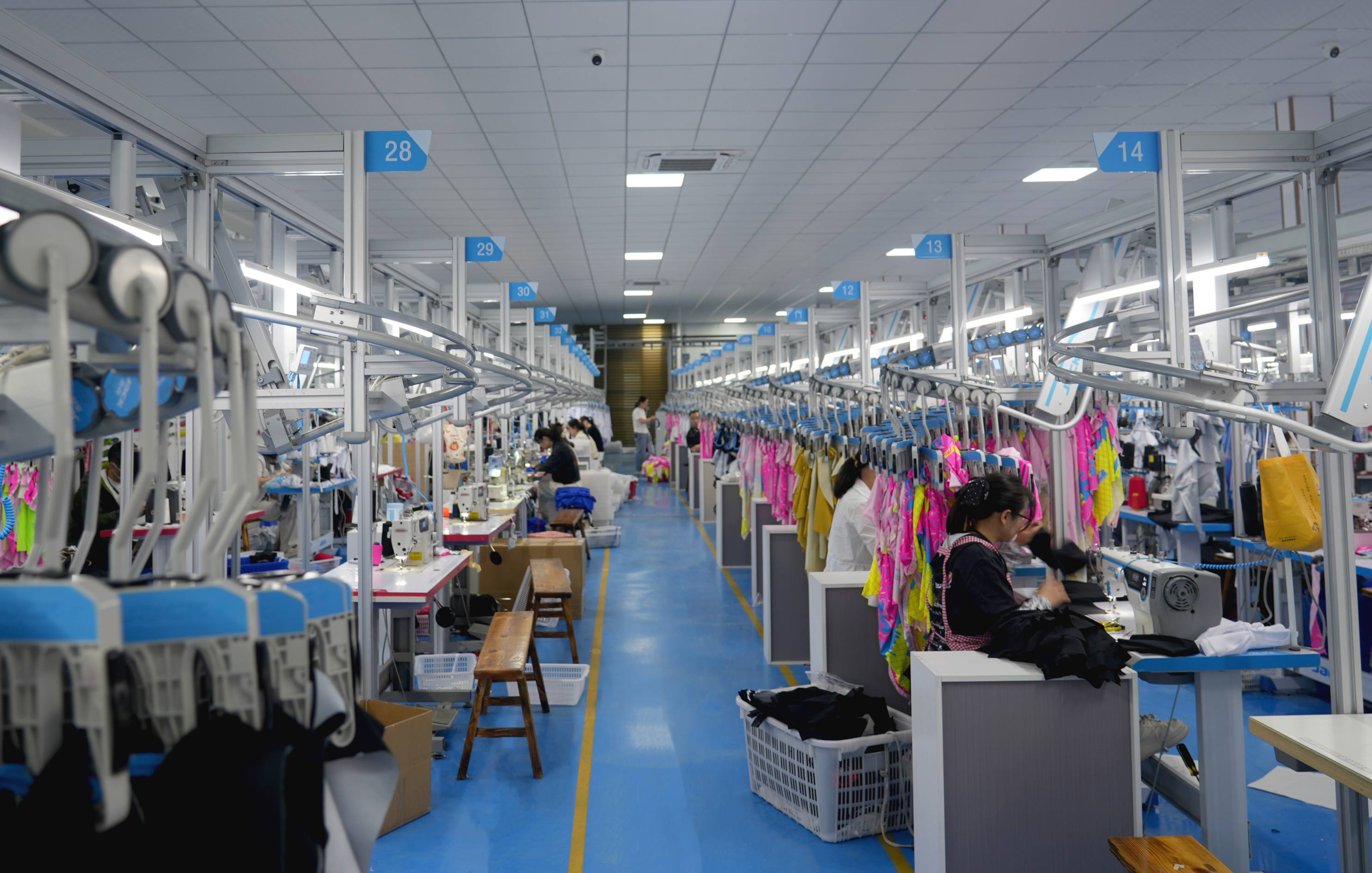
The top layer — the one touching skin — is the Tencel Modal blend. This is where the client feels the luxury. Beneath it sits our high-density microfiber terry core, which does the unglamorous work of trapping menstrual fluid while staying under 3mm thick. Below that, a breathable TPU membrane — our PFAS-free waterproof barrier — blocks liquid while letting vapor escape. And the outer shell uses the same Modal/Elastane blend at a 92/8 ratio, giving the garment a smooth, seamless finish under clothing.

The whole thing feels like regular luxury underwear. That's the point. You're not supposed to know it's period underwear until you need it to be.
One detail I'm particularly proud of on this order: the elastic engineering.
Saudi Arabia is hot. When you sweat in 40°C+ heat, exposed rubber elastic at leg openings becomes your worst enemy — it chafes, it irritates, it leaves red marks. Most factories take the shortcut: they sew the elastic directly onto the edge of the fabric. It's fast, it's cheap, and it's terrible for the wearer.
We don't do that. For this client, we used fabric-encased elastic on every leg opening and waistband. The Modal fabric wraps entirely over the rubber, so only the soft, cool fiber touches the skin. It costs us more in labor. It slows down the sewing line. But the client's customers will never experience chafing — and that's the kind of invisible detail that turns a first-time buyer into a lifelong one.
I want to be honest about something. Tencel Modal is not the right fabric for every brand.
If you're building a budget line for Amazon at a $12 retail price point, Modal will eat your margins alive. Stick with cotton or poly blends. If you're targeting athletes who need the fastest possible dry time, a nylon/spandex shell will outperform Modal every day.

But if you're building a premium brand — the kind that charges $35-$45 per pair and justifies it with a story about sustainability, craftsmanship, and skin-first design — then Tencel Modal is, in my experience, the single best material on the planet for intimate apparel in 2026. AnaOno calls it "buttery-soft". Stripe & Stare says it delivers "comfort like no other". And now, a growing number of brands in the Middle East are discovering what European lingerie houses have known for years.
The Saudi order shipped last week. 500 pieces, three colorways (Sand, Obsidian, Dusty Rose), sizes XS through 3XL, all packed in compostable kraft mailers with bilingual Arabic/English care cards.

The client already sent her reorder — 1,500 pieces this time, with two new colors.
That's what happens when the fabric is right. The product sells itself, and the reorder follows.
If you're a brand owner and you've read this far, you probably felt something when I described that fabric swatch test. If you want to feel it for yourself, I'll send you the same three swatches I sent to Riyadh — no labels, no pitch, just fabric. You decide.
Write to me: [info@ljvogues.com]
Or if you're further along and have a tech pack ready: [Request a Free OEM Quote]