You are here:Home / Blog / Case Studies / From 1,000-Piece Trial to 20,000-Unit Reorder: How We Built a Premium Bamboo Period Underwear Brand for a Saudi Arabia Client
From 1,000-Piece Trial to 20,000-Unit Reorder: How We Built a Premium Bamboo Period Underwear Brand for a Saudi Arabia Client
Views: 0 Author: Ocean Yang Publish Time: 2026-03-23 Origin: Ljvogues
The best case studies do not end at delivery. They end at reorder. In this project, a Saudi Arabia-based entrepreneur contacted us with a clear vision for a premium bamboo underwear brand — and an inbox full of unanswered questions from other factories. Within six months, we took the project from a detailed first inquiry to a 1,000-piece trial order, then to a 20,000-unit production reorder driven by strong market feedback. This is the story of how a first email became a real business.
The First Email
In September 2025, we received an inquiry from Ahmed, a Saudi Arabia-based entrepreneur in the process of establishing a premium apparel brand specializing in bamboo underwear. His email was thorough, organized, and covered exactly the questions that a serious buyer should be asking before committing to a manufacturing partner.
What struck us immediately was the structure. Ahmed did not ask "what's your price?" — he asked the right questions, in the right order:
Product and sampling:
Was a product catalog available?
Could samples be sent within China (to Shenzhen for initial evaluation)?
What were sample costs?
Customization:
Could we produce custom underwear with his brand logo?
Could the waistband be customized with a branded design?
What private-label options were available — brand labels, care labels, size labels?
Production and logistics to Saudi Arabia:
What was the unit pricing structure?
What were production lead times for bulk orders?
What shipping methods and trade terms were available (FOB, CIF)?
What was the MOQ for customized products?
Packaging:
What standard packaging options existed?
Were eco-friendly packaging solutions available?
Could custom packaging with his brand logo be produced, and at what MOQ?
These are the questions that separate a buyer who is ready to build a brand from one who is just browsing. Ahmed was ready .
Why This Inquiry Mattered
We share Ahmed's original questions (with his permission and with commercially sensitive details removed) because they represent what dozens of potential clients ask us every month. If you are reading this and recognizing your own questions in Ahmed's list, this case study was written for you.
The concerns Ahmed raised are universal among first-time private-label buyers:
"Can you actually customize, or is it catalog-only?" — Many factories offer "custom" but mean "choose from our existing options." Ahmed needed genuine customization: his logo, his waistband, his labels, his packaging.
"What will this really cost, and how does MOQ work?" — Pricing is meaningless without understanding the MOQ structure. A low unit price with a 10,000-piece MOQ per color per size is not helpful for a brand that needs to test the market first.
"How do I get the product from China to Saudi Arabia?" — Logistics, trade terms, and shipping timelines are not afterthoughts. They determine whether the product arrives on time and within budget.
"Is eco-friendly packaging real or just a markup?" — For a bamboo-based brand, sustainable packaging is not optional — it is part of the brand story. But it needs to be commercially realistic.
The Client
Ahmed was building a premium apparel brand from Saudi Arabia, with a clear material thesis: bamboo. He had researched the market thoroughly and understood that bamboo fiber offered a compelling combination of properties for the Saudi climate — natural breathability, moisture-wicking performance, antibacterial properties, and an exceptionally soft hand feel that positioned it firmly in the premium segment.
His initial concept was premium bamboo underwear. Through our early discussions, we introduced the possibility of combining the bamboo fabric platform with period-proof functionality — creating a product that was not just premium everyday underwear, but premium bamboo period underwear. This reframing excited Ahmed because it gave his brand a genuine market differentiator: a product combining the luxury feel of bamboo with the practical functionality of leak-proof protection, in a market where most period underwear feels clinical rather than premium.
Ahmed ultimately chose to launch with bamboo period underwear as his hero product.
What the Client Needed
After the initial email exchange and a detailed call, the project requirements crystallized:
Premium bamboo period underwear — outer fabric in bamboo-blend jersey with a built-in multi-layer absorbent and leak-proof system
Custom branded waistband — woven elastic waistband with Ahmed's brand logo integrated into the design, not printed on top
Full private-label package — custom woven main label, printed care label with Arabic and English content, woven size label
Eco-friendly packaging — recyclable materials, custom printed with brand identity, suitable for both e-commerce and retail presentation in the Saudi market
A trial first order of 1,000 units — enough to test market response without excessive inventory risk
Shipping to Saudi Arabia — FOB or CIF terms, with clear documentation for Saudi customs clearance
A clear pathway to scale — if the trial succeeded, Ahmed wanted to move to volume production quickly
The Concerns We Addressed
"Can you produce genuine bamboo fabric, and is it suitable for the Saudi climate?"
Bamboo viscose/lyocell is one of the most climate-appropriate fabrics for the Middle Eastern market. It is naturally more breathable than cotton, wicks moisture 40% faster than conventional cotton blends, and has inherent antibacterial properties that reduce odor — critical for a product worn in temperatures that regularly exceed 35°C. We confirmed our bamboo-blend fabric specifications and sent Ahmed physical swatches for hand-feel evaluation before proceeding.
"Can you put my logo on the waistband — actually woven in, not printed?"
Yes. We produce custom jacquard-woven elastic waistbands with the client's logo integrated into the weave structure. This creates a premium, permanent branding element that does not crack, peel, or fade — a critical quality signal for a premium positioning. We showed Ahmed samples of previous custom waistband work and produced a waistband sample with his specific logo and colorway before bulk production.
"What is the real MOQ for a fully customized product?"
We structured the MOQ transparently: custom waistband elastic has its own minimum (driven by the jacquard loom setup), custom labels have their own minimum, and garment production has its own minimum. We worked with Ahmed to align all three minimums so his 1,000-unit trial order was feasible without requiring overproduction on any component. Some components (like woven labels) were ordered in slightly higher quantities to reduce per-unit cost and provide stock for the anticipated reorder.
"What about eco-friendly packaging?"
We offered Ahmed three packaging tiers:
Standard: polybag with branded header card (lowest cost, functional, not eco-aligned)
Eco-standard: recycled kraft box with soy-ink printing and brand logo (moderate cost, genuinely sustainable, strong visual presentation)
Premium eco: recycled kraft box with a seed-paper hangtag (the customer can plant the tag) and a cotton drawstring dust bag (highest cost, maximum brand story impact)
Ahmed chose the eco-standard option for the trial order, with the intention to upgrade to premium eco for the scaled reorder if market response justified the investment.
"How does shipping to Saudi Arabia work?"
We offered both FOB Shenzhen and CIF Riyadh/Jeddah terms. For the 1,000-unit trial, Ahmed chose FOB — managing his own freight forwarder for customs and delivery optimization. For the 20,000-unit reorder, he switched to CIF for operational simplicity. We prepared all export documentation (commercial invoice, packing list, certificate of origin, and material composition declarations) formatted for Saudi customs requirements.
How We Developed the Product
Phase 1 — Fabric Selection and Climate Validation
We selected a bamboo viscose/spandex blend (92/8) as the outer body fabric — optimized for the trifecta of softness, stretch recovery, and breathability that the Saudi climate demands. The fabric was pre-tested for:
Moisture vapor transmission rate (MVTR) — confirming breathability performance in hot conditions
Color fastness to washing and perspiration — ensuring the premium appearance survived repeated use
Pilling resistance — a bamboo-blend specific concern; we selected a fabric grade with anti-pilling treatment
Antibacterial performance — verified per ISO 20743 testing standard
Phase 2 — Absorbent System Integration
The leak-proof system was built using our proven multi-layer architecture, adapted for the bamboo outer fabric :
Top wicking layer: bamboo-blend micro-jersey — maintaining the bamboo hand feel all the way to the skin-contact surface of the absorbent zone
Absorbent core: a medium-capacity core suitable for light-to-moderate flow, balancing protection with the slim profile that premium positioning demands
Leak-proof membrane: breathable waterproof barrier optimized for warm-climate vapor transmission
Inner lining: smooth bamboo-blend knit for tactile consistency across the entire garment interior
The critical design decision: the absorbent zone had to feel like a natural part of the bamboo underwear, not like a technical insert. We achieved this by matching the top wicking layer's fabric hand feel to the garment's body fabric — so there was no tactile "surprise" when the wearer's hand crossed from non-functional to functional area.
Phase 3 — Custom Waistband Development
The branded waistband went through its own development cycle:
Ahmed's logo was digitized for jacquard loom compatibility
We produced waistband strike-offs in three color combinations for Ahmed's selection
The selected version was produced in the exact width, tension, and fold configuration specified for the garment's fit standard
The waistband was designed to sit flat without rolling — critical for comfort under abayas and traditional clothing
Phase 4 — Sample Review and Approval
Paid samples (2 units — one in size M, one in XL) were produced with full customization: bamboo body fabric, integrated absorbent system, custom woven waistband, branded main label, Arabic/English care label, and eco-standard packaging prototype.
Ahmed's team evaluated the samples in Shenzhen and provided feedback:
Fabric hand feel: approved — "significantly softer than the cotton period underwear samples we received from other factories"
Waistband branding: approved after one color adjustment (shifted from cool white to warm ivory for better harmony with the fabric tone)
Absorbent panel feel: approved — "cannot feel it unless I press deliberately"
Packaging: approved with minor layout adjustment to the Arabic text positioning
Overall: approved for trial production
Phase 5 — Trial Production (1,000 Units)
The trial order was structured for maximum learning:
1 core style (high-waist brief — the most universally trusted silhouette for the Saudi market, validated by our previous Saudi project experience)
4 sizes (S/M/L/XL), weighted toward M/L
2 colorways: black + nude (the two safest launch colors for intimate apparel in any market)
Full custom branding: jacquard waistband, woven main label, Arabic/English care label
Eco-standard recycled kraft packaging with brand identity
1,000 total units
Production followed our standard 7-step process with bamboo-specific additions: pre-shrink treatment calibrated for bamboo viscose (which has different shrinkage behavior than cotton), color-fastness verification on the dyed bamboo fabric, and a hand-feel consistency check at three production points to ensure the premium softness was maintained throughout the run .
Delivery was completed FOB Shenzhen within the agreed lead time.
The Market Response
What happened next is the part of this story that matters most.
Ahmed launched the product in the Saudi market through a combination of e-commerce and direct sales channels. Within the first 90 days:
Customer feedback was strongly positive — the bamboo hand feel and the premium packaging created a word-of-mouth effect that Ahmed had not anticipated at this scale
Return rate was minimal — the fit (developed with Saudi market body proportions in mind, based on our previous regional experience) was well-received across the size range
Repeat purchase intent was high — customers who bought one pair came back for multi-packs
The brand's premium positioning held — the custom waistband, eco packaging, and bamboo fabric story supported a higher price point than competitors using standard cotton
By January 2026, Ahmed had enough data to make a confident decision: he placed a reorder for 20,000 units — a 20x scale-up from the trial order.
The Reorder (20,000 Units)
The reorder was not simply "more of the same." Armed with 90 days of real market data, Ahmed refined the order:
Expanded size range — added XS and 2XL based on customer requests during the trial period
Adjusted size ratio — shifted more volume toward L/XL based on actual sales data (the Saudi market indexed heavier toward larger sizes than Ahmed's initial estimate)
Added a third colorway — a deep burgundy that multiple customers had requested
Upgraded to CIF shipping — at 20,000 units, it was operationally simpler to let us manage freight to Jeddah
Maintained eco-standard packaging — confirmed as the right balance of sustainability credibility and cost
Production scaled smoothly because all specifications, patterns, labels, and packaging had already been locked during the trial. The 20,000-unit order was essentially a repeat production with minor additions — exactly how a well-planned trial-to-scale pathway should work.
The Result
This project is a complete commercial cycle: inquiry → evaluation → trial → market validation → scale reorder.
From first email to trial delivery: approximately 8 weeks (including sampling, approval, and production)
From trial launch to reorder decision: approximately 90 days of market testing
Scale factor: 1,000 → 20,000 units (20x growth on first reorder)
Product-market fit validated: strong customer feedback on bamboo feel, premium presentation, and functional performance in the Saudi climate
Brand foundation established: Ahmed now has a complete branded product — custom fabric, custom waistband, custom labels, custom packaging — not a generic white-label resale
Supply chain proven: the entire workflow from Ljvogues to Saudi Arabia has been executed twice, with documentation, logistics, and quality all confirmed
For Ahmed, the most important outcome was not the first order. It was the confidence to place the second one.
What Other Buyers Can Take from This Project
Ask the right questions before you send money.
Ahmed's first email covered product, customization, production, logistics, and packaging. That level of preparation allowed us to give him a comprehensive response and move to sampling faster than clients who ask one question at a time over weeks of emails. If you are building a private-label brand, write the detailed email first.
Start with 1,000 units, not 10,000.
A trial order is not a small order — it is a smart order. Ahmed invested in 1,000 units to validate his product, his positioning, his pricing, and his market. The data from those 1,000 units made his 20,000-unit reorder a calculated decision, not a gamble.
Bamboo is not just a marketing story — it is a performance material.
In warm-climate markets like Saudi Arabia, bamboo viscose genuinely outperforms cotton on breathability, moisture management, and softness. If you are building a premium intimate apparel brand for the Middle East, Southeast Asia, or any hot-climate market, bamboo should be on your shortlist.
Custom waistbands are worth the investment for premium positioning.
A jacquard-woven branded waistband costs more than a printed label, but it communicates premium quality every time the customer puts the product on. For a brand competing on quality rather than price, this detail pays for itself in perceived value.
Plan your trial so your reorder is fast.
Lock your specifications, labels, and packaging during the trial order — even if the trial volume does not strictly require that level of precision. When market feedback comes back positive and you need to reorder quickly, everything is already approved and production-ready. Ahmed went from reorder decision to production start in days, not weeks, because nothing needed to be re-developed.
Looking for a Confidential OEM Partner for Bamboo Period Underwear, Period Swimwear, or Premium Intimate Apparel?
At Ljvogues, we manufacture premium bamboo period underwear, period swimwear, and functional intimate apparel for brands worldwide — with full customization from fabric and waistband branding through eco-friendly packaging and international logistics. Whether you are placing your first 1,000-unit trial or scaling to tens of thousands, we build supply chains that grow with your brand.
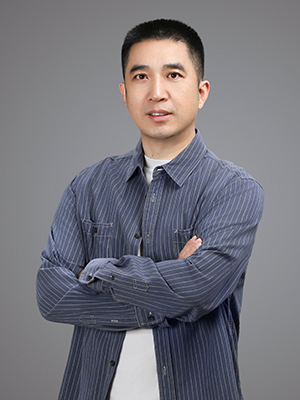
Ocean Yang bridges the gap between textile science and brand success. As the founder of Ljvogues, he leverages 10+ years of expertise in manufacturing high-performance period underwear and swimwear. Dedicated to transparency and safety, Ocean empowers B2B buyers to source verified, compliant, and innovative functional apparel from Shenzhen to the world.
Ljvogues is a Shenzhen-based manufacturer of high-performance menstrual and incontinence apparel. Empowering 500+ brands across 100+ countries since 2015 — with PFAS-free verified production, REACH/SVHC compliance, and ISO 9001 & 14001 certified precision.

 English
 العربية
 Français
 Русский
 Español
 Português
 Deutsch
 italiano
 日本語
日本語 한국어
한국어 Nederlands
 Tiếng Việt
 ไทย
ไทย Polski
 Türkçe
 ພາສາລາວ
 ភាសាខ្មែរ
 Bahasa Melayu
 Filipino
 Bahasa Indonesia
 magyar
 Română
 Čeština
 Српски
 हिन्दी
 فارسی
فارسی Svenska
 українська
 Ελληνικά
 Suomi
Suomi Հայերեն
 עברית
עברית Latine
 Dansk
Dansk Gaeilge
 Eesti keel
 Oʻzbekcha
 Azərbaycan dili
 Беларуская мова
 Български
 ქართული
 Lietuvių


 Ocean Yang


