



The fastest way to tell if a manufacturer can actually do what they say is to ask for third-party test reports from comparable past projects, before you place an order, instead of relying on their verbal confirmation that they "can meet the standard."* A factory that says yes to everything gives you no information. A factory that can produce evidence for something it has actually made gives you a real signal.
A brand asked me about this recently. They were deep in development calls with a new factory, discussing sampling details for a functional garment, and the factory's team sounded confident about everything — every question got a smooth, reassuring answer. The brand's own team liked the conversation. But something felt off, and they could not name it. They asked me: how do you tell the difference between a factory that genuinely can do what it says, and one that has simply gotten good at sounding like it can?
That is a fair question, and it comes up more than people admit.
I run a factory myself, so I am not neutral about factories in general. But after 11 years doing this, I have sat across the table from enough manufacturers — as a buyer of raw materials, components, and services myself — to know that fluent, confident answers are cheap to produce. What is not cheap to produce is a document from an outside lab that says a specific product, tested on a specific date, met a specific standard.
This applies whether you are sourcing period underwear, sport period shorts, incontinence underwear, period swimwear, or any other functional intimate apparel category. The verbal-confidence problem is the same regardless of product line.
Verbal confidence is not evidence, and every factory knows how to produce it
A factory saying "we can definitely meet that" or "we do this all the time" costs the factory nothing and tells the buyer nothing, because any factory — capable or not — can say the same sentence.
Think about what a sales or merchandising conversation actually optimizes for. The person on the call wants to keep the conversation moving toward an order. Saying "yes, we've done this" keeps things moving. Saying "we haven't tested that specific requirement before" risks losing the deal to a competitor who will say yes regardless. This incentive exists in every factory, including mine. It does not make the people dishonest. It means a verbal answer is not designed to carry proof — it is designed to keep the deal alive.
This is not a claim that most manufacturers are misrepresenting themselves. It is a description of what a spoken assurance can and cannot tell you. A confident answer tells you the person is good at sales conversations. It does not tell you whether the factory's engineers have ever actually built and verified the thing you are asking about.
The practical problem for a buyer is that a smooth conversation and a capable factory can look identical from the outside — right up until the point where you ask for something the smooth talker cannot produce.
Asking for a past project's third-party test report is the simplest filter available to you
Before you commit to an order, ask the factory to show you a third-party test report — from a lab such as SGS or Intertek — from a comparable project it has actually completed, and treat the response itself as part of your evaluation.
This is a narrow, specific ask. You are not asking the factory to test your exact product before you have even placed an order — that comes later, through your own trial process. You are asking whether the factory has, in its history, produced something similar enough that an outside lab has verified a result, and whether the factory can put that document in front of you without a struggle.
The reason this works as a filter has nothing to do with the report's content matching your product perfectly. It rarely will. Your product has its own specification, and even a strong factory's past reports may cover a different fabric blend, a different absorbency requirement, or a different construction. That is expected. What you are testing is something else entirely: does this factory have a real history of being tested by outside parties, and does it treat that history as something to share rather than something to avoid.
A factory that has actually built comparable products for other clients over the years typically has a drawer — sometimes literal, sometimes a shared folder — of past reports. Pulling one and sending it is routine. It may take a day to find the right one, it may come with a note explaining what it does and does not cover, but it arrives.
A factory that has been describing capability rather than demonstrating it tends to behave differently at this exact step. The conversation that was fluent on fabric, construction, and delivery timelines suddenly slows down. You get a reason why it is complicated, a promise to check with another department, or a redirection back to what the factory can tell you rather than show you. None of that proves bad faith. It does tell you that the confidence you heard earlier was not backed by a habit of producing evidence.
The request itself functions as a test, independent of what the report says
Asking for a report is a low-cost way to observe how a factory behaves when a claim needs to be backed up, and that behavior tells you more than the document itself.
I want to be direct about what this method does and does not do. It does not verify whether a specific report is genuine, whether it was issued for the exact product you plan to order, or whether the testing scope matches your requirements. Those are real questions, and they deserve their own process — one that goes beyond what this article covers. What this method does is much simpler: it gives you a quick read on whether a factory's confidence is backed by anything, before you spend time and money finding out the hard way.
Here is the pattern I would pay attention to, phrased as behavior rather than as a pass/fail test:
What the factory says | What you should ask for instead | What the response tells you |
|---|---|---|
"We can definitely meet that standard." | A third-party test report from a comparable past project | Whether the confidence is backed by documented history or is a conversational default |
"We do this kind of product all the time." | A report or project reference tied to that product type | Whether "all the time" reflects real repeated production or a general capability claim |
"Our quality is very stable, don't worry." | Any inspection or test documentation from a recent order | Whether quality claims are supported by records or only by reassurance |
"This is not a problem for us." | A specific example of when this exact issue came up before, with evidence | Whether the factory has faced this situation or is guessing it will go fine |
"Trust us, we know what we're doing." | A direct answer plus supporting documentation, even if imperfect | Whether the factory treats evidence as normal or as an unusual demand |
Notice that in every row, the useful signal is not just whether a document exists — it is how the factory responds to being asked. A factory that treats the request as a normal, expected part of doing business is behaving like an experienced supplier. A factory that treats the same request as an inconvenience, a delay tactic, or a reason to change the subject is telling you something about how it operates, independent of whether it eventually produces a document at all.
A missing report is not automatically disqualifying — a missing willingness to engage with the question usually is
A factory without a directly comparable report is not necessarily unqualified, especially in a newer or more specialized category, but a factory that avoids the question entirely is telling you something worth taking seriously.
I want to be fair to factories here, including ones that are not mine. There are legitimate reasons a manufacturer might not have a report that matches your exact ask. It may be genuinely new to a specific functional category — period swimwear and incontinence underwear, for example, are more specialized than basic apparel, and a factory with a strong general track record may simply not have tested that particular function before. It may have done testing through a client's own lab rather than an independent one. It may have relevant experience that was never formally documented because a past client did not require it.
None of that should be an automatic disqualifier. What should raise your concern is not the absence of a report — it is the absence of a straight answer about why it is absent. A factory that says "we haven't had a project that required that specific test, here's what we have done instead" is giving you something you can evaluate. A factory that deflects, delays without explanation, or keeps circling back to verbal reassurance is giving you nothing to evaluate at all.
The point of asking is not to collect paperwork for its own sake. It is to move your decision-making away from "this conversation felt reassuring" and toward "this factory produced something, or gave me an honest account of why it could not." That shift, on its own, filters out a meaningful share of the risk before you ever place an order.
Make the report request a standard step, not a special demand
Asking for a comparable third-party test report should be a normal part of every new-factory conversation, applied the same way regardless of product category or how confident the factory sounds.
The easiest mistake to make here is only asking for evidence when something already feels wrong. By the time a conversation feels wrong, you have often already spent weeks on it. The better habit is to make this request early and routinely, the same way you would ask about MOQ or lead time — not as an accusation, but as a standard question every serious factory should expect.
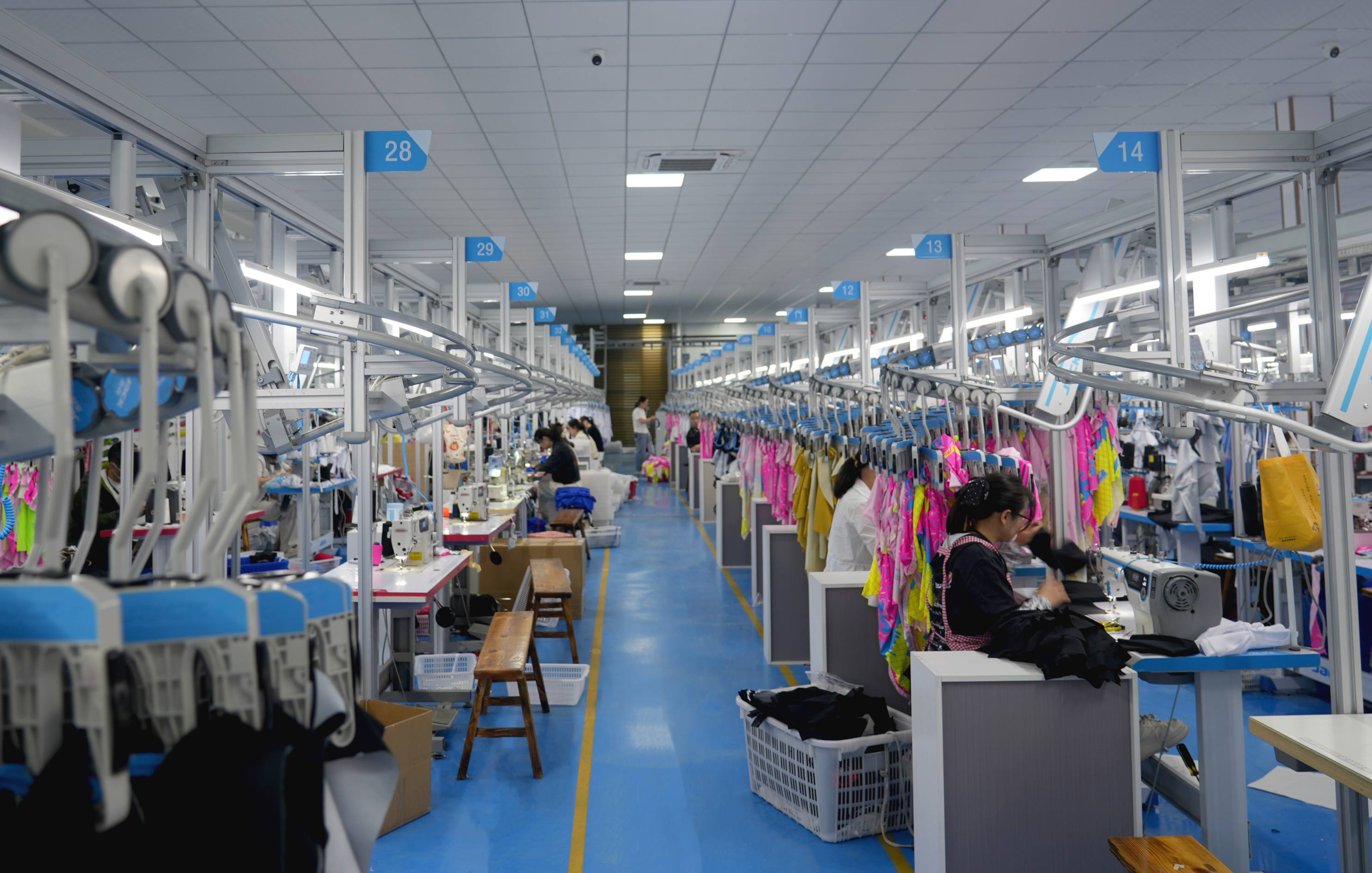
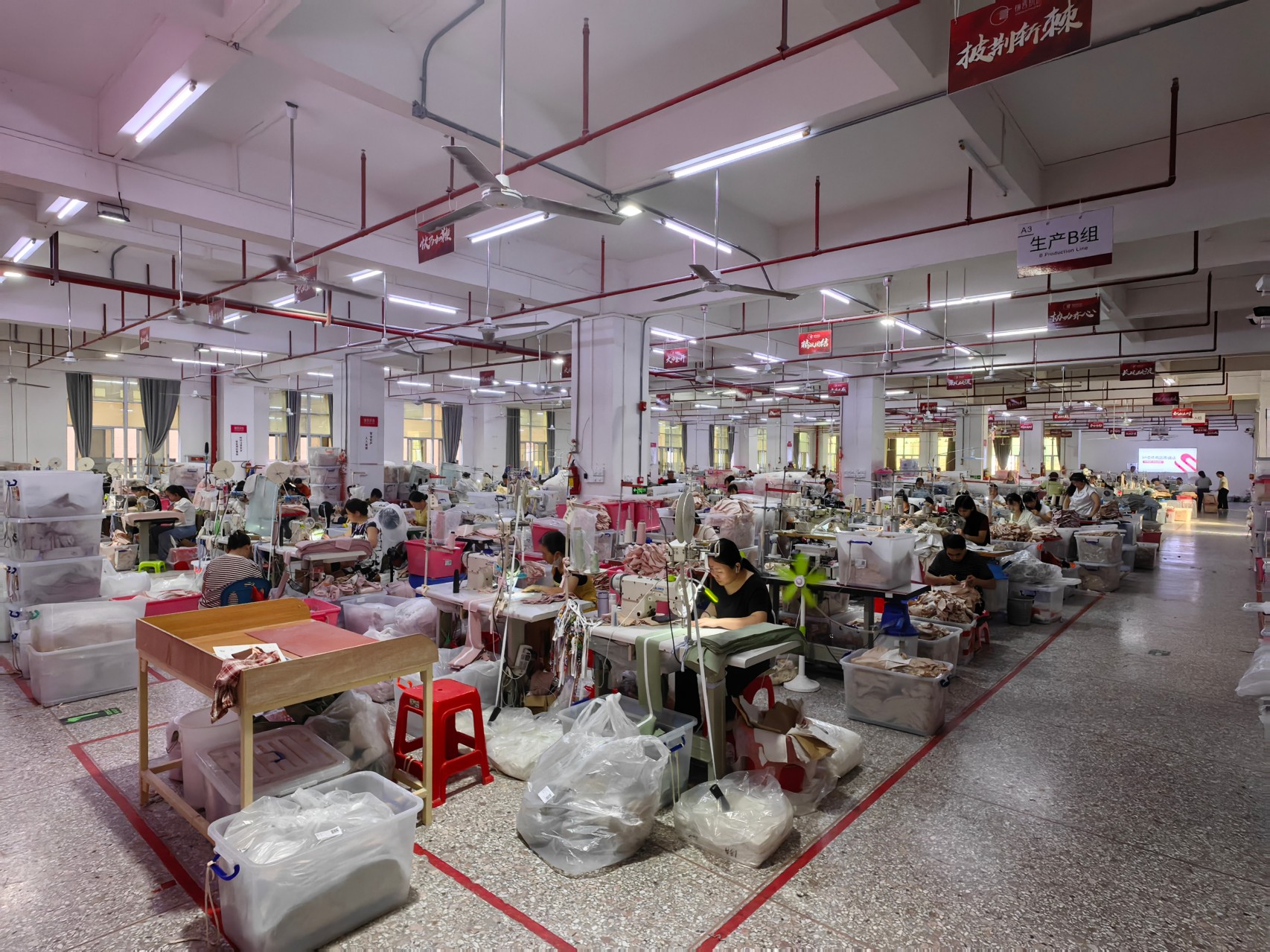
At Ljvogues, we work from an 8,000-square-meter facility in Longgang, Shenzhen, with 14 sewing lines, more than 200 employees, and a 12-person R&D engineering team, and our standard MOQ is 300 pieces per SKU. I mention this not to argue that scale equals credibility — it does not, on its own — but because a factory of any real size has usually accumulated some testing history, and should be able to talk about it plainly instead of only talking around it.
If a manufacturer answers every technical question with total fluency but goes quiet, vague, or evasive the moment you ask for a document, you have learned something important before committing a single unit of production. That is a cheap lesson compared to the alternative.
FAQ
What should I do if a factory says it has no past third-party test reports at all?
Ask why, and listen to the specific answer. A factory new to a specialized category may genuinely lack a matching report. Treat a clear, specific explanation as a reasonable answer, and treat a vague or evasive one as a warning sign regardless of how confident the rest of the conversation sounded.
Does having a third-party report mean the factory is definitely capable of making my product?
No. A report from a past project shows the factory has been tested by an outside party before and is willing to share that history. It does not confirm the report matches your exact specification or that the factory can repeat the result for your product — that is a separate validation step beyond what this article covers.
Should I ask for a report before or after getting a quote?
Ask early, ideally alongside your first technical questions. Asking before you are emotionally invested in a promising quote keeps the request neutral and routine, rather than something that feels like a late-stage accusation.
Is it rude to ask a new factory for test reports before placing an order?
No. A serious, experienced factory expects this question and will not be offended by it. Any hesitation to simply engage with the request, as opposed to hesitation about the report's exact content, is itself useful information.
Does this apply differently across period underwear, sport period shorts, incontinence underwear, and period swimwear?
The underlying behavior to watch for is the same across categories. What changes is how likely a factory is to have a directly matching report, since more specialized functional categories naturally have a smaller pool of manufacturers with deep documented history in that exact area.