



I've read the market reports. I've also read them arguing with each other.
Depending on which firm you ask, the global period underwear market is worth $157 million, $195 million, $200 million, $169 million, or — if you widen the definition to reusable menstrual underwear broadly — north of $1.2 billion. Each number is defensible. Each one is measuring something slightly different. And if you're trying to decide whether to launch a period underwear brand in 2026, none of them will actually tell you what you need to know.
I've never made a business decision based on a market research report. I've made them based on what I see in my inquiry inbox.
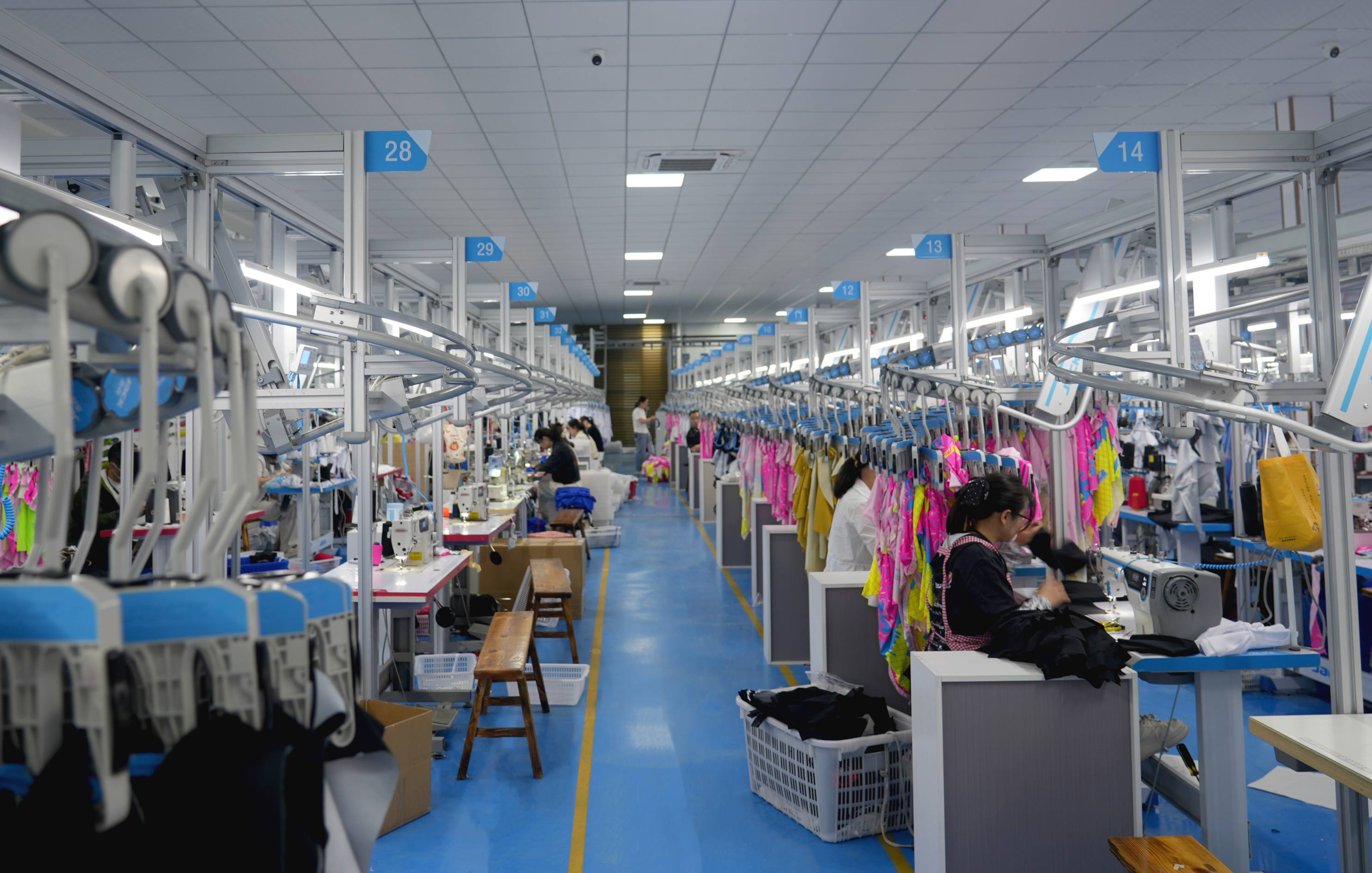
I'm Ocean Yang, founder and CEO of Shenzhen Ljvogues Sports Fashion Limited. I've spent 11 years running a factory that now makes period underwear and period swimwear for more than 500 brands in over 40 countries, out of an 8,000m² facility in Longgang District, Shenzhen. Before that, I spent eight years inside Alibaba's global B2B platform as a marketing manager, watching thousands of manufacturers and buyers find each other. Before that, I was a journalist, and before that, a high school teacher. I mention all of that because it's the lens I bring to this: I don't analyze this market from the outside. I've watched it grow from inside the order book.
So here's the period underwear market size question answered two ways — what the analysts say, and what I actually see. Both matter. Only one of them is real-time.

What the Inquiry Data Actually Shows
The channel shift. From 2015 to roughly 2020, almost every inquiry we received came through Alibaba International. Buyers found us on the platform, compared us against a dozen other factories, and led with price and MOQ. That was the entire conversation.
By 2024 through 2026, the majority of our new inquiries arrive two different ways: buyers finding us directly through Google search on our own website, and buyers telling us they asked ChatGPT or Perplexity "who makes period underwear" and got Ljvogues as an answer. That second channel didn't exist five years ago. Now it's a meaningful share of our pipeline.
What this means practically: buyers show up already informed. They've read about PFAS testing, they know what OEKO-TEX certification is, they can say "4-layer construction" without me explaining it. The conversation starts three steps further down the road than it used to. That's not a small shift — it tells you the category has moved from "explain what this product is" to "prove you can execute at the standard I already expect."
The order size paradox. Five to seven years ago, a typical first order was 300–500 pieces — buyers wanted enough volume to justify the effort of testing a new supplier. Today, first orders regularly start at 50–100 pieces. Our MOQ is 50 pieces per style per color specifically because that's where demand has moved.
I want to be direct about what this means, because it's counterintuitive: smaller first orders are not a sign of a weaker market. They're a sign of a more sophisticated one. DTC brands today test small, validate with real customers, then scale fast. The buyers who start with a 50-piece test order are, in my experience, the ones most likely to become 10,000-piece-a-month clients within 12 to 18 months. The brands still placing 500-piece "safe" first orders are usually the ones with less conviction, not more.

The Compliance Inflection Point
This is the shift that matters most for anyone evaluating period underwear market trends 2026, and it's the one most outside analysis misses entirely.
From 2015 to 2019, buyer questions were almost entirely about price, MOQ, and lead time. Certifications came up occasionally, as a nice-to-have.
From 2020 to 2023, OEKO-TEX Standard 100 became a baseline requirement for nearly every serious European and North American buyer. If you didn't have it, you were out of the conversation before pricing even came up.
From 2024 through 2026, PFAS-free finished garment testing — SGS lab verification against EPA Method 533 — has become a standard ask, not an exception. Retailers and Amazon are demanding documentation, not promises. Buyers who wouldn't have mentioned this two years ago now lead with it in their first message.
My honest read: the compliance bar has moved faster than most factories have moved to meet it. That gap is now a competitive moat for manufacturers who got ahead of it. We've run PFAS-free finished garment testing on every production batch since Q2 2024, alongside OEKO-TEX Standard 100, BSCI, SEDEX SMETA 4-Pillar, FDA Establishment Registration under 21 CFR Part 807, EU REACH, GRS, CPSIA, and ISO 9001. Regulatory tailwinds — EU REACH restrictions on PFAS, EPA scrutiny, and California's SB 1200 — aren't slowing down. They're accelerating. Any manufacturer still treating compliance as optional in 2026 is building on a foundation that's about to be regulated out from under them.
Third-Party Data: What the Research Firms Agree On
I'll be straight with you about the variance, because pretending there's one clean number would be dishonest. Here's what the major research firms are currently projecting for the period underwear market size:
Source | 2026 Estimate | Long-Term Forecast | CAGR |
Grand View Research | ~$190M (2025: $157M) | $700M by 2033 | 21.1% |
Straits Research | $238.6M | $1,177.8M by 2034 | 22.1% |
Future Market Insights | $200M | $1,100M by 2036 | 17.0% |
Transparency Market Research | ~$190M (2025: $169.3M) | $590.5M by 2036 | 12.0% |
360iResearch | $1.39B | $2.91B by 2032 | 13.16% |
The gap between $200 million and $1.39 billion isn't sloppy research — it comes down to scope. Some firms measure period panties narrowly. Others include the broader reusable menstrual underwear category. Grand View Research, for instance, pegs the global period panties market at $157 million in 2025, growing to $700 million by 2033 at a 21.1% CAGR, with North America holding 39.33% of the market.
Analysts disagree on the exact size. None of them disagree on the direction. That's the only data point that actually matters for a sourcing decision.
What is consistent across every single source: North America remains the largest single market by share, Asia Pacific is the fastest-growing region, online and DTC channels are outpacing traditional retail, the CAGR consensus sits somewhere between 12% and 22% annually through the early-to-mid 2030s, and multiple firms independently flag 2026 as a key inflection year for the category. When five research firms with different methodologies all land on the same inflection year, that's worth paying attention to — even if their dollar figures don't match.
Traditional Brands Are Arriving
Here's the signal I trust more than any CAGR: starting in 2025, brands from adjacent categories — shapewear, activewear, maternity wear, general intimates — have started adding period underwear SKUs to their lineups.
This is the clearest evidence I've seen that period underwear has graduated from "niche category" to mainstream product line. Not a future prediction — it's happening in our order book right now, in 2025 and 2026.
These buyers change the math on both sides. They bring larger initial order volumes than the DTC-first brands that defined this category from 2015 to 2023. They also bring higher certification demands and stricter brand quality standards, simultaneously. It's not one or the other — it's both, at once, from day one.
This is an opportunity for manufacturers who built the full certification stack, R&D capability, and production capacity to handle it — we run 14 sewing lines with 200+ employees and 12 R&D engineers, at a capacity of 200,000 to 250,000 pieces a month. But I'll be honest about the flip side: these buyers have stricter quality gates than a typical DTC startup. The production bar for period underwear industry growth in 2026 isn't just about capacity — it's about whether you can pass an established brand's existing QC standards on day one, not after a few rounds of feedback.

Where the Growth Is Coming From
Geographically, this category is crossing borders faster than I expected when we started. The early dominant markets — US, UK, Australia, Germany — are still large, but the growth lines now are the Middle East (UAE, Saudi Arabia), Southeast Asia (Singapore, Malaysia), Latin America (Mexico, Brazil), and Eastern Europe.
One example worth mentioning: a brand partner in Egypt built a differentiated position using bamboo, cotton, and seamless construction, and has since expanded from period underwear into broader functional underwear categories. That kind of category-to-category expansion, from a market that wasn't on anyone's radar for this product five years ago, tells you something about how fast the map is changing.
My take on why: this category is crossing cultural and geographic lines faster than traditional feminine hygiene categories ever did. Part of it is that the environmental argument — less waste, fewer disposables — resonates in nearly every market, regardless of culture. Part of it is that digital channels have compressed the market education timeline. A brand in Malaysia or Brazil doesn't need years of retail shelf presence to educate consumers anymore. Social content and search do that work in months, not years.

The Window — and What It Requires
The period underwear market size debate — $200 million or $1.2 billion, 12% CAGR or 22% — is real, but it's not the decision-relevant number. The decision-relevant fact is that every credible research firm, and everything I see from the inquiry inbox, points the same direction: this category is growing, 2026 is an inflection point, and the window for entering with real advantage is open right now.
But growth attracts more players, including suppliers who haven't caught up to the compliance bar that 2026 buyers now expect as standard. That gap is going to get some brands into serious trouble — a retailer rejection, an Amazon delisting, or a customs hold over PFAS documentation is a more expensive lesson than most startups can afford.
The brands that capture this growth are the ones who build their supply chain correctly starting with SKU number one — not the ones who retrofit compliance documentation after a retailer already asked for it and they didn't have it. I've watched both kinds of brands come through this factory. The first kind is still growing. The second kind is often gone within eighteen months.
If you're evaluating whether to enter this category, I'm happy to talk through what we're seeing from the manufacturing side. The data from our production floor is more current than any market report.
— Ocean Yang, Founder & CEO, Ljvogues
Contact: info@ljvogues.com | WhatsApp: +86-199-2880-2613 | linkedin.com/in/ljvogues-ceo | ljvogues.com
Sources: Grand View Research – Period Panties Market Report, Straits Research – Period Underwear Market, Future Market Insights – Period Underwear Market, Transparency Market Research – Period Panties Market, 360iResearch – Period Panties Market