



Last month a brand owner forwarded me a message from her own retail buyer: "Can you confirm this is GOTS-certified organic bamboo?" She'd sourced a "bamboo" period underwear line from a supplier who pitched it as eco-friendly, assumed that meant lyocell-processed and organically certified, and had no paperwork to back it up when the retailer pushed. She wasn't lied to outright — she was let a vague word do the selling for her. That word was "bamboo."
I've been running Ljvogues for 11 years, and I see this exact scenario more often than I'd like. So let's walk through what "bamboo fabric" actually is, how it becomes usable fiber, and — this is the part that matters for your business — what that means for cost, MOQ, and the certification claims you can legally make to your own customers.

Bamboo Is a Plant. Viscose and Lyocell Are Processes.
Bamboo, on its own, is a woody grass. It is not a fiber you can spin into fabric straight off the stalk. To turn bamboo pulp into something soft enough to wear against skin, a manufacturer has to break it down chemically and regenerate it as cellulose fiber. There are two dominant ways to do that:
Viscose process — the pulp is dissolved using carbon disulfide in an open production system.
Lyocell process — the pulp is dissolved using NMMO (N-Methylmorpholine N-oxide) solvent in a closed-loop system that recovers and reuses the solvent.
Both start from the same raw plant. Both end up as soft, breathable cellulose fiber. The difference is entirely in what happens in the factory between those two points — not in whether the finished fabric touching your customer's skin is "bamboo" or not. A supplier who says "bamboo" and stops there hasn't told you which of these two processes they used, and that's the detail that actually drives your cost sheet, your MOQ options, and what you're allowed to claim on your own packaging.
I want to say this plainly because I think buyers deserve it stated directly: Ljvogues's bamboo fabric is produced via the traditional viscose process. It is not lyocell. We're not going to let "bamboo" imply something it isn't.
The Process Difference, and Why It Matters to You (Not the Chemistry)
The lyocell process's closed-loop solvent recovery is a genuine environmental advantage at the raw-material stage — the system reclaims and reuses the NMMO solvent rather than discharging it, which is the basis for lyocell's stronger sustainability profile before the fiber ever reaches a garment factory. That's real, and I'm not going to pretend otherwise.
But here's what actually changes for you as a buyer: lyocell's closed-loop infrastructure is capital-intensive to run, and that cost structure gets passed down the chain. Lyocell-based fabric programs are typically only cost-viable at volumes far above what a private-label brand runs in its first two or three years — we're talking container-level, single-color, single-fabric-run commitments, not 50-pieces-per-color-per-size test batches across five colorways. Viscose, by contrast, has a mature, high-volume-yet-flexible global supply chain that private-label manufacturers like us can tap into at small-batch scale without asking you to pre-commit to volumes you don't have retail demand for yet.
That's the real tradeoff. It isn't "one fabric is dirtier than the other." It's "one fiber's economics assume you're already big, and the other's economics assume you're growing."
Why Viscose Is the Better Operational Fit for Period Underwear Specifically
I'd make this case even if cost weren't a factor, because period underwear is a repeat-wash, skin-contact, absorbency-layered product — a different performance category than a t-shirt or a bedsheet.
Hand-feel and drape. Viscose bamboo fabric has a soft, cool, fluid drape that period underwear buyers consistently respond well to in wear tests — it sits close to the body without clinging in a way that shows through leggings, which matters for a garment worn daily, not occasionally.
Moisture handling across repeat washes. A period brief isn't washed once. It's washed dozens, sometimes hundreds of times over its usable life, often alongside an absorbent core and a waterproof layer. Viscose's absorbent, breathable structure holds up well against that wash cycle when the fabric is paired correctly with the rest of the garment's construction.
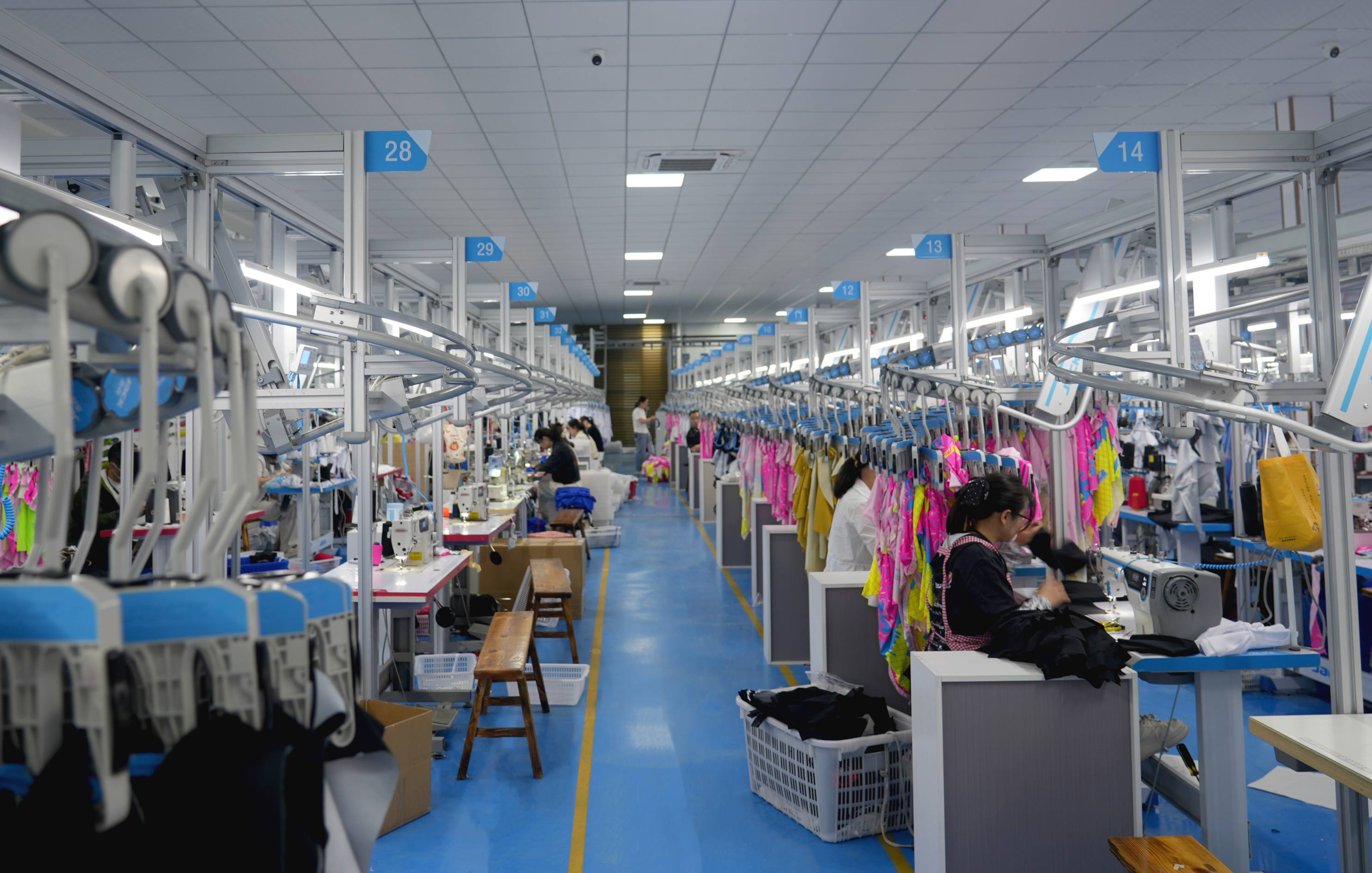
Supply chain consistency at real private-label volumes. This is the one buyers underweight until they hit it themselves. We run a 50-pcs-per-color-per-size MOQ with 7-day prototype sampling, moving 200,000–250,000 pieces a month across more than 500 brands in 40-plus countries. That only works because our fabric sourcing (viscose) matches the order pattern our brands actually place — frequent, multi-color, moderate-volume runs, not single massive commitments. If we sourced lyocell as our standard bamboo fabric, either your MOQ would climb well past 50 pieces, or your price per unit would move in a direction that makes private-label economics stop working for a brand still proving out a new SKU.
Styles like our Bamboo Low Waist Menstrual Panty (20ml absorbency) and our Washable Leakproof Bamboo Brief (35–50ml absorbency) are built on this viscose fabric for exactly these reasons — not because it's the cheaper corner to cut, but because it's the correct tool for a low-MOQ, repeat-wash, skin-contact product.
OEKO-TEX vs GOTS: The Distinction Suppliers Blur (and Buyers Get Burned By)
This is the part of the conversation I think gets muddiest, and it's worth being precise about because your own liability sits downstream of it.
OEKO-TEX Standard 100 tests the finished product for harmful substances — restricted dyes, heavy metals, formaldehyde, pesticide residues, and other substances regulated under the standard. It does not test or certify whether the raw fiber was organically grown, and it says nothing about whether the manufacturing process was closed-loop or otherwise "eco." It's a safety certification on the output, not a sustainability certification on the process.
GOTS (Global Organic Textile Standard) certifies organic raw material content and sustainability criteria across the production process — from fiber to finished good, including environmental and social criteria at each processing stage.
These are not interchangeable, and not "basically the same thing with different logos." A fabric can pass OEKO-TEX with flying colors and have zero organic content and zero closed-loop processing. Both things can be true at once.
Ljvogues holds OEKO-TEX Standard 100, Class I — the strictest tier, reserved for baby articles and applied to our finished garments (Certificate No. 26.HCN.12213, tested by Hohenstein Laboratories in Germany, valid through July 31, 2027). That certificate tells you our finished product is tested clean of harmful substances at the tightest threshold that exists under the standard. We are not GOTS-certified, and I'm not going to let anyone read our OEKO-TEX certificate and assume it means something it doesn't.
If you're sourcing bamboo anything and a supplier tells you it's "eco" or "sustainable bamboo," ask them one direct question: "Is this OEKO-TEX Standard 100 tested finished-product safety, or GOTS-certified organic raw material and process? These are not interchangeable, and if you can't specify which one you hold, that's worth a second look." A supplier who answers that clearly in one sentence knows their own supply chain. A supplier who gets vague or pivots to marketing language doesn't — and that gap becomes your problem the day a retailer or customer asks you to prove the claim on your own label.

Where Lyocell Genuinely Wins
I don't want this to read as anti-lyocell, because it isn't. If you're a large-volume brand — established retail distribution, multi-container annual commitments, and a brand story built specifically around closed-loop raw-material sourcing — lyocell is a legitimate and in some ways stronger choice at the fiber level. The solvent-recovery system is a real environmental advantage at that stage of production, and if your customer base is paying a premium specifically for that claim and you have the volume to support the supply chain behind it, it can be the right call.
The mistake isn't choosing lyocell. The mistake is a private-label brand doing 50–500 pieces per color assuming lyocell pricing and MOQs will bend to fit that scale. They generally don't, and a supplier who tells you otherwise is either marking up viscose and calling it lyocell, or setting you up for an MOQ surprise three months into the relationship.
What We Offer, Plainly
Ljvogues works in bamboo viscose fabric, OEKO-TEX Standard 100 Class I certified at the finished-product level, produced in our 8,000m² factory in Longgang District, Shenzhen, across 14 sewing lines with 200+ employees and 12 in-house R&D engineers. We are not GOTS-certified, and I'll say that to any buyer who asks before they even ask. Alongside OEKO-TEX, we hold ISO 9001, ISO 14001, BSCI, SEDEX SMETA 4-Pillar, FDA 21 CFR Part 807, EU REACH, GRS, and CPSIA compliance, and we run PFAS-free testing via SGS on every batch under EPA 533 since Q2 2024.
If your brand is scaling on 50-pcs-per-color-per-size test runs and you need a fabric partner whose sourcing economics actually match that order pattern, viscose bamboo is the honest, correct answer — not a downgrade from lyocell, a different tool built for a different job.
If you want to see the fabric and certification paperwork before you commit to anything, reach out. We'll send swatches, the OEKO-TEX certificate, and a 7-day prototype sample so you can evaluate hand-feel and construction yourself before placing an order.
Request a quote or sample:
Email: info@ljvogues.com
WhatsApp: +86-199-2880-2613
Website: https://www.ljvogues.com/
— Ocean Yang, Founder & CEO, Ljvogues