



I get some version of this question at least once a week from brand owners building out a period underwear line: "Which fabric is best — cotton, bamboo, modal, or mesh?" It's the wrong question, and I tell people that directly, because it assumes the four fabrics are competing for the same job. They're not. Cotton isn't trying to be modal. Mesh isn't trying to replace bamboo. Each one is doing a different job inside your product line, and the buyers who get this wrong usually pick one fabric, put it on every SKU, and then wonder why their premium line doesn't feel premium or their "breathable" line still gets heat complaints.
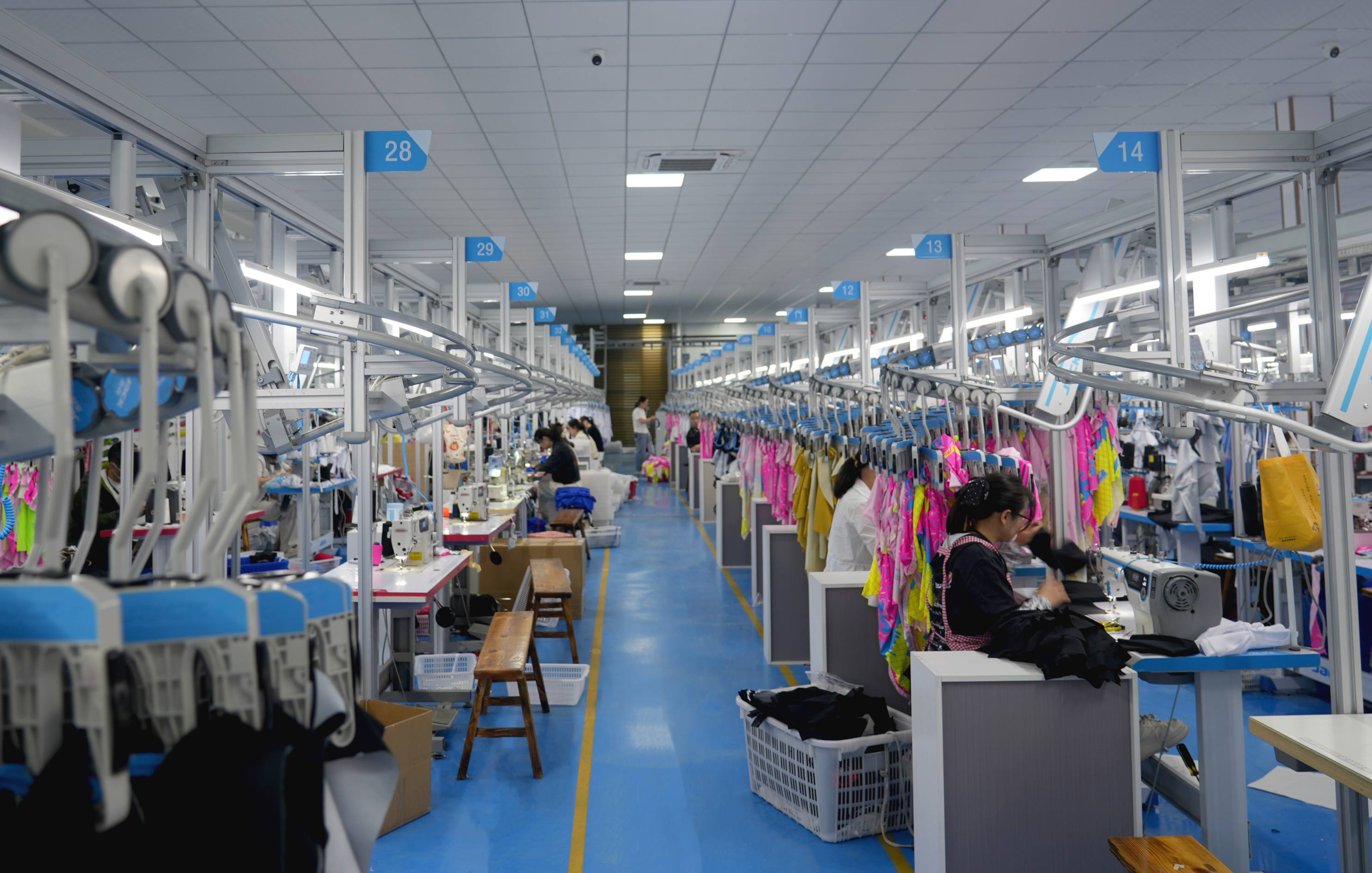
So let me answer the question the way I'd answer it if you were sitting across from me at our Longgang factory going through your line plan.

The fabric decision follows the SKU's job, not your personal preference
Here's the direct version: cotton earns customer trust because nobody needs it explained to them, bamboo viscose earns you an eco-positioning story, modal earns you a premium upsell through hand-feel, and mesh earns you comfort in hot climates and active use — and you choose based on which job that specific SKU needs to do, not which fabric feels nicest to you personally in a swatch book.
This is the same tier-based thinking we used in our , where I laid out how to group your styles by market tier instead of treating every SKU like it needs to be everything at once. Fabric selection is really an extension of that same logic — you're not choosing "the best fabric," you're staffing four different roles on your roster.
Cotton: the trust play for your first daily SKU
Cotton's core job is removing doubt — it's the fabric customers already trust against sensitive skin without you having to explain anything.
If you're launching your first period underwear SKU and you don't yet have a customer base that knows your brand, cotton is almost always my recommendation for the entry point. Nobody has ever emailed a brand asking "is cotton safe against my skin" — that education cost simply doesn't exist. Customers already have a decade of underwear-buying history telling them cotton is fine. That matters more than people give it credit for, because every other claim you make on the product page (leak-proof, absorbent, comfortable) is competing for attention with something your customer has to newly believe. Cotton is the one variable you don't have to sell.
We build this into our P10002 Low Waist Cotton Period Panty — 20ml absorbency, sizes S through 2XL, six colors. It's a deliberately unglamorous SKU, and that's the point. It's the daily-driver, and daily-drivers should not require a debate.
Bamboo viscose: the eco-positioned everyday alternative
Bamboo viscose's core job is giving sustainability-conscious buyers a softer, cooler alternative to cotton with a story to tell — but the sustainability story has real limits you need to know before you lean on it.
Bamboo viscose has a genuinely nice hand-feel — soft, cool to the touch, breathable, and it drapes a little better than cotton. For a brand whose customer base cares about "natural" or "eco" positioning, it's a strong second SKU or an alternative core fabric to cotton. But I have to be straight with you here the way I was in our dedicated piece on this: what we produce is traditional viscose-process bamboo — not lyocell, and not GOTS-certified. covers the full explanation of what that production difference actually means for your marketing claims. Here, I'll just say it plainly once: if your buyer is expecting closed-loop lyocell or GOTS paperwork, bamboo viscose is not that fabric, and you should market it as "bamboo-soft, breathable, eco-positioned" rather than "zero-impact sustainable."
We use bamboo viscose in two current styles: the P10007 Bamboo Low Waist Menstrual Panty (20ml, Black/Green, S-2XL) and the P10012 Washable Leakproof Bamboo Brief (35-50ml, Black) for higher-flow days.

Modal: the premium hand-feel upsell
Modal's core job is making a SKU feel like an upgrade the moment a customer touches it — that's what justifies charging more for it.
Modal is a regenerated cellulose fiber, same broad family as viscose and bamboo, but it's typically spun from beech or spruce wood pulp rather than bamboo pulp, and the process gives you a noticeably smoother, silkier hand-feel than either cotton or standard viscose. It also absorbs moisture well and holds its shape and drape better over repeated washes, which matters a lot for underwear that customers are washing dozens of times over its life. In the intimatewear world, modal has built a reputation as a step above standard fabrics in perceived quality — it's the fabric that makes a customer think "this feels expensive" without you having to say it in the copy.
That's exactly how I'd position it in your line: modal is your justification for a higher price point on a specific SKU, not your everyday fabric. You don't need it across the whole catalog — you need it on the one or two styles where you want a customer picking up the product and immediately feeling the difference from a

22 pair.
One honest note here: modal isn't in our current standard catalog the way cotton, bamboo, and mesh are — it's a fabric we develop on request for brands that want a dedicated premium SKU. If modal is the play you want, tell us during sampling and we'll build it into your prototype rather than you discovering after the fact that it's a custom request.
Mesh: the breathability and performance fix
Mesh's core job is solving heat retention, which is the single most common complaint customers have about period underwear generally.
Whatever fabric sits against the skin, heat and moisture buildup is the recurring frustration in this category — it's the complaint I hear most often from brands reviewing customer feedback. Mesh solves this directly through open-weave construction combined with high elasticity, so air actually moves instead of getting trapped. That makes it the right call for two specific situations: hot-climate markets where customers are dealing with heat most of the year, and active/athleisure-positioned SKUs where the customer is moving, sweating, and needs the underwear to keep up.
Our P10008 Breathable Mesh Period Panty covers a 20-150ml absorbency range with high-elastic construction across six colors — that range is intentional, because mesh works as both a light-flow performance piece and a heavier-flow option once you factor in the elasticity and airflow. Many of our brand partners run it as a "cooling" variant alongside their cotton or bamboo core line rather than as a standalone collection, which I think is the smarter way to use it.
Comparison table
Fabric | Hand-Feel / Key Trait | Best-For Product Tier | Ljvogues Style(s) Using It |
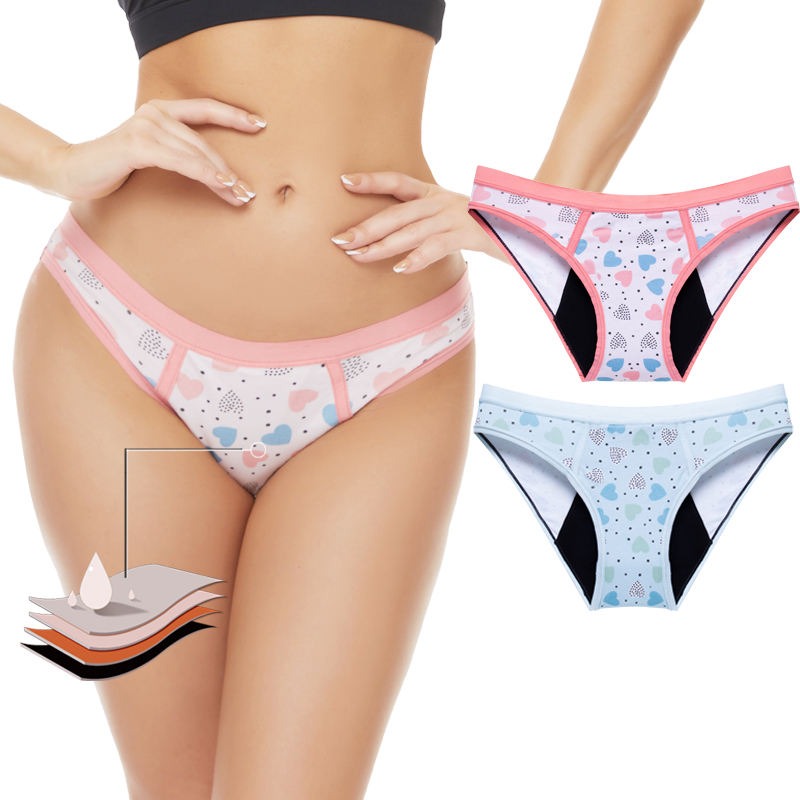
Cotton | Familiar, breathable, trusted against sensitive skin | Entry / daily-driver, trust-building first SKU | P10002 Low Waist Cotton Period Panty (20ml, S-2XL, 6 colors) |
Bamboo viscose | Soft, cool, good drape; viscose-process, not lyocell, not GOTS-certified | Everyday eco-positioned alternative to cotton | P10007 Bamboo Low Waist Menstrual Panty (20ml, S-2XL); P10012 Washable Leakproof Bamboo Brief (35-50ml) |
Modal | Silky, smooth hand-feel, strong moisture absorption, holds shape/drape | Premium upsell SKU, higher price justification | Custom-developed on request (not a current standard catalog fabric) |
Mesh | Open-weave, high-elastic, solves heat retention | Performance/active wear, hot-climate markets, cooling variant | P10008 Breathable Mesh Period Panty (20-150ml, 6 colors) |
How to combine fabrics across a starter line
You do not need all four fabrics on day one, and I'd actively discourage it. Most of the 500+ brands we work with start with one trust-building core — cotton or bamboo, depending on whether their audience skews traditional or eco-conscious — get that SKU selling consistently, and only then layer in differentiation.
The sequencing I recommend most often: launch with cotton (or bamboo if your brand identity is explicitly eco-first) as your daily-driver core. Once you have repeat customers and real sales data, add mesh as a "cooling" or performance variant to pick up the climate/active segment you're currently missing. Modal comes last, as a deliberate premium SKU once you have enough brand trust that customers will pay more without needing convincing — modal sells on feel, and feel only sells once someone already trusts your brand enough to buy sight-unseen. This mirrors the phased approach we walked through in the , and it pairs with the leak-protection layer decisions covered in our — fabric and waterproof layer are two separate decisions that both roll up into the same SKU tier logic.
Sampling before you commit
Every fabric decision in this article should get validated with your hands before it goes into a purchase order — that's just standard practice, not a hedge. Our MOQ is 50 pieces per color per size, and we run prototype samples in 7 days, so you can feel the actual hand-feel difference between bamboo and modal, or test mesh breathability yourself, before committing to a production run. All of it — cotton, bamboo, modal, mesh — ships under our OEKO-TEX Standard 100 Class I certification (Certificate No. 26.HCN.12213, Hohenstein Laboratories Germany, valid through July 31, 2027), so the safety baseline doesn't change no matter which fabric you pick.
If you're mapping out which fabric goes on which SKU for your next line, , and my team and I will help you think through the tiering before you sample anything. Reach out directly at info@ljvogues.com, WhatsApp +86-199-2880-2613, or through https://www.ljvogues.com/.
— Ocean Yang, Founder & CEO, Ljvogues