


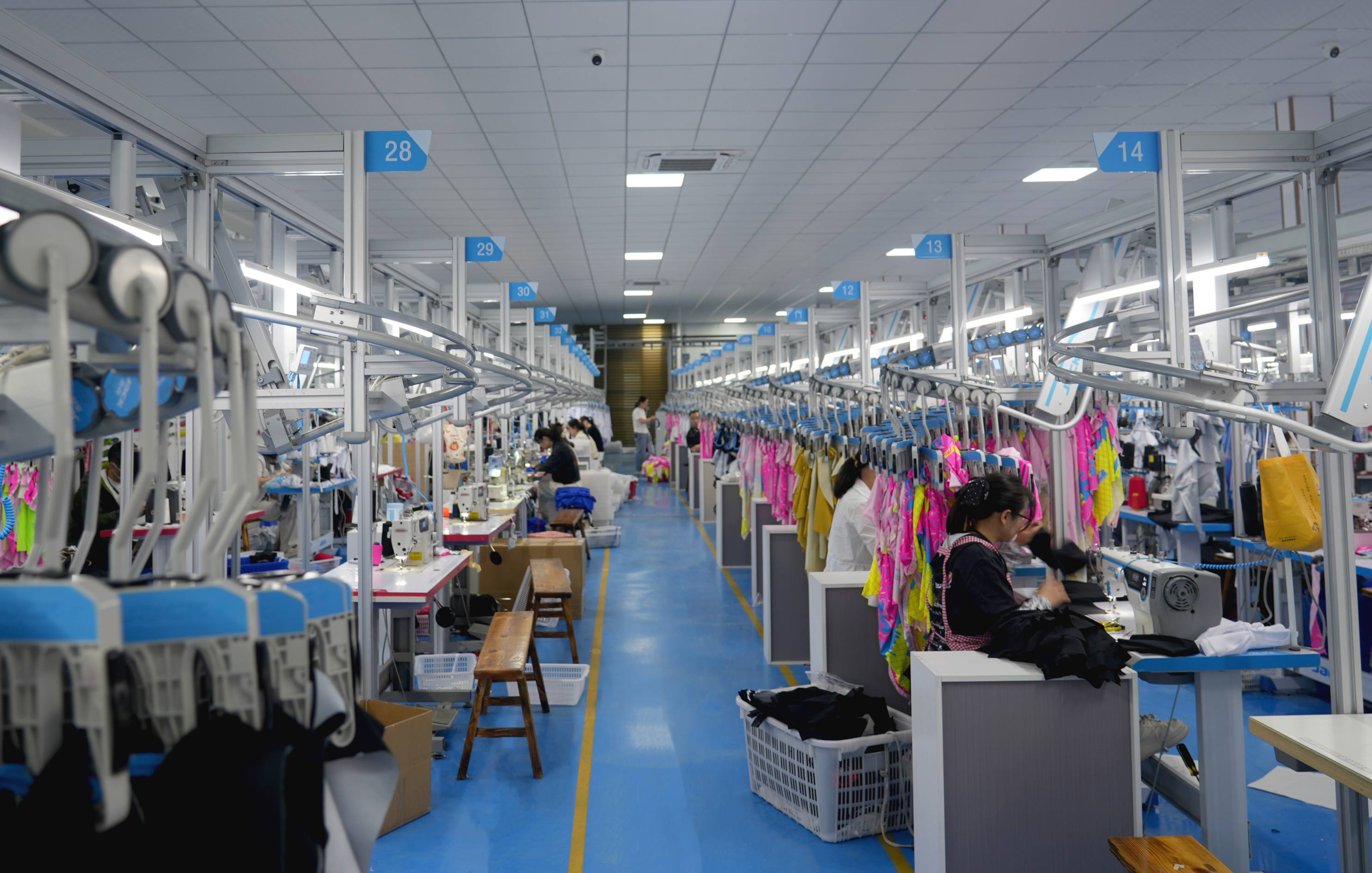

Most brands that come to me about entering the period underwear category make the same mistake before they even send a sample request: they treat it like adding another SKU. It isn't. Period underwear is the most technically demanding intimate garment a woman will wear, and the cost of getting it wrong — a leak, a PFAS exposure, a seam failure at wash number 12 — lands directly on the person wearing it. That's a different accountability than a slightly off-color sports bra.
I've been running the Ljvogues facility in Longgang District, Shenzhen for 11 years. We've worked with 500+ period care brands across 40+ countries. I've seen who succeeds at this and who burns through their first production run and quietly retreats. The difference is rarely budget. It's almost always preparation and sourcing judgment. This guide is my attempt to give you both.

Why This Category Is Harder Than It Looks
You already know how to run a brand. You understand MOQs, tech packs, lead times, landed costs. What trips up even experienced operators when they first ask how to start a period underwear business is the technical and regulatory complexity sitting underneath the product.
Material performance is non-negotiable. A period underwear must manage moisture in four distinct zones simultaneously — absorption, wicking, odor control, and leak barrier. Each zone requires different fabric properties, and they have to coexist in a 2–4 layer laminate construction that still feels comfortable against skin. You can't compromise one zone to simplify another.
The regulatory environment is moving fast. PFAS — per- and polyfluoroalkyl substances — were widely used in moisture barriers. They're now restricted or banned in California (AB 1817, effective 2024), and similar legislation is advancing in the EU. Any manufacturer who can't show you third-party lab results on finished garments — not raw fabric rolls, finished garments — is not a partner I'd trust with your brand name. At Ljvogues, we've been PFAS-free since Q2 2024, verified by independent third-party labs on every production run.
Performance claims require verification. Absorption capacity ranges from 15–45ml for period panties and 20–30ml for period swimwear. Hydrostatic pressure resistance — the waterproof barrier — should pass a 10,000mm H₂O pressure test. Wash durability should hold through at least 50 wash cycles without degradation. These are testable numbers. If a supplier gives you vague reassurances instead of test data, move on.
What Makes Period Underwear Different at the Manufacturing Level
This is the conversation most brands don't have until something goes wrong. Here's the honest comparison:
Specification | Regular Underwear | Period Underwear |
Layer construction | 1–2 layers | 3–5 layers (top wicking layer, absorption core, TPU barrier, outer fabric, optional gusset reinforcement) |
Seam type | Standard lockstitch | 4-needle 6-thread flatlock — critical for preventing channel separation |
Barrier bonding | Not applicable | TPU thermal bonding at 18–25 microns — too thin and it leaks, too thick and it stiffens |
Absorption testing | Not applicable | 15–45ml capacity verified per batch |
Hydrostatic resistance | Not applicable | 10,000mm H₂O pressure test |
Wash durability standard | 10–15 cycles typical | 50-cycle minimum |
Regulatory compliance | Basic textile standards | OEKO-TEX Standard 100, PFAS-free verification, FDA Establishment Registration (21 CFR Part 807), EU REACH, CPSIA |
QC checkpoint | Pre-shipment | 3-stage: pre-production, in-line, pre-shipment (AQL 2.5) |
The TPU bonding specification is where I see the most factory variation. At 18–25 microns, the bond provides full leak protection while maintaining the flexibility and breathability that make the garment wearable. Factories operating outside this range — usually going thicker to reduce the failure rate on their end — produce a garment that technically doesn't leak but feels like wearing a plastic bag. Your customers will tell you about this in their reviews.
Where Most New Brands Get the Sourcing Decision Wrong
I'll be direct about the patterns I've watched repeat over 11 years.
Choosing on price before verifying construction. The cheapest quote almost always omits the 4-needle 6-thread flatlock seaming in favor of standard lockstitch. That saves the factory roughly $0.30–0.50 per unit. It also means your garment's absorption layers separate after 8–10 washes. You'll never see this on a spec sheet unless you ask directly: "Show me the seam specification, stitch count per inch, and the machine setup for your gusset attachment."
Accepting a factory's own test data. I'm a manufacturer. I have obvious incentives to show you favorable numbers. So does every other manufacturer. The only test data that matters for period underwear is from an independent third-party lab on production samples. Ask for the report, check the lab's accreditation (CNAS, A2LA, or equivalent), and verify the report date — fabric from a different production run than your order tells you nothing about your order.
Skipping certifications because the product looks right. OEKO-TEX Standard 100 is table stakes now for any European or North American retailer. BSCI and SEDEX SMETA 4-Pillar matter if you're selling into markets where buyers conduct supply chain audits. GRS matters if you're making sustainability claims. And FDA Establishment Registration under 21 CFR Part 807 matters if you're selling medical-adjacent intimate wear in the US. These aren't checkboxes — they're the documentation that keeps your brand on shelves when a retailer's compliance team comes calling. We hold all of these at Ljvogues. If a supplier holds none, you're absorbing unknown risk.
Underestimating the MOQ math. Starting a period underwear brand with enormous production runs is unnecessary. Our MOQ is 50 pieces per style per color — which means a brand can test 4 silhouettes across 3 colorways with 600 units total. That's a real market test, not a warehouse commitment.

The Egypt Case Study: Building a Brand Moat Through Material Innovation
One of our partners — a brand entering the period underwear market from Egypt — came to us with a problem I hear often: they wanted to compete in a market where the major players had already established functional credibility. Meeting the baseline wasn't enough. They needed a reason for their customer to choose them specifically.
We worked through their options together. Standard polyester-spandex constructions were already crowded. What they wanted was a product that could carry a clear material story while still meeting the technical performance requirements their market expected.
The solution was a bamboo fiber + cotton + seamless fabric construction. Bamboo brings genuine moisture-wicking properties and a softness profile that synthetic fabrics can't match. Cotton satisfies the consumer preference for natural materials in intimate wear. The seamless construction eliminated pressure points and gave the garment a premium aesthetic that photographed well and translated into customer trust.
The result wasn't just a product launch — it was a brand moat. They owned a positioning that their local competitors couldn't easily copy without changing their entire supply chain. Sales grew steadily from launch, and as the brand relationship deepened, they expanded into additional functional underwear categories. That's how a sourcing decision becomes a competitive advantage.
How to Actually Evaluate a Manufacturer
When you're figuring out how to start a period underwear business, the supplier evaluation is where everything downstream gets determined. Here are the specific questions I'd ask any manufacturer — including myself.
On construction:
What is your seam specification for the gusset attachment? (Answer should be 4-needle 6-thread flatlock or equivalent.)
What is your TPU bonding range in microns? (Answer should be 18–25.)
Can I see your in-line QC records from a recent production run?
On materials and compliance:
Do you hold current PFAS-free verification from an independent third-party lab on finished garments? Can I see the lab report and the lab's accreditation number?
What is your current OEKO-TEX Standard 100 certificate number and expiry date?
Are you FDA Establishment Registered under 21 CFR Part 807?
On quality systems:
What AQL standard do you apply? (AQL 2.5 is the correct answer for intimate wear.)
How many QC checkpoints in a standard production run?
On capacity and logistics:
What is your monthly production capacity?
Can you ship DDP to Amazon FCs?
Our answers: AQL 2.5, three-stage QC (pre-production, in-line, pre-shipment), 200,000–250,000 pieces/month capacity, and yes — DDP shipping to Amazon FCs in US, UK, DE, FR, IT, ES, JP, CA, and AU.
The manufacturer who hedges or redirects on any of these questions is giving you information. Take it seriously.
What a Realistic Launch Timeline Looks Like
Brands consistently underestimate this, so I'll give you the real numbers rather than the optimistic version.
Week 1–2: Tech-pack finalization. If you don't have a full tech pack, this is where we develop it together. Material selection, construction spec, colorway confirmation, label and packaging requirements.
Week 3–4: Sample production. We deliver prototypes within 7 days of tech-pack confirmation. You'll receive samples, evaluate fit, performance, and aesthetics, and either approve or send revision notes.
Week 4–5: Sample revision (if needed). Most brands require one revision round. Factor it in.
Week 5–6: Sample approval and bulk production confirmation. Payment terms, delivery address, FBA prep requirements if applicable.
Weeks 6–10: Bulk production. Typical lead time is 30–45 days for a standard first order, depending on order size and fabric sourcing.
Week 10–12: QC, packaging, export documentation, and shipment.
From first contact to goods in your warehouse: 10–14 weeks is realistic for a well-prepared brand. Brands that come to me without a tech pack, without size grading, or without clear packaging direction add 3–4 weeks to that timeline — not because of us, but because decisions that weren't made in pre-production have to be made during it, and that's the most expensive place to make them.

One More Thing
I started as a high school teacher, then spent three years as a journalist, then eight years inside Alibaba learning how cross-border buyers actually evaluate suppliers. Twenty years of that converges into one function now: building period care products that protect the women who wear them and the brands that put their name on the label.
If you're serious about how to start a period underwear business — not the generic version, the real version, with the technical questions and the compliance questions and the sourcing questions that actually determine whether your brand succeeds — I'm not hard to reach.
Ask me the hardest question you have. That's the conversation I want.
Ocean Yang
Founder & CEO, Shenzhen Ljvogues Sports Fashion Limited
WhatsApp: +86-19928802613