


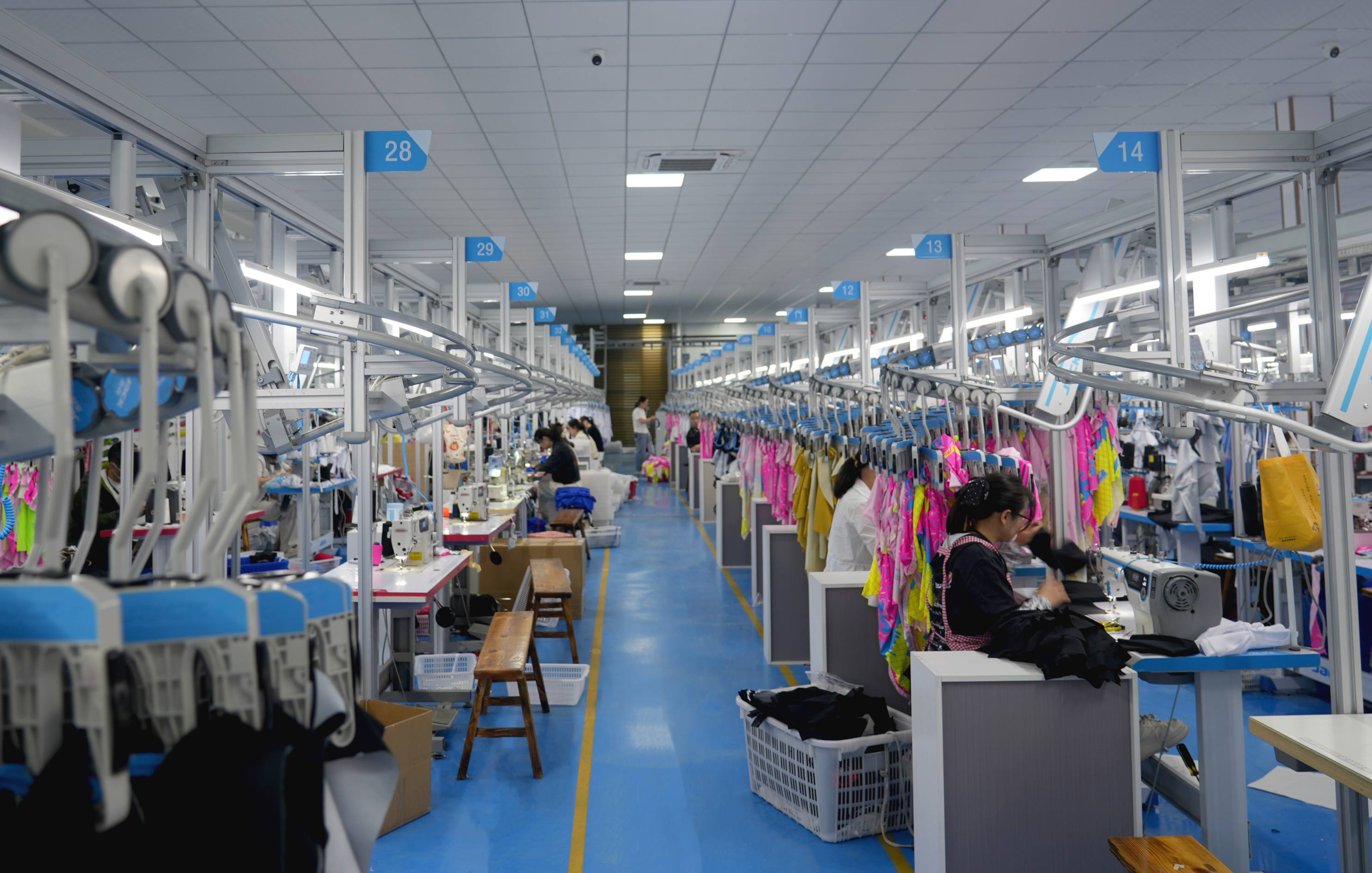

30ml is a capacity target, not a wear-time promise — how long any period running short actually lasts on your body depends on your flow and how hard you're training, not on the number printed in a spec sheet.
I want to get that out of the way in the first line because it's the single most common misunderstanding I run into, and it comes from both sides of the business — the runner reading a product page and the buyer building one.
Why I'm writing this one
A few weeks ago I had a buyer from a European activewear brand send me an RFQ email for a period running short. Her third follow-up question, verbatim, was: "How was the 30ml figure measured — what liquid, what rate, and is it a static test or does it account for movement?" That's not a question a marketing person asks. That's a question from someone who has been burned before by a supplier's number that didn't survive contact with a real return-rate report.
On the same week, one of our brand partners forwarded me a customer service message from an end consumer: "It says 30ml but I don't know if that means I can run a 10K or just get through a warm-up." Same number, two completely different questions — one about test methodology, one about real life. Both are fair, and both deserve a straight answer instead of a marketing shrug.
First, what "30ml" is actually trying to describe
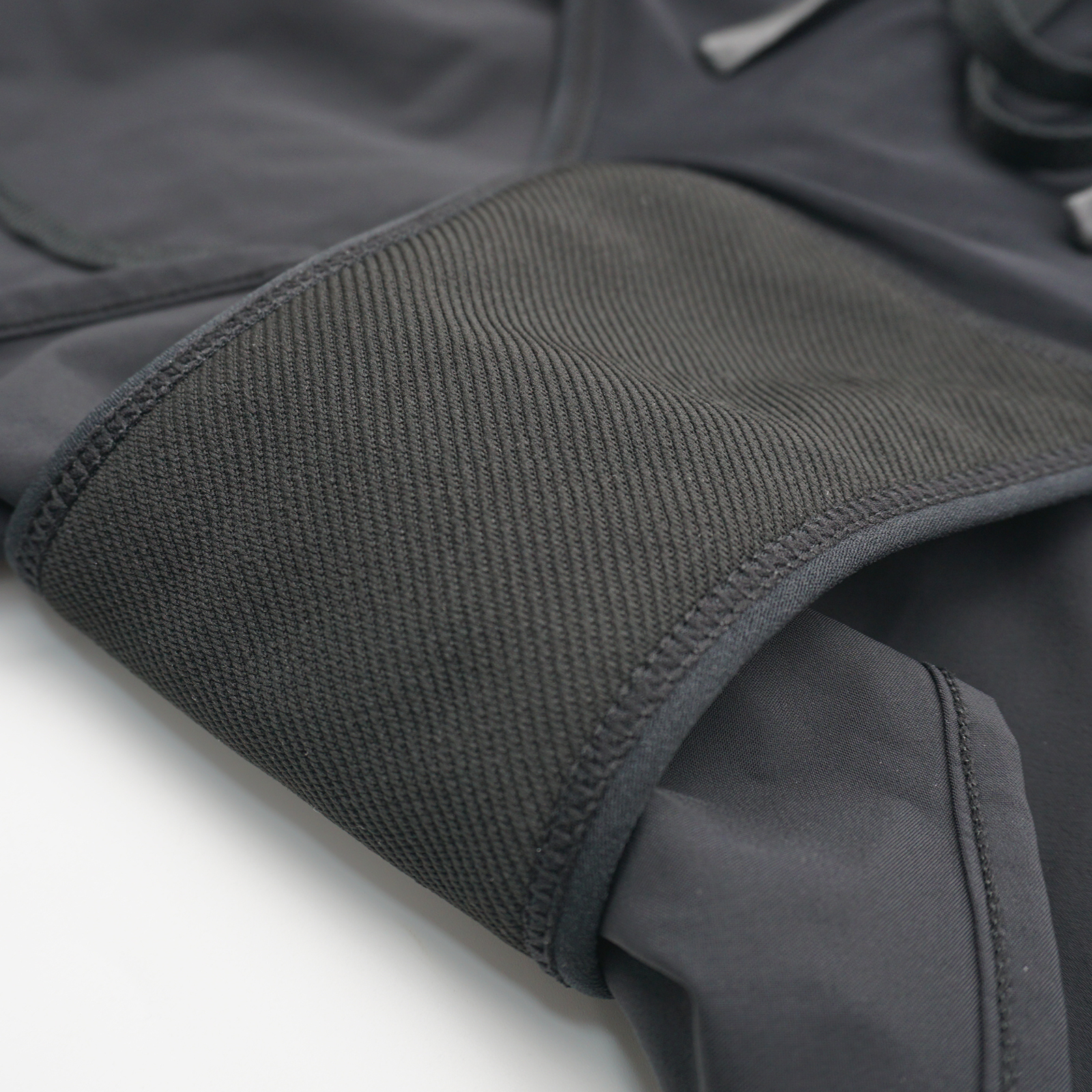
30ml refers to a volume the absorbent core is designed to hold before it reaches saturation — think of it as a tank size, not a stopwatch. Nothing about a milliliter figure tells you how fast that tank fills up during an actual period, because flow rate varies enormously between people and even hour to hour for the same person. A number that describes capacity gets turned into a "how long can I wear this" answer by consumers constantly, and honestly, by some marketing teams too — but the two aren't the same measurement, and conflating them is where most of the unrealistic claims in this category come from.
A rough flow-to-wear-time reference (directional only, not a guarantee)
I'll give you a table here because a table is more honest than a paragraph that tries to hedge every sentence. But read the header row as seriously as the numbers themselves.
Flow level | How it's typically described | Rough wear-time reference for a 30ml-class product | Why this varies so much |
Light | Comparable to what pad/tampon brands often label "light absorbency" or a regular tampon change interval | Longer stretch between changes — often most of a training session | Lower fluid volume per hour means the capacity fills slowly |
Moderate | Comparable to a "regular to super" pad/tampon range | A noticeably shorter window than light flow — plan for a mid-session check | Fluid volume per hour is higher and less predictable day to day |
Heavy | Comparable to what brands typically flag as "super plus," heavy-flow, or requiring more frequent changes regardless of product type | Shortest window, and may need backup protection or a mid-activity change | High flow can outpace absorption speed even before the stated capacity is technically reached |
This table is directional only — it is not a fixed or scientifically validated schedule, and nobody's flow behaves like a metronome. I'm borrowing the light/moderate/heavy framing that pad, tampon, and menstrual cup brands have used for decades to help people build a mental model, not because there's an industry-standard conversion between "30ml" and "X hours." There isn't one. Anyone who tells you there is one is simplifying past the point of being useful.
Why "lab maximum absorbency" isn't the same as "safe wear time"
This is the part I think gets skipped over the most, so let me slow down on it.
A stated absorbency capacity — 15ml, 30ml, whatever the number — describes a physical ceiling: the most fluid the core is engineered to hold before it's saturated, tested under specific lab conditions. Safe, comfortable wear time in real life depends on several other variables layered on top of that ceiling:
Absorption speed — how fast the core pulls fluid away from the surface layer. A product can have a high maximum capacity but still feel wet quickly if the acquisition layer is slow, because surface wetness against skin is what you actually feel, not the theoretical remaining capacity underneath.
Leak-edge design — how well the gusset's edges, leg openings, and back coverage contain fluid before it reaches the stated maximum. A garment can leak at the edges well before the core is "full" if the containment geometry isn't matched to the coverage area.
Individual flow rate and clot pattern — two people with the same self-reported "moderate" flow can empty the same capacity at very different speeds.
Activity intensity — running, jumping, and repeated hip flexion move fluid differently than sitting or walking, which is part of why a static lab result and a real workout don't map onto each other cleanly.
Personal change habits — some people change proactively at a fixed interval regardless of how the product feels; others wait until they notice wetness. That habit alone changes what "safe" means for that person.
None of this is unique to us or to sportswear — it's true of pads, tampons, and cups too, which is exactly why professional testers evaluate more than just a stated capacity number. Good Housekeeping's period underwear testing, for example, measures absorbency speed with a viscosity-matched test liquid, surface wetness under a weighted filter paper, and runoff after washing — precisely because a single capacity figure doesn't tell you how a garment behaves in practice. That's the industry-standard instinct: capacity is one input, not the whole answer.
How this kind of claim is actually supposed to be tested (the methodology view)
Here's where I put my manufacturing hat back on, because this is the part that separates a credible "XXml" claim from a number someone picked because it sounded competitive.
A methodologically sound absorbency claim needs to specify:
Methodology element | What it controls for | Why it matters |
Test liquid | Whether the fluid mimics menstrual flow viscosity, or is just water/saline | Water absorbs and moves differently than menstrual fluid — a number tested with water alone will not behave the same in real use, which is why credible testers use a viscosity-matched liquid the way Good Housekeeping describes using cough syrup to simulate flow consistency |
Injection/application rate | Whether fluid is applied gradually (like real flow) or dumped all at once | A slow drip and a syringe dump can produce very different absorption and leak behavior on the same garment |
Saturation endpoint definition | What "full" actually means — first sign of surface wetness, first drip-through, or total core refusal to absorb more | Different endpoint definitions produce different "maximum" numbers even on an identical garment |
Sample condition | New/unwashed vs. post-wash | Absorbent cores and leak-proof layers can perform differently after laundering, which is why real test protocols check performance new, then again after repeated washes |
Static vs. dynamic testing | Flat, motionless lab sample vs. testing during simulated movement (running, squatting, jumping) | A static absorbency number says nothing about whether the gusset holds its shape and containment once your body is actually moving |
A number without these details attached is a marketing figure, not a test result. That's not a knock on any specific brand — it's just the honest state of a fairly young product category where standardized, third-party dynamic testing protocols for period activewear still don't really exist yet the way they do for, say, diaper absorbency (ASTM/ISO methods) or feminine pad testing.
What buyers should ask any supplier for — including us
If you're a brand evaluating any "XXml" claim from any factory, here's the list I'd actually put in an RFQ, because it's the list I wish more buyers used before they signed off on a spec sheet:
The test report itself — not a summary, the actual lab or internal test document with dates and a named methodology.
Test liquid and viscosity — confirm it's designed to approximate menstrual fluid, not plain water or saline.
Application method and rate — syringe drip, poured, or another method, and at what speed.
Saturation endpoint definition — how "full" was defined and measured.
Sample condition — new/unwashed sample, or post-wash (and if post-wash, how many cycles).
Static vs. dynamic data — was this measured on a flat sample at rest, or during simulated movement?
Surface wetness and rewet data — does fluid stay locked in the core, or migrate back to the surface under pressure or motion?
Third-party vs. internal testing — was this run by an independent lab or is it an internal factory measurement? Both have value, but they're not interchangeable claims.
If a supplier can't answer most of these with specifics, that tells you something on its own — and it's a more useful signal than the number itself.
Where LY4291-1 actually stands on this
I'd rather be specific here than vague in a way that sounds impressive.
30ml is LY4291-1's internal development target capacity — it's the number our team designed the absorbent core around, not a figure certified by an independent third-party lab. I want that distinction to stay clear every time this number comes up, because "we designed for 30ml" and "an outside lab confirmed 30ml as a tested maximum" are two different claims, and only the first one is accurate for where we are today.
What we have not yet completed for LY4291-1 specifically:
Dynamic testing — no running, squatting, or jumping-jack absorbency/leak testing has been done and documented.
Post-wash performance testing — no data yet on how the core or leak-proof layer performs after 5, 20, or more wash cycles.
Third-party lab verification of the 30ml figure using a viscosity-matched test liquid and a defined saturation endpoint.
I'm not going to tell a buyer "30ml means you're covered for X hours of running" because that number doesn't exist in any responsible way — it depends entirely on that person's flow and training intensity, exactly like the flow-level table above shows. What I can tell you is what the design target is, what testing is and isn't done, and what we'd run together as part of your development process if you want documentation specific to your market.
On chemical safety, the same "be specific, not impressive" rule applies: as a company we test PFAS-free status at the finished-garment level via SGS testing against EPA Method 533, on every batch since Q2 2024 across our production — that's real and it's company-wide policy. LY4291-1 as a standalone style still needs its own finished-garment chemical test on file before I'd call that fully documented for this specific product. Our OEKO-TEX Standard 100 Class I certificate (26.HCN.12213, Hohenstein, valid through July 31, 2027) covers our period underwear line — I won't claim it automatically extends to this new sport short until we've confirmed the certificate's scope covers it.
This isn't a small-category problem, either. Federation University's 2025 research found that 91.5% of girls in the study worried about leaking or staining sportswear — a number like "30ml" only earns trust if the methodology behind it can survive a direct question, which is exactly the kind of question that study's population, and the buyers I talk to, are already asking.
If you want the real numbers instead of a bigger adjective
I'd rather walk a buyer through exactly what's tested, what isn't, and what we'd build into a joint testing plan than inflate a spec sheet with a word like "proven." If you're developing a period running short and want to talk through absorbency methodology, sample testing, or a development timeline for your market, reach out directly.
WhatsApp: +86-199-2880-2613
Email: info@ljvogues.com
LinkedIn: linkedin.com/in/ljvogues-ceo
Product page: https://www.ljvogues.com/2-in-1-sport-period-shorts
— Ocean Yang, Ljvogues
Sources cited in this article
Federation University — Menstruation driving girls out of sport (2025): https://www.federation.edu.au/about/news/media-release/new-study-reveals-menstruation-is-quietly-driving-girls-out-of-sport/
Good Housekeeping — Period Underwear Lab Testing Criteria: https://www.goodhousekeeping.com/health-products/g27421796/best-period-panties/
New York State DEC — PFAS in Apparel Law: https://dec.ny.gov/environmental-protection/pollution-prevention/pfas-in-apparel-law