


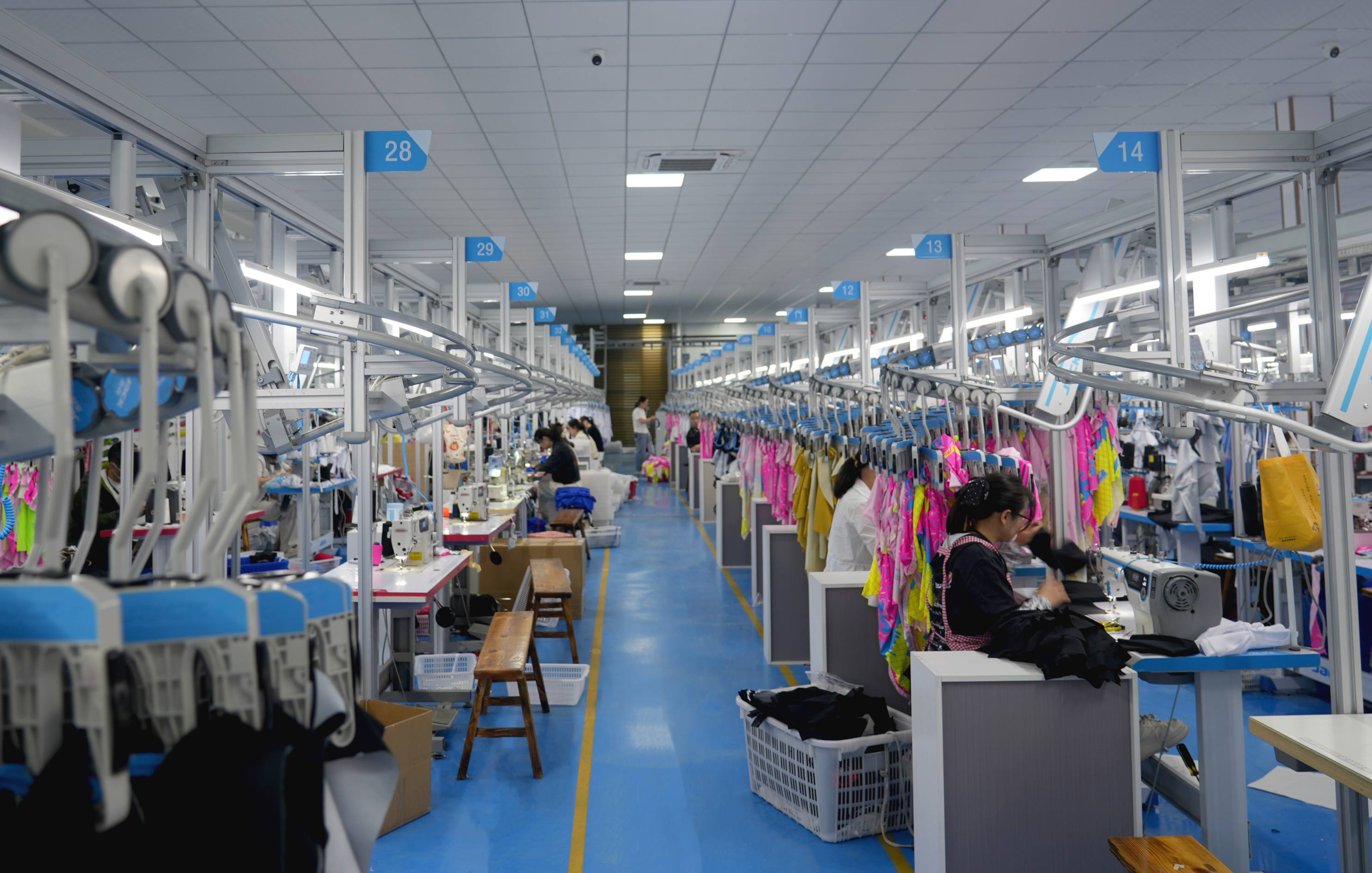

Almost every buyer who contacts us asks the same opening question: "Do you use TPU or PUL?" — as if the answer tells them everything they need to know about the product.
It doesn't. After 11 years making period underwear for 500+ brands across 40 countries, I can tell you that the material name is the least important part of the answer. What actually determines whether a waterproof layer holds up — in terms of safety, durability, and comfort — is the bonding process and the precision of how it's applied, not whether the label says TPU or PUL.

This article is my attempt to give buyers and consumers the actual framework for evaluating any waterproof layer claim, regardless of what a manufacturer calls it. We make both TPU and PUL constructions at Ljvogues. I have no reason to tell you one is universally better than the other, because it isn't true. What I can tell you is what separates a waterproof layer that lasts from one that fails in a handful of washes.
Two Names, One Confusion
TPU (Thermoplastic Polyurethane) is a thin film of synthetic polymer that becomes bondable under heat and pressure. In period underwear, it's applied as a standalone film sandwiched between fabric layers. The waterproofing comes from the polymer's molecular structure — it physically blocks liquid while staying flexible.
PUL (Polyurethane Laminate) is a fabric that already has a polyurethane layer bonded to one side before it ever reaches the sewing line. The chemistry is similar to TPU — the key word is "laminate," which describes the finished material, not the bonding method used to make it.
Here's the overlap that causes most of the confusion: both use polyurethane chemistry. The real difference is in how they're applied and processed, and that's exactly where quality variation comes from.
Most factories use one or the other based on their equipment, their supplier relationships, and their production history — not because one is inherently superior. Both can produce excellent period underwear. Both can produce terrible period underwear. The material name on a spec sheet is not the quality signal. The process behind it is.
(Related: How Period Underwear Works — the full 4-layer construction explained)

The Bonding Method Is Everything
If I had to boil 11 years of factory experience into one sentence for this topic, it would be this: ask how it's bonded, not what it's called.
Surface bonding is the problem. When adhesive is applied loosely or heat is applied without precision, the film and fabric end up connected only at the surface interface. The layers are held together, but the connection sits at the boundary — it's never integrated into the fiber structure underneath. Repeated washing, especially with heat and agitation, breaks down that surface bond. You'll see it as peeling at the edges, bubbling across the panel, or waterproofing that quietly gets worse wash after wash.
Structural bonding is the standard to look for. When temperature and pressure are precisely controlled, the polymer actually penetrates the fiber gaps of the fabric and fuses across multiple layers. The film becomes part of the fabric structure rather than a coating sitting on top of it. That kind of bond maintains its integrity through repeated wash cycles because there's no clean boundary for water and agitation to attack.
At Ljvogues, we use a professional constant-temperature, constant-pressure heat-bonding machine — not iron pressing, not manual heat application with a handheld tool. The machine holds both temperature and pressure uniformly across the entire panel, not just wherever a person happens to press. Our standard TPU film runs 18–25 microns — thin enough to be invisible and unfelt in wear, thick enough to deliver full waterproof integrity. In our internal wash testing, this construction holds up through 100 wash cycles without delamination. I want to be precise about what that means: it's our internal factory test standard, not a third-party certification. But it's the benchmark we build every panel to.
Iron pressing is where a lot of cheap production goes wrong. It creates a surface bond, full stop. The pressure is uneven because a human hand is applying it, the temperature isn't controlled the way a machine controls it, and the resulting bond only ever sits at the fabric surface. We've seen competitor products made this way delaminate in 3–8 washes. Period blood, hot water, and machine agitation are particularly effective at exposing a weak bond — which is exactly the wrong place for a product like this to fail. A product that fails after a few washes isn't a TPU problem or a PUL problem. It's a bonding process problem, and it would show up regardless of which material name was on the spec sheet.
(Related: Are Period Underwear Reusable? How construction affects wash durability)
The Real Chemical Question Isn't TPU vs PUL
When buyers ask me about TPU vs PUL from a safety angle, I think they're really asking about PFAS — per- and polyfluoroalkyl substances. That's the right concern to have. But the answer has nothing to do with whether the waterproof layer is called TPU or PUL.
Neither TPU nor PUL inherently contains PFAS. The waterproofing in both comes from the polymer structure itself, not from a fluorochemical coating. But PFAS can be applied on top of either material as an additional DWR (durable water repellent) surface treatment — and this is where products actually diverge on safety. A product can use TPU and still have a PFAS treatment applied to it. A product can use PUL and be completely PFAS-free. The material name tells you nothing about this.
The question to ask any manufacturer is: is your waterproof layer, and any surface treatment applied to it, PFAS-free? And can you show me the lab report?
At Ljvogues, we verify PFAS-free status through SGS finished garment testing using EPA 533 methodology, on every production batch since Q2 2024. We can show any buyer the actual lab report on request. That's the real answer to the safety question. TPU vs PUL is a distraction from it.

Does the Waterproof Layer Affect How It Feels?
This is the consumer-facing version of the same question, and it deserves a straight answer.
Both TPU and PUL, at thin gauges, allow some moisture vapor transmission — neither is a fully impermeable plastic sheet sitting inside your underwear. The 18–25 micron thickness of our TPU film adds no perceptible stiffness or bulk to the garment; at that thickness, you genuinely cannot feel it as a separate layer during wear.
What actually affects comfort is everything around the waterproof layer — the fabric on either side of it, and how the seams are constructed. If a period underwear feels "plasticky" or stiff, the problem is almost always the film gauge, the fabric selection, or the seam construction. It's rarely an inherent property of TPU or PUL as materials. A well-made product using either one should disappear on the body.
TPU or PUL: How to Choose for Your Product
We work with both constructions. Here's how the conversation usually goes when a brand comes to us trying to decide.
Choose TPU heat bonding when:
You want the thinnest, lightest possible construction
You're building a premium product where fabric hand-feel is a priority
You want a simpler supply chain — film plus fabric, no separate laminate sourcing step
You're starting a new product line without an existing spec to match
Choose PUL when:
You already have a product on the market that uses PUL and need to match it exactly
Your product development team has specified it for a particular technical reason
You're working in a category like cloth diapers, where PUL has a long, established track record
Whichever one you're leaning toward, ask the manufacturer these four questions before you commit:
What bonding method do you use — surface adhesive, heat bonding, or pressure bonding?
What is the film or laminate thickness?
Is the construction PFAS-free, and can you provide a lab report?
What is your wash durability standard, and is it internally tested or third-party verified?
A manufacturer who answers all four specifically is worth talking to further. One who gives you a vague answer to any of them — especially the PFAS question — is telling you something, even if they don't mean to.
TPU Heat Bonding | PUL (quality process) | PUL (surface adhesive) | |
Bond type | Structural (fiber-integrated) | Structural (if heat-bonded) | Surface only |
Film thickness | 18–25 microns (Ljvogues) | Varies | Varies |
Wash durability | High (100-cycle internal test) | High (if well-made) | Low (3–8 washes) |
PFAS risk | None inherent | None inherent | None inherent (separate treatment question) |
Feel in wear | Minimal (thin film) | Minimal (thin laminate) | May add stiffness |
What Certification Actually Tests
Certifications matter, but it's worth being precise about what they cover.
OEKO-TEX Standard 100 Class I tests the finished garment, including the TPU or PUL component, for substance safety — not for construction quality or wash durability. Our Certificate No. 26.HCN.12213, issued by Hohenstein Laboratories and valid until July 31, 2027, covers our TPU film as a tested component under that standard. Separately, our PFAS-free status is verified through SGS lab testing using EPA 533 methodology, available to buyers on request. We also hold ISO 9001 (No. 62726Q00153R001) for our production quality system.
Certification tells you what's in the material. It doesn't tell you whether the bond will survive 50 washes. That's what factory testing standards, and your own sample evaluation, are for.

Let's Talk About Your Product
If you're building a period underwear brand and want to understand which construction actually makes sense for your specific product, reach out. We'll walk through the options honestly, including the cases where PUL makes more sense than TPU for what you're trying to build.
Email: info@ljvogues.com
WhatsApp: +86-199-2880-2613