



Pick up a pair of period underwear and it looks, from the outside, like ordinary underwear. Same silhouette, same soft fabric, same waistband. That simplicity is deliberate — and it hides more engineering than most people realize.
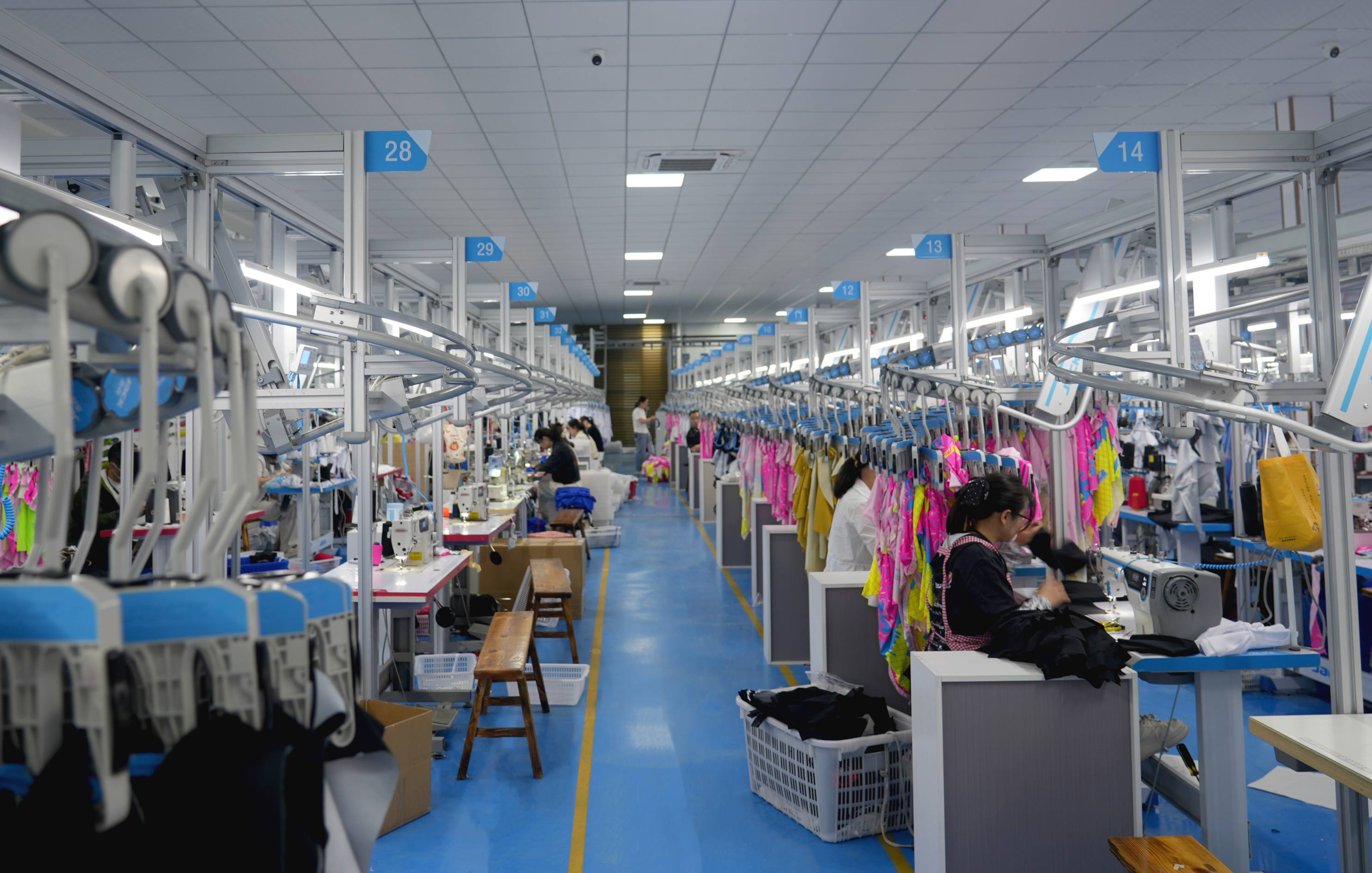
I've been manufacturing period underwear since 2015. In that time, my team has produced for 500+ period care brands across 40+ countries, out of an 8,000m² facility here in Longgang District, Shenzhen. The question I get most often from buyers, brand founders, and curious consumers alike is the same: how does it actually work? This article is my honest answer — no marketing language, just the construction logic.

What Does Period Underwear Actually Have to Do?
Before we get to layers, it helps to be clear about the job. Period underwear needs to do three things simultaneously:
Keep skin feeling dry — no one wants to feel wet against their body
Hold liquid without leaking — whether used as a primary product or backup to a tampon/cup
Look and move like normal underwear — no bulk, no crinkle, no giveaway stiffness
Here's the design challenge: those three requirements pull in different directions. The material that stays dry against skin is not the same material that absorbs liquid. The material that absorbs liquid is not the material that stops leaks. And neither of those is the face fabric that determines how the garment looks and moves.
That's why period underwear is a multi-layer construction. Each layer has a distinct job. When all four work together correctly, the garment performs invisibly. When even one layer is wrong, the whole system fails — usually at the worst possible moment.
Let me walk you through each one.
How Period Underwear Works: A Layer-by-Layer Breakdown
Layer 1 — The Skin Layer (Moisture-Wicking Top Fabric)
This is what you feel. It sits directly against the body, and its one job is to move liquid away from skin — not absorb it, not hold it, just transfer it downward into the layers below.
Think of it like performance athletic wear. When you sweat in a good running top, the fabric pulls moisture away from your skin and pushes it outward. The same principle applies here. The skin layer in period underwear is typically made from bamboo viscose, modal, or moisture-wicking polyester — all chosen for softness, breathability, and that wicking behavior.
If this layer fails — if it's too dense, too slow to transfer moisture, or the wrong fiber blend — the wearer feels wet immediately. That's a comfort failure. No one comes back from that first impression.
Layer 2 — The Absorption Core
This is the reservoir. Once liquid passes through the skin layer, the absorption core catches it, holds it, and keeps it from migrating back upward.
Picture a very thin, high-capacity sponge built into the gusset of the underwear. In our period panties at Ljvogues, that core is engineered to hold between 15ml and 45ml depending on the style — roughly equivalent to two to five tampons' worth of fluid. Our period swimwear sits in the 20–30ml range.
The engineering challenge here is two-sided. The core must absorb fast — slow absorption means the skin layer stays saturated too long. But it also must not feel heavy or swollen when full. Getting that balance right requires precise selection of absorbent materials and careful attention to gusset construction thickness.
This is also the layer where most cheap production cuts corners. Thin, low-density absorbent cores feel fine when dry but fail under real-world use conditions.

Layer 3 — The Waterproof Barrier
This is the layer most people don't know exists — and it's the one that makes or breaks the entire product.
Between the absorption core and the outer fabric sits a thin, flexible, completely invisible waterproof film. It's thinner than a credit card, it flexes with the garment, and it creates an impermeable barrier that liquid simply cannot pass through. This film is heat-bonded — not glued, not stitched — to the surrounding layers through a precision thermal process. The technical name for the material is a TPU (thermoplastic polyurethane) membrane.
The precision of this layer matters enormously. At Ljvogues, we bond at 18–25 microns. That's the range where the film is thin enough to stay soft and invisible in the garment, but thick enough to hold under pressure. Go thinner and you risk micropore failure under sustained load — meaning leaks. Go thicker and the gusset stiffens, the wearer feels it, and you've destroyed the comfort profile of the garment.
We test this barrier with a hydrostatic pressure test: every production batch is subjected to 10,000mm H₂O of water pressure. That is not a casual number. It's the kind of test that reveals whether the bonding is uniform across the entire barrier surface — because a single weak point is all it takes.
Layer 4 — The Outer Face Fabric
The outermost layer is the face fabric — what the world sees. It determines the garment's color, texture, stretch, and silhouette. It also contributes to breathability from the outside in, which matters for all-day wearability.
From a performance standpoint, this layer does less heavy lifting than the inner three. But it's responsible for two things that are commercially critical: how the garment looks on the shelf, and how it wears over time. Face fabric choice affects drape, pilling resistance, colorfastness across wash cycles, and overall durability.
The Four Layers at a Glance
Layer | Function | What It Means for the Wearer |
Layer 1 — Skin layer | Wicks moisture away from skin | Stays feeling dry, no "wet" sensation |
Layer 2 — Absorption core | Captures and holds fluid | 15–45ml capacity; no leaking back up |
Layer 3 — Waterproof barrier | Blocks liquid from passing through | Period underwear leak proof protection — nothing gets out |
Layer 4 — Face fabric | Structure, aesthetics, durability | Looks and moves like regular underwear |
Why "PFAS-Free" Matters — and Why I Made It a Non-Negotiable
For most of the history of functional textiles, waterproof barriers in fabric were created using PFAS — per- and polyfluoroalkyl substances. They're a large family of synthetic chemicals that have been used in everything from food packaging to outdoor gear to intimate apparel. They do the job well, technically speaking. The problem is what they do after.
PFAS don't break down. Not in the environment, not in the human body. They bioaccumulate over time — which is why they've earned the nickname "forever chemicals." Regulatory agencies in the EU, the US, and elsewhere have been restricting them aggressively, and for good reason: the health literature on PFAS exposure is not reassuring.
Now consider where period underwear sits. Against the body, in an intimate area, for hours at a time, repeatedly across the week. This is not the same risk profile as a waterproof jacket you wear occasionally in rain. The exposure duration and the skin sensitivity are both higher.
This is why I made PFAS-free materials a baseline requirement at Ljvogues — not a product tier, not an upsell, not a marketing claim. A floor. Every material that enters our factory must meet this standard before it ever touches a production run.
Since Q2 2024, we have verified PFAS-free status through independent third-party lab testing on finished garments — not just raw material declarations from suppliers. The distinction matters. A fabric roll can arrive with a supplier's documentation claiming PFAS-free status. What we want to know is whether the finished garment, after assembly and bonding, tests clean. That's a different question, and it requires testing the actual product.
Our relevant certifications on this front: OEKO-TEX Standard 100, EU REACH compliance, and CPSIA compliance for the US market. We also hold BSCI, SEDEX SMETA 4-Pillar, FDA Establishment Registration (21 CFR Part 807), GRS, and ISO 9001.
The Manufacturing Reality — What I Watch Most Closely
As someone who makes these garments rather than just wears them, here's where I focus my attention.
Seam construction at the gusset. This is where most low-cost production eventually fails. The gusset is the highest-stress zone in the garment — it absorbs the most movement, carries the most functional load, and is where layers meet. We use 4-needle 6-thread flatlock seaming throughout the gusset. Cheaper production uses 2-needle or standard overlock stitching. The difference shows up around wash 8 to 10: layers begin to separate, absorption channels open up, and the waterproof integrity degrades. By wash 20, the garment has functionally failed. Our construction is tested to 50 wash cycles with integrity intact.
TPU bonding precision. As described above, the 18–25 micron range is where the performance lives. Bonding too thick creates stiffness complaints. Bonding too thin creates leak complaints. Getting this right requires calibrated equipment, trained operators, and in-line monitoring — not just a good spec sheet.
Finished-garment PFAS testing. I mentioned this above, but it deserves repeating in a manufacturing context: raw material declarations from suppliers are not the same as finished-garment test results. Any factory serious about PFAS-free production should be testing the finished article. We do.
Absorbency verification. Capacity claims (15–45ml for period panties, 20–30ml for period swimwear) should be tested on finished garments under standardized conditions — not calculated from material specifications. We test.
Quality control structure. We operate AQL 2.5 with a 3-stage QC process: pre-production inspection, in-line quality checks during production, and pre-shipment inspection before goods leave the facility. At our production volume of 200,000–250,000 pieces per month, maintaining AQL 2.5 requires that QC be built into the process, not bolted on at the end.
If You're Building a Period Underwear Brand
The details above are the questions worth asking your manufacturer. Not as a test — as a genuine conversation about what you're building and whether they can build it with you.
A supplier who can answer those questions precisely — who knows their TPU bonding thickness, who can tell you exactly how absorbency is tested, who can show you third-party lab results on finished garments rather than pointing to a supplier certificate — that supplier understands what they're making. A supplier who deflects, generalizes, or responds to technical questions with marketing language is telling you something important about their production floor.
I've spent 11 years thinking about why these garments work or fail. My MOQ starts at 50 pieces per style per color — low enough for brands at early stage, scalable enough for established players. We deliver prototypes within 7 days of tech-pack confirmation. And we hold all the certifications your retail partners and compliance teams will ask for.
If you want to talk through the specs for your line, I'm straightforward to reach.
Ocean Yang
Founder & CEO, Shenzhen Ljvogues Sports Fashion Limited
Email: info@ljvogues.com
WhatsApp: +86-199-2880-2613
LinkedIn: linkedin.com/in/ljvogues-ceo
Website: ljvogues.com
Ocean Yang (杨钧雄) founded Ljvogues in May 2015. He operates an 8,000m² manufacturing facility in Longgang District, Shenzhen, serving 500+ period care brands in 40+ countries. Certifications held: OEKO-TEX Standard 100, BSCI, SEDEX SMETA 4-Pillar, FDA Establishment Registration (21 CFR Part 807), EU REACH, GRS, CPSIA, ISO 9001.