



Table of Contents
A Technical Guide for Product Developers: Why top brands are moving from "Sewn-In Pads" to "Integrated Bonding" for a thinner, sleeker, and leak-proof profile.
Introduction: The Evolution of "Invisible" Protection
In the early days of the period underwear industry, the standard manufacturing method was simple: sew a thick, multi-layer pad into a regular pair of panties. While functional, this method often resulted in visible seam lines, bulky "diaper-like" ridges, and potential leak points at the needle holes.
Today, premium brands are demanding something better. They are asking for Laminated Composite Structures.
As a manufacturer at the forefront of this shift, I have seen firsthand how Bonding Technology (instead of stitching) is revolutionizing the market. It allows us to create a product that is not just a piece of underwear with a pad, but a single, integrated high-performance garment.
In this guide, I will explain the Ljvogues Lamination Capability and why this technology is the gold standard for your next premium collection.
1. What is "Laminated Composite Structure"?
Unlike traditional "Cut & Sew" methods where layers are stacked and stitched together, Lamination (or Bonding) involves fusing multiple functional layers into a single, cohesive composite fabric.
At our Shenzhen facility, we utilize advanced Hot-Melt Adhesive Machines and Ultrasonic Bonding technology to combine:
The Wicking Layer (Skin-side)
The Absorbent Core (Middle)
The Waterproof Barrier (Outer)
The Result: A fused, ultra-thin composite panel that performs as one unit. No shifting, no bunching, and crucially—no needle holes for liquid to escape through.

2. The 3 Key Advantages of Lamination vs. Stitching
For a brand owner, choosing lamination offers three distinct commercial advantages:
A. The "Zero Bulk" Profile (<1mm Edges)
Stitched: Requires folded hems and thread, adding bulk to the edges (visible panty lines).
Laminated: Uses Laser-Cut edges sealed with adhesive tape. The result is a razor-thin edge that lies completely flat against the skin. This is the secret to creating "True Seamless" period underwear.
B. Enhanced Leak Protection
Stitched: Every needle puncture is a potential micro-leak point. Capillary action can draw fluid out through the thread.
Laminated: The layers are bonded. The waterproof barrier (TPU) is continuous and unbroken by needles in the critical zone. This creates a 100% sealed perimeter.
C. Manufacturing Consistency
Stitched: Relies heavily on the manual skill of the operator. Human error can lead to crooked pads.
Laminated: Uses automated bonding machines. The composite panel is positioned with millimeter precision, ensuring every SKU in your
5,000-piece order is identical.

3. Ljvogues' Bonding Capabilities: Yes, We Can.
To answer the specific needs of premium buyers (like the inquiry we received today), here is a transparent look at our in-house capabilities:
Composite Lamination: Yes. We have industrial laminators capable of combining hydrophobic wicking layers, high-density absorbent cores, and breathable TPU films into a single composite yardage before cutting.
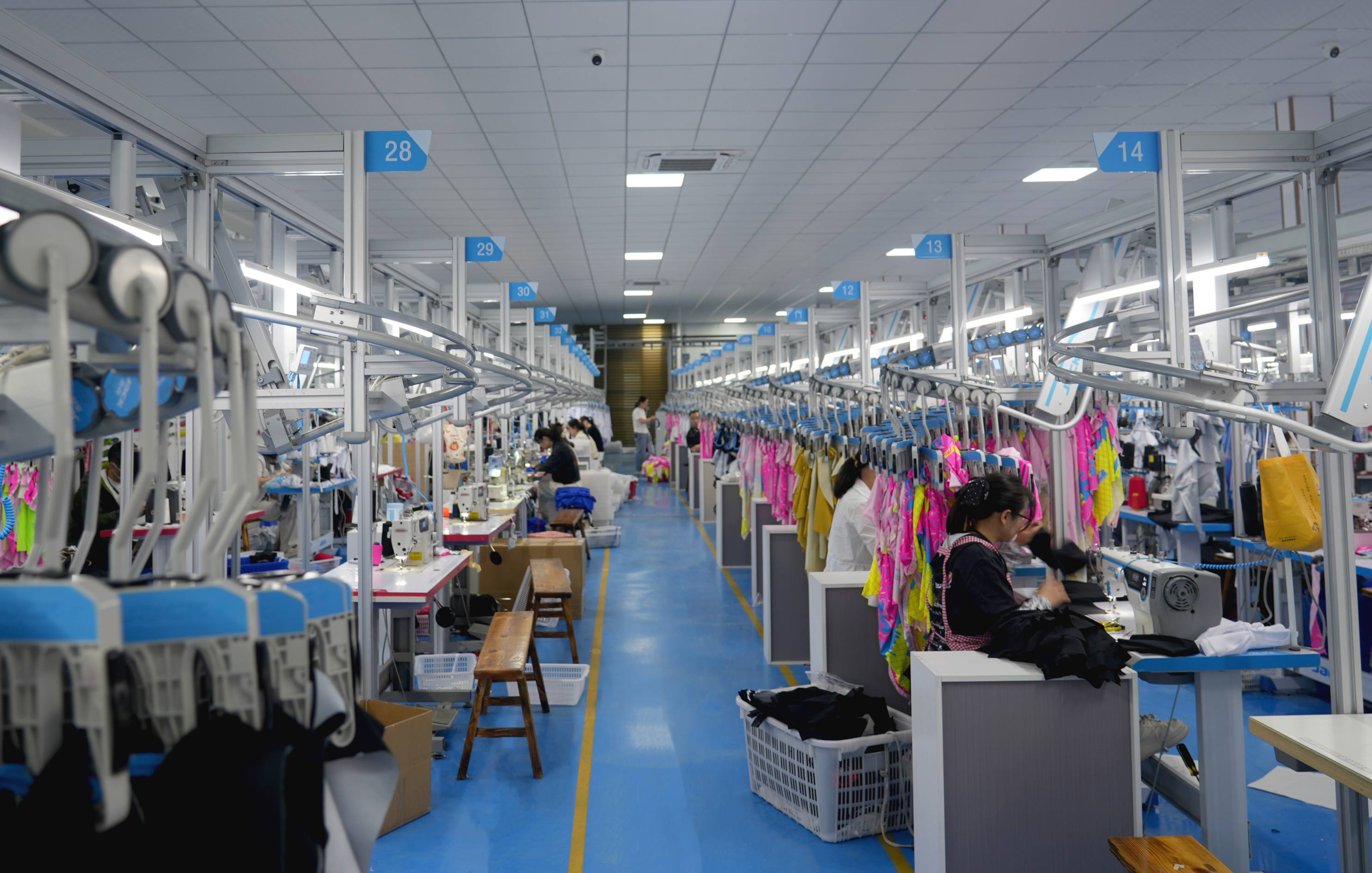
Seamless Construction: Yes. We operate Sew-Free production lines equipped with Laser Cutters and Adhesive Bonding Machines (e.g., Santoni/Bemis equivalents).
Functional Layer Expertise:
Surface: We work with CoolMax® style fast-wicking meshes.
Core: We laminate ultra-thin, high-density terry or non-woven absorbents that resist swelling.
Barrier: We bond breathable TPU films (PFAS-Free) directly to the outer shell for a smooth finish.
4. Case Study: Developing a Premium "Invisible" Line
The Challenge: A European client wanted a "Daywear" period thong that could be worn under tight gym leggings without any VPL (Visible Panty Line).
The Old Way: A sewn-in pad would have created ridges visible through the leggings.
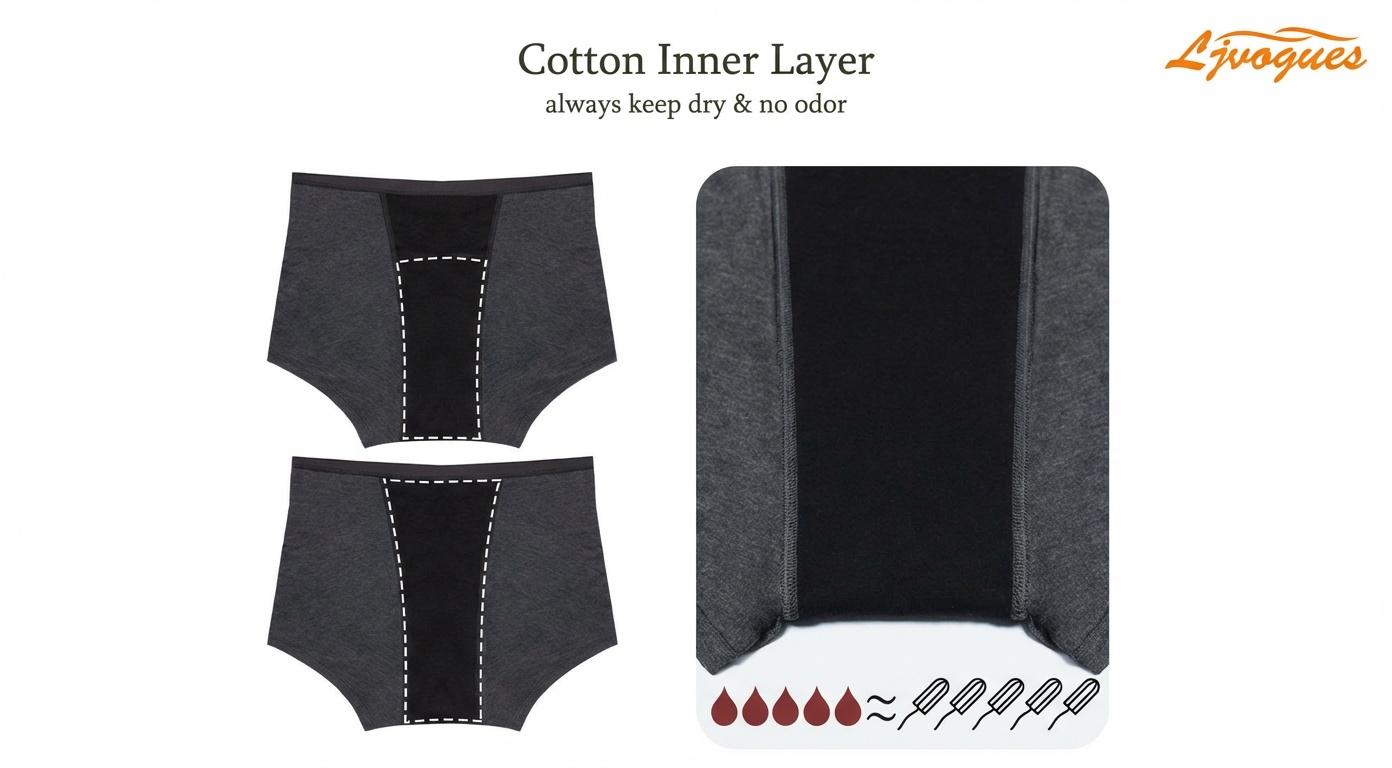
The Ljvogues Solution: We used our Laminated Composite Process. We bonded a micro-thin absorbent core between a laser-cut nylon shell and a moisture-wicking liner. The edges were heat-sealed, not stitched.
The Result: A completely smooth, invisible garment with 15ml absorbency. The client's initial test order sold out in 3 weeks.
5. Start Your Laminated Project with Ljvogues
If you are developing a premium line that requires Laminated Composite Structures, you need a partner who understands the chemistry of bonding, not just the mechanics of sewing.
Our Project Roadmap for Bonding Orders:
Feasibility Check: Send us your functional requirements (as the client above did). We confirm if our machinery fits your spec.
Sample Production:
Availability: Yes, we run dedicated sampling lines for bonded products.
Lead Time: 10-15 days for seamless/bonded prototypes.
Cost: Typically 2-3x standard sample cost due to mold/adhesive setup (refundable on bulk).
MOQ (Minimum Order Quantity):
Because lamination requires machine setup, MOQs are slightly higher than cut-and-sew.
Standard MOQ: 1,500 - 2,000 pieces per style (negotiable based on fabric consumption).
Conclusion
The future of period underwear is Seamless, Bonded, and Composite. Don't let your brand be stuck in the "stitched pad" era.
Ready to upgrade your technology?
Let’s discuss your laminated specs.
[Contact Our Technical Team]: Confirm your specs with Ocean Yang.
Ljvogues – Engineering the Future of Intimate Apparel.