



When I was working at Alibaba's marketing division, I used to spend hours watching how suppliers built their storefronts. This was 2007 to 2015 — eight years inside the platform. I saw the whole thing from the inside: how factories presented themselves, how trading companies presented themselves, and — most importantly — how they looked nearly identical to a first-time buyer.
The suppliers claiming to be factories always outnumbered the actual factories. That was true then. It is still true now.
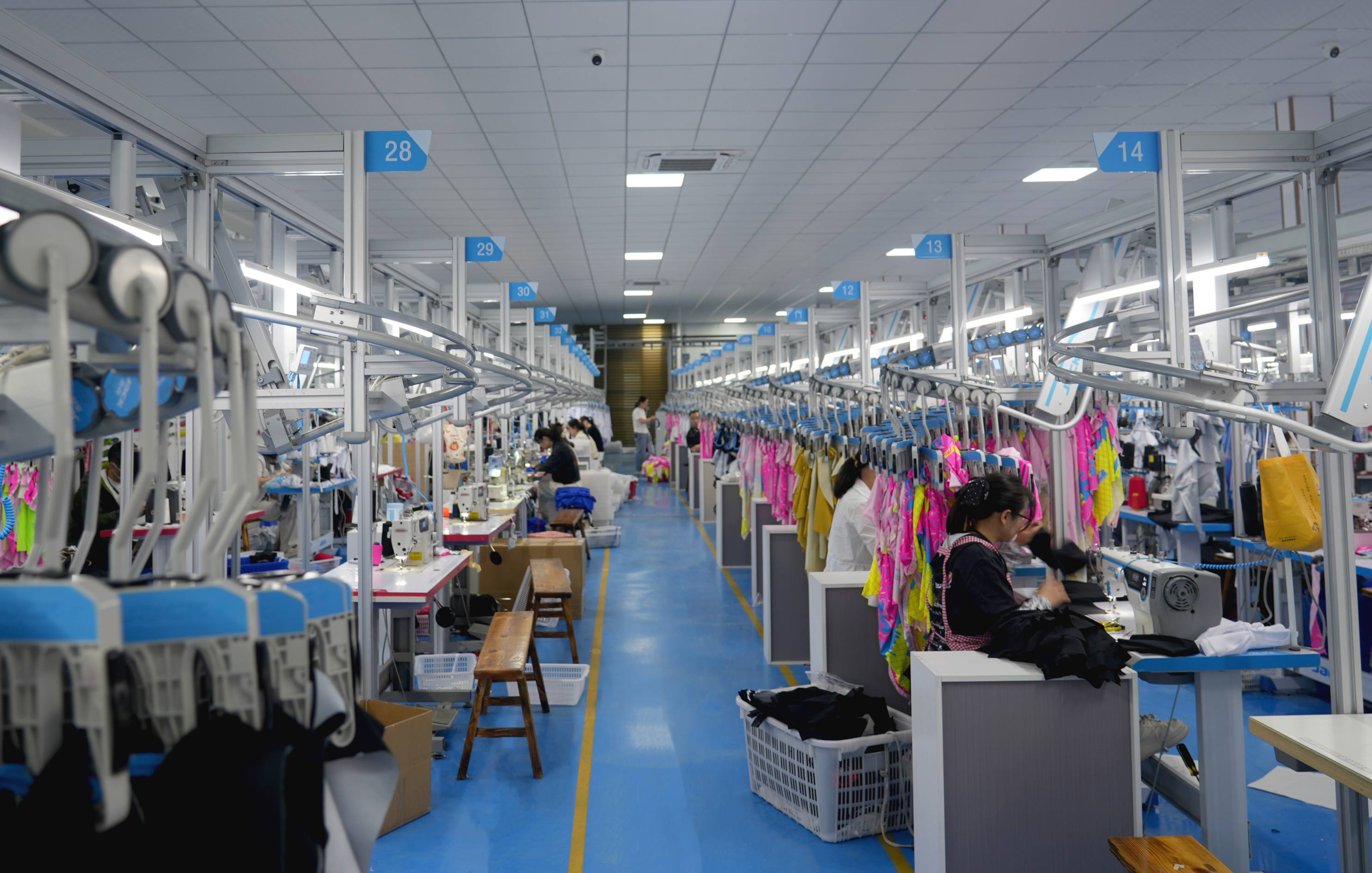
I left Alibaba in 2015 to found Ljvogues. I have now spent 11 years on the other side of that screen — running an 8,000m² production facility in Longgang District, Shenzhen, manufacturing period underwear for 500+ brands across 40+ countries. I have been on both sides of this evaluation process. I know exactly what the paperwork looks like when it's real, and I know exactly what it looks like when it isn't.
This period underwear sourcing guide is what I wish every first-time buyer had before they sent their first inquiry.

Why Period Underwear Is the Wrong Category to Get This Wrong
Before I get to the verification framework, let me explain why this category is specifically high-stakes.
A trading company sourcing t-shirts is an inconvenience. The product is simple, the spec sheet is short, and a middleman can usually find a factory that produces something acceptable. You overpay a bit. You probably don't notice.
Period underwear is not a t-shirt.
The absorptive gusset requires engineered layering — typically a moisture-wicking inner, an absorbent core, and a TPU waterproof barrier. The PFAS-free requirement demands finished-garment testing under EPA 533 methodology, not just a fabric certificate. The hydrostatic pressure standard (we test to 10,000mm H₂O) requires a production line configured to deliver consistent TPU thermal bonding — we run at 18–25 microns — batch after batch.
A trading company does not have fabric engineers. A trading company cannot control TPU layer thickness. A trading company cannot hold a PFAS-free certification that applies to your production run, because your production run is being done at a factory the trader has never actually audited.
For a brand staking its reputation on period care, this is a product integrity risk — not just a supplier management problem.
The Three Pits: What Actually Goes Wrong
I call them 坑 — pits. Not because they're exotic, but because buyers fall into them quietly, and sometimes don't realize what happened until the second or third order.
Pit 1 — You Pay 15–30% More for the Same Product
Trading companies add margin. That's their business model. The product might be perfectly acceptable — but you are paying the trader's overhead on every unit, and you have no leverage on cost reduction because you have no visibility into the actual factory. When you grow and want to renegotiate pricing, you're negotiating with someone who doesn't control the inputs. That conversation goes nowhere.
Pit 2 — Batch 1 and Batch 2 Are Not the Same Product
Traders subcontract to whichever factory has available capacity. Your first order ships from Factory A in Dongguan. Your second order — same SKU, same spec sheet — ships from Factory B in Foshan. Different fabric supplier. Different gusset construction. Different absorption performance. Your returning customers notice before you do.
This is the most common quality complaint I hear from brands who come to us after a bad sourcing experience. They don't describe it as "the trader switched factories." They describe it as "something changed and we can't figure out what."
Pit 3 — The Compliance Documents Don't Cover Your Product
This one is the most dangerous, and the hardest to catch without knowing what to look for.
A trader submits an OEKO-TEX certificate. It looks legitimate. The certificate number checks out. But the certificate holder is the trading company — not the factory doing your production. The PFAS test report references a fabric sample, not a finished garment. The FDA Establishment Registration belongs to an entity whose address is a Guangzhou office building, not a production floor.
When a regulatory body or retailer asks for documentation, those certificates cannot be traced to your actual production. That's not the trader's problem. It's yours.
Period Underwear Sourcing Guide: A Three-Method Verification Framework
This is the core of any serious period underwear supplier China evaluation. These three methods work because they target things a trading company structurally cannot fake — without it immediately becoming obvious.
Method 1 — Test Their Fabric Engineering Knowledge
Send this exact question: "What fabric combinations do you recommend for a heavy flow product with a bamboo outer layer? What GSM range, and what moisture-wicking test data do you have for those options?"
A factory has fabric engineers on staff. You will get a response the next morning with specific GSM weights, fiber composition percentages, wicking test results, and a note about tradeoffs between bamboo softness and structural recovery. At Ljvogues, that question goes straight to our R&D team — 12 engineers who do nothing but this.
A trader will either give a vague answer ("we can customize according to your requirements") or come back two days later with information they had to request from someone else — and it usually won't include GSM specs.
Follow up by asking for fabric swatches with technical data sheets. Factories have these in hand. Traders have to source them, and they frequently can't provide the underlying test data.
Method 2 — Push on Customization Specifics
Real factories can quote customization across every dimension of the product. Ask these questions specifically:
"Can you adjust the TPU layer from 20 to 25 microns? What's the lead time impact?"
"Can you run seamless construction on the gusset panel?"
"What's your minimum for a custom woven label versus a heat-transfer printed label?"
A factory answers these questions with actual production parameters — and usually within 24 hours, because the person answering works ten meters from the sewing line. A trader either says yes to all of them without providing any specifics (that's a red flag on its own — unlimited flexibility is the signal of someone who doesn't control anything), or they route the question elsewhere and come back days later with hedged answers.
For period underwear wholesale sourcing, this step alone will eliminate most of the misrepresentation you'll encounter on Alibaba.
Method 3 — Verify the Certification Chain
This is where period underwear manufacturer verification either holds up or falls apart.
Request these three documents and check these three things:
OEKO-TEX Standard 100 certificate — Look at the certificate holder name. It must match the business license name of the entity signing your purchase order. If it says "Guangzhou [Trading Name] Import Export Co., Ltd." and your PO is with the same entity, that certificate covers nothing about your production.
SGS or Intertek PFAS test report — Check the test sample description. It must reference a finished garment, not raw fabric. A fabric-level PFAS test does not certify your finished period underwear. The testing methodology should reference EPA 533 — that's the standard that covers the full PFAS compound list relevant to textiles. We have been running batch-level finished garment testing to EPA 533 at every production run since Q2 2024.
FDA Establishment Registration — Ask for their FDA registration number and verify it yourself at the FDA's Establishment Registration database. It takes 30 seconds. You're checking that the registered entity matches the one producing your goods.
At Ljvogues, every certification we hold — OEKO-TEX Standard 100, BSCI, SEDEX SMETA 4-Pillar, FDA Establishment Registration (21 CFR Part 807), EU REACH, GRS, CPSIA, ISO 9001 — is issued to Shenzhen Ljvogues Sports Fashion Limited. That is the same entity that signs your purchase order and operates the 14 sewing lines in our Longgang facility. Ask for that match from any Alibaba period underwear supplier you're evaluating. It takes 30 seconds to check. If they balk at the request, you have your answer.

One More Thing: The Factory Tour Test
Even if you can't travel to Shenzhen, this works.
Ask: "Can I do a live video factory tour?"
A real factory says yes and books a time. A trader either deflects ("we'll send you a video") or shows you footage of a factory they don't own — professionally shot, completely generic, no identifying details.
Here's the one request that eliminates almost all misrepresentation at the inquiry stage: when they take you on the video tour, ask the person on camera to hold up a piece of paper with your company name and today's date.
That's it. Ninety percent of the actors playing factory owners can't do that, because they aren't in the factory.
The Decision You're Actually Making
I've watched first-time buyers rush this process because they're excited to launch. I understand the feeling. But here's what the timeline actually looks like when sourcing goes wrong:
Bad first supplier → inconsistent quality on initial orders → customer returns and reviews suffer → you start over with a new supplier → your second supplier needs new samples → sampling takes 4–6 weeks → you lose a selling season.
That's not a hypothetical. That's the sequence I hear every few months from a founder who didn't know this period underwear sourcing guide existed before they placed their first order.
The first period underwear supplier you choose sets your quality baseline for the next 12 months. Your fabric consistency, your certification stack, your ability to scale — all of it flows from that first production relationship. Choosing wrong doesn't just mean a bad first order. It means rebuilding your supply chain mid-growth, which is significantly more expensive than getting it right at the start.
A Note on What We Offer at Ljvogues
If you're currently evaluating suppliers and want a second opinion on what you're seeing — the documents, the answers, the claims — I'm easy to reach. I've been on both sides of this process for a combined 19 years. I know what the paperwork should look like.
Our facility in Longgang, Shenzhen runs 14 sewing lines across 8,000m² with 200+ employees and a 12-person R&D team. We produce 200,000–250,000 pieces per month. Our MOQ is 50 pieces per style per color, and we turn prototypes in 7 days after tech-pack confirmation.
We absorb 15–45ml in our period panties and 20–30ml in period swimwear. We test to 50 wash cycles. We test hydrostatic pressure to 10,000mm H₂O. Every batch of finished garments is PFAS-tested to EPA 533 methodology. All of that is verifiable — because the certifications and the production address are the same entity.
If you're ready to start, or just want a second set of eyes on what you're currently looking at:
Email: info@ljvogues.com
WhatsApp: +86-199-2880-2613
LinkedIn: linkedin.com/in/ljvogues-ceo
Website: ljvogues.com
Ocean Yang (杨钧雄) is the Founder & CEO of Shenzhen Ljvogues Sports Fashion Limited. He spent 2007–2015 as a Marketing Manager at Alibaba, working with Chinese manufacturers exporting globally, before founding Ljvogues in May 2015. Ljvogues has since served 500+ period care brands across 40+ countries from its 8,000m² facility in Longgang District, Shenzhen.