



If you're sourcing period-proof running shorts, ask every factory — us included — for four specific things: the exact absorbency test method behind any "XXml" number, dynamic leak testing under running/squat/jump motion, post-wash performance data at multiple wash cycles, and finished-garment chemical testing rather than a raw-material supplier statement. Anything short of that is an adjective, not a test result.
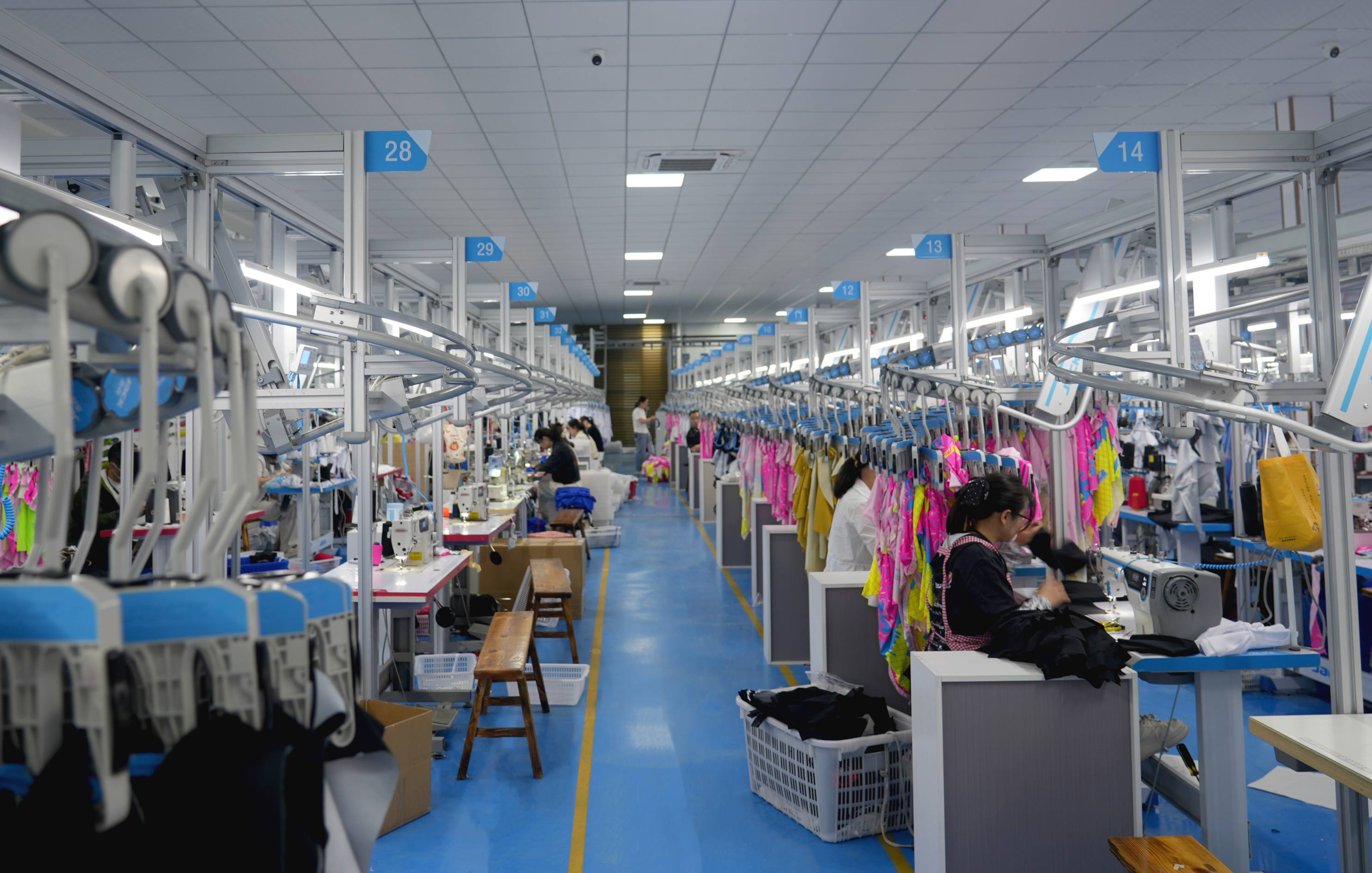
We had a buyer send over a pre-audit questionnaire a few weeks back, ahead of visiting our Shenzhen facility. Fourteen pages, and about a third of it was testing-related — but half those questions weren't answerable the way she'd phrased them, because they assumed test data existed for things nobody in this category has published yet. I don't think she was wrong to ask. I think most buyers just haven't been taught what a real testing question sounds like versus what a supplier wants them to ask. This article is that: what to actually ask, and how to tell if the answer means anything.
Why this article exists
I've written elsewhere in this series about what our LY4291-1 development spec looks like today. This piece is different — it's not about our product specifically, it's the questionnaire I'd hand any buyer walking into any factory, ours or a competitor's. If you're evaluating period-proof running shorts as a category, this is the list that separates a supplier who's done real work from one who's good at writing spec sheets.
One thing before I get into it: everything here is scoped to running, gym training, and similar high-impact movement — not cycling. Cycling puts sustained, concentrated pressure on the saddle contact area in a way running and gym training don't, and none of the testing logic below — ours or anyone's — has been validated against that pressure profile. A buyer developing for cycling needs a different pattern and a different test plan. I'll repeat this at the end so it doesn't get lost.

What to ask about the absorbency number itself
A supplier's "XXml" figure only means something once you know the test liquid, the application rate, the saturation endpoint, and the sample condition — ask for all four before you repeat that number to your own customers.
I went through this in detail in an earlier article in this series, so I'll keep it tight here. A capacity number is a tank size, not a stopwatch, and it can be measured very differently while still producing a plausible-looking figure:
Test liquid — water, saline, or a viscosity-matched liquid meant to approximate menstrual fluid? Water behaves differently than real flow, and a number tested on water alone won't hold up in the real world.
Application rate — dripped in gradually to mimic real flow, or dumped in all at once with a syringe? The two methods can produce very different absorption and leak behavior on an identical garment.
Saturation endpoint — what did the tester define as "full"? First sign of surface wetness, first drip-through, or total refusal to absorb more? Each definition produces a different maximum number on the same product.
Sample condition — brand-new and unwashed, or already through a wash cycle? Absorbent cores and leakproof layers don't always perform the same after laundering.
If a supplier can't answer those four questions specifically, ask for the actual test document — not a summary — with a date and a named method attached. A number with no method behind it isn't a lie exactly, but it isn't useful information either.
Why dynamic leak testing matters more than a static number
A static absorbency test tells you what a flat, motionless sample can hold — it tells you nothing about whether the gusset stays anchored and sealed once your body starts moving, which is the whole point of a running short.
This is the gap I think buyers underestimate most, because a lab-style capacity figure feels rigorous and final, when really it answers a narrower question than people assume. Running, squatting, and jumping-jack-style movement changes things a flat sample never deals with: repeated hip flexion that can shift a poorly anchored gusset, sustained pressure changes across the crotch panel, and fluid movement driven by motion rather than gravity alone. None of that shows up on a garment sitting still on a lab bench.
What a real dynamic test protocol should cover:
Movement types — running gait, deep squats, and jumping-jack-style lateral movement, since each stresses the gusset-to-shell attachment differently.
Gusset stability under motion — does the panel stay in position, or drift, bunch, or pull away from the seam line during repeated movement?
Leak points, not just leak amount — side edges, back rise, and leg openings are usually where failure starts, well before the core is technically saturated.
Duration — a five-minute test and a 45-minute training session are not the same stress test; a supplier should know which one they ran.
I'll be direct about where we stand: LY4291-1 has not completed documented dynamic movement testing yet. No running, squat, or jumping-jack leak trial has been run and recorded for this specific style. This is our current development specification, and I'd rather tell you that plainly than let a buyer assume otherwise from a spec sheet. What I can tell you is that our testing capability keeps expanding as buyer inquiries for this category come in — I won't hand you a project name or a completion date for something that isn't finished, because that's exactly the kind of promise I'm asking suppliers not to make to you.
Why post-wash performance is the test buyers skip and then regret
A garment that performs well brand-new and degrades by wash 20 is a return-rate problem waiting to happen — ask for wash-cycle data before you commit to a reorder quantity, not after your first batch of customer complaints.
This is the test I see skipped most often, because it's slow and unglamorous next to a nice absorbency figure on a spec sheet. But this product isn't one-wear — a customer washes and re-wears it for months, maybe years. If performance drops off a cliff after a handful of washes, you don't find out until the reviews arrive, and by then you've already shipped the reorder.
What buyers should ask for:
Absorbency retention at 5, 20, and 50 wash cycles — does the core still hold close to its original capacity, or does laundering and detergent exposure degrade it meaningfully?
TPU or leakproof-layer integrity after washing — cracking, delamination, or reduced barrier performance after repeated wash-and-dry cycles?
Elastic recovery — does the waistband and leg opening still return to shape after regular wear-and-wash cycles, or start sagging?
Wash instructions matched to the construction — cold water, no fabric softener, air dry is standard advice here, but ask whether the supplier's own testing followed those same conditions or a gentler lab-only protocol that doesn't match real customer behavior.
Here too, I want to be straightforward: we have not yet completed and documented 5-, 20-, or 50-wash-cycle performance testing specifically for LY4291-1. That data doesn't exist yet for this style, and I won't pretend it does. If wash-durability documentation matters for your launch — and it should — raise it directly with any supplier before you sign off on a bulk order, not after.
What "chemical safety tested" should actually mean
A raw-material supplier's PFAS declaration and a third-party finished-garment PFAS test are two different documents — ask specifically which one you're being shown, because only one of them tells you what's actually in the sewn product a customer will wear.
This distinction matters more than most buyers realize. A fabric mill can declare its raw material PFAS-free, and that can be entirely true, while the finished garment still picks up fluorinated compounds during dyeing, coating, trims, or printing further down the line. Only testing the finished, sewn garment tells you what's actually in the product on the shelf.
This has real regulatory weight behind it now, not just a "nice to have" argument: New York State's PFAS-in-apparel law restricts the sale of new apparel, including activewear, containing intentionally added PFAS, effective January 1, 2025 (NY State DEC). I'm not raising that to scare anyone — it's the compliance backdrop any buyer selling into the US should already have on their radar, regardless of supplier.
Where we stand: as a company, Ljvogues tests PFAS-free status at the finished-garment level via SGS testing against EPA Method 533, on every batch, company-wide, since Q2 2024 — that's real policy, not a one-off claim. But I want to be precise: LY4291-1 as its own standalone style still needs its own finished-garment chemical test on file before I'd call that specific product independently documented, separate from our general production testing cadence. Our OEKO-TEX Standard 100 Class I certificate (26.HCN.12213, Hohenstein, valid through July 31, 2027) covers our period underwear line — I won't tell a buyer it automatically extends to this sport short until we've confirmed the certificate's scope covers it.

The buyer's test-question checklist
Here's the table I'd actually hand someone walking into an audit or drafting an RFQ — the questions worth asking regardless of which factory you're evaluating.
Test category | What to ask | Why it matters |
Absorbency method | What test liquid, injection rate, and saturation endpoint were used — and was the sample new or post-wash? | A capacity number without a method is a marketing figure, not a test result |
Dynamic leak testing | Has the gusset been tested during running, squatting, or jumping motion, or only on a flat static sample? | Static absorbency says nothing about whether the gusset holds position and seal once the body moves |
Post-wash performance | Is there absorbency, TPU-integrity, and elastic-recovery data at 5, 20, and 50 wash cycles? | Products that degrade after repeated washing drive returns and damage repurchase rates |
Finished-garment chemical test | Is this a raw-material supplier declaration, or a third-party test on the actual sewn garment (e.g., SGS + EPA Method 533)? | Only finished-garment testing reflects what's actually in the product a customer wears |
Certificate scope | What exact product line, materials, and certificate number does this certification cover? | A certification for one product line doesn't automatically extend to a different garment |
Gusset coverage | What are the front/back coverage dimensions, and do they scale across the size range? | Coverage that isn't sized for the body wearing it is a leak risk regardless of absorbency capacity |
Fit verification | Has this been tried on real bodies across multiple sizes, not just a single sample size on a fit model? | Grading problems at the size extremes are a common, avoidable source of returns |
If a supplier can't answer most of these with specifics, that's useful information on its own.
The parts worth a shorter mention
A few things worth knowing but not worth a full section each:
Gusset coverage diagrams — ask for the actual front-to-back and side-to-side dimensions of the absorbent panel, and whether coverage scales proportionally across a size run from XXS to 3XL or stays fixed.
Real-body fit feedback — a fit-model sample isn't the same as feedback from a few representative sizes (say, a small, a mid-size, and a plus size) actually training in the garment.
Drying time — ask what fabric/layer combination the supplier recommends and roughly how long it takes to air-dry fully at room temperature; anything left damp too long invites its own problems.
None of these need a dedicated lab report to ask about, but they're the kind of detail that separates a supplier who's built this category before from one who's guessing alongside you.
Where LY4291-1 stands today — stated plainly
I'd rather repeat this clearly than let a reader assume more than what's documented. LY4291-1 is a 2-in-1 sport short — relaxed outer shell, fixed built-in leakproof gusset, 88% nylon / 12% spandex, sized XXS–3XL, drawstring waistband, dual side pockets, reflective detailing. 30ml is our internal development target capacity, not a third-party-certified figure. PFAS-free testing since Q2 2024 is a company-wide policy via SGS and EPA Method 533, not yet a standalone finished-garment test specific to this style. Our OEKO-TEX Standard 100 Class I certificate covers our period underwear line, not this sport short. Dynamic movement testing, post-wash performance data, and finished-garment chemical testing specific to LY4291-1 are not yet complete — this is our current development specification, and final performance claims should be confirmed through your own approved sample and testing in your target market. Full product details are on the LY4291-1 product page.
And to say it once more plainly: everything above is scoped to running, gym, and training-style movement. None of it — ours or anyone else's in this category — has been validated for cycling, and a saddle-pressure use case needs its own pattern and its own testing before anyone should call it proven.
If you want to build this testing plan together
I'd rather walk a buyer through what's on file, what isn't, and what we'd test jointly than hand over a spec sheet dressed up with words like "proven." If you're evaluating suppliers for this category and want to talk through a real testing plan for your market, reach out directly.
WhatsApp: +86-199-2880-2613
Email: info@ljvogues.com
LinkedIn: linkedin.com/in/ljvogues-ceo
Product page: https://www.ljvogues.com/2-in-1-sport-period-shorts
— Ocean Yang, Ljvogues