



Leak proof underwear is underwear with a built-in absorbent layer sewn into the gusset — it looks, fits, and washes like a regular pair of underwear, and its only extra job is catching light leaks before they reach your clothes. That's the whole concept. No tubes, no adhesive strips, no bulky shape under your pants. Just underwear that happens to do one more thing than plain cotton briefs do.
I want to open with that sentence on purpose, because most of what's written about this category buries the simple answer under ten paragraphs of clinical language before it ever tells you what the product actually is.

Why I'm writing this one
A buyer emailed me a few weeks back after finding our period underwear line, asking if we could "just relabel one of those styles for the incontinence market since it's basically the same customer." I understood why she asked — a leakproof gusset for period protection and one for everyday light-leak protection share a lot of construction logic. But the real question was buried in her third email: "Do we need to make this look medical, or can it just look like underwear?"
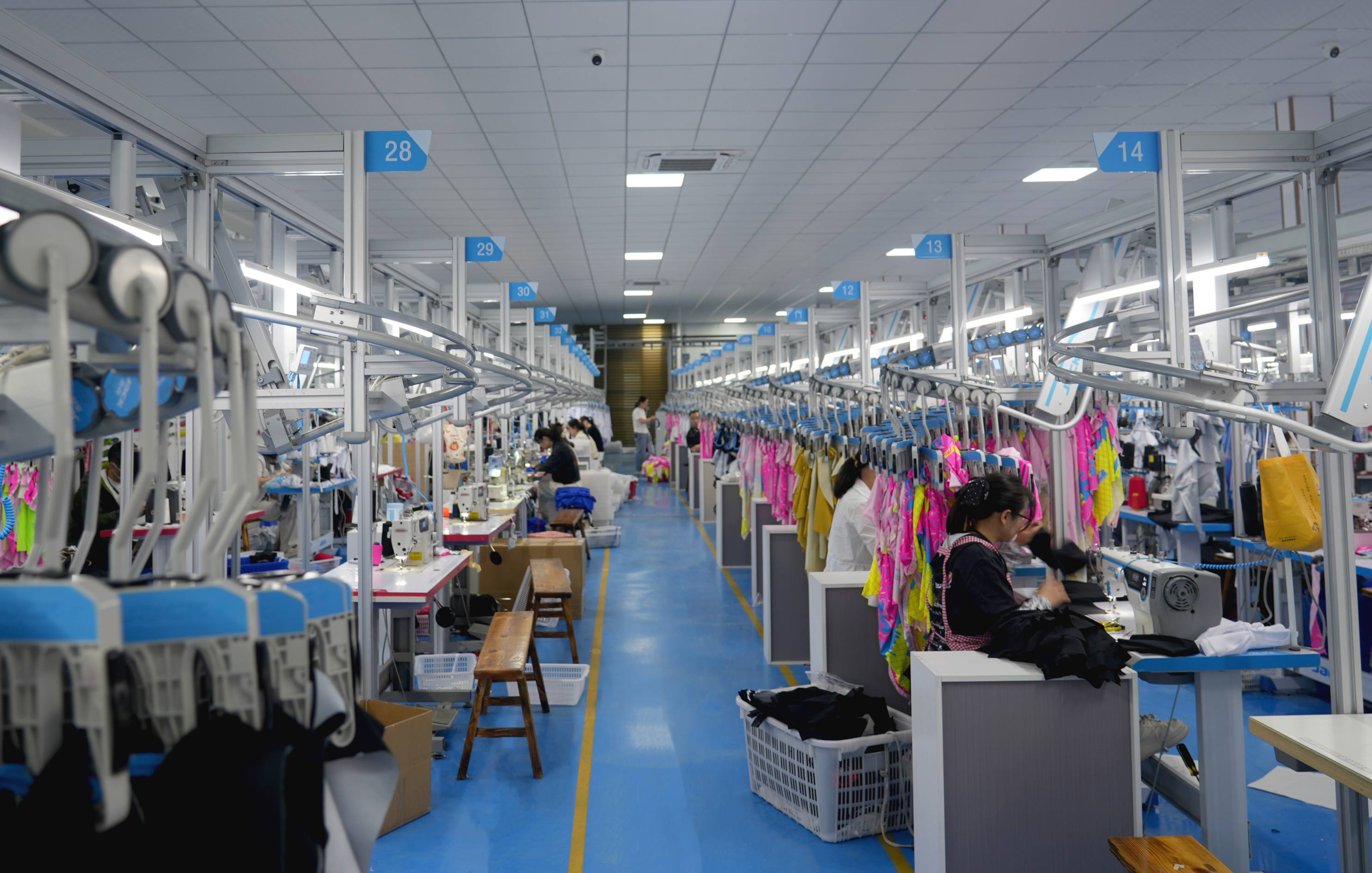
That question sums up what's wrong with how this category usually gets marketed. I've run a factory floor in Shenzhen for 11 years, and I've watched brands wrap a simple product — underwear with an absorbent layer — in packaging that makes it look like medical equipment. People don't want to feel like they're buying a medical device to handle an ordinary light leak. They want underwear. So let's talk about what this actually is, who it's for, and how a brand should think about building it.
What leak proof underwear actually is
Leak proof underwear is a regular-looking pair of underwear with an absorbent core built into the crotch panel, designed to catch everyday light leaks the same way period underwear catches menstrual flow. The category goes by a few names — leakproof underwear, incontinence underwear, absorbent underwear — but the construction logic is consistent across all of them: a moisture-wicking layer close to the skin, an absorbent core in the middle, and a leakproof barrier layer underneath, all stitched into a garment shape you'd recognize as underwear from across the room.
The core difference from a disposable pad or adult diaper is that this is washable and reusable, not single-use. You wear it, and if there's a light leak, the built-in layers absorb and contain it instead of it soaking through your clothes. At day's end, you wash it like any other underwear and wear it again. That's the entire value proposition — a much less dramatic story than the category's marketing usually makes it sound.
It looks like normal underwear — and that's the whole point
This detail drives purchase decisions more than absorbency specs do, and I don't think it gets said plainly enough.
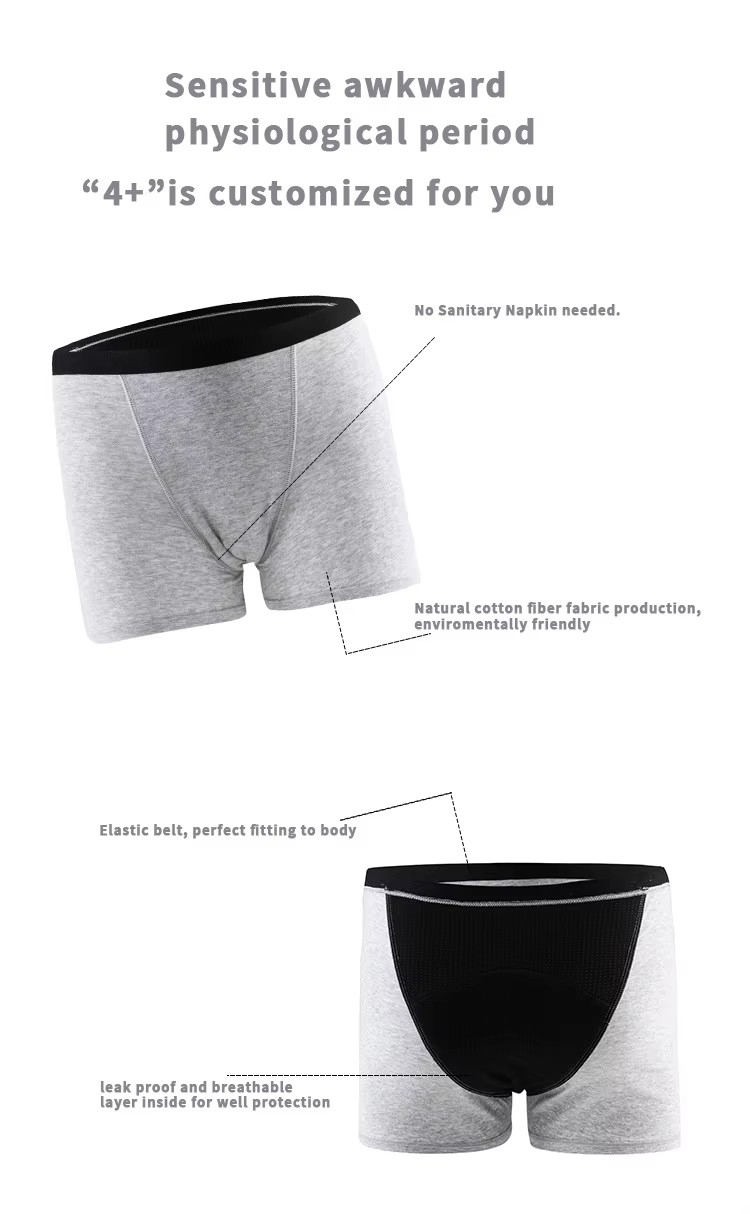
A well-made pair of leak proof underwear is visually indistinguishable from a regular pair of underwear or period underwear once it's on — no visible padding, no crinkle, no shape that reads as "medical" under clothing. Take our Model 8306, a mid-rise boyshort style: from the outside, it's a boyshort cut with a pure stretch waistband and no hardware or snaps — nothing that signals "this is different." The absorbent structure is built into the inner layers, not stacked on top where it would show. Lay it next to a regular boyshort on a shelf and you couldn't tell which one does what just by looking.
That matters because the biggest barrier to trying this category isn't cost or comfort — it's the fear of looking or feeling clinical. A garment that looks exactly like underwear removes that barrier before the person even puts it on.
Who actually wears this — and why "diagnosis" is the wrong lens
I want to be direct: I'm not going to talk about this category in terms of diagnoses, and there's a real reason beyond tone.
Leak proof underwear serves everyday, light-leak protection needs, and those needs show up across ordinary life situations that have nothing to do with a diagnosis. Think about who actually reaches for a product like this: someone noticing more frequent light leaks as they get older, a new parent in the months after childbirth whose body is still recovering, someone with a demanding job or active training schedule who notices occasional light leaks during exertion, or simply someone who wants everyday backup protection without making it a big deal. None of that requires a diagnosis or a label. It's closer to why someone reaches for period underwear on a heavy-flow day — a practical daily-life tool, not a medical intervention.
That's also why I avoid the word "patient" when talking about this category. The person wearing this is a wearer, a customer, a person going about their day. Frame it that way and the shame-driven hesitation around this category falls away, because you're describing underwear with an extra job, not a medical device.

How to actually pick a pair — the four things that matter
Once you get past the framing, choosing leak proof underwear comes down to four practical questions, the same way choosing period underwear does.
Absorbency layer count and capacity tell you how much protection you're getting — more layers generally means more capacity but also more fabric between your skin and the outside world. A basic leakproof brief might use two or three layers; a heavier-protection style like our Model 8306 uses four — a wicking layer, an absorbent core, and a waterproof barrier stacked to handle up to 40ml before saturation. More layers isn't automatically "better" for everyone; it's a trade-off between capacity and how much you notice you're wearing something at all.
Fabric composition affects comfort, breathability, and durability. Model 8306 uses a 95% cotton / 5% spandex main fabric against the skin, a 92% polyester / 8% spandex inner wicking layer, an 88% polyester / 12% spandex absorbent core, and a 100% polyester-plus-TPU waterproof outer layer. Cotton against skin for comfort, synthetic blends doing the technical absorption work underneath — standard construction logic across this category, not something unique to us.
Sizing matters more here than in most underwear categories, because a gusset positioned wrong for your body won't contain a leak no matter how many layers it has. Look for a size range wide enough to fit your body accurately rather than rounding up or down — Model 8306 runs XS to 4XL, wider than a lot of basic underwear lines bother stocking.
Style and rise are personal preference, but they affect how the product sits day to day. A boyshort cut like Model 8306's mid-rise silhouette tends to give more coverage and more secure gusset placement than a low-rise thong-style cut, which is part of why boyshort and brief styles dominate this category.
Absorbency reference: what the numbers actually mean
A table is more honest here than hedged paragraphs, and this is a place where getting specific actually helps you shop.
Protection level | Typical absorbency range | What it's generally suited for |
Light | Up to ~10-15ml | Very light, occasional daily leaks; backup confidence more than active containment |
Moderate | ~15-30ml | Regular light leaks throughout a normal day |
Heavy | Up to ~40ml (e.g. Model 8306) | More frequent or larger light leaks; all-day everyday protection |
Treat this as directional, not a fixed schedule — absorbency capacity describes how much a garment's core holds before saturation, not how many hours you can wear it, since that depends on your body and activity level. Same logic as period underwear: capacity is a tank size, not a stopwatch.
Leak proof underwear vs. regular underwear vs. traditional disposables
This is the comparison people want when deciding whether to switch.
Factor | Regular underwear | Leak proof underwear | Traditional disposable pad/diaper |
Appearance | Normal underwear | Normal underwear — no visible difference | Visibly bulkier; can show under fitted clothing |
Reusability | Wash and reuse | Wash and reuse | Single-use, thrown away after each use |
Built-in absorbency | None | Yes — layered into the garment itself | Separate product worn inside or with regular underwear |
Daily cost over time | Lowest ongoing cost | Higher upfront cost per unit, lower cost over repeated wear vs. disposables | Recurring cost, adds up with daily use |
Environmental waste | None from the garment itself | Reusable, less daily waste than single-use products | Daily disposable waste |
Typical use case | No leak protection needed | Everyday light-leak protection needs | Any protection level, including heavier or overnight needs |
None of this claims leak proof underwear replaces every disposable product for every situation — for heavier overnight needs, a dedicated disposable product may still make more sense. This is about the everyday, light-leak use case the category is built around.
Now, if you're a brand: why this category fits OEM/ODM development well
Consumers ask "does this work for me." Brand buyers need to ask a different question: does this category make sense to build, and what does building it require.
Leak proof underwear is a strong OEM/ODM fit because the construction is modular — fabric, absorbency layer count, and sizing can all be adjusted independently without redesigning the whole garment. That's different from apparel categories where changing one spec means re-engineering the pattern. Here, you can hold the outer shell constant and adjust the absorbent core, or keep the core and shift the outer fabric for a different market's climate or price point. That flexibility is what makes private label development here more approachable than buyers often expect.
A few things I'd flag for anyone evaluating this:
Fabric customization — main fabric blend, wicking layer, and waterproof barrier material can be adjusted for a specific price point, hand-feel, or climate requirement.
Absorbency tiering — build a light/moderate/heavy line off the same base pattern with different core layer counts, rather than three unrelated products from scratch.
Size range — grading logic matters more here than in basic underwear, since gusset placement has to stay accurate at every size, not just the sample size.
Colorway and branding — Model 8306 currently runs in black and grey; additional colorways, private label packaging, and branding are open to development discussion.
MOQ planning — Model 8306 runs at 300 pieces per style as a baseline, worth mapping against your customization tier before committing to a launch quantity.
Model 8306 as a starting sample — what it is, stated plainly
I'd rather describe this exactly as it is than dress it up. Model 8306 is our Wholesale Heavy Flow Leakproof Incontinence Boyshort — a mid-rise boyshort with a 4-layer leakproof structure, built for everyday heavy-flow-level light-leak protection, sized XS to 4XL, in black and grey, at a 300-piece MOQ per style. Full specs are on the Model 8306 product page.
I want to be specific about certifications, because this is the kind of detail I'd want a supplier to be straight with me about if I were the buyer. Model 8306's product page does not currently list any third-party certifications — no OEKO-TEX, no independently verified PFAS-free status, nothing of that kind on file for this specific style. That's the honest current state of this product, and I won't imply otherwise just because it would sound better.
What I can tell you: we have real, demonstrated experience running this certification and testing process elsewhere in our incontinence-adjacent lines. Our men's incontinence briefs, Model 1092, and our men's striped incontinence boxer briefs, Model LJVOGUES1090, both carry OEKO-TEX Standard 100 certification, third-party verified PFAS-free status, REACH/SVHC compliance, and ISO 9001/ISO 14001 certification at the company level (Model 1092, Model LJVOGUES1090). That tells you we know how to run these tests when a product line requires them — it does not tell you Model 8306 already has them. If a buyer wants Model 8306 developed with a specific certification package, that's a testing project we'd scope together, not something already on file today.
On chemical safety more broadly: as a company, we test PFAS-free status at the finished-garment level via SGS testing against EPA Method 533, and hold ISO 9001 (62726Q00153R001), ISO 14001 (62726E00103R001), BSCI, SEDEX SMETA 4-Pillar, EU REACH, GRS, and CPSIA credentials across our operation. Those are real, company-wide capabilities — but whether a specific certificate applies to a specific style is answered style by style, not by pointing at the company letterhead.
If you're weighing this category
If you're a consumer trying to figure out whether this category is for you: it's underwear, it does one extra job, and nobody needs to know unless you tell them. If you're a brand evaluating whether to develop something like Model 8306, I'd rather walk you through the actual fabric spec, size range, MOQ, and what certification work would involve than sell you on adjectives.
WhatsApp: +86-199-2880-2613
Email: info@ljvogues.com
LinkedIn: linkedin.com/in/ljvogues-ceo
Website: https://www.ljvogues.com/
Product page: https://www.ljvogues.com/heavy-flow-leakproof-incontinence-boyshorts
— Ocean Yang, Ljvogues
Sources cited in this article
Model 8306 product page — Wholesale Heavy Flow Leakproof Incontinence Boyshorts: https://www.ljvogues.com/heavy-flow-leakproof-incontinence-boyshorts
Model 1092 product page — Men's Incontinence Briefs: https://www.ljvogues.com/men-s-incontinence-briefs
Model LJVOGUES1090 product page — Men's Striped Incontinence Boxer Briefs: https://www.ljvogues.com/men-s-striped-incontinence-boxer-briefs-