



Table of Contents
Quality cannot be compromised in intimate apparel—especially in period underwear, where a single defect can become a leak, a bad review, and a lost customer. At Ljvogues, we position quality as a system, not a slogan, supported by certified management and material standards (including ISO systems and OEKO-TEX®-aligned safety expectations) and rigorous in-process controls.
Why Period Underwear QC Must Be Stricter
Unlike basic underwear, period panties must deliver measurable functional performance: absorbency, barrier protection, durability after washing, and consistent fit across sizes. Industry QC frameworks emphasize structured checkpoints from pre-production through in-line inspection and final inspection, because most costly problems are discovered too late when QC is only done at the end.
Below is the 10-point inspection logic we use to reduce risk and protect brand reputation at scale.
Checkpoint 1: Raw Material Inspection
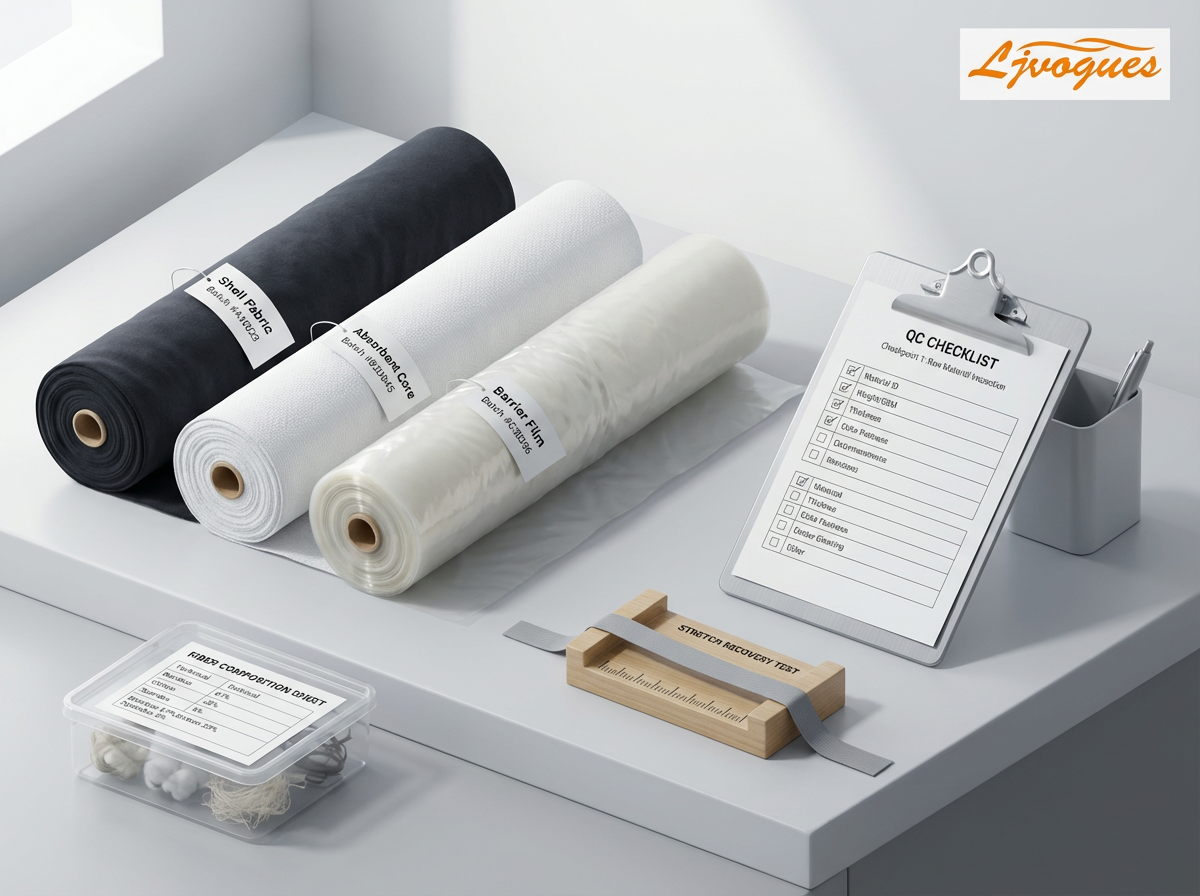
Raw material inspection is the first “quality gate” and one of the most important, because defects here multiply throughout production. We verify core materials before cutting begins to ensure they meet both performance needs and skin-contact safety expectations.
What we check:
Fabric composition verification: Confirm fiber content matches the agreed specification and documentation, especially for certified programs.
Absorbency layer testing: Validate the absorbent core material’s expected behavior (absorption rate, retention, consistency across lots).
Elastic and thread quality checks: Inspect strength, stretch recovery, and suitability for repeated wear and washing.
Checkpoint 2: Pattern Accuracy
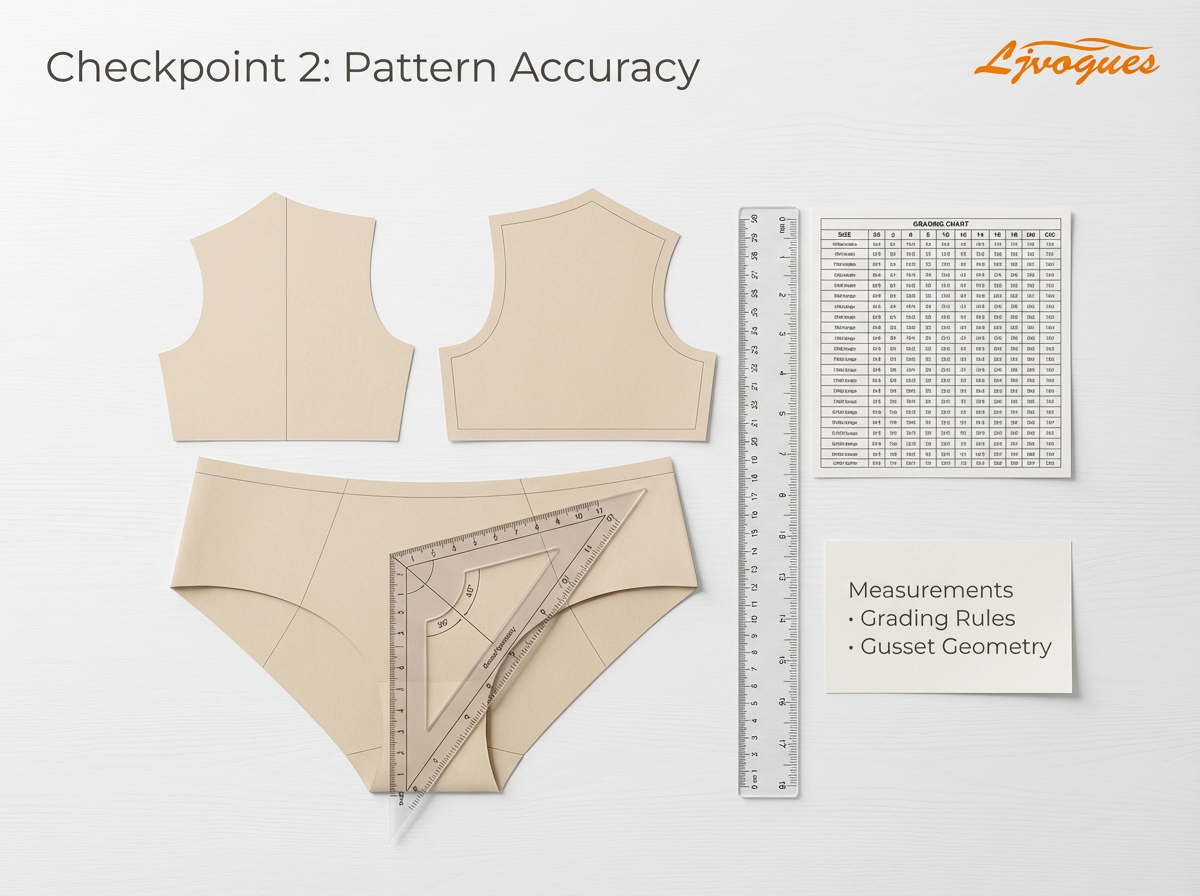
If the pattern is wrong, everything downstream is wrong—no sewing skill can “fix” a flawed pattern. We confirm pattern measurements, grading rules, and gusset geometry to ensure the absorbent area and barrier coverage remain correct across the full size range.
Checkpoint 3: Cutting Precision
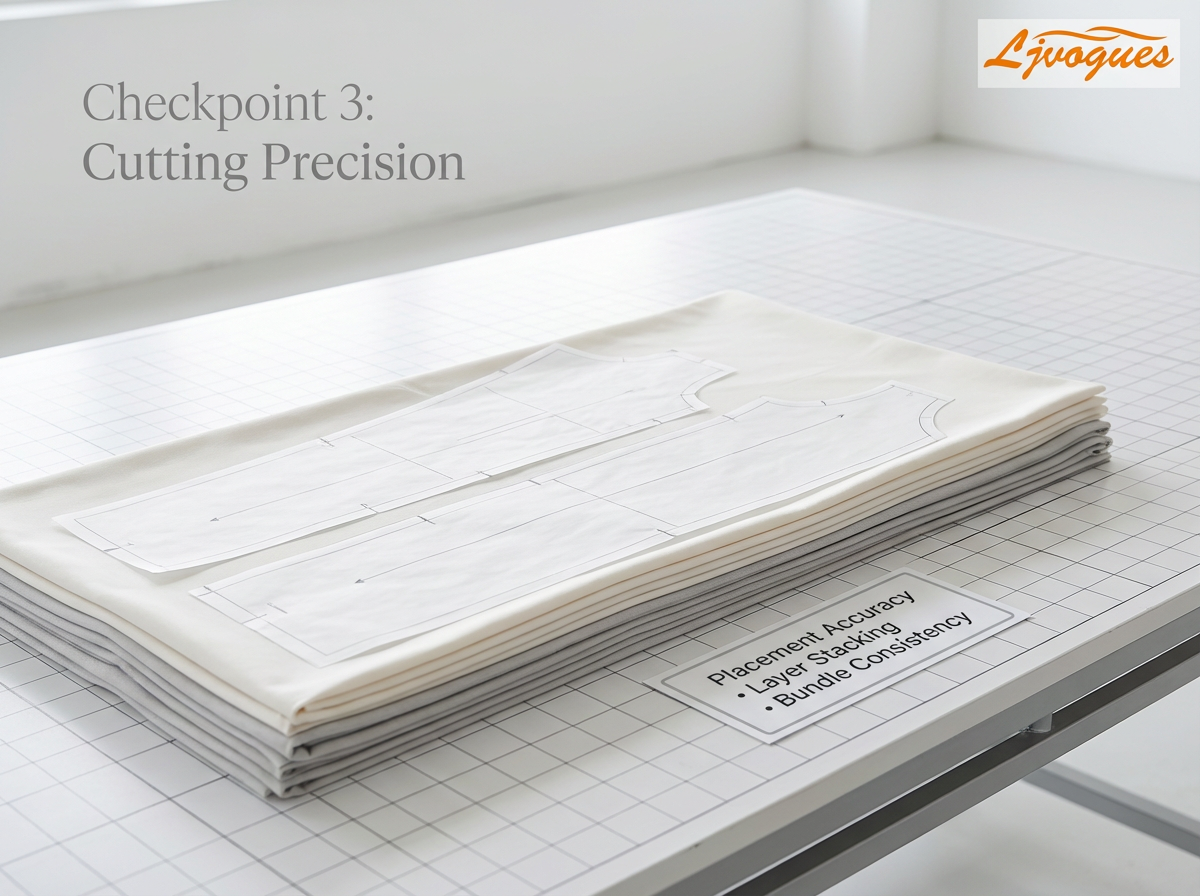
Cutting is where many invisible problems begin, including misalignment that later causes gusset shifting or inconsistent coverage. Our cutting checks focus on placement accuracy, layer stacking control, and consistency of cut pieces across bundles.
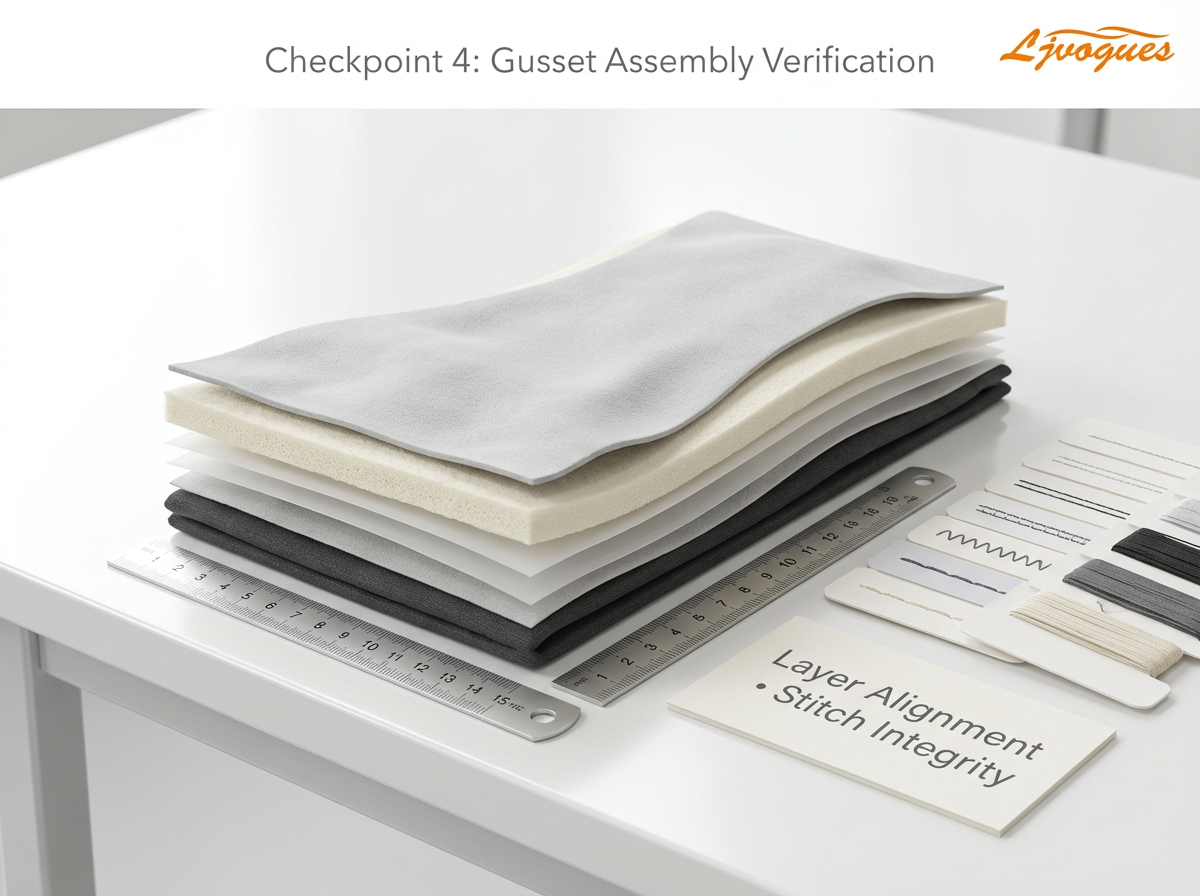
Checkpoint 4: Gusset Assembly Verification
The gusset is the “engine” of period underwear, so assembly verification is a critical checkpoint. This is where we ensure the multi-layer system performs as designed—not just that it looks neat.
What we verify:
Layer alignment: Each layer must be positioned correctly to prevent edge leakage and coverage gaps.
Stitching integrity: Stitch quality and seam control must prevent shifting, tunneling, and long-term failure after washes.
-
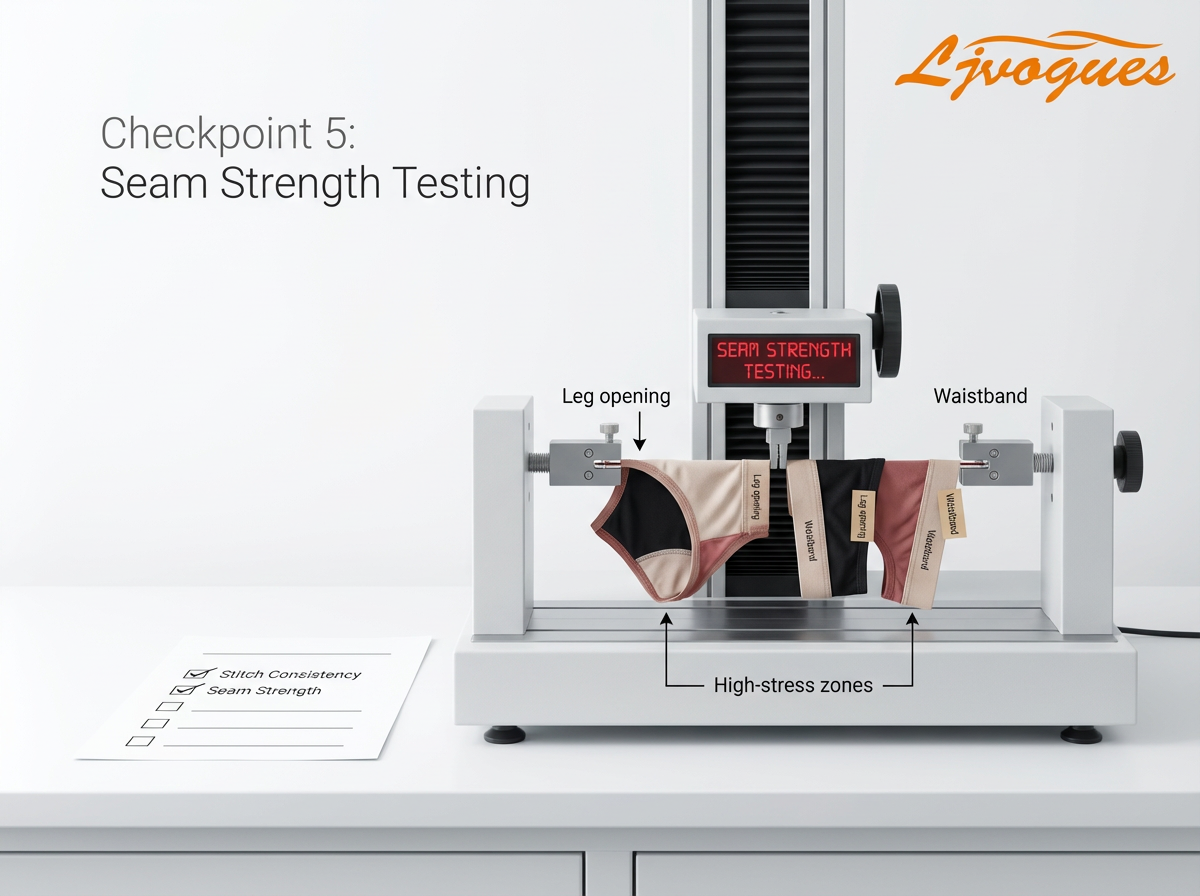
Checkpoint 5: Seam Strength Testing
Seam failure is one of the fastest ways to trigger returns in underwear. We verify seam strength and stitch consistency—especially around high-stress zones like leg openings, waistband joins, and gusset edges.
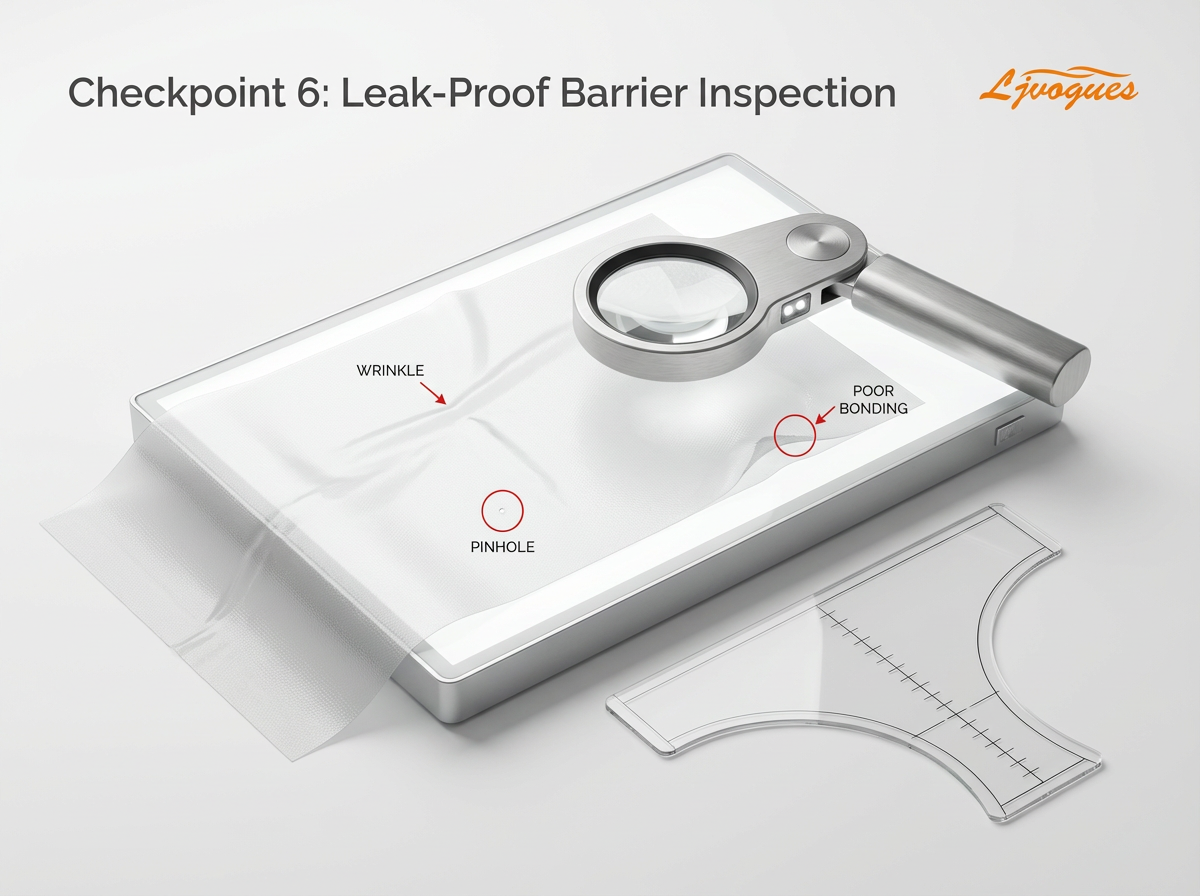
Checkpoint 6: Leak-Proof Barrier Inspection
The barrier layer (often TPU/PUL-type waterproof components) is what prevents garment-to-clothing transfer, so it must be stable, correctly placed, and defect-free. We inspect barrier integrity, coverage area, and potential failure points (wrinkles, punctures, poor bonding, and seam-edge risks).
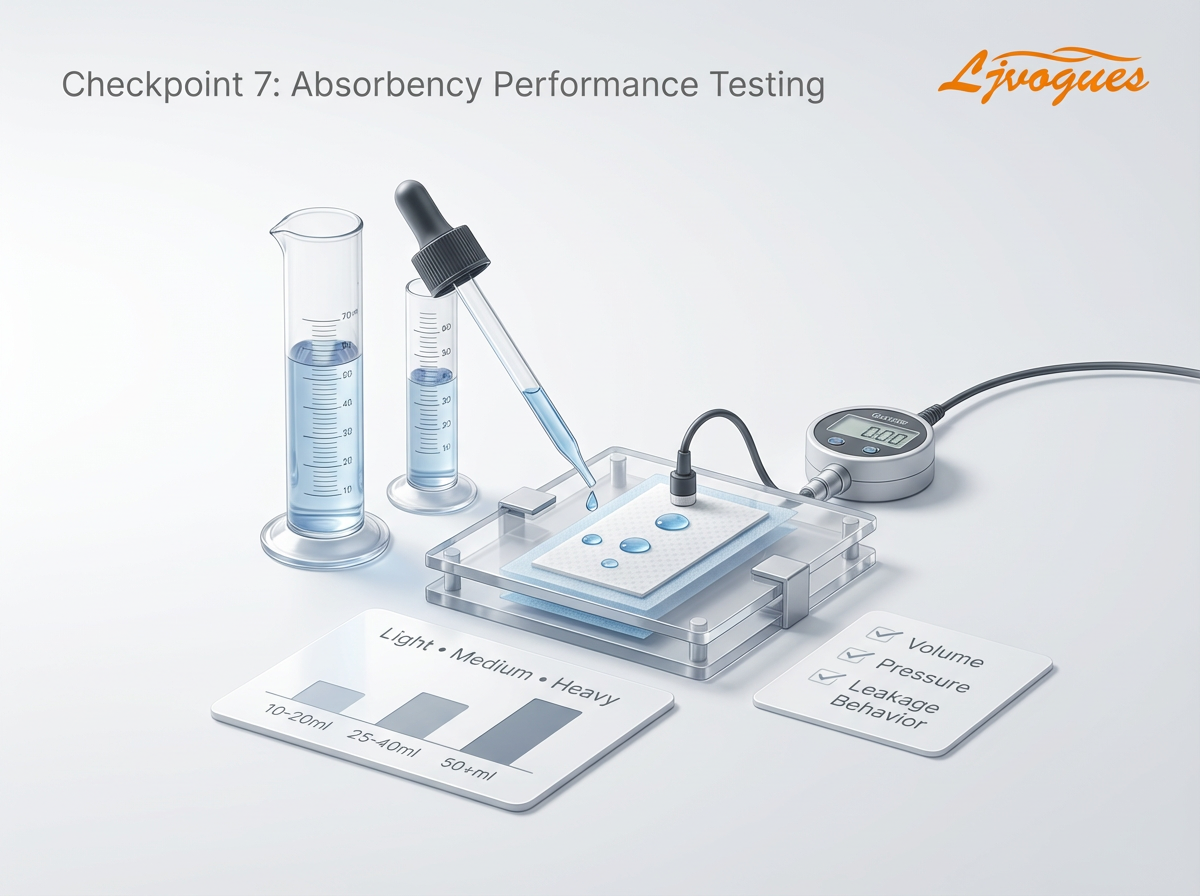
Checkpoint 7: Absorbency Performance Testing
Absorbency testing is essential because “heavy flow” is not a feeling—it is a performance claim. In industry practice, absorbency tests often use controlled liquid volumes and simulate pressure/movement conditions to confirm capacity and leakage behavior.
At Ljvogues, performance validation is tied to your product’s defined absorbency tier so the bulk product matches the approved sample’s claim.
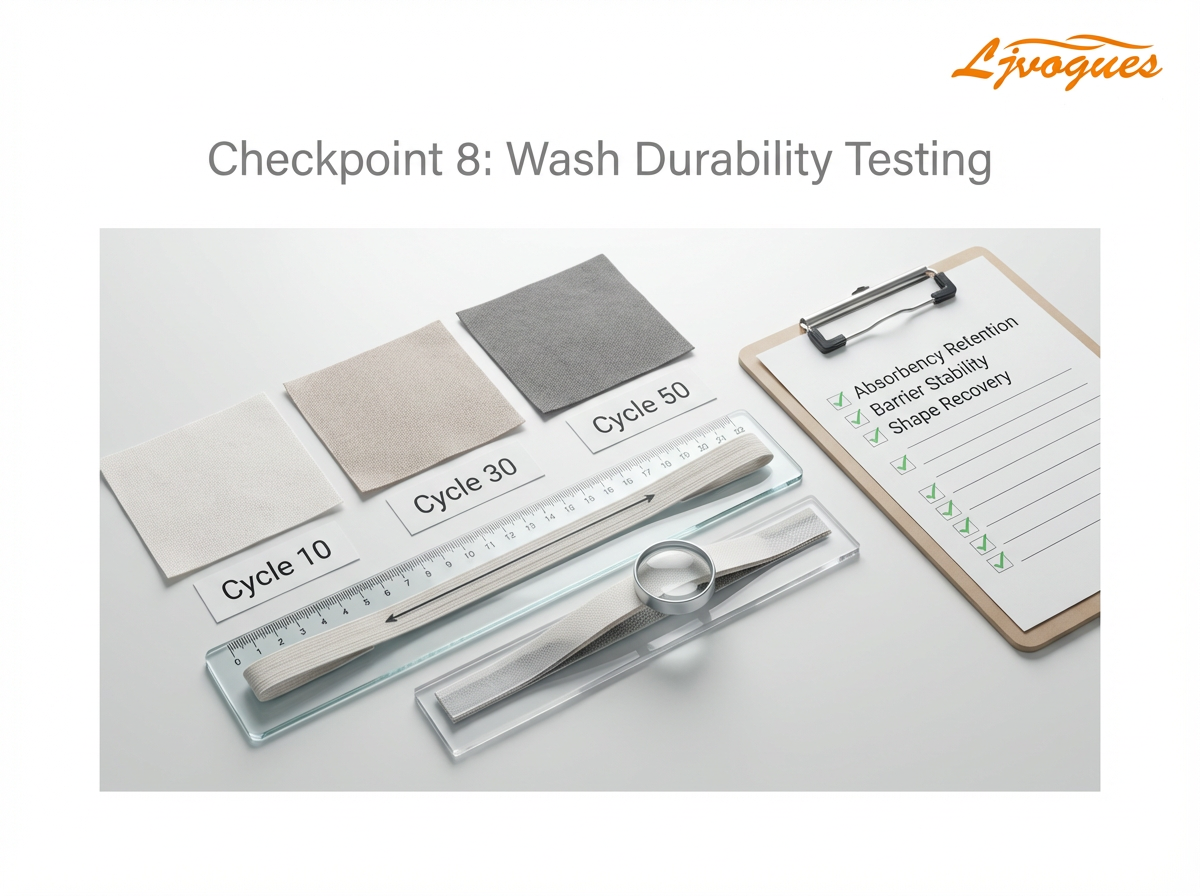
Checkpoint 8: Wash Durability Testing
Because period underwear is reusable, wash durability is part of the product’s value proposition. Independent testing approaches have evaluated period underwear across dozens of wash cycles to observe wear and performance retention, illustrating why wash testing should be structured rather than assumed.
We focus on:
Absorbency retention after repeated wash cycles.
Barrier stability (no delamination or cracking).
Elastic recovery and shape retention.
-
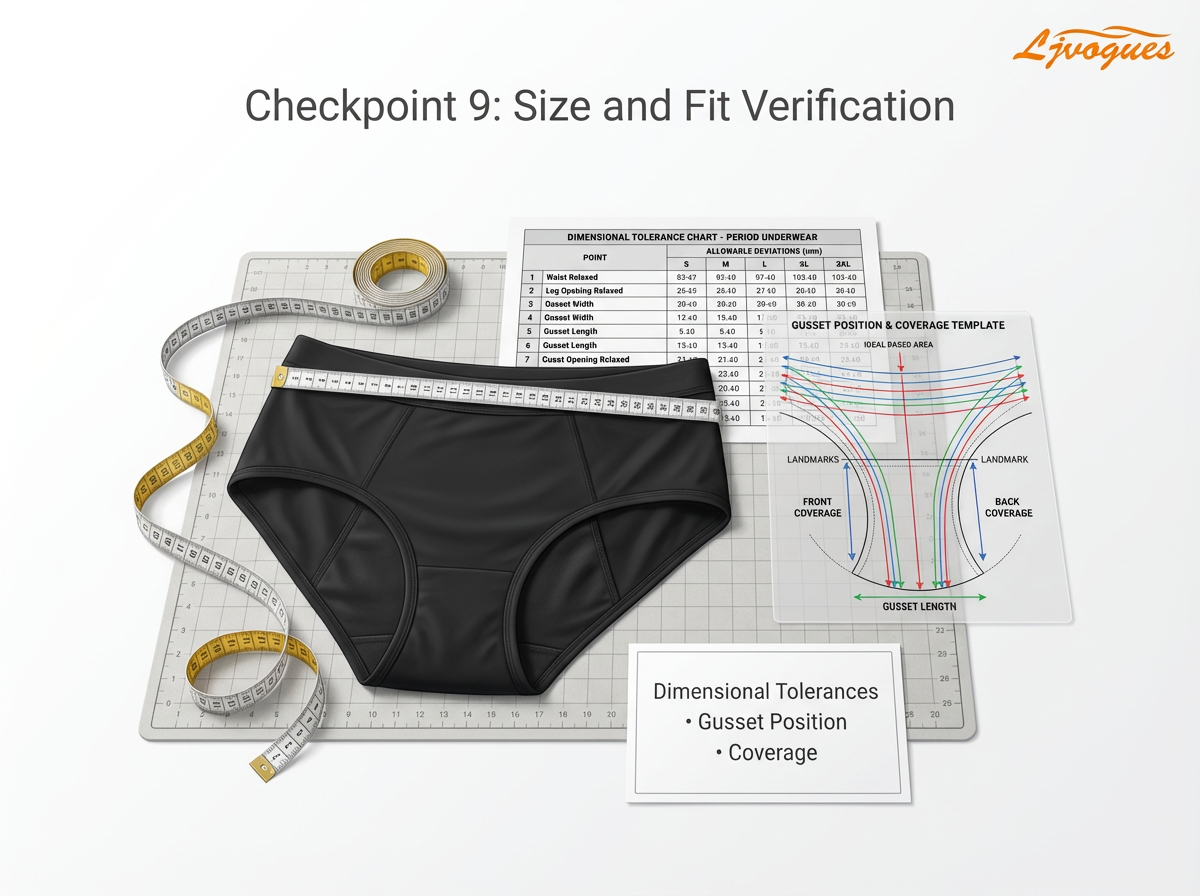
Checkpoint 9: Size and Fit Verification
Sizing must be consistent in bulk production, or even a strong product will fail commercially due to returns and customer confusion. In-line and final dimensional checks are widely recommended in garment QC to keep measurements within tolerance.
For period underwear specifically, fit checks also confirm gusset position and coverage across sizes—because a correct “size label” is meaningless if the absorbent zone sits in the wrong place.
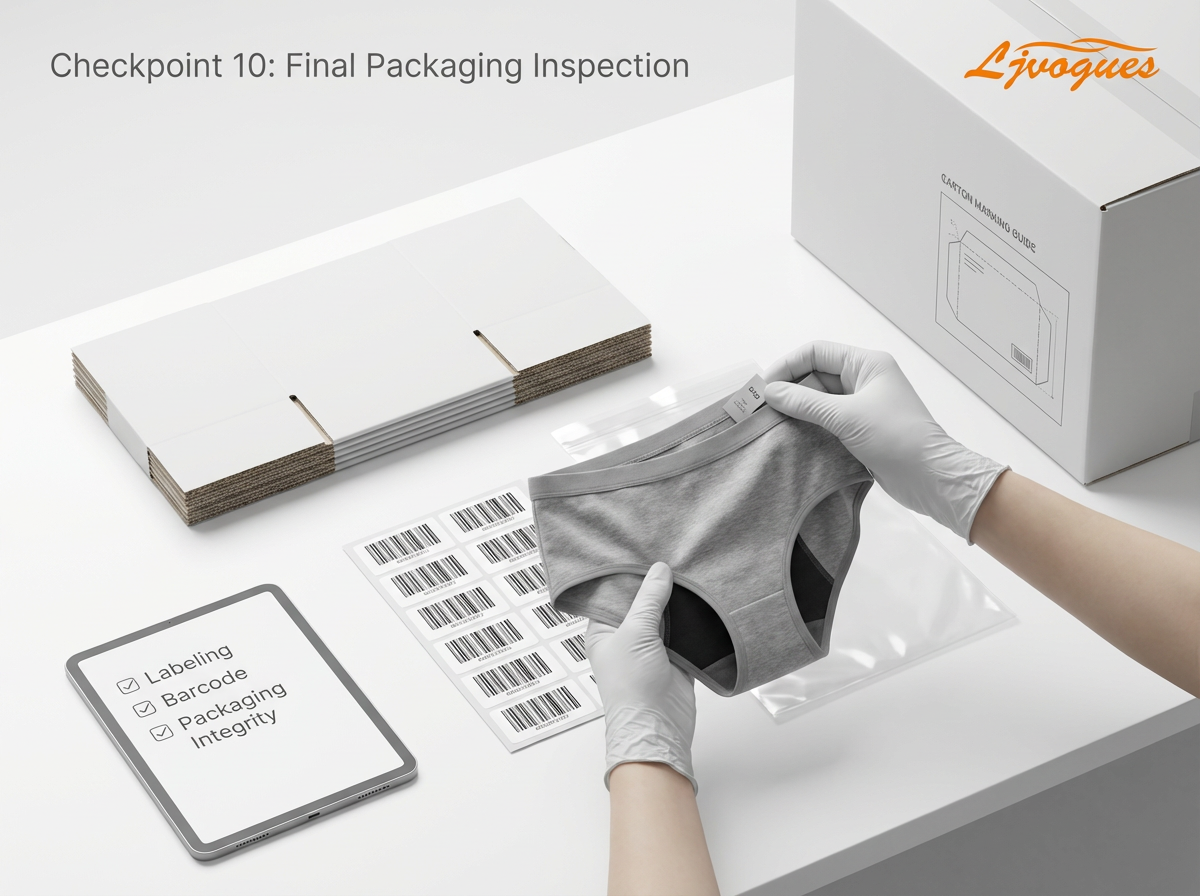
Checkpoint 10: Final Packaging Inspection
Final inspection protects shipment readiness and retail presentation. We verify correct labeling, size tags, barcode placement (if required), packaging integrity, and carton marking accuracy to reduce downstream issues at customs, warehouses, and retail receiving.
Our Commitment to Zero-Defect Manufacturing
A “zero-defect mindset” comes from building quality into every stage—materials, patterns, cutting, gusset assembly, performance testing, wash durability, fit verification, and final packing—not from inspecting problems at the end. Ljvogues backs this approach with certified quality and compliance positioning (including ISO and OEKO-TEX®-related expectations) plus strict production controls designed for global brand customers.
If you want, the 10-point QC checklist above can be converted into a downloadable “Factory Audit Sheet” for your sourcing team to evaluate multiple manufacturers consistently.