



"We're PFAS-free." I've heard that sentence hundreds of times — from fabric mills, from intermediary suppliers, from finished goods factories. At this point it's said about as often as "good quality" and means about as much. Both phrases are technically possible to verify. Most buyers never ask how.
That's the problem I want to address directly here. This isn't a post about whether PFAS are dangerous — the science on that is settled. It's a practical guide for brand owners who already know PFAS compliance matters and want a working framework for PFAS-free leakproof underwear certification — the difference between a supplier making a claim and a supplier who can actually prove one.
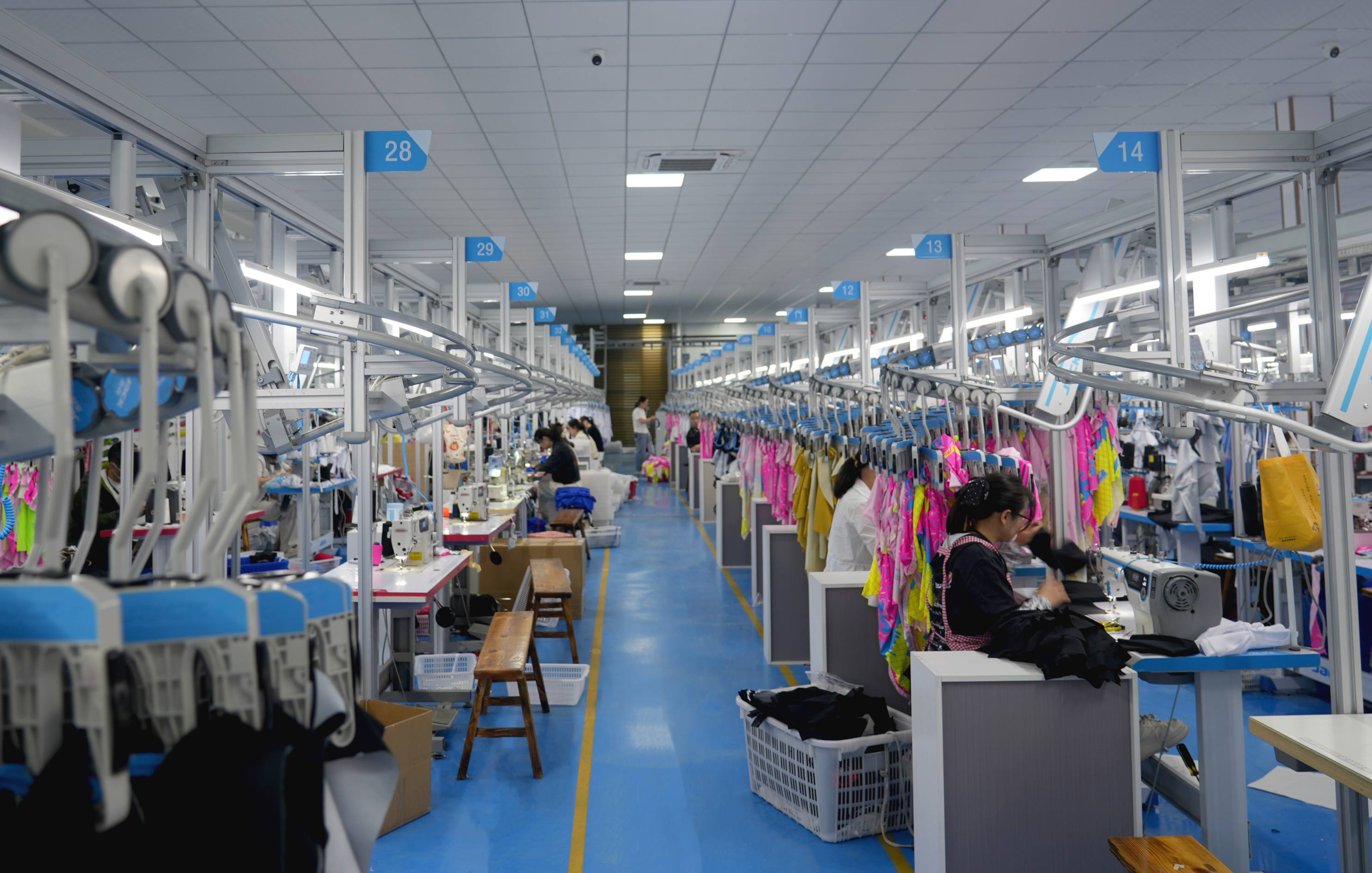
I've been running an 8,000m² manufacturing facility in Longgang District, Shenzhen for 11 years. Before that I spent four years as a journalist — a career where "verify before you publish" is the only rule that matters. That instinct never left me when I moved into manufacturing. The framework I'm going to walk you through is what I'd want my own sourcing team to apply to any partner, including us.

What PFAS Actually Are — and Why the Chemistry Matters
PFAS stands for per- and polyfluoroalkyl substances. It's a family of more than 10,000 synthetic chemical compounds, most of which share one defining structural feature: a chain of carbon atoms bonded to fluorine atoms.
That C–F bond — carbon bonded to fluorine — is one of the strongest chemical bonds in nature. This is precisely what made PFAS so attractive to the textile industry for decades. The bond is chemically inert, highly stable, and creates an exceptionally effective barrier against water, oil, and staining. A coating built around this chemistry doesn't degrade from washing, UV exposure, or heat. From a performance standpoint, PFAS were remarkable.
The problem is the same reason they worked so well: they don't break down. Not in the environment. Not in the human body. Rain runs them into waterways. Animals ingest them. Tissue accumulates them over time. Hence the name most people now recognize: forever chemicals.
Long-term exposure to PFAS in humans has been associated with immune system disruption, endocrine interference, liver toxicity, and elevated cancer risk. These aren't fringe findings from outlier studies — they're the basis for why regulators in the US, EU, and beyond have spent the last decade progressively restricting PFAS in consumer products.
Why Period Underwear Is a Higher-Risk Category Than Most Apparel
It's worth being precise about why PFAS-free leakproof underwear certification carries more weight than, say, a PFAS claim on a windbreaker.
A waterproof jacket is worn occasionally. It sits against relatively insensitive skin on the outer body. Most wearers don't think about it between uses.
Period underwear is different in almost every dimension that matters for chemical exposure:
It sits against the body in a highly sensitive area with high skin permeability
It's worn for hours at a stretch, multiple days per cycle
It's laundered and re-worn across months and years
The absorptive mechanism of leakproof underwear — the gusset layers, bonding agents, and any waterproofing treatment — sits in direct, prolonged contact with sensitive tissue
Cumulative exposure is the core concern. A woman who wears period underwear across several years of her reproductive life has a different risk profile than someone who occasionally wears treated outerwear. That's not alarmism; it's basic contact time and surface area math.
This is why I think the verification bar for PFAS-free period underwear should be higher than for general apparel. The exposure is more intimate, more frequent, and more sustained. Brand owners who are building in this category have a genuine responsibility that extends beyond compliance paperwork — and a regulatory and reputational risk if they skip the verification work.

The Regulatory Landscape: Moving Fast, Tightening Fast
I want to give you a brief, factual picture of where regulations stand today — because this is moving quickly.
EU REACH has restricted multiple PFAS compounds over the past several years. PFOA was banned in 2020. A December 2025 REACH expansion added PFOS. Under current limits, the sum of C9–C14 perfluorocarboxylic acids (PFCAs) must not exceed 25 ppb in textiles intended for consumer use. The EU is expected to continue expanding PFAS restrictions under a universal restriction approach.
France enacted Law n°2025-188, a comprehensive category-specific PFAS ban with among the tightest requirements globally for consumer textiles.
In the US, EPA Method 533 is the current standard for PFAS detection in water matrices. For textiles, commercial labs including SGS typically use a combined approach: total fluorine (TF) screening to flag potential PFAS presence, followed by targeted PFAS panel testing to identify specific compounds and concentrations. This is the methodology we use at Ljvogues on every production batch.
California has progressively expanded PFAS restrictions in consumer goods through multiple laws (SB 1200 and related statutes), with additional measures pending. New York has passed parallel restrictions. The regulatory direction is unambiguous.
SGS has introduced a specific "PFAS Not Detected" green mark certification for textiles and apparel — granted after total fluorine and targeted PFAS screening tests, plus document submission. It covers both raw materials and finished products, carries a 3-year validity with annual surveillance tests, and is one of the few certifications specifically designed for PFAS compliance rather than general chemical safety.
My view on all of this: regulations are not slowing down. What meets the compliance threshold today may require re-verification within 12 to 18 months. Building verification into your supplier relationship from day one isn't overcautious — it's the only approach that prevents you from spending 18 months into a product line retroactively fixing something that should have been designed out at the start.
The Central Problem: "PFAS-Free" Is a Claim, Not a Fact — Until Tested
I've been on the other side of this conversation hundreds of times, from two angles: first as an Alibaba marketing manager for eight years learning how cross-border buyers evaluate suppliers, and then as a manufacturer being evaluated by buyers. Here's what I've learned about what "PFAS-free" actually means in practice — and how to tell the difference between a claim and a verified fact.
The claim is easy. Any factory can say it. The documentation that supports it is not easy to fabricate — because it has to come from an accredited third-party laboratory, on the lab's letterhead, tied to a specific test method, on a specific sample, from a specific production run.
What follows is the three-layer framework I'd recommend any brand buyer apply before accepting a supplier's PFAS-free statement at face value.
The 3-Layer Verification Framework for PFAS-Free Leakproof Underwear Certification
Layer 1 — Third-Party Finished Garment Test Reports
What to ask for: SGS or Intertek PFAS test report on finished garments. Not raw fabric swatches. Not supplier self-declarations. Not internal testing conducted by the factory itself. A finished garment, tested by an accredited third-party laboratory.
Why finished garment matters: This is the detail most buyers miss. A fabric roll can arrive at a factory completely PFAS-free. The bonding agents, TPU membranes, and lamination treatments applied during the assembly of the absorptive gusset layers may introduce PFAS at the production stage — after the raw fabric has already passed its own testing. Only a finished-garment test catches contamination introduced during manufacturing.
What to look for in the report:
The test method used (total fluorine screening plus a targeted PFAS panel)
The lab name and its ISO 17025 accreditation status
The test date — should be within the last 12 months, ideally traceable to a specific production batch
Which PFAS compounds were tested, and against which regulatory limits
What we do at Ljvogues: We test every production batch through SGS using EPA 533 methodology on finished garments — not raw material declarations. The report covers the full gusset assembly, post-bonding. If a buyer asks to see it, we hand it over immediately.
Layer 2 — Raw Material Supplier PFAS Declarations
What to ask for: Written PFAS-free declarations from the factory's upstream material suppliers — specifically the fabric mills, TPU membrane suppliers, and any coating or bonding agent suppliers.
Why this matters: A factory that cannot produce upstream declarations has no documented visibility into its own supply chain. They may believe their materials are PFAS-free. Belief is not a compliance posture.
What good looks like: Declarations on supplier letterhead, specific to the materials used in your product, referencing the applicable PFAS standards and limits. Not a general company policy statement — a material-specific attestation.
What red flags look like:
"We don't use PFAS" communicated verbally or in a generic email
A declaration that covers "our company" without naming specific materials
No mention of which PFAS compounds are covered or which test standards were referenced
Declarations dated more than 12 months ago with no indication of renewal
What we do at Ljvogues: We require PFAS-free declarations from all material suppliers before onboarding them. This is a sourcing requirement, not a polite request. A supplier who can't produce this documentation does not enter our supply chain.
Layer 3 — Factory PFAS Tracking Records
What to ask for: Evidence that the factory maintains ongoing PFAS tracking — batch records, material change logs, and a documented process for what happens when a material supplier changes a formulation or is substituted.
Why this matters: PFAS-free status at one point in time does not guarantee PFAS-free status after a material substitution. Factories that don't track changes can inadvertently introduce PFAS without knowing — because a long-standing fabric supplier quietly reformulated a coating, or a TPU membrane sourced from a new mill wasn't re-tested before production resumed.
What good looks like:
A documented material change control process with defined triggers for re-testing
Batch-level test records that can be matched to specific production runs
Transparency about what changes prompt a new round of finished-garment testing
What we do at Ljvogues: We maintain batch-level PFAS test records matched to production runs. Any material change — including a supplier change or formulation update from an existing supplier — triggers a new round of finished-garment testing before production resumes. This is not a reaction to buyer pressure; it's how we run the factory.

My Position on This, Directly
PFAS-free due diligence should begin at your first SKU, not when a retailer or platform asks for documentation. By the time a compliance team is requesting test reports, the gap already exists — and you're retroactively fixing a problem that should have been designed out from the start.
I've served 500+ period care brands across more than 40 countries over 11 years. The brands that handle compliance well are not the ones who respond fastest when a regulator sends a letter. They're the ones who built the verification requirements into their supplier onboarding before placing their first order.
A supplier who cannot hand you finished-garment test reports on request is not a PFAS-free supplier. They are a supplier who says they are PFAS-free. Those are different things.
Certifications to Look For: A Quick Reference
Period underwear PFAS testing and compliance documentation spans several certification types. Here's how to read the landscape — and how each fits into a complete PFAS-free leakproof underwear certification stack:
Certification | What It Covers | Renewal | PFAS-Specific? |
OEKO-TEX Standard 100 | Hundreds of harmful substances including PFAS; tests on finished garments | Annual | Partial — broad chemical scope |
SGS "PFAS Not Detected" Green Mark | Total fluorine + targeted PFAS panel on finished goods or raw materials | 3 years, annual surveillance | Yes — PFAS-specific |
EU REACH Compliance Documentation | Chemical restrictions including PFAS, for EU market access | Ongoing — tied to regulation updates | Partial — includes PFAS under restricted substances |
CPSIA Compliance | US children's and consumer product safety (lead, phthalates) | Per applicable requirements | No |
FDA Establishment Registration (21 CFR Part 807) | Relevant for period underwear sold as a menstrual device in the US | Annual | No |
GOTS (Global Organic Textile Standard) | Organic fiber processing and chemical use | Annual | No |
One important note on certifications versus test reports: annual certifications confirm a factory's process and compliance posture at a moment in time. They do not capture batch-level variation. Both certification documentation and batch-level test reports are needed for rigorous period underwear supplier compliance. One doesn't replace the other.
Bringing This to a Supplier Conversation
If you bring the questions from this framework to a supplier conversation, you'll learn everything you need to know within the first 15 minutes. A manufacturer who has done this work answers quickly and specifically: here is the SGS report, here are the lot numbers, here are the upstream declarations. One who hasn't will tell you a lot of things that aren't quite answers.
The documents aren't hard to produce if the work has been done. They're impossible to produce convincingly if it hasn't.
I'm happy to walk through our PFAS documentation with any brand evaluating a manufacturing partner. The paperwork exists. Ask for it.
Ocean Yang (杨钧雄)
Founder & CEO, Shenzhen Ljvogues Sports Fashion Limited
Founded May 4, 2015 | Longgang District, Shenzhen | 8,000m² production facility
Contact:
Email: info@ljvogues.com
WhatsApp: +86-199-2880-2613
LinkedIn: linkedin.com/in/ljvogues-ceo
Website: ljvogues.com
Ljvogues holds OEKO-TEX Standard 100, FDA Registration, PFAS-Free compliance documentation, GOTS, BSCI, SEDEX, OCS, and GRS certifications. Third-party PFAS testing conducted through SGS using EPA 533 methodology on finished garments. Test reports available on request.