


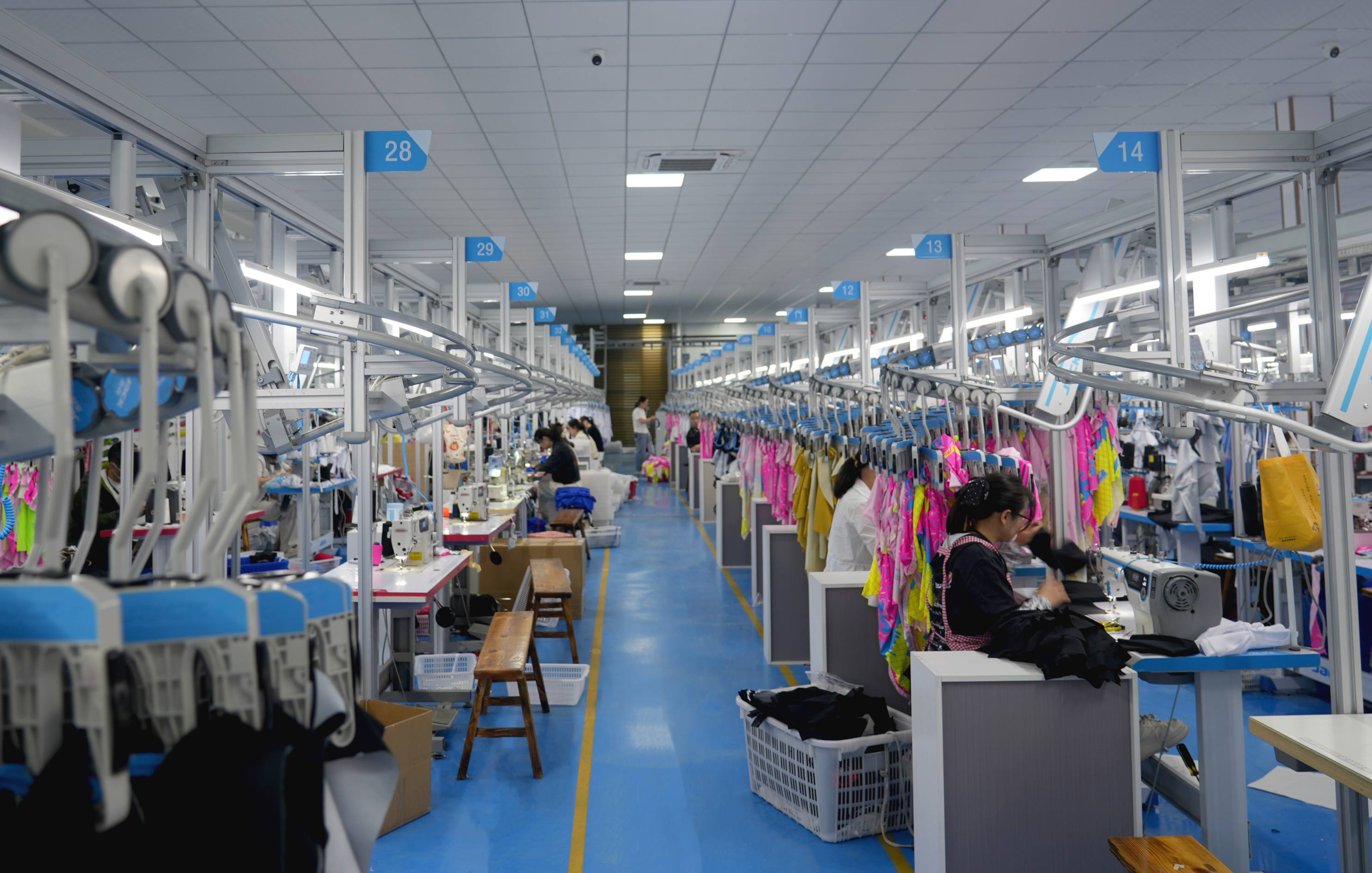

I've spent 11 years running a period underwear factory in Longgang District, Shenzhen, and I can tell you the exact moment most people lose trust in a pair of period underwear. It's not the first wash. It's usually somewhere around wash five, six, or eight — when the lace at the gusset starts to lift, a hard ridge appears where it never used to be, and a little blood shows up somewhere it shouldn't.
Most people assume that's just what period underwear does. It isn't. It's a manufacturing decision, made months before that underwear touched skin, and most factories have made the same decision for twenty years without changing it. I made a different one. This is the period underwear manufacturing process behind that decision — why it matters more here than for almost any other garment, whether you're wearing this product or ordering it by the thousands.

Why Period Underwear Is Different
Regular underwear has an easy life. Period underwear does not. There are four specific stresses that period underwear absorbs that a normal pair of briefs never sees, and every one of them attacks the bonded seam at the gusset and waistband.
Heavy wash intensity. Period blood contains protein, so you can't just toss period underwear in with a normal cold cycle. It needs warm water, enzyme-based detergents, sometimes a stain remover or bleach, and often a soak and a scrub — a far harsher wash routine than any other underwear category, repeated every cycle.
Higher stretch frequency. Bloating, sitting, standing, changing a pad, walking around all day — the waistband and gusset lace are under near-constant tension in a way regular underwear isn't. Think of a rubber band stretched dozens of times a day instead of a few times a week.
Prolonged moisture exposure. The intimate area stays warm and humid throughout your period, and that moisture sits directly against the adhesive layer for hours at a time. Adhesive not built for sustained moisture breaks down chemically — a process called hydrolysis — long before it wears out mechanically.
Sensitive skin contact. Skin in that area is more reactive during menstruation. Any hard edge where bonding sits proud of the fabric becomes a source of friction, redness, and itching you'd barely notice in a t-shirt seam but absolutely notice here.
Put those four together and you get a garment that's washed harder, stretched more, kept wetter, and worn against more sensitive skin than almost anything else in a drawer. That's why the bonding method — how the lace, the fabric, and the leak-proof layer are actually joined together — matters so much more here than it does for a regular pair of underwear.
What's Actually Happening When Your Period Underwear Falls Apart
Here's what's going on underneath. Most low-cost period underwear — and a surprising amount of mid-priced product — is made using a heated iron to press the lace, the leak-proof membrane, and the base fabric together. The iron melts the surface of an adhesive film just enough to make the layers stick, but the adhesive never penetrates the fabric fibers. It's a surface bond, not a structural one.
That surface bond survives a few gentle washes. Then the enzyme detergent, the warm water soak, and the scrubbing you need to actually get period blood out start dissolving that adhesive layer from the outside in. Somewhere between wash three and wash eight, the lace at the gusset starts lifting. Push it further and the leak-proof membrane itself starts to bubble and peel away. Once that leak-proof layer detaches, blood can travel sideways and backward through the gap — which means the one job period underwear exists to do, it can no longer do.
The stretching makes it worse. Every time you bloat, bend, or sit, you're pulling on a bond that was only ever attached at the surface, and it separates a little more each time — the lifted edge is exactly what rubs your skin raw. Moisture trapped in the gaps left by uneven hand-pressing has nowhere to go, and a warm, damp, blood-residue environment is precisely the kind of place bacteria and odor develop. Because pressure from a hand-held iron is never even, you also get lumps and hardened ridges in the adhesive — that stiff, foreign-body feeling against your inner thigh or waist that no one asks for and everyone notices.
None of this is a fluke or bad luck with a particular pair. It's the predictable result of a bonding method that was never designed to survive what period underwear actually goes through.
How Heat Bonding Works Differently
The alternative is a professional heat-bonding machine, and the difference comes down to two words: constant temperature, constant pressure. Instead of a hand pressing an iron unevenly across fabric for a few seconds, a machine holds precise heat and even pressure across the entire bonding area for the correct duration, every single time.
Under those conditions, the adhesive doesn't just melt on the surface — it fully penetrates the fiber structure of the fabric, the lace, and the leak-proof membrane. The three layers stop being three layers stacked on top of each other and become, physically, one unit.
I think of it this way: iron pressing is like taping two pieces of paper together. The tape holds them, but you can still see where one sheet ends and the other begins, and enough pulling or moisture will peel that tape right off. Heat bonding is like welding those two sheets until they become a single piece of material. There's no seam to find, and nothing to peel, because there's no longer two separate things being held together — there's one thing.
That's the entire difference between period underwear that survives 100 washes and period underwear that starts failing at wash five — and it's the core of what "how period underwear is made" really means once you get past the fabric and into the seams.
Side-by-Side Comparison
Performance Dimension | Iron Pressing | Heat Bonding (Ljvogues) |
Wash durability | Delamination in 3–8 washes | 100 washes in our internal testing, no cracking |
Stretch performance | Edge lifting under tension | Synchronous stretch, no separation |
Leak-proof layer stability | Membrane bubbles/peels after washing | Permanently fused, function doesn't degrade |
Skin contact feel | Hard adhesive ridge, friction | Flat, smooth, zero foreign-body sensation |
Moisture/bacteria risk | Gaps trap fluid, mold risk | Seamless bond, rinses clean |
To be clear on the wash number: 100 washes is our internal production testing standard, not a third-party certified figure — the benchmark we hold our gusset construction to before it ships, using the same enzyme detergents and warm-water conditions a real customer would use. For the biology behind why gusset construction matters this much, see How Period Underwear Works.
Ocean Yang's Manufacturing Perspective
As the person who made this production decision — here's what I'd tell a brand buyer evaluating two factories and trying to figure out which one is telling the truth.
Heat bonding isn't a trade secret. Any factory could invest in the machinery. Most haven't, and it's not complicated why: equipment and mold calibration cost is high, per-unit processing cost is higher than iron pressing, and — the real reason — most buyers don't know to ask about it. If your customer never asks what bonding method you use, there's no pressure to spend the money upgrading. Factories that haven't upgraded simply haven't had to.
I'll say this plainly, because I've seen both sides of this more times than I can count: factories still using iron pressing on period underwear aren't making a quality choice. They're making a cost choice, hoping their customer doesn't notice until after the order has shipped and the reviews start coming in. That's the gap between what a factory tells you and what actually comes off their line — widest in exactly this kind of detail, because it stays invisible until a real customer has washed the product ten times.
So here's what I'd ask any manufacturer, ours included: Can I see your bonding equipment? What temperature and pressure range do you run? How do you test wash durability? A factory running heat-bonding machinery answers immediately and specifically — the numbers are sitting right there on their line. A factory still hand-pressing with irons changes the subject or talks about price instead.
This matters more for your brand than for ours. Your customer will wash that period underwear 50 to 100 times over its life. If the bonding fails at wash eight, the one-star review says your brand name on it, not your factory's. We build to our internal 100-wash standard for exactly this reason. Our construction runs TPU thermal bonding at 18–25 microns with 4-needle 6-thread flatlock seams, tested to a 10,000mm H₂O hydrostatic rating, and every batch since Q2 2024 is PFAS-free per SGS finished garment testing and EPA Method 533. Full documentation — OEKO-TEX Standard 100, BSCI, SEDEX SMETA 4-Pillar, FDA Establishment Registration, EU REACH, GRS, CPSIA, ISO 9001 — is on our Certifications page.
How to Spot the Difference Before You Buy or Order
You don't need a lab to check this. Run your fingers along the gusset lace where it meets the leak-proof layer.
Iron-pressed product feels like it has a hard, slightly raised ridge where the adhesive sits. Give the lace a light pull and you'll often see a bit of separation or layering right at the edge. If you've already washed it a few times, look for lifted lace at the gusset or a bubbled, uneven texture in the leak-proof membrane.
Heat-bonded product feels completely flat — the lace and the base fabric read as one surface, with no raised edge to find. Pull on it and it won't delaminate. After repeated washing, the gusset stays flat and the leak-proof layer stays fused, not peeling.
It takes about ten seconds with your hands, and it tells you more about how that product will perform on wash fifty than any label on the packaging will.
Let's Talk About Your Line
If you're building a period underwear line and want to understand how our production process translates into your product's durability, tell us about your project. We run an 8,000m² facility in Shenzhen, produce 200,000–250,000 pieces a month, work with a 50-piece MOQ per style per color, and turn around a prototype in 7 days once a tech pack is confirmed. We've built this for 500+ brands across 40+ countries since I founded Ljvogues on May 4, 2015 — and I'm happy to walk through the specs, the equipment, and the test data directly.
Fill in the form below to start a conversation — or reach us directly at info@ljvogues.com.