



Yes, you can run in period underwear — the real question isn't whether it's possible, it's whether the specific pair you're wearing was actually built for running or just happens to be underwear you could technically run in.
I got asked this in a way I wasn't expecting a couple months ago. One of our pattern makers, who's been on my floor for six years, came to me before a company fun-run event and asked, straight-faced, "Ocean, if I wear our own shorts for this, am I going to regret it by kilometer three?" She helps build these garments and still wanted a straight answer instead of just trusting the spec sheet. That told me something — if someone who sews the gusset every day has ten questions before trusting it on a run, a customer who's never seen the inside of a factory has every right to ask the same thing, times ten.
Here are the ten questions I hear most, answered the way I'd answer them over coffee, not the way a product page would.
Quick-answer table
Question | One-line answer | |
1 | Is it safe/hygienic? | Yes for most people, if the fabric breathes and you change at a normal interval — same hygiene logic as any period product. |
2 | Will it leak while running? | Nobody in this category has published third-party dynamic leak data yet, including us — test it yourself before race day. |
3 | How long can I wear it before changing? | Depends entirely on your flow and training intensity — there's no fixed number that's honest. |
4 | Will it shift, bunch, or chafe? | A 2-in-1 built-in gusset moves with the shorts; a layered brief under shorts can shift independently — that's the main difference. |
5 | Will it smell? | Sweat plus menstrual fluid is a real combination to manage — breathable fabric and timely changes help, but there's no independent odor test data yet. |
6 | How do I wash it? | Cold water, no fabric softener, air dry — standard period-garment care, nothing product-specific claimed here. |
7 | How do I pick a size, and will I get VPL? | Go true to your regular size using the brand's chart; a well-fitted drawstring waistband and single-layer construction lowers VPL risk. |
8 | What intensities/distances does it work for? | Running, gym training, and HIIT are the intended use cases; cycling is explicitly not yet validated. |
9 | Can I use it with a cup or tampon? | It's designed to work as standalone protection; some people layer for extra security, but we haven't tested that combination specifically. |
10 | How should a beginner start? | Trial it on a low-stakes training run first, then move up to race day or long distance once you trust it. |
Is it actually safe and hygienic to wear during a run?
Short answer: yes, for most people, as long as the fabric breathes and you're not leaving it on far longer than you would any other period product.
The hygiene logic isn't different from pads, tampons, or cups — it's about how long fluid sits against skin, how breathable the fabric is, and whether you change at a reasonable interval for your flow. What matters structurally is that the layer touching your skin isn't trapping heat and moisture with nowhere to go. If you already tolerate period underwear for daily wear without irritation, running in a version built for movement isn't a new category of risk — it's the same skin-contact principle under more sweat.
Will I leak if I run in period underwear or a 2-in-1 sport short?
Short answer: I can't promise you won't, because nobody in this category — including us — has published third-party dynamic leak testing yet.
I said this plainly in the absorbency article: static lab absorbency numbers and real leak performance during running, jumping, or repeated hip flexion aren't the same measurement. A garment can hold a stated capacity on a flat lab sample and still behave differently once your body is moving. That's not a knock on this category specifically — standardized third-party dynamic testing protocols for period activewear largely don't exist yet the way they do for diapers or pads.
My honest, practical advice: test it on a training run before you trust it on race day. Wear it for an easy 5K or your normal routine before you put it under real pressure at a competition or a long run where changing isn't convenient. That's what I'd tell my own team.

How long can I actually wear it before I need to change?
Short answer: there's no fixed number I can honestly give you — it depends on your flow and how hard you're training, full stop.
This is the exact question my pattern maker asked me, and it's the one I get the most pushback on when I refuse to answer with a number. A 30ml-class product, like our LY4291-1, describes a capacity target — a tank size, not a stopwatch. Light flow during a moderate session can stretch a lot longer between changes than heavy flow during an intense one, because flow rate and training intensity both move the "how long" answer independently of the capacity printed on a tag. I'd rather tell a runner to check in with herself partway through, especially the first few times, than hand out a wear-time number that will be wrong for a meaningful share of readers. The full flow-level breakdown is in the 30ml absorbency article.
Will it shift, bunch up, or cause chafing while I run?
Short answer: this depends heavily on whether you're wearing a layered brief under shorts or a 2-in-1 with a built-in gusset — they behave differently by design.
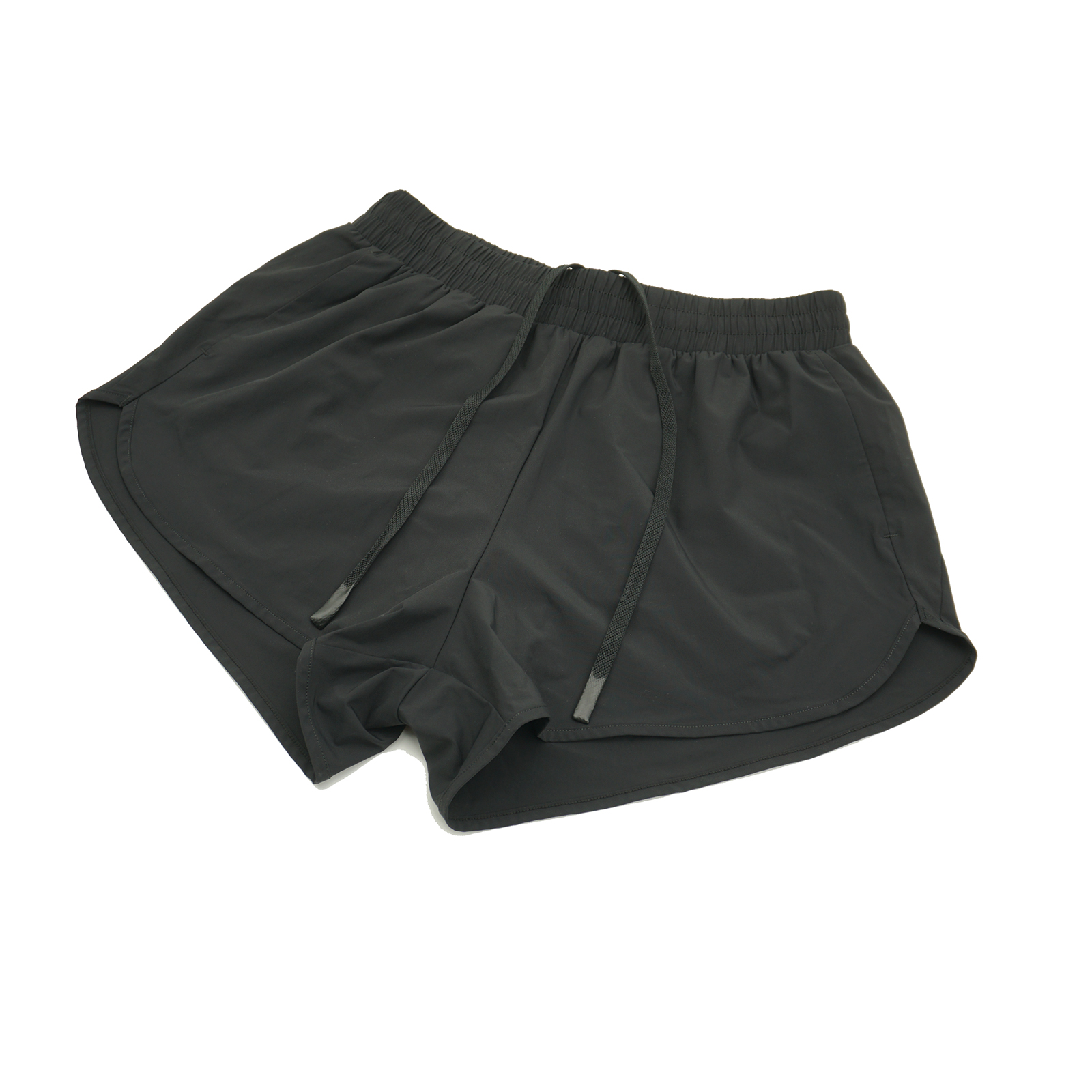
A standalone period brief worn under running shorts is two separate garments, each with its own waistband, not mechanically connected. As your legs move through a stride cycle, the brief can shift or rotate somewhat independently of the outer shorts, and you're dealing with two fabric edges at the leg opening instead of one — both common contributors to chafing complaints in runner discussion threads (Reddit r/XXRunning). A 2-in-1 structure like LY4291-1 patterns the gusset directly into the shorts' inner panel, designed to move as one unit with a single waistband and a single leg-opening edge. I broke this comparison down in full — waistbands, bulk, VPL risk — in the layering vs. 2-in-1 article: layering isn't "wrong," it's just a workaround rather than a single engineered system.
Will it smell after a workout?
Short answer: sweat and menstrual fluid together is a real thing to manage, and while breathable fabric and timely changes help, I don't have independent odor-testing data to back up a specific claim.
This is one of the more honest gaps in the category, and runner forums bring it up constantly — people describing a product that "doesn't breathe" or develops a noticeable smell after a sweaty session (Reddit r/XXRunning). The design goal is straightforward: breathable fabric and a gusset that pulls fluid away from skin should reduce the conditions odor-causing bacteria thrive on — trapped moisture, whether sweat or menstrual fluid. But "designed to reduce it" and "independently tested to prevent it" are different claims, and we haven't run a dedicated combined sweat-plus-menstrual-fluid odor test for LY4291-1. My practical advice: don't let sweaty gear sit in a closed bag for hours, and change reasonably promptly after a hard session.
How do I wash and care for it?
Short answer: cold water, skip the fabric softener, and air dry — standard care for this category, nothing exotic.
This is general best practice, not a manufacturer-tested claim specific to this garment — we haven't published our own wash-cycle performance data yet (see the absorbency article for more on that gap). General industry guidance across period underwear as a category:
Rinse in cold water before a full wash if you can — it helps prevent staining from setting.
Use a mild detergent; skip fabric softener, since it can coat the absorbent layer and reduce performance over time.
Air dry instead of tumble drying — heat is generally harder on elastic and laminate layers in leakproof garments.
Avoid bleach.
We haven't completed post-wash performance testing (5, 20+ cycles) for LY4291-1 specifically, and I'd rather say that than imply otherwise.
How do I pick the right size, and will I get VPL (visible panty line)?
Short answer: size the same way you would your regular shorts, and a well-designed single-layer construction lowers VPL risk compared to layering, though it's not something we've independently verified across every color and fabric.
Fit complaints tend to come from two places: sizing that ignores waist-to-hip and thigh differences across a range, and visible outlines from a bulky gusset or second waistband showing through. LY4291-1 runs XXS–3XL with a drawstring waistband so fit can be adjusted at the waist rather than relying purely on the size picked. Structurally, one integrated layer has less to show through than a separate brief under a second garment — a straightforward outcome of one fabric layer instead of two, not a lab-verified anti-VPL claim across every color and lighting condition. If you're between sizes, size toward hip and thigh measurement over waist, since a drawstring can tighten a loose waist but can't fix tight thighs.
What intensities and distances does this actually work for — 5K, marathon, HIIT?
Short answer: running, gym training, and HIIT-style circuits are the intended use case; cycling is explicitly not something we've validated yet.
The construction — one gusset fixed to one outer layer, one waistband, one leg-opening edge — is built around sustained, repetitive, higher-impact movement: a 5K, marathon training miles, gym sessions, team training, HIIT circuits. That's where a built-in gusset earns its keep over a layered brief, since a separate garment's independent movement becomes a repeated irritation over a long session rather than a one-off inconvenience.
What I won't do is tell you it works for cycling. Cycling puts sustained, concentrated pressure on the saddle contact area in a way running and gym training don't, and we haven't done saddle-specific pressure testing on this pattern. A running-oriented gusset isn't automatically right for that pressure profile — that needs its own development and wear testing, and cycling stays off the list until it's done.

Can I wear it with a tampon or menstrual cup, or is it one or the other?
Short answer: it's designed to work as standalone protection, and some people do layer it with a cup or tampon for extra security on heavier days — but we haven't run a specific test on that combined use case.
A sport period short like LY4291-1 is engineered to be a complete protection layer on its own, not a backup accessory to something else. That said, plenty of people — especially on heavier-flow days or during longer events — choose to combine it with a cup, disc, or tampon for backup, and there's nothing inherently wrong with that if it gives you more confidence. What I can't tell you is how the combined setup performs, because we haven't tested absorbency or comfort with a cup or tampon used simultaneously. If trying that combination for the first time, treat it the same way as the shorts alone: test it on a lower-stakes run before relying on it somewhere that matters.
I'm a beginner — how do I try this without a bad first experience?
Short answer: start on a low-intensity training run, not race day, and build up from there once you know how your body and this specific garment behave together.
This is the advice I gave my own pattern maker before her fun run. Wear it first on an easy, familiar run or a moderate gym session — something where changing isn't a crisis if things don't go as hoped. Pay attention to how it feels around kilometer two or three, whether the waistband stays put, whether you notice any shifting, and how you feel afterward in terms of dryness and comfort. Once you've done that once or twice on a day with a flow level you understand well, you'll have a much better sense of whether to trust it for a longer run, a race, or a harder session — a far better way to build confidence than reading a spec sheet and hoping for the best.
If you're a brand: what these consumer questions actually mean for product development
Every one of these ten questions translates directly into a development decision. "Is it safe/hygienic" is a fabric breathability and skin-contact material question. "Will it leak" is a dynamic testing gap the whole category needs to close, not a marketing line to reassure around. "How long can I wear it" only gets a responsible answer once you document your capacity target honestly instead of printing a universal number. "Will it shift or chafe" is a construction and gusset-anchoring decision, not a fabric choice. "Will it smell" is where acquisition-layer performance and breathability get tested under real conditions, not assumed. Sizing and VPL come down to grading logic across your full size range, not just your sample size. And "does it work for my sport" is exactly why we won't extend a running-validated pattern to cycling without saddle-specific trials.
If you're sourcing a product like this, the consumer's plain-language worry is your supplier questionnaire in disguise — ask your factory to answer it with test methods and documentation, not adjectives.
Where to go from here
If you're a runner deciding whether to try this, the LY4291-1 product page has the full spec — size range, fabric, and what's tested versus still in development, stated plainly.
Product page: https://www.ljvogues.com/2-in-1-sport-period-shorts
If you're a brand developing something like this for your own line, I'd rather walk you through what's actually documented and what we'd test together than sell you on adjectives.
WhatsApp: +86-199-2880-2613
Email: info@ljvogues.com
LinkedIn: linkedin.com/in/ljvogues-ceo
— Ocean Yang, Ljvogues
Sources cited in this article
Reddit r/XXRunning — Period underwear and running (anecdotal/qualitative runner discussion, not statistical data): https://www.reddit.com/r/XXRunning/comments/19ehcvg/period_underwear_and_running/
Reddit r/XXRunning — Period panties for running sweat (anecdotal/qualitative runner discussion, not statistical data): https://www.reddit.com/r/XXRunning/comments/xqo1y3/period_panties_for_running_sweat/
Additional background sources from this content series, not directly linked inline in this article but relevant to the same topic: Good Housekeeping — Period Underwear Lab Testing Criteria; Federation University — Menstruation driving girls out of sport (2025).