



Bookmark this page or copy the checklist into your supplier evaluation document.
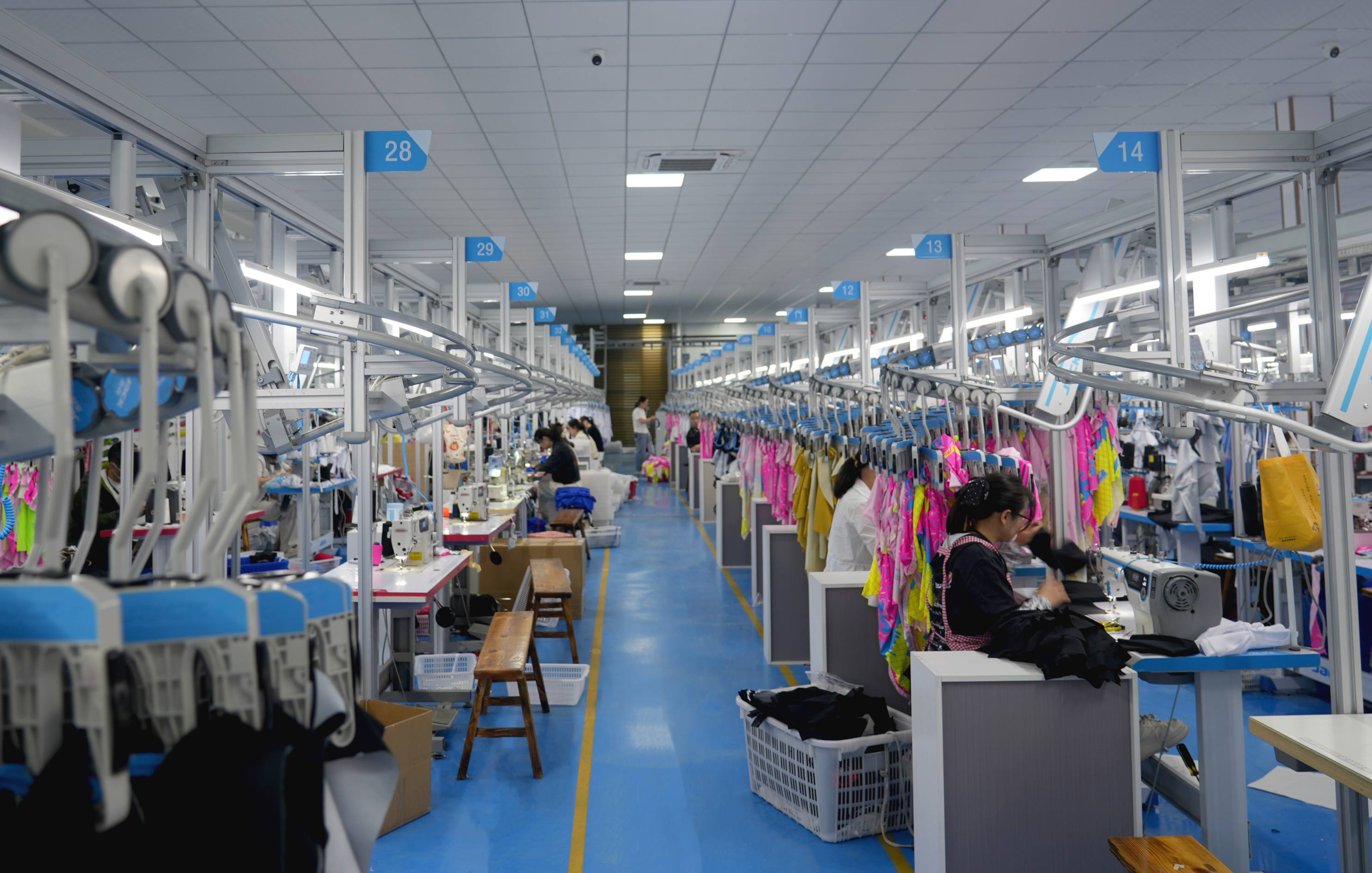
I'm Ocean Yang, founder of Ljvogues. I've run an 8,000m² period underwear factory in Shenzhen for 11 years, working with 500+ brands across 40+ countries, and before that I spent 8 years at Alibaba watching buyers navigate supplier selection from the other side of the screen. I've seen the same mistakes made over and over. Most buyers don't lose because they picked the wrong price — they lose because they never had a systematic way to evaluate what they were actually buying. This is the period underwear supplier verification checklist I'd hand a brand buyer sitting across from me before their first sourcing trip. Use it as your period underwear supplier checklist for every new conversation, from first message to first purchase order.

Stage 1: Initial Contact & First Screening
Goal: Filter out trading companies and unqualified suppliers before investing time in deeper evaluation.
☐ Ask: "Are you the manufacturer or a trading company?" — A direct question; follow up by requesting the business license (营业执照) to verify the registered business type — manufacturing companies list "生产" in their scope.
☐ Request the factory address and cross-check it on Google Maps or Baidu Maps — Verify the factory is a real industrial facility, not a residential or commercial office address.
☐ Ask for a live video factory tour (scheduled, not pre-recorded) — Request that the person on camera hold up a piece of paper with your company name and today's date — eliminates borrowed footage.
☐ Check how long the supplier has been in business — Ask for business license registration date; verify it matches their claimed years of experience.
☐ Ask: "How many sewing lines do you have, and what is your monthly production capacity?" — A real factory answers with specific numbers immediately; a trading company estimates or deflects.
☐ Ask: "Do you have in-house R&D? Can you modify the gusset layer configuration?" — Factories with real R&D capability answer with options and tradeoffs; traders route this question elsewhere and come back days later.
Stage 2: Factory & Production Capability Verification
Goal: Confirm the factory has the technical capability to produce period underwear at the required quality standard.
☐ Ask for fabric recommendations for your target absorbency level (e.g., heavy flow, 35ml+) — A factory with fabric engineers gives specific options with GSM weights and fiber compositions; traders give vague answers.
☐ Request fabric swatches with technical specs (GSM weight, fiber composition, moisture-wicking data) — Factories stock and ship these; traders must request them from whoever supplies their materials, causing delays.
☐ Ask: "What TPU membrane thickness range do you use, and can it be adjusted?" — A capable factory specifies micron range (e.g., 18–25 microns) and explains the tradeoff between thickness, flexibility, and waterproofing.
☐ Ask: "What seam type do you use on the gusset, and what is your wash durability standard?" — Look for 4-needle 6-thread flatlock seaming; ask specifically how many wash cycles the construction is tested to (standard is 50 cycles).
☐ Ask: "What is your absorbency range across your period underwear styles?" — Verified factories can state tested ranges (e.g., 15–45ml for panties, 20–30ml for swimwear); unverified suppliers give ranges without test data.
☐ Ask: "What hydrostatic pressure test do you run on the waterproof layer?" — Industry standard is 10,000mm H₂O; a factory that tests to this standard will cite it immediately.
☐ Confirm MOQ and whether it applies per style per color or per total order — MOQ per style per color (e.g., 50 pieces) is the relevant number for brand planning; total-order MOQ can be misleading.
☐ Ask: "What is your sampling lead time after tech-pack confirmation?" — Standard for a well-organized factory: 7 days; longer timelines may indicate production congestion or outsourcing.

Stage 3: Compliance & Certification Verification
Goal: Verify that certifications are real, applicable to actual production, and sufficient for your target market.
☐ Request the full OEKO-TEX Standard 100 certificate — Check that the certificate holder name matches the factory name on the business license — trader certificates are issued to the trading company, not the production factory.
☐ Request SGS or Intertek PFAS test report on finished garments — Must be finished garment testing, not raw material declarations; check the test date (within 12 months, ideally per batch) and verify the test method cited (EPA Method 533 or equivalent).
☐ Ask: "Is your PFAS testing done per production batch or periodically?" — Per-batch testing is the gold standard; periodic testing introduces gaps when material suppliers change.
☐ Request raw material supplier PFAS-free declarations — A factory with supply chain visibility can produce written declarations from fabric mills and TPU suppliers; inability to provide these indicates no upstream traceability.
☐ Verify FDA Establishment Registration number at fda.gov (for US market) — Period underwear may be regulated as a menstrual device; verify the registration number at fda.gov's registration listing — trader registrations do not cover production factories.
☐ Ask for BSCI or SEDEX SMETA audit report — Required by most major retailers; confirms ethical manufacturing standards; check the audit date and scope.
☐ Confirm EU REACH and CPSIA compliance documentation (for EU and US markets respectively) — Ask for the specific compliance statements, not just verbal confirmation.
☐ Ask: "Do you maintain batch-level test records that can be matched to specific production runs?" — This is the supply chain traceability question; a factory with real records says yes and can demonstrate the system.
☐ Check whether certifications are issued to the manufacturing entity, not a trading or holding company — Every certificate must name the same legal entity that will appear on your purchase order and shipping documents.

Stage 4: Sample & Pre-Order Confirmation
Goal: Validate everything on paper against the actual physical sample before committing to a production order.
☐ Order a development sample (proto sample) and specify exact fabric, layer configuration, and absorbency target — Do not accept a stock sample as a substitute — proto samples reflect your actual specifications.
☐ Test the sample absorbency yourself against the stated range — Pour the stated volume (e.g., 30ml) and check both absorption speed and leakthrough under light pressure; this replicates real-use conditions.
☐ Run a wash test: machine wash 10 cycles at stated care temperature and inspect seams, waterproof layer, and fabric integrity — 10 cycles won't reach the 50-cycle standard, but delamination or seam separation in the first 10 washes indicates a quality problem.
☐ Confirm that the sample matches the fabric specs and certifications submitted in Stage 3 — Request a fabric content label with the sample; cross-check fiber composition against the OEKO-TEX certificate scope.
☐ Ask: "Will production use the same fabric lot and construction as this sample?" — Get written confirmation; material substitutions between sample and production are a common source of quality inconsistency.
☐ Review the purchase order terms: payment schedule, inspection rights, rework policy, and delivery terms — Confirm whether DDP (Delivered Duty Paid) is available to your target market; clarify who bears cost for pre-shipment inspection.
☐ Request a pre-shipment inspection option (in-house AQL or third-party) — AQL 2.5 is the industry standard for intimate apparel; confirm the factory's QC standard and whether you can commission an independent inspection.
☐ Confirm all compliance documents will accompany the shipment — OEKO-TEX certificate, PFAS test report, country-of-origin documentation, and any market-specific compliance paperwork should ship with the order.
Run through these four stages as your period underwear sourcing checklist, and you'll know how to verify a period underwear supplier — and be ready for a period underwear factory audit — before money changes hands, not after.
If you're working through this checklist with a supplier and want a second opinion on what you're seeing, I'm easy to reach: info@ljvogues.com