


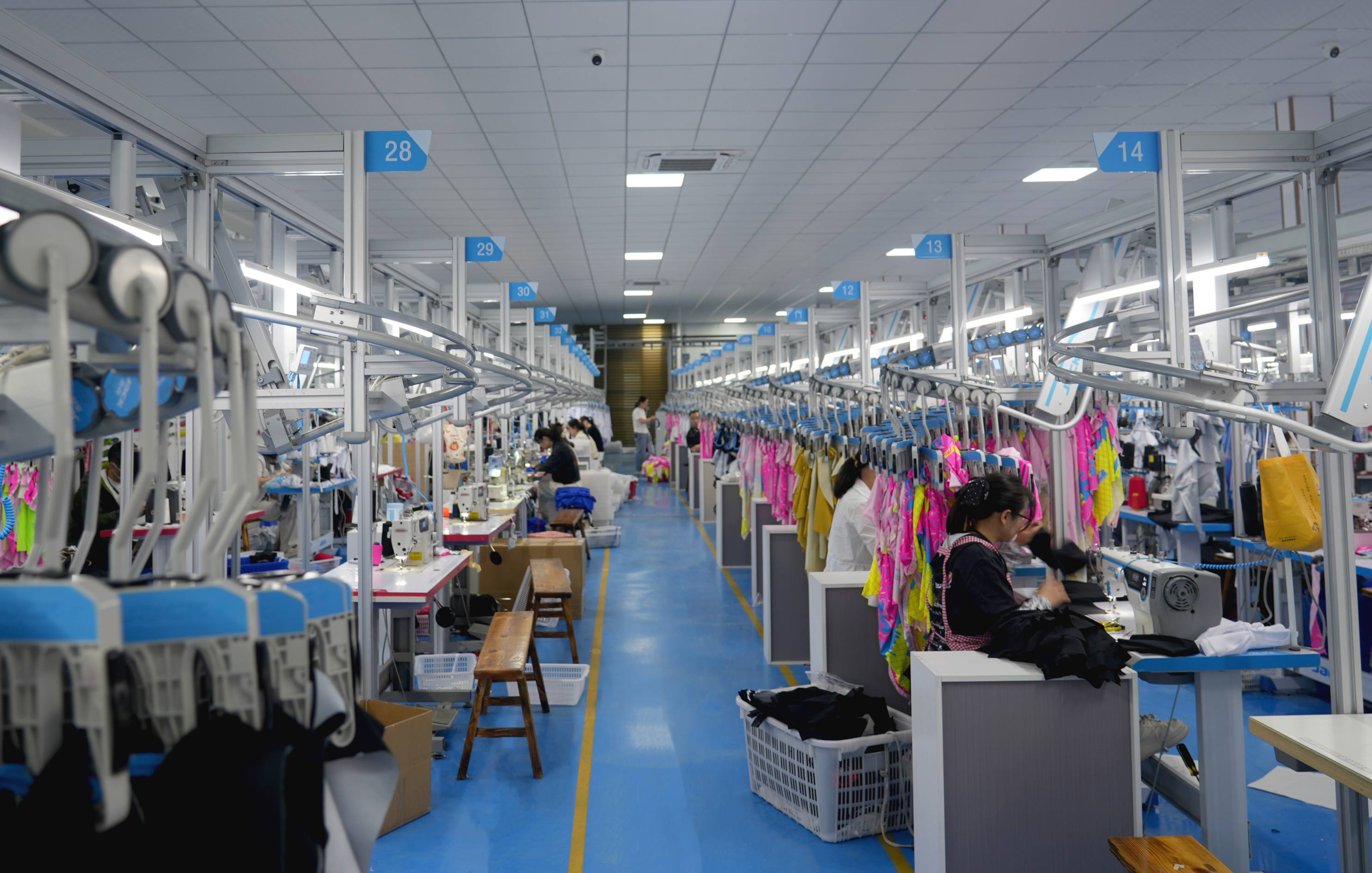

When it comes to the period underwear market, the options can feel overwhelming. To stand out, you need a trusted Period Underwear manufacturer that delivers on safety, quality, and cost-effectiveness. The real challenge is identifying a partner who checks all the boxes. A thorough vetting process is essential—one that evaluates certifications, transparency, and technical expertise. This guide offers a practical, step-by-step framework, drawing on the standards upheld by leading manufacturers like Ljvogues. Getting this right from the start prevents costly missteps down the line. It also helps you avoid compliance issues and potential health concerns. Each step is designed to give you actionable insights for assessing potential partners. Don’t rush through these steps. Ensure your chosen Period Underwear manufacturer provides absorbent layers that offer both comfort and full coverage for your customers. Choose a partner you can rely on for consistent, high-quality period underwear production.
Key Takeaways
Look for certifications such as OEKO-TEX and BSCI to confirm safe and fair manufacturing.
Check the factory for honesty and good quality checks.
Test samples to check absorbency and fit before ordering large amounts.
Protect your designs early by using non-disclosure agreements and patents.
Pick a manufacturer that shows clear prices and honest deadlines so you won't face surprise fees.
Why Partnering with the Right Period Underwear Manufacturer Matters
The Risks of Poor Quality and Non-Compliance
Picking the wrong partner for your period underwear line leads to big problems. Materials that don't follow the rules can harm health. The U.S. Agency for Toxic Substances and Disease Registry says PFAS chemicals are linked to higher cholesterol, weaker vaccine response in kids, and changes in liver enzymes. Some studies also connect PFAS to kidney and testicular cancers. These chemicals should not be in products that touch delicate skin.
Bad absorbency is another major risk. If your period underwear cannot hold fluid, customers stop trusting your brand. They expect full coverage on heavy flow days. A leaky product quickly ruins your reputation. You might also face legal trouble if your clothes don't meet safety rules in places like the US or Europe. Regulators can fine you or pull your products from stores.
Poor fit adds to customer annoyance. Uncomfortable period underwear that moves or bunches up does not give the comfort people want. They need a secure fit that stays in place all day. Without good design, your product fails to protect as customers expect. These failures cost you money through returns, refunds, and lost sales.
The Benefits of a Specialized Production Partner
A specialized period underwear manufacturer brings deep know-how to your project. These partners understand leak-proof technology very well. They know how to layer fabrics for high absorbency without adding bulk. A manufacturer like Ljvogues uses a proven four-layer system. This system pulls moisture away, absorbs fluid, stops leaks, and keeps skin dry. You get a product that works reliably from the very first batch.
Specialized partners also find sustainable fabrics. They offer PFAS-free materials that meet strict safety rules. This saves you time because you skip the try-and-fail stage. You don't waste months testing different fabric mixes. The manufacturer already knows what works.
These partners help you create comfortable period underwear that fits well. They understand how to design for different body shapes and flow levels. You get a product that gives full coverage without feeling bulky. Customers like the comfort and protection. They become repeat buyers who trust your brand.
Working with a specialized manufacturer also lowers your risk. They hold certifications like OEKO-TEX and BSCI. These credentials prove they care about safety and ethics. You avoid compliance problems and focus on growing your business. The effort you put in early to find the right partner pays off many times over.
Check Certifications of a Reliable Period Underwear Manufacturer
Certifications are your first way to check any period underwear maker. These papers show that a factory meets safety, ethics, and environment rules. You should see certifications as must-haves, not nice extras. A maker without proper papers cannot promise safe products or following the law. Top makers like Ljvogues have many certifications that show they care about quality. You want a partner who lets you check their papers. This openness protects your brand and your customers.
Prioritize Material Safety (OEKO-TEX and PFAS-Free)
Material safety is the most important part of making period underwear. Your products touch sensitive skin for many hours. Bad chemicals can go through the skin and into the blood. You need proof that fabrics have no dangerous stuff. The OEKO-TEX Standard 100 certification gives this proof. This check confirms that fabrics have no harmful things, including PFAS chemicals. Ljvogues has this top credential for their production lines.
You should also ask for clear PFAS-free proof. PFAS chemicals stay in the environment and build up in human bodies. These chemicals are linked to serious health problems. A trusted period underwear maker will give clear proof of PFAS-free production. Look for several types of proof. First, check for OEKO-TEX STANDARD 100 certification, which looks for harmful things. Second, ask for lab reports with dates from outside testing places. Third, ask about total fluorine testing methods, like combustion ion chromatography. This testing finds PFAS because fluorine is a chemical marker. Fourth, ask about targeted PFAS panel testing through certified labs like SGS. These panels look at specific chemicals like PFOA and PFOS. Together, these methods prove that no PFAS were added on purpose during making.
You should ask every possible maker for these papers before signing any deal. A reliable partner will share this info willingly. Hesitation or unclear answers should raise red flags. Your customers deserve products that protect their health without compromise.
Verify Social and Environmental Compliance (BSCI and GRS)
Beyond material safety, you must check how the factory treats its workers and the planet. More and more consumers care about ethical production. They want to support brands that match their values. The Business Social Compliance Initiative (BSCI) checks factories for fair work conditions. This certification covers work hours, pay, health and safety, and workers' rights. A period underwear maker with BSCI certification shows fair treatment of workers. You can trust that your products do not come from unfair labor.
Environmental responsibility matters just as much. The Global Recycled Standard (GRS) confirms the use of recycled materials in production. This certification tracks materials from their source through the whole supply chain. GRS also ensures responsible chemical use and environmental management during making. Ljvogues has both BSCI and GRS certifications, showing they care about sustainable practices. When you choose a maker with these credentials, you help a cleaner planet. You also attract eco-conscious consumers who want sustainable period products.
These certifications need regular audits and ongoing compliance. They are not one-time achievements. A maker who keeps these credentials shows steady commitment to high standards. You should check that certifications are still current and valid. Ask for copies of recent audit reports. This care ensures your partnership upholds the values your brand stands for. The right certifications protect your reputation and build lasting customer trust.
Conduct a Factory Audit and Assess Transparency
Paper certificates are not the whole story. You must see how the factory really works. A real audit shows if the period underwear maker keeps its promises. You can check production lines, storage areas, and testing labs. You can also watch how workers handle materials. This takes time but protects your brand from hidden problems.
Request a Physical or Virtual Tour
Begin by asking for a tour of the place. A visit in person is best if you have the money and time. If you cannot go, ask for a live video tour. A good maker will show you the knitting line, bonding cell, fabric storage, and testing lab. This live tour proves the factory owns its production process. You see for yourself if equipment works well and if workers follow safety rules.
During the tour, look for signs of mess. Check for clean floors, labeled materials, and neat storage. Ask about the quality process, not just the machines. A factory can have great machines but lack proper inspection steps. You want a partner who records each stage of production. Ljvogues, with its Shenzhen headquarters, welcomes this kind of check. Their team knows that openness builds trust.
You should also ask for recent audit reports from outside groups. These reports show if the factory passed social and environmental checks. Look for BSCI Grade A or SEDEX/SMETA 4-Pillar certifications. These papers prove fair labor practices and good management. A factory that is slow to share audit results is a red flag.
Evaluate Communication and Documentation
Good communication shows a reliable partner. From your first question, notice how fast the team answers. Do they give direct answers? Do they give clear, detailed info without you asking again? A quick responder values your business. Ljvogues shows this with fast replies and full explanations. Their team shares technical details openly, helping you make smart choices.
Documents show a factory's real commitment to following rules. Ask for specific papers and check them carefully. Look up each certificate number on the issuer's public database. A certificate not found online is worthless. Ask for batch test reports that confirm PFAS-free production. These reports should show total-fluorine limits at or below 10 ppm, checked by labs like Intertek, SGS, or BV. The test must be for your specific batch, not just a random fabric roll.
You also need papers that prove following international rules. Ask for papers showing compliance with REACH/SVHC rules in Europe, California Prop 65 in the US, and CPSIA requirements. These rules protect people from harmful substances. A factory that cannot provide these papers likely lacks proper oversight.
Quality control documents matter just as much. Ask for proof of inspection standards, like an AQL 2.5 sampling plan. Every production lot should have a downloadable test report you can link to your sales listings. This traceability lets you show customers that your period underwear meets strict safety standards. Customers trust period underwear that comes with checked safety data.
Verification Area | Insufficient Documentation | Sufficient Documentation |
|---|---|---|
Finished-garment certification | Certificate only covers a fabric roll | Certificate names the finished garment |
PFAS scope | Statement does not list tested parts | Report names barrier-layer materials |
Commercial terms | MOQ is just a marketing promise | Written terms show style and approval details |
Quality process | Tour only shows equipment | Documented QC process available for review |
A factory-direct quality approach means the maker controls every step. They get fabrics, cut patterns, sew garments, and test finished products under one roof. This control lowers mistakes and ensures steady quality. When you partner with such a factory, you get period underwear that works reliably every time. You avoid the trouble of managing many suppliers. You also solve problems faster when they come up.
Ask for customer references in your product type. A factory with related experience knows the special needs of leak-proof clothing. They know how to layer fabrics for absorption without adding bulk. They also know how to make comfortable period underwear that fits different body shapes. Two good references can confirm their track record.
Finally, ask for a detailed quote. Break down fabric, elastic, hardware, labor, setup, compliance, and overhead costs. A supplier who cannot separate the compliance line either hides costs or does not have the program their certificate suggests. Clear pricing builds trust. It also helps you plan your budget without surprise costs later.
Openness during this audit phase sets the tone for your whole partnership. A factory that shares openly now will likely talk well during production. One that hides info will cause problems later. Take your time with this step. Your careful work ensures you choose a partner who values honesty as much as you do.
Test the Sampling Process for Period Underwear
Evaluate Prototyping Speed and Technical Skill
The sampling phase shows how a manufacturer works. A reliable period underwear maker should deliver a prototype in 7 days or less. This speed requires an in-house testing center and pre-stocked certified fabrics. The process starts with a tech pack review on day one. The team selects materials from certified stock. On days two and three, they cut and sew the prototype on an agile production line. Days four and five involve absorbent and leak testing and fit checks for proper coverage. The team can make a first revision if needed. Days six and seven produce the final sample with photo documentation.
A manufacturer needs specific equipment to create functional period underwear. Key machinery includes textile cutting tools, contract sewing stations, and seaming and sealing equipment. The factory should also have slitting and rerolling machines. These tools produce a sample that matches your fit specifications. A skilled R&D team operates this equipment. They can work from reference images or physical samples without a tech pack. This flexibility speeds up the process.
A pre-sourced material library adds value. Look for a maker with access to modal, regenerated cellulose, and antibacterial cotton. These materials improve absorbent performance and comfort. The factory should also conduct fit and wear testing. They check for durability, elastic recovery, seam integrity, fabric pilling, and gusset functionality. A factory located in a manufacturing cluster helps too. This location ensures immediate material access and a skilled workforce. Quick sourcing means faster sampling.
Review Revision Costs and Timelines
Revisions are a normal part of sampling. You must understand how the manufacturer handles them. Ask about revision costs upfront. Some makers include one or two free revisions. Others charge for each change. Clear policies prevent surprises later.
The timeline for revisions matters too. A good period underwear maker completes revisions within a few days. They communicate each step clearly. You should receive a written update after each revision. This transparency builds trust.
Your tech pack should be detailed from the start. Include fabric types, color codes, stitching details, and absorbent core specifications. A clear tech pack reduces the number of revisions. It also helps the manufacturer understand your needs faster. The right partner reviews your tech pack carefully and asks questions before cutting fabric. This approach saves time and money.
The final sample should match your expectations for fit and coverage. Test the sample yourself. Check that the absorbent layers provide full coverage. The absorbent materials inside the period underwear should offer comfort during movement and throughout your period. A good sample leads to a smooth production run. A bad one causes delays and extra costs.
Assess Absorbency Engineering and Testing
Understand the Layering System and Fabric Sourcing
Period underwear absorbs fluid through a smart layering system. Each layer has its own job. The top layer touches your skin during your period. Good fabrics for this layer include organic cotton stretch knit, bamboo stretch knit, or athletic wicking stretch knit. These fabrics pull moisture away and feel comfortable. The absorbent core sits below the top layer. This core holds the fluid. Good materials for this core include bamboo fleece or Zorb. Bamboo fleece pulls liquid in fast. Zorb holds the most fluid but feels stiffer. The waterproof barrier comes next. Polyurethane laminate (PUL) stops leaks completely. This thin, flexible layer prevents leaks. The outer layer adds durability. Recycled poly blends work well here. This whole leakproof system works together for full coverage.
You must check where each fabric layer comes from. All fabrics need pre-washing in warm water with mild detergent. This step removes leftover chemicals and pre-shrinks the material before assembly. A reliable manufacturer like Ljvogues offers PFAS-free verified production. This means the waterproof barrier and other absorbent layers have no harmful chemicals. The absorbent core must give full coverage across the gusset area. Without proper coverage, you risk leaks. Good fit also matters for protection. The period underwear should fit snugly around the legs.
Demand Third-Party Performance Data
You cannot trust marketing claims alone. You need data from independent labs for period underwear. Industry standards define clear absorbent capacity levels. Light absorbent capacity holds 5-10 ml, equal to one regular tampon. Medium holds 10-20 ml, equal to two regular tampons. Heavy holds 20-30 ml, equal to three regular tampons. Super or overnight holds 30-60 ml, equal to four or more regular tampons.
Three key tests measure absorbent performance. First, the total capacity test measures how much fluid the absorbent layers hold. Second, the absorption rate test checks how fast the fabric absorbs fluid. Third, the retention under pressure test applies pressure to mimic sitting and measures fluid released. Lower values mean better performance.
You should ask for specific third-party tests. The absorbent capacity test follows modified AATCC 22 or ISO 9073-12 standards. The garment must absorb its rated capacity with zero leak-through. The rewet test measures surface dryness. After absorption, a weighted blotter applies pressure for 30 seconds. Fluid transfer should be less than 0.5g for light or moderate flow and less than 1.0g for heavy or super flow. The leakproof performance test uses an anatomical form. It pours the rated volume in a simulated wear position. Zero leak-through must occur at the rated capacity. The washability test follows modified ISO 6330. After 50 washes, absorbent capacity must stay above 80% of the original value. The barrier must show no delamination. Your period underwear needs reliable testing.
Keep in mind that industry standards are not the same across brands. Two pairs both labeled "Heavy" can perform differently. Manufacturers adjust the density and capacity of the absorbent core. They change the speed of liquid movement through the top layer. They modify the length and width of the protected gusset for better coverage. They position the waterproof membrane differently. They adjust construction around leg openings. So you must look beyond the marketing name. Pay attention to the absorbent capacity, gusset coverage, fit, and intended use. The right testing data gives you confidence in your period protection. The good fit and coverage keep customers happy.
Inspect Quality Control and Traceability Protocols
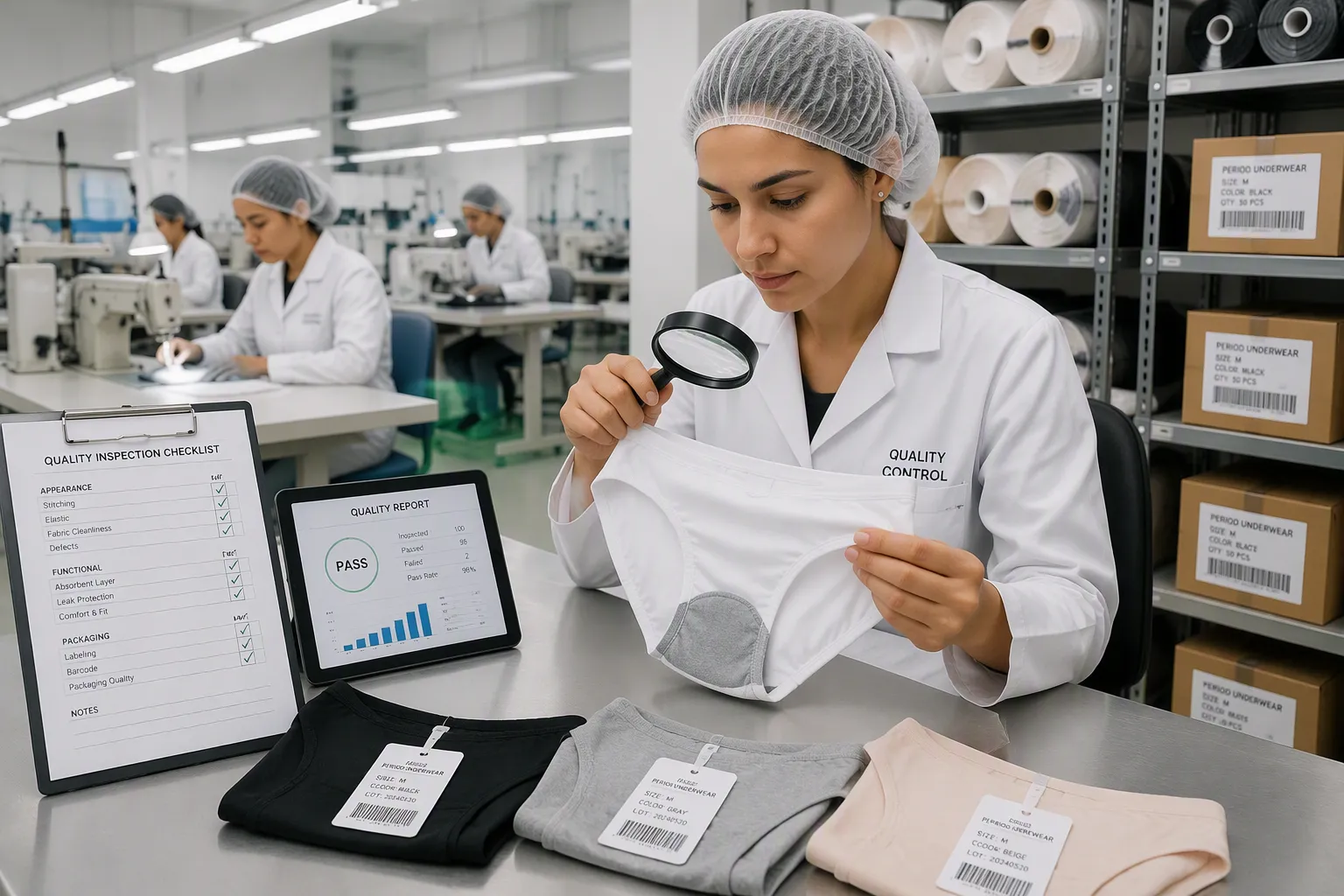
Quality control (QC) is more than just checking the final product. A reliable period underwear manufacturer uses a clear inspection system. This system finds problems early and keeps quality the same. You also need to track key materials. Without tracking, you cannot check if claims about recycled content or eco-friendly sourcing are true. A good QC and tracking process keeps your brand safe and builds trust with customers.
Define In-Line and Final Inspection Procedures
A strong QC program uses a 4-step inspection system. This system covers four stages. First, incoming material inspection checks fabrics and parts before production starts. The team looks for defects, color matching, and correct absorbency. Second, in-line inspection takes place during cutting and sewing. Workers check each batch for stitch quality, strong seams, and correct placement of the absorbent core. These checks make sure the underwear works well during your period. Third, final inspection happens after assembly. The team tests each garment for absorbency, leak resistance, and full coverage. They also check the fit. Fourth, pre-shipment inspection checks finished products before they leave the factory. This stage uses an AQL 2.5 sampling plan. This means the team accepts up to 2.5% defective items per batch.
You should ask for records from each inspection stage. A reliable manufacturer gives records of every check. These records include photos of problems, test results, and fixes. The team also tracks batch numbers. This tracking helps you find and fix problems fast. Your period underwear benefits from this careful process. Customers receive products that meet their needs for absorbency and comfort.
Trace the Supply Chain for Key Materials
Tracking starts with the raw materials. For eco-friendly underwear, you need proof that recycled materials come from trusted sources. The Global Recycled Standard (GRS) gives this proof. Ljvogues has GRS certification, which tracks recycled materials through the whole supply chain.
For period underwear to say it is GRS certified on the label, the product must have at least 50% recycled content. Also, just because a material is on a GRS Transaction Certificate does not mean you can put the GRS logo on every product. The product itself must meet the rule.
Two main documents help with this tracking.
Document Type | Role in Traceability for Period Underwear |
|---|---|
Scope Certificate | Confirms that the supplier (e.g., fabric mill or manufacturer) has the capability and certification to process GRS materials. It validates the facility's certification status. |
Transaction Certificate (TC) | Connects the certified recycled material to a specific order or shipment of fabric used in the period underwear. It provides the chain-of-custody link from the recycled input to the final product. |
Follow three steps to check tracking. First, ask for the Transaction Certificate from the GRS-certified supplier for each certified shipment. Ask for it when you place the order. Second, check the TC online by looking up the certificate number on the Textile Exchange public database. You can also search Scope Certificates of suppliers. Third, only say GRS after you have a valid TC on file. This step makes sure your period underwear marketing claims are correct and believable.
The absorbent layers in your underwear also need tracking. You want to know where the absorbent materials in the core come from. Ask for paperwork that shows the supply chain for each absorbent layer. This openness helps you avoid harmful chemicals and keeps coverage and performance the same. Your customers deserve underwear made with checked, safe materials. This care builds trust and loyalty over time.
Analyze Fulfillment and Logistics Capabilities
Making great products does not help if your partner cannot deliver on time. A period underwear manufacturer must handle your order size now and grow with you later. You need a partner who plans for growth, not just your first batch. Ask about their monthly production capacity. Ask if they can add shifts during busy seasons. A factory with flexible capacity helps you meet demand spikes without long delays.
Determine Capacity for Scaling and Peak Seasons
Your sales will change throughout the year. Promotions, holidays, and new product launches create demand surges. A reliable manufacturer plans for these peaks. They keep extra space in their production schedule. They also stay in touch with backup suppliers for materials. This preparation ensures your period underwear arrives when customers expect it.
Minimum order quantities (MOQs) play a big role in your growth plan. Different manufacturers set different MOQ levels based on customization, materials, and your relationship with them. The table below shows typical ranges you will see.
Factor | Lower MOQ Range | Higher MOQ Range |
|---|---|---|
Customization Level | Standard designs: 500 units | Fully custom: 2,000–3,000 units |
Material Selection | Stock materials: 500–1,000 units | Custom-developed: 3,000+ units |
Color Options | Standard colors: 500 per color | Custom dyed: 1,000+ per color |
Business Relationship | Established partners: potential for lower MOQs | New relationships: standard MOQs apply |
Some manufacturers offer more flexible terms. Ljvogues, for example, starts MOQs at just 50 pieces. This low threshold suits startups testing the market. You can check your product idea without tying up money in extra inventory.
If you face higher MOQ requirements, try these strategies:
Start with ODM (Original Design Manufacturing) using the manufacturer's existing designs with your branding.
Focus on 1-2 core styles in 1-2 colors to meet minimum requirements.
Use stock materials rather than custom-made fabrics.
Partner with manufacturers offering lower MOQs for standard designs.
These approaches let you launch with less risk. You can test demand before committing to larger production runs.
Review Warehousing and DTC Shipping Options
Fulfillment logistics determine how fast your period underwear reaches customers. Ask your manufacturer about warehousing services. Some factories store finished goods for you. Others ship directly to your customers. This flexibility matters for different business models.
Amazon sellers need FBA-ready fulfillment. This service includes prep, labeling, and packaging that meets Amazon's rules. A manufacturer with FBA experience saves you time and prevents listing errors. They know the specific barcode and poly-bag requirements. They also handle case packing correctly.
Direct-to-consumer (DTC) brands need different support. You might want a dropshipping-friendly solution. This setup lets you send orders directly from the factory to your customers. You avoid holding inventory yourself. Your manufacturer picks, packs, and ships each order. This model cuts your storage costs and simplifies order management.
Ask about shipping methods and transit times. Air freight moves faster but costs more. Sea freight costs less but takes weeks longer. A good partner explains your options clearly. They also help you figure out landed costs, including duties and customs fees. This openness prevents surprise expenses.
Your fulfillment plan should match your business stage. Startups benefit from low MOQs and flexible shipping. Growing brands need reliable capacity and faster transit. Established companies need steady quality at scale. Choose a period underwear manufacturer who grows with you at every stage.
Protect Your Intellectual Property (IP)
Your designs, tech packs, and brand identity hold real business value. A dishonest manufacturer could copy your period underwear patterns and sell them to competitors. They could also share your product specs with others. These actions destroy your market edge before you even launch. You must protect your intellectual property from the very first talk. The right legal agreements create a safety net around your creative work.
Sign Non-Disclosure and Non-Compete Agreements
Never share your tech pack without a signed agreement first. This document legally stops the factory from sharing your designs or using them for other clients. A full contract must include a Non-Disclosure Agreement and intellectual property ownership clauses. These clauses stop the factory from selling extra units to the grey market or using your custom pattern blocks for other brands.
Your agreement needs several key parts:
Reciprocal NDA – Both sides sign before any tech pack exchange. This agreement is the first step before your first sample.
Firewall clause – This clause stops the manufacturer from making a same-market competitor's main product. It also requires separate data for each client.
Pattern ownership clause – This clause names the tech pack and pattern as your property. The supplier only has a license to produce for your brand.
Different clauses do different jobs. The table below shows what each one stops:
Clause | What it stops | Needed for period underwear manufacturer? |
|---|---|---|
Non-Disclosure | Sharing private info (specs, materials, pricing, customers) with others | Yes – basic protection |
Non-Use | Manufacturer using your designs/patterns for other clients or own products | Yes – critical, since a standard NDA does not cover internal use |
Non-Circumvention | Manufacturer going around you to sell straight to your customers | Yes – common risk in sourcing |
Governing law + arbitration | Makes sure the rules work in the manufacturer's country | Yes – without this, foreign court orders are slow to enforce |
A manufacturer with a clean record respects these limits. Ljvogues, for example, has served over 500 brands without IP disputes. Their reputation depends on keeping client designs safe.
Secure Patents and Design Rights Early
Your legal protection goes beyond contracts. You should file for patents and design rights before showing your product to any factory. A patent protects how your period underwear works. A design right protects how it looks. Both give you full control over your creation.
Start by searching existing patents in your product area. This search shows whether your design is truly new. You can work with a patent lawyer to do this search the right way. They will help you file applications in your target markets. The United States, European Union, and Australia all offer design protection systems.
Timing matters a lot here. If you show your product to a manufacturer before filing, you risk losing your rights. Many countries use a "first-to-file" system. The first person to file gets the rights, not the first inventor. File early to lock in your position.
Your supply agreement should also cover future ideas. Include clauses that handle improvements made during production. Decide who owns new versions of your design. Clear ownership terms stop disputes later. A trustworthy partner welcomes these talks. They know that protecting your IP protects their production volume too. This shared interest builds a stronger working relationship.
Calculate Total Cost and Lead Time
Break Down the True Unit Cost (MOQs and Hidden Fees)
The quoted unit price never tells the full story. You must look beyond the manufacturing cost to see the real expense of each pair of period underwear. Shipping, duties, and potential rework costs add up quickly. A smart buyer calculates the landed cost, not just the factory price.
Hidden fees surprise many brands. Port delays create demurrage charges that reach $50–150 per day. Some delays cost $1,000–3,000 total. Currency exchange losses eat 3–5% of your order value in volatile markets. Testing your period underwear samples costs $300–800 per test round. Budget for 2–3 rounds before production starts. Defects and damage typically add 1–3% to your order total. On a $30,000 order, that means $300–900 in losses. Working capital costs another 2–6% when your cash cycle runs 60–120 days at 12–18% interest.
Other costs hide in your inventory management:
Inventory overstock – capital stays tied up in unsold seasonal items.
Out-of-stock sizes – emergency replenishment for popular sizes costs extra.
Seasonal mismatches – markdowns or storage fees for off-season stock.
A transparent manufacturer helps you avoid these surprises. Ljvogues offers low MOQs starting at 50 pieces. This low threshold lets you test demand without overcommitting capital. You can validate your product idea before placing large orders. Ask your partner for a detailed quote that breaks down fabric, elastic, labor, setup, and compliance costs. Clear pricing prevents hidden charges later.
Establish a Realistic Production and Delivery Timeline
Timeframes matter as much as costs. A reliable period underwear maker delivers samples quickly and sets honest production schedules. Ljvogues completes sampling within 72 hours. This rapid turnaround serves as a strong industry benchmark. You should expect clear timelines for every production stage.
Your production timeline depends on order size and complexity. Standard orders move faster than custom designs. Fabric availability affects your schedule too. Stock materials ship quickly, while custom-developed fabrics take weeks longer. Ask your manufacturer for a written production schedule before you commit.
Plan for your peak sales seasons. If you sell more period underwear during certain months, order early. A good partner reserves production capacity for your needs. They also communicate delays honestly. You need a manufacturer who tells you about problems before they become crises. This transparency protects your launch dates and keeps your customers happy. Your careful planning ensures your period products arrive when buyers expect them.
Recognize Red Flags in Potential Partners
Identify Vague Communication and Lack of Data
You can spot a trustworthy partner by clear answers. A manufacturer who avoids questions about materials or testing is hiding something. You should ask for specific test reports. A reliable period underwear maker shares documents without waiting. They tell you which labs they use. They explain how they test. They show you batch numbers for each production run.
Vague answers show deeper problems. When you ask about PFAS-free production, a good partner gives you lab reports with dates. They tell you which testing standard they follow. They name the independent lab that did the test. A partner who says "our fabrics are safe" without proof does not pass your check.
Watch for manufacturers who avoid written promises. They say quality is good but won't put it in writing. They are slow to share audit results. They cannot name their fabric suppliers. These gaps mean you cannot check their claims. Your period underwear needs better oversight.
Trust your gut during talks. If answers feel like they are hiding something, they probably are. A partner who cares about your business answers directly. They explain technical details in simple words. They welcome your questions about their processes. This openness builds trust in your partnership.
Beware of Unusually Low Quotes and Rapid Promises
A quote much lower than normal prices should worry you. Quality period underwear needs certified materials, skilled workers, and proper testing. These things cost money. A manufacturer who charges less than others cuts corners somewhere. They might use cheaper fabrics that do not absorb well. They might skip safety tests to save time. They might pay workers unfairly.
Think about what a low quote really means. Fabric costs stay about the same across suppliers. Labor costs vary by region but follow known patterns. Testing fees are consistent. A quote 30% below other companies means someone skipped a step. That step could be material certification. It could be quality inspection. It could be fair wages for workers.
Fast promises need caution too. A manufacturer who guarantees very fast delivery probably lacks quality controls. They rush production without proper checks. They skip absorbency tests that make sure your period underwear works. They deliver products that do not meet your customers' needs.
Ask direct questions about pricing. Ask for a detailed breakdown of material, labor, and testing costs. Compare quotes from several makers. Notice who explains their pricing clearly. Notice who gives realistic timelines. These details show which partner cares about quality over quick profits. Your brand's reputation depends on choosing wisely.
Your checklist is clear. Choose a period underwear manufacturer who is transparent, certified, and specialized. Apply these standards without compromise. A low quote may tempt you, but it often hides unsafe materials or poor absorbency during your period.
Your brand deserves better.
A partner like Ljvogues offers PFAS-free production, OEKO-TEX certification, and low MOQs. Their period underwear meets strict safety standards. Their period underwear passes rigorous testing. Reach out to them today. The right partnership protects your reputation. Your brand's future depends on choosing a period underwear manufacturer who values quality. Your protection line deserves the best. It is an investment in your brand's future.
FAQ
How Long Does the Entire Process Take from First Contact to Delivery?
A typical timeline spans 6 to 10 weeks. Sampling takes 7 days. Production requires 4 to 6 weeks. Shipping adds another 1 to 3 weeks depending on your destination. Ask your manufacturer for a written schedule before signing any agreement.
What Minimum Order Quantity Should I Expect?
MOQs vary widely by manufacturer. Standard factories require 500 to 3,000 units per style. Some partners offer lower starting points. Ljvogues begins at just 50 pieces. This low threshold lets you test your product idea without tying up excessive capital.
Can I Request Changes to an Existing Design?
Yes, most manufacturers offer customization options. You can modify colors, fabrics, absorbent layers, and branding. Request samples before committing to full production. Verify that your changes maintain proper coverage and leak protection throughout your period. A reliable partner will guide you through each modification step.
How Do I Verify a Manufacturer's Claims About PFAS-Free Production?
Ask for third-party lab reports with dates. Request total fluorine testing results below 10 ppm. Check for OEKO-TEX Standard 100 certification. Look for batch-specific test documentation. A trustworthy manufacturer shares these documents willingly without hesitation.
What Happens If My Product Fails Quality Inspection?
Your contract should define clear remedies. Most manufacturers will rework or replace defective units at no cost. Establish an AQL 2.5 sampling plan before production starts. This agreement protects you from accepting substandard batches. Always document inspection results in writing.