These questions help development, quality, and sourcing teams turn the comparison into a controlled sample approval process.
Which is better for period underwear samples: bamboo-based or cotton?
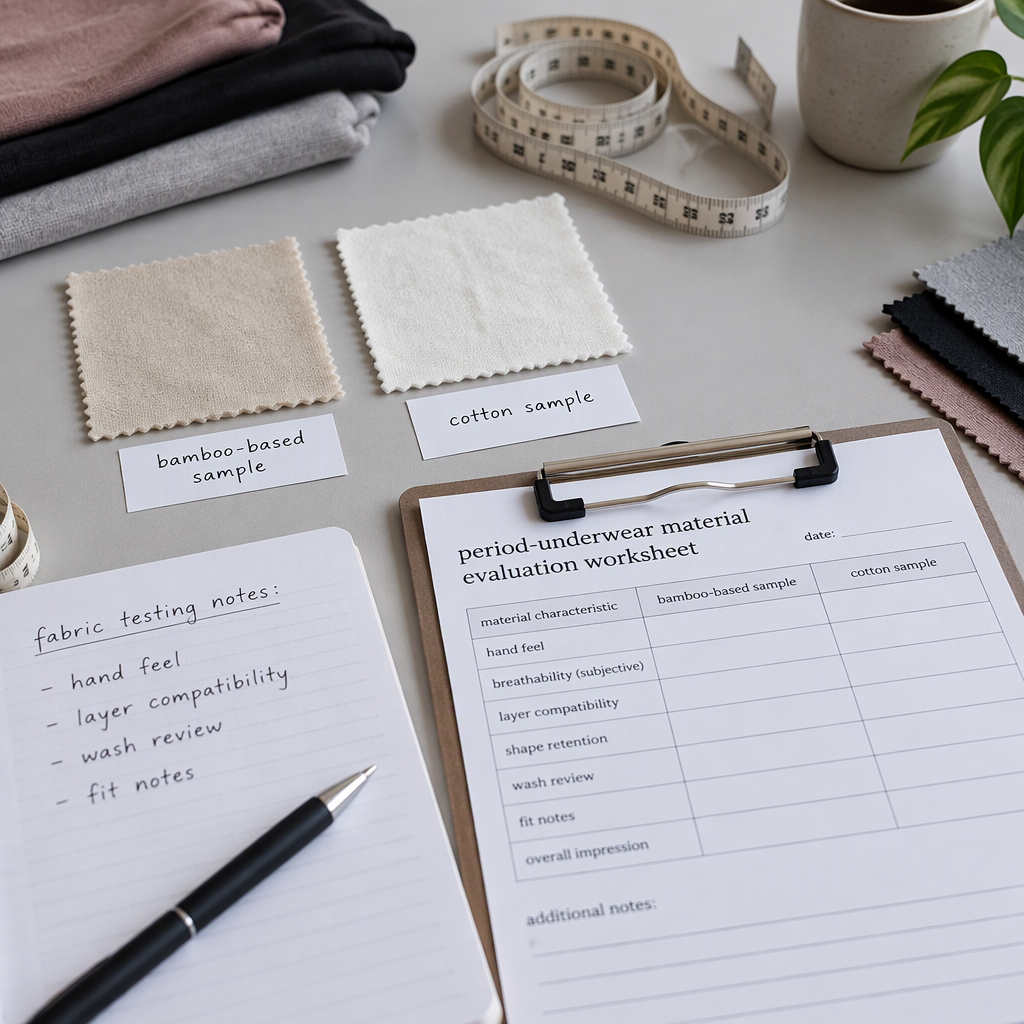
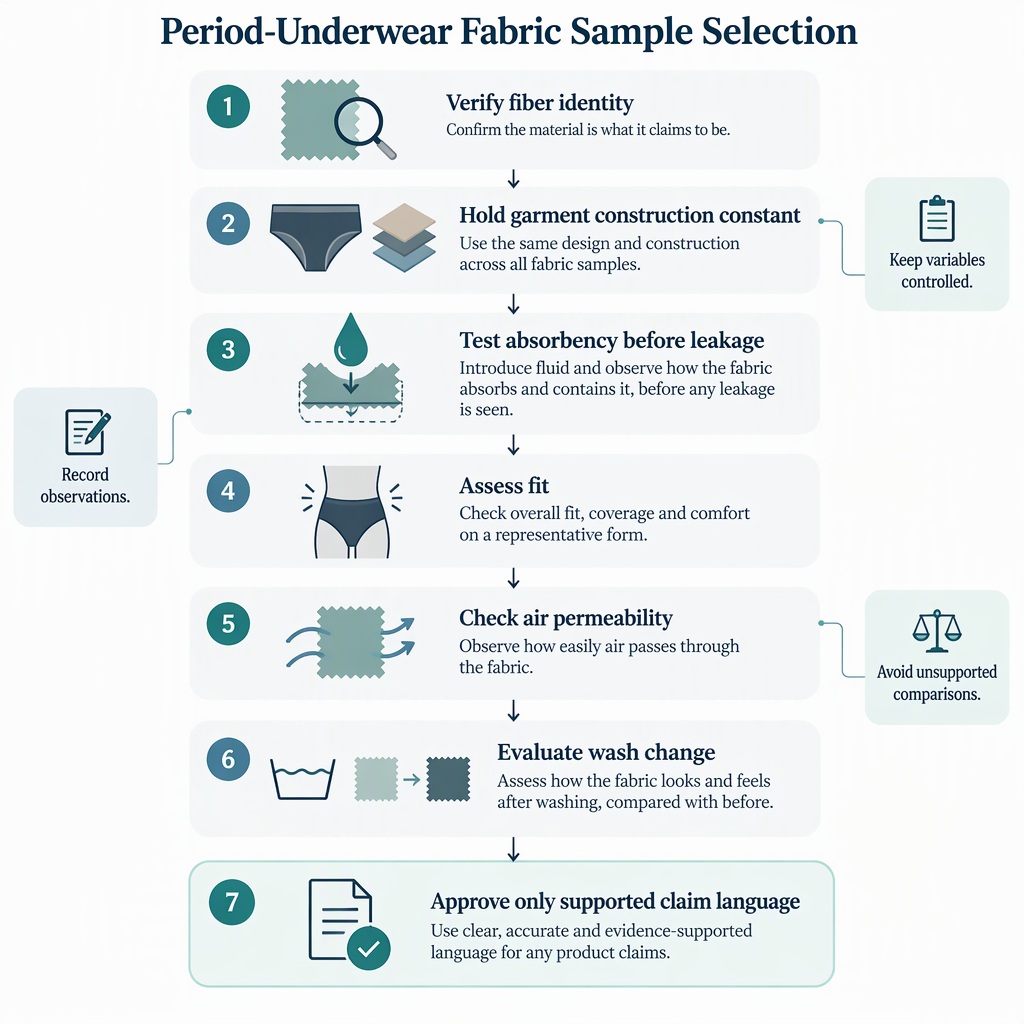
Neither material direction should be approved as universally better. Use the intended use case, garment construction, absorbency-before-leakage results, fit, wash behavior, air-permeability needs, and claim documentation to decide.
Can bamboo-derived viscose be marketed simply as bamboo?
Under FTC guidance, textiles should only be called bamboo when made directly from actual bamboo fiber; rayon or viscose made from bamboo should be described as rayon or viscose made from bamboo.
What should be tested first for a new period-underwear fabric sample?
Start with the sample’s intended use and compare absorbency before leakage and fit in the same garment context, then add wash and comfort-related checks.
Is air permeability enough to prove comfort?
No. ASTM describes air permeability as a textile measurement that can indicate breathability for certain fabrics, but it does not prove total wearer comfort by itself.
What documents matter for cotton samples?
Ask for fiber-content information and separate support for any organic, regenerative, recycled, or other preferred-cotton sourcing claim.
Why compare the two fabrics in the same construction?
Period-underwear results can change with gusset design, absorbent layers, leak-barrier placement, elastics, seams, size, and laundering. Keeping those conditions consistent makes the fabric comparison more useful.
What costs should procurement compare beyond fabric price?
Compare documentation, testing, redesign work, wash-validation repeats, claim review, trims, absorbent layers, barrier materials, and supplier support alongside the fabric quote.