A Sourcing Audit Guide: How to vet suppliers for leak-proof technology, PFAS compliance, and true scalability.
Introduction: The Risk of the Wrong Partner
In the functional fashion industry, your manufacturer is not just a supplier; they are the backbone of your brand. Unlike standard bikinis, period swimwear is a performance product.
If a regular swimsuit has a loose thread, it’s a minor defect. If a period swimsuit leaks, it’s a disaster—for your customer’s dignity and for your brand’s reputation.
With hundreds of factories on Alibaba and Google claiming to produce "leak-proof" swimwear, how do you filter the experts from the amateurs? As a dedicated OEM/ODM provider in this niche, I’ve seen what separates successful brands from struggling ones.
Here are the 5 non-negotiable questions you must ask potential suppliers to ensure quality, safety, and scalability.
Question 1: "Can you explain your gusset construction in detail?"
The Trap: Many general swimwear factories simply sew a layer of plastic (PVC) into the crotch and call it "period swimwear." This is uncomfortable, noisy ("crunchy"), and sweats in the sun.
What You Want to Hear:
A professional manufacturer should speak fluent "Hydro-Engineering." They should explain:
The Anti-Swell Core: How they prevent the absorbent layer from soaking up pool water (which creates a diaper effect).
The Floating vs. Integrated Gusset: Do they use a "Floating Gusset" (easy to wash/dry) or a "Fully Bonded" one (sleeker look)?
The Edge Seal: How they prevent side leaks (e.g., using folded elastic or silicone tape).
The Ljvogues Standard: We utilize a specialized 4-layer hydro-tech stack that balances 40ml absorbency with a profile <3mm thick, ensuring the swimsuit looks exactly like regular fashion swimwear.
Question 2: "Do you have valid OEKO-TEX and PFAS-Free test reports?"
The Trap: A supplier says "Yes, we are safe," but cannot produce a document dated within the last 12 months.
Why It Matters:
PFAS (Forever Chemicals): New regulations (like California's AB 1817) are strictly banning PFAS in water-resistant textiles. Period products are under the highest scrutiny.
OEKO-TEX Standard 100: This guarantees that fabrics touching the most sensitive areas are free from harmful substances.
Red Flag: If a supplier asks you to pay for the basic material safety testing, they are not a serious player in the Western market.
Question 3: "Do you manufacture in-house or outsource?"
The Trap: Many "manufacturers" are actually trading companies or "middleman factories" that take your order and sub-contract it to a cheaper, lower-quality workshop during peak season.
What to Ask:
"Can I do a live video tour of your cutting and sewing floor right now?"
"Do you handle the lamination of the leak-proof layer in-house?"
Why It Matters:
Outsourcing kills consistency. A factory with in-house control (like Ljvogues) can manage rush orders, control the lamination quality, and protect your IP.
Question 4: "How does your QC process differ for FUNCTIONAL layers?"
The Trap: Standard QC only checks for visual defects (loose threads, stains). Functional QC needs to check for Performance.
The Gold Standard Process:
Raw Material Inspection: We place the waterproof membrane over a light box to check for microscopic pinholes before cutting.
In-Line Inspection: We ensure the gusset is perfectly centered. If it's off by even 2mm, leakage risk increases.
Batch Testing: We perform random "Water Column Testing" on finished goods to ensure the seam sealing holds under pressure.
CEO Tip: Ask your supplier, "What is your AQL (Acceptable Quality Limit) for leakage?" The answer should be Zero.
Question 5: "Can you handle complex ODM customizations?"
The Trap: A "Cut & Sew" shop can only follow your instructions blindly. If your design has a flaw, they will manufacture the flaw.
What You Need:
An ODM (Original Design Manufacturer) partner who acts as a consultant.
Ask: "Do you have an in-house pattern maker who understands how leak-proof layers affect the stretch of the fabric?"
Ask: "Can you recommend a chlorine-resistant fabric for my competitive swimmer line?"
A true partner brings ideas to the table, helping you iterate and improve before you even make a sample.
FAQ
Q: What is the typical lead time for a period swimwear sample?
A: At Ljvogues, an ODM sample takes 7-10 days. A fully custom OEM sample (with new pattern making) takes 14-21 days.
Q: Do you offer low MOQs for testing a new factory?
A: Yes. We understand the need to validate quality. We offer trial orders starting at 100 pieces for our ready-made ODM styles.
Q: Can you help with packaging compliance (e.g., polybag warnings)?
A: Absolutely. We provide retail-ready packaging services that comply with Amazon FBA and EU safety standards.
Conclusion: Vetting is the First Step to Success
Finding a manufacturer is easy. Finding a partner who understands the technical nuances of menstrual swimwear is the challenge. By asking these five questions, you protect your business from returns, legal issues, and supply chain disruptions.
At Ljvogues, we welcome these questions. We believe transparency is the foundation of a long-term partnership.
Ready to audit us?
We invite you to verify our claims.
[Schedule a Video Factory Tour]: See our production lines live.
[Request Certification Copies]: Get our latest PFAS-free and OEKO-TEX reports.
Ocean Yang bridges the gap between textile science and brand success. As the founder of Ljvogues, he leverages 10+ years of expertise in manufacturing high-performance period underwear and swimwear. Dedicated to transparency and safety, Ocean empowers B2B buyers to source verified, compliant, and innovative functional apparel from Shenzhen to the world.
Ljvogues is a Shenzhen-based manufacturer of high-performance menstrual and incontinence apparel. Empowering 500+ brands across 100+ countries since 2015 — with PFAS-free verified production, REACH/SVHC compliance, and ISO 9001 & 14001 certified precision.

 English
 العربية
 Français
 Русский
 Español
 Português
 Deutsch
 italiano
 日本語
日本語 한국어
한국어 Nederlands
 Tiếng Việt
 ไทย
ไทย Polski
 Türkçe
 ພາສາລາວ
 ភាសាខ្មែរ
 Bahasa Melayu
 Filipino
 Bahasa Indonesia
 magyar
 Română
 Čeština
 Српски
 हिन्दी
 فارسی
فارسی Svenska
 українська
 Ελληνικά
 Suomi
Suomi Հայերեն
 עברית
עברית Latine
 Dansk
Dansk Gaeilge
 Eesti keel
 Oʻzbekcha
 Azərbaycan dili
 Беларуская мова
 Български
 ქართული
 Lietuvių


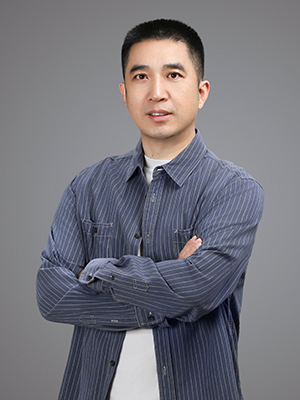 Ocean Yang


