



Launching or scaling a line of functional intimates—such as period panties, leak-proof underwear, or maternity briefs—requires more than just standard garment manufacturing. It demands specialized fabric layering, liquid-absorbent technology, and rigorous anti-leak construction.
One of the most critical decisions early in your product development cycle is choosing between OEM (Original Equipment Manufacturer) and ODM (Original Design Manufacturer).
This guide breaks down the core differences, advantages, and decision factors to help you select the ideal manufacturing model for your brand’s current growth stage.
1. Fast Definition: What is OEM vs. ODM in Functional Apparel?
Feature | OEM (Original Equipment Manufacturing) | ODM (Original Design Manufacturing) |
Core Concept | Custom manufacturing based on your designs | Ready-to-brand products based on factory designs |
Design & Tech Pack | Provided completely by the client | Provided/developed by the manufacturer |
Intellectual Property (IP) | Client owns full IP & design rights | Factory retains design IP (Private Label options available) |
Time-to-Market | Longer (Requires R&D, sampling, fit tests) | Faster (Pre-tested designs ready for production) |
Initial Capital Investment | Higher (Tooling, custom fabric runs, R&D) | Lower (Proven fabrics and existing patterns) |
Best For | Established brands with unique patented features | Startups, e-commerce sellers, expanding product lines |
2. Understanding OEM: Full Customization for Unique Brand Patents
How OEM Works for Period Underwear
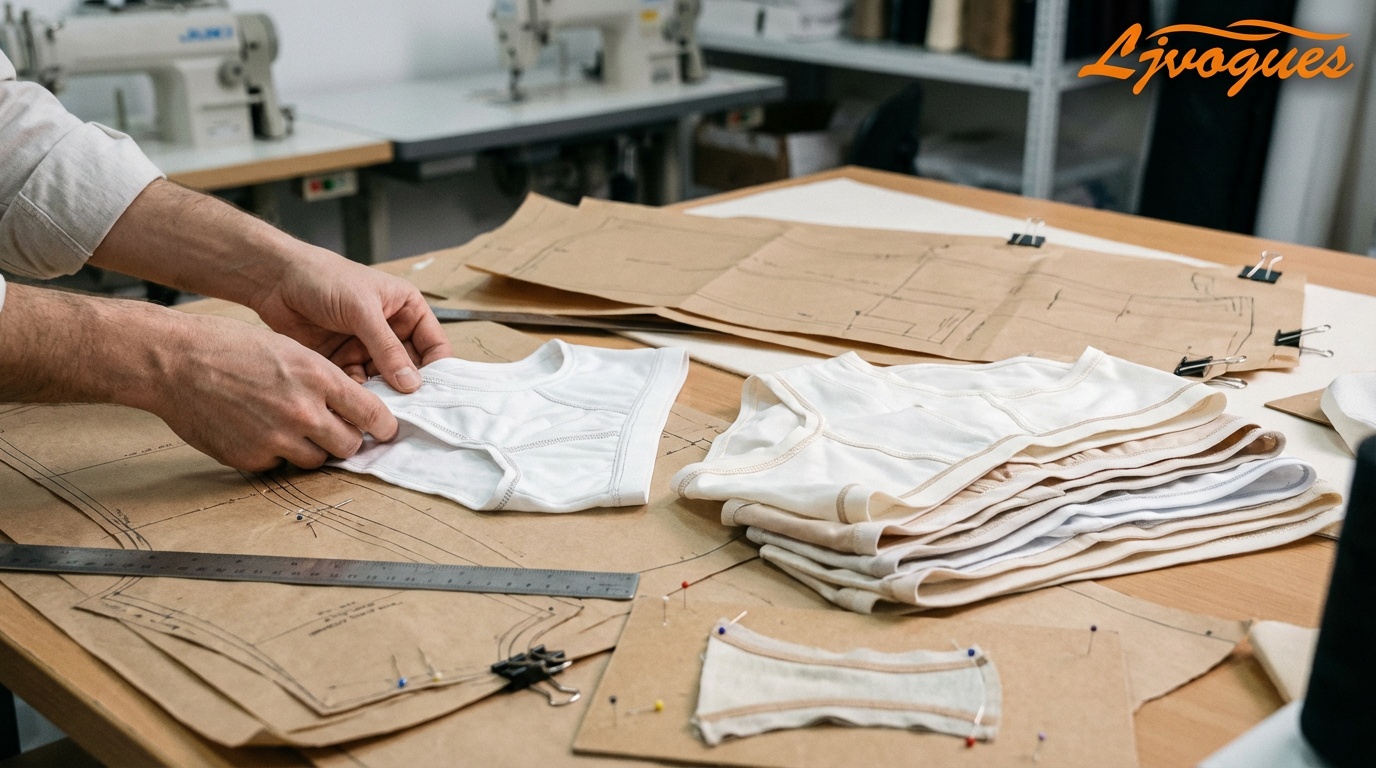
Under the OEM model, your company brings a complete Tech Pack—including precise measurement specs, fabric composition requirements (e.g., organic cotton layer, TPU waterproof layer, outer elastane), seam bonding instructions, and grading charts. The factory provides precision cutting, sewing, quality assurance, and assembly.
Advantages of OEM:
100% Brand Differentiation: Complete freedom to innovate custom layer compositions, patented absorbent cores, or unique body shapes.
Full IP Protection: You retain exclusive ownership over the design tech pack and functional innovations.
Scalable Quality Standards: Strict control over raw material sourcing, from GOTS-certified organic cotton to Oeko-Tex Standard 100 lining materials.
Ideal Scenario for OEM:
You have an in-house apparel design/R&D team.
You hold or are applying for a patent on leak-proof structures.
You require highly specific eco-friendly or high-tech fabrics not found in standard catalogs.
3. Understanding ODM: Speed to Market with Proven Technology
How ODM Works for Leak-Proof Intimates
With ODM, the manufacturer leverages its existing R&D and tested silhouettes. The factory has already developed, laboratory-tested, and optimized the multi-layer absorption core (e.g., Light, Moderate, or Heavy flow absorbing levels).
You choose from pre-designed models and customize branding elements such as:
Custom care labels, heat-transfer logos, and waistband weaves.
Custom packaging (eco-friendly boxes, biodegradable bags).
Select colorways and fabric finishes.
Advantages of ODM:
Rapid Market Entry: Skip 3–6 months of R&D and pattern engineering; go straight to sample approval and production.
Lower Financial Risk & MOQs: Lower initial investment since pattern tooling and lab testing are pre-completed by the manufacturer.
Proven Performance: Products use field-tested absorbent fabrics and leak-proof barriers with known wash-durability metrics.
Ideal Scenario for ODM:
E-commerce sellers (Amazon, Shopify, TikTok Shop) needing fast launch speeds.
Brands expanding into period swimwear or incontinence underwear without prior functional apparel R&D background.
Companies testing a new market segment before committing to full custom tooling.
4. Key Factors to Evaluate Before Choosing Your Model
                     ┌─────────────────────────────────────────┐
                     │ Do you have a complete Tech Pack & IP?  │
                     └────────────────────┬────────────────────┘
                                          │
                   ┌──────────────────────┴──────────────────────┐
                   │                                             │
                [ YES ]                                       [ NO ]
                   │                                             │
                   ▼                                             ▼
        ┌──────────────────────┐                     ┌──────────────────────┐
        │   Select OEM Model   │                     │  Do you need custom  │
        │  (Full Customization)│                     │  R&D co-development? │
        └──────────────────────┘                     └──────────┬───────────┘
                                                                │
                                         ┌──────────────────────┴──────────────────────┐
                                         │                                             │
                                      [ YES ]                                       [ NO ]
                                         │                                             │
                                         ▼                                             ▼
                              ┌──────────────────────┐                     ┌──────────────────────┐
                              │    Select OEM/ODM    │                     │   Select ODM Model   │
                              │ Hybrid R&D Partner   │                     │ (Private Label / Fast│
                              └──────────────────────┘                     │  Market Launch)      │
                                                                           └──────────────────────┘
1. Speed-to-Market Urgency
If you need to capitalize on seasonal trends or launch within 60–90 days, ODM is the most effective pathway. Full OEM development typically spans 4 to 8 months from initial pattern drafting to final bulk production.
2. R&D Capabilities & Technical Expertise
Functional underwear requires specialized know-how (e.g., preventing lateral leakage along leg openings via sonic bonding or elastic sealing). If your team lacks specialized textile engineering expertise, partnering via ODM allows you to leverage the factory’s established lab testing and technical expertise.
3. Minimum Order Quantities (MOQs)
OEM orders often require higher MOQs to cover custom fabric dyeing and specialized absorbent core milling. ODM utilizes shared or stocked functional textiles, allowing for more flexible minimums.
5. How Ljvogues Supports Both OEM and ODM Success
At Ljvogues, we specialize in the engineering and manufacturing of Period Underwear, Leak-Proof Incontinence Pants, and Maternity Intimates. Whether you need full OEM production or agile ODM solutions, we offer:
In-House R&D & Prototyping: Advanced laboratory testing for fluid absorption, breathability, and wash longevity.
Certified Eco-Friendly Materials: GOTS, OEKO-TEX Standard 100, and ISO-compliant supply chain integrity.
Flexible Hybrid Options: Transition seamlessly from fast ODM private labeling to custom OEM development as your sales scale.
Need Guidance on Your Next Collection?
Consult with our technical manufacturing team to evaluate tech packs, sample lead times, and tailored production solutions for your brand.