



Table of Contents
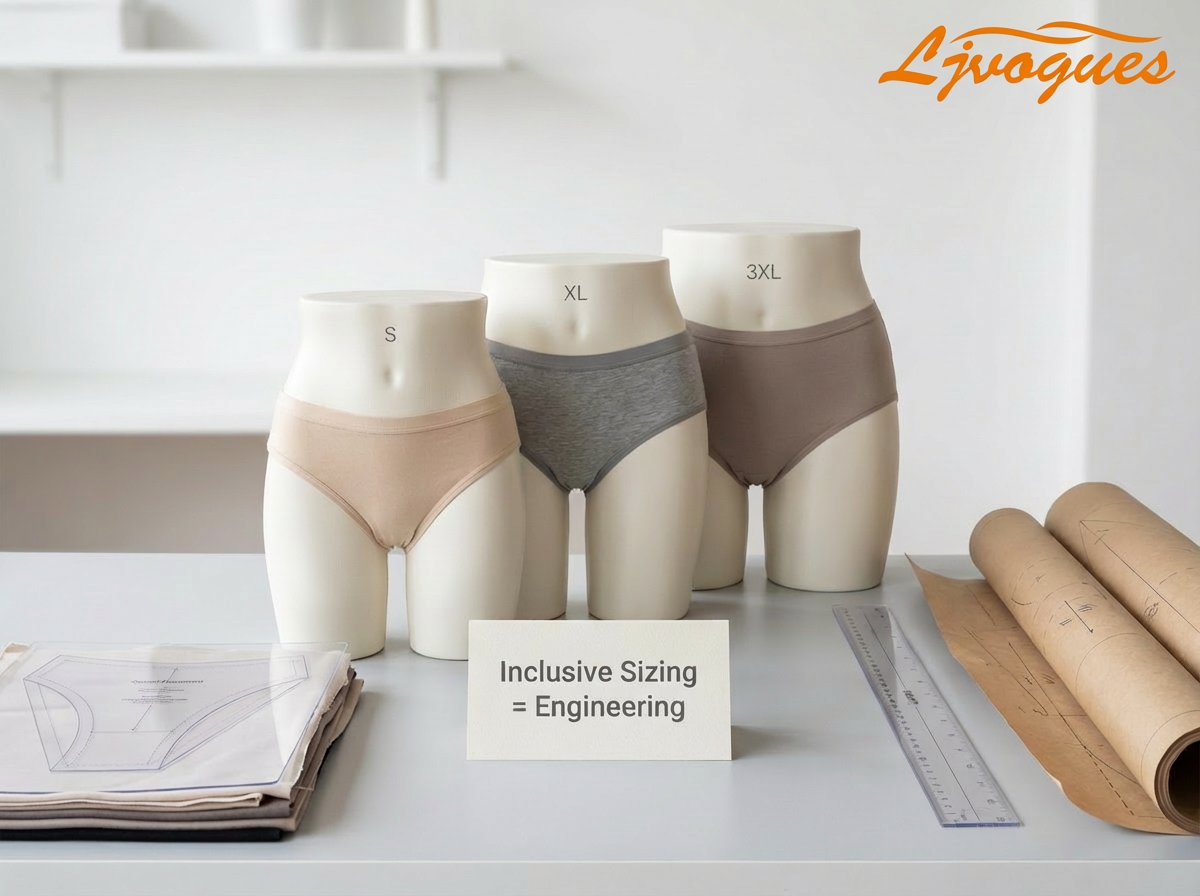
Inclusive sizing has become a real demand—not only because of the body-positivity movement, but because online shopping makes fit mistakes instantly visible through reviews and return rates. In my work at Ljvogues, I see that brands who treat sizing as an engineering system (not a size chart afterthought) earn higher trust, better retention, and stronger wholesale readiness.
Current Market Gaps
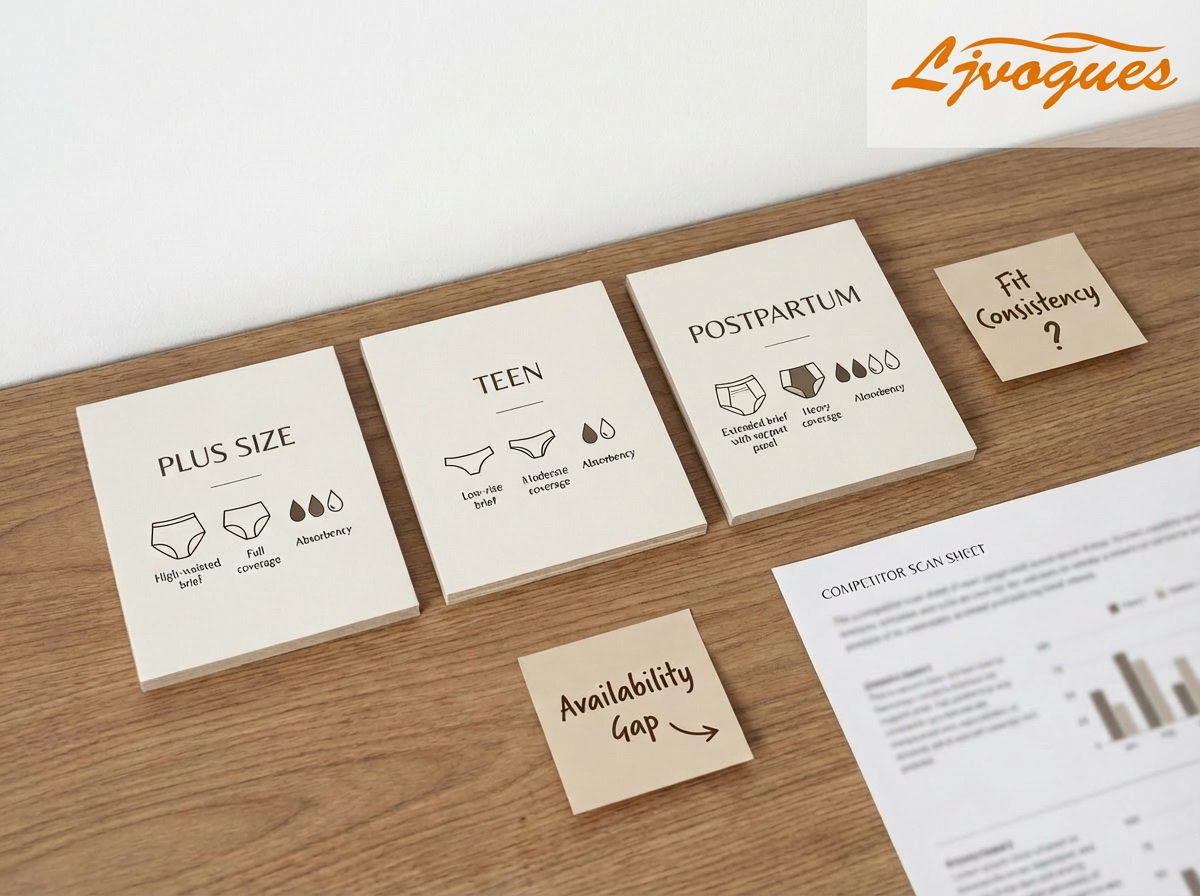
The period underwear market is expanding fast, and research notes that inclusivity and product variety—including plus-size, postpartum, and teen-focused products—are becoming a key direction. However, customer conversations and competitive scans still show clear gaps, especially in extended sizing availability and fit consistency across silhouettes.
Key gaps brands should address:
Limited plus-size options (and inconsistent fit)
Market research highlights growing emphasis on plus-size options, which often signals that existing supply is still catching up to demand.
Brands that already offer very wide ranges (for example, TomboyX extending to 6X) show that extended sizing can be a strong differentiator when executed correctly.
Teen-specific sizing needs
Teen users often need different rises, leg openings, and comfort priorities than adult customers, and they frequently prefer fuller coverage for confidence at school and sports.
Postpartum body considerations
Postpartum customers often prioritize higher waist, supportive comfort, and higher absorbency for longer wear windows, which affects both style choice and fit requirements.
Grading Techniques for Extended Size Ranges
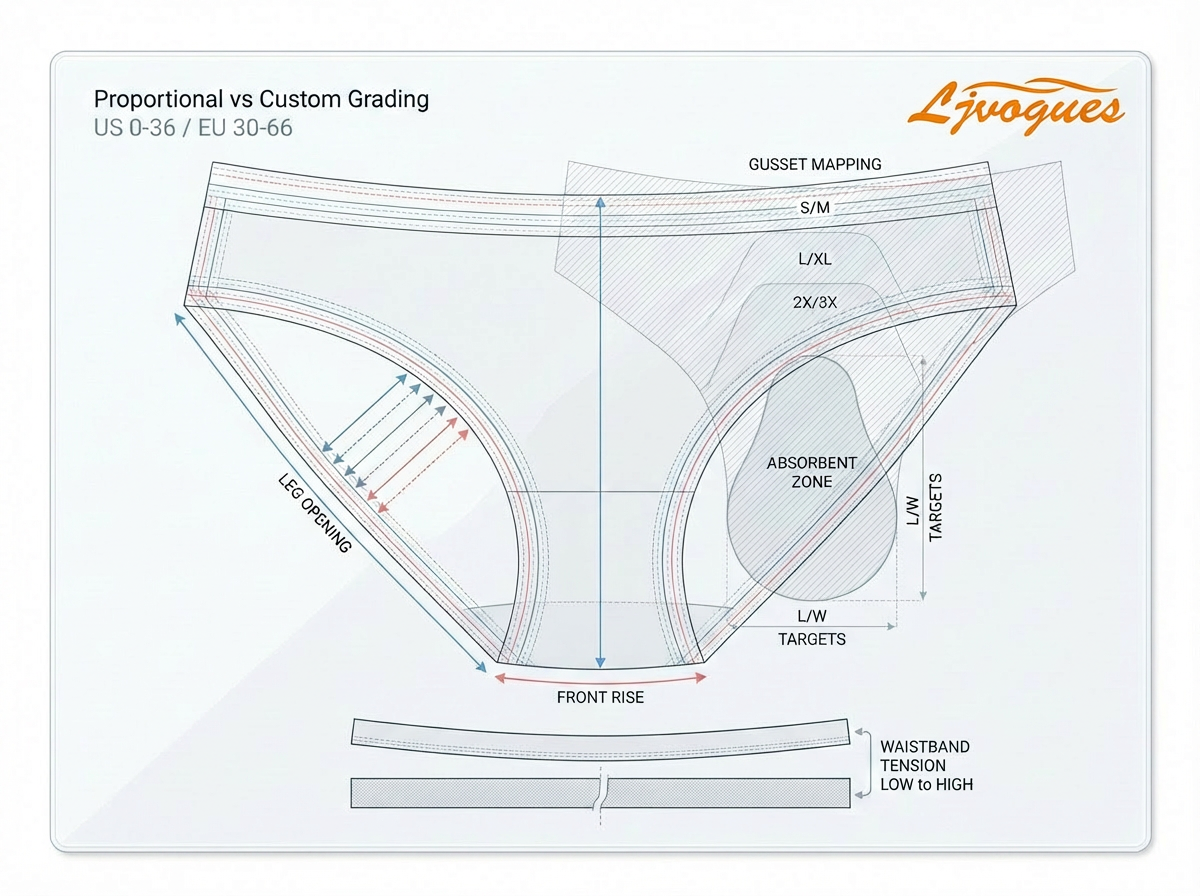
Extended sizing is not achieved by “scaling up” a pattern the same way in every direction. To keep comfort and function consistent, grading must account for body-shape changes and how the gusset and barrier sit on the body at each size.
At a manufacturing level, three elements matter most:
Proportional vs. custom grading
Proportional grading is faster but can create poor fit in larger sizes because real bodies don’t scale evenly.
Custom grading (with size-specific adjustments) is often required for plus sizes to maintain leg opening comfort, rise stability, and waistband placement.
Maintaining absorbency across sizes
Period underwear requires that absorbent coverage and barrier placement stay correct across the entire range; if coverage is too short or poorly positioned in larger sizes, leak risk increases.
Brands should specify not only absorbency “ml capacity,” but also absorbent-zone length/width targets by size group.
Elastic and waistband adjustments
Elastic tension and waistband construction must be tuned to avoid rolling, digging, or slipping, and these problems are frequently amplified in extended sizes.
At Ljvogues, we treat grading and gusset mapping as a single system, because comfort and leak protection fail together when grading is handled carelessly.
Fit Testing Across Demographics
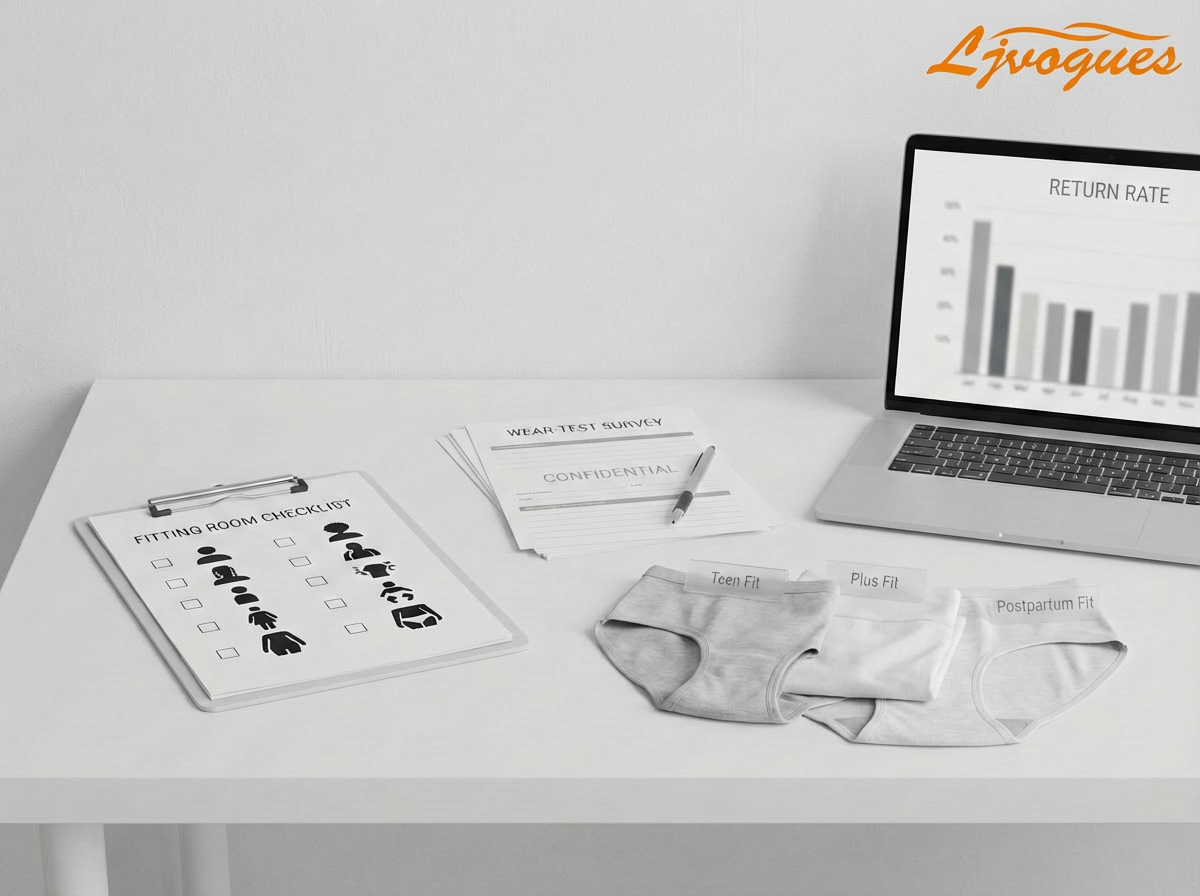
Inclusive sizing requires proof, and fit proof comes from testing on real bodies—not only on one “standard” fit model. A strong fit-testing program reduces returns and strengthens your brand reputation.
Best-practice elements:
Diverse fit model programs
Testing across multiple body shapes within the same size label helps identify where a pattern works and where it breaks (rise height, leg opening, gusset positioning).
Customer feedback integration
Customer reviews and wear-test surveys are critical for identifying issues like waistband rolling, chafing, and leaks that lab checks may not reveal.
Return rate analysis
Incorrect sizing and fit are widely cited as primary drivers of apparel returns, so tracking returns by size and style can quickly reveal grading or measurement issues.
Manufacturing Challenges and Solutions
Inclusive sizing creates real operational complexity, but the brands that manage it well build a moat competitors struggle to copy. From a factory perspective, the challenges are predictable—and solvable with the right planning.
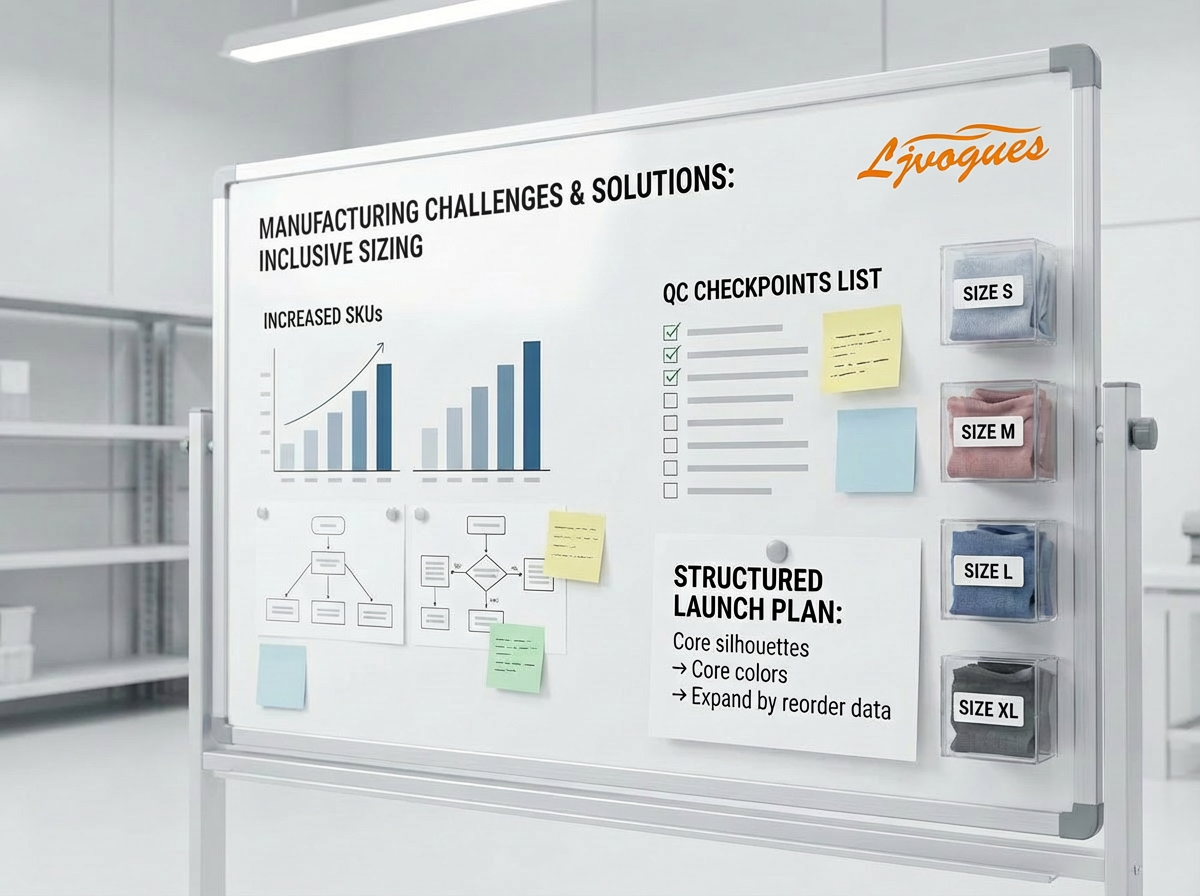
Pattern complexity management
More sizes and more fit variations increase pattern sets, sewing guidance needs, and QC workload, so documentation and checkpoints become more important.
Inventory planning for brands
Extended size ranges increase SKU count, and brands need realistic forecasts and MOQ strategies to prevent overstock while keeping size availability credible.
Cost implications
Extended sizing can increase material consumption and sometimes labor time, so cost models should be built early to protect margin at retail.
At Ljvogues, we usually recommend launching inclusive sizing in a structured way—starting with core silhouettes and core colors, then expanding once reorder data confirms the size curve.
Marketing Inclusive Sizing
Inclusive sizing is only a competitive advantage if customers can confidently choose the right size online. Your size strategy must be supported by clear communication and representation.
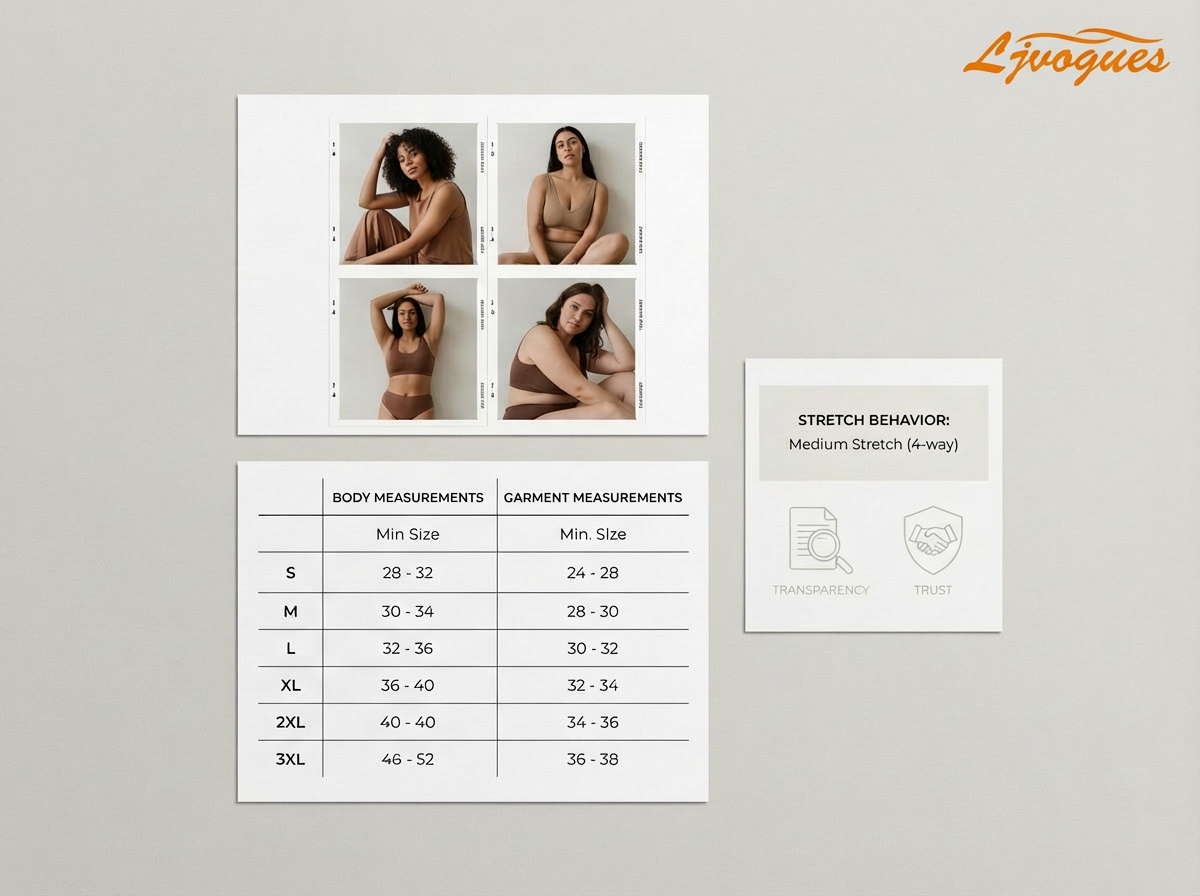
Size chart best practices
Provide body measurements and garment measurements, explain stretch behavior, and keep sizing consistent across styles as much as possible.
Representation in product photography
Showing products on multiple body types and sizes helps customers predict fit and reduces “expectation gap” returns.
Inclusive sizing as a competitive advantage
The market is moving toward more inclusivity—plus-size, postpartum, teen, and even gender-inclusive designs—and research explicitly notes this as a trend in the period panties category. Brands that invest in correct grading, multi-demographic fit testing, and transparent size communication can convert inclusivity into trust, loyalty, and lower returns.
As CEO of Ljvogues, my view is simple: inclusive sizing is not extra work—it’s brand protection and growth strategy. If you share your target market, planned size range, key silhouettes, and absorbency needs, our team can recommend a grading approach, sampling plan, and MOQ ladder that makes inclusive sizing commercially realistic from day one.